
Reviewed · COOKING CLASSES
Cusco: Peruvian Cooking Class, Cocktails & Local Market Tour
San Pedro Market is the real opening act here. You walk through Cusco’s old food market, seeing potatoes, quinoa, cacao, fruit, bread, and local cheese before carrying that sense of place into a cooking studio in the historic center. The market visit connects the meal to daily Cusco life, rather than treating Peruvian food as a list of recipes.
I like the generous menu and the friendly, story-filled teaching from chefs such as Jesus, Jorge, and Eric. You make two pisco cocktails, three savory dishes, and finish with picarones, so the $67 price buys far more than a short demonstration. The main consideration is that the class is partly preparation and assembly, not four hours of demanding stovetop cooking.
In This Review
- Key points to know before booking
- Starting with Cusco’s San Pedro Market
- The short walk to the cooking studio
- Making two Peruvian cocktails
- Cebiche, causa limeña, and quinoa tamal
- A generous meal at the shared table
- Dietary choices and what to tell the chef
- Why the chef matters so much
- Timing, group size, and planning your day
- Who will get the most from this experience
- Is the $67 price fair?
- Should you book the Cusco cooking class?
- FAQ
- Where does the Cusco cooking class meet?
- How long does the experience last?
- What dishes will I prepare?
- Are drinks included?
- Are vegetarian, vegan, or gluten-free options available?
- Is the class offered in languages other than English?
- Can children join the activity?
Key points to know before booking
- San Pedro Market comes first: See and taste local cheese, bread, chocolate, cacao, fruit, quinoa, and potatoes before cooking.
- A full meal is included: Prepare cebiche, causa limeña, and quinoa tamal, then finish with picarones and honey.
- Two cocktails are part of the class: Alcohol-free versions are available, so nondrinkers can take part.
- Dietary needs are handled: Vegetarian, vegan, and gluten-free menus are available, though it is wise to repeat your needs at the start.
- The group is capped at 10: That keeps the class social but still small enough for help from the chef.
- Plan on four hours: Wear comfortable shoes and clothes, and arrive hungry.
Starting with Cusco’s San Pedro Market
Meet at Door Number 1 of San Pedro Market. This is a practical meeting point, but the market has many sections and plenty of activity, so give yourself enough time to find the right entrance.
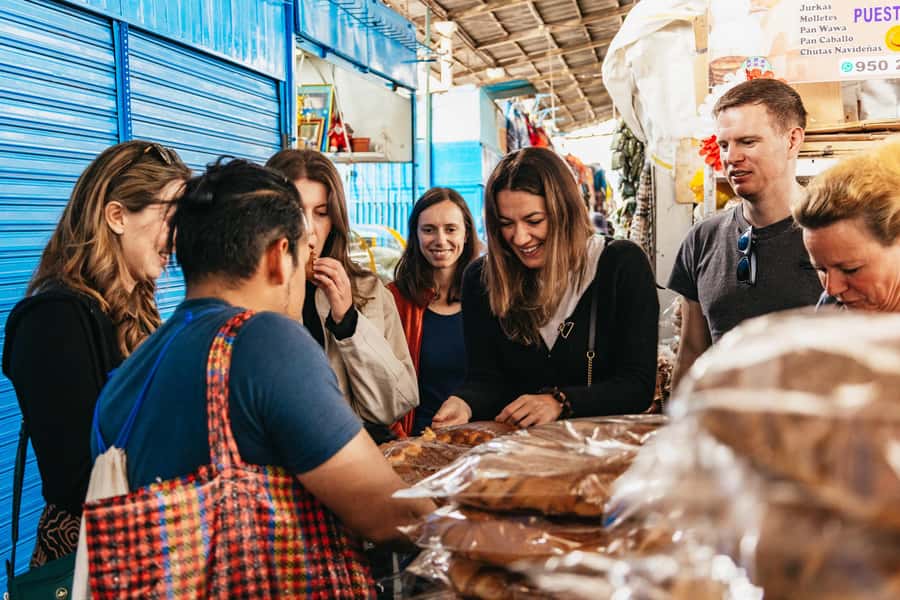
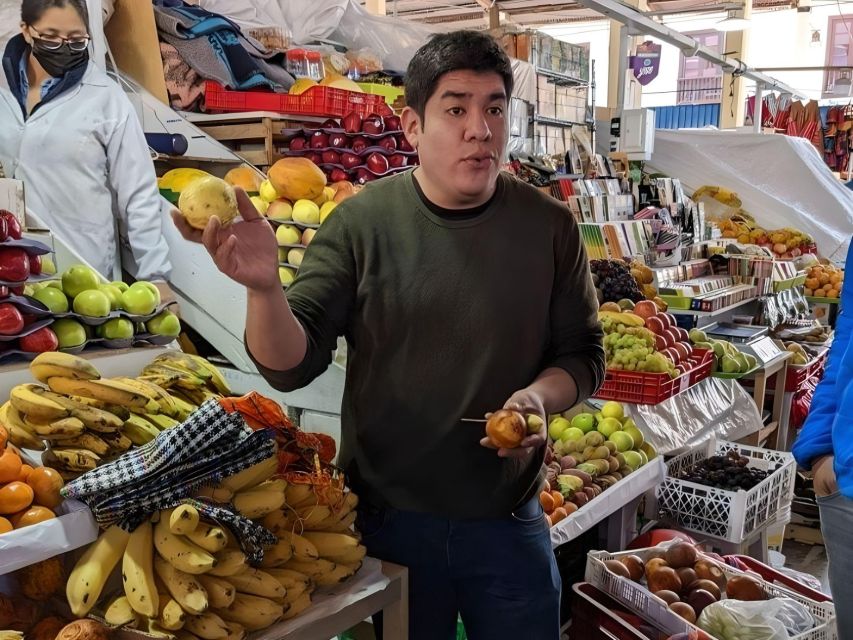
The market is one of the oldest in Cusco. You are not simply walking past stalls on the way to a kitchen. The chef uses the visit to explain the foods that shape Peruvian cooking, including potatoes, quinoa, cacao, bread, cheese, and unusual fruits.
The tasting element makes this first hour useful. You might sample local cheese, bread, chocolate, coffee, or passion fruit, depending on what is available. I like this part because it gives you a sense of flavor before the recipes begin. You start to notice the ingredients as food, not just as unfamiliar items on a table.
The market is also the least polished part of the experience. It is a working food market, not a quiet museum. You may find tight aisles, strong smells, and plenty of visual noise. Wear shoes you can walk in and clothes that are easy to manage.
One practical detail matters: San Pedro Market has occasionally been closed for cleaning. When that happens, the chef may use a nearby local food market instead, where ingredients for the class are purchased. That change can alter the route, but it does not remove the food-shopping part of the experience.
A few more Cusco trips to weigh up
- Cooking class and market tour with a local chef
★ 5.0 · 186 reviews - Private Andean Cooking Class, Pachamanca
★ 5.0 · 54 reviews - Vegan Peruvian Cooking Class Cocktails and Local Market in Cusco
★ 5.0 · 46 reviews
The short walk to the cooking studio
After the market, you take a short walk to the cooking studio in Cusco’s historic center. This transition works well because the class moves from food culture to hands-on preparation without a long transfer or a bus ride.
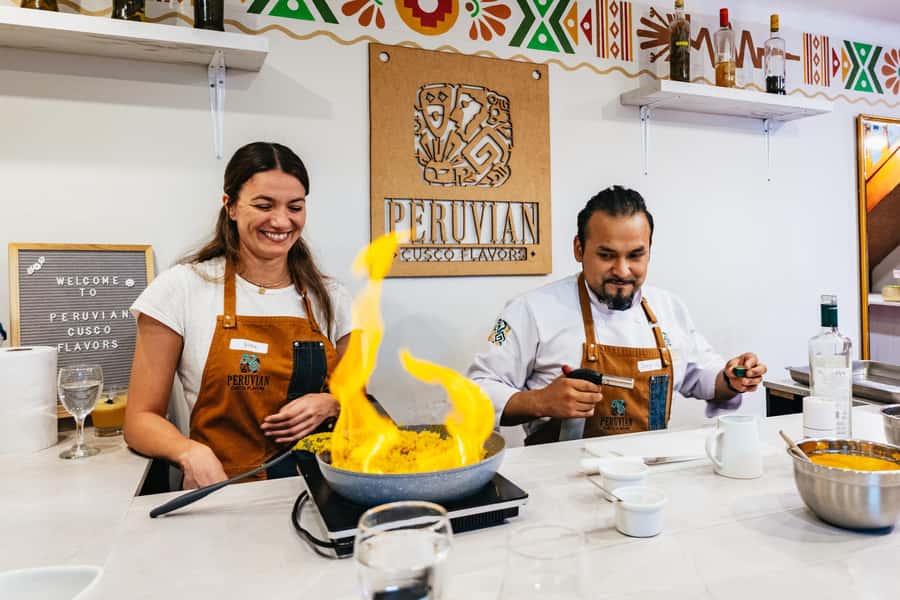
At the studio, you get an apron and settle into the kitchen. The setting is described as modern and clean, which is welcome after the busy market. A small group of up to 10 people shares the space, creating a friendly table atmosphere without making the class feel like a large demonstration.
Chef Jesus is the named chef for the experience, while sessions may also be led by chefs such as Jorge or Eric. The important point for you is that the guide is both the market leader and the cooking teacher. That continuity helps: the person explaining the potato or fruit at the market can connect it to the dish on your plate later.
English is the only listed language. If you need detailed instruction in another language, this class is not the right choice.
Making two Peruvian cocktails
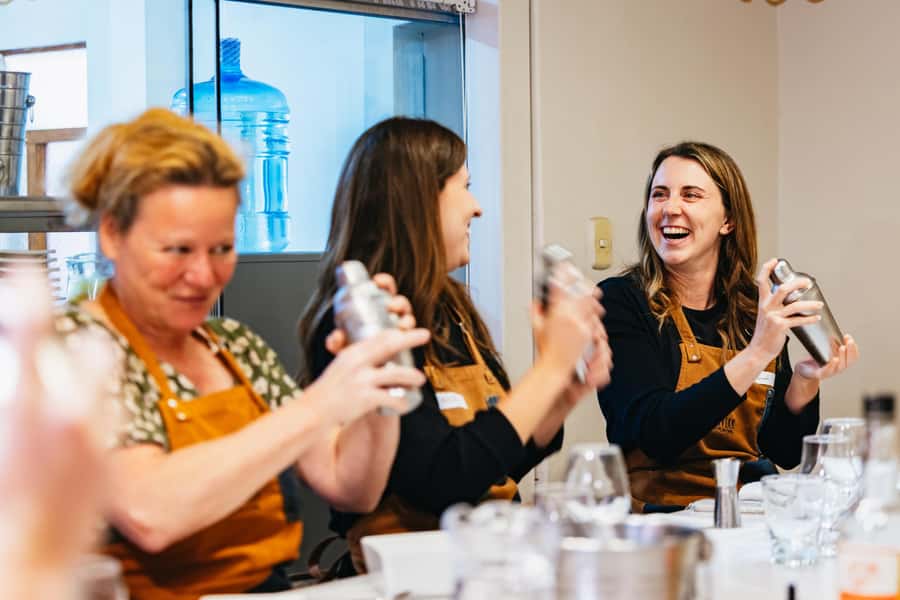
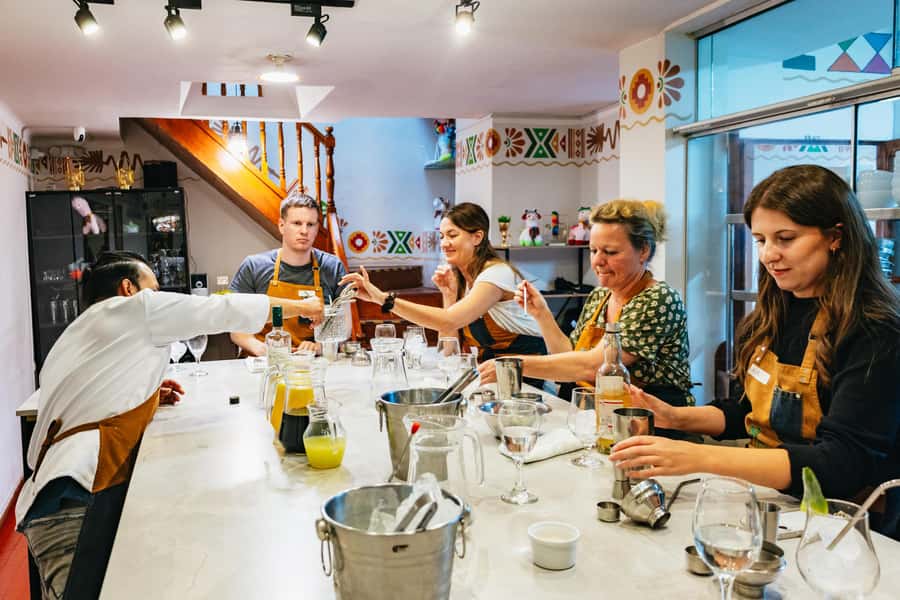
The class begins in the kitchen with a Peruvian cocktail. You prepare two cocktails during the session and drink them as the food comes together.
Pisco gives this part a clear Peruvian identity. The cocktails also help the group relax and start talking, especially when people are cooking together for the first time. You do not need to be an experienced bartender. The chef takes you through the steps, and the activity is designed as a shared lesson rather than a professional cocktail workshop.
Alcohol-free recipes are available. This is particularly helpful if you do not drink, are taking a break from alcohol, or want a child over 10 to join the class with a mocktail. The minimum age is 10, so families with younger children need another plan.
The cocktail portion is a benefit, but it also means the experience is not just about food technique. If you want an intensive culinary course with lots of knife work and long cooking times, this will probably feel light. If you want a social introduction to Peruvian flavors, it fits better.
Cebiche, causa limeña, and quinoa tamal
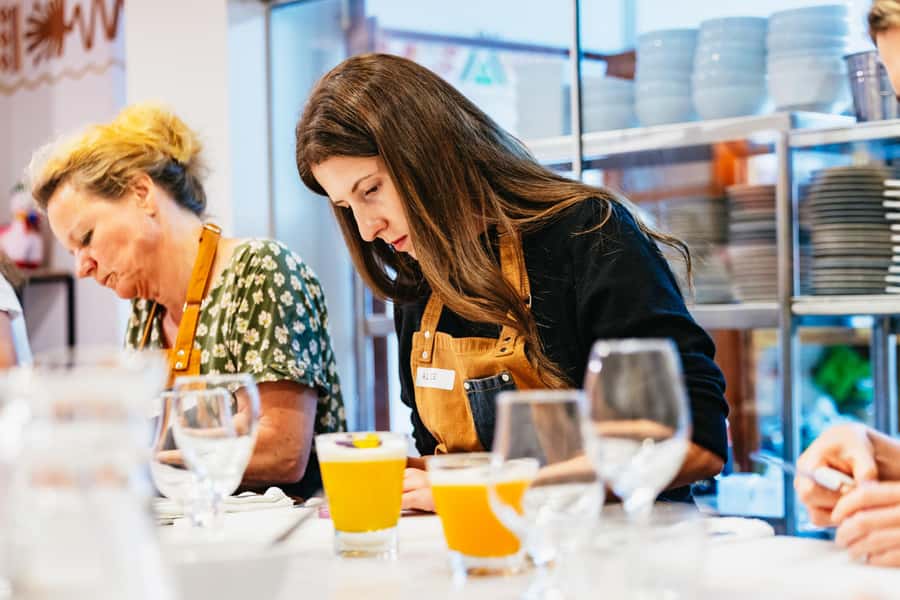
The core of the class is a three-dish menu. The chef explains the background and preparation of each recipe, then guides you as you work.
Cebiche is the sharp, fresh centerpiece. You learn how the dish comes together with its bright Peruvian flavors. The preparation is more about correct handling, mixing, timing, and balance than about standing over heat. It is a good dish for a class because the result feels special without requiring complicated equipment.
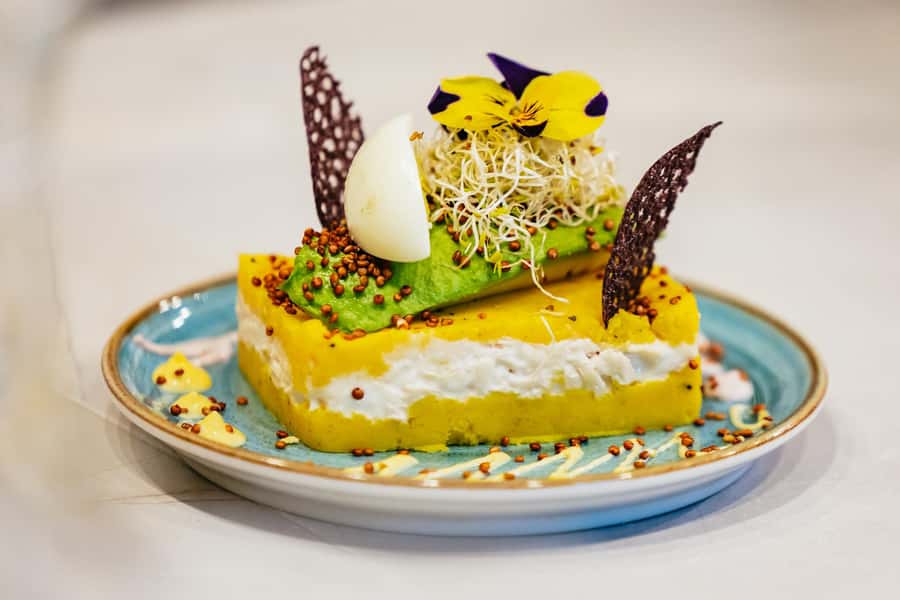
Causa limeña gives you a different kind of lesson. Potatoes are central to Peru, and causa shows how a familiar ingredient can become a carefully layered, beautifully plated dish. One of the most enjoyable parts is shaping and presenting it. You may leave feeling more capable than expected, even if you do not normally cook.
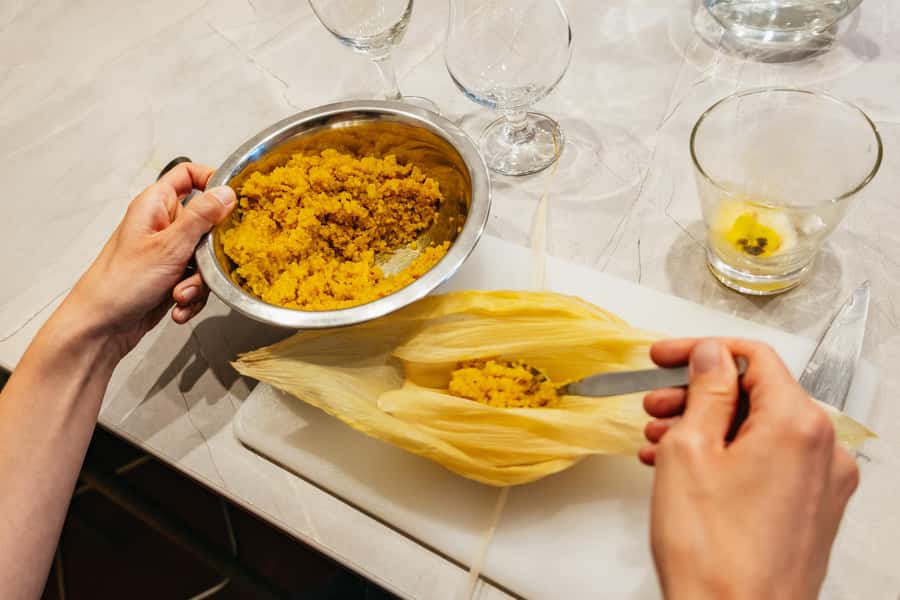
Quinoa tamal brings a highland ingredient into the menu. Quinoa is strongly associated with the Andes, and preparing it in tamal form helps place it in a wider food tradition. The dish also balances the cool, fresh character of cebiche and the potato-based causa.
The menu is broad enough to show several sides of Peruvian cooking. It includes seafood, potato, quinoa, cocktails, and dessert, rather than focusing on one narrow dish.
Still, keep expectations realistic. One detailed session describes the cooking as a mix of preparing and assembling, with some elements ready to combine. That is normal for a four-hour group class, and it keeps the meal moving, but you should not book this expecting to make every component from raw ingredients from start to finish.
Same valley, a completely different kind of day:
- Cusco: Humantay Lake Tour with Breakfast and Buffet Lunch
★ 4.9 · 2,976 reviews - From Cusco: Sacred Valley & Maras Salt Mines Tour with Lunch
★ 4.8 · 2,227 reviews - From Cusco: Moray, Maras Salt Mines & Chinchero Weavers Tour
★ 4.8 · 1,925 reviews - From Cusco: Full-Day Group Tour of Machu Picchu
★ 4.7 · 1,767 reviews
A generous meal at the shared table
Once the dishes are ready, you sit down and eat what you have made. The meal is not a quick sample. You prepare three dishes, enjoy two cocktails, and finish with picarones and honey.
This is where the $67 price begins to make sense. You are paying for four hours, a professional chef, ingredients, the market tour, tastings, two drinks, a full meal, and dessert. A restaurant meal might cost less, but it would not include the shopping walk, instruction, or the chance to understand how the dishes are built.
The shared table is also part of the value. Cooking gives strangers an easy reason to talk. You trade stories while eating, and the group setting can be especially pleasant for solo visitors or couples who want an activity with some social energy.
Picarones are a fitting finish. These Peruvian fritters are served with honey, adding a warm and sweet ending after the bright cebiche and savory dishes. Sugar-free and gluten-free options are available, though you should state your needs clearly before the meal begins.
Dietary choices and what to tell the chef
Vegetarian, vegan, and gluten-free menus are available. The class has also adapted dishes for mixed groups, such as a vegetarian participant cooking alongside someone who needed gluten-free food. Alcohol-free cocktails are possible as well.
That flexibility is a strong reason to choose this activity, but do not rely only on the booking form. One participant experienced some confusion about a gluten-free request, so I would repeat any allergy or dietary restriction when you meet at the market and again in the studio.
Ask what has been changed in each dish. A menu substitution can affect sauces, toppings, tamal ingredients, or dessert. The chefs have shown they can make useful adjustments, but clear communication helps prevent mistakes.
Why the chef matters so much
The quality of this experience depends heavily on the person leading it. Chef Jesus is praised in the activity details, and chefs Jorge and Eric have also led sessions. Their role is bigger than reading out a recipe.
The best part of the teaching is the link between cooking and culture. You learn why ingredients matter, how dishes developed, and how Peruvian cuisine reflects different influences. The chef also helps with presentation, which makes the food feel more special when you sit down to eat.
The tone is friendly and relaxed. That matters because many people arrive with little cooking experience. You can follow along without feeling tested, and the chef remains available when you need help.
Recipes have also been sent by email after some sessions. This is worth confirming on the day, but it gives you a chance to recreate the dishes at home instead of leaving the recipes behind in Cusco.
Timing, group size, and planning your day
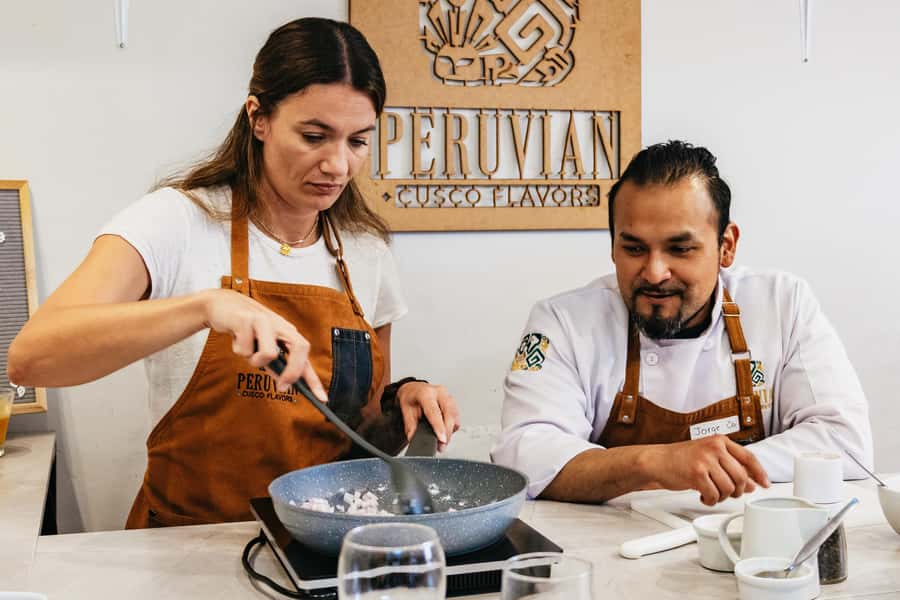
The activity lasts four hours. Starting times vary, so check the available schedule when booking. Because the experience includes a market visit, walking, cocktails, cooking, and a full meal, avoid placing it immediately before another fixed tour.
A four-hour class can feel long if you are not interested in food. For anyone who enjoys cooking, eating, and conversation, the pace should feel full rather than wasteful. Go with an empty stomach. You will prepare and eat more food than the short description might suggest.
The group limit of 10 is a good middle ground. You get company at the table, but the chef can still offer help. Smaller groups may feel more personal, while a full group will bring more conversation and shared laughter.
This can be a smart activity for a day when you are adjusting to Cusco. It keeps you in the city center, involves some walking but no major excursion, and gives you a relaxed way to learn about local food. You should still judge your own energy and comfort, especially if you have just arrived.
Who will get the most from this experience
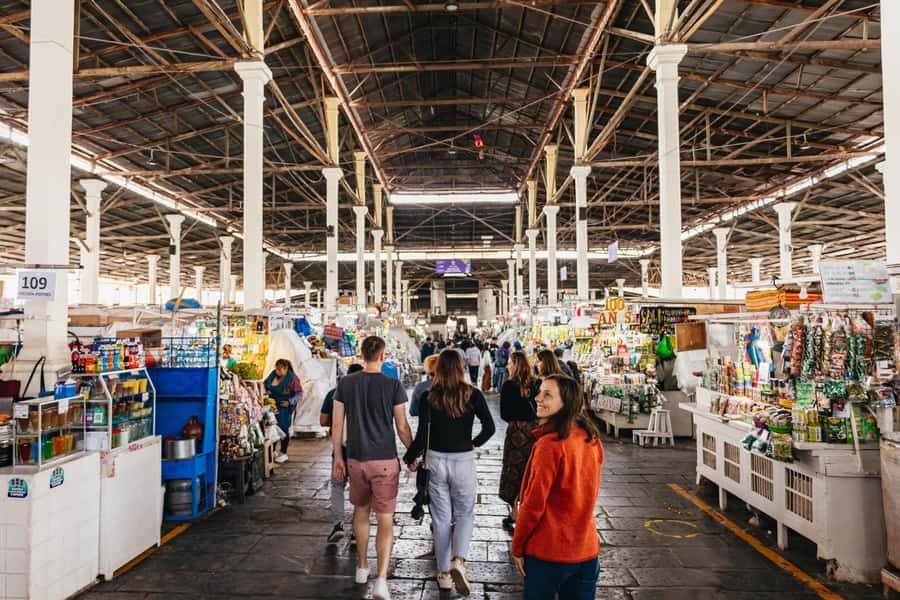
I would choose this class for you if food is one of the main ways you understand a place. The market adds local context, and the cooking gives you something active to do rather than another hour of looking at buildings.
It suits couples, friends, solo visitors, and families with children aged 10 or older. It is also a useful choice for a mixed-diet group because vegetarian, vegan, gluten-free, and alcohol-free options are available.
It is less suitable for anyone wanting a serious chef-training session. Much of the work involves preparation, mixing, assembling, and plating. You get a taste of Peruvian cooking and a meal you helped create, not a formal qualification or an advanced culinary course.
You should also be comfortable with English instruction and a market setting. If you dislike shared meals, food tastings, or group activities, the social format may not suit you.
Is the $67 price fair?
At $67 per person, I consider this good value if you take part in the entire four-hour experience. The price includes the professional chef, market tour, ingredients, two cocktails, three dishes, water, and picarones tasting.
The strongest value is the combination of experiences. A basic cooking class might skip the market, while a guided market visit might end after tasting a few foods. Here, the market explains the ingredients and the studio turns them into a meal.
The price is less compelling if you mainly want to eat. You are paying for instruction and participation, so choose a restaurant instead if you would rather sit back. You also need to count the four-hour time commitment, which is significant during a short Cusco stay.
Free cancellation up to 24 hours before the activity and the option to reserve without paying immediately make planning easier. Check the exact start time and state dietary needs when you book.
Should you book the Cusco cooking class?
Yes, if you want an active, food-focused way to understand Cusco. The visit to San Pedro Market, the pisco cocktails, the three-course cooking session, and the picarones create a complete half-day rather than a single cooking demonstration.
I especially recommend it for an adjusting day in Cusco, for people curious about Peruvian ingredients, and for anyone who wants recipes to take home. Chef Jesus, Jorge, and Eric have each been associated with warm, informative sessions, though your specific guide may vary.
Skip it if you want advanced cooking technique, a private class, or a quiet meal. For most others, the combination of market, kitchen, and shared table makes this one of the better food activities in the city.
FAQ
Where does the Cusco cooking class meet?
Meet at Door Number 1 at San Pedro Market in Cusco.
How long does the experience last?
The activity lasts four hours. Starting times vary, so check availability when booking.
What dishes will I prepare?
You will learn to prepare cebiche, causa limeña, and quinoa tamal. The experience also includes a tasting of picarones with honey.
Are drinks included?
Yes. Two Peruvian cocktails are included, along with water. Non-alcoholic cocktail recipes are available.
Are vegetarian, vegan, or gluten-free options available?
Yes. Vegetarian, vegan, and gluten-free menus are available. Tell the chef about your requirements at the beginning of the activity.
Is the class offered in languages other than English?
No. The listed tour language is English.
Can children join the activity?
Children under 10 are not permitted. Participants must be at least 10 years old.
More Workshops in Cusco
- The First Class Machu Picchu Train by Inca Rail
★ 4.0 · 182 reviews - The Textile Workshop Experience in Cusco Region
★ 5.0 · 118 reviews - Sacred Valley Textile Workshop – Dyeing & Weaving in Cusco
★ 5.0 · 92 reviews - Chocolate Workshop in Cusco with Premium Organic Cacao
★ 5.0 · 75 reviews
More Shopping Tours in Cusco
- Pisac Indian Market and Ollantaytambo Fortress with Lunch
★ 4.5 · 395 reviews - Cusco City Sightseeing, San Pedro Market, Cathedral and Qorikancha Temple
★ 4.5 · 139 reviews - Cusco: Peruvian Cooking Class & Market Tour
★ 4.9 · 19 reviews - Lima: Historic Center Street Food, Market, and Eateries Tour
★ 4.9 · 216 reviews
Just added around Cusco
- Waqrapukara 1 day trekking + meals★ 3.9 · 3 reviews
- Zipline over the Sacred Valley Trip★ 5.0 · 11 reviews
- Valle Sur Cusco | half day★ 4.3 · 3 reviews
- Visit to the Cochahuasi Animal Sanctuary with rescued animal★ 4.1 · 4 reviews
- Visit Pisac from Cusco: Private Transport★ 4.6 · 9 reviews
- Maras and Huaypo lagoon by ATV from Cuzco | Local Operator★ 4.7 · 4 reviews
- Trek to Humantay Lake from Cusco★ 4.9 · 8 reviews
- Trek to Choquequirao 4 days★ 3.8 · 4 reviews
Cooking Classes, compared.
Cooking class and market tour with a local chef
Read our review →
Market Tour, Tasting of 35 Fruits, and 4-Course Peruvian Cooking Class in Lima
Read our review →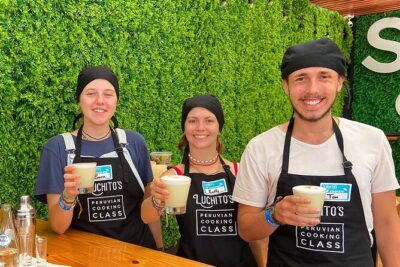
#1 Rated Cooking Classes with Local Market Tour & Pickup
Read our review →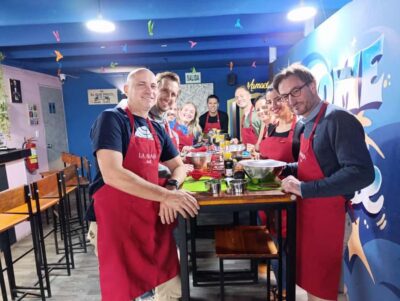
Amazing Peruvian Cooking Class Ceviche Seafood and Pisco Sour
Read our review →
Private Cooking + Market with Maido’s Former Creative Chef (+trasportation)
Read our review →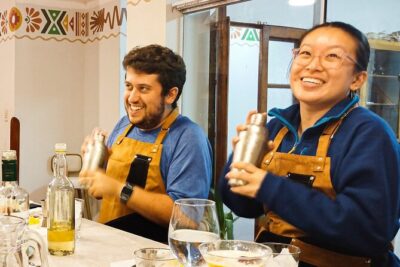
Vegan Peruvian Cooking Class Cocktails and Local Market in Cusco
Read our review →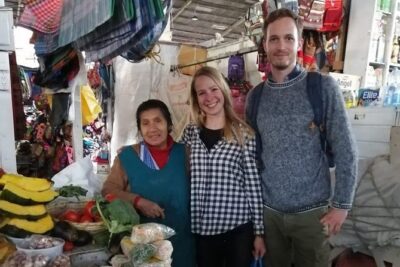
Browse the lists this tour appears in