
Reviewed · WORKSHOPS
The Textile Workshop Experience in Cusco Region
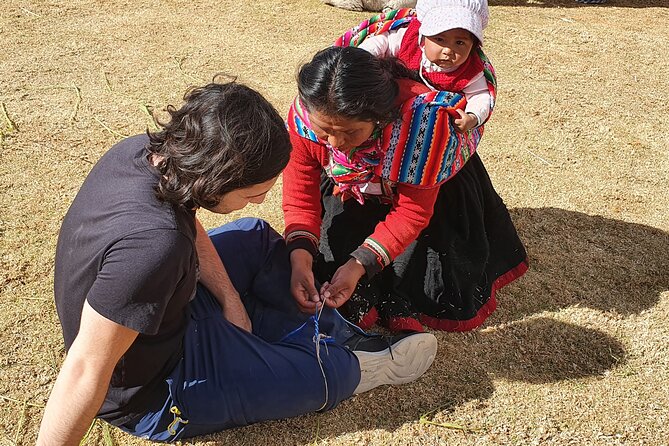
The most memorable part of this Cusco-area experience is that you do not simply watch a textile demonstration. You clean wool, prepare natural dyes, spin fiber by hand, and weave your own small piece. The process is genuinely hands-on, and you take home the yarn or bracelet you make.
I like two things right away: the workshop connects ordinary shopping in Peru with the skill behind each finished textile, and the setting gives you time with llamas and alpacas against the Andes Mountains. The main consideration is transport. The meeting point is outside central Cusco, and private transportation is not included, so you must arrange your own ride or ask Andean Colors about options.
In This Review
- Key points to know
- Why this four-hour workshop is different
- Arriving at Andean Colors in Racchi
- Cleaning wool and learning where textiles begin
- Making color from Andean plants and materials
- Spinning fiber by hand
- Weaving your bracelet or bookmark
- Meeting llamas and alpacas among the mountains
- A traditional Andean lunch at the family table
- Shopping for textiles and leather goods
- Is $79 a fair price?
- Who should book this experience?
- Practical details before you go
- Should you book the Andean Colors textile workshop?
- FAQ
- Where does the textile workshop begin?
- Where does the activity end?
- How long does the experience last?
- How much does the experience cost?
- Is transportation included?
- What does the price include?
- What is not included?
- Is this a private activity?
- Can I cancel for a full refund?
Key points to know
- You take part in every main textile step: Clean wool, create dye, spin fiber, and weave a bracelet or bookmark.
- Natural dyes make the lesson memorable: Plants, moss, and even cactus insects can produce surprising colors.
- The animals are part of the visit: Feed llamas and alpacas fresh grass, then enjoy a short walk with them.
- Lunch is included: Expect traditional Andean food prepared on site, with dietary needs worth sharing in advance.
- The setting is rural and photogenic: You look out toward mountain scenery and countryside rather than city streets.
- The boutique supports local craft work: Handmade textiles and leather goods are available, with proceeds supporting artisan mothers.
Why this four-hour workshop is different
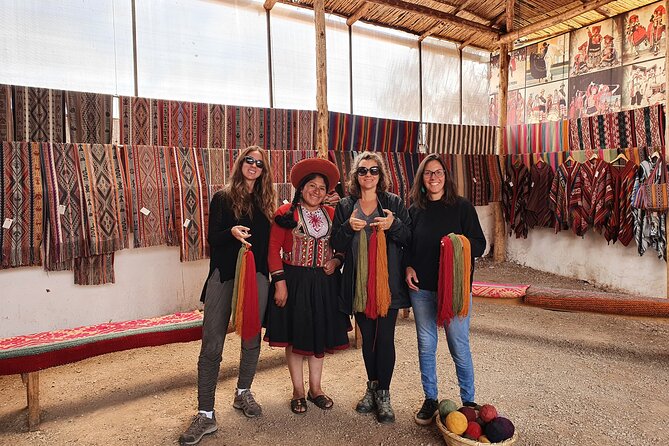
Cusco is full of textile shops and short demonstrations. Those can be useful, but many leave you holding a finished product without understanding how it was made. At Andean Colors, you work backward from the finished bracelet to the raw material.
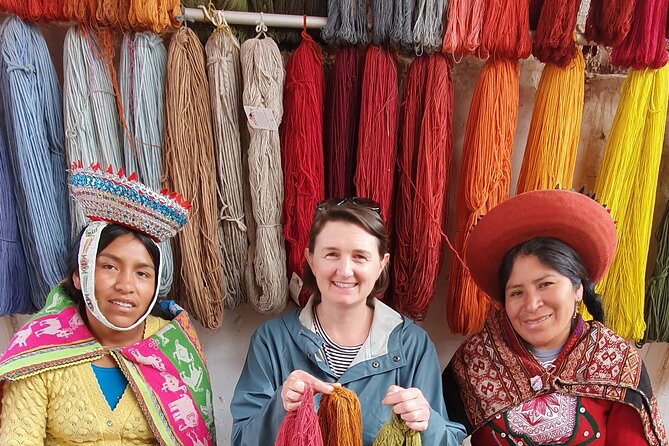
The lesson covers cleaning wool, preparing and applying dyes, spinning fiber, and weaving. You may handle wool from alpacas, learn how the fibers are prepared, and use simple traditional tools rather than watching a machine do the work. One especially striking detail is how ordinary natural materials create color. Leaves can produce green, dried moss can produce yellow, and insects found on cactus can create purple shades. Even pink dye can come from cactus.
That connection between the local environment and the finished cloth is the heart of the activity. You begin to understand why a finely made poncho, hat, glove, or woven belt costs more than a factory-made souvenir. The work is slow, repetitive, and precise. A bracelet may be small, but it represents a long chain of decisions and manual skill.
The experience is private, so only your own group takes part. That matters here. Spinning and weaving require patient instruction, and a smaller setting lets the guide correct your hand position and answer questions without rushing you along.
A few more Cusco trips to weigh up
- Cusco: Peruvian Cooking Class, Cocktails & Local Market Tour
★ 4.9 · 512 reviews - Cooking class and market tour with a local chef
★ 5.0 · 186 reviews - The First Class Machu Picchu Train by Inca Rail
★ 4.0 · 182 reviews
Arriving at Andean Colors in Racchi
The workshop begins at Andean Colors in Racchi ayllu, postal code 08670, Peru. This is not a central Cusco attraction that you can casually fit between a plaza visit and dinner. You need to plan the journey to the meeting point.
Public transportation is nearby, and some people have reached the site that way. You can also arrange transportation through the provider, but that cost is separate from the $79 activity price. One booking arranged a round trip from a Cusco hotel for $80, though you should confirm the current price and pickup details directly with Andean Colors rather than treat that figure as a standard fare.
This extra planning is the biggest practical weakness of the experience. The workshop itself lasts about four hours, but the drive from Cusco can add substantial time. One account described the trip as about an hour, while adding Maras and Moray made the outing much longer. Those sites can be combined if you arrange it, but that becomes a full day rather than a simple half-day visit.
The provider has earned praise for clear communication about transport and schedules. Miguel has helped visitors organize rides, and the team has also assisted people using public transport. Still, send your arrival plan before the day of the activity. A beautiful rural workshop is less enjoyable if you are unsure how you will get back to Cusco.
Cleaning wool and learning where textiles begin
The textile lesson starts with the raw material rather than a polished garment. You learn how wool is cleaned and prepared before it becomes thread. This is a useful correction to the way Andean textiles are often presented in shops, where the color and pattern receive all the attention.
The work is simple to describe but harder to do well. Wool must be handled carefully, and the fiber needs to be prepared before it can be spun. The instructors explain each stage with patience, then give you a turn.
Paulita, also referred to as Paola in some accounts, has guided this part of the experience with a gentle teaching style. Miguel, Marco, and other members of the Andean Colors team also help with the workshop and meal. The staff’s names may vary depending on who is working that day, but the experience is designed around personal instruction rather than a large scripted presentation.
You should not expect to become a skilled weaver in four hours. The value is in trying the work yourself. When the thread slips or the weave becomes uneven, you see how much practice lies behind the neat textiles sold in Cusco.
Making color from Andean plants and materials
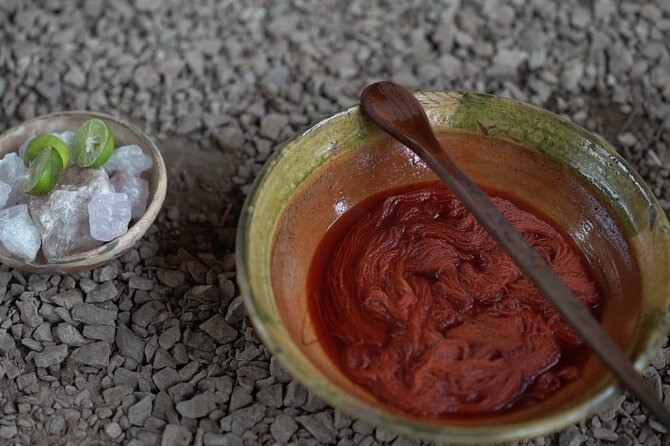
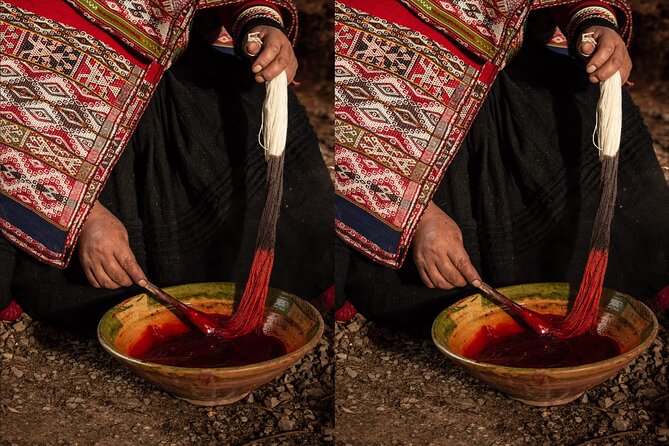
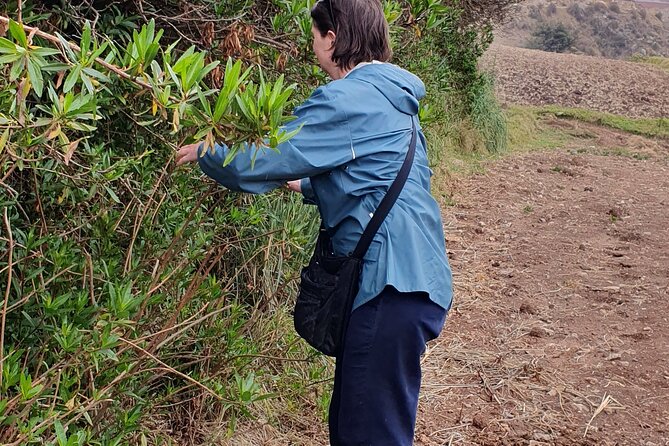
Natural dyeing is the most eye-opening stage for many people. You may gather leaves or other plant material, then see how it is prepared to color the yarn. This gives the activity a clear connection to the surrounding countryside.
The available materials and exact colors can vary, but examples include leaves for green, moss for yellow, and cactus insects for purple. Pink tones can also come from cactus. These details make the lesson more than a craft class. You learn how local materials, animal fiber, heat, and time work together.
The dyeing process also gives you a better sense of why traditional textiles can have subtle, varied colors. A synthetic souvenir may offer a bright, uniform shade. Natural dyeing produces a closer relationship between material and color, with results that depend on what is gathered and how it is prepared.
You are not asked to sit back while someone else performs the interesting part. You participate in the dyeing, then receive the yarn you worked on. That small souvenir is one of the strongest reasons to choose this activity over a standard textile sales stop.
Same valley, a completely different kind of day:
- Cusco: Humantay Lake Tour with Breakfast and Buffet Lunch
★ 4.9 · 2,976 reviews - From Cusco: Sacred Valley & Maras Salt Mines Tour with Lunch
★ 4.8 · 2,227 reviews - From Cusco: Moray, Maras Salt Mines & Chinchero Weavers Tour
★ 4.8 · 1,925 reviews - From Cusco: Full-Day Group Tour of Machu Picchu
★ 4.7 · 1,767 reviews
Spinning fiber by hand
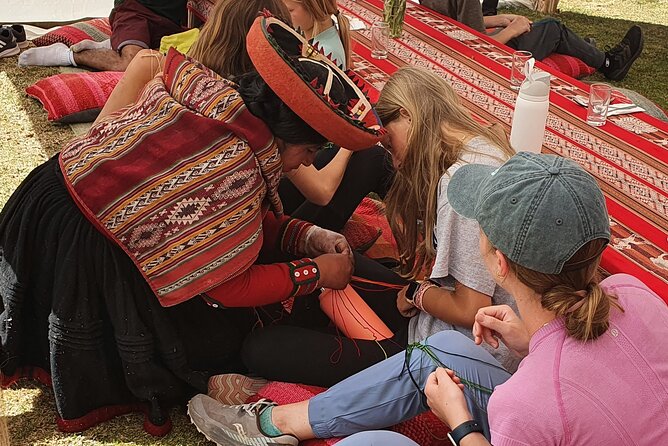
After cleaning and dyeing, you learn to turn the fiber into yarn. The traditional method uses your hands and a simple drop-spindle-like tool that resembles a top with a stick attached. It is not a modern spinning wheel.
This takes coordination. You must keep the fiber feeding evenly while the tool twists it into thread. The result may not be perfectly uniform, and that is part of the lesson. You feel the difference between seeing a spinning demonstration and controlling the fiber yourself.
The guides adjust the pace to the group. Children as young as eight have taken part with help, and adults who do not normally choose craft activities have also enjoyed this stage. Families should expect some assistance rather than assume children will manage every step alone.
The activity works well for solo visitors, too. One person who attended alone felt personally cared for because the teaching remained attentive rather than becoming a group performance. Since the experience is private, solo participation should not feel awkward.
Weaving your bracelet or bookmark
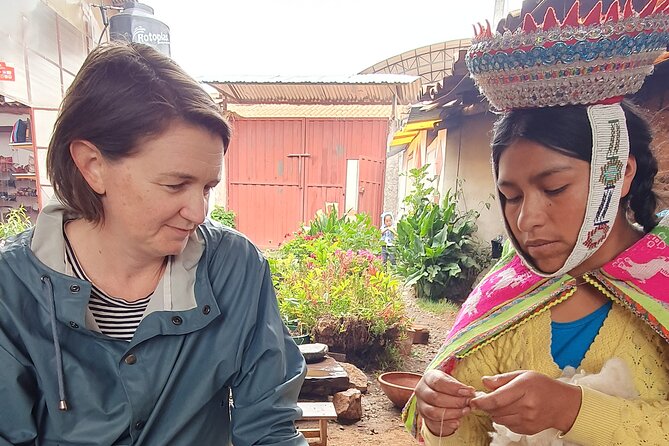
You then use the yarn to create your own bracelet or bookmark. The workshop provides wool, dyes, and fabric tools, so you do not need to bring craft supplies.
This is the point when all the earlier steps come together. You have seen the raw wool, helped prepare color, and spun fiber into thread. Now you work with a loom or weaving method based on ancient Andean techniques.
Do not expect a large textile in four hours. The finished item is modest, but it is personal. You keep the bracelet or bookmark, along with yarn you dyed in the process. That makes the souvenir more meaningful than a product bought without context.
I also like that the lesson does not treat weaving as decoration alone. The team explains its cultural roots and the care involved in preserving the craft. You leave with a clearer eye for the patterns and materials you see elsewhere in the Cusco Region.
Meeting llamas and alpacas among the mountains
The animals add a light, friendly change of pace after the concentration of the workshop. You receive fresh grass to feed llamas and alpacas, and you may walk with them around the property or toward an overlook.
The setting is a major part of this stop. You see pasture, countryside, and mountain views, with the Andes forming a natural backdrop for photographs. The atmosphere is calmer than a busy city visit, and the short walk gives you time outside without turning the day into a demanding hike.
Llamas, alpacas, and baby goats may be present. The animals are not just placed beside you for a quick photograph. Feeding and walking with them gives the encounter a more natural rhythm, though you should still follow staff instructions around the animals.
Families often find this the easiest part for children to enjoy. Adults get good photos, while children have a simple activity between the more detailed textile lessons. If you love animals, this section may be the reason you remember the day. If you are mainly interested in weaving, it provides a pleasant break rather than taking over the workshop.
A traditional Andean lunch at the family table
Lunch is included, and it is served as part of the visit rather than as a restaurant stop you make on your own. The meal has been described as homemade and traditionally Andean, with examples including soup, chicken, potatoes, carrots, and rice.
The food is generally one of the strongest parts of the experience, though expectations should stay sensible. It is a local meal prepared with care, not a formal tasting menu. One person found it pleasant but less impressive than expected, so lunch quality may depend on your personal taste and the menu that day.
Miguel has taken the initiative to ask about dietary restrictions before arrival. That is useful if you need gluten-free food or must avoid shellfish or red meat. You should still explain your needs when booking and confirm them again before the meal, since the published price does not promise a specific menu.
Eating with the hosts adds context that you do not get from a quick buffet. You can ask about the area, the textile work, and the purpose behind Andean Colors. The site also has a bathroom and accepts credit cards, two small conveniences that matter at a rural stop.
Shopping for textiles and leather goods
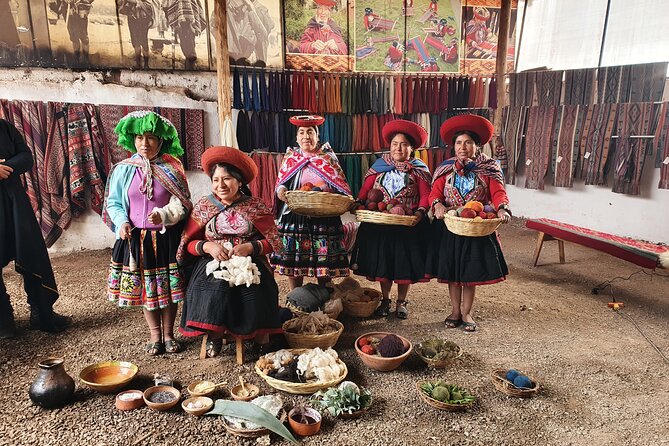
The large boutique gives you time to browse after learning how much work goes into the craft. It carries handmade textiles and fine leather goods, including the kinds of ponchos, capes, hats, gloves, and other items commonly sold around Cusco.
Shopping here can be a better value than buying similar goods in the main plaza, but you should still compare materials, workmanship, and prices before purchasing. Some items sold in central Cusco were described as costing roughly twice as much for lower quality. That is a useful warning, though prices and stock change.
The social purpose also affects the value of a purchase. Andean Colors supports a project connected with single artisan mothers and women from local communities. Buying directly gives you a clearer link to the people and work behind the product.
You should not feel pressured to shop. The boutique is an option, not the whole reason to come. If you already bought clothing in Cusco, the workshop may still be worthwhile for the practical lesson, lunch, animals, and mountain setting.
Is $79 a fair price?
At $79 per person, the price includes more than a short craft demonstration. You receive about four hours of instruction, the materials and tools for your bracelet or bookmark, lunch, and grass for feeding the animals. You also get access to the boutique and the surrounding property.
The value is strongest if you want participation rather than passive sightseeing. A visitor focused only on seeing alpacas can probably find a cheaper animal encounter. Someone who only wants to buy a textile may not need a four-hour workshop. But if you want craft instruction, food, animals, scenery, and a small handmade keepsake in one outing, the cost is reasonable.
Transportation is the important extra expense. Since it is not included, budget for public transportation or a private ride. If you arrange a car, confirm whether the quoted amount covers waiting time, return transport, and any added stops such as Maras and Moray.
The activity is booked, on average, about 32 days ahead. That suggests planning early, especially if you need a particular date or transport help. At the same time, the team has accepted last-minute bookings, including one made the day before. Availability is never guaranteed, so early booking remains the safer choice.
Who should book this experience?
I would choose this for families, couples, solo visitors, and anyone who wants a quieter alternative to another major archaeological stop. Children around eight and older have taken part successfully, with staff helping when needed.
It is also a good choice for your first full day in Cusco if you want a calm cultural activity while adjusting to altitude. You still need to take altitude seriously, but the workshop is less strenuous than a full hiking day. There is a short walk, not an all-day trek.
You do not need to speak Spanish to take part. Miguel speaks fluent English and Spanish, and the team has welcomed visitors with minimal Spanish. That said, a few basic Spanish words will make any rural visit warmer.
This may not suit you if you want an intense outdoor adventure, a large-scale cultural show, or a guaranteed gourmet lunch. The workshop moves at a relaxed pace, and the finished craft is small. Its appeal comes from time, care, and participation.
Practical details before you go
The activity starts and ends at Andean Colors in Racchi ayllu. It is a private activity for your group, and most people can participate. The meeting point is near public transportation, but private transportation is not part of the listed price.
Bring a plan for getting there and back. If you want help arranging a car, contact the team soon after booking. Also share dietary restrictions in advance, especially if you avoid gluten, shellfish, or red meat.
Confirmation is provided at booking. Free cancellation is available if you cancel at least 24 hours before the local start time. Cancellations or changes made inside that 24-hour window are not accepted for a refund.
Soda, bottled water, and breakfast are not included. Pack water for the day, and remember that the Andes can feel cool even when the sun is strong. Comfortable clothing will make the wool work and short animal walk easier.
Should you book the Andean Colors textile workshop?
Yes, if you want to understand Andean textiles by making part of one yourself. The full chain from wool to woven keepsake gives this four-hour visit more substance than a quick demonstration, while the animals, lunch, boutique, and mountain views keep the day varied.
Book it early if you need transport or a fixed date. Ask about the pickup cost, confirm food needs, and allow extra time if you add Maras or Moray. I would skip it only if your schedule is too tight for the trip to Racchi or if you are looking for a strenuous outdoor activity.
For a hands-on cultural experience near Cusco, this is a strong use of half a day and a meaningful way to support local textile work.
FAQ
Where does the textile workshop begin?
The activity begins at Andean Colors in Racchi ayllu, 08670, Peru.
Where does the activity end?
It ends back at the Andean Colors meeting point.
How long does the experience last?
The workshop lasts approximately four hours.
How much does the experience cost?
The listed price is $79 per person.
Is transportation included?
No. Private transportation is not included, though Andean Colors can help arrange transportation. Public transportation is also nearby.
What does the price include?
The price includes the textile workshop, lunch, wool, dyes, fabric tools, materials for making a bracelet or bookmark, and fresh grass for feeding llamas and alpacas.
What is not included?
Breakfast, soda or pop, bottled water, and private transportation are not included.
Is this a private activity?
Yes. Only your group participates in the activity.
Can I cancel for a full refund?
Yes, if you cancel at least 24 hours before the experience start time. Cancellations or changes made less than 24 hours in advance are not accepted for a refund.
Just added around Cusco
- Waqrapukara 1 day trekking + meals★ 3.9 · 3 reviews
- Zipline over the Sacred Valley Trip★ 5.0 · 11 reviews
- Valle Sur Cusco | half day★ 4.3 · 3 reviews
- Visit to the Cochahuasi Animal Sanctuary with rescued animal★ 4.1 · 4 reviews
- Visit Pisac from Cusco: Private Transport★ 4.6 · 9 reviews
- Maras and Huaypo lagoon by ATV from Cuzco | Local Operator★ 4.7 · 4 reviews
- Trek to Humantay Lake from Cusco★ 4.9 · 8 reviews
- Trek to Choquequirao 4 days★ 3.8 · 4 reviews
Workshops, compared.
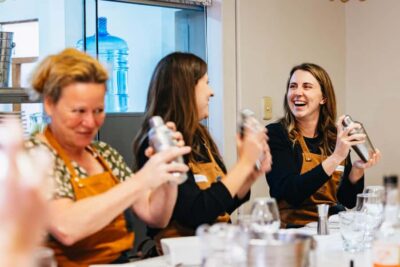
Peruvian Cooking Class, Cocktails & Local Market Tour
Read our review →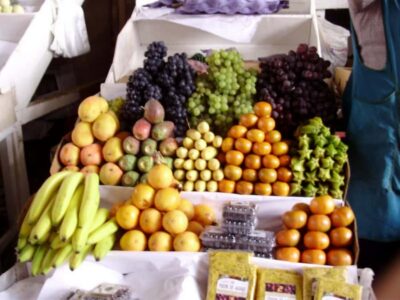
Cooking class and market tour with a local chef
Read our review →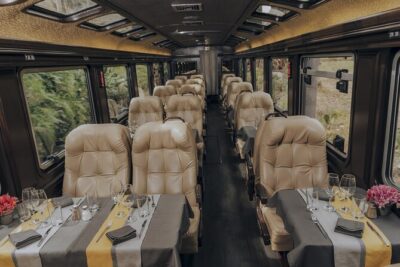
The First Class Machu Picchu Train by Inca Rail
Read our review →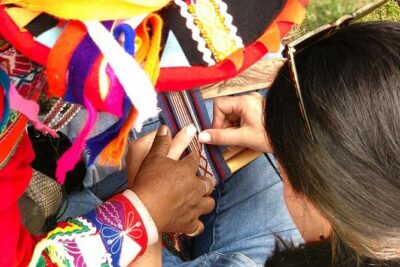
Sacred Valley Textile Workshop – Dyeing & Weaving in Cusco
Read our review →
Market Tour, Tasting of 35 Fruits, and 4-Course Peruvian Cooking Class in Lima
Read our review →
Chocolate Workshop in Cusco with Premium Organic Cacao
Read our review →
#1 Rated Cooking Classes with Local Market Tour & Pickup
Read our review →Browse the lists this tour appears in