
Reviewed · SACRED VALLEY TOURS
Sacred Valley Textile Workshop – Dyeing & Weaving in Cusco
This is not a textile demonstration where you sit politely and watch someone else work. You collect plants, prepare natural dyes, spin alpaca wool, and try a backstrap loom under the patient guidance of Ruth Pimentel and other master weavers from the Sacred Valley. Your finished piece may be modest, such as a bracelet, bookmark, or headband, but you will understand why Andean textiles take so much time and skill.
I like the real hands-on work and the generous family setting. I also like that the day includes private transport, a shared lunch, translation, and time with the women who keep these methods alive. The main drawback is the road time: the trip from Cusco can take about an hour to an hour and a half each way, so this is a full-day commitment rather than a quick workshop.
In This Review
- Key points to know before booking
- Meeting Ruth Pimentel in the Sacred Valley
- Collecting plants for natural dyes
- From alpaca fiber to colored yarn
- Learning the backstrap loom
- A shared lunch with the weaving family
- Traditional clothing, dancing, and the finished piece
- What the $420 price includes
- The long drive and the full-day schedule
- Who will enjoy this Cusco textile workshop
- Should you book the Sacred Valley weaving workshop?
- FAQ
- How long does the textile workshop last?
- What time does pickup begin?
- What will I make during the workshop?
- Is lunch included?
- Is this a private activity?
- Can I cancel for a full refund?
Key points to know before booking
- Natural dyeing starts outdoors: You may walk out to gather leaves, herbs, or other seasonal plants for the dye bath.
- Ruth Pimentel leads the craft work: She is presented as Peru’s only UNESCO-Awarded Indigenous Master Weaver.
- You make your own textile: Expect patient instruction, but also expect the weaving to be challenging.
- Lunch is part of the cultural exchange: You eat with the artisans, not simply at a restaurant along the route.
- The drive is scenic but long: Pickup begins at 8:30 am, and the full outing lasts about eight hours or more when road time is included.
- The activity is private: Only your own group participates, making it easier to ask questions and work at your own pace.
Meeting Ruth Pimentel in the Sacred Valley
The day begins with pickup in Cusco at about 8:30 am. Private transport takes you toward the Sacred Valley and the workshop area near Calca, with countryside views along the way. Scenic stops may be possible, and the drive itself helps you leave behind the city and understand the rural setting where these textile traditions belong.
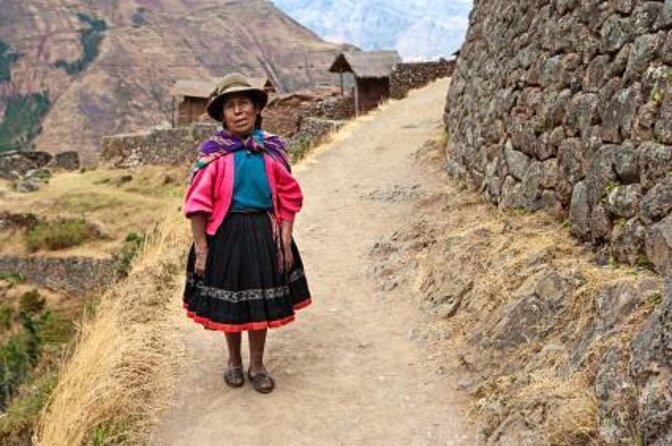
At the atelier, Ruth Pimentel and members of her weaving family welcome you. Ruth is described as a guardian of Peru’s living textile heritage, and her UNESCO recognition gives the introduction added weight. This is not only a lesson in color and technique. It is also an explanation of how Andean women have passed skills, patterns, plant knowledge, and cultural meaning from one generation to the next.
An interpreter or bilingual facilitator helps bridge the language gap. Names associated with the workshop include Nayda, Delia, Edwin, and several master weavers such as Julia, Maria, Dalia, Martina, and Ruth. The exact people present can vary, but the format is clear: you work directly with local artisans, with translation available throughout the day.
More sacred valley tours in Cusco:
- From Cusco: Sacred Valley & Maras Salt Mines Tour with Lunch
★ 4.8 · 2,227 reviews - From Cusco: Moray, Maras Salt Mines & Chinchero Weavers Tour
★ 4.8 · 1,925 reviews - Cusco: Sacred Valley, Pisac, Ollantaytambo, Salt Mines Moray
★ 4.6 · 1,058 reviews
Collecting plants for natural dyes
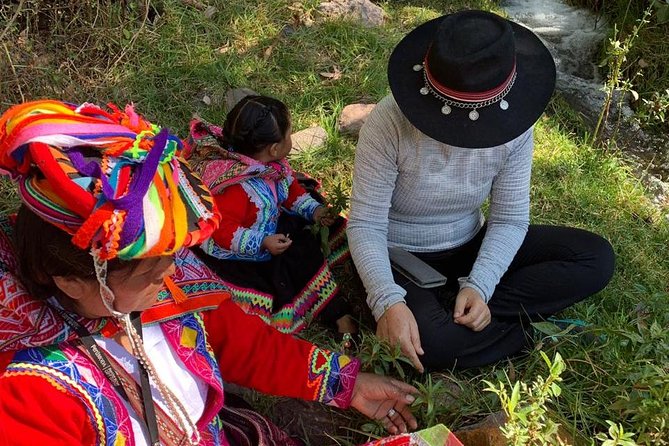
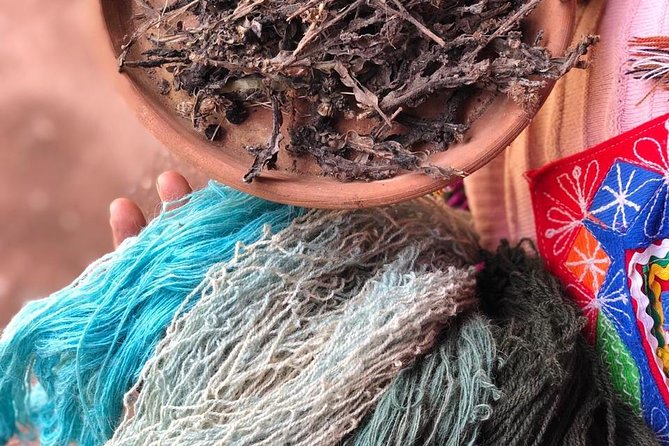
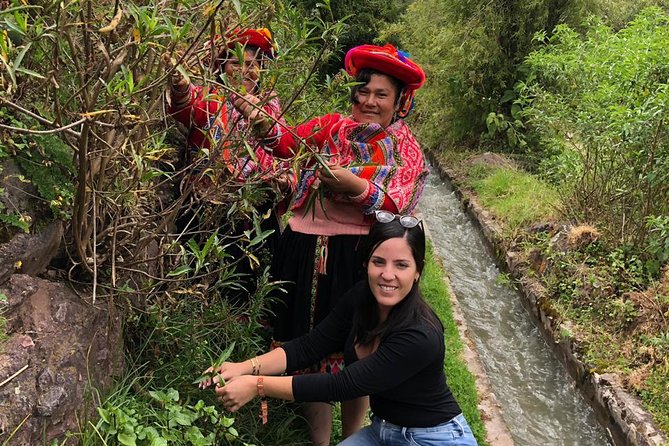
One of the best parts comes before the loom. You walk near the workshop to collect leaves, herbs, or other plant material for dyeing. The women explain which plants can color yarn and which are also used for food, medicine, or tea.
This short walk gives the dyeing process a useful sense of place. Instead of seeing a finished skein and hearing that it was naturally dyed, you begin with the raw material. You handle the leaves, prepare them for the dye bath, and see how a plant becomes part of the textile process.
The materials are seasonal, so you should not expect a fixed menu of colors or plants. That is part of the point. Andean textile work responds to what grows locally and what the weavers know how to use at that time of year.
You may also be offered a small snack or a hot coffee or tea. One account describes gathering herbs for a drink, while other parts of the day include fruit and local food. The details can change, but the food is treated as part of the welcome rather than an afterthought.
From alpaca fiber to colored yarn
The workshop moves through several stages of textile production. Depending on the day’s exact lesson, you may see or try making yarn from alpaca wool, spinning the fiber, winding it into balls, and preparing it for dyeing.
The material is described as premium baby-alpaca yarn, while some sessions also explain how alpaca wool is turned into usable yarn. This distinction matters because the activity is not just about decorating a finished product. You get a glimpse of the labor that comes first.
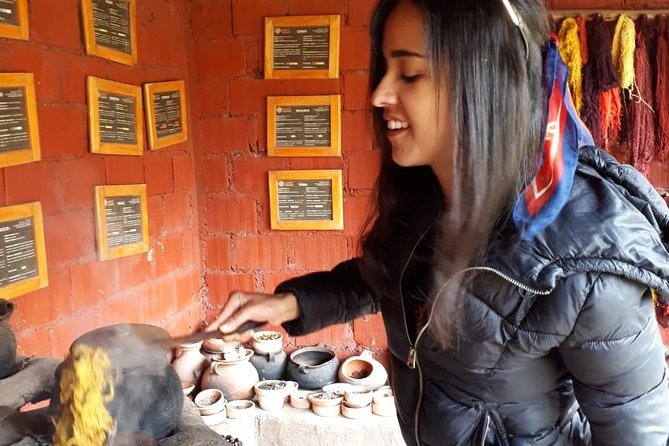
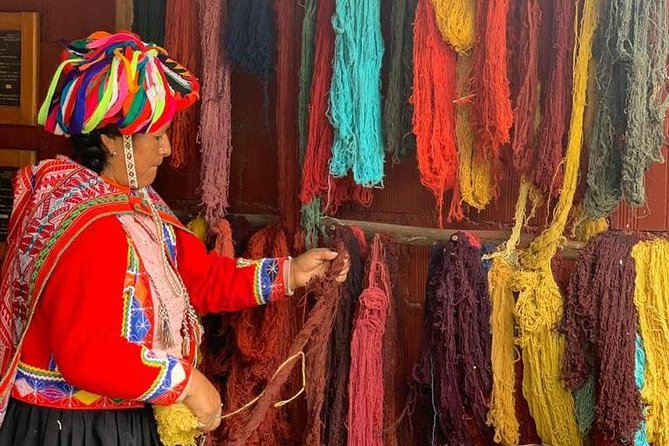
Next comes the dye bath. You help prepare the natural ingredients and dye the yarn using traditional methods. The final colors may be softer and less uniform than factory-dyed wool. That variation is a feature, not a fault. It reflects the plant material, the process, and the hand of the person making it.
You may take home yarn that you dyed yourself. This is a nice extra because it gives you a physical reminder of a stage you completed, even if your woven piece is small. It also makes the workshop more satisfying for anyone who already knits, weaves, spins, or works with fiber.
Learning the backstrap loom
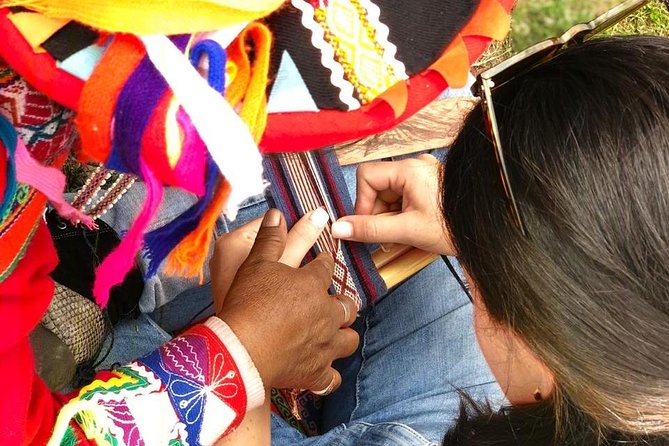
After the yarn is ready, the master weavers show you how to set up and use a traditional backstrap loom. The loom is compact and operated close to the body, often with the weaver seated on the floor. You should be prepared to sit low for a few hours.
The women first demonstrate the movements, then help you begin. You may choose several colors of prepared yarn and work toward a bracelet, bookmark, headband, or similar small piece. The exact project varies, and the scale is practical for a one-day class.
Do not expect to master the technique quickly. Several parts must work together: tension, thread placement, pattern control, and steady hand movements. The weaving can feel difficult at first, but that difficulty is one of the workshop’s rewards. A small band suddenly reveals the precision behind the broad, complex textiles sold throughout the Andes.
The artisans offer help when you need it. You are not left to struggle alone, but you also do not simply receive a finished item. Your piece may show a little unevenness. That is appropriate. It tells you that you made it with instruction, not that it came off a production line.
A few more Cusco trips to weigh up
- Cusco: Peruvian Cooking Class, Cocktails & Local Market Tour
★ 4.9 · 512 reviews - Cooking class and market tour with a local chef
★ 5.0 · 186 reviews - The First Class Machu Picchu Train by Inca Rail
★ 4.0 · 182 reviews - The Textile Workshop Experience in Cusco Region
★ 5.0 · 118 reviews
A shared lunch with the weaving family
Lunch usually breaks up the craft work and gives you time to talk. The meal is included, and the setting is communal, with the artisans and guides eating together.
The food has been described as fresh, home-cooked, and generous. Examples from the day include fruit such as pineapple, passion fruit, papaya, and avocado, as well as local staples including yucca. One participant also encountered guinea pig during an optional food stop, but that is not presented as a fixed part of the workshop, so do not book this expecting it.
The lunch matters because conversation continues the lesson. You can ask about the community, family traditions, Quechua words, clothing, and the work involved in making larger textiles. Translation helps, though the exchange is also carried by gestures, demonstrations, and shared food.
If you are uncomfortable with a family-style meal or prefer a tightly scheduled sightseeing day, this slower format may not suit you. For me, it is one of the strongest reasons to choose this experience over a standard stop at a craft market.
Traditional clothing, dancing, and the finished piece
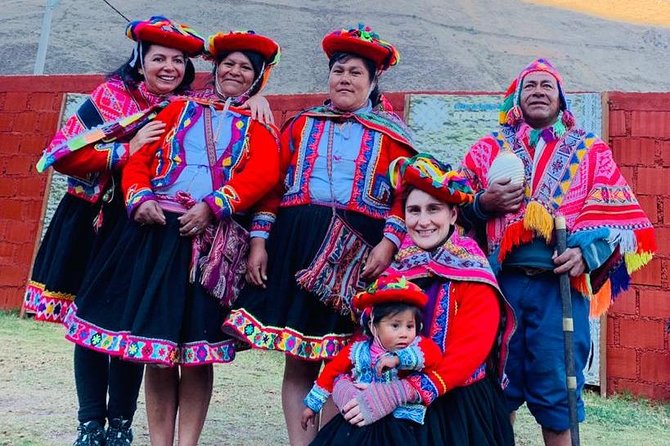
Near the end of the day, the guide may explain traditional clothing and help you try some garments. A short dance can follow. This is a light, social ending after several hours of concentrated handwork.
The dance is not the main reason to book the workshop, but it helps connect the textiles to daily life. Clothing here is not merely decorative. The colors, patterns, and construction form part of how Andean communities express identity.
Your small woven item is completed with assistance from the master weavers. The finished creation is presented in elegant packaging with a signed provenance card according to the activity description. Depending on the session, you may also return with naturally dyed yarn, a bracelet, a bookmark, or a woven headband.
There is usually time to look through the workshop store. The products are handmade by the women, and direct purchasing gives you a chance to buy something tied to the people and techniques you have just encountered. Prices are not specified, so bring a payment method that works for local purchases if you plan to shop.
What the $420 price includes
At $420 per person, this is an expensive day compared with a simple Sacred Valley excursion or a market visit. The value comes from the private format and the amount of personal instruction, not from the size of the finished textile.
Your price covers an approximately eight-hour experience, private pickup and return transport, the workshop, guidance from master weavers, lunch, and coffee or tea. You also receive your own textile creation, and you may take home yarn dyed during the class.
The private arrangement matters if you want to ask many questions or need extra help with the loom. Solo participants can take part, and families have also found the work accessible with guidance. The activity description says most people can participate, while service animals are allowed and the meeting area is near public transportation.
I would judge the price by your interests. If you only want a souvenir, the cost is hard to justify. If you care about textiles, natural dyes, Quechua culture, family-run workshops, or respectful cultural contact, the value is stronger. You are paying for time, transport, teaching, food, and access to a process that is rarely explained in such detail.
The long drive and the full-day schedule
The biggest practical issue is the distance from Cusco. The ride to the workshop area has been described as roughly one hour to one and a half hours, and the return trip makes the day longer than the listed workshop hours might suggest.
Plan for an early start and a full day. The countryside views are part of the experience, and the private driver can make the journey comfortable, but this is not a quick activity to squeeze between major Cusco sights.
The timing can work well during your first days in the region, when a calm craft day may help you adjust to the altitude. One participant found it a good way to spend an acclimatization day. Still, the altitude can affect people differently, and the workshop itself requires sitting, walking outdoors, and concentrating with your hands.
Wear comfortable clothing and shoes suitable for a short walk. Since some weaving takes place on the floor, consider your knees, hips, and back before booking. The work is gentle in pace but not entirely effortless.
Cancellation is free up to 24 hours before the start time for a full refund. The activity needs good weather, and if poor weather causes cancellation, you are offered another date or a full refund.
Who will enjoy this Cusco textile workshop
I would choose this for:
- Anyone who works with fiber, sewing, knitting, tapestry, macramé, or other hand crafts.
- People who want a cultural activity beyond ruins and standard sightseeing.
- Families who enjoy making something together.
- Solo visitors who want a warm, guided day with local hosts.
- Visitors who value direct contact with artisans and are comfortable with a slower pace.
- Shoppers who want to understand how a textile is made before buying one.
You do not need prior weaving experience. The instructors expect beginners and provide help. But you should bring patience. The point is not to produce a perfect piece in record time. The point is to feel how much skill sits inside a small strip of patterned cloth.
This may not be right for you if you dislike long drives, sitting on the floor, hands-on work, or an itinerary built around conversation instead of famous sights. It also is not ideal if your schedule allows only a few hours in the Sacred Valley.
Should you book the Sacred Valley weaving workshop?
Book it if you want a personal, craft-based day and can accept the long drive from Cusco. Ruth Pimentel’s connection to Andean textile traditions, the plant-dye walk, the shared lunch, and the chance to work at a backstrap loom make this far more substantial than a quick demonstration.
I would especially recommend it to textile enthusiasts, families, solo visitors, and anyone uneasy about staged cultural experiences. The small-group setting, translation, and direct work with the artisans give the day a thoughtful feel.
Skip it if your priority is archaeological sites, shopping, or a tightly packed sightseeing route. At $420, you should want the teaching and human connection as much as the finished bracelet or bookmark. If you do, this can become one of the most memorable days of a Cusco visit.
FAQ
How long does the textile workshop last?
The experience lasts approximately eight hours. With hotel pickup from Cusco and the drive to the workshop near the Sacred Valley, you should plan on a full day.
What time does pickup begin?
The stated start time is 8:30 am. Hotel pickup by private transport is offered in Cusco.
What will I make during the workshop?
You take part in making a small textile item such as a bracelet, bookmark, or headband. The exact project can vary. You may also take home yarn that you dyed during the activity.
Is lunch included?
Yes. Lunch and coffee or tea are included. The meal is shared with the artisans and guides at the workshop.
Is this a private activity?
Yes. Only your group participates in the private tour or activity.
Can I cancel for a full refund?
You can cancel at least 24 hours before the experience start time for a full refund. Cancellations or changes made less than 24 hours in advance are not accepted for a refund. If poor weather forces cancellation, you are offered another date or a full refund.
Just added around Cusco
- Waqrapukara 1 day trekking + meals★ 3.9 · 3 reviews
- Zipline over the Sacred Valley Trip★ 5.0 · 11 reviews
- Valle Sur Cusco | half day★ 4.3 · 3 reviews
- Visit to the Cochahuasi Animal Sanctuary with rescued animal★ 4.1 · 4 reviews
- Visit Pisac from Cusco: Private Transport★ 4.6 · 9 reviews
- Maras and Huaypo lagoon by ATV from Cuzco | Local Operator★ 4.7 · 4 reviews
- Trek to Humantay Lake from Cusco★ 4.9 · 8 reviews
- Trek to Choquequirao 4 days★ 3.8 · 4 reviews
Sacred Valley Tours, compared.
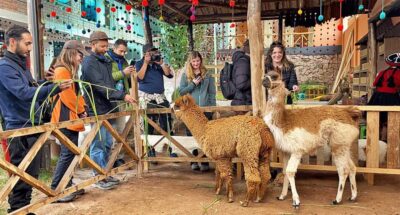
Sacred Valley & Maras Salt Mines Tour with Lunch
Read our review →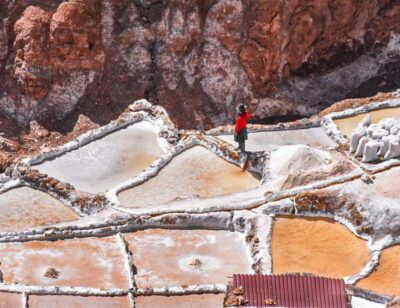
Moray, Maras Salt Mines & Chinchero Weavers Tour
Read our review →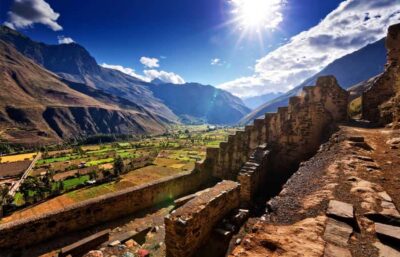
Sacred Valley, Pisac, Ollantaytambo, Salt Mines Moray
Read our review →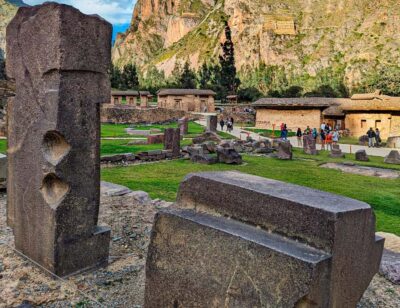
Chinchero,Moray & Salt Mines drop-off in Ollantaytambo
Read our review →

Pisac Indian Market and Ollantaytambo Fortress with Lunch
Read our review →
2-Day Trip to the Sacred Valley and Machu Picchu
Read our review →Browse the lists this tour appears in