
Reviewed · MACHU PICCHU TOURS
Small Group 5 Days Salkantay and Machu Picchu by Llactapata Tour
The best part of this five-day route is the change in scenery. You begin among the high, cold peaks of Humantay and Salkantay, then drop into warm forest and coffee country before approaching Machu Picchu by way of Llactapata, an Inca site with a striking view toward the citadel. It feels like a real journey, not simply a long walk to one famous ruin.
I especially like the small maximum group of nine, which makes it easier to keep a steady pace and ask questions. I also like the local coffee visit in Lucmabamba, where you see how beans are grown, dried, roasted, and prepared. The main caution is the physical demand: the first two days include high-altitude climbs, and the effort can feel front-loaded.
In This Review
- Key points to know before you book
- What the five-day route really feels like
- Day 1: Cusco to Soraypampa and Humantay Lake
- Day 2: The hard climb to Salkantay Pass
- Day 3: Coffee, cacao, and the farms of Lucmabamba
- Day 4: Llactapata and the walk to Aguas Calientes
- Day 5: First light at Machu Picchu
- What the $593 price includes
- Who should choose this trek?
- Should you book the Salkantay and Llactapata route?
- FAQ
- Where does the trek start?
- How long is the experience?
- What is the highest point on the route?
- Is Humantay Lake included?
- How large is the group?
- Is food included?
- Is accommodation included?
- Is transportation back to Cusco included?
- Do I need to bring a sleeping bag?
Key points to know before you book
- Salkantay Pass reaches 4,600 meters, so altitude is the central challenge of the trek.
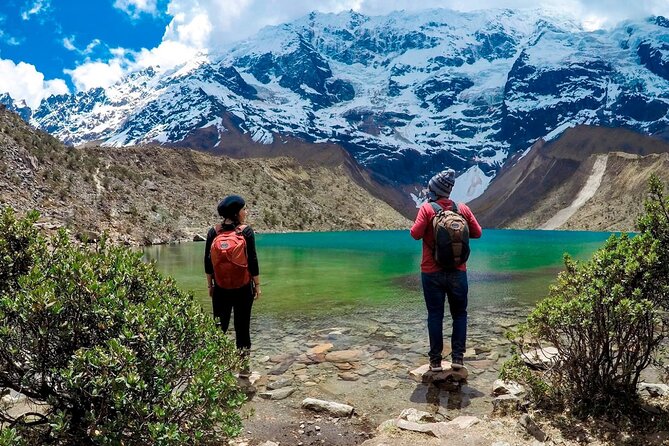
- Humantay Lake is an optional hike on Day 1, giving you a chance to add one of Peru’s best-known mountain views.
- Lucmabamba brings coffee, cacao, fruit plantations, and rural life after the stark high Andes.
- Llactapata gives you a quieter approach to Machu Picchu, with views of Machu Picchu Mountain and the Vilcanota Canyon.
- The group is limited to nine people, with a bilingual guide and horse support for up to 7 kilograms of personal equipment.
- The $593 price includes major transport, permits, meals, camping gear, and a private Aguas Calientes room, but several useful extras cost more.
What the five-day route really feels like
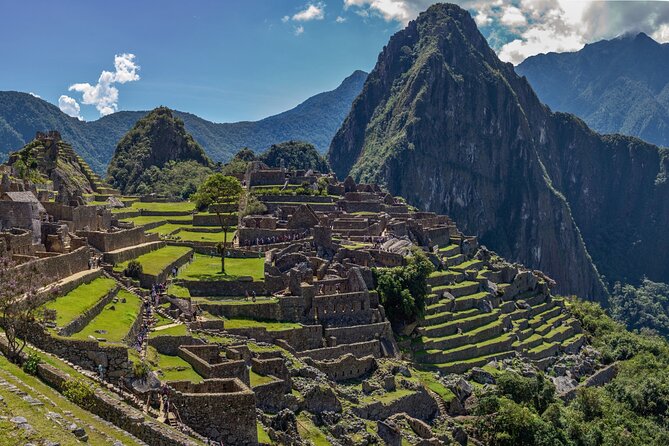
This is a point-to-point mountain trek with a dramatic shift in climate. You start near Cusco at high elevation, cross a serious mountain pass, descend through cloud forest, and finish by walking toward Machu Picchu from the west.
That variety is the reason to choose this route. The famous Inca citadel is only one part of the experience. You also get snow peaks, turquoise water, eucalyptus and mountain valleys, tropical vegetation, farms, archaeological remains, and a long final approach beside the railway corridor.
The route is not a gentle warm-up. You leave Cusco at 4:00 am, travel toward Mollepata, and begin hiking at Challacancha. A strong fitness level is required, and you should take the altitude seriously. The emergency horse included between Marcoccasa and Chaullay offers some reassurance, but it is not a substitute for preparation.
The small group helps. A guide can usually pay closer attention to different walking speeds, and the group atmosphere can become friendly quickly. Past groups have praised guides including Jainor, Carlos, Henry, Rolando, and Dario. Rolando received especially strong praise for his clear English, good humor, and ability to answer questions about Inca culture. Jainor was also singled out for patience and detailed explanations.
Guide assignments can change, so you should not assume a particular person is guaranteed. Still, the repeated praise for the guiding team points to one of the tour’s strongest features: the human side of a demanding trek.
More machu picchu tours in Cusco:
- From Cusco: Full-Day Group Tour of Machu Picchu
★ 4.7 · 1,767 reviews - Machu Picchu Day Trip from Cusco
★ 4.5 · 1,644 reviews - Machu Picchu: Full-Day Tour from Cusco with Optional Lunch
★ 4.6 · 927 reviews
Day 1: Cusco to Soraypampa and Humantay Lake
Your morning begins before sunrise in Cusco’s Plaza de Armas area. The drive passes through Mollepata at about 3,000 meters, where you can stretch your legs and see the countryside before continuing to Challacancha at roughly 3,400 meters.
At Challacancha, you meet the horsemen and the rest of the hiking group. This is the practical starting point, where personal equipment is organized and the walking begins. A horse and mules carry up to 7 kilograms of your belongings, so pack carefully and keep your daypack manageable.
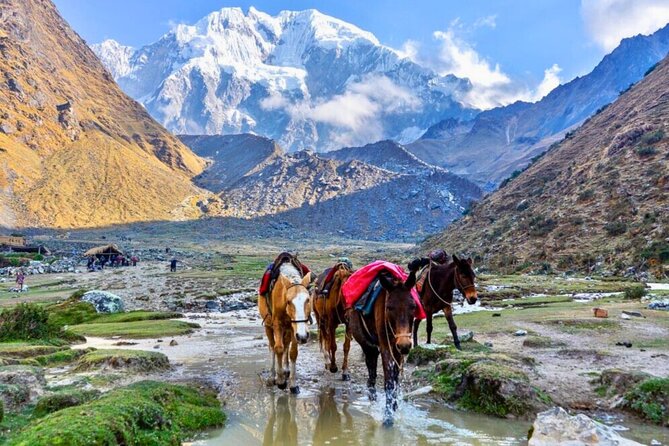
The first hike follows a mountain valley with views toward Humantay and Salkantay. The peaks are the visual stars of this opening section. The air is crisp, the terrain is open, and the scale of the mountains quickly reminds you that this is not a city sightseeing tour with a short country walk attached.
The campsite is at Soraypampa, around 3,700 meters. That altitude matters. Even if you are fit, you may feel the effects of thin air, especially after the early start and road transfer.
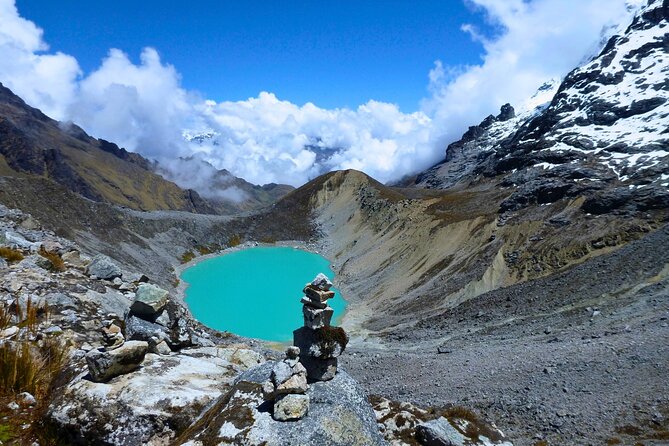
In the afternoon, you can take the optional hike to Humantay Lake. The lake is known for its turquoise water and high setting below the surrounding peaks. The climb gives you a memorable first-day goal, but it also adds effort after the main hike. If you are feeling tired or affected by altitude, skipping it is a sensible choice, not a failure.
Camping equipment includes a dining tent with tables and chairs. Meals, tea, and snacks are provided during the trek, with vegetarian options available. Past groups have praised the cooking, including meals prepared by Alejandro, who was described as remarkably creative with limited camp equipment. That matters on a route where a hot dinner is not a luxury. It is part of your recovery.
Day 2: The hard climb to Salkantay Pass
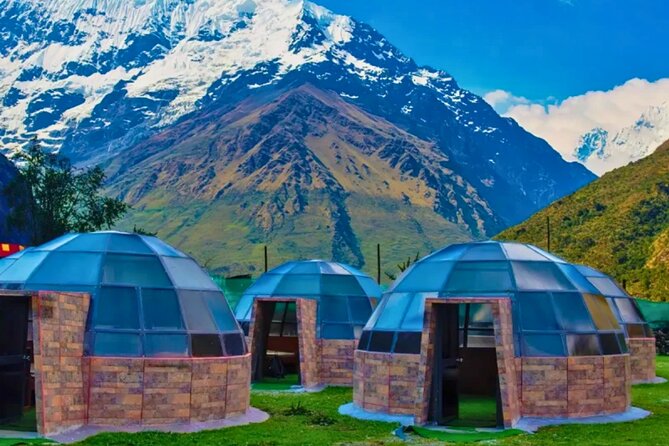
Day 2 is the toughest and most important day for most people. After breakfast at Soraypampa, you climb toward Salkantay Pass at 4,600 meters.
The ascent takes about four hours according to the planned schedule, though your actual pace depends on altitude, weather, and group ability. The high point gives you broad views of Salkantay, which rises to 6,264 meters. You will have time to stop, breathe, and take in the peaks before beginning the descent.
This is where the route tests you. One past assessment found that the first two days were extremely intense and that the effort affected the rest of the trek. Take that warning seriously. Walk slowly, drink water, and follow the guide’s pace rather than trying to prove something to the group.
The good news is that the descent changes everything. As you lose altitude, the cold, bare mountain setting gives way to thicker vegetation and warmer air. You move through several ecological zones in a single day, which is one of the great pleasures of the Salkantay route.
The night is spent at Collpapampa, around 3,000 meters, in tropical forest. The setting is calmer and warmer than Soraypampa, but mosquitoes are present. Bring repellent and clothing that covers your arms and legs. The campsite facilities are basic, and one assessment specifically noted that the toilet situation could use improvement on Day 3. You should approach the camping nights with a practical mindset rather than lodge-level expectations.
Day 3: Coffee, cacao, and the farms of Lucmabamba
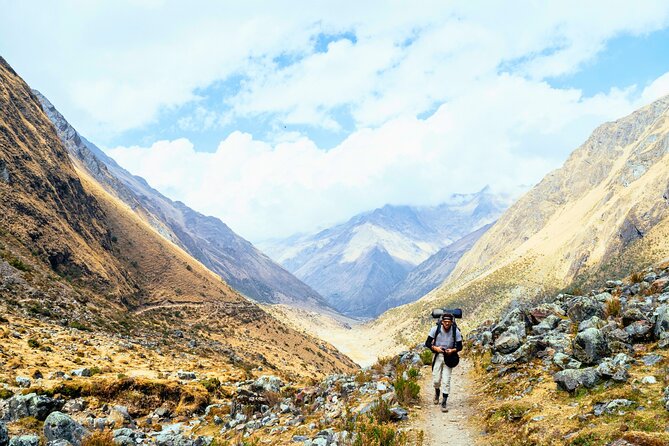
Day 3 is a welcome change of pace. The route continues through forest, with orchids, bromeliads, and other plants along the way. The vegetation becomes a major part of the experience, especially after the stark high-altitude views of the first two days.
As you descend, farms appear. Coffee, cacao, and fruit plantations support local communities and give the walk a strong connection to everyday life. This is not just scenery passing by a trail. You get a chance to learn how crops are planted, harvested, dried, and prepared.
The route passes through Wiñaypoco and Granadilla before reaching Lucmabamba at about 2,000 meters. The lower altitude brings warmer, more humid conditions. You may find this section physically easier than the pass, although the trail remains a full-day walk.
The local coffee experience is one of the most distinctive parts of the trip. A rural family explains the process from coffee plant to finished cup, including cultivation, drying, roasting, and preparation. It gives you something that a standard Machu Picchu day trip cannot: a direct look at the work and knowledge behind a product grown in the region.
Lucmabamba is also a good place to notice the change in daily life. High in the Andes, the mountains dominate every view. Here, farms and family routines become central. The contrast makes the trek feel more complete.
Food is another strength. Breakfast, lunch, and dinner are included for the three relevant camping days, along with tea and snacks. Vegetarian meals are available. A cook and horseman support the group, and people who value good meals should ask the operator how the kitchen team and muleteers are handled. Clear communication about gratuities is important, since confusion about tipping expectations has caused frustration in the past. The staff’s work is substantial, and you should budget for tips even though they are not listed as included.
More salkantay trek in Cusco:
- Salkantay Trek Challenge – 3 Days / 2 Nights
★ 5.0 · 101 reviews - Machu Picchu: 5-Day Salkantay Trek with Panoramic Train
★ 5.0 · 79 reviews - Salkantay Trek 4 Days to Machu Picchu by Glamping Sky Lodge Dome
★ 5.0 · 68 reviews - Salkantay Trek to Machu Picchu in 4 days
★ 4.5 · 50 reviews
Day 4: Llactapata and the walk to Aguas Calientes
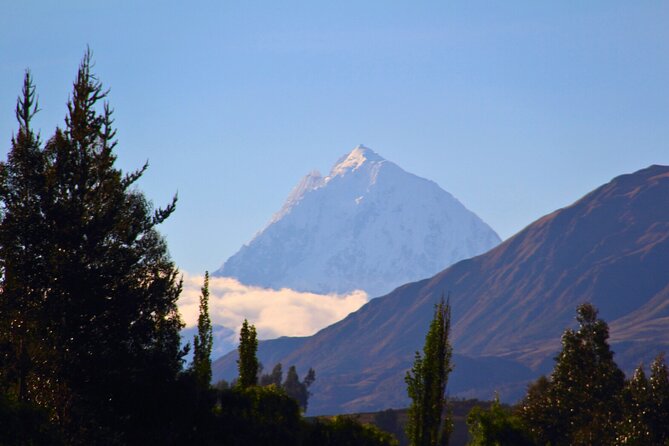
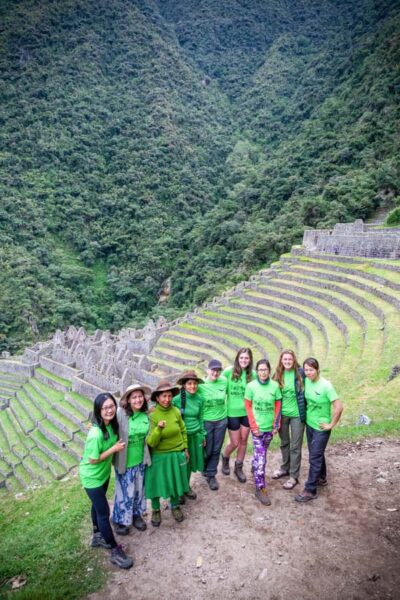
After breakfast in Lucmabamba, you climb toward Llactapata on an old Inca trail. The archaeological site sits at about 2,650 meters and includes terraces and structures linked to the wider Inca road network.
Llactapata is not Machu Picchu, and it should not be treated as a replacement for the main citadel. Its value is the setting and the approach. From here, you get views toward Machu Picchu Mountain and the Vilcanota Canyon, offering a perspective that many direct-entry visitors never see.
Your guide adds meaning to the stonework and explains the site’s role in the Inca world. This is where a strong guide makes a real difference. A guide who can move comfortably between Spanish and English, explain details without rushing, and answer questions can turn scattered terraces into a place you understand.
After Llactapata, you descend toward the Hydroelectric station. Equipment and larger bags are transported from Lucmabamba to Hydroelectric, so you do not need to carry everything on your back. You will still be walking for several hours, and the descent can be hard on knees and feet.
From Hydroelectric, the route continues toward Machu Picchu town, also called Aguas Calientes. The town is your first proper accommodation after the camping sections. A private room with a private bathroom and breakfast is included, giving you a welcome chance to shower, sleep indoors, and prepare for the early Machu Picchu visit.
You have the evening to eat and look around. Lunch is not included on the final day, and meals in Aguas Calientes are an added expense. Plan on $30 for the first-day breakfast and $30 for the last-day lunch according to the stated costs, though you should confirm the exact arrangements before departure.
Day 5: First light at Machu Picchu
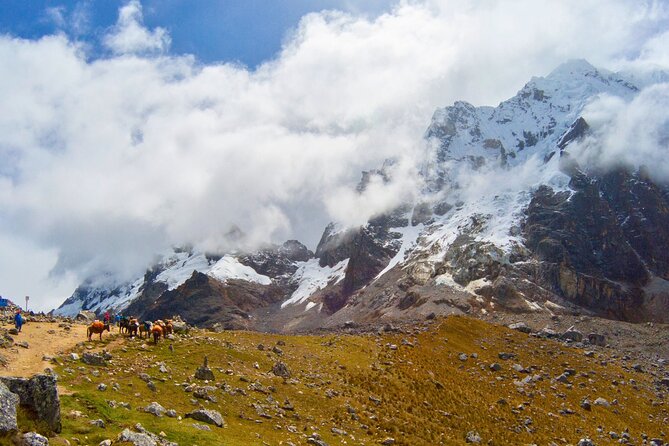
The final morning starts at 5:30 am after breakfast. A tourist bus takes you from Aguas Calientes up to Machu Picchu, arriving around 6:00 am. The early timing is useful because it brings you to the sanctuary when the first light begins to reach the ruins.
Entrance to Machu Picchu is included, as is a guided visit lasting about three hours. Your guide explains the architecture, Inca customs, and the purpose of major areas within the citadel. This is not a quick photo stop. You get time to connect the stonework with the larger story of the civilization that built it.
The return bus from Machu Picchu to Aguas Calientes is not included and costs $12. You can walk instead, but the tour information specifically lists the bus as an extra, so budget for it if you want the simplest return.
After time in Aguas Calientes, you take the afternoon tourist train to Ollantaytambo. A vehicle then takes you back to Cusco’s historic center. The final transfer makes for a long day, but it completes the route without requiring another overnight stay.
What the $593 price includes
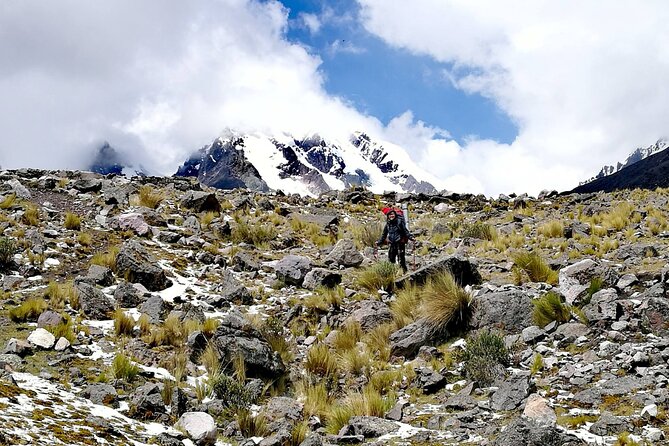
At $593 per person, this is a strong value if you want a supported trek rather than arranging each piece yourself. The price covers:
- Pre-trek briefing at 7:00 pm one or two days before departure
- Private transport from Cusco to Challacancha
- Salkantay and Machu Picchu entrance tickets
- Bilingual professional guide
- Camping equipment and dining tent
- Horse and mules for up to 7 kilograms of personal equipment
- Emergency horse on the specified section
- Three breakfasts, three lunches, and three dinners
- Tea and snacks each day
- A private Aguas Calientes room with private bathroom and breakfast
- Tourist train from Machu Picchu to Ollantaytambo
- Transport from Ollantaytambo back to Cusco
- First-aid kit and oxygen bottle
The value comes from combining permits, mountain support, food, accommodation, and transport in one package. Buying those pieces separately would take time and would make the logistics harder, especially around the train and Machu Picchu entrance.
You still need to budget for the first-day breakfast, final lunch, the $12 return bus, and a sleeping bag at $5 per day. The cancellation policy is strict: the experience is non-refundable and cannot be changed after booking. Confirm your dates and fitness level before paying.
Who should choose this trek?
I would choose this route if you want a demanding mountain experience with more variety than the shorter classic approaches to Machu Picchu. It suits you if you enjoy long walking days, basic camping, early starts, high passes, and learning about local farming as well as Inca sites.
It is also a good fit if you prefer a small group. A maximum of nine people creates better conditions for conversation and personal attention than a large coach-style excursion.
I would think twice if you dislike altitude, humidity, mosquitoes, or simple toilets. The Salkantay Pass is not a minor uphill stroll, and the first two days can set a hard pace for the rest of the trip. Ask about current trail conditions and the assigned guide at the pre-trek briefing.
Should you book the Salkantay and Llactapata route?
Book it if you want Machu Picchu to be the final chapter of a real trek. The high peaks, Humantay Lake, Salkantay Pass, coffee farms, local family visit, and Llactapata viewpoint give you a much fuller five-day story than a direct visit to the citadel.
Skip it if your main goal is comfort or if you are not prepared for 4,600-meter hiking. For the right person, the combination of small-group support, strong guiding, good camp food, and a private final night in Aguas Calientes makes the $593 cost sensible. Ask about the guide, confirm the tipping arrangements, pack for both cold and tropical conditions, and keep the first two days slow.
FAQ
Where does the trek start?
The meeting point is in Cusco at Plaza de Armas, Del Medio 123. The listed start time is 4:00 am.
How long is the experience?
The trek lasts five days, including the Machu Picchu visit and return to Cusco.
What is the highest point on the route?
Salkantay Pass is the highest point, at about 4,600 meters or 15,092 feet.
Is Humantay Lake included?
The hike to Humantay Lake is described as optional on the first afternoon. The Salkantay entrance ticket is included.
How large is the group?
The activity has a maximum of nine travelers.
Is food included?
Three breakfasts, three lunches, and three dinners are included, along with tea and snacks. Vegetarian meal options are available. Breakfast on the first day and lunch on the final day in Aguas Calientes are not included.
Is accommodation included?
Camping equipment is included for the trekking nights. The final night is in a private room with a private bathroom in Aguas Calientes, with breakfast included.
Is transportation back to Cusco included?
Yes. The tourist train from Machu Picchu to Ollantaytambo and the vehicle from Ollantaytambo to Cusco are included. The bus from Machu Picchu to Aguas Calientes costs $12 extra.
Do I need to bring a sleeping bag?
A sleeping bag is not included. It can be rented for $5 per day.
More 5-Day Experiences in Cusco
- Ausangate Trek 5 Days
★ 5.0 · 74 reviews - Classic Choquequirao Trek – 5 Days / 4 Nights
★ 5.0 · 52 reviews - Ultimate Lares Trek & Inca Trail 5 days
★ 5.0 · 47 reviews - Wonderful Cusco 5-Day Tour with Entrance to Machupicchu
★ 5.0 · 46 reviews
Just added around Cusco
- Waqrapukara 1 day trekking + meals★ 3.9 · 3 reviews
- Zipline over the Sacred Valley Trip★ 5.0 · 11 reviews
- Valle Sur Cusco | half day★ 4.3 · 3 reviews
- Visit to the Cochahuasi Animal Sanctuary with rescued animal★ 4.1 · 4 reviews
- Visit Pisac from Cusco: Private Transport★ 4.6 · 9 reviews
- Maras and Huaypo lagoon by ATV from Cuzco | Local Operator★ 4.7 · 4 reviews
- Trek to Humantay Lake from Cusco★ 4.9 · 8 reviews
- Trek to Choquequirao 4 days★ 3.8 · 4 reviews
Machu Picchu Tours, compared.
4-Day Inca Trail to Machu Picchu with Accommodation
Read our review →
2-Day Trip to the Sacred Valley and Machu Picchu
Read our review →
Machu Picchu 2-Day Inca Trail with Panoramic Train
Read our review →
Browse the lists this tour appears in