
Reviewed · MACHU PICCHU TOURS
Salkantay Trek to Machu Picchu in 4 days
Machu Picchu is the finale, but the 4,630-meter Salkantay Pass is the great prize along the way. Over four days, you move from high mountain terrain and turquoise Humantay Lagoon into cloud forest, coffee country, and the train tracks beside the Urubamba River. I like the route’s variety, and I like that horses carry up to 7 kilograms of your gear while a cook prepares the meals.
The main concern is the altitude and the uneven standard of communication. The second day is a serious uphill hike, and one unhappy customer reported illness, missing safety gear, and costly transport to lower ground. Guides such as Gilber and Rene have earned warm praise for their care and explanations, but you should confirm health and safety details before departure.
In This Review
- Key points to know before booking
- Why this four-day route is worth considering
- Day one: Cusco to Soraypampa and Humantay Lagoon
- Day two: the hard climb to Salkantay Pass
- Day three: coffee country and the walk to Aguas Calientes
- Day four: Machu Picchu, the train, and a late return to Cusco
- Food, luggage, and camp support
- The guides and group size
- Health, altitude, and practical limits
- Is $590 a fair price?
- Who should book this Salkantay trek?
- Should you book it?
- FAQ
- How long is the Salkantay Trek to Machu Picchu?
- What is the highest point of the trek?
- How difficult is the Salkantay Trek?
- Is Humantay Lagoon included?
- Where do you sleep during the trek?
- Are meals included?
- How much luggage can the horses carry?
- Is transport from Cusco included?
- Can you cancel for a full refund?
Key points to know before booking
- The Salkantay Pass reaches 4,630 meters: Day two is the hardest section, with about three hours of climbing from Soraypampa.
- Humantay Lagoon adds a steep side hike: The lake sits at 4,200 meters and requires roughly 90 minutes uphill from camp.
- Your luggage support is useful: Muleteers and horses carry kitchen supplies, food, and up to 7 kilograms of your personal luggage.
- The sleeping arrangements change each night: You stay in a mountain cabin, a wood-and-glass dome, and a hotel in Aguas Calientes.
- The final day is long: Machu Picchu is followed by a bus, train, and road transfer, with arrival in Cusco around 10:00 pm.
- Small groups help on a hard route: The maximum group size is 10 people, with an English-speaking guide and cook included.
Why this four-day route is worth considering
The Salkantay route gives you a very different approach to Machu Picchu than a short train visit. You spend two days among huge Andean peaks, then descend through warmer forests and farming country before reaching Aguas Calientes on foot.
I like that change in scenery. You are not looking at the same type of view for four days. The first part feels cold, open, and high. The second part turns greener and warmer, with coffee, bananas, avocados, oranges, medicinal plants, orchids, and the Urubamba River.
The price is $590 per person. That is not a bargain-basement trek, but it covers a lot: Cusco pickup, transport to the trailhead, three nights of lodging, meals, entrance fees, a guide, cook, muleteers, horses, transport during the route, the bus at Machu Picchu, the return train to Ollantaytambo, and the final ride to Cusco.
You should still read the inclusions carefully. Personal clothing, shoes, and your daypack are not supplied. A tip for the guide and cook is optional. Huayna Picchu access is included only if a ticket is available, so do not build your plans around that extra climb.
More machu picchu tours in Cusco:
- From Cusco: Full-Day Group Tour of Machu Picchu
★ 4.7 · 1,767 reviews - Machu Picchu Day Trip from Cusco
★ 4.5 · 1,644 reviews - Machu Picchu: Full-Day Tour from Cusco with Optional Lunch
★ 4.6 · 927 reviews
Day one: Cusco to Soraypampa and Humantay Lagoon
The day starts early, with hotel pickup in Cusco at 5:00 am. Bring your original passport. It is required at control points along the route, and forgetting it could create a serious problem before the hiking has even begun.
The private vehicle takes about two hours to Mollepata. This is more than a transport stop. You get breakfast at a local restaurant and see snowy peaks and valleys on the way out of Cusco. The early departure is tiring, but it gives you a full first day on the trail.
From Mollepata, the ride continues for about 30 minutes to Challacancha, at roughly 3,600 meters. Here you meet the muleteer team and pack equipment onto the horses. You carry only your smaller backpack and water, which makes a real difference on a route where the air is thin.
The first walk covers about 10 kilometers and takes around three hours. The trail follows an old water channel carrying cold, clear water to local residents. It is a pleasant introduction, though the altitude means you should keep your pace steady instead of trying to prove anything in the first hour.
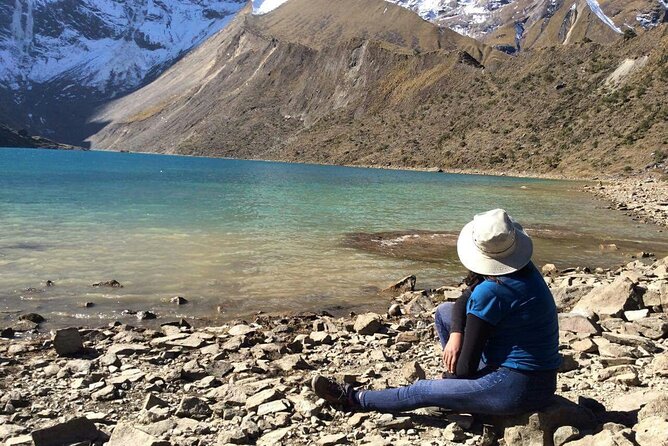
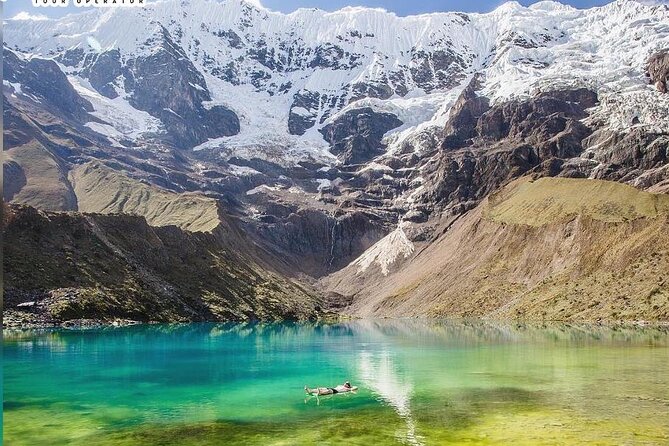
You reach Soraypampa for lunch and a break. Later, you hike up to Humantay Lagoon, which sits at about 4,200 meters. The climb takes about 90 minutes, and the stop at the lake lasts around 40 minutes.
Humantay is one of the visual highlights of the whole route. The water, mountain slopes, and snow peaks create the kind of view that makes a difficult climb feel worthwhile. Still, this is not a gentle photo stop. You are hiking uphill at high altitude after already walking in the morning, so take the ascent slowly and use the rest period well.
Back at Soraypampa, you arrive around 5:30 pm. Tea, coffee, popcorn, and cookies are served, followed by dinner. If the sky is clear, the high camp offers good star watching, and the snowy peaks may catch the last light of the day.
Your first night is in a cabin at Eco-Lodge Mamá Andrea. The setting is basic mountain accommodation rather than a conventional hotel. Pack warm layers and keep your sleeping essentials easy to reach, since the night at altitude can feel very different from your hotel in Cusco.
Day two: the hard climb to Salkantay Pass
Day two is the physical test. A coca tea wake-up comes at 5:00 am, followed by breakfast and the climb toward the high point of the route.
You walk about seven kilometers uphill over roughly three hours. The trail first follows the Salkantay Valley, then reaches Pampa Salkantay at about 4,200 meters. After a short rest, the route becomes rockier as you continue toward the pass.
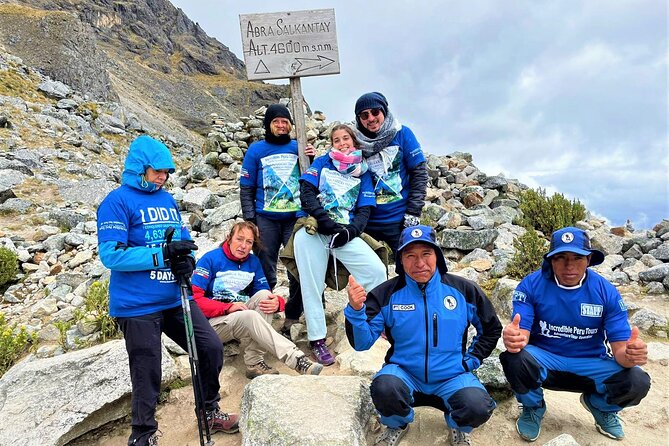
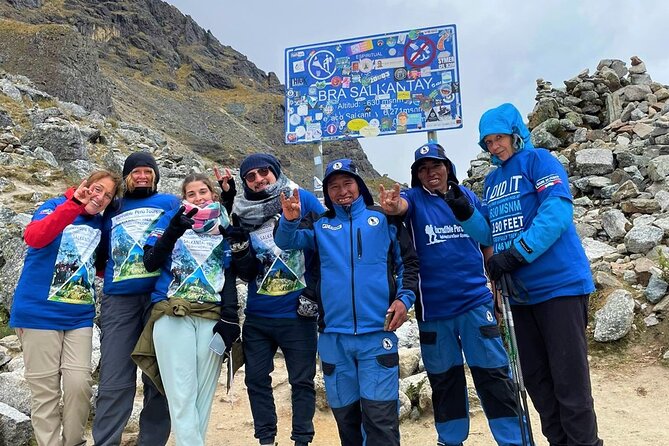
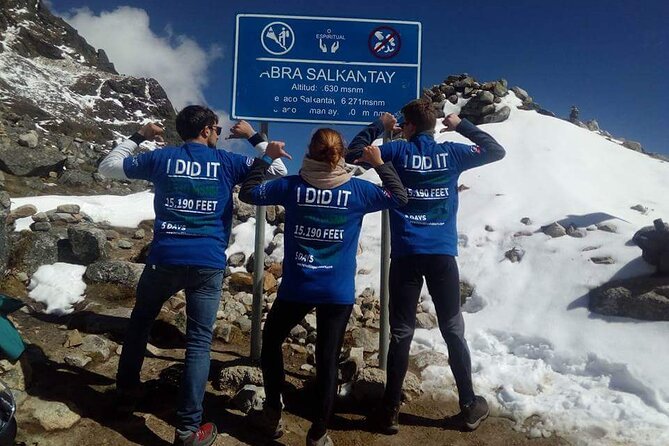
The Salkantay Pass is 4,630 meters high, or about 15,190 feet. From here, you can see Salkantay Mountain, which rises to 6,271 meters, along with Humantay Mountain at 5,400 meters. The pass also gives you a view toward the mountain’s snowy upper slopes and the lower cloud forest.
This is the point where fitness and acclimatization matter most. The tour asks for a moderate fitness level, but that phrase should not make you underestimate the route. A three-hour climb at more than 4,000 meters is demanding even for an active person.
One customer reported becoming very ill and claimed the guide did not have the advertised first-aid kit or emergency oxygen. That is a serious concern, not a minor complaint. The written inclusions say the guide carries both, so I would confirm their presence at the pre-tour meeting and ask what the plan is if someone needs to descend.
After the pass, the route drops toward Huayracmachay, where lunch is served around 1:30 pm. The descent continues into the high forest, also called cloud forest. The temperature becomes warmer and the plant life changes quickly.
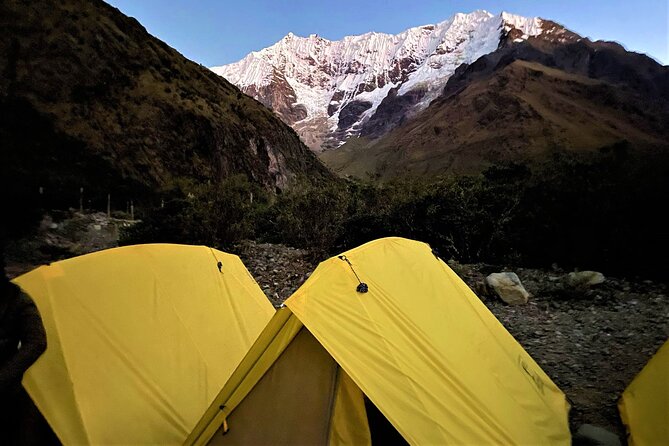
You reach Colpapampa at roughly 2,900 meters in the late afternoon. A vehicle then carries you for about an hour to Sahuayaco, where you spend the night at Eco Lodge Majestic Sky Domes.
This change from high camp to a private wood-and-glass dome is one of the tour’s nicest comforts. Tea, hot chocolate, coffee, popcorn, and cookies are served after arrival, with dinner later in the evening. After a very hard hiking day, having a proper room rather than another basic camp can make the second night much easier.
Day three: coffee country and the walk to Aguas Calientes
Day three starts later, with wake-up at 7:00 am and breakfast at 8:00 am. The slower start gives your legs a chance to recover after the pass.
You walk around the Sahuayaco area and visit local plantations. Bananas, avocados, oranges, medicinal plants, and coffee are grown here. Coffee is the main agricultural product, and you may visit a local farm to taste coffee that has been roasted and ground nearby.
I like this part because it connects the hike to the people who live along the route. You are not only passing through scenery. You get a look at the crops that support local families and the work behind the coffee served in Peru.
The schedule then allows time to return to the lodge and relax before transport to the Hydroelectric Power Plant. The transfer takes you to the start of the final walk to Aguas Calientes.
From the hydroelectric station, the route follows the railway and the Urubamba River. There is a short climb of about 15 minutes at the start, then much of the walk is flatter. The full walk takes about three hours.
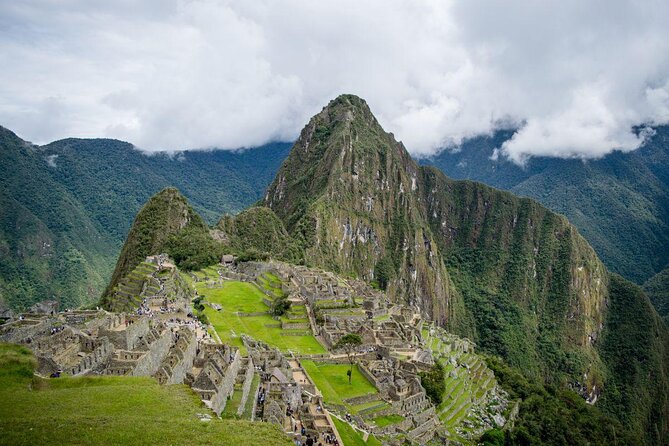
Along the way, you visit Intihuatana, an Inca-era sundial carved into a large natural rock. From this area, you can see toward Huayna Picchu and Machu Picchu. The trail also passes through cloud forest with orchids and thick plant growth.
This section is easier than the pass, but it comes late in the trip. Your feet may be sore, and the railway setting is less wild than the high mountain trail. You also need to stay alert around the tracks and follow the guide’s directions.
Arrival in Aguas Calientes is planned for about 5:30 pm. You sleep in a hotel room with a private bathroom, a welcome change after the mountain camps. Dinner is served at a restaurant in town, and the guide explains the next morning’s Machu Picchu visit.
The early bedtime advice is sensible. You leave the hotel at 5:30 am, so Aguas Calientes is a place to rest rather than a night for a late meal or long walk around town.
More salkantay trek in Cusco:
- Salkantay Trek Challenge – 3 Days / 2 Nights
★ 5.0 · 101 reviews - Small Group 5 Days Salkantay and Machu Picchu by Llactapata Tour
★ 5.0 · 88 reviews - Machu Picchu: 5-Day Salkantay Trek with Panoramic Train
★ 5.0 · 79 reviews - Salkantay Trek 4 Days to Machu Picchu by Glamping Sky Lodge Dome
★ 5.0 · 68 reviews
Day four: Machu Picchu, the train, and a late return to Cusco
After breakfast, you walk to the bus station in Aguas Calientes. The tourist bus takes about 30 minutes up a zigzag road to Machu Picchu.
The group is scheduled to arrive around 6:30 am. A professional English-speaking guide leads a visit lasting about two hours. You see the temples, agricultural terraces, canals, water sources, and other parts of the Inca citadel while receiving historical explanations.
After the guided portion, you have free time for photos and independent exploration. Huayna Picchu may be available, but the extra entrance depends on ticket availability. Ask about this early if the climb matters to you.
The return is long and tightly timed. You take the bus back down to Aguas Calientes, then an Expedition train to Ollantaytambo. The train is scheduled to arrive around 7:40 pm. A staff member meets you there and directs you to the tourist bus for the drive to Cusco.
Final hotel drop-off is expected around 10:00 pm. If you stay in the Sacred Valley, transport can also end at a hotel there. For a Cusco-based plan, do not schedule an early activity the next morning unless you are comfortable with a late arrival.
Food, luggage, and camp support
The package includes four breakfasts, four lunches, and three dinners. A cook and kitchen assistant prepare the meals, and vegetarian, vegan, and special-diet meals are available if you request them.
The food support matters on a strenuous route. You do not need to find meals in remote areas, and the dining setup includes a tent, field tables, portable chairs, and camp lamps. Exact menus are not provided, so you should still bring personal snacks if you have strong preferences.
Horses carry kitchen equipment and food, as well as up to 7 kilograms of your luggage. That limit is helpful, but it is not a reason to overpack. Keep your passport, water, rain protection, warm layers, medications, and valuables in the small backpack you carry yourself.
The company says the guide carries a first-aid kit and emergency oxygen balloon. Because one account disputes whether these supplies were actually available, confirm this during the preparation meeting one day before departure.
The guides and group size
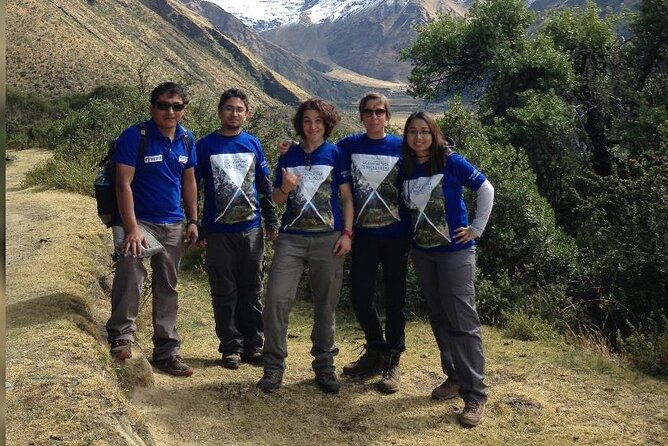
The maximum group size is 10 people. That is small enough for a guide to keep track of the group on a demanding trail, though the actual group size may be smaller or close to the limit.
Gilber is praised for making the route more interesting through long conversations about history and lesser-known facts. Rene is described as helping the whole group complete an activity that was physically demanding. Herbert is also singled out for genuine effort and a desire to make the experience enjoyable.
Those names matter because the guide can shape a trek this long. You spend several days walking, eating, and dealing with altitude together. At the same time, individual guide assignments can change, so you should not assume one particular guide will lead your departure.
The preparation meeting takes place at the company office in Cusco one day before the trek. Use it to confirm pickup time, meals, luggage weight, accommodation, transport, and emergency procedures. A separate complaint describes poor communication before the trip and incorrect instructions about what to bring, so ask for clear information in writing if anything remains uncertain.
Health, altitude, and practical limits
You need moderate physical fitness, but altitude is the bigger issue. The route reaches 4,630 meters on day two, then drops into warmer country. Even strong hikers can struggle when breathing becomes difficult or symptoms develop.
Acclimatization details are not provided, so you should not assume the tour itself prepares you for the pass. If you have concerns about altitude or other medical conditions, get medical advice before booking.
Wear proper hiking shoes and bring clothing for both cold and warm conditions. The route shifts from icy mountain air to subtropical forest, so one heavy jacket alone will not be enough for comfort.
The trek operates in good weather conditions. If poor weather causes cancellation, you are offered another date or a full refund. Standard cancellation allows a full refund when you cancel at least three full days before the start time. Within that window, changes and refunds are not accepted.
Is $590 a fair price?
For the services included, $590 is a reasonable middle-range price. You receive a guide, cook, food, horses, luggage support, accommodation, route and Machu Picchu tickets, buses, train, and all major transfers.
The value is strongest if you want a managed trek without arranging each part yourself. Booking transport from Cusco, a high-altitude camp, a dome, meals, Machu Picchu entry, and the train separately would take time and create more chances for missed connections.
The price is less attractive if you want a luxury trek from start to finish. The first night is a mountain cabin, the second is a dome lodge, and the final hotel is in Aguas Calientes. Comfort improves as you descend, but this remains a physically serious hiking trip, not a soft adventure.
Who should book this Salkantay trek?
I would recommend it to an active visitor who wants Machu Picchu to feel like the end of a real journey. You should be comfortable walking for several hours, starting early, sleeping at altitude, and handling a long return day.
It suits people who value changing scenery and local farming stops more than a relaxed schedule. The coffee visit and plantation walk are especially worthwhile if you want contact with daily life along the route.
I would hesitate if you dislike steep climbs, have not considered altitude carefully, or need highly reliable pre-trip communication. In that case, a shorter route or a train-based Machu Picchu visit may be a better fit.
Should you book it?
Book this tour if you want a small-group Salkantay experience with strong logistical coverage, varied scenery, luggage support, and a guided Machu Picchu visit. The combination of Humantay Lagoon, Salkantay Pass, cloud forest, coffee farms, dome lodging, and train return gives you a full picture of the region.
Before paying, confirm the guide assignment, emergency oxygen, first-aid supplies, meal requests, 7-kilogram luggage limit, and Huayna Picchu availability. If those details are clear and you are ready for the demanding second day, the tour offers good value. If safety answers remain vague, choose another operator.
FAQ
How long is the Salkantay Trek to Machu Picchu?
The experience lasts approximately four days, beginning with pickup in Cusco at 5:00 am and ending with hotel drop-off in Cusco at about 10:00 pm on day four.
What is the highest point of the trek?
The Salkantay Pass is the highest point, at 4,630 meters, or about 15,190 feet above sea level.
How difficult is the Salkantay Trek?
The tour requires a moderate level of physical fitness. Day two is the hardest section, with about three hours of uphill walking from Soraypampa to the Salkantay Pass.
Is Humantay Lagoon included?
Yes. Entrance to the Salkantay route and Humantay Lagoon is included. The hike to the lagoon takes about one hour and 30 minutes uphill from the Soraypampa camp.
Where do you sleep during the trek?
You spend the first night in a cabin at Eco-Lodge Mamá Andrea, the second night in a wood-and-glass dome at Eco Lodge Majestic Sky Domes, and the third night in a hotel room with a private bathroom in Aguas Calientes.
Are meals included?
Yes. The package includes four breakfasts, four lunches, and three dinners. Vegetarian, vegan, and special-diet meals can be prepared when requested.
How much luggage can the horses carry?
Muleteers and horses carry up to 7 kilograms, or 15 pounds, of your luggage. You carry your smaller backpack and water.
Is transport from Cusco included?
Yes. Pickup from hotels in Cusco is included, along with transport to Challacancha, vehicles during the route, the train from Aguas Calientes to Ollantaytambo, and the final bus transfer to Cusco. Pickup and drop-off at hotels in the Sacred Valley are also offered.
Can you cancel for a full refund?
You can receive a full refund if you cancel at least three full days before the experience start time. Cancellations or changes made less than three full days before departure are not accepted.
More 4-Day Experiences in Cusco
- Cusco: 4-Day Inca Trail to Machu Picchu with Accommodation
★ 4.8 · 432 reviews - 4 Day Tour to the Manu National Park
★ 5.0 · 81 reviews - Choquequirao Trek 4 days and 3 nights
★ 5.0 · 81 reviews - Cusco Sacred Valley and Machupicchu 4 Days
★ 5.0 · 80 reviews
More Hiking & Trekking in Cusco
- From Cusco: 7 Lakes Ausangate Trek with Breakfast and Lunch
★ 4.8 · 360 reviews - Cusco: Rainbow Mountain Tour and Red Valley Hike (Optional)
★ 4.7 · 149 reviews - Cusco: Full-Day Rainbow Mountain & Red Valley Trekking Tour
★ 4.5 · 121 reviews - From Cusco: Rainbow Mountain Trek
★ 4.5 · 98 reviews
Just added around Cusco
- Waqrapukara 1 day trekking + meals★ 3.9 · 3 reviews
- Zipline over the Sacred Valley Trip★ 5.0 · 11 reviews
- Valle Sur Cusco | half day★ 4.3 · 3 reviews
- Visit to the Cochahuasi Animal Sanctuary with rescued animal★ 4.1 · 4 reviews
- Visit Pisac from Cusco: Private Transport★ 4.6 · 9 reviews
- Maras and Huaypo lagoon by ATV from Cuzco | Local Operator★ 4.7 · 4 reviews
- Trek to Humantay Lake from Cusco★ 4.9 · 8 reviews
- Trek to Choquequirao 4 days★ 3.8 · 4 reviews
Machu Picchu Tours, compared.



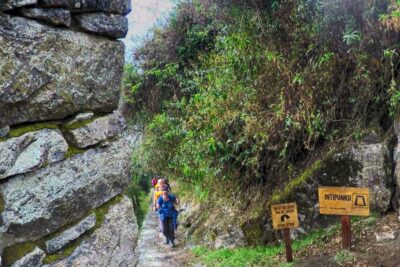
4-Day Inca Trail to Machu Picchu with Accommodation
Read our review →
2-Day Trip to the Sacred Valley and Machu Picchu
Read our review →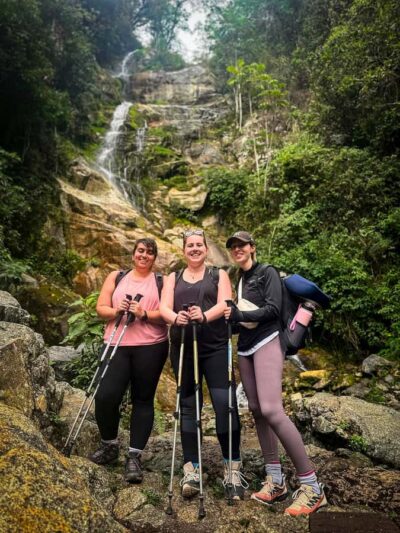
Machu Picchu 2-Day Inca Trail with Panoramic Train
Read our review →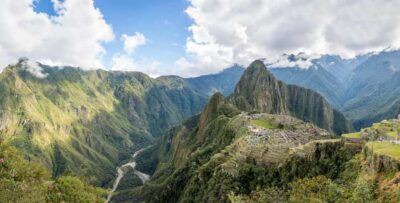
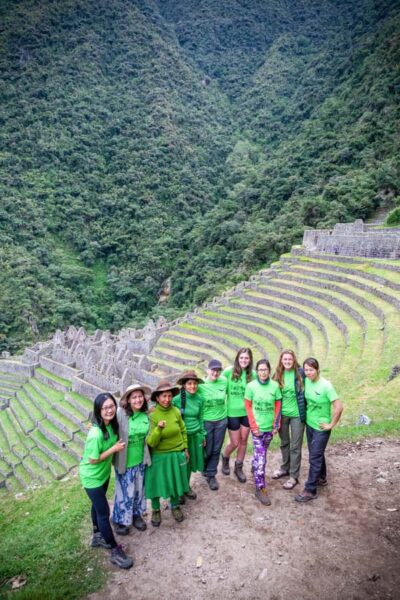
Browse the lists this tour appears in