
Reviewed · MACHU PICCHU TOURS
Machu Picchu: Inca Trail 2-Day Overnight Guided Tour
Machu Picchu feels far more meaningful when you first reach it on foot through the Sun Gate. This two-day trip gives you that memorable arrival, a look at Wiñay Wayna, and a second visit to the ruins the next morning, without asking you to spend four days sleeping on the trail.
I like the freshly cooked trail lunch, which has earned repeated praise for its size and quality, and I like the patient guiding. Walter, Victor, Santiago, Angel, and other guides have helped slower walkers keep a steady pace without turning the hike into a race.
The trade-off is price: $585 per person is a serious spend for one night. The first day is also demanding, and the hotel quality can vary, so you should book this for the access, guides, and route, not simply for a guaranteed luxury stay.
In This Review
- Key points to know before you book
- Why this two-day route works so well
- The train from Cusco to Ollantaytambo
- Starting at KM 104
- Wiñay Wayna, the day’s archaeological prize
- The hot lunch that hikers remember
- Reaching Machu Picchu through the Sun Gate
- A hotel night in Aguas Calientes
- Sunrise and the main Machu Picchu visit
- Free time and the Huayna Picchu choice
- Aguas Calientes and the train back to Cusco
- What the $585 price buys you
- Who should choose this tour
- Should you book the Short Inca Trail?
- FAQ
- How long does the Machu Picchu Inca Trail tour last?
- Where does the hike begin?
- How long is the hike to Wiñay Wayna?
- What is included in the $585 price?
- Is Huayna Picchu included?
- Is the tour suitable for people who do not hike regularly?
- What language is the guided tour in?
Key points to know before you book
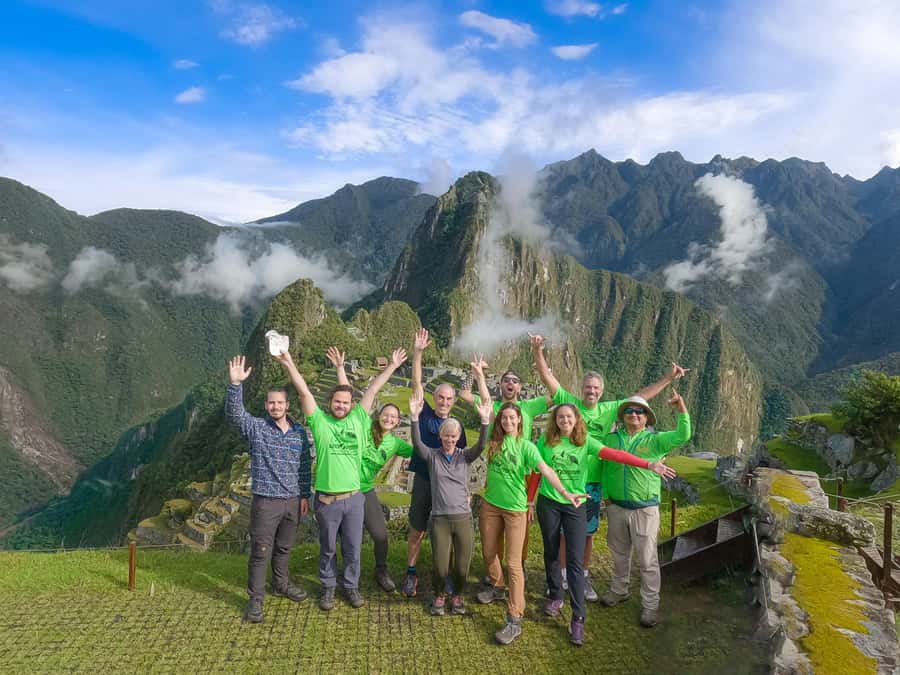
- Enter Machu Picchu through the Sun Gate: The first view comes after a proper hike, not from a bus.
- Visit Wiñay Wayna at 2,600 meters: This striking Inca site includes terraces, temples, and water fountains.
- Sleep in Aguas Calientes: You get a bed, dinner, and breakfast instead of a night at a trail camp.
- See Machu Picchu on two days: Day one offers the arrival view from above, while day two focuses on Circuit 3 inside the citadel.
- Expect a small group of up to 16: Guides can offer more attention, but the pace still depends on the slowest member.
- Reserve Huayna Picchu early: The extra climb costs $75 and is limited by availability.
Why this two-day route works so well
The Short Inca Trail is a smart middle ground. You get the ceremonial approach to Machu Picchu, but you avoid the longer four-day trek and camping routine. That matters if you want a real walk through the Inca route but would rather sleep in a hotel and keep your luggage light.
The itinerary also gives you two different ways to see the sanctuary. On the first afternoon, you arrive at the Sun Gate and look across toward Machu Picchu from above. On the second morning, you enter the citadel and study its buildings with a guide.
That contrast is the heart of the trip. The first view is about distance, mountains, and surprise. The second is about stonework, temples, terraces, and the meaning of the place.
The group size is limited to 16 people. That is small enough for a guide to notice when you are struggling, but it does not guarantee a private or perfectly matched walking pace. One slower walker can add pauses of 30 minutes or more, as happened on one trip. Patient guides generally manage this well, and the route is better enjoyed slowly than hurriedly.
More machu picchu tours in Cusco:
- From Cusco: Full-Day Group Tour of Machu Picchu
★ 4.7 · 1,767 reviews - Machu Picchu Day Trip from Cusco
★ 4.5 · 1,644 reviews - Machu Picchu: Full-Day Tour from Cusco with Optional Lunch
★ 4.6 · 927 reviews
The train from Cusco to Ollantaytambo
Your day begins with pickup near central Cusco and a transfer to the train station. The train follows the Urubamba River toward Ollantaytambo, passing farmland and snow-capped mountains.
This is not dead travel time. It lets you watch the highland scenery change as you move toward the trail. The train is also a practical start because it brings you to the KM 104 access point without the long approach required by the classic four-day route.
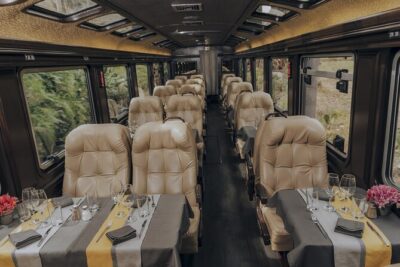
For bookings from March 2026, the package includes the Vistadome Train Experience. That adds larger windows and a more polished rail setting, though the real prize is still the view outside. Keep your camera ready during the ride, but do not expect the entire trip to feel like a scenic railway excursion. The train is transportation first.
Starting at KM 104
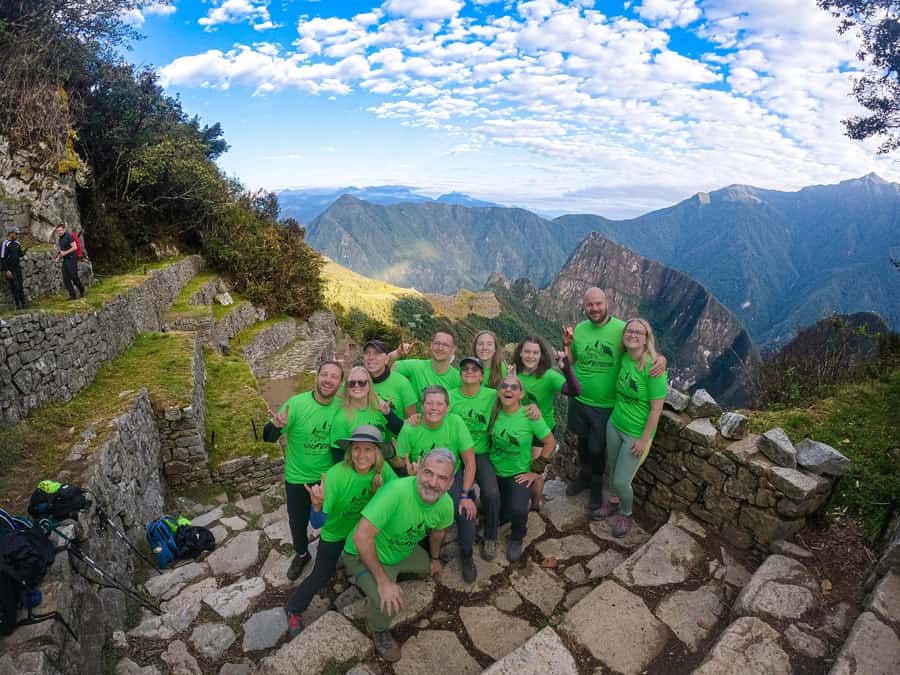
You leave the train at KM 104 and begin the hike. This is where the trip changes from sightseeing to exercise.
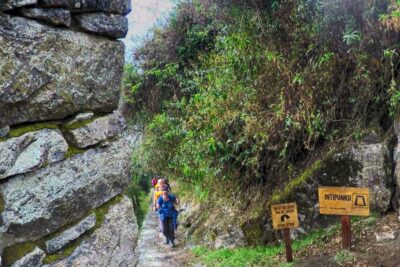
The walk takes about three hours to reach Wiñay Wayna, with forest, stone paths, and archaeological remains along the way. The route is shorter than the full Inca Trail, but short does not mean easy. High altitude, humidity, heat, and uneven steps can make the first day feel intense.
You should arrive with a reasonable level of walking fitness. Several people completed it at a steady pace with regular breaks, while one older participant needed extra time on the climbs. The guides were praised for staying patient and keeping slower walkers on schedule.
I would not plan this as a casual stroll. Comfortable clothes and proper trekking gear are essential. A walking stick can help your knees and balance, but rental costs $10, and bringing your own is worth considering if you already use one.
Insects appear in some wooded sections, so pack repellent. That is a small item, but you will be glad to have it.
Wiñay Wayna, the day’s archaeological prize
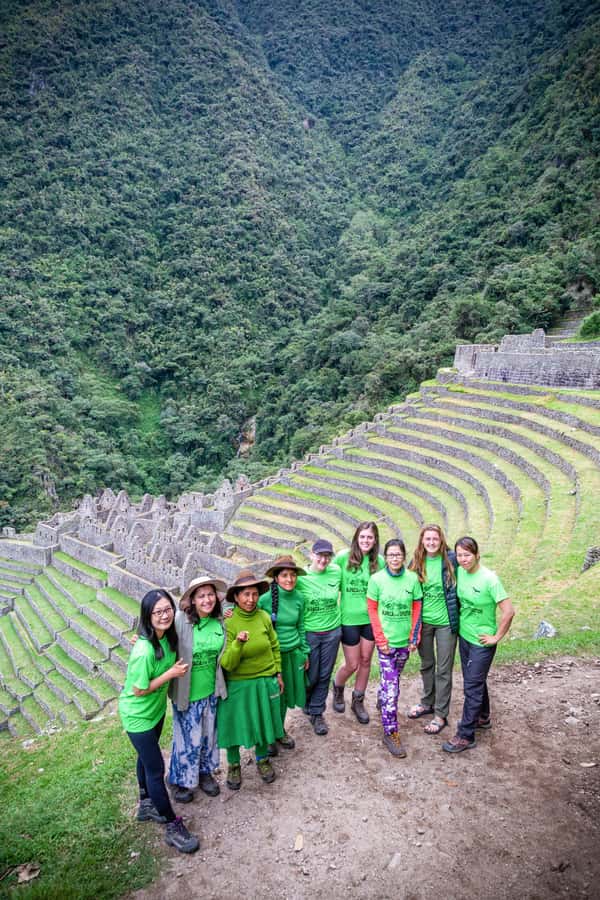
After roughly three hours, you reach Wiñay Wayna, also called Forever Young, at about 2,600 meters, or 8,500 feet. It is one of the finest parts of the route and deserves more than a quick photo stop.
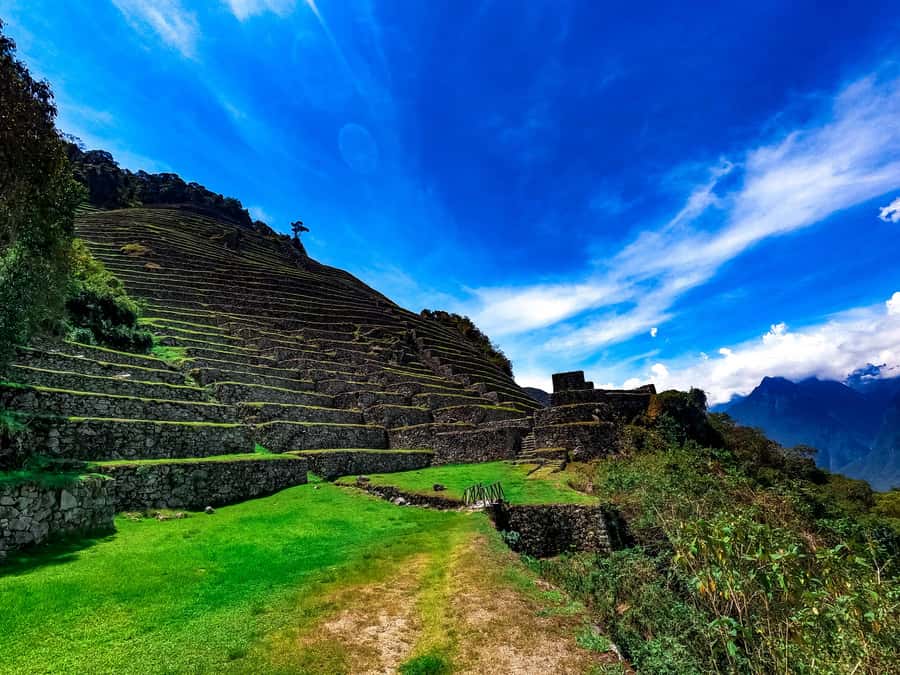
The site is built into the mountainside, with agricultural terraces, temples, and a series of elaborate water fountains. The terraces show how the Incas used steep ground for farming, while the water system hints at the engineering and planning behind the settlement.
This is where the guide adds real value. Guides such as Walter, Santiago, Ruben, and Victor have explained Inca symbolism, daily life, traditions, and the purpose of the structures. You can walk among ancient stonework on your own, but without context it is easy to see only walls and steps.
The route has a quiet, forested feel in places, followed by open views. It is less crowded than the main citadel, and the walk gives the ruins a sense of connection rather than presenting them as an isolated monument.
More inca trail treks in Cusco:
- Cusco: 4-Day Inca Trail to Machu Picchu with Accommodation
★ 4.8 · 432 reviews - Cusco: Machu Picchu 2-Day Inca Trail with Panoramic Train
★ 4.9 · 260 reviews - From Cusco: 2-Day Inca Trail to Machu Picchu
★ 4.2 · 244 reviews - Short Inca trail to MachuPicchu || 2days – 1nigth ||
★ 5.0 · 103 reviews
The hot lunch that hikers remember
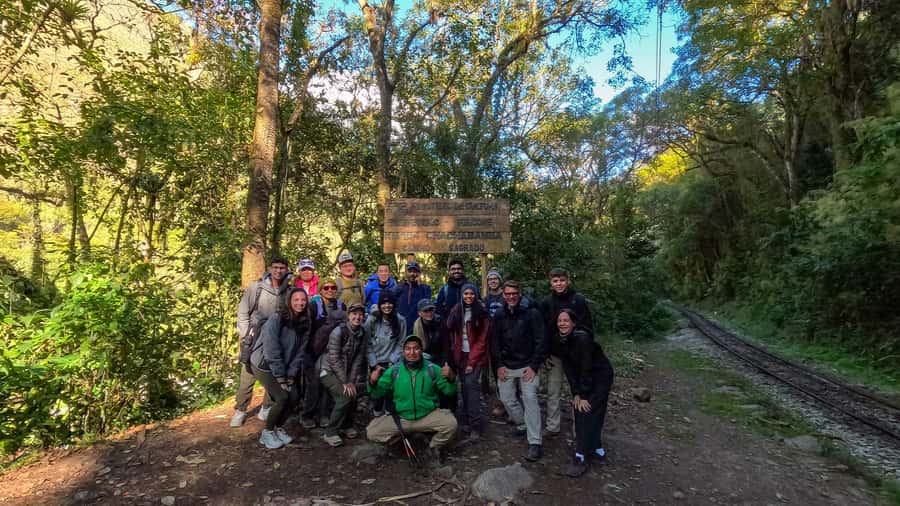
Lunch comes after the Wiñay Wayna visit. Chefs prepare it fresh, rather than handing you a basic packed meal.
This is one of the tour’s strongest practical features. Several meals have been described as enormous, with one reaching eight courses. Vegetarian food has also been provided. After several hours of walking, a proper hot meal is not a minor comfort. It gives you time to sit, recover, and continue toward the Sun Gate with more energy.
Do not mistake the generous meal for permission to overeat before the final section. You still have more walking ahead, and the afternoon route includes steps and uneven ground.
Water is provided in the morning and at lunchtime. Carrying your own bottle is still sensible, especially since hydration matters at altitude and in humid conditions.
Reaching Machu Picchu through the Sun Gate
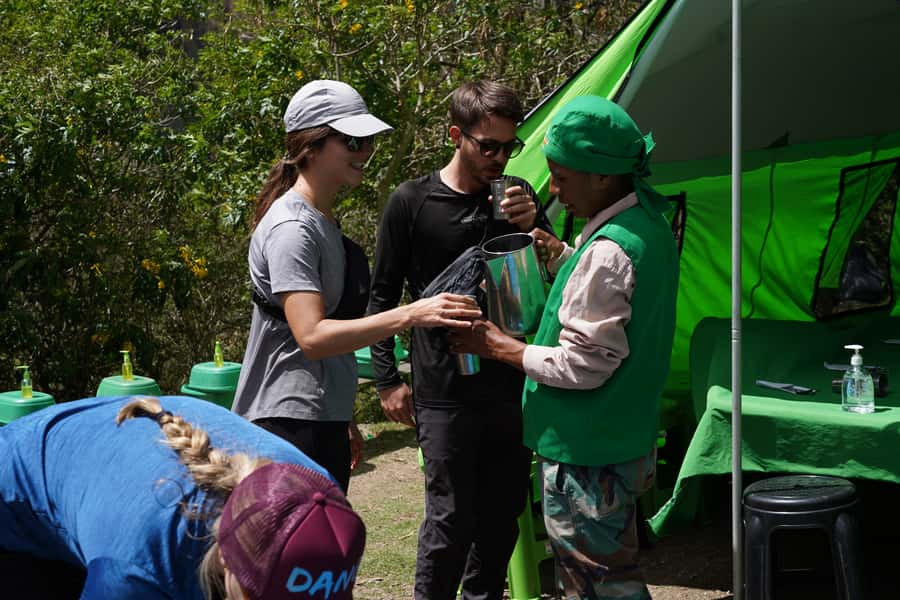
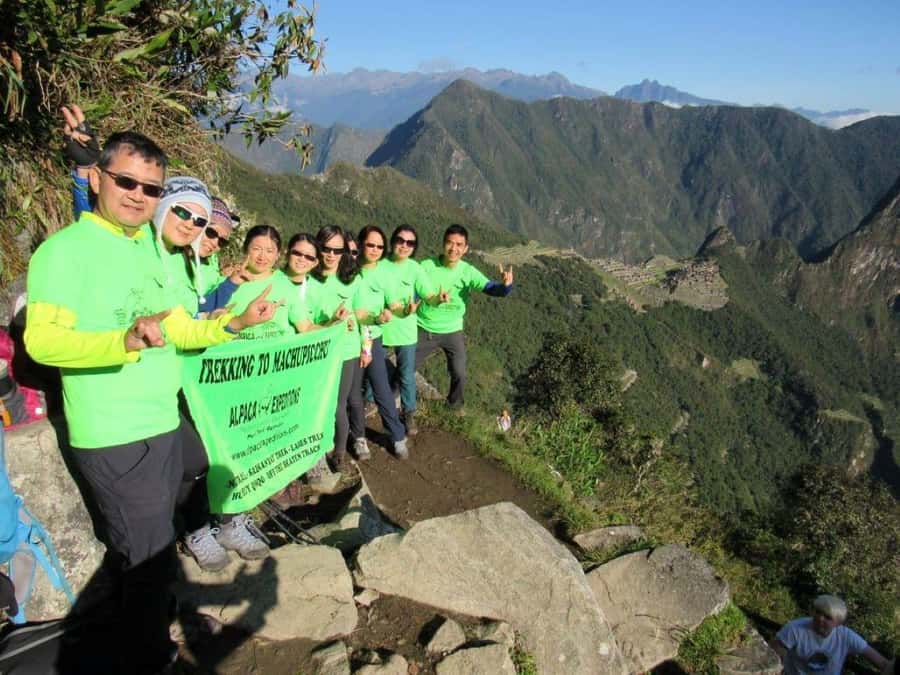
From Wiñay Wayna, you continue toward Inti Punku, the Sun Gate. This is the emotional high point of day one.
You do not approach Machu Picchu from the standard bus entrance. Instead, the ruins appear from above and at a distance, framed by the surrounding peaks. The view depends heavily on weather, but clear conditions can make this arrival unforgettable.
The timing has another advantage. By reaching the classic viewpoint later in the day, you may find fewer people than during the busiest morning period. You can take photos, look across the site, and let the first sight settle in without immediately being pushed through the main ruins.
The Sun Gate is not a viewpoint you simply drive to. You earn it with the hike. That effort changes the experience. Machu Picchu feels like the destination of a route, not just the next stop on a bus schedule.
After the visit, you take a bus down to Aguas Calientes. The transport is convenient, though the buses are shared with other visitors and can feel tight. The return transfer to Cusco is generally more comfortable, with a larger vehicle used for the final drive in some cases.
A hotel night in Aguas Calientes
Aguas Calientes, also called Machu Picchu town, gives you a proper hotel bed after the trail. The package includes one night in a 3-star hotel, dinner at a local restaurant, and breakfast the next morning.
This is a major reason to choose the two-day format. You can wash, sleep indoors, and start the second day without carrying camping gear. The included dinner has often been generous, and the hotel has usually been described as pleasant.
Still, do not read 3-star as a fixed luxury standard. One stay had no hot water and a window facing an interior hallway, with the room judged below expected quality. Another hotel was praised as very nice. The property can therefore be a weak link, and you should keep expectations moderate.
Dinner is also variable. Most meals have been considered good, but one was described as average. Aguas Calientes is built around visitors to Machu Picchu, so the evening meal is mainly about convenience and recovery rather than a major food discovery.
Sunrise and the main Machu Picchu visit
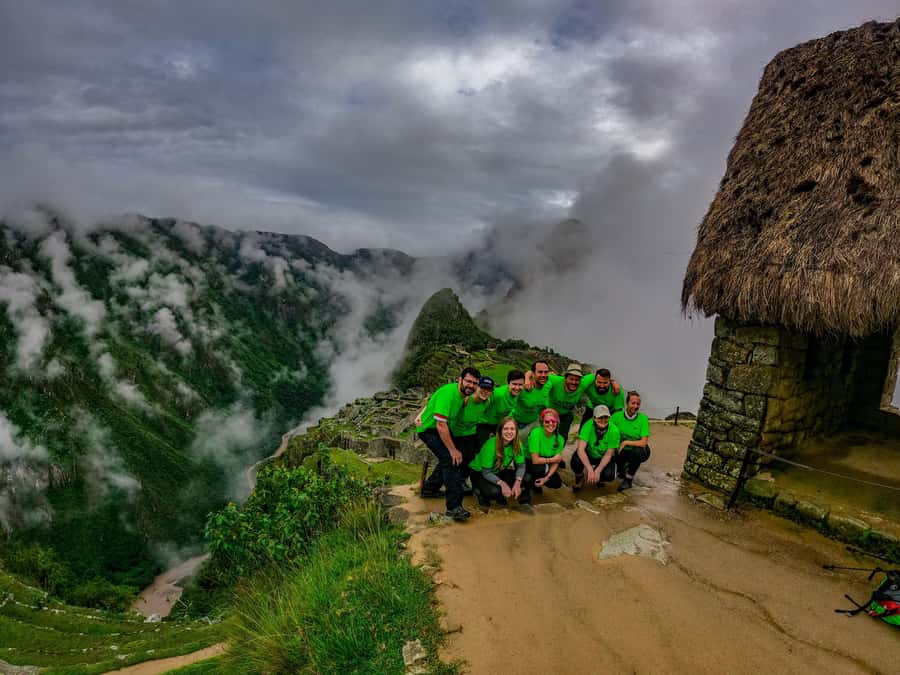
Day two starts early, with one of the first buses up to Machu Picchu. The early departure can mean a short night, especially after the first day’s hike, but it gives you the best chance of seeing the site in softer morning light and before the busiest hours.
Sunrise is never guaranteed. Clouds and mountain weather can cover the first light, so treat it as a bonus rather than a promise. Even without a dramatic sunrise, entering early gives the morning a special calm.
Your guide then leads a walking tour lasting about two hours. The focus is Circuit 3, which covers the lower areas of the citadel. This is not the same experience as simply stopping at the classic postcard viewpoint. You get time to examine the stonework, temples, terraces, and layout while hearing explanations about Inca culture and the site’s purpose.
I strongly recommend taking the guided portion seriously. The guides are repeatedly praised for mixing history with stories about philosophy, symbolism, nature, and daily life. Walter was especially valued for bringing the past to life, while others such as Luz, Ruben, and Juan Carlos were praised for clear explanations and good humor.
Free time and the Huayna Picchu choice
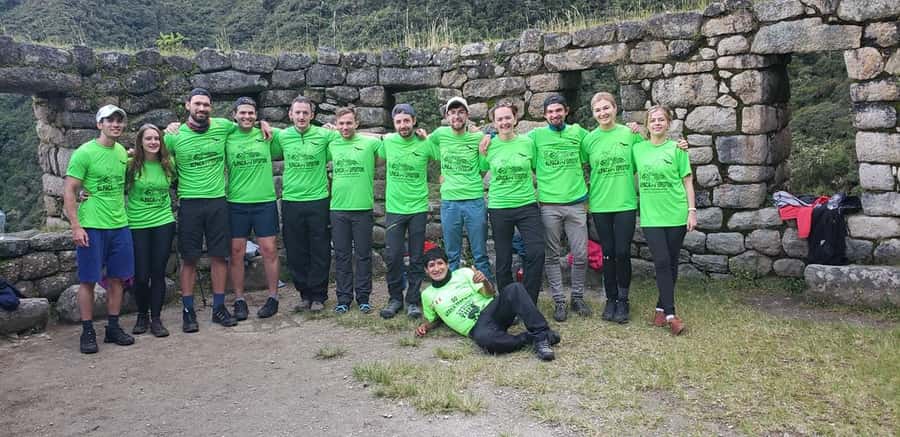
After the guided circuit, you have free time to explore within the limits of your ticket and route. You can take more photos, look back over the stone buildings, or slow down after the structured tour.
Huayna Picchu is an optional extra. The climb takes about 1.5 hours in total and costs $75 per person. Tickets are limited, so you must reserve them ahead of time. You cannot count on adding this at the last minute.
The climb is best for someone who still has energy after the previous day and the early start. It is not necessary to enjoy Machu Picchu, but the high viewpoint can add a different angle on the citadel and surrounding peaks.
Check that the Huayna Picchu entry fits your scheduled circuit before paying for it. The supplied details confirm that advance tickets are required, but they do not specify a particular entry time.
Aguas Calientes and the train back to Cusco
After Machu Picchu, you return to Aguas Calientes by bus or on foot. The afternoon is free, and the schedule can leave you with as much as four hours before the return train.
That extra time is useful if you want lunch, a slow walk around town, or a break after the citadel. It can also feel too long when you are tired and ready to get back to Cusco. One sensible approach is to have a relaxed meal, keep an eye on the train schedule, and avoid wandering too far.
The return train takes you to Ollantaytambo, where a driver meets you for the transfer to your Cusco hotel. Transportation is arranged throughout the trip, so you are not left to solve the rail and road connections yourself after a tiring two days.
What the $585 price buys you
At $585, this is not a budget Machu Picchu visit. The price includes hotel pickup and drop-off, train travel, buses during the route, Inca Trail permits, the Machu Picchu entry ticket, an English-speaking guide, meals, hotel accommodation, first aid equipment, and an oxygen tank.
You also get a personal duffle bag service for up to 5 kilograms. That is useful because you can leave larger luggage behind and carry only what you need for the overnight portion.
The value is strongest if you want one organized package. Permits and train seats are not simple details to arrange separately, and the company handles the connections from Cusco to the trail, the hotel, Machu Picchu, and back again.
The cost is harder to justify if you only want to see the ruins and do not care about hiking in through the Sun Gate. You are paying for the short Inca Trail, limited group support, food, permits, and logistics, not just entry to Machu Picchu.
The cancellation policy is strict because the activity is non-refundable. Booking must be made at least two weeks before the tour date, and you should confirm availability before making fixed travel plans.
Who should choose this tour
I would choose this trip if you want the Inca Trail experience but do not want four days of camping. It suits people who can handle a hard first day, value history and guiding, and prefer a hotel bed to a tent.
It also works well for mixed-age groups when everyone accepts a slower pace. The guides have shown patience with older walkers and people who were not regular hikers.
I would hesitate if you have serious mobility limits, heart or back problems, a pre-existing medical condition, or are pregnant. The activity is not suitable for wheelchair users, and the operator specifically excludes these groups.
You should also think twice if you expect a polished hotel and fine dining. The main strengths are the route, the guide, the views, and the well-managed transport. The overnight stay is comfortable for some people, but not consistently impressive.
Should you book the Short Inca Trail?
Yes, if your priority is to walk into Machu Picchu through the Sun Gate and then see the citadel properly the next morning. The combination of Wiñay Wayna, the hot lunch, patient guides, and two different views of Machu Picchu makes this a strong two-day plan.
Book it with realistic expectations. Train schedules, weather, group pace, and hotel rooms are not fully under your control. Reserve Huayna Picchu early if you want the climb, bring repellent and trekking gear, and use the pre-tour briefing at the company office the evening before departure at 6:00 PM to confirm the details.
At $585, it is expensive. But if you want a short, supported Inca Trail route with indoor accommodation and a second day inside Machu Picchu, the price can make sense.
FAQ
How long does the Machu Picchu Inca Trail tour last?
The tour lasts two days and includes one overnight stay in Aguas Calientes.
Where does the hike begin?
You leave the train at the KM 104 station and begin the Short Inca Trail from there.
How long is the hike to Wiñay Wayna?
The hike to Wiñay Wayna takes about three hours.
What is included in the $585 price?
The price includes hotel pickup and drop-off, transportation, meals listed in the schedule, an English-speaking guide, Inca Trail permits, the Machu Picchu Citadel entry ticket for Circuit 3, a 3-star hotel night, first aid equipment, oxygen, and a duffle bag service of up to 5 kilograms per person.
Is Huayna Picchu included?
No. Huayna Picchu costs $75 per person and is subject to availability. You must reserve the ticket in advance because spaces are limited.
Is the tour suitable for people who do not hike regularly?
The route can be completed at a steady pace with breaks, but the first day is hard and includes high altitude, heat, humidity, and uneven paths. Comfortable clothing and trekking gear are required.
What language is the guided tour in?
The live guided tour is in English, and the group is limited to 16 participants.
More 2-Day Experiences in Cusco
- From Cusco: 2-Day Trip to the Sacred Valley and Machu Picchu
★ 4.6 · 265 reviews - 2-Day Machu Picchu Tour by train from Cusco ( All included )
★ 5.0 · 85 reviews - Machu Picchu & Sacred Valley 2-Day Tour
★ 5.0 · 82 reviews - From Cusco: Sacred Valley & Machu Picchu 2-Day Tour by Train
★ 4.9 · 79 reviews
Just added around Cusco
- Waqrapukara 1 day trekking + meals★ 3.9 · 3 reviews
- Zipline over the Sacred Valley Trip★ 5.0 · 11 reviews
- Visit to the Cochahuasi Animal Sanctuary with rescued animal★ 4.1 · 4 reviews
- Valle Sur Cusco | half day★ 4.3 · 3 reviews
- Visit Pisac from Cusco: Private Transport★ 4.6 · 9 reviews
- Maras and Huaypo lagoon by ATV from Cuzco | Local Operator★ 4.7 · 4 reviews
- Trek to Humantay Lake from Cusco★ 4.9 · 8 reviews
- Trek to Choquequirao 4 days★ 3.8 · 4 reviews
Machu Picchu Tours, compared.
4-Day Inca Trail to Machu Picchu with Accommodation
Read our review →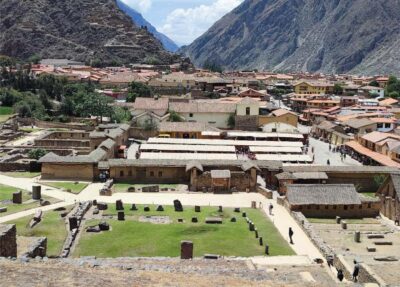
2-Day Trip to the Sacred Valley and Machu Picchu
Read our review →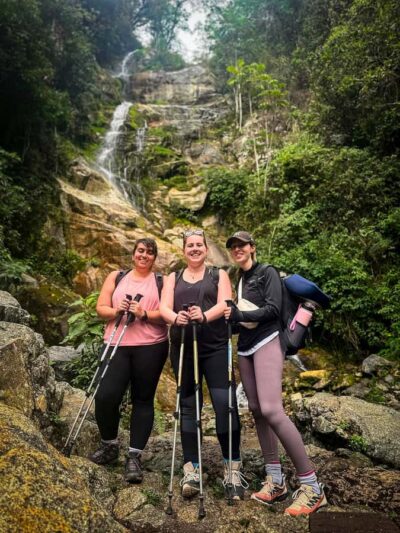
Machu Picchu 2-Day Inca Trail with Panoramic Train
Read our review →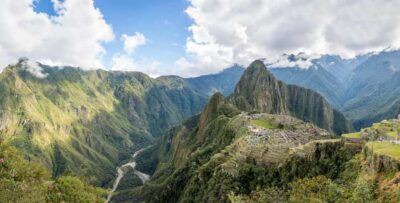
The First Class Machu Picchu Train by Inca Rail
Read our review →Browse the lists this tour appears in