
Reviewed · HIKING & TREKKING
Classic Choquequirao Trek – 5 Days / 4 Nights
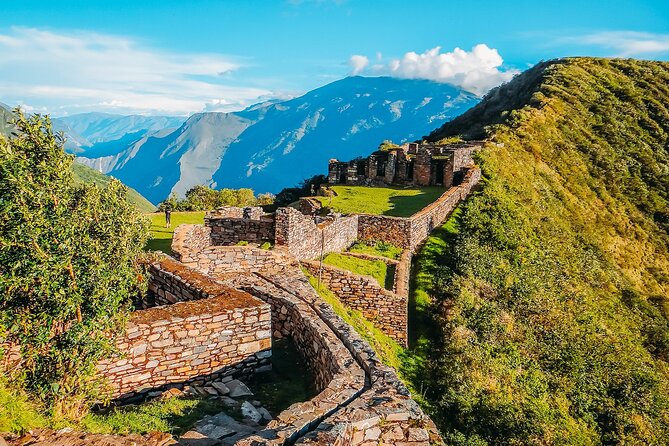
Choquequirao is the Inca site for people who want more effort and fewer crowds. This five-day trek drops into the Apurímac Canyon, climbs back toward the ruins, and gives you a full day among plazas, terraces, temples, and the famous carved white llamas. The scenery is enormous, but the trail is no gentle stroll.
I like the small-group setup, capped at 10 people in the tour description, with a maximum of 12 listed in the additional details. I also like the support system: guide, cook, muleteers, camping crew, snacks, water, emergency equipment, and a 5-kilogram duffle allowance. The catch is simple: this is a very hard hike, with a punishing descent, a steep climb, and a return over the same rough country.
In This Review
- Key points to know before booking
- Why Choquequirao rewards a difficult five-day route
- Day 1: From Cusco to Capuliyoc and down to Chiquisca
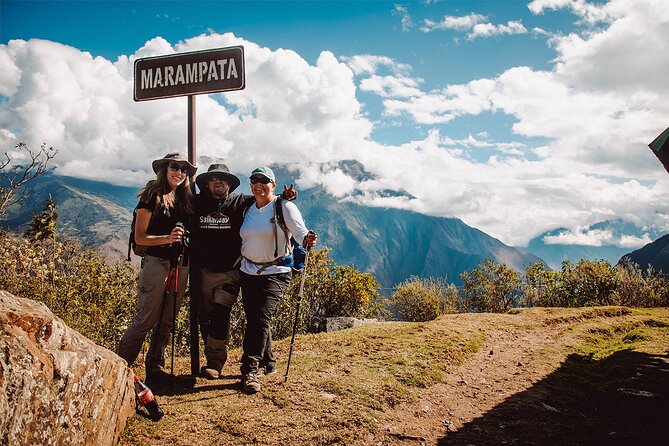
- Day 2: Crossing the river and climbing to Marampata
- Day 3: A full day at Choquequirao
- Camping, meals, and the people who make the route possible
- Day 4: Saying goodbye to the ruins and returning through the canyon
- Day 5: Capuliyoc, Saywite, and Cconoc hot springs
- Who should book this trek
- Is $735 a fair price?
- Final decision: a demanding route with excellent support
- FAQ
- How long is the Classic Choquequirao Trek?
- How difficult is the Choquequirao Trek?
- What is included in the $735 price?
- Is a sleeping bag included?
- Can I request vegetarian, vegan, or gluten-free meals?
- How early should I arrive in Cusco before the hike?
Key points to know before booking
- Choquequirao gets a full exploration day: You have time to tour the citadel with a licensed bilingual guide rather than rushing through a short visit.
- The Apurímac Canyon shapes the trek: Expect steep altitude changes, hot lower sections, high mountain views, and demanding uphill zigzags.
- The support crew carries the heavy load: Muleteers transport camping equipment and your personal duffle, up to 5 kilograms or 11 pounds.
- Food is a major part of the service: Five breakfasts, five lunches, four dinners, snacks, tea time, and vegetarian or vegan meals are included if requested ahead.
- The final day adds variety: Saywite Monolith and Cconoc hot springs break up the long return to Cusco.
- You need time to adjust: Arrive in Cusco at least two days before the trek, and come prepared for sustained physical effort.
Why Choquequirao rewards a difficult five-day route
Choquequirao sits at about 3,050 meters, or 10,007 feet, among steep Andean mountains and near one of South America’s deepest canyons. The site is often compared with Machu Picchu, but the experience feels different because getting there requires a serious walk rather than a short train ride and a compact visit.
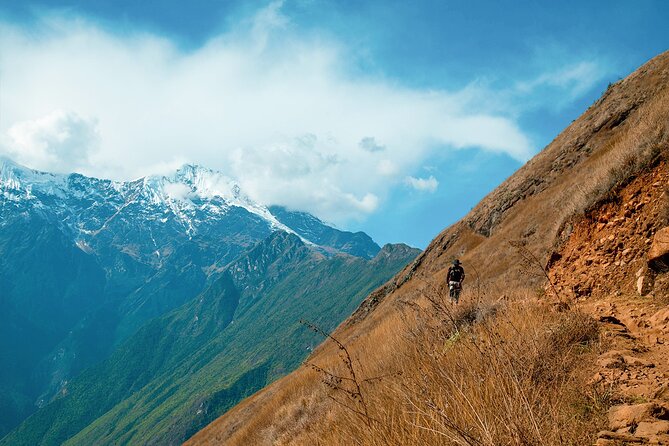
The route is shaped by contrast. You begin high enough to see snow-covered peaks, descend into hot and dry country, cross the Apurímac River, and then climb toward Marampata and the ruins. Along the way, the views open across the valley toward Padreyoc and Qoriwayrachina. If conditions cooperate, you might see condors circling above the canyon.
I like that the trip does not treat Choquequirao as a quick photo stop. You spend the third day exploring the complex, learning about its architecture and Inca purpose, and taking a picnic lunch on site. The estimate that only about 40 percent of the archaeological area is visible gives the ruins a sense of unfinished discovery, without requiring you to imagine that every slope contains a major monument.
The price is $735 per person. That is not a budget walk, but it covers much more than a guide and an entrance ticket. You are paying for private transportation, camping equipment, porters, cooks, muleteers, meals, snacks, safety gear, a duffle bag, and hotel transfers. For a remote trek with a support team, the price can make sense, especially if you would otherwise need to arrange each part separately.
A few more Cusco trips to weigh up
- From Cusco: 7 Lakes Ausangate Trek with Breakfast and Lunch
★ 4.8 · 360 reviews - Cusco: Rainbow Mountain Tour and Red Valley Hike (Optional)
★ 4.7 · 149 reviews - Cusco: Full-Day Rainbow Mountain & Red Valley Trekking Tour
★ 4.5 · 121 reviews
Day 1: From Cusco to Capuliyoc and down to Chiquisca
The morning starts early, with hotel pickup around 4:00 to 4:30 a.m. That departure gives you a long transfer from Cusco toward Cachora and the trailhead area at Capuliyoc. Bring something warm for the vehicle ride, along with water and a small daypack that you can keep with you.
The route toward Cachora includes views of the Salkantay and Humantay glaciers. These are an early reminder that this is a mountain trip, even though the trail soon drops into warmer, drier terrain.
After breakfast, you continue to Capuliyoc and meet the cooks and muleteers. This is an important moment in the trip because the crew takes over the heavy camping load. Your duffle can hold up to 5 kilograms, while you carry only what you need during the day.
From Capuliyoc, the main hiking begins with roughly three hours of descent to Chiquisca. A downhill start can sound easy, but steep descents often tax your knees and thighs more than a level trail. Trekking poles are not included, so bring your own if you use them.
The route looks across the Apurímac Valley and toward Padreyoc and Qoriwayrachina. The surrounding mountains are dry and dramatic, while fruit crops near Chiquisca add a softer touch. Condor sightings are possible, but they are never guaranteed, so enjoy the valley even if the birds stay out of view.
You spend the night at a warm camp near Chiquisca. The first day is long because of the early departure and transfer, so use dinner as a chance to eat well, refill, and prepare your feet for the next day.
Day 2: Crossing the river and climbing to Marampata
Day two is the route’s main physical test. You first descend for about an hour to Playa Rosalinas, the lowest point in the valley. The name can sound inviting, but this is a mountain crossing, not a resort beach.
After crossing the footbridge, the trail turns upward. The climb toward Santa Rosa and Marampata is steep, with long zigzags that make the height gain easier to manage but do not make it easy. The day’s timing is substantial, and the itinerary allows up to about 14 hours overall, so you should expect a full mountain day rather than a relaxed walk.
Lunch comes in Santa Rosa, after which the climb continues for around three hours toward Marampata. This is where pacing matters. You do not need to race the fastest hiker in the group. A good guide will help set a manageable rhythm, and the support team provides snacks and tea along the route.
Marampata is a welcome reward. From camp, you can look across immense canyons and the Apurímac Valley. Late afternoon light can turn the mountains orange, and the lack of city lights makes the evening sky a major part of the experience.
The guides named in the feedback include Guido, Roman, Franz, George, Carlos, Anthony, Caesar, and Elvis. You may not be assigned one of these people, but the service model is clear: expect regular briefings, encouragement during hard sections, and explanations about local culture and Inca traditions. Franz was especially attentive to a gluten-free diet, so mention dietary needs before departure rather than waiting until camp.
Day 3: A full day at Choquequirao
From Marampata, Choquequirao is about an hour away on foot. After breakfast, you walk to the citadel with your guide and spend the day exploring the site at 3,050 meters.
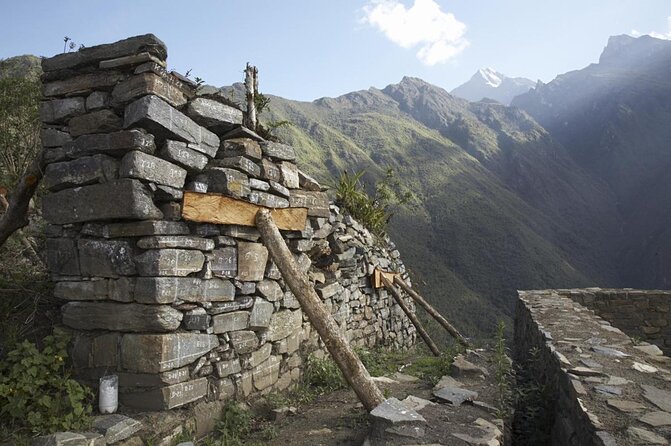
The ruins include plazas, temples, agricultural terraces, and stonework that shows how the Incas adapted construction and farming to steep mountain terrain. The famous white llamas carved into the terraces are the detail you should not miss. They are easy to remember and give the site a visual identity beyond the usual Inca walls and platforms.
A full day matters here. Choquequirao is spread across a large area, and the mountain setting makes every section feel separate. You can stop for a picnic lunch and take in the canyon views instead of treating the citadel as a quick sequence of photographs.
The claim that Choquequirao is larger than Machu Picchu needs context. It does not mean every part is excavated or equally easy to see. The site is still only partly visible, and that incomplete quality is part of its appeal. You see major structures, terraces, and carved details, while other sections remain covered or difficult to reach.
You return to Marampata for dinner and another night in camp. This is a demanding day even though the walking distance is shorter than on the approach, because you spend hours on uneven paths and moving around the archaeological area.
Same valley, a completely different kind of day:
- Cusco: Humantay Lake Tour with Breakfast and Buffet Lunch
★ 4.9 · 2,976 reviews - From Cusco: Sacred Valley & Maras Salt Mines Tour with Lunch
★ 4.8 · 2,227 reviews - From Cusco: Moray, Maras Salt Mines & Chinchero Weavers Tour
★ 4.8 · 1,925 reviews - From Cusco: Full-Day Group Tour of Machu Picchu
★ 4.7 · 1,767 reviews
Camping, meals, and the people who make the route possible
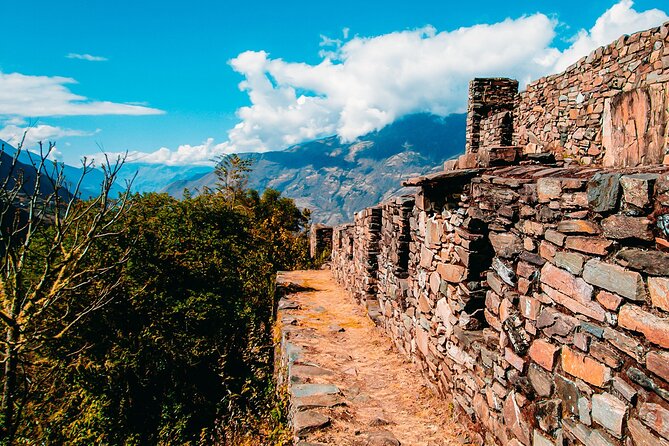
The camping setup includes high-quality tents for two people, a dining tent, chairs, cooking equipment, an inflatable mattress, a rain poncho, a bag cover, and a portable toilet. Three nights of tent accommodation are specifically included, while the itinerary also describes a local family welcome in Chiquisca on the fourth day. Ask the operator to clarify the exact sleeping arrangement for each night before you pay.
The food service is one of the strongest parts of the package. Five breakfasts, five lunches, four dinners, daily snacks, water, and tea time are included. Food on a remote trek can be basic, but this team is described as serving substantial meals, fresh cakes, and careful options for special diets.
That matters because the route burns energy quickly. Eat breakfast even if you are not hungry at dawn, keep snacks within reach, and use tea time to recover rather than treating it as a luxury.
Porters and muleteers carry camping equipment and personal belongings. This does not make the hike easy, but it keeps the challenge focused on walking rather than hauling a full load. Treat the crew well, follow the duffle limit, and keep essential items in your daypack.
Safety support includes a first aid kit, oxygen, walkie-talkies, and emergency satellite phones. These tools are reassuring in a remote canyon, but they are not a substitute for fitness or travel insurance. Insurance is recommended and not included.
Day 4: Saying goodbye to the ruins and returning through the canyon
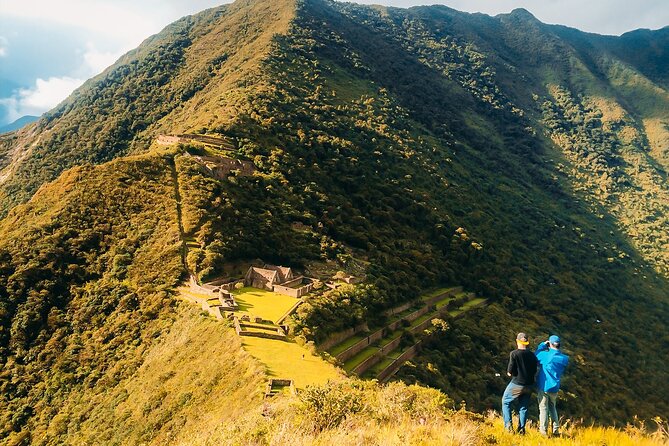
The return begins with a final view of the canyon from Marampata. This is your last easy chance to pause and look back at the setting that makes Choquequirao special.
You then walk for about two hours to Santa Rosa through greener vegetation and stop for lunch. The route feels different in reverse, but the effort remains. Downhill sections can be hard on tired knees, and the coming climb from the river should not be underestimated.
At Playa Rosalinas, you can cool off in the cold waters of the Apurímac River. This is a useful break after the descent, but do not assume the water will feel warm or comfortable. Bring a small towel, which is included, and keep your dry clothing protected.
The route then climbs back to Chiquisca. A local family welcomes you into their home, giving you a chance to learn about Andean customs, local traditions, and the connection to Pachamama. This part adds human contact to a trek otherwise dominated by mountains and ruins.
You spend the night at the campsite after dinner. The day can last around 14 hours according to the schedule, so the practical goal is not to squeeze in extra activity. Eat, clean up, check your feet, and prepare for the final climb to Capuliyoc.
Day 5: Capuliyoc, Saywite, and Cconoc hot springs
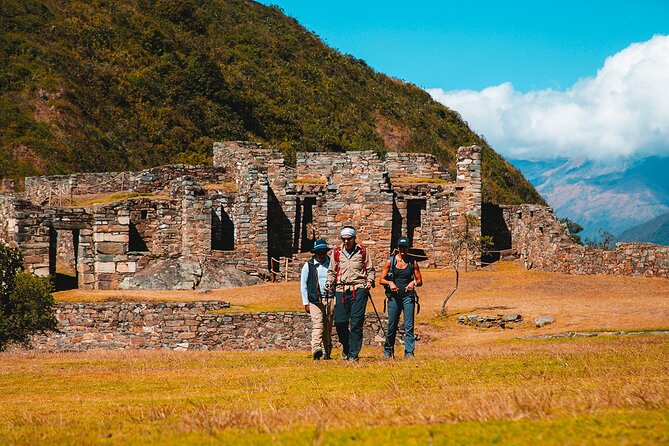
The final hiking day starts early, partly to avoid the strongest sun and partly because you still have a four-hour climb to Capuliyoc. The sound of the Apurímac River accompanies the first section, but the main task is steady uphill walking.
At Capuliyoc, you say goodbye to the hiking team and board private transport. That handoff is useful because the day is not over. The return includes two worthwhile stops before Cusco.
Saywite Monolith is a sacred Inca site with more than 200 carved figures. It gives you a final look at Inca stonework in a setting different from Choquequirao. Because the visit lasts about an hour and a half, you get enough time to see the main carving rather than stopping only for a rushed photograph.
Next comes Cconoc hot springs, where you can soak before lunch. After four demanding days and a final morning climb, this is exactly the sort of ending that makes practical sense. Pack swimwear where you can reach it, since your main luggage may be stored with the transport.
You return to Cusco around 6:00 p.m. and are transferred to your accommodation. Dinner in Cusco is not included, so plan for that cost and do not expect a late-night arrival to feel effortless.
Who should book this trek
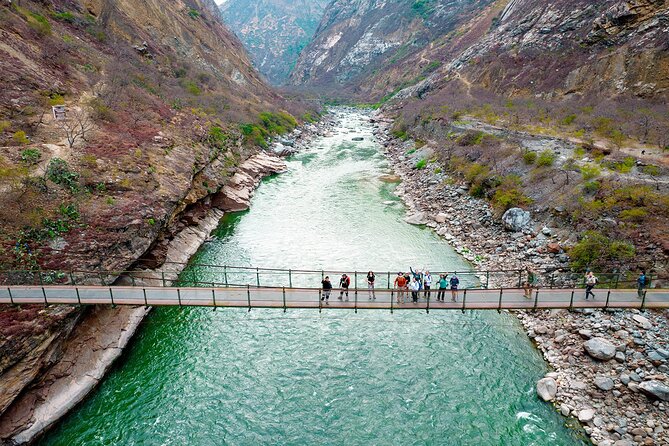
This route suits you if you want a major physical challenge, care about archaeology, and prefer a small support team over a self-guided trip. It is also a good fit if Machu Picchu feels too familiar or crowded and you want an Inca site reached by foot through a huge mountain setting.
You should have strong physical fitness and arrive in Cusco at least two days early to adjust to the altitude. Children aged 12 and older may participate, but they must be accompanied by a responsible adult. The route is not a good choice if you dislike steep descents, long uphill stretches, camping, or early starts.
Bring a sleeping bag and trekking poles because neither is included. You also need personal hiking clothes and equipment, travel insurance, and a current passport. Passport name, number, expiry date, and country are required when booking.
The departure is listed around 4:00 a.m., while the first hotel pickup is described at about 4:30 a.m. Confirm your exact pickup time before the night before, and arrange your breakfast plan with the operator.
Is $735 a fair price?
At $735, the package offers solid value for a remote five-day route. The entrance to Choquequirao, Saywite, and Cconoc is included, along with private transport, hotel pickup and drop-off, a licensed bilingual guide, camping gear, cooks, muleteers, food, snacks, and emergency equipment.
The biggest value comes from the logistics. You are not arranging a vehicle to Cachora, finding a mule team, buying camping supplies, planning meals, and organizing a return from the canyon on your own. The support also lets you focus on the trail and the ruins.
The main extra costs are a sleeping bag, trekking poles, personal gear, insurance, and dinner on the fifth night. Ask what tent setup applies to each night, since the schedule is five days and four nights while the included equipment specifies three nights in tents.
The experience is non-refundable and cannot be changed after booking. Since the departure also depends on suitable weather and a minimum group size, make sure your Cusco dates are flexible enough before committing.
Final decision: a demanding route with excellent support
Book this trek if you want Choquequirao for the setting as much as for the ruins. You get a full archaeological visit, dramatic canyon scenery, strong meal support, porters for heavy equipment, and a small group that can benefit from close guidance.
Skip it if you are looking for a comfortable sightseeing tour or a short walk with easy altitude changes. The descent to the canyon, river crossing, climb to Marampata, and return over the same region demand real preparation.
For the right hiker, the combination is hard to beat: an enormous Inca site, condors overhead if luck allows, quiet mountain camps, contact with a local family, and a hot-spring soak before returning to Cusco. The trail asks a lot, but the support system and the extra day at Choquequirao make the effort worthwhile.
FAQ
How long is the Classic Choquequirao Trek?
The trek lasts approximately five days and four nights, beginning with an early pickup in Cusco and ending with arrival back in Cusco around 6:00 p.m. on day five.
How difficult is the Choquequirao Trek?
It is a challenging trek requiring strong physical fitness. You should expect steep descents, a major climb after crossing the Apurímac River, long hiking days, and demanding return sections.
What is included in the $735 price?
The price includes Choquequirao admission, a licensed bilingual guide, transportation and transfers, camping equipment, cooks, muleteers, meals, snacks, water, tea time, a 5-kilogram duffle allowance, safety equipment, hotel pickup and drop-off, and a portable toilet.
Is a sleeping bag included?
No. You need to bring or arrange your own sleeping bag. Trekking poles are also not included.
Can I request vegetarian, vegan, or gluten-free meals?
Vegetarian and vegan options are available if you request them at booking. You should also advise the operator of any gluten-free requirements before the trek.
How early should I arrive in Cusco before the hike?
You should arrive in Cusco at least two days before departure to adjust to the altitude. The tour begins with hotel pickup around 4:00 to 4:30 a.m.
Just added around Cusco
- Waqrapukara 1 day trekking + meals★ 3.9 · 3 reviews
- Zipline over the Sacred Valley Trip★ 5.0 · 11 reviews
- Valle Sur Cusco | half day★ 4.3 · 3 reviews
- Visit to the Cochahuasi Animal Sanctuary with rescued animal★ 4.1 · 4 reviews
- Visit Pisac from Cusco: Private Transport★ 4.6 · 9 reviews
- Maras and Huaypo lagoon by ATV from Cuzco | Local Operator★ 4.7 · 4 reviews
- Trek to Humantay Lake from Cusco★ 4.9 · 8 reviews
- Trek to Choquequirao 4 days★ 3.8 · 4 reviews
Hiking & Trekking, compared.
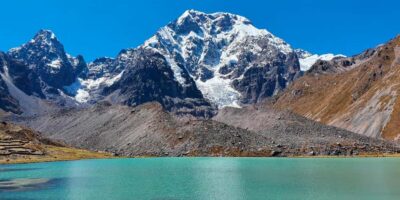
7 Lakes Ausangate Trek with Breakfast and Lunch
Read our review →
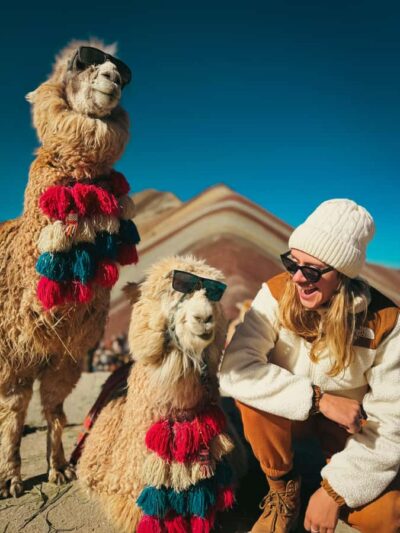
Rainbow Mountain Tour and Red Valley Hike (Optional)
Read our review →
Full-Day Rainbow Mountain & Red Valley Trekking Tour
Read our review →
Browse the lists this tour appears in