
Reviewed · HISTORICAL TOURS
Puno: History and Culture Walking Tour
Puno’s best introduction may begin above the city, at Huajsapata Lookout, where you can take in Lake Titicaca and see how Puno spreads around the high-altitude basin. From there, this two-hour walk brings you down through the historic center, into the 18th-century cathedral, and onward to a museum filled with pre-Columbian objects.
I like the compact route and the small group size, limited to 10 people. I also like the mix of views, architecture, and museum displays, since you get more than a quick photo stop. One thing to weigh is the extra 20 soles entrance fee for the Carlos Dreyer Museum, which is not included in the $20 tour price.
- Huajsapata Lookout: Begin above Puno for wide views of the city and Lake Titicaca.
- Manco Capac monument: See the monument linked with the founder of the Incan Empire.
- Puno Cathedral: Examine Spanish Baroque design mixed with Andean details.
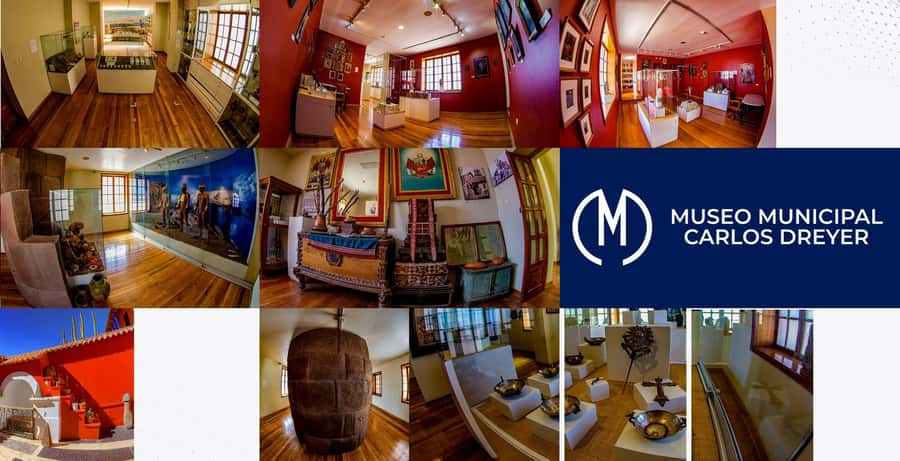
- Carlos Dreyer Museum: View pre-Columbian jewelry, ceramics, and textiles for an added 20 soles.
- Small bilingual group: Walk with a Spanish and English-speaking guide, with no more than 10 participants.
- Simple two-hour route: Start and finish at Puno’s Plaza de Armas, with no transport between stops.
In This Review
- Starting Above Puno at Huajsapata Lookout
- Walking Down Into Puno’s Historic Center
- Reading the Andean Details in Puno Cathedral
- Pre-Columbian Objects at the Carlos Dreyer Museum
- What the $20 Price Really Buys You
- Why the Small Group Format Helps
- Timing, Walking, and What to Bring
- Who Will Get the Most From This Walk
- Should You Book the Puno History and Culture Walking Tour?
- FAQ
- Where does the Puno walking tour begin?
- Where does the tour finish?
- How long does the walking tour last?
- Which languages does the guide speak?
- Is the Carlos Dreyer Museum entrance included?
- How many people can join the tour?
- What should I bring, and are there age restrictions?
Starting Above Puno at Huajsapata Lookout
The tour begins at the Plaza de Armas, but your first major stop is Huajsapata Lookout. This is a smart opening because it gives you a quick sense of Puno before you get caught up in its streets and buildings.
From the lookout, you can see across the city toward Lake Titicaca. The view helps explain Puno’s setting better than a map does. You see the town gathered around the high plateau, with the lake forming the broad backdrop. Since the tour is only two hours, this opening view also gives you an efficient orientation without spending half the morning on a formal city introduction.
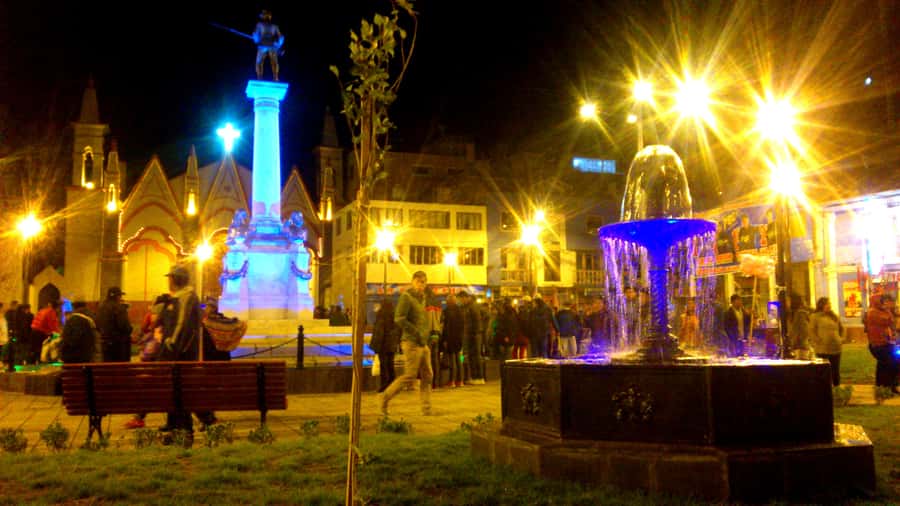
I would pay attention to the guide’s explanation here. The lookout is not just a place for photographs. It connects the modern city with older Andean stories, especially through the monument to Manco Capac, identified here as the founder of the Incan Empire.
That detail gives the opening stop some weight. You are not simply looking over rooftops. You are also being introduced to the traditions and origin stories that shape the region’s identity.
The view is likely the tour’s most immediately appealing moment, but it comes with one practical consideration. You should bring your passport or another ID card, as requested for the activity, and avoid bringing luggage or a large bag. This is a walking tour, not a transfer service, so travel light.
Walking Down Into Puno’s Historic Center
After the lookout, your guide leads you toward the center and the Cathedral of Puno. The route lets you move from a broad view of the city to the details of its streets and public buildings.
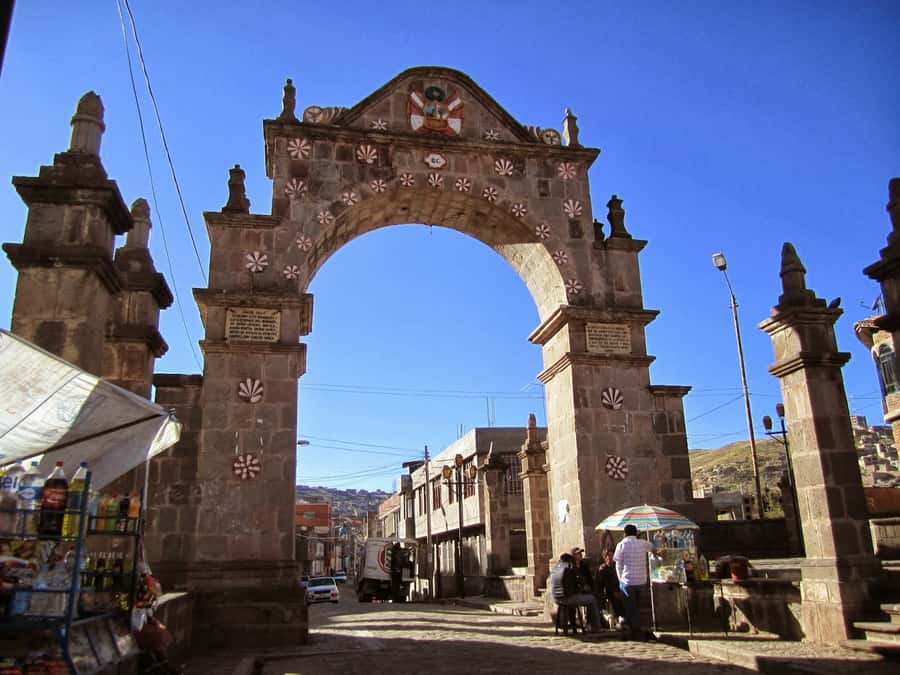
That change in scale is one of the best reasons to choose a walking tour. From above, Puno looks like a place on a map. On foot, its historic center becomes a series of facades, plazas, religious buildings, and local details that are easier to understand with someone explaining what you are seeing.
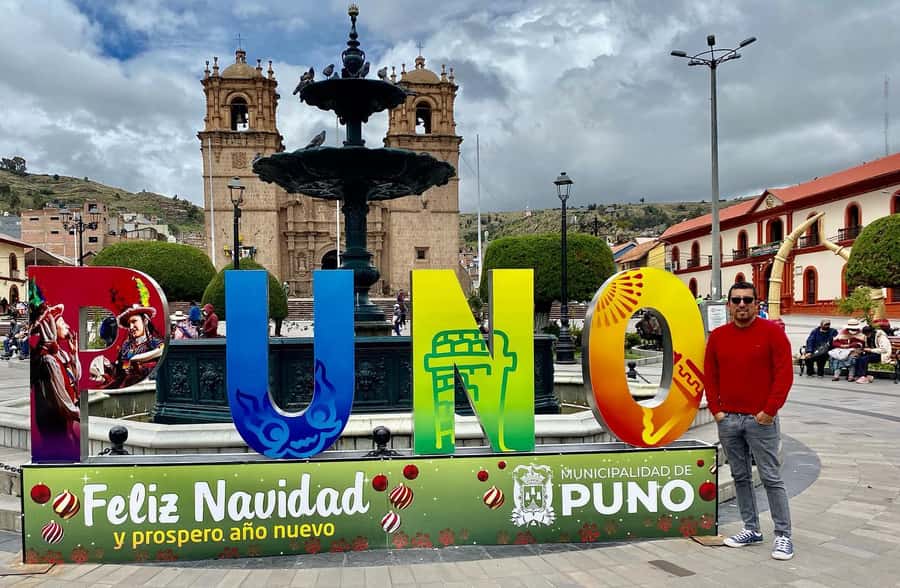
The tour begins and ends at the Plaza de Armas, officially the Plaza Mayor de Puno. That makes the activity easy to fit into a day in the city. You do not need to arrange a separate pickup or figure out where the walk ends. Once the tour is over, you are back at the same central meeting point.
The schedule is listed as two hours, though the exact starting time depends on availability. I would choose a departure that leaves you enough room afterward for lunch, independent sightseeing, or another Puno activity. Since the route includes a lookout, a cathedral, and a museum, the walk should feel focused rather than rushed, but it is not an all-day city tour.
A few more Puno trips to weigh up
- Aymara Route Mystical Cultural Tour
★ 4.7 · 27 reviews - Guided Tour of Historic and Monumental Trujillo
★ 5.0 · 930 reviews - Lima’s Vibrant Heritage: Exploring the City’s Landmarks Half-day
★ 4.5 · 581 reviews
Reading the Andean Details in Puno Cathedral
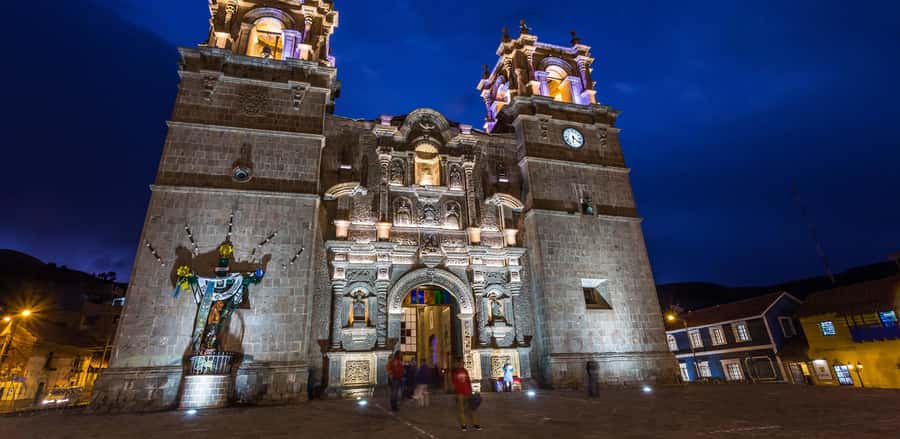
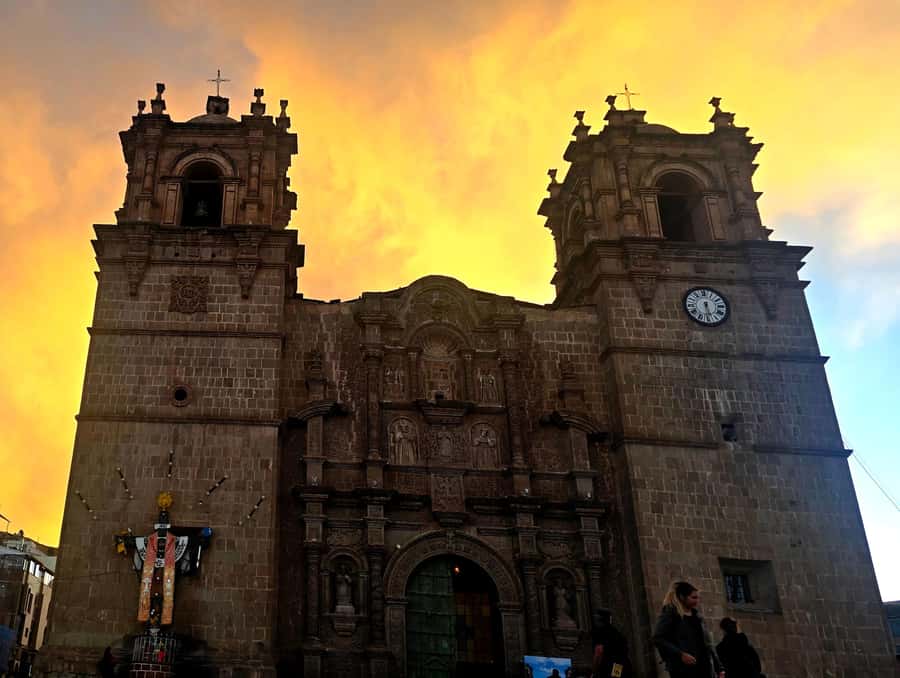
The 18th-century Cathedral of Puno is the architectural centerpiece of the walk. Its design combines Spanish Baroque ideas with indigenous Andean elements, a blend that reflects the region’s complicated colonial past and its continuing cultural identity.
This is where a guide adds real value. A cathedral can be beautiful without explanation, but the mix of European forms and local decoration deserves more than a quick glance. Your guide can point out how the building reflects a meeting of traditions rather than a purely Spanish style.
The cathedral is also useful for understanding Puno as a mestizo city. That word refers to the blending of European and Indigenous influences, and here it appears in stone, ornament, religious imagery, and the building’s overall character.
I would not expect the cathedral visit to function like a long religious-art lecture. The activity is designed as a broad history and culture walk, so the cathedral is one part of a larger route. Still, it gives you a strong visual example of the themes introduced at Huajsapata Lookout.
The route’s bilingual format matters here. The guide speaks Spanish and English, so English-speaking participants can ask questions rather than simply follow a scripted path. One guide named Samuel received especially strong praise for making the experience enjoyable. Guide assignments can change, so Samuel should not be treated as guaranteed, but his mention gives you a useful name to look for when confirming your booking.
Pre-Columbian Objects at the Carlos Dreyer Museum
The Carlos Dreyer Museum provides the most direct look at the region’s archaeological and cultural past. Inside, you can see pre-Columbian jewelry, ceramics, and textiles, along with material connected to the founding and development of Puno.
The collection matters because objects often explain a place more clearly than dates alone. Jewelry shows skill and status. Ceramics reveal daily use and artistic choices. Textiles can carry patterns and techniques that connect the past with Andean cultural traditions.
Your guide accompanies you through the museum, helping connect the objects with the wider story of Puno. This is particularly useful if you do not already know the difference between the many cultures and periods represented in the region. You can ask questions as you go, rather than trying to make sense of every display by yourself.
The museum entrance costs 20 soles per person, paid separately from the tour. At the listed tour price of $20, that extra fee is worth including in your budget. It is not a large addition, but the tour’s advertised price is not the final cost if you want to see the full route.
If you are mainly interested in scenery and architecture, you might consider the museum optional in spirit, even though it is part of the planned experience. If you enjoy objects and historical context, I would pay the entrance fee. The museum is what turns the walk from a sightseeing loop into a more rounded introduction to Puno’s past.
What the $20 Price Really Buys You
At $20 per person, the tour offers a reasonably priced way to cover several central sights with a guide. You are paying for the bilingual service, the small group format, and the structure of a route that combines a lookout, cathedral, and museum.
The value is strongest if you have limited time in Puno or want help getting oriented at the start of your stay. A guide can show you the key center-city sights in two hours, while the small group limit of 10 leaves more room for questions than a large coach-style outing.
The price is less attractive if you want a long museum visit, extended photography time, or a slow architectural study. Two hours passes quickly once you include walking, explanations, and the museum stop. You should think of this as a concise introduction, not a detailed specialist tour.
Remember to add the 20 soles museum fee. The guide is included, and there is no mention of transportation, meals, or other admissions. The tour’s value comes from interpretation and route design, not from a long list of included extras.
A free cancellation policy up to 24 hours before the start gives you useful flexibility. You can also reserve now and pay later, which helps if your Puno plans depend on weather, timing, or connections. These booking terms do not change the sights themselves, but they make a short city walk easier to fit into a larger Peru itinerary.
Same valley, a completely different kind of day:
- From Cusco: Vinicunca Rainbow Mountain ATV Tour with Meals
★ 4.6 · 1,060 reviews - From Puno: Uros, Amantaní & Taquile Islands 2-Day Tour
★ 4.5 · 452 reviews - From Puno: Floating Islands of the Uros Half-Day Tour
★ 4.4 · 394 reviews - Lake Titicaca 2-Day Tour to Uros, Amantani and Taquile
★ 4.4 · 199 reviews
Why the Small Group Format Helps
A maximum of 10 participants is a practical advantage here. Puno’s historic center is best experienced at walking pace, and a smaller group can gather around a cathedral detail or museum display without the awkwardness of a large crowd.
You also get a better chance to ask about the things that catch your attention. The available comments point to a guide who knew the important city sights and could answer questions. That is exactly the service you want from a short cultural walk.
The guide’s quality remains central to the experience. The route itself is straightforward, but the explanations determine whether it feels like a useful introduction or simply a series of stops. Samuel was specifically praised for doing an outstanding job, while another assessment noted that the guide covered the important sights and handled questions well.
Those comments suggest the strongest part of the experience is the human interpretation. Keep your expectations measured, though. The overall rating is 4.1 from 13 ratings, which points to a generally positive but not flawless experience. I would book it for its practical orientation and cultural range, not because every departure will be identical.
Timing, Walking, and What to Bring
The tour lasts two hours and starts at the Plaza de Armas. It ends back at the same meeting point, so you can plan around a fixed central location.
You should bring a passport or ID card. Large bags and luggage are not allowed, so leave suitcases at your accommodation or use another approved storage option before arriving. A small personal bag is the sensible choice, but the activity specifically warns against large bags.
The experience is not suitable for children under five. The supplied information does not give a detailed accessibility description, so you should contact the provider if you have mobility concerns or need a precise account of the route.
Because the tour includes Huajsapata Lookout and a city walk, wear practical walking clothing and shoes. The activity information does not list a dress code or special equipment, so keep your preparation simple. The key is to arrive ready to walk and to carry only what you need.
The exact departure times vary, so check availability before booking. A morning or afternoon start may change how the views feel, but no specific lighting or weather promise is made. Lake Titicaca is the visual highlight, so clear conditions would help, though the tour remains useful for the cathedral and museum even if the view is less dramatic.
Who Will Get the Most From This Walk

I would recommend this tour to first-time visitors who want a quick introduction to Puno without committing to a full-day excursion. It is especially useful if you have just arrived and want to understand the city center before exploring independently.
It also suits anyone who likes a blend of history, architecture, and objects. The route does not force you to choose between a viewpoint and a museum. You get both, along with a major cathedral and the central plaza.
The tour may work well for solo visitors and couples who prefer a guide but do not want a large group. The 10-person limit keeps the outing personal enough for questions while still giving you the social ease of a shared walk.
I would think twice if your priority is Lake Titicaca itself rather than Puno. You see the lake from Huajsapata Lookout, but this is not a boat trip or a lakeside excursion. It offers a city view of Titicaca, not an extended visit on the water.
Families with very young children should note the age restriction. Children under five are not suited to this activity, according to the tour information.
Should You Book the Puno History and Culture Walking Tour?
Book it if you want an efficient, guided look at Puno’s central sights, and if the combination of Lake Titicaca views, Andean and Spanish architecture, and museum objects appeals to you. The two-hour length, central meeting point, bilingual guide, and small group make it easy to add to a busy Peru itinerary.
Budget another 20 soles for the Carlos Dreyer Museum. That extra cost is worthwhile if you enjoy pre-Columbian jewelry, ceramics, and textiles, but it is important to know about it before you arrive.
I would choose this walk early in a Puno stay, when the city’s layout and cultural background are still unfamiliar. If Samuel is leading your departure, you may get the kind of clear, question-friendly guiding that this route needs. Book elsewhere if you want an extended museum visit, a lake excursion, or a tour built around one narrow subject.
FAQ
Where does the Puno walking tour begin?
The tour begins at the Plaza de Armas of Puno, also called the Plaza Mayor de Puno.
Where does the tour finish?
The activity ends back at the meeting point in the Plaza de Armas.
How long does the walking tour last?
The tour lasts two hours. Starting times depend on availability.
Which languages does the guide speak?
The live guide speaks Spanish and English.
Is the Carlos Dreyer Museum entrance included?
No. The museum entrance fee is not included and costs 20 soles per person.
How many people can join the tour?
The activity uses a small-group format limited to 10 participants.
What should I bring, and are there age restrictions?
Bring your passport or ID card, and do not bring luggage or large bags. The activity is not suitable for children under five.
Just added around Puno
- Uros Floating Islands Tour in Puno★ 3.7 · 9 reviews
- Two Day Lake Titicaca Tour With Homestay★ 3.7 · 6 reviews
- TRIP FROM PUNO TO CUSCO WITH THE ROUTE OF THE SUN★ 4.7 · 16 reviews
- Full-Day Tour of Uros, Taquile and Sillustani from Puno★ 5.0 · 41 reviews
- Two-Day Tour to Uros with Amantani and Taquile from Puno★ 5.0 · 44 reviews
- Full Day Lake Titicaca Tour to Uros and Taquile Islands★ 4.5 · 56 reviews
- Full Day Guided Tour of the Aymara Route from Puno★ 5.0 · 55 reviews
- Sun island and Copacabana | From Puno or La Paz / Day Trip★ 4.1 · 5 reviews
Historical Tours, compared.
Guided Tour of Historic and Monumental Trujillo
Read our review →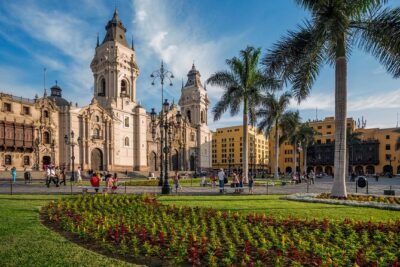
Lima’s Vibrant Heritage: Exploring the City’s Landmarks Half-day
Read our review →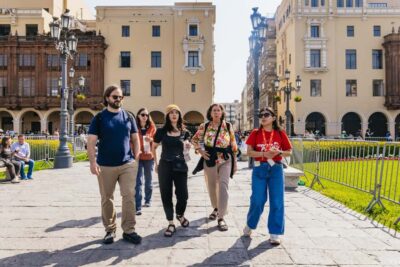
Historic Center Street Food, Market, and Eateries Tour
Read our review →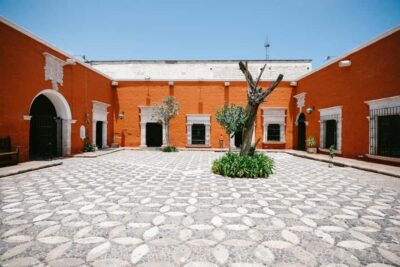
Walking tour in the Historic Center of Arequipa
Read our review →
Historic Downtown, Miraflores & Catacombs Private Tour
Read our review →
Machu Picchu Private Archaeological and Historical Guided Tour
Read our review →Browse the lists this tour appears in