
Reviewed · HISTORICAL TOURS
Aymara Route Mystical Cultural Tour
The most unusual part of the Aymara Route is its mix of sacred places, ancient farming methods, burial towers, and dramatic stone formations. In one day, you move from Chucuito’s Temple of Fertility to the square chullpas of Molloco, then on to Aramu Muru and Juli, known here as the Rome of America.
I like two things right away: the variety is excellent, and an official guide gives meaning to places that could otherwise look like scattered stones and old walls. I also like the price. At about $32, transport, entrance tickets, and a live guide are included, which makes this one of the better-value cultural outings from Puno.
The main thing to consider is the long day and the high-altitude setting. The schedule includes several stops with walking, sun, wind, and limited shelter. At Aramu Muru, you may also need to choose between a short hike for photos and a ceremony, so you might not get every activity in one visit.
In This Review
- Key points to know before you book
- Why this route is different from a standard Puno day trip
- Chucuito and the Temple of Fertility
- Molloco’s square and circular chullpas
- Waru warus and old Andean farming science
- Aramu Muru and the choice between ritual and photos
- Juli, the Rome of America
- What the $32 price really covers
- Language, guide quality, and the value of explanation
- Packing and preparation for a high-altitude day
- Who will enjoy the Aymara Route most
- Should you book the Aymara Route?
- FAQ
- How long does the Aymara Route tour last?
- What places does the tour visit?
- Is transportation included?
- Is an English-speaking guide available?
- Are entrance tickets included?
- What should I bring?
Key points to know before you book
- Temple of Fertility in Chucuito: See six smaller phalluses and one larger stone symbol connected with fertility beliefs.
- Molloco’s unusual chullpas: Compare three square towers and one circular tower with the better-known round towers at Sillustani.
- Andean waru warus: Learn how raised fields and water channels helped test and grow Andean grains and tubers.
- Aramu Muru ceremony: Meditation and a traditional ceremony give this stop a more personal, reflective feel.
- Comfortable transport and included tickets: The price covers first-class mobility, admissions, and an official guide.
- Free drone videos on some departures: Guides have sometimes used a drone at the waru warus and Aramu Muru, producing memorable group footage.
Why this route is different from a standard Puno day trip
Many excursions from Puno focus on Lake Titicaca, colonial churches, or the famous Sillustani burial towers. The Aymara Route takes a less familiar path. Its purpose is to show you how several parts of Aymara life fit together: fertility, burial customs, farming knowledge, sacred geography, and religious practice.
That variety gives the day a good rhythm. You are not looking at the same type of ruin for eight hours. One stop is tied to ritual symbolism, another to funerary architecture, and another to agriculture. Aramu Muru changes the mood again, with time for meditation and a ceremony near a large carved rock opening.
The tour lasts roughly seven to eight hours, with the day ending in Puno around 4 or 5 pm. The supplied schedule lists about 7 hours and 10 minutes, while the activity details describe an eight-hour tour. Allowing for traffic, pickup changes, and stops is sensible.
You receive an English or Spanish-speaking guide, and pickup is included. Send your hotel address and a phone number or WhatsApp contact in advance so the driver can coordinate the meeting point. That small step matters in Puno, where a clear pickup arrangement can save you a lot of waiting.
A few more Puno trips to weigh up
- Puno: History and Culture Walking Tour
★ 4.1 · 13 reviews - Guided Tour of Historic and Monumental Trujillo
★ 5.0 · 930 reviews - Lima’s Vibrant Heritage: Exploring the City’s Landmarks Half-day
★ 4.5 · 581 reviews
Chucuito and the Temple of Fertility
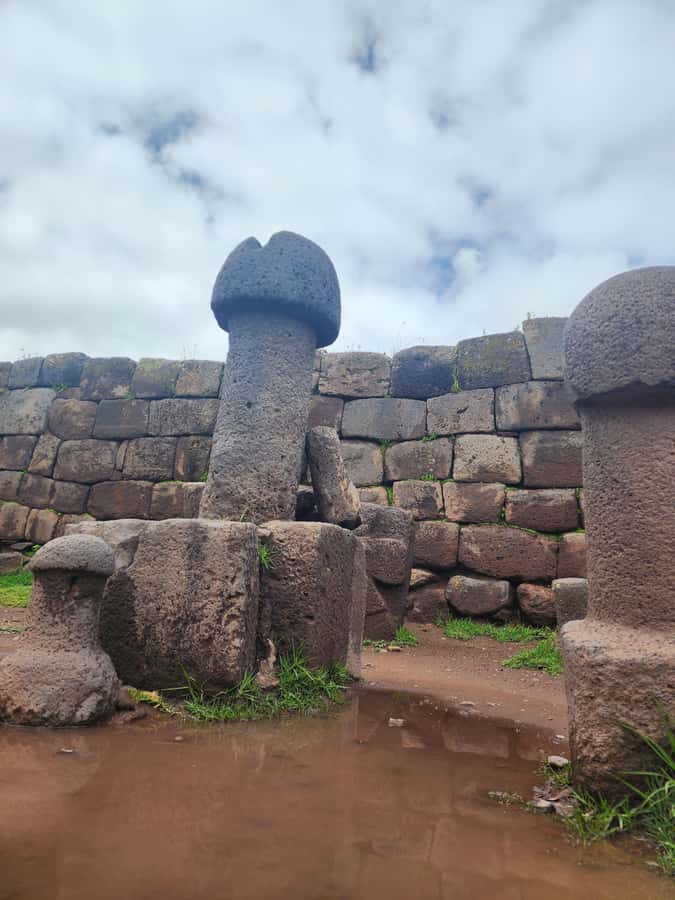
The first major stop is Chucuito, south of Puno. The visit lasts about 45 minutes to an hour and begins with the Temple of Fertility, one of the strangest and most memorable sites on the route.
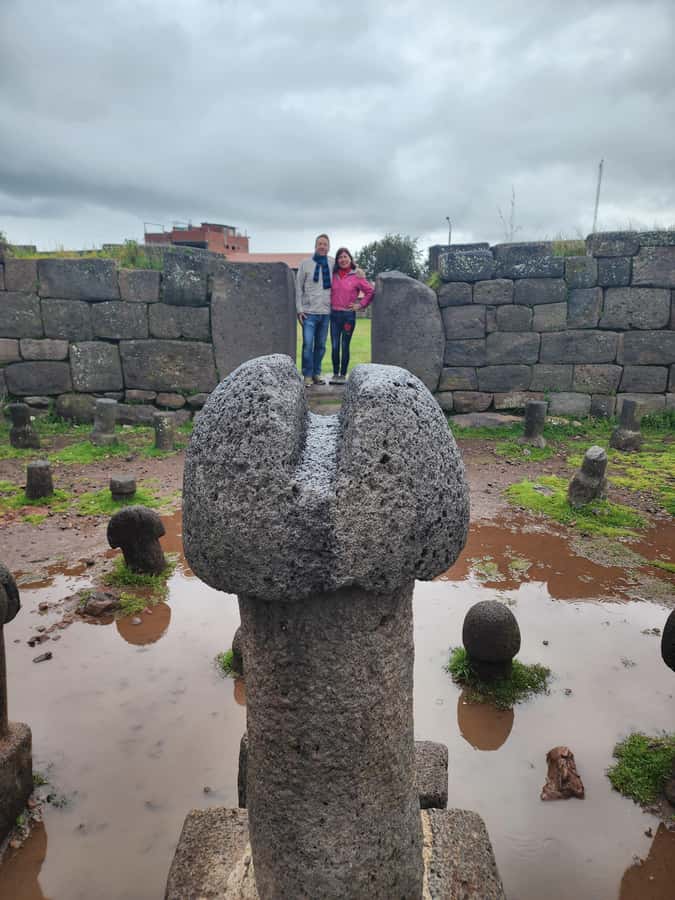
The central feature is a group of carved stone phalluses: six smaller examples and one larger one. The site is connected with fertility, reproduction, and the hope for abundance. The symbolism is direct, but the guide’s explanation helps place it in the setting of Andean belief rather than treating it as a quick joke or photo stop.
You can expect time for photographs, a guided visit, walking, and views along the route. Souvenirs may also be available. The stop is not large, so the value comes from understanding what you are seeing and how it fits into local customs.
Bring an open mind. This is not a polished museum exhibit, and the subject may feel unusual if you are expecting conventional colonial or Inca monuments. For me, that is part of its appeal. It shows a side of Andean culture that many standard day trips leave out.
The visit is fairly short, which is useful on a full-day schedule. You get a clear introduction without spending hours at one site. Wear shoes with a firm sole, since the tour includes walking rather than only viewing from the vehicle.
Molloco’s square and circular chullpas
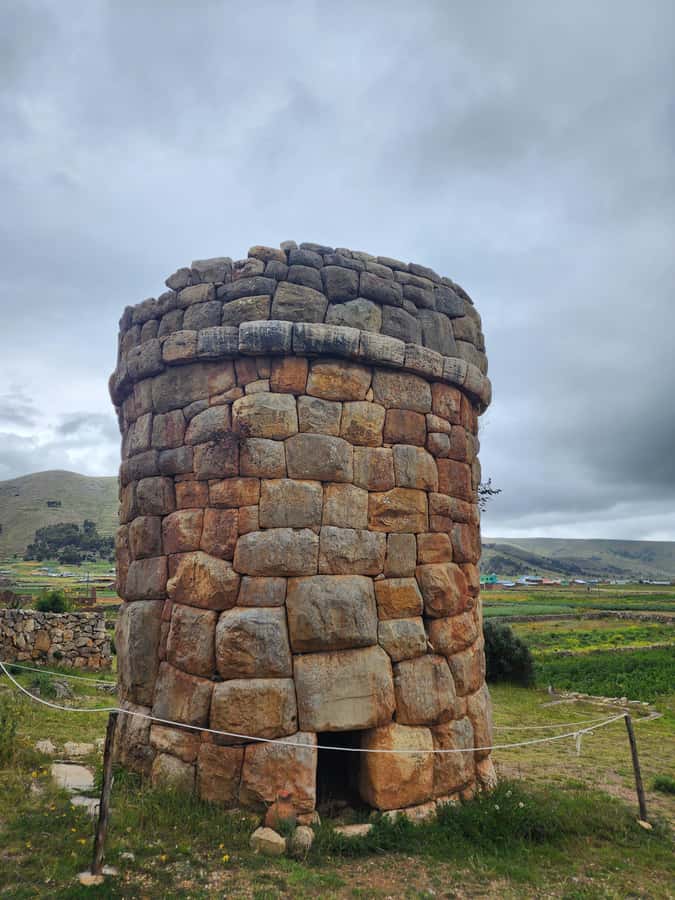
The route continues toward Acora for the Chullpas de Molloco. The stop takes about 45 minutes to an hour. Chullpas are burial towers, and Molloco is especially interesting because its forms differ from the round towers at Sillustani.
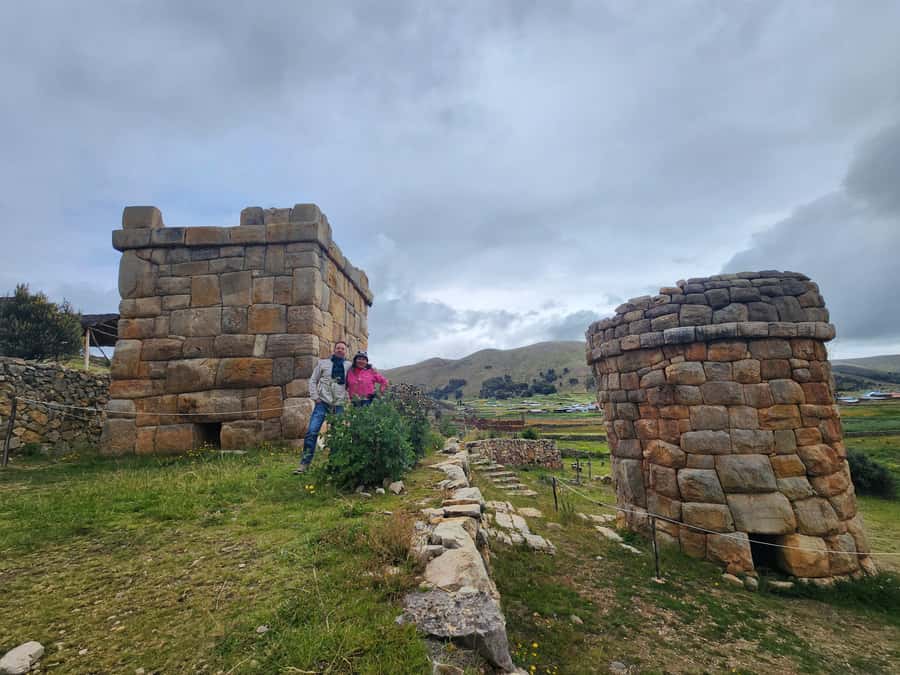
Here you can see three square-style towers and one circular tower. The contrast gives the guide something useful to explain: ancient communities in the region did not all build in exactly the same way. The site also includes niches beneath the floor, connected with burial use.
This is a good stop for people who like archaeology but do not want a day made up only of famous monuments. Molloco is less instantly recognizable than Sillustani, so you benefit from the guide’s maps, photographs, and explanations. One well-prepared guide on a recent departure used visual material to explain the places, which made the structures easier to understand.
The towers may not look dramatic at first glance. Some visitors may find the stop more rewarding after the explanation than before it. That is not a criticism of Molloco. It is simply the kind of place where context turns a basic photo stop into a meaningful visit.
Keep your camera ready, but pay attention to the details in the stonework and the shapes of the towers. The square forms are the reason to come. If you have already visited Sillustani, this stop works as a useful comparison rather than a repeat.
Waru warus and old Andean farming science
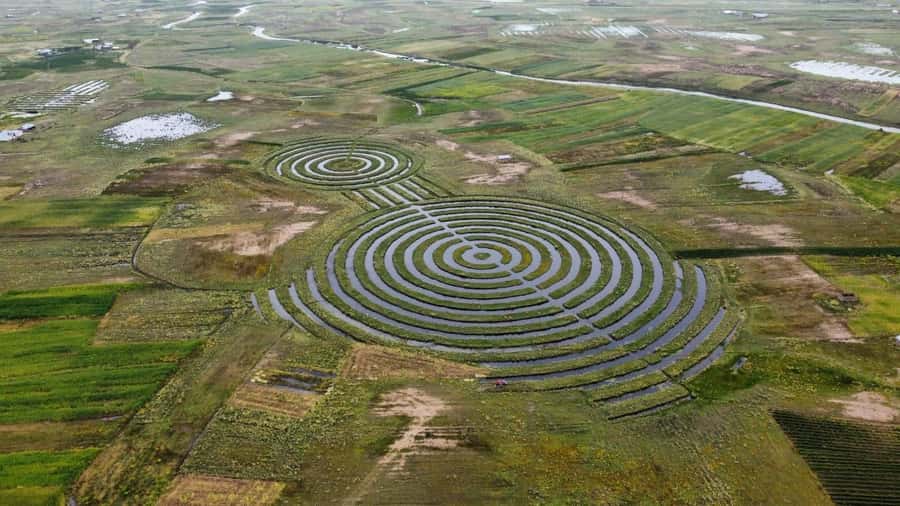
The next stop near Acora presents one of the most valuable ideas on the route: the circular Andean waru warus. The visit lasts around 45 minutes to an hour.
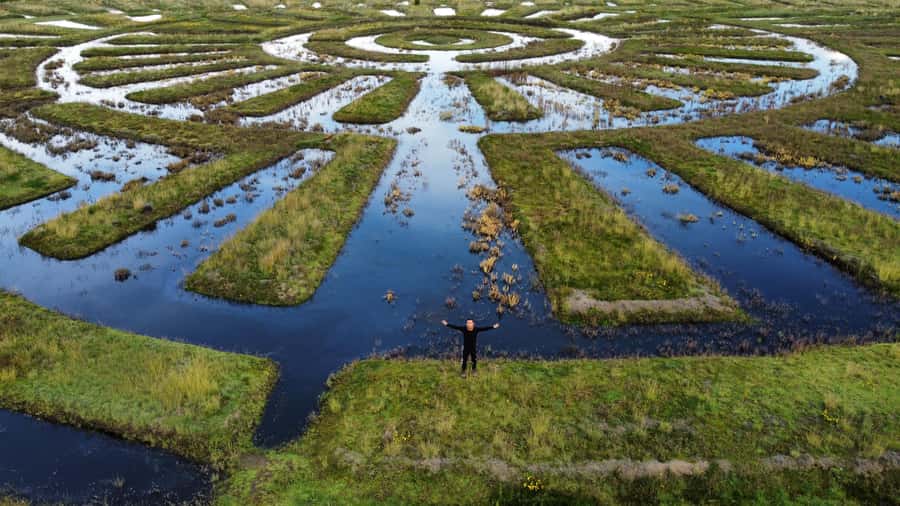
Waru warus are raised agricultural fields surrounded by channels. The route presents them as an ancestral method used as a kind of outdoor laboratory for the domestication and cultivation of Andean grains and tubers. The design helped people work with water, soil, and changing temperatures in a difficult high-altitude environment.
This stop gives the day practical depth. You are not only looking at ritual objects or burial structures. You are also learning how people developed ways to produce food. That makes the tour useful for anyone interested in agriculture, adaptation, and the daily work behind Andean civilization.
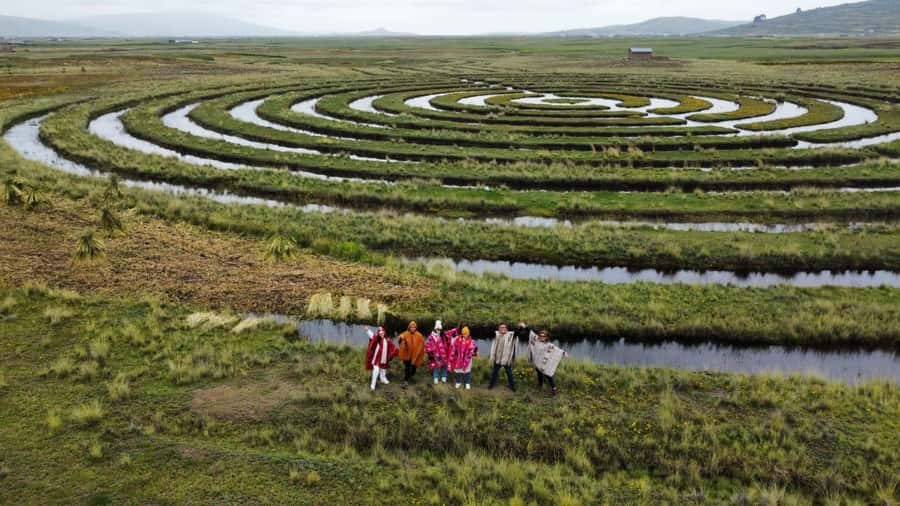
The site is particularly well suited to an overhead view. On some departures, the guide has used a drone and provided free video clips of the group and the fields from above. These images can show the circular layout far more clearly than ground-level photographs. Treat that as a welcome extra rather than a guaranteed feature, since the activity information does not list drone footage as a formal inclusion.
The area is open and exposed. Sunglasses, a hat, and water are practical choices, although water is not specifically listed among the required items. Comfortable clothing and shoes will help you move around without fuss. Sun at this altitude can be strong even when the air feels cool.
Same valley, a completely different kind of day:
- From Cusco: Vinicunca Rainbow Mountain ATV Tour with Meals
★ 4.6 · 1,060 reviews - From Puno: Uros, Amantaní & Taquile Islands 2-Day Tour
★ 4.5 · 452 reviews - From Puno: Floating Islands of the Uros Half-Day Tour
★ 4.4 · 394 reviews - Lake Titicaca 2-Day Tour to Uros, Amantani and Taquile
★ 4.4 · 199 reviews
Aramu Muru and the choice between ritual and photos
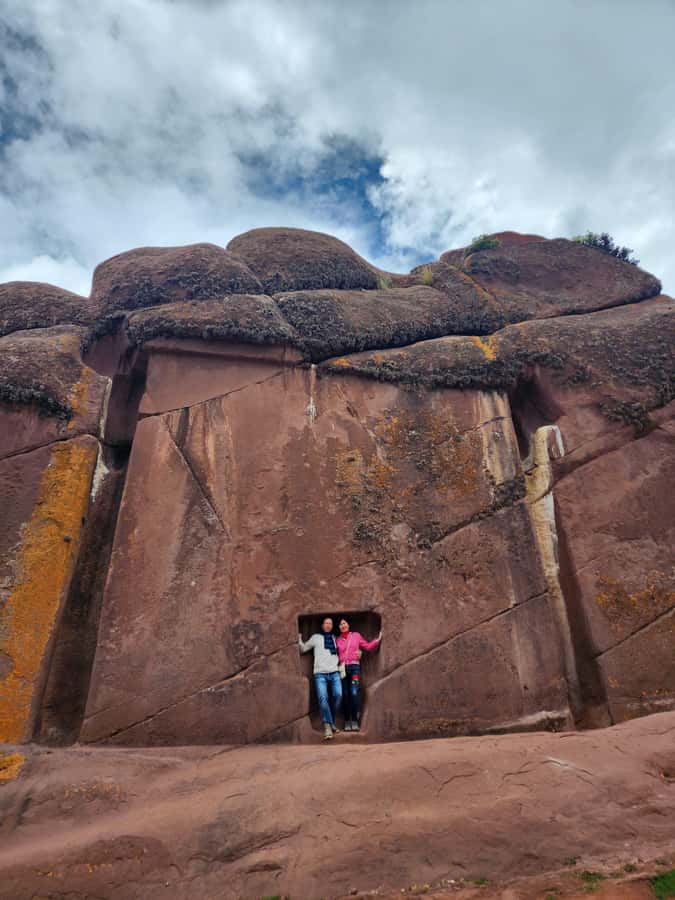
Aramu Muru is the emotional center of the day. The visit lasts about an hour and includes guided time, free time, meditation, and the chance to take part in a ceremony.
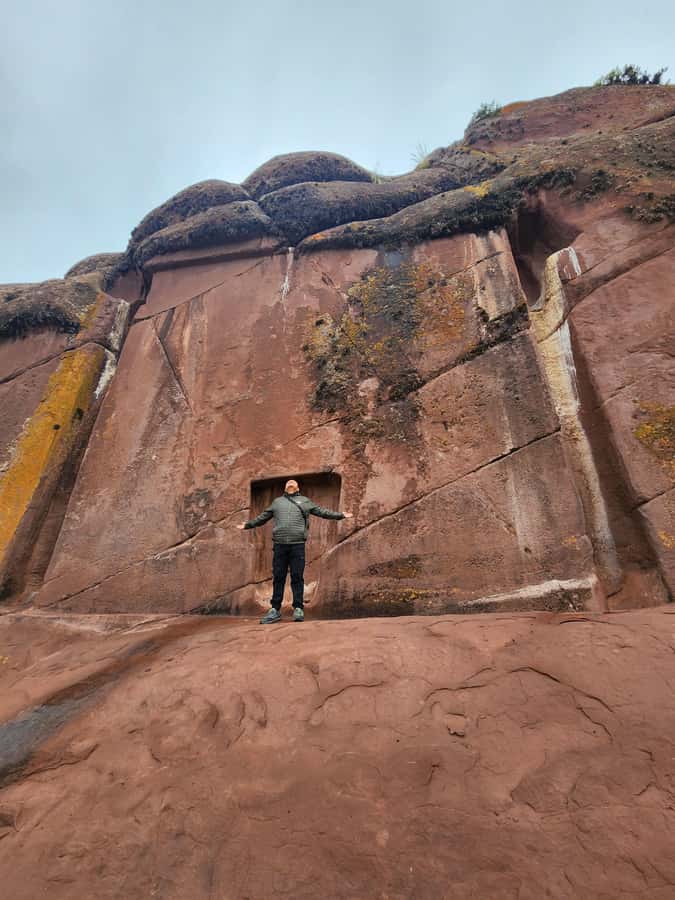
The portal is a large rock formation with a doorway-like shape cut into the stone. Its appearance has encouraged many stories and spiritual interpretations. The tour presents the site as a place for reflection and meditation, not simply another archaeological stop to photograph and leave.
You should expect some quiet time here. The guide can explain the rock formations, then give you space to look, take pictures, or join the ceremony. This change of pace is welcome after several short visits.
There may be a choice between a short hike and a ceremony. The hike offers better photo angles and a little more movement. The ceremony provides a more inward experience and may include an initiation-style ritual. Several people on recent departures chose one and wished they could have done both, so ask the guide about the timing as soon as you arrive.
I would choose based on your travel style. If you collect strong scenic photographs, take the mini hike. If you want the most distinctive cultural part of the day, join the ceremony. Neither option is automatically better, but you may have to accept that you cannot fit both into the available hour.
Aramu Muru can also feel intense or highly symbolic. Go with respect and avoid treating the ceremony as a performance. If you prefer ordinary sightseeing with little spiritual content, this may be the least comfortable part of the tour.
The activity notes that people with epilepsy should not take this tour. That warning is especially important here, given the mention of meditation and ceremony. Check with the provider if you need clarification before booking.
Juli, the Rome of America
The final major destination is Juli, described on the route as the Rome of America. The stop lasts about an hour and includes time to see its beach, enjoy the scenery, and consider optional activities.
This part of the day helps prevent the tour from becoming a chain of ruins. You get a different setting and a more relaxed finish. Depending on the schedule, there may also be a break, free time, shopping, or food options.
The information provided does not specify a fixed restaurant or meal included in the price. You should therefore expect food to be your own expense. A guide may explain different options, and one recent departure included a reasonably priced barbecue restaurant, but do not assume that every group will follow the same plan.
Juli is useful as a flexible stop. You can take photos, walk, or spend some time near the beach rather than rushing through another formal explanation. The exact amount of free time can depend on traffic and how long earlier visits take.
After Juli, the group returns to Puno. The stated finish point is on Cajamarca 236 in central Puno, with the full day ending around 4 to 5 pm.
What the $32 price really covers
At $32 per person, this tour gives you a lot of structure for the money. The price includes an official tourism guide, transport, and entrance tickets. Those inclusions matter because separate short transfers between rural sites would otherwise be hard to arrange and could quickly cost more than the tour itself.
The value is strongest if you want several cultural stops in one day. You do not need to hire a car, negotiate separate admissions, or work out how to reach Molloco and the waru warus on your own. The guide also provides the historical and cultural links that make the places worth seeing.
The price does not appear to include meals, drinks, souvenirs, or personal purchases. Bring cash for optional activities and food. The tour information also recommends biodegradable insect repellent, though the main practical concerns are sun, wind, and comfortable footwear.
Transport quality seems to be a real strength. The vehicle is described as first-class, and one recent departure had a puncture that was handled with a replacement vehicle in about half an hour. That does not remove the possibility of delays, but it suggests the operator has a way to respond when road problems occur.
Language, guide quality, and the value of explanation
The guide service is available in Spanish and English. This is important because some of the sites have little written information on location. If you do not speak Spanish, send that information when booking and confirm that you need the English explanations.
The guide style can make or break a route like this. The best version of this tour includes maps, photographs, clear explanations, and time for questions. One guide also explained extra points about the region beyond the main stops, which helped connect the sites to the wider area.
The drone clips are another possible benefit. Free videos showing the group from above can be a fun souvenir, especially at the waru warus and Aramu Muru. Again, I would not book solely for this feature. Weather, equipment, and local conditions can affect it.
The tour has a rating of 4.7 from 27 ratings, with especially strong praise for the guide, vehicle, multilingual explanations, and the unusual route. That is a good sign, but the itinerary still requires flexibility. The schedule includes several stops, and the exact balance between free time, ceremony, hiking, shopping, and lunch may vary.
Packing and preparation for a high-altitude day
Pack lightly, but prepare for changing conditions. The recommended items are:
- Comfortable walking shoes
- Sunglasses
- A hat
- Comfortable clothes
- A camera
- Cash
- Biodegradable insect repellent
Check the weather and local social conditions the day before you leave. The operator also asks you to provide a contact number. That is useful for pickup coordination and for any last-minute change.
You should be comfortable spending much of the day outside. The route includes walking at Chucuito, Molloco, the waru warus, and Aramu Muru. The descriptions do not promise extensive facilities at every stop, so plan around the day rather than expecting a city tour with frequent indoor breaks.
Free cancellation up to 24 hours before departure and reserve-now, pay-later booking add some flexibility. Still, confirm the starting time and hotel pickup details before the morning of the tour.
Who will enjoy the Aymara Route most
I would recommend this route to you if you want a cultural day away from the usual Puno highlights. It suits people who enjoy archaeology, local customs, old farming methods, unusual sacred sites, and scenic drives between stops.
It is also a good choice if you have only one spare day in Puno and want to see several different types of places. The official guide and included transport remove much of the planning work.
You may prefer another outing if your main goal is Lake Titicaca, long hikes, or a slow day at one site. This route is active and varied, but it is not a leisurely stay in one location. The itinerary has several short visits, so people who want extended time for photography may feel hurried.
I would also think carefully if you dislike ritual activities or feel uncomfortable with fertility symbolism. The tour does not hide those elements, and they are part of what makes it different. People with epilepsy should not book it according to the stated safety information.
Should you book the Aymara Route?
Book it if you want an affordable, unusual day with strong guide support and more variety than a standard ruins excursion. The combination of Molloco’s square chullpas, the waru warus, and Aramu Muru gives the route a clear identity.
Before paying, confirm your hotel address, pickup phone number, language, and the plan for Aramu Muru. Ask if the day will include the ceremony or the mini hike, and treat the drone video as a possible bonus rather than a promise.
For about $32, included admissions and transport make the value easy to see. Just bring sun protection, expect a full outdoor day, and leave room for the schedule to shift. If those conditions suit you, this is a smart way to see a less familiar side of the Puno Region.
FAQ
How long does the Aymara Route tour last?
The activity is described as lasting eight hours, while the detailed timing gives a total of about 7 hours and 10 minutes. The tour generally finishes in Puno around 4 or 5 pm.
What places does the tour visit?
The route includes Chucuito and the Temple of Fertility, the Chullpas de Molloco near Acora, the circular Andean waru warus, Aramu Muru, and Juli, known as the Rome of America.
Is transportation included?
Yes. Pickup is included, and the tour provides first-class transportation. Send your hotel address and a phone number or WhatsApp contact so pickup can be arranged.
Is an English-speaking guide available?
Yes. Live guiding is offered in English and Spanish.
Are entrance tickets included?
Yes. The tour includes tickets for the places visited, so you do not need to pay admission separately at each stop.
What should I bring?
Bring comfortable shoes, sunglasses, a hat, comfortable clothes, a camera, cash, and biodegradable insect repellent. Check the weather and local social conditions the day before departure.
Just added around Puno
- Uros Floating Islands Tour in Puno★ 3.7 · 9 reviews
- Two Day Lake Titicaca Tour With Homestay★ 3.7 · 6 reviews
- TRIP FROM PUNO TO CUSCO WITH THE ROUTE OF THE SUN★ 4.7 · 16 reviews
- Full-Day Tour of Uros, Taquile and Sillustani from Puno★ 5.0 · 41 reviews
- Two-Day Tour to Uros with Amantani and Taquile from Puno★ 5.0 · 44 reviews
- Full Day Lake Titicaca Tour to Uros and Taquile Islands★ 4.5 · 56 reviews
- Full Day Guided Tour of the Aymara Route from Puno★ 5.0 · 55 reviews
- Sun island and Copacabana | From Puno or La Paz / Day Trip★ 4.1 · 5 reviews
Historical Tours, compared.
Guided Tour of Historic and Monumental Trujillo
Read our review →
Lima’s Vibrant Heritage: Exploring the City’s Landmarks Half-day
Read our review →
Historic Center Street Food, Market, and Eateries Tour
Read our review →
Walking tour in the Historic Center of Arequipa
Read our review →
Historic Downtown, Miraflores & Catacombs Private Tour
Read our review →
Machu Picchu Private Archaeological and Historical Guided Tour
Read our review →Browse the lists this tour appears in