
Reviewed · HISTORICAL TOURS
Guided Tour of Historic and Monumental Trujillo
Trujillo’s appeal is packed into a few stone streets: a grand Renaissance square, a Muslim citadel on the hill, noble palaces, old defensive houses, and churches with layers of Spanish history. This two-hour walking tour ties those pieces together instead of leaving you to guess what you are seeing.
I like the route’s strong sense of place, especially the shift from the open Plaza Mayor into the walled medieval town. I also like the practical touch of pointing out good photo corners and linking Trujillo to the Discoverers, Isabel la Católica, Carlos V, and film locations.
The main consideration is pace. With a maximum of 30 people and many stops packed into about two hours, some sites are likely to be explained from outside rather than explored at length. The tour is best for orientation and context, not a slow museum visit.
In This Review
- Key points to know before you book
- Start with Trujillo’s grand Plaza Mayor
- Move from Renaissance wealth into the walled town
- Fortified homes and the Palacio de San Carlos
- Climb toward Trujillo Castle and the Muslim Alcazaba
- Pizarro House and the story of Trujillo’s conquerors
- Santa María la Mayor and Trujillo’s layered churches
- Gates, redoubts, and the medieval edge of town
- What the two-hour format gives you
- Why the photo guidance and themed routes matter
- Is $13.90 good value for Trujillo?
- Who will get the most from this walk?
- Should you book the Historic and Monumental Trujillo tour?
- FAQ
- Where does the tour start?
- Where does the tour end?
- How long does the tour last?
- How much does the tour cost?
- What are the main sights on the route?
- Does the tour visit Trujillo Castle?
- Is the tour offered with a mobile ticket?
- How many people can join the tour?
- Can I cancel for a full refund?
Key points to know before you book
- Plaza Mayor sets the scene: Begin among Renaissance buildings and the equestrian statue of Francisco Pizarro.
- The route reaches the Alcazaba: Walk to Trujillo Castle, its Muslim walls, and an old cistern dating from the 10th to 12th centuries.
- Medieval defenses shape the walk: See the Triumph Gate, Bejarano Redoubt, and Puerta de San Andrés.
- Palaces tell the local story: Pass the Palacio de San Carlos, Pizarro House, and several fortified noble homes.
- The price is modest: At $13.90 per person, the tour offers a useful historical introduction for a short visit.
- Guide quality matters: Ana is specifically praised for making the route complete and engaging, though guide assignment can vary.
Start with Trujillo’s grand Plaza Mayor
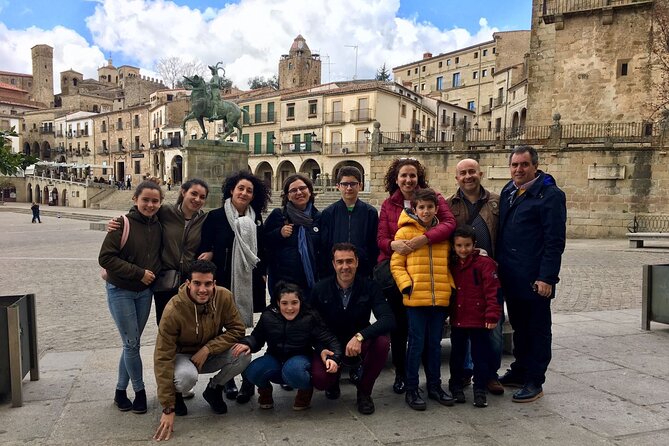
The meeting point is TurismoTrujillo.es Actividades Turísticas at Plaza Mayor, 20. This is a useful place to begin because Trujillo’s main square gives you the town’s story in one broad view.
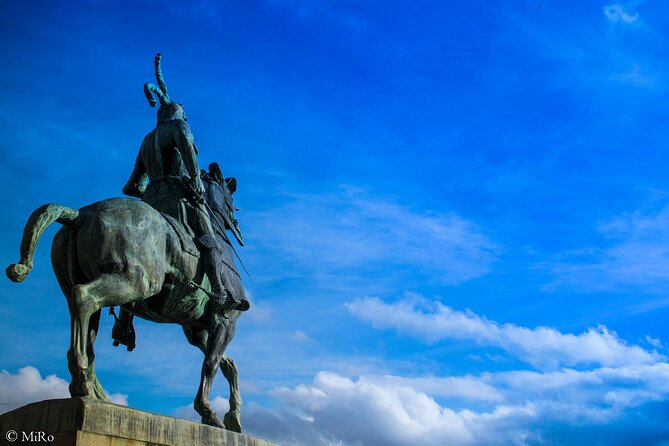
The square is lined with Renaissance palaces, and Francisco Pizarro’s equestrian monument dominates the center. You get an immediate reminder that Trujillo was both a medieval stronghold and the home of men connected with Spain’s conquest of Peru.
The opening explanation also covers the square’s 16th-century construction, begun in 1562 under the direction of Hernando Pizarro. That detail helps you read the buildings around you. The grand façades are not random decoration. They reflect the wealth and ambition that reached Trujillo after Spain’s expansion overseas.
Allow about 20 minutes for the main Plaza Mayor stop, with a short additional explanation of the square’s building history. Since the route begins here, arrive ready to look up. The architectural details are above street level, and the guide’s comments help turn a pretty plaza into a readable one.
The Pizarro statue receives its own brief stop. It is easy to photograph, but the more useful part is the chance to place the famous name within Trujillo itself. You will see that the town’s connection to the Americas is not limited to one monument. Several houses and local stories return to the same period.
A few more Trujillo trips to weigh up
- Lima’s Vibrant Heritage: Exploring the City’s Landmarks Half-day
★ 4.5 · 581 reviews - Lima: Historic Center Street Food, Market, and Eateries Tour
★ 4.9 · 216 reviews - Walking tour in the Historic Center of Arequipa
★ 4.4 · 180 reviews
Move from Renaissance wealth into the walled town
From Plaza Mayor, the route continues into Trujillo’s historic center. This is where the tour becomes more than a square-and-statue visit.
Expect a mixture of Muslim defenses, medieval strong houses, noble residences, churches, towers, and convents. The buildings are not presented as isolated sights. The guide connects them to the town’s changing role, from fortified settlement to aristocratic city.
That approach is valuable if you have only a few hours in Trujillo. You can see how the town is arranged and decide which places deserve a longer return visit. The route also points out photographic corners, a small but worthwhile feature in a town where stone doorways, towers, walls, and narrow streets reward careful framing.
At the same time, do not expect every building to offer a long interior visit. The supplied schedule lists many stops as short pauses, and admission is shown as free for the tour. The experience is mainly a guided outdoor walk through the historic center, with explanation taking priority over extended time inside each monument.
Fortified homes and the Palacio de San Carlos
The Palacio de San Carlos, also called the Palacio de los Vargas-Carvajal, introduces Trujillo’s Plateresque style. The building keeps its original Plateresque façade and also has another façade facing Domingo Street.
This is a good stop for comparing the town’s architecture. The palace shows how medieval defensive traditions gave way to more decorative Renaissance design. You get a sense of status from the stonework, but the building still belongs to a city shaped by walls and military power.
The Casa-Fuerte de Luis de Chaves El Viejo brings the focus back to defense. Dating from the 13th and 14th centuries, this strong house sheltered the Catholic Monarchs during the Wars of Succession. That makes it more than an attractive old residence. It connects Trujillo directly with national political struggles.
The Palacio Viejo, or Palacio de la Cadena, adds another layer. The site includes a 13th-century church founded by the Military Order of Santiago. A stop here helps explain why religious and military institutions were so closely linked in medieval Spain.
I like this portion because it avoids treating Trujillo as a row of pretty façades. The route shows how a residence could also be a fortified building, and how a church could be tied to a military order.
Climb toward Trujillo Castle and the Muslim Alcazaba
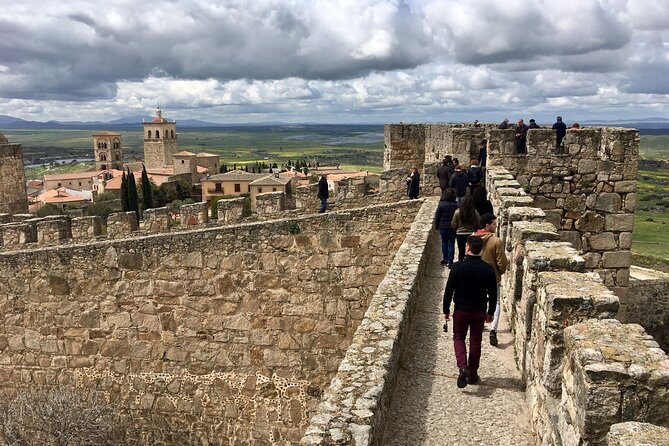
The castle is one of the tour’s most important sights. Trujillo’s upper stronghold includes a Muslim Alcazaba and an old cistern, or aljibe, dating from the 10th to 12th centuries.
This stop gives you the clearest view of Trujillo’s earlier past. Before the Renaissance palaces and the Pizarro connection, the hill was a strategic defensive site. The walls and cistern speak to the practical needs of a fortified settlement: protection, control, and water storage.
The castle stop is listed at about 10 minutes. That is enough for an introduction and for taking in the defensive setting, but not enough for a long, unhurried examination of every wall or feature. If the castle becomes your main interest, plan to return after the tour and give it more time.
The route’s movement uphill also matters. This is a walking experience through an old fortified town, not a flat plaza circuit. The supplied information does not give a detailed accessibility assessment, so you should be prepared for historic streets and the climb toward the Alcazaba. Service animals are allowed, and most people can participate.
Same valley, a completely different kind of day:
- Visit Trujillo Medieval Scene and Route of the Discoverers
★ 5.0 · 204 reviews - Guided tour in Trujillo at Sunset “El Collector de Atardeceres”
★ 5.0 · 88 reviews - Full Day Tour Huacas, Chan Chan & Huanchaco – Trujillo
★ 4.5 · 64 reviews - Piramids of Tucume Tour, Sican Museum and Lambayeque city tour
★ 5.0 · 30 reviews
Pizarro House and the story of Trujillo’s conquerors
Pizarro House is described as a 15th-century Hidalgo manor house. It adds a more personal scale to the Pizarro story after the larger equestrian statue in Plaza Mayor.
The useful contrast is between public memory and domestic architecture. In the square, Pizarro appears as a national figure on horseback. At the manor house, the focus shifts to the type of urban home associated with a local noble family.
The tour also visits the Casa Fuerte de los Escobar. This 15th-century military building is linked with María de Escobar, the first woman credited with bringing wheat and barley seeds to Peru. That is a specific and unusual detail, and it widens the story beyond military leaders and royal politics.
You will not get only the familiar conquistador narrative. The route includes women, agriculture, fortified homes, religious institutions, and trade in its picture of Trujillo’s past. That makes the history easier to connect with everyday life, even within a short tour.
Santa María la Mayor and Trujillo’s layered churches
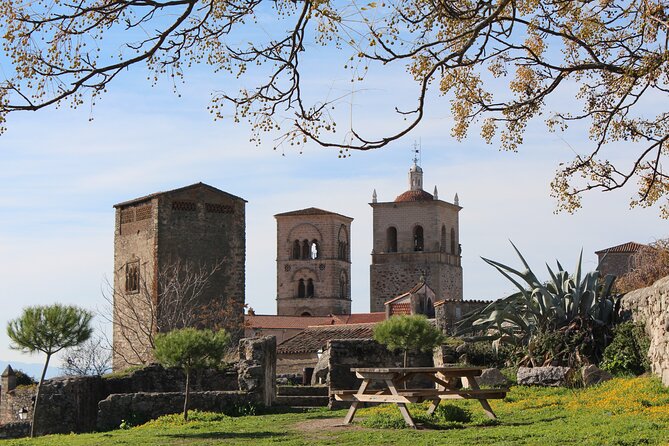
I would pay close attention at Iglesia de Santa María la Mayor. It is recognized as a Gothic National Monument, yet earlier Romanesque remains survive here, including Torre Julia.
The church also contains a Spanish-Flemish altarpiece by Fernando Gallego. Even if you are not an architecture specialist, the combination of Gothic structure, Romanesque remnants, a historic tower, and a notable altarpiece gives the stop real depth.
The church is listed without a specific time allotment, unlike several of the shorter pauses. Still, the overall tour lasts about two hours, so the guide must keep the visit moving. Your experience inside may depend on the day’s pace and access conditions.
This is one place where I would resist rushing past the details. Trujillo’s churches show how the town changed over centuries. You can see older and newer forms sharing one site, rather than finding a single building frozen in one period.
Gates, redoubts, and the medieval edge of town
The Triumph Gate marks an important point in the old defenses. Nearby, the Bejarano Redoubt is a 13th-century strong house that defended the Puerta del Triunfo.
These stops are small but help you understand the medieval town as a protected settlement. A gate was not simply an opening in the wall. It controlled movement, and a nearby fortified house helped guard it.
The walk ends its defensive sequence at Puerta de San Andrés, one of the seven gates in Trujillo’s wall. It sits beside the Church of San Andrés, showing again how religious buildings and defensive structures occupy the same historic setting.
For me, this is where the tour’s route design pays off. You begin in the open, formal Plaza Mayor, then move through palaces and strong houses before reaching the gates and walls that define the older town. The path gives you a physical sense of Trujillo’s growth and protection.
What the two-hour format gives you
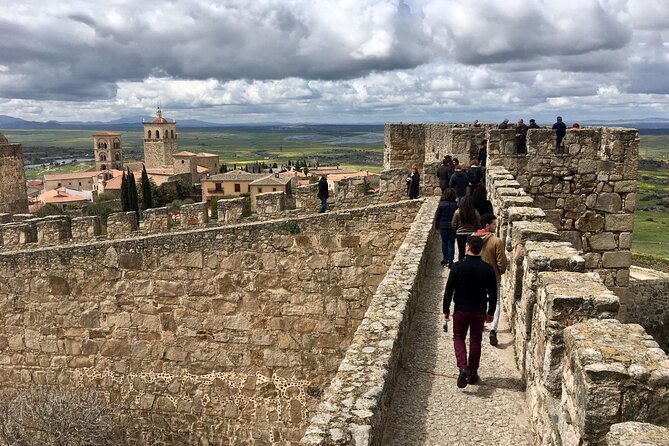
The tour covers a lot in a short time. The listed route includes Plaza Mayor, the Palacio de San Carlos, the Pizarro monument, the historic center, two fortified houses, the Palacio Viejo, the castle, Pizarro House, Santa María la Mayor, the Escobar strong house, the Triumph Gate, Bejarano Redoubt, and Puerta de San Andrés.
That is an ambitious list for approximately two hours. The benefit is breadth. You get a clear first look at the town’s main historic themes without spending half a day on one building.
The tradeoff is depth. Several stops are scheduled for only two to ten minutes, so you should expect concise explanations and viewing points rather than long interior tours. The historic center itself is marked as a two-hour portion in the stop details, but the experience summary gives approximately two hours overall. Use the overall duration as your planning guide.
The group can include up to 30 people. That is not a tiny private walk, so you may need to stay close to the guide, especially in narrow streets or at busy landmarks. A smaller group would make questions and photography easier, but the stated limit still keeps the experience within a manageable walking-tour size.
Why the photo guidance and themed routes matter
The guide points out particularly interesting photographic spots and corners. That is useful in Trujillo because the most memorable views may come between major monuments: a fortified doorway, a stone façade, a tower rising above the roofline, or a wall opening toward the town.
The tour also fits several wider themes. These include the Routes of the Discoverers, the Isabel la Católica Route, the Carlos V Route, and film locations. You do not need to follow any of those themes separately to benefit from the references. They give you different ways to understand the same streets.
If you like royal history, pay attention to the Catholic Monarchs and the Wars of Succession. If your interest is Spain’s overseas expansion, the Pizarro homes, statue, and María de Escobar connection add local detail. If you enjoy screen locations, the film-stage references may help you recognize why Trujillo’s old stone setting attracts productions.
Is $13.90 good value for Trujillo?
At $13.90 per person, this is a low-cost way to get an organized introduction to a historic town. The value comes from the guide’s interpretation and route planning, not from paid admissions, since the stops are listed with free admission for the activity.
You are paying to have the castle, palaces, churches, walls, and notable residents arranged into a story. That can save time, especially if Trujillo is one stop on a larger Extremadura trip and you want the essentials in a single walk.
The price is less compelling if you prefer to explore at your own speed or spend a long time inside one church or palace. You may still want to return to the castle or Santa María la Mayor after the tour, so consider this an introduction rather than a complete substitute for independent sightseeing.
The experience is booked an average of eight days ahead, which suggests you should not leave it until the last moment if your schedule is fixed. Confirmation arrives when you book, and you can cancel for a full refund up to 24 hours before the start time. Changes or cancellations inside that window are not accepted for a refund.
Who will get the most from this walk?
I would choose this tour if you are visiting Trujillo for the first time and want the town’s major sights placed in context. It suits anyone interested in medieval defenses, Renaissance architecture, the Catholic Monarchs, the Discoverers, or the local Pizarro story.
It also works well for photographers who want help finding strong viewpoints and details. The route’s thematic links give you useful material if you are building a larger trip around Extremadura’s historic towns.
You may want another plan if you need a private guide, a very slow pace, or guaranteed extended interior access. A group of up to 30 and a two-hour schedule favor coverage over lingering.
The tour begins and ends at Plaza Mayor, 20, which makes it easy to continue exploring afterward. It is near public transportation, and service animals are allowed. Most people can participate, but the provided information does not promise step-free access throughout the medieval streets or the climb to the castle.
Should you book the Historic and Monumental Trujillo tour?
I would book it for the price, the broad route, and the chance to understand how Trujillo’s plaza, walls, castle, churches, and noble houses fit together. The especially strong point is the guide’s ability to keep the walk engaging while adding many historical comments. Ana is specifically noted for making the route both complete and enjoyable.
Go in expecting a brisk orientation, not a two-hour examination of every monument. Keep your camera ready, stay close to the guide, and save time afterward for any building that catches your interest. For $13.90, this is a sensible first look at Trujillo and a good choice for a short stay.
FAQ
Where does the tour start?
It starts at TurismoTrujillo.es Actividades Turísticas, Plaza Mayor, 20, 10200 Trujillo, Cáceres, Spain.
Where does the tour end?
The activity ends back at the meeting point in Plaza Mayor.
How long does the tour last?
The tour lasts approximately two hours.
How much does the tour cost?
The listed price is $13.90 per person.
What are the main sights on the route?
The route includes Plaza Mayor, the Palacio de San Carlos, Francisco Pizarro’s equestrian monument, Trujillo’s historic center, several fortified houses, the Palacio Viejo, Trujillo Castle, Pizarro House, Santa María la Mayor, the Triumph Gate, Bejarano Redoubt, and Puerta de San Andrés.
Does the tour visit Trujillo Castle?
Yes. The route includes the Muslim Alcazaba, its walls, and an aljibe dating from the 10th to 12th centuries.
Is the tour offered with a mobile ticket?
Yes. The experience includes a mobile ticket.
How many people can join the tour?
The maximum group size is 30 people.
Can I cancel for a full refund?
Yes. You can cancel at least 24 hours before the start time for a full refund. Cancellations or changes made less than 24 hours before the start time are not refunded or accepted.
Just added around Trujillo
- Trujillo Shore Excursion from Salaverry Port★ 5.0 · 9 reviews
- Guided Tours Trujillo Essential★ 5.0 · 5 reviews
- Guided Walking Tour in Trujillo Through the Centuries★ 4.5 · 8 reviews
- Piramids of Tucume Tour, Sican Museum and Lambayeque city tour★ 5.0 · 30 reviews
- Shore Excursion from Salaverry port★ 4.5 · 8 reviews
- Pyramids of the Sun and the Moon, Huanchaco and Chan Chan★ 4.1 · 9 reviews
- Pyramids of the Sun and the Moon, Huanchaco and Chan Chan★ 4.8 · 11 reviews
- From Trujillo: Temple of the Moon and Sun and Chan Chan★ 3.3 · 5 reviews
Historical Tours, compared.
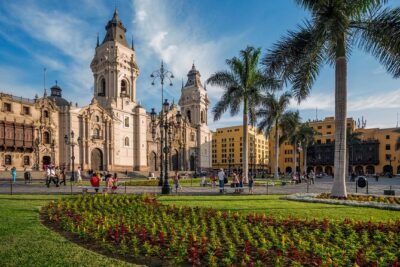
Lima’s Vibrant Heritage: Exploring the City’s Landmarks Half-day
Read our review →
Historic Center Street Food, Market, and Eateries Tour
Read our review →
Walking tour in the Historic Center of Arequipa
Read our review →
Historic Downtown, Miraflores & Catacombs Private Tour
Read our review →
Machu Picchu Private Archaeological and Historical Guided Tour
Read our review →
Browse the lists this tour appears in