
Reviewed · TRUJILLO TOURS
Shore Excursion from Salaverry port
The most striking part of this Salaverry shore excursion is the contrast between Moche temple mounds and the enormous adobe city of Chan Chan. In five hours, you move from painted religious walls and royal burial platforms to the former capital of the Chimú empire.
I like the sensible route, which includes both Huacas de Moche and Chan Chan, and I like the small-group transport with port pickup and return. Guides such as Alfredo and William have been especially praised for clear, well-timed explanations. The catch is that entrance fees, food, and drinks are extra, and the schedule may feel tight if your ship is calling for only a short time.
In This Review
- Key points at a glance
- Why this shore excursion is worth your port time
- Meeting your guide at Salaverry Plaza
- Huaca de la Luna and Huaca del Sol
- The Huacas de Moche Museum fills in the blanks
- Huaca Arcos Iris and the story of Takaynamo
- Chan Chan, the Chimú capital in adobe
- Timing, transport, and the cruise connection
- What the $80 price really covers
- Who should book this outing?
- Should you book the Salaverry archaeological excursion?
- FAQ
- Where does the shore excursion begin?
- What time does the tour start?
- How long does the experience last?
- Which archaeological sites are included?
- Are entrance fees included?
- Is food included?
- What languages are available?
- Can I cancel the booking?
Key points at a glance

- Huaca de la Luna reveals Moche ritual life: See adobe walls, temple platforms, and surviving decorative work from a society that ruled this coast centuries ago.
- Huaca del Sol explains Moche power: This huge stepped mound served as an administrative center rather than a simple temple.
- The Moche Museum adds the missing details: Ceramics, utensils, artifacts, and tombs help make sense of the ruins.
- Huaca Arcos Iris brings you into Chimú legend: Carved adobe panels and niches connect the site with the story of Takaynamo, the mythical founder of Chan Chan.
- Chan Chan is the grand finale: The UNESCO-listed adobe city once held courtyards, palaces, terraces, gardens, and perhaps 30,000 to 60,000 people.
- Port logistics are mostly handled: You take the cruise shuttle to Salaverry Plaza, then look for the JD ADVENTURE sign.
Why this shore excursion is worth your port time
Salaverry itself is mainly your gateway. The archaeological sites lie inland near Trujillo, and reaching them independently from a cruise call would mean arranging transport, watching the clock, and coordinating several separate admissions. This outing puts the major Moche and Chimú sites into one half-day plan.
At $80 per person, the price is fair if you value a guide and direct transport. You are paying for a small-group vehicle, an English or Spanish-speaking guide, and pickup and drop-off connected to Salaverry port. You still need cash for entrance fees, and the package does not include lunch or drinks, so the final cost will be higher than the headline price.
I see the strongest value in the range of places covered. Many short port outings focus on only one major site. Here, you get a religious complex, a museum, a smaller Chimú temple, and Chan Chan. That gives you a better sense of how two different coastal powers shaped the region.
The five-hour duration also suits a cruise stop better than a long inland trip. Still, you should read the timing carefully. One particularly successful outing took about seven hours, so the real day can run beyond the listed five hours. Ask for the current departure and return plan before you go, and keep checking your email for updates.
A few more Trujillo trips to weigh up
- Trujillo Shore Excursion from Salaverry Port
★ 5.0 · 9 reviews - Lima: Shore excursion from the Port of Callao for Cruises
★ 4.3 · 10 reviews
Meeting your guide at Salaverry Plaza
When your ship arrives, use the shuttle bus supplied by the cruise company. The ride to Salaverry Plaza takes about 10 minutes. Once there, look for the JD ADVENTURE sign.
The operator sends full meeting instructions about two days before arrival. You must provide your ship name, arrival time, departure time, and a valid mobile number that works with WhatsApp. That information matters here because cruise schedules can change, and the company may need to reach you about the meeting point or departure.
Your guide may be Alfredo or William, among others. Alfredo has been singled out for friendly explanations and strong English, while William has been praised for keeping information structured and well timed. That is useful at archaeological sites, where a guide can either help you see the story or bury you under dates and names.
Bring cash. Entrance fees are not included, and the supplied information does not give a fixed admission price. I would also bring water, sun protection, and comfortable shoes, though the stated rules say backpacks are not allowed. Follow the operator’s current advice on what kind of small personal bag, if any, is permitted.
Huaca de la Luna and Huaca del Sol
The first major stop is the Moche complex known as the Temples of the Sun and Moon. These are not single buildings in the usual sense. They are huge adobe mounds built in stages during the Moche empire.
Huaca de la Luna served as a religious complex. Huaca del Sol functioned as an administrative center. Seeing both helps you avoid a common mistake: treating every large pre-Columbian mound as a temple. The Moche used architecture to organize worship, government, power, and burial.
The building process is one of the most interesting details. Over roughly 700 years, the Moche added new platforms over older ones. When a ruler died, his remains were sealed into the temple, and a fresh platform covered the earlier structure. Each generation effectively wrapped the old building inside a new one.
That method explains the stepped pyramid form you see today. It also means the site is not just a ruin left behind after one brief period of use. It records repeated construction, changing rulers, and shifting religious practice.
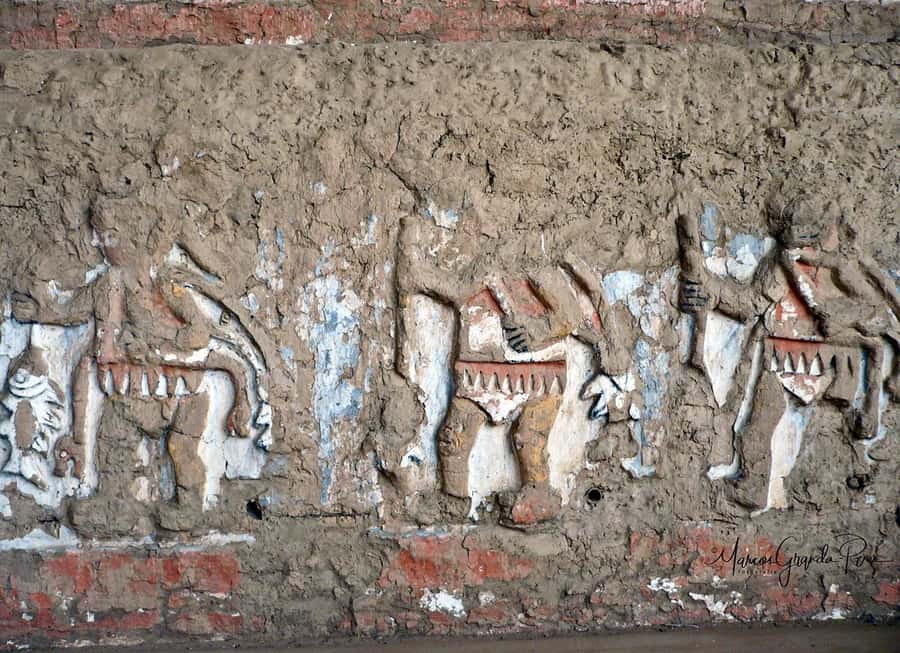
Huaca de la Luna is likely to be the more visually rewarding of the two mounds because the religious complex preserves carved and decorated surfaces. Your guide can explain what the spaces were used for and how the Moche linked ritual authority to political control.
Huaca del Sol is the larger administrative counterpart. You may find its scale more impressive than its surviving decoration. The point here is not to expect two identical pyramids, but to understand the different jobs they performed.
This stop involves outdoor walking and uneven archaeological surfaces. The excursion is not suitable for people with mobility impairments, and the operator also lists pregnancy, pre-existing medical conditions, altitude sickness, and an age over 95 as reasons to avoid the activity. The sites are not at high altitude, but the restriction is part of the stated suitability guidance.
The Huacas de Moche Museum fills in the blanks
The museum is an important part of the visit. Without it, you see walls and platforms but may struggle to picture the people who made and used them.
Inside, you can expect an assortment of Moche artifacts, ceramics, utensils, and tombs. These objects give the architecture a human scale. A large mound tells you about labor and authority, while a ceramic vessel or household tool points to daily life.
I like the museum placement because it gives your guide material to work with between the large outdoor stops. You can look at the objects, then return to the temple ruins with a clearer sense of what the buildings supported.
The exact amount of time at the museum is not specified, so the guide will need to balance it against the rest of the route. If archaeology is your main reason for booking, pay attention here rather than treating the museum as a quick indoor break.
Same valley, a completely different kind of day:
- Guided Tour of Historic and Monumental Trujillo
★ 5.0 · 930 reviews - Visit Trujillo Medieval Scene and Route of the Discoverers
★ 5.0 · 204 reviews - Guided tour in Trujillo at Sunset “El Collector de Atardeceres”
★ 5.0 · 88 reviews - Full Day Tour Huacas, Chan Chan & Huanchaco – Trujillo
★ 4.5 · 64 reviews
Huaca Arcos Iris and the story of Takaynamo
The route continues to Huaca Arcos Iris, also called the Rainbow Temple or El Dragon. The Chimú built it around A.D. 1200, several centuries after the Moche temple complex began its long building cycle.
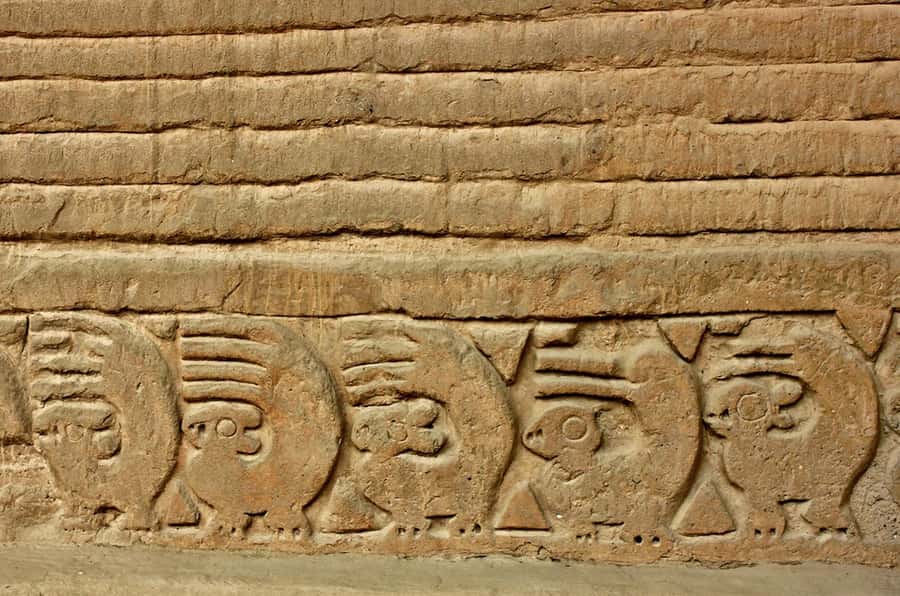
This site is smaller than Chan Chan, but that does not make it disposable. You explore two platforms with carved adobe panels and niches. The niches once held ritual objects, and the decorative panels give you a closer look at Chimú design.
Local tradition connects Huaca Arcos Iris with Takaynamo, the mythical man said to have founded Chan Chan. It is best to treat this as legend rather than a confirmed biography, but the story helps explain how Chimú identity connects one ceremonial place to its capital.
This is also where the tour’s historical sequence becomes clear. The Moche and Chimú were not one single culture, and the sites do not tell one single story. Your guide’s job is to point out the changes in architecture, beliefs, and political organization.
Chan Chan, the Chimú capital in adobe
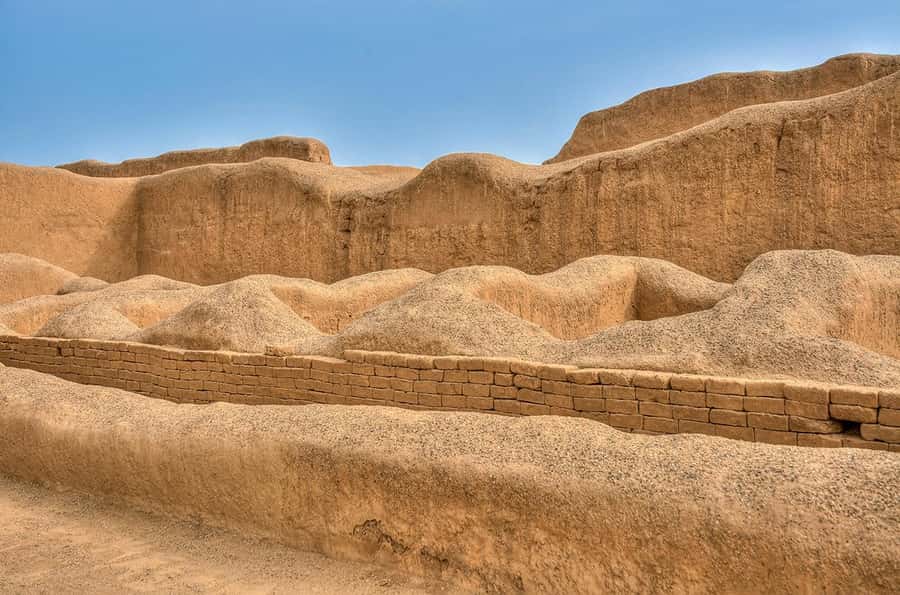
Chan Chan is the largest pre-Columbian adobe city in the Americas and a UNESCO World Heritage Site since 1986. It was the capital of the Chimú empire, and its size gives the final stop real weight.
The city once included courtyards, terraces, palaces, and gardens. Estimates place its population between 30,000 and 60,000 people. That figure is hard to picture until you walk among the broad adobe walls and see that Chan Chan was not a lone ceremonial building. It was a planned urban center.
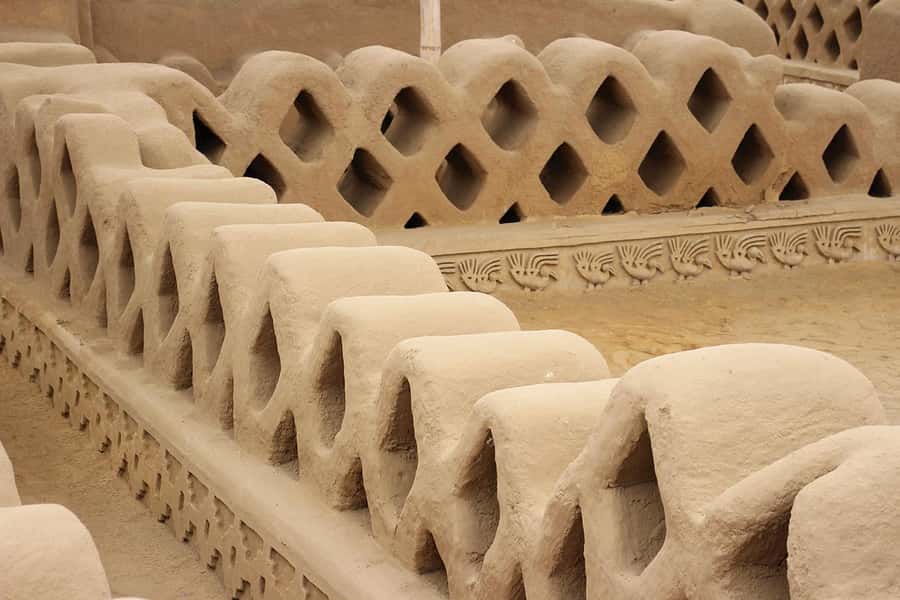
The surviving architecture is especially good for showing how the Chimú organized space. Large compounds could control access, display authority, and separate public from restricted areas. Carved surfaces and repeated designs add decoration, but the city’s real impact comes from its scale and planning.
Adobe is also Chan Chan’s weakness. Earth walls are vulnerable to rain and weather, and coastal conditions require constant care. Some sections may look worn or incomplete. That is not a reason to skip the site. It is a reminder that you are seeing a preserved fragment of a much larger city, not a fully intact palace complex.
Your guide makes a major difference here. Chan Chan can feel like a maze of walls if you walk through it without context. A well-organized explanation helps you understand where courtyards, ceremonial spaces, and palace areas fit into the larger city.
Allow yourself to look closely at the wall details. The carved panels and repeated forms are easy to pass without noticing when you are focused only on the size of the complex. At the same time, keep an eye on your watch. Chan Chan is the final major stop, and the vehicle must still return you to Salaverry.
Timing, transport, and the cruise connection
Round-trip transport is the main practical advantage of this experience. You do not need to negotiate a taxi from the port or work out a private route between four separate archaeological areas. The small-group vehicle keeps the day focused.
The listed start is 8:30 a.m. from Salaverry port, after the cruise shuttle transfer to the plaza meeting point. You need to be ready for possible schedule changes and keep checking email before the call.
The excursion ends with a return to Salaverry port so you can rejoin your ship. That connection is the reason to use a company that knows the port routine, but you should still give the operator complete ship details and confirm the return plan.
One guest described finishing with ceviche at a restaurant overlooking the ocean. Food is not included, and that restaurant stop is not presented as a guaranteed part of every departure, so do not book this expecting a meal. If it happens within the schedule, it can be a pleasant coastal finish. Otherwise, plan to eat and drink on your own.
What the $80 price really covers
The $80 fee makes the most sense for someone who wants a guided archaeological day without arranging private transport. It covers pickup and drop-off from the port, a small-group vehicle, and live guiding in English or Spanish.
It does not cover entrance fees, personal travel insurance, food, or drinks. You should carry cash and ask for the current admission costs before departure. The total may still compare well with hiring separate transport and guides, but the value depends on how many people are in your party and how much independence you want.
The reserve-now, pay-later option helps if your cruise plans are not fully settled. Free cancellation is available up to 24 hours before the activity for a full refund. Those terms are useful, but the more important cruise tip is to provide accurate ship details and monitor messages before arrival.
Who should book this outing?
I would choose this tour if you want the major archaeological sites near Trujillo in one organized trip. It suits history-minded people who prefer a guide to explain the Moche and Chimú cultures rather than simply provide transport to a pile of ruins.
It is also a good fit for English or Spanish speakers who appreciate a small-group setting. The strongest guide feedback centers on clear explanations, friendly service, and good structure. Alfredo and William are names worth noting, though a particular guide is not guaranteed.
I would hesitate if you need a slow, highly flexible visit. Four archaeological stops in roughly five hours require forward movement. The route is not designed for long independent wandering at each site.
I would also avoid it if walking or outdoor conditions are difficult for you. The operator does not recommend it for people with mobility impairments, pregnant women, people with certain medical conditions, people with altitude sickness, or anyone over 95.
Should you book the Salaverry archaeological excursion?
Book it if you want a strong overview of Moche and Chimú archaeology with port transport already arranged. The mix is excellent: Huaca de la Luna and Huaca del Sol provide the Moche foundation, the museum adds objects and tombs, Huaca Arcos Iris introduces Chimú ceremony, and Chan Chan gives you the large urban finale.
The main cautions are simple: budget extra for admission and refreshments, expect a brisk schedule, and confirm the return timing for your ship. If you value organized guiding and want to see more than one site during your Salaverry call, the $80 price is reasonable. If you want a leisurely visit or dislike fixed routes, arrange something slower instead.
FAQ
Where does the shore excursion begin?
The activity begins after you take the cruise ship’s shuttle bus from the port to Salaverry Plaza. The shuttle ride takes about 10 minutes. Look for the JD ADVENTURE sign.
What time does the tour start?
The stated departure time is 8:30 a.m. from Salaverry port. You should keep checking your email because the departure time may be updated.
How long does the experience last?
The listed duration is five hours. One completed outing took seven hours, so confirm the current schedule and allow enough time for the return to your ship.
Which archaeological sites are included?
The route includes Huaca de la Luna, Huaca del Sol, the Huacas de Moche Museum, Huaca Arcos Iris, and Chan Chan.
Are entrance fees included?
No. Entrance fees are not included in the $80 price. Bring cash for these additional costs.
Is food included?
No. Food and drinks are not included. A ceviche restaurant stop has occurred on one outing, but it is not listed as a guaranteed inclusion.
What languages are available?
The live guide service is available in English and Spanish.
Can I cancel the booking?
Yes. You can cancel up to 24 hours in advance for a full refund. You can also reserve now and pay later.
Just added around Trujillo
- Trujillo Shore Excursion from Salaverry Port★ 5.0 · 9 reviews
- Guided Tours Trujillo Essential★ 5.0 · 5 reviews
- Guided Walking Tour in Trujillo Through the Centuries★ 4.5 · 8 reviews
- Piramids of Tucume Tour, Sican Museum and Lambayeque city tour★ 5.0 · 30 reviews
- Pyramids of the Sun and the Moon, Huanchaco and Chan Chan★ 4.1 · 9 reviews
- Pyramids of the Sun and the Moon, Huanchaco and Chan Chan★ 4.8 · 11 reviews
- From Trujillo: Temple of the Moon and Sun and Chan Chan★ 3.3 · 5 reviews
- From Trujillo: Complete full day tour with museums★ 5.0 · 5 reviews
Trujillo Tours, compared.
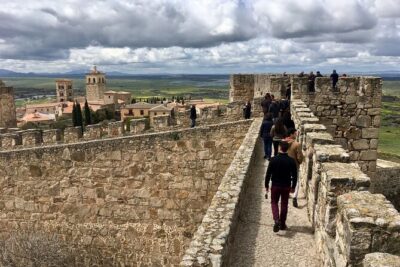
Guided Tour of Historic and Monumental Trujillo
Read our review →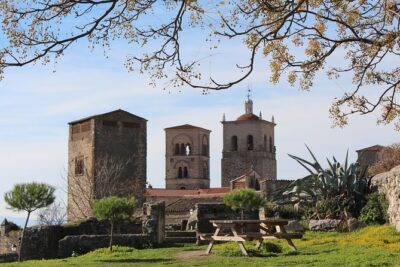
Visit Trujillo Medieval Scene and Route of the Discoverers
Read our review →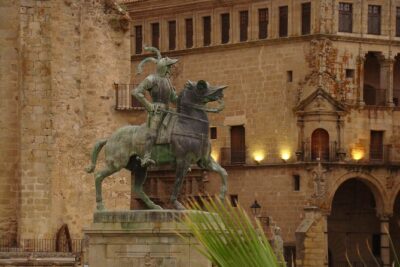
Guided tour in Trujillo at Sunset “El Collector de Atardeceres”
Read our review →
Full Day Tour Huacas, Chan Chan & Huanchaco – Trujillo
Read our review →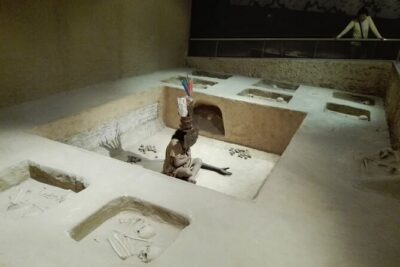
Piramids of Tucume Tour, Sican Museum and Lambayeque city tour
Read our review →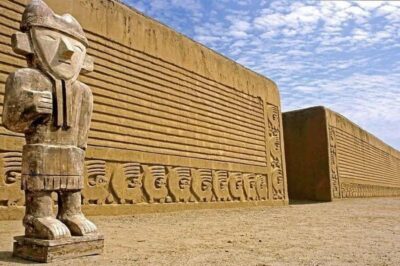
Pyramids of the Sun and the Moon, Huanchaco and Chan Chan
Read our review →Pyramids of the Sun and the Moon, Huanchaco and Chan Chan
Read our review →
Browse the lists this tour appears in