
Reviewed · HISTORICAL TOURS
Cusco: Historical Guided City Tour with 4 Inca Ruins
Cusco’s best introduction to the Inca world may be a half-day ride uphill from the city. This tour links Sacsayhuaman, Qenqo, Puka Pukara, and Tambomachay with Qoricancha, the former Temple of the Sun, so you see both the great stones outside town and the Inca foundations inside it.
I like two things here: the efficient route saves you long uphill walks at high altitude, and the guide gives the ruins a human story instead of leaving you to stare at stones. Guides named Luis, Alfredo, Romulo, and Hyame have been singled out for clear English and strong explanations. The catch is that the $23 price does not include the entrance fees, and the day can feel brisk if you want long, quiet time at each site.
In This Review
- Key points to know before booking
- Why this Cusco half-day route works
- Qoricancha: start with the Inca center of power
- Sacsayhuaman: Cusco’s great stone puzzle
- Qenqo: a smaller site with a darker purpose
- Puka Pukara: a red fortress above the city
- Tambomachay: water, ritual, and a quiet finish
- The morning and afternoon versions are not identical
- What the $23 price really covers
- Guide quality can shape the whole day
- Who will enjoy this tour most
- Should you book this Cusco city tour?
- FAQ
- How long does the Cusco historical city tour last?
- Which Inca sites are included?
- Is hotel pickup included?
- Are entrance fees included in the $23 price?
- Is the tour available in English?
- What should I bring?
Key points to know before booking
- Four Inca sites in one half-day: Sacsayhuaman, Qenqo, Puka Pukara, and Tambomachay are all included.
- Qoricancha adds a city-center highlight: You see the most important Inca religious site before heading to the hills.
- Morning and afternoon choices: Morning departures finish around 2:30 pm, while the afternoon option runs until about 6:00 or 6:30 pm.
- Transport matters at Cusco’s altitude: A vehicle connects the spread-out ruins and limits strenuous walking between them.
- Entry fees are extra: Budget for the Cusco Tourist Card and Qoricancha admission, plus the cathedral fee if you visit it.
- English and Spanish guiding: The quality of the explanation matters here, and several named guides have earned praise for their language skills.
Why this Cusco half-day route works
Cusco’s main plaza is only the beginning. The city grew over Inca foundations, but the largest ceremonial and defensive sites sit beyond the compact historic center. Walking to all four would take time and energy, especially while you are still adjusting to Cusco’s altitude.
This tour makes a sensible first or second day plan. You begin at Qoricancha, then ride to Sacsayhuaman and continue to three smaller sites on the hills above Cusco. The route gives you scale: Qoricancha shows how the Inca shaped a sacred center, while Sacsayhuaman shows the engineering behind their enormous stonework.
The advertised duration is six hours. The morning version begins with Qoricancha at about 8:55 am and returns you near Plaza de Armas around 2:30 pm. Hotel pickup is generally between 8:35 and 9:00 am for the other morning option. The afternoon version meets at the cathedral entrance around noon and ends near the main square between 6:00 and 6:30 pm.
You are not simply buying a ride. You are paying for transport, a professional accredited guide, and help making sense of places that can look confusing without context. At this price, that is the main value.
A few more Cusco trips to weigh up
- Machu Picchu Private Archaeological and Historical Guided Tour
★ 5.0 · 86 reviews - 6-Day Cultural Tour to Machu Picchu
★ 5.0 · 76 reviews - Cusco: Historic Walking Tour with Pisco Sour and Music Show
★ 4.6 · 65 reviews
Qoricancha: start with the Inca center of power
Qoricancha, also written Koricancha or Coricancha, was the most important Inca religious construction in Cusco. Its name is often translated as the Golden Enclosure, and it was dedicated to the Sun.
The visit lasts about an hour. This is a city stop rather than a remote ruin, so it fits well at the beginning of the morning route. Your guide can explain how the Inca sacred complex later became part of a Spanish religious building, making the site a clear lesson in the layers of Cusco’s past.
The entrance fee is not included. The supplied cost is 15 soles for Qoricancha, so bring cash in Peruvian soles. The guide’s role is especially useful here because the site combines Inca construction, colonial architecture, religious change, and the art associated with Cusco.
If you choose the afternoon option, the schedule lists Qoricancha after the cathedral meeting point. That version also includes a cathedral visit, subject to availability. If the cathedral is important to you, ask about entry before the tour begins. Cathedral admission is listed separately at 50 soles.
Sacsayhuaman: Cusco’s great stone puzzle
From Qoricancha, the vehicle takes you toward the archaeological park of Sacsayhuaman. This is the major stop, and the one most likely to leave you looking at your watch in disbelief.
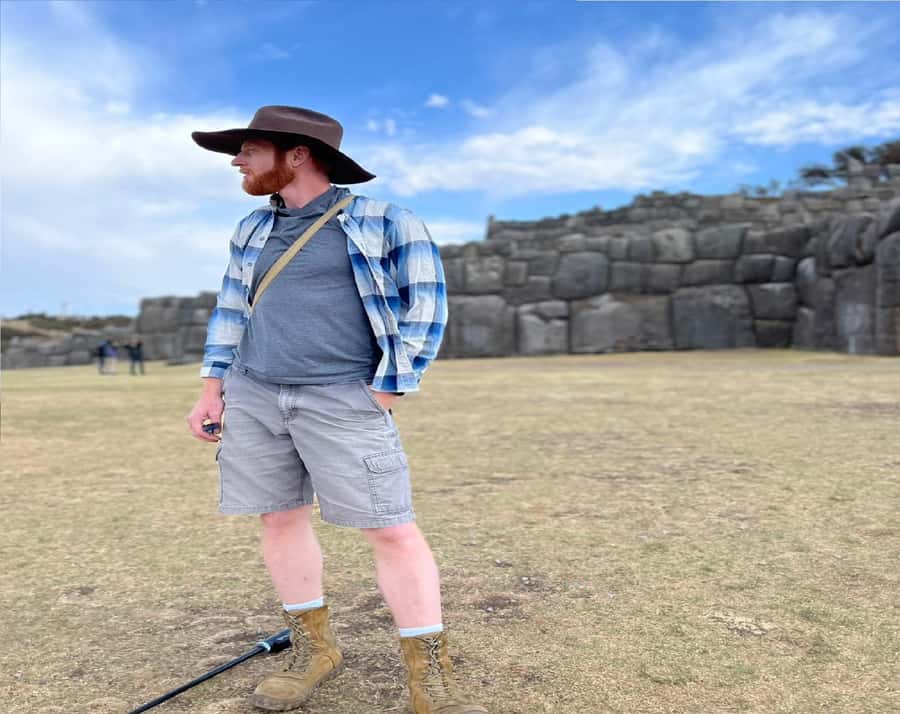
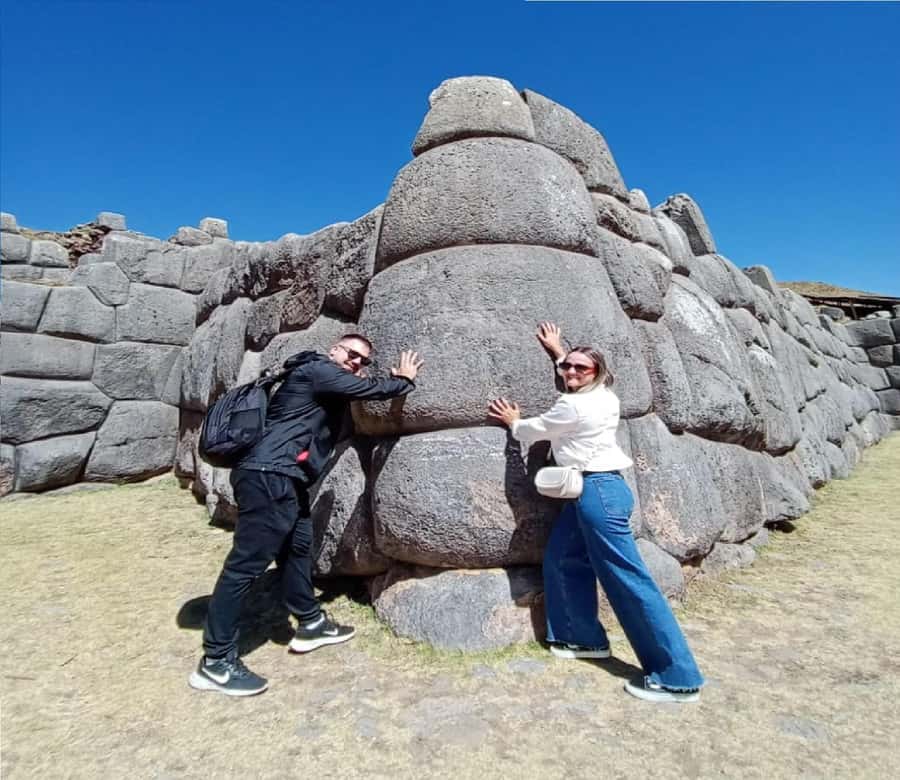
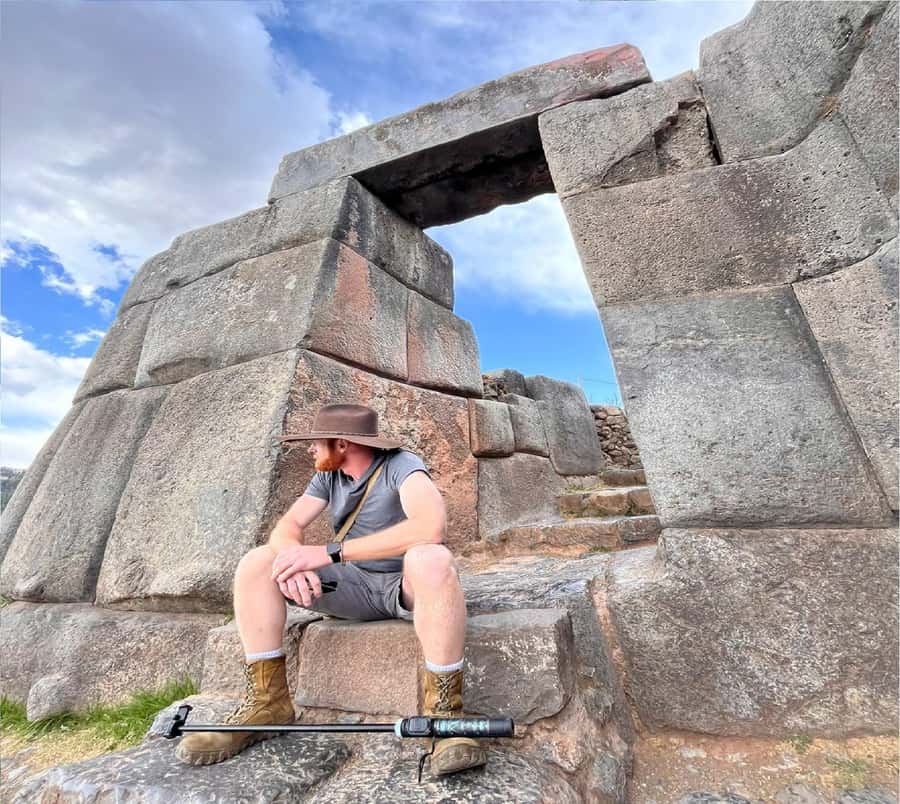
Sacsayhuaman is described as an Inca military fortress and is also linked to the shape of a puma’s head. The Inca city of Cusco was laid out as a puma, with Sacsayhuaman forming the head. The site is known for huge fitted blocks, some reaching four to six meters high and weighing more than 100 tons.
The guide-led visit is planned for about an hour and a half. That time lets you see the massive walls, hear about their defensive and ceremonial roles, and take photographs. Your guide may also help separate established facts from traditional stories, a useful habit at Inca sites where legend and archaeology often sit side by side.
Wear shoes with a good grip. The ground at archaeological sites can be uneven, and the altitude makes steep or exposed walking feel harder than it might at home. Bring water and sun protection. Rain gear is also sensible because Cusco weather can change quickly.
Admission to the archaeological zones is not included. The supplied information lists a 70-sol fee, purchased at Sacsayhuaman, and also says access requires the Cusco Tourist Card, bought in person with your passport. Since the wording combines the ticket and card, confirm the current arrangement when you book or at the first site. Children under nine are listed as free with a passport.
Qenqo: a smaller site with a darker purpose
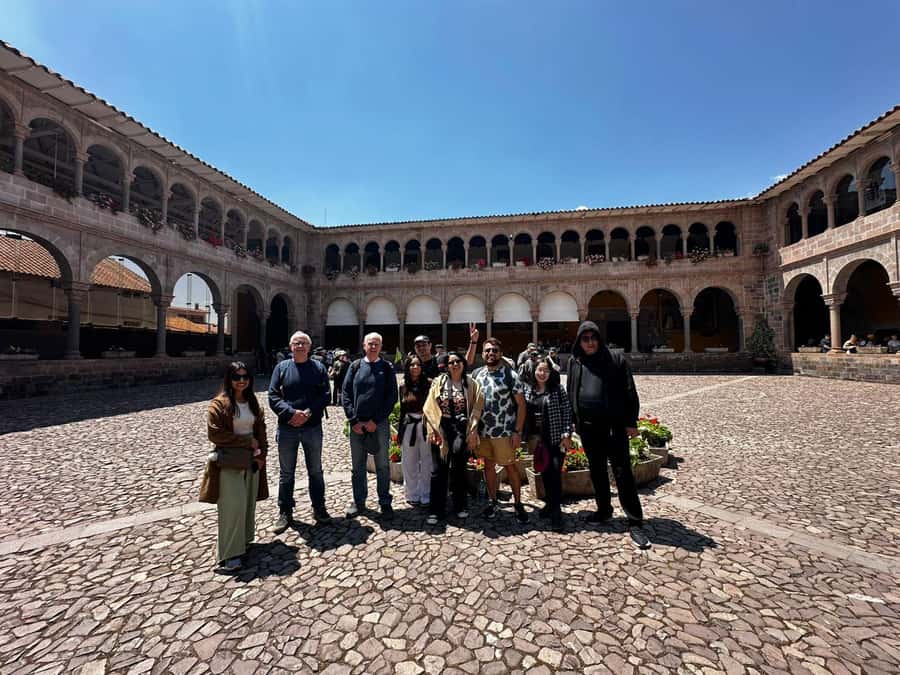
Qenqo follows Sacsayhuaman and provides a sharp change of scale. Instead of huge defensive walls, you encounter an Inca ceremonial center cut into and built around natural rock.
The site is associated with ceremonies, sacrifices to the Sun God, and mummification. The exact purpose of Qenqo is not treated as a simple certainty, and a good guide can explain what is supported by archaeology and what belongs to later interpretation. That distinction is one of the strongest reasons to take a guided visit.
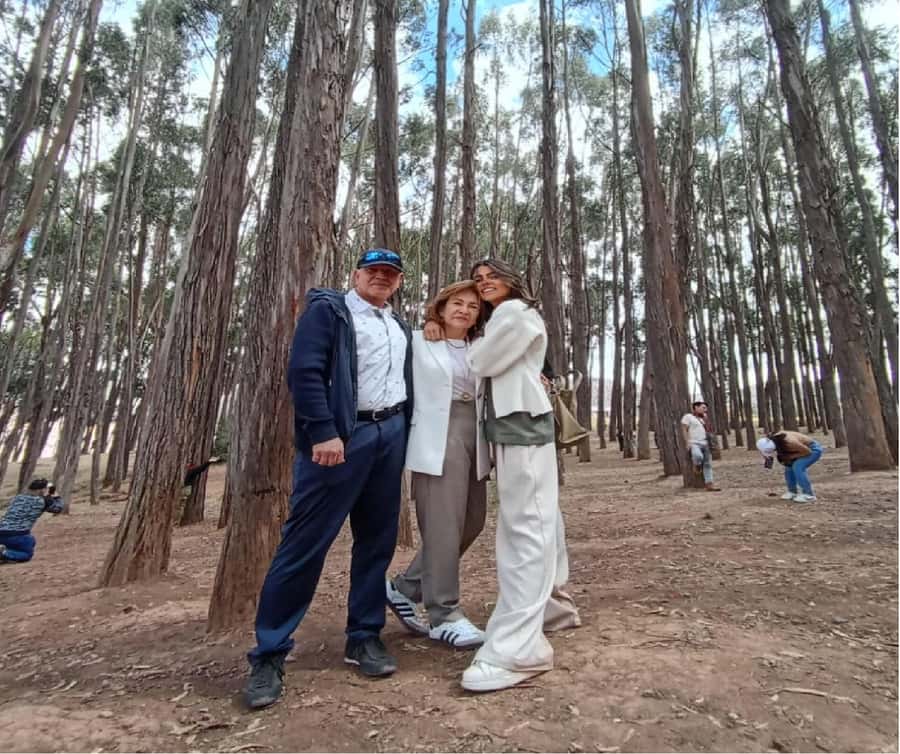
The scheduled stop is about an hour and a half, though actual time can vary with the group and the day’s traffic. There is also a eucalyptus forest nearby, included as a photo stop on the listed options. It offers a pause after the more concentrated archaeological explanations and gives you a chance to take pictures.
Qenqo can be easy to underestimate if you rush through it. Look closely at the carved stone surfaces and enclosed areas. The site has less instant visual drama than Sacsayhuaman, but the guide’s explanation gives it weight.
Same valley, a completely different kind of day:
- Cusco: Humantay Lake Tour with Breakfast and Buffet Lunch
★ 4.9 · 2,976 reviews - From Cusco: Sacred Valley & Maras Salt Mines Tour with Lunch
★ 4.8 · 2,227 reviews - From Cusco: Moray, Maras Salt Mines & Chinchero Weavers Tour
★ 4.8 · 1,925 reviews - From Cusco: Full-Day Group Tour of Machu Picchu
★ 4.7 · 1,767 reviews
Puka Pukara: a red fortress above the city
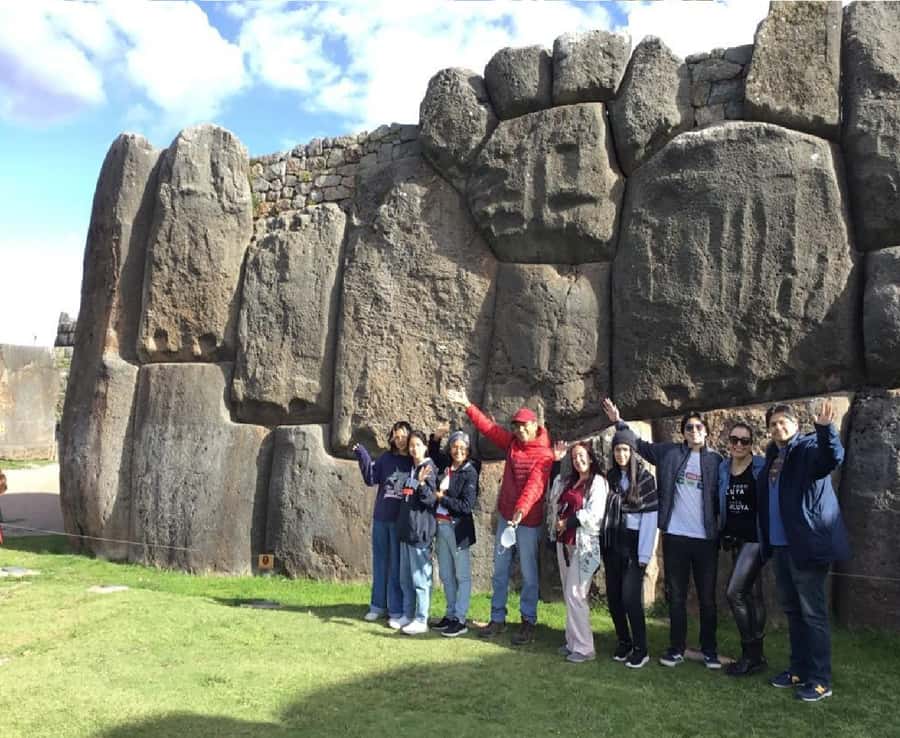
Puka Pukara is commonly called the Red Fortress because of the color of the stone used in its construction. It served as a surveillance and control point above Cusco, helping monitor movement toward the Inca city.
This stop is valuable because it shows the wider Inca system. Sacsayhuaman is the imposing defensive site, while Puka Pukara helps you picture how roads, entrances, and traffic around Cusco were watched. The elevated position also gives you views across the Andean surroundings.
Do not expect a vast complex. Puka Pukara is more compact, and its interest comes from location and purpose. I like it as part of this route because you see how the sites worked together rather than treating each one as an isolated monument.
The visit is listed at about an hour and a half, although the full six-hour schedule includes driving, explanations, and group movement. Bring your camera, but keep your attention on the guide before rushing toward the next viewpoint. The historical setting is the point of this stop, not only the photograph.
Tambomachay: water, ritual, and a quiet finish
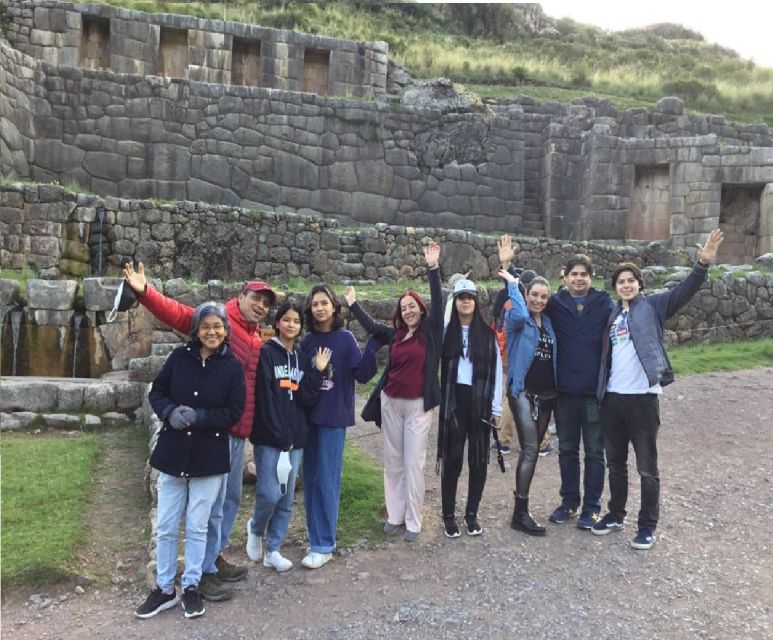
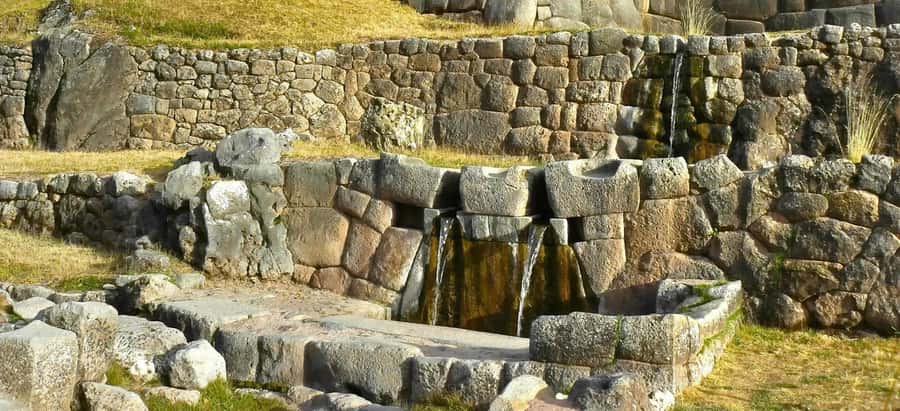
Tambomachay is known as the Temple of Water. Its channels and fountains are the main attraction, and the site offers a gentler ending after the bulky stonework at Sacsayhuaman.
The water features are linked to Inca ritual and careful engineering. Your guide can explain why water held such importance in Inca religious life and how the site may have functioned. The word mysterious is often attached to Tambomachay, but that should not mean you need to accept every theory as fact.
This is usually the last archaeological stop before the vehicle returns to Cusco. The setting feels more open and less monumental than Sacsayhuaman. That contrast works well: you finish with an example of design and water control rather than another wall.
The site visit is listed at around an hour and a half. Again, treat that as a planning guide rather than a promise that you will spend exactly that long at the fountains. Group tours must allow for pickup times, traffic, and the interests of everyone aboard.
The morning and afternoon versions are not identical
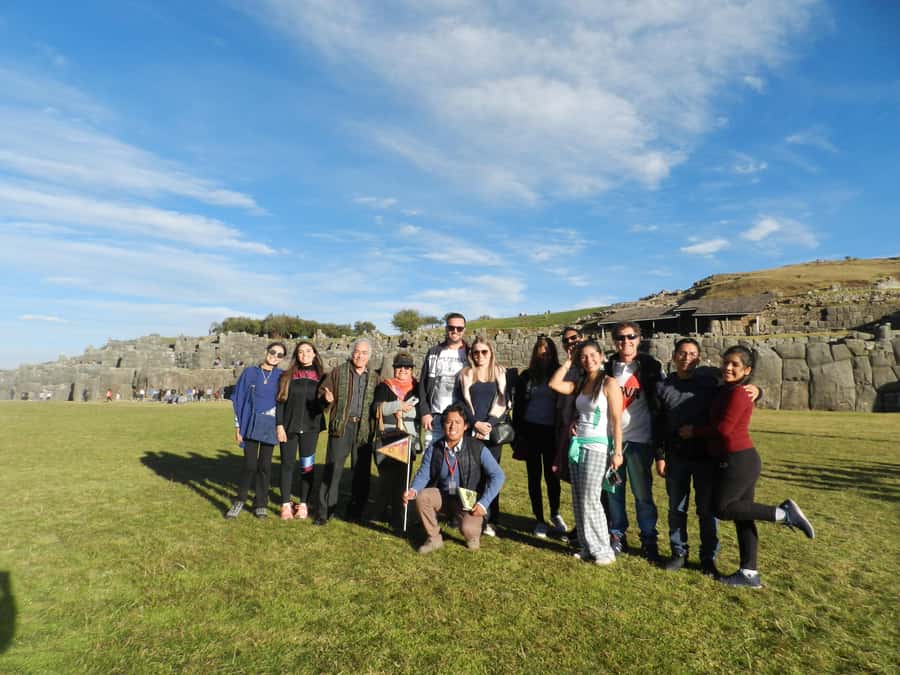
You have three general formats to consider.
The first morning version starts at Qoricancha around 8:55 am, then visits Sacsayhuaman, Qenqo, the eucalyptus forest, Puka Pukara, and Tambomachay. The vehicle returns you near Plaza de Armas on Calle Plateros at about 2:30 pm.
The second morning option picks you up from a nearby hotel between 8:35 and 9:00 am. It includes Qoricancha, the four archaeological sites, and the eucalyptus forest, then finishes near the main square. This is the most convenient choice if your hotel is among the listed central properties and you prefer not to find a meeting point.
The afternoon option meets at the entrance to Cusco Cathedral between 11:50 am and noon. It includes the cathedral, Qoricancha, Sacsayhuaman, Qenqo, the eucalyptus forest, Puka Pukara, and Tambomachay, with a return around 6:00 to 6:30 pm.
The afternoon schedule is useful if you arrive late or want the morning free. It may also feel less rushed for someone who dislikes an early start, though you should confirm how much time is assigned to the cathedral. Cathedral access depends on availability, and its 50-sol entrance fee is extra.
Hotel pickup is offered only from hotels close to Cusco’s main square. The long list includes properties such as Novotel Cusco, JW Marriott El Convento Cusco, Sonesta Hotel Cusco, Casa Andina Premium Cusco, Selina Plaza de Armas, and many hostels and smaller hotels in the center. If your accommodation is farther out, you may need to reach the meeting point yourself.
What the $23 price really covers
At $23 per person, this is an inexpensive way to connect five major sights. The price includes tourist transport, an accredited guide, and the guided visits listed for your chosen option. That removes the hassle of arranging separate rides to sites spread around the hills.
The extra costs matter. Qoricancha is listed at 15 soles. The archaeological zones are listed at 70 soles, with the required tourist card purchased in person and a passport needed. The cathedral costs 50 soles if you enter and if space is available.
That means the headline price is not the full cost of the day. Still, the package can be good value if you want a broad first look at Cusco and do not need private transport. You are paying less for personal control and more for a shared route.
The tour is especially worthwhile if you have only a day or two in Cusco, are preparing for a Machu Picchu trek, or want to limit long uphill walks while adjusting to altitude. One guest used the tour during a short gap before a trek and found it a practical way to see sites that would have been hard to reach on foot.
Guide quality can shape the whole day
The experience depends heavily on the guide. The strongest descriptions focus on clear English, detailed explanations, cultural context, and the ability to switch between English and Spanish when needed.
Luis is noted for making sure everyone understood the explanations and had time for questions and photographs. Alfredo is praised for moving between English and Spanish with ease. Romulo is described as well informed and helpful, while Hyame is remembered for responding carefully to questions during a short visit to Cusco.
Those names identify guides who have led this experience, but they do not guarantee who will lead your departure. The useful point is to choose the English or Spanish language option that suits you and ask questions during the visit. A bilingual tour can work well, but you should expect the guide to serve both language groups.
The best guides also explain the difference between fact and myth. At Qenqo and Tambomachay in particular, that approach keeps the tour interesting without pretending that every part of Inca history is fully settled.
Who will enjoy this tour most
I would recommend this to a first-time Cusco visitor who wants orientation rather than a slow, private archaeological study. It suits couples, solo visitors, and families with older children who can manage uneven ground and several hours of sightseeing.
It also fits travelers with limited time. You see the city’s main Inca sites in one organized outing, then still have part of the morning or evening for meals and independent wandering, depending on your departure.
You should think twice if you dislike group schedules or want to linger at every ruin. The route covers a lot, and transport timing controls the pace. It is also not a good match for anyone who needs a fully accessible, level walking route. The activity is not suitable for people over 95, and the archaeological sites require comfortable shoes and a reasonable ability to walk over uneven ground.
Bring your passport or ID, water, sunscreen, rain gear, camera, and cash. Alcoholic drinks are not allowed in the vehicle, and bikes, drugs, and explosive substances are prohibited. Most of those rules are ordinary, but the passport and cash are easy to forget and directly affect entry.
Should you book this Cusco city tour?
Book it if you want maximum coverage for a low starting price, prefer transport over negotiating separate rides, and value a guide who can put the ruins into context. The route is especially helpful early in a Cusco stay, when the city’s size, altitude, and Inca history can feel like a lot to absorb.
Skip it if your priority is silence, flexible timing, or a private guide. Also add the entrance fees before comparing the cost with other tours. I would choose the morning version for a classic half-day plan and the afternoon version if the cathedral matters or you need a later start.
Free cancellation up to 24 hours before departure and reserve-now, pay-later terms make planning easier. Just confirm your pickup hotel, passport requirements, language, and current entry arrangements before you commit. At a 4.5 rating from 99 bookings, the tour has a strong record, but its real value comes from choosing the right pace and understanding what the $23 does and does not include.
FAQ
How long does the Cusco historical city tour last?
The activity lasts about six hours. The morning options finish near Plaza de Armas at approximately 2:30 pm, while the afternoon option ends around 6:00 to 6:30 pm.
Which Inca sites are included?
The tour visits Sacsayhuaman, Qenqo, Puka Pukara, and Tambomachay. It also includes Qoricancha, the Inca Temple of the Sun.
Is hotel pickup included?
Hotel pickup is available for the first two options from hotels close to Cusco’s main square. You should wait in your hotel lobby. The afternoon option uses a meeting point at the entrance to the cathedral.
Are entrance fees included in the $23 price?
No. Qoricancha admission is listed at 15 soles, the archaeological zones at 70 soles, and cathedral admission at 50 soles. The archaeological sites require the Cusco Tourist Card, bought in person with your passport.
Is the tour available in English?
Yes. The tour is offered in English and Spanish with a live guide. You should select your preferred language when booking.
What should I bring?
Bring your passport or ID, comfortable shoes, a camera, sunscreen, water, rain gear, and cash.
Just added around Cusco
- Waqrapukara 1 day trekking + meals★ 3.9 · 3 reviews
- Zipline over the Sacred Valley Trip★ 5.0 · 11 reviews
- Valle Sur Cusco | half day★ 4.3 · 3 reviews
- Visit to the Cochahuasi Animal Sanctuary with rescued animal★ 4.1 · 4 reviews
- Visit Pisac from Cusco: Private Transport★ 4.6 · 9 reviews
- Maras and Huaypo lagoon by ATV from Cuzco | Local Operator★ 4.7 · 4 reviews
- Trek to Humantay Lake from Cusco★ 4.9 · 8 reviews
- Trek to Choquequirao 4 days★ 3.8 · 4 reviews
Historical Tours, compared.
Guided Tour of Historic and Monumental Trujillo
Read our review →
Lima’s Vibrant Heritage: Exploring the City’s Landmarks Half-day
Read our review →
Historic Center Street Food, Market, and Eateries Tour
Read our review →
Walking tour in the Historic Center of Arequipa
Read our review →
Historic Downtown, Miraflores & Catacombs Private Tour
Read our review →
Machu Picchu Private Archaeological and Historical Guided Tour
Read our review →
Browse the lists this tour appears in