
Reviewed · MACHU PICCHU TOURS
5-Day Salkantay Trek to Machupicchu Sky Lodge Dome
The best part of this trek is the dramatic change in scenery. You begin among high Andean peaks at Humantay Lagoon and Salkantay Pass, then descend through coffee country, fruit plantations, and the Urubamba Valley before reaching Machu Picchu. It is a demanding route, but you get more than a mountain walk: private-bathroom domes, cooked meals, a coffee-making visit, and a night in Aguas Calientes.
I especially like the small groups of up to 10 people and the mix of comfort and effort. You get hot showers in the domes, a cook, mules for gear, and a hotel night before Machu Picchu, while still tackling a 4,650-meter pass on foot. The main concern is communication about Machu Picchu arrangements, so confirm your entry time, train, and bus details before departure.
In This Review
- Key points to know before booking
- What the $700 price really covers
- Day 1: Cusco to Humantay Lagoon and the first dome
- Day 2: The 4,650-meter Salkantay Pass
- Day 3: From high mountains to coffee country
- Day 4: Llactapata, a Machu Picchu glimpse, and the train tracks
- Day 5: First bus to Machu Picchu
- Dome comfort, food, and sleeping conditions
- Fitness, altitude, and who should choose this trek
- Communication and booking details to confirm
- Should you book the Salkantay dome trek?
- FAQ
- How long is the Salkantay trek to Machu Picchu?
- What is the highest point of the trek?
- Is Humantay Lagoon included?
- Where do I sleep during the trek?
- Are meals included?
- Is vegetarian or vegan food available?
- How much luggage can the mules carry?
- Can I send my luggage to Aguas Calientes?
- Is the Machu Picchu bus included?
- Can I climb Huayna Picchu or Machu Picchu Mountain?
Key points to know before booking
- 4,650-meter Salkantay Pass: The highest point comes on Day 2, with views toward Salkantay and Tucarhuay.
- Private domes with hot showers: You sleep in geodesic domes with a private bathroom, though the first night can be very cold.
- Coffee plantation stop: Day 3 includes harvesting, roasting, and grinding coffee rather than just passing through rural scenery.
- First Machu Picchu glimpse: From Llactapata, you may see Machu Picchu and Salkantay Mountain in the distance.
- Gear transfer changes on Day 4: Your duffel is carried through Day 3, but you may need to carry it afterward unless you pay about 20 soles for transport.
- Strong guide and cooking teams matter: Roberto, Abel, Mario, and Exaltación are among the guides and cooks associated with departures, but assignments can vary.
What the $700 price really covers
At $700 per person, this is not a bare-bones hiking package. The price includes four breakfasts, four lunches, four dinners, four snacks, a bilingual guide, a cook, transport from Cusco to the trailhead, one-way train travel, Machu Picchu admission, the uphill bus, lodging, and basic first aid.
You also get horses and mules to carry food, cooking equipment, and up to 7 kilograms of personal luggage per person. That matters on a five-day trek, since carrying every item yourself would make the high pass much harder.
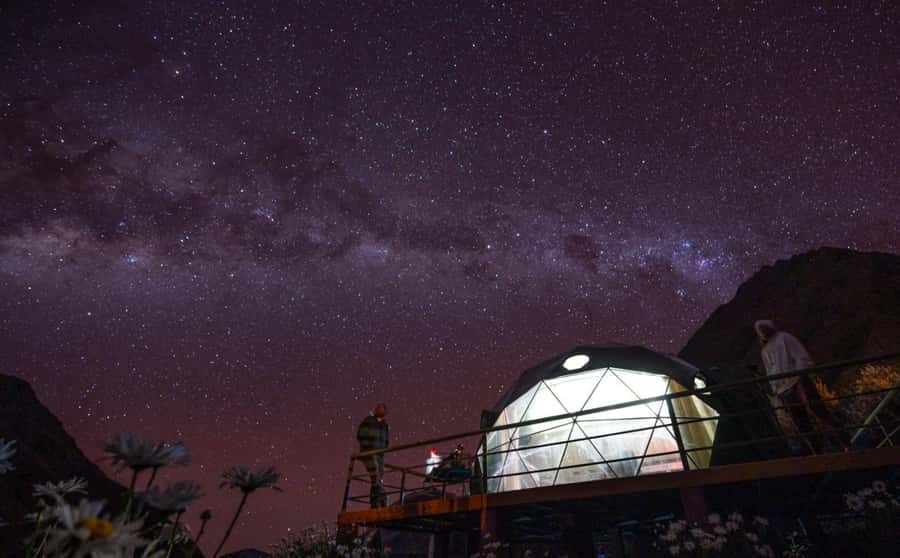
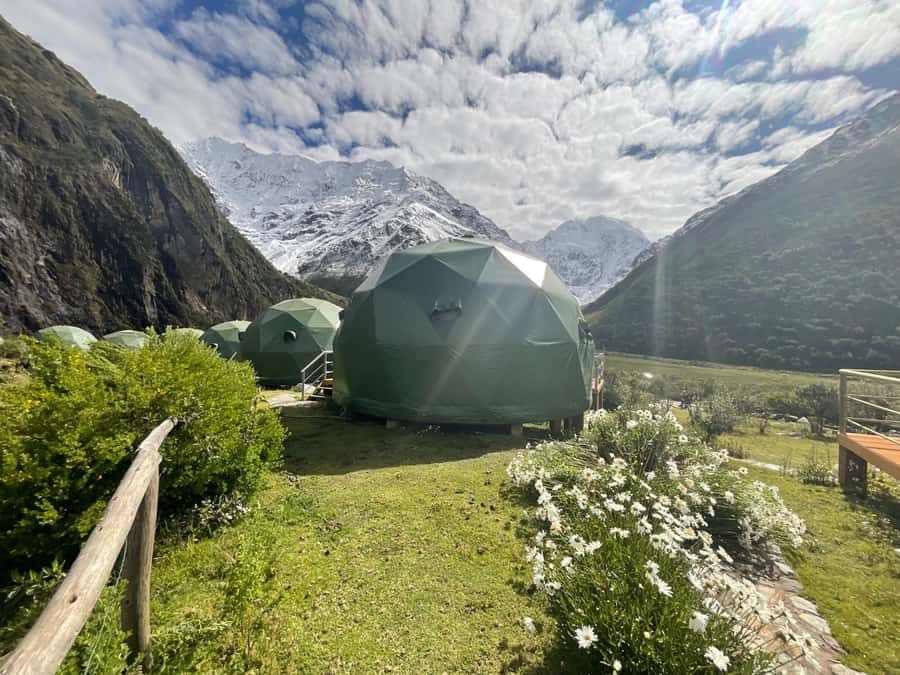
The domes add comfort that you usually do not get on a standard camping trek. Each has a private bathroom and hot shower, plus a dining tent with tables and chairs for group meals. You are still camping in the mountains, not staying in a full-service hotel, but the setup softens the rough edges.
The value is strongest if you want the Salkantay route without sleeping in a conventional tent every night. It is less attractive if you already have trekking equipment and prefer a simpler, cheaper camping trip.
Budget for the extras. The first breakfast and final dinner are not included. You must also bring or rent a sleeping bag and trekking poles. The Aguas Calientes hot springs cost 10 soles, and optional Huayna Picchu or Machu Picchu Mountain tickets cost extra and depend on advance availability.
More machu picchu tours in Cusco:
- From Cusco: Full-Day Group Tour of Machu Picchu
★ 4.7 · 1,767 reviews - Machu Picchu Day Trip from Cusco
★ 4.5 · 1,644 reviews - Machu Picchu: Full-Day Tour from Cusco with Optional Lunch
★ 4.6 · 927 reviews
Day 1: Cusco to Humantay Lagoon and the first dome
The day begins early, with hotel pickup around 4:30 to 5:00 a.m. The first van ride takes about two hours to Mollepata, where you stop for breakfast. From there, private transport continues for roughly 40 minutes to Challacancha, the walking starting point.
This early start is not optional in spirit. You need enough daylight and energy for the first hike, and the trip from Cusco to the trailhead takes time. Arrange your bags the night before and keep water, sun protection, and warm layers where you can reach them.
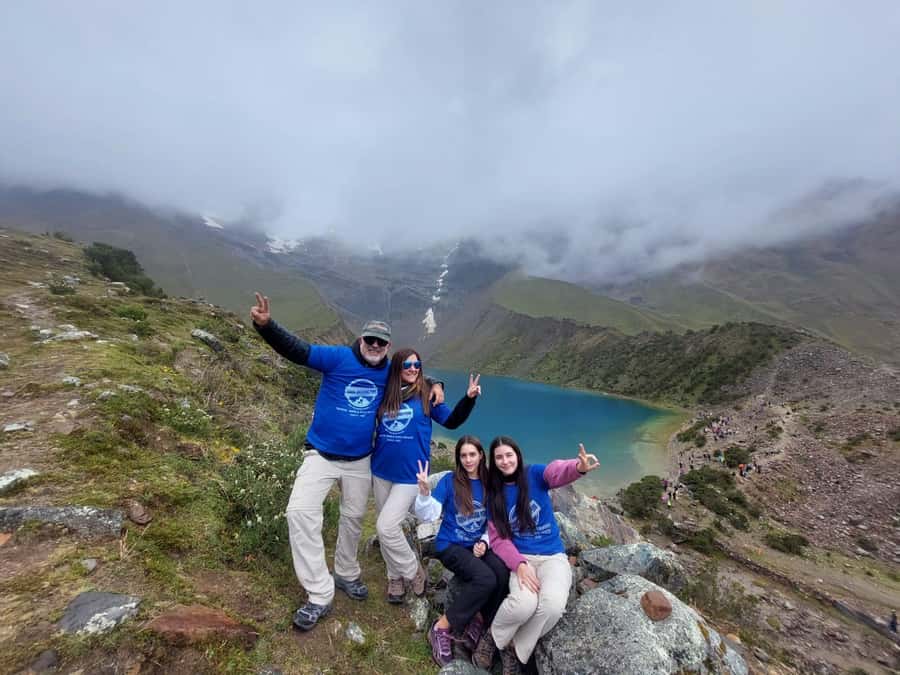
The main walk leads to Humantay Lagoon, one of the trek’s first big rewards. The lagoon sits below high mountain peaks, and the route gives you an immediate sense of the altitude and effort ahead. Take this section seriously. The itinerary begins with a major scenic stop, not a gentle warm-up.
After the lagoon, you continue toward Soraypampa and spend the night in a geodesic dome. The private toilet and hot shower are useful, but do not mistake them for warmth. The first night can be especially cold inside the dome, so bring proper thermal clothing and use the sleeping bag requirement as a real warning, not a suggestion.
The day also includes an Andean ceremony and an offering to Mother Earth. This gives the start of the trek a local cultural element, rather than making it only a test of your legs.
Day 2: The 4,650-meter Salkantay Pass
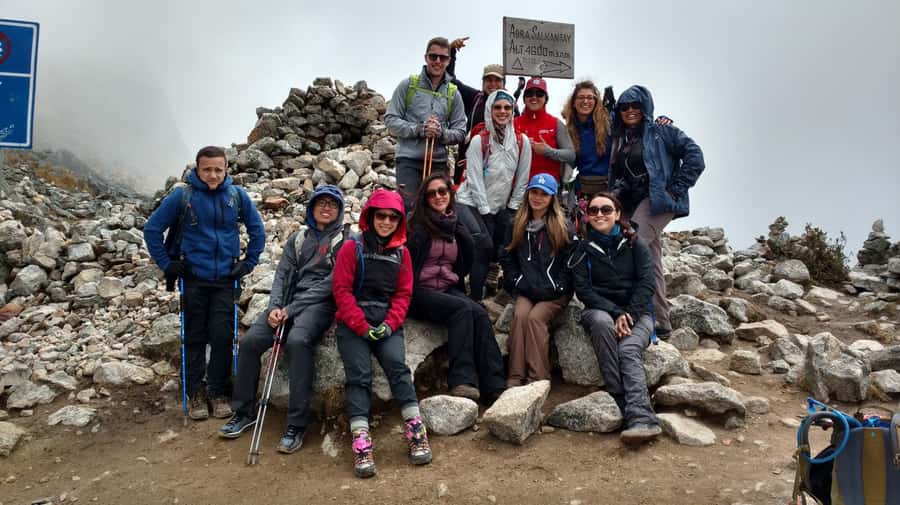
Breakfast comes around 5:30 a.m., followed by the hardest day of the trek. You climb to the Salkantay Pass at approximately 4,650 meters, or 15,200 feet, between the snow-covered Salkantay and Tucarhuay mountains.
This is the day that determines if the route suits you. The pass is high enough that cold, thin air, and steep walking can slow you down. You should arrive in Cusco at least two days before the trek to adjust to the altitude. That extra time is one of the smartest things you can do for your safety and enjoyment.
At the top, the views toward the two snow-capped mountains are the payoff. Snow is possible at the pass, and conditions can change quickly in this high section. Pack a warm hat, gloves, sunglasses, and a sun hat. You need protection from both cold and strong high-altitude sun.
After the pass, the route descends to Chaullay, where you spend another night in a dome. The descent marks a major change in climate and scenery, but it can be tiring after the climb. Your knees may feel the downhill work more than the uphill effort, so trekking poles are worth renting or bringing.
Day 3: From high mountains to coffee country
The third day starts around 6:30 a.m. and takes you into the high jungle. You cross the Lluskamayo River and several smaller streams while walking for about four hours to La Playa.
This section is valuable because it shows how quickly the Salkantay route changes. In two days, you move from cold mountain terrain into warmer agricultural country. The walk is not just a transfer between camps. Streams, plantations, and rural paths give the day a different rhythm from the high pass.
At La Playa, you sleep in domes at a coffee plantation. The visit includes the full coffee process: harvesting, roasting, and grinding. That hands-on stop adds substance to the route. You are seeing how a local crop moves from plant to cup, not simply stopping for a photograph.
The coffee stop also makes the third night feel distinct from the first two. Each dome camp has the same basic comfort package, but the setting changes as you descend. Ask about vegetarian or vegan meals before the trek. Those options are available at no extra charge.
You should also pay attention to your luggage plan here. Your duffel is carried for you through Day 3, with the mule team transporting equipment, food, and up to 7 kilograms of your personal luggage. From Day 4 onward, the arrangement changes.
More salkantay trek in Cusco:
- Salkantay Trek Challenge – 3 Days / 2 Nights
★ 5.0 · 101 reviews - Small Group 5 Days Salkantay and Machu Picchu by Llactapata Tour
★ 5.0 · 88 reviews - Machu Picchu: 5-Day Salkantay Trek with Panoramic Train
★ 5.0 · 79 reviews - Salkantay Trek 4 Days to Machu Picchu by Glamping Sky Lodge Dome
★ 5.0 · 68 reviews
Day 4: Llactapata, a Machu Picchu glimpse, and the train tracks
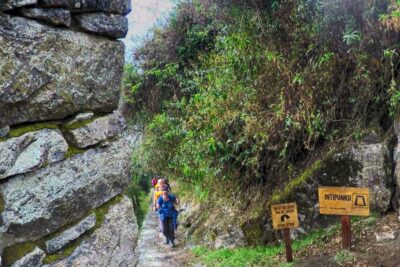
Day 4 begins early again, around 6:30 a.m. The route heads toward Llactapata, following part of an original Inca trail and passing through areas where local residents grow crops.
This is one of the most varied days. You may have the chance to harvest fruit, see coca and banana plantations, and look across the Urubamba Valley. The route also offers a first glimpse of Machu Picchu, with Salkantay Mountain in the background. Seeing the destination from a distance before entering it the next morning gives the final approach some suspense.
After reaching Hydroelectric, you stop for lunch and then walk beside the railway for about two and a half hours to Aguas Calientes. The train-track walk is practical rather than polished, and it can feel long late in the day. Still, it puts you directly into the valley leading to Machu Picchu.
Aguas Calientes is your first conventional accommodation of the trek. The hotel is described as basic but adequate, and it gives you a bed before the early Machu Picchu visit. You can visit the town’s hot springs for 10 soles, a pleasant way to ease tired muscles if you still have the energy.
This is also the day to decide what happens to your bags. You can carry them yourself, or pay about 20 soles directly to send luggage by car from La Playa to Hydroelectric and then by train to Aguas Calientes. Confirm the arrangement early. A small daypack is the sensible choice for the walking portion.
Day 5: First bus to Machu Picchu
You wake around 5:00 a.m., eat breakfast, and take one of the first buses from Aguas Calientes to Machu Picchu. The ride takes about 25 minutes. The goal is to arrive as the sun rises and make the most of your included entry.
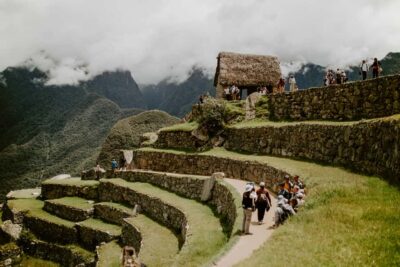
Your bilingual guide leads a two-hour tour of the archaeological site. Afterward, you have time to explore on your own, subject to the entry rules and ticket schedule in effect for your visit.
Huayna Picchu is available as an optional extra if you reserve it in advance and tickets remain available. The climb to the top takes about 1 hour and 45 minutes and reaches 2,720 meters. Machu Picchu Mountain is another possible add-on. Do not count on deciding at the last minute, since these mountain permits are tied to availability.
The return schedule depends on the train assigned to you. Departure may be around 2:00 p.m., 4:00 p.m., or 6:20 p.m. The train takes about two hours to Ollantaytambo, where private transport returns you to Cusco.
That late return can make Day 5 a long day. Keep your plans after the trek flexible, especially if your train leaves in the evening. The final dinner is not included, so plan for food after you return.
Dome comfort, food, and sleeping conditions
The domes are the most distinctive comfort feature of the trip. You get a private bathroom and hot shower rather than shared mountain facilities. A dining tent with tables and chairs gives you a proper place to eat and rest after walking.
The tradeoff is temperature. The first night can be very cold, and the domes do not remove the need for serious cold-weather gear. Bring warm clothing and a sleeping bag, or arrange a rental before departure.
A dedicated cook prepares the four included breakfasts, lunches, dinners, and snacks. The food program is a major practical benefit because you do not need to carry five days of meals. Vegetarian and vegan food can be arranged at no added cost.
The cooking team can shape your experience, so it is worth asking who will be assigned. Mario and Exaltación are named cooks connected with departures, while Roberto and Abel are among the guides who have led this trek. These names are useful when confirming your team, but they should not be treated as guaranteed assignments.
Fitness, altitude, and who should choose this trek
You need to be comfortable with several consecutive days of walking, early starts, uneven ground, and a high mountain pass. The itinerary does not give total daily distances or exact walking times for every day, but Day 2 clearly includes the route’s greatest physical challenge.
The trek is not suitable for people with back problems, heart problems, mobility impairments, or pregnant women. The activity information also marks it as wheelchair accessible, but that label conflicts with the steep, high-altitude trekking route. If accessibility is important to you, ask the operator for a precise explanation before paying.
Arrive in Cusco at least two days early. That advice is especially important because Cusco itself is at altitude, and the Salkantay Pass is much higher. Do not schedule a rushed arrival followed by a 4:30 a.m. pickup the next morning.
Bring hiking shoes, a daypack, trekking clothing, sunglasses, a sun hat, cash, and your passport or identity card. Your passport or ID is needed for the Machu Picchu portion. Trekking poles are not included, but they are a smart addition for the steep ascents and descents.
Communication and booking details to confirm
The biggest weakness is not the route itself. It is the need to confirm key arrangements clearly. Before setting out, ask for written details covering your Machu Picchu entry, the entry time, the uphill bus, the train departure, and the return transfer from Ollantaytambo to Cusco.
A pre-trek briefing takes place at the operator’s office. Use it to check every moving part. Do not assume that all transport details have been explained simply because the tour price includes them.
The small group limit, live English and Spanish guide, hotel pickup within Cusco’s historic center, and free cancellation up to 24 hours before departure all make planning easier. You can also reserve now and pay later, which helps if your dates are still shifting.
Should you book the Salkantay dome trek?
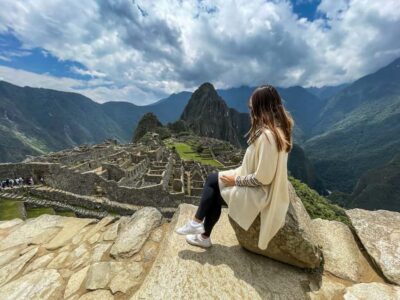
Book this trek if you want a physically serious route to Machu Picchu with more comfort than standard camping provides. The combination of Humantay Lagoon, the Salkantay Pass, coffee production, fruit-growing country, Llactapata, and Machu Picchu gives you a full five-day story rather than a quick approach to the ruins.
Skip it if you dislike early starts, cold nights, long walking days, or uncertainty around train and entry times. You should also choose another type of visit if high altitude or mobility is a major concern.
At $700, the package offers solid value for an organized five-day trek with meals, a cook, mules, dome lodging, a hotel, Machu Picchu entry, bus, train, and return transport. Make the booking only after confirming the Machu Picchu ticket and train details. That one check can protect an otherwise memorable route from an avoidable final-day problem.
FAQ
How long is the Salkantay trek to Machu Picchu?
The trek lasts five days and four nights, starting in the Cusco Region and finishing with a visit to Machu Picchu before returning to Cusco.
What is the highest point of the trek?
The highest point is Salkantay Pass at about 4,650 meters, or 15,200 feet, between Salkantay and Tucarhuay mountains.
Is Humantay Lagoon included?
Yes. The first day includes transport to Challacancha, the hike to Humantay Lagoon, and an overnight stay in a dome at Soraypampa.
Where do I sleep during the trek?
You sleep in luxury geodesic domes at Soraypampa, Chaullay, and La Playa. The domes have private bathrooms and hot showers. The fourth night is in a hotel in Aguas Calientes.
Are meals included?
The price includes four breakfasts, four lunches, four dinners, and four snacks. The first breakfast and final dinner are not included.
Is vegetarian or vegan food available?
Yes. Vegetarian and vegan meals are available on request at no extra charge.
How much luggage can the mules carry?
Horsemen and mules carry equipment, food, and up to 7 kilograms of personal luggage per person. Your duffel is carried through Day 3, but from Day 4 you may need to carry it yourself.
Can I send my luggage to Aguas Calientes?
Yes. On Day 4, you can send luggage by car from La Playa to Hydroelectric and then by train to Aguas Calientes. The cost is about 20 soles, paid directly.
Is the Machu Picchu bus included?
Yes. The uphill bus from Aguas Calientes to Machu Picchu is included. The ride takes about 25 minutes.
Can I climb Huayna Picchu or Machu Picchu Mountain?
Yes, either climb may be possible as an optional addition, but you must book in advance and check availability. The stated climb time to Huayna Picchu is about 1 hour and 45 minutes.
More 5-Day Experiences in Cusco
- Ausangate Trek 5 Days
★ 5.0 · 74 reviews - Classic Choquequirao Trek – 5 Days / 4 Nights
★ 5.0 · 52 reviews - Ultimate Lares Trek & Inca Trail 5 days
★ 5.0 · 47 reviews - Wonderful Cusco 5-Day Tour with Entrance to Machupicchu
★ 5.0 · 46 reviews
More Hiking & Trekking in Cusco
- From Cusco: 7 Lakes Ausangate Trek with Breakfast and Lunch
★ 4.8 · 360 reviews - Cusco: Rainbow Mountain Tour and Red Valley Hike (Optional)
★ 4.7 · 149 reviews - Cusco: Full-Day Rainbow Mountain & Red Valley Trekking Tour
★ 4.5 · 121 reviews - From Cusco: Rainbow Mountain Trek
★ 4.5 · 98 reviews
Just added around Cusco
- Waqrapukara 1 day trekking + meals★ 3.9 · 3 reviews
- Zipline over the Sacred Valley Trip★ 5.0 · 11 reviews
- Valle Sur Cusco | half day★ 4.3 · 3 reviews
- Visit to the Cochahuasi Animal Sanctuary with rescued animal★ 4.1 · 4 reviews
- Visit Pisac from Cusco: Private Transport★ 4.6 · 9 reviews
- Maras and Huaypo lagoon by ATV from Cuzco | Local Operator★ 4.7 · 4 reviews
- Trek to Humantay Lake from Cusco★ 4.9 · 8 reviews
- Trek to Choquequirao 4 days★ 3.8 · 4 reviews
Machu Picchu Tours, compared.
4-Day Inca Trail to Machu Picchu with Accommodation
Read our review →
2-Day Trip to the Sacred Valley and Machu Picchu
Read our review →
Machu Picchu 2-Day Inca Trail with Panoramic Train
Read our review →
Browse the lists this tour appears in