
Reviewed · SACSAYHUAMAN TOURS
Cusco City Sightseeing and Sacsayhuaman Archeological Park Tour
Sacsayhuaman is the star here: huge stones, fitted so tightly that a sheet of paper can barely pass between them, sit above Cusco with sweeping city views. You then connect that dramatic Inca site with four smaller ruins, Qorikancha, and the cathedral in one half-day outing.
I like the small-group format, capped at 15 people, and the way air-conditioned transport saves you from walking between scattered sites at high altitude. Guides such as Alvaro, Yuber, Clara, Rommel, and Niko have earned strong praise for lively storytelling and deep knowledge of Inca culture.
The main catch is the ticket wording. Some booking options do not include admission, and several people were surprised by extra charges on tour day. Bilingual guiding can also mean less English time if most of the group speaks Spanish.
In This Review
- Key points to know before booking
- What this Cusco half-day tour really covers
- Sacsayhuaman: the reason to take the tour
- Qenqo, Puca Pucara, and Tambomachay
- Qorikancha and the collision of two faiths
- Plaza de Armas and Cusco Cathedral
- The guide can make or break the afternoon
- Transport, pickup, and the pace of the route
- Is $79 a fair price?
- Who should book this Cusco tour?
- Final verdict: a useful first look at Cusco
- FAQ
- How long does the Cusco City Sightseeing and Sacsayhuaman tour last?
- What sites are included in the route?
- Are entrance tickets included in the $79 price?
- Is the guide available in English?
- Is hotel pickup and drop-off provided?
- Can I take photographs inside Cusco Cathedral?
Key points to know before booking
- Sacsayhuaman provides the big visual payoff: Massive stones and broad views over Cusco make this the strongest stop.
- Four hillside archaeological sites fit into one outing: Qenqo, Puca Pucara, and Tambomachay follow Sacsayhuaman by vehicle.
- Qorikancha shows Inca and Spanish layers together: The Santo Domingo Convent was built over the former Temple of the Sun.
- Cusco Cathedral adds colonial art and architecture: Look for the Senor de los Temblores painting and grand Gothic and Baroque details.
- The tour is advertised at 3 hours 30 minutes: Some outings have lasted closer to four or five hours, especially with pickups and extra stops.
- Read the ticket option twice: Admission may or may not be included, and the difference matters at this price.
What this Cusco half-day tour really covers
At $79 per person, this is not simply a quick drive to Sacsayhuaman. It links the main Inca sites above Cusco with two major city attractions, giving you a useful first look at how Inca and Spanish history overlap.
The stated duration is about 3 hours 30 minutes. The route includes hotel pickup and drop-off, an air-conditioned vehicle, a live bilingual guide in Spanish and English, and admission to Sacsayhuaman Archaeological Park, Qorikancha, and Cusco Cathedral only if you select the ticket-included option.
That last detail deserves your full attention. There are purchase choices with and without tickets. If you choose the lower-priced option without admission, you may need to buy a separate ticket or pay additional entrance fees. One account describes a last-minute request for 290 soles, which turned a seemingly simple booking into a costly surprise.
I would compare the final price, not just the headline price. If the ticket-included option costs more but removes uncertainty, it may be the better value. If you already have a wider archaeological ticket that covers the sites, the non-ticket option might suit you. Confirm exactly what you have before departure.
The group limit of 15 is a useful middle ground. You get the convenience of a vehicle and guide without the scale of a large coach tour. Still, hotel pickups can take time, especially if the vehicle cannot reach your lodging. Some central streets do not allow vehicle access, so you may be asked to walk to a nearby meeting point.
More sacsayhuaman tours in Cusco:
- Cusco: Half-Day City Tour with Sacsayhuaman and Q’enco
★ 4.6 · 1,129 reviews - City Tour Cusco Qoricancha Sacsayhuaman y Tambomachay
★ 4.7 · 617 reviews - Cusco 4-Hour Private Tour Including Sacsayhuaman and Qenqo
★ 5.0 · 77 reviews
Sacsayhuaman: the reason to take the tour
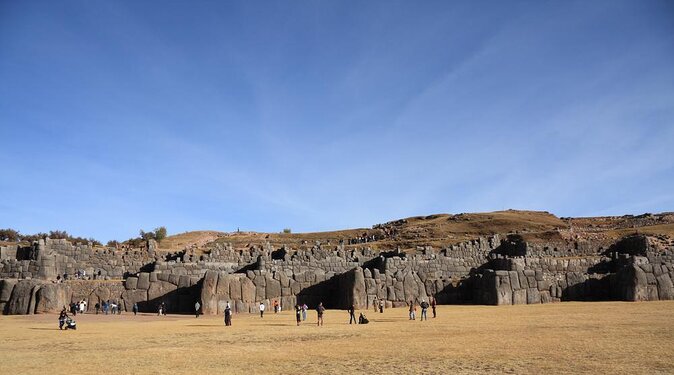
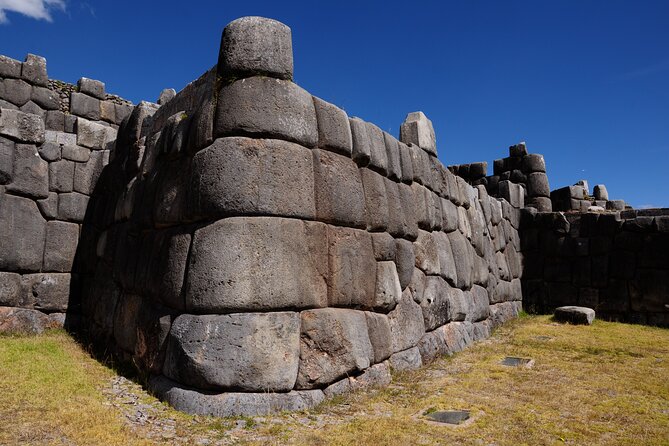
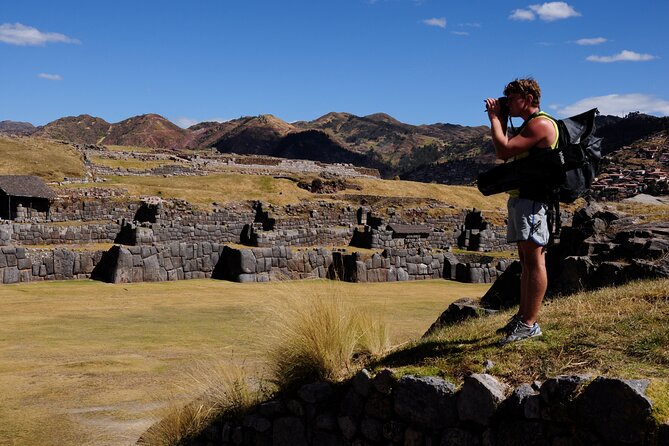
Sacsayhuaman sits on a hill north of Cusco, and the first impression is all about scale. The massive stones, some as tall as 13 feet, form walls that feel more like carefully fitted mountainside blocks than ordinary masonry.
Your guide should help you look beyond the famous zigzag walls. The stone shapes vary greatly, yet the joins are remarkably tight. The site also carries symbolic meaning linked to the condor, puma, and snake, figures associated with the three Inca worlds.
I find this stop especially useful early in a Cusco visit because it gives you a physical sense of Inca engineering before you see other sites in Peru. You can ask questions here about construction, ritual use, defense, and the way the walls survived earthquakes. If you want highly technical explanations about engineering, make that clear to your guide. One past participant felt the answers on earthquake resistance were not detailed enough.
The views over Cusco are another reason to linger. The city spreads below the site, making it easier to understand the relationship between the old Inca capital and the colonial center you will visit later.
You should wear sturdy shoes and bring protection from both sun and rain. The weather can change quickly, and one highly rated outing continued successfully despite heavy rain. A light waterproof layer is a smart addition, as is water. The site is open and exposed, so the heat can be tiring even though the vehicle itself is air-conditioned.
Qenqo, Puca Pucara, and Tambomachay
After Sacsayhuaman, the vehicle continues to three smaller sites. These stops are shorter and less visually overwhelming, but they help fill out the story of Cusco’s ceremonial and defensive network.
At Qenqo, you see the ceremonial altar and sacred temple often associated with the Puma. The site has an atmospheric, carved-stone character, and your guide may explain how ritual activity was connected to the rock formations and enclosed spaces.
Puca Pucara brings a different mood. Its remains are linked to military defense, and its position above Cusco helped it serve as a lookout or control point within the Inca road system. You will not find a huge fortress on the scale suggested by Sacsayhuaman, but the stop makes more sense when you view it as part of a wider network.
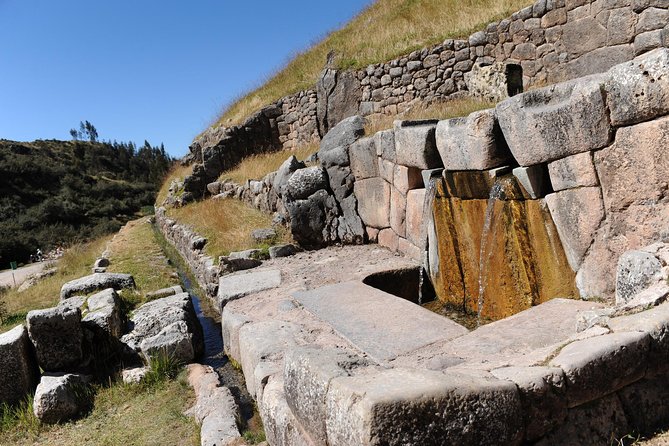
Tambomachay is the most water-focused stop. Aqueducts, channels, and small waterfalls show how carefully the Inca worked with water. It may have served ritual purposes and perhaps a spa-like retreat for elite members of society, though the exact use is not presented as certain.
These sites are close enough to combine efficiently by vehicle. That is the practical strength of this excursion. On your own, you would need to arrange transport between them and work out the entrance requirements. Here, the route is handled for you.
The tradeoff is time. You may wish for longer at each ruin, especially if you enjoy photography or archaeology. The schedule also depends on group coordination, traffic, hotel pickups, and the amount of time your guide spends explaining each place. Several outings have run longer than the advertised 3.5 hours, sometimes closer to four or five. That can be a bonus if you want more detail, but do not schedule a tight dinner or airport connection afterward.
Qorikancha and the collision of two faiths
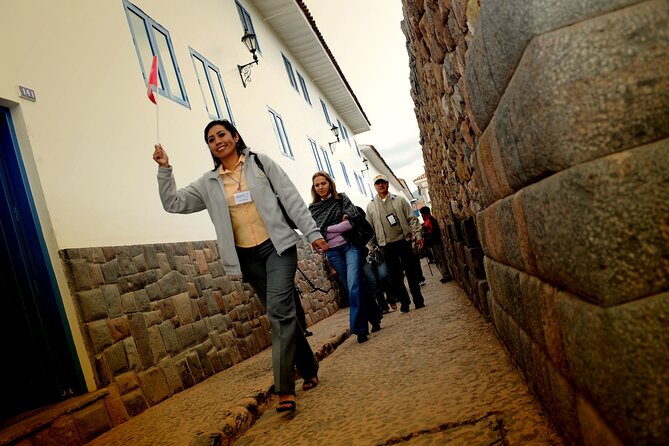
Back in central Cusco, the tour visits Qorikancha, the Temple of the Sun. The site is important not only for its Inca past but also for the way Spanish colonial construction sits directly above it.
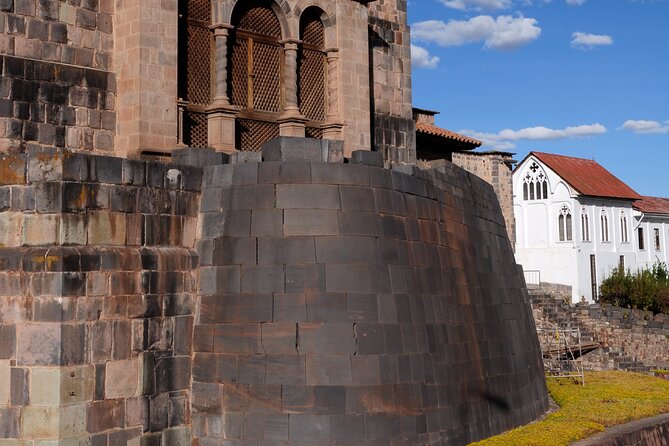
The Santo Domingo Convent was built over Qorikancha. The contrast is clear: Inca stonework and sacred planning below, Spanish religious power above. The legend says the original temple was covered in gold, which astonished the Spanish conquerors when they arrived.
You will likely spend about an hour here, although the pace can vary. This is a good place to pay attention to your guide’s explanation of how conquest changed the city rather than treating the building as an isolated monument.
Qorikancha also gives you a more intimate view of Inca masonry than the huge walls at Sacsayhuaman. The value is in the contrast between precise stone foundations and later colonial additions. If your main interest is massive ruins, Sacsayhuaman will impress you more. If you want to understand Cusco as a layered city, Qorikancha may be the more important stop.
Admission is included only with the appropriate booking option. Check before you pay, since the tour description presents both ticketed and non-ticketed choices.
A few more Cusco trips to weigh up
- Cusco: Sightseeing Tour of the City on an Open-Top Bus
★ 4.0 · 481 reviews - Open Bus Cusco City Tour
★ 4.5 · 219 reviews - Cusco: City Tour | Half-Day Tour to 4 Archaeological Sites
★ 4.6 · 206 reviews - City Tour in Cusco & visit Museum South American Camelid Private.
★ 5.0 · 147 reviews
Plaza de Armas and Cusco Cathedral
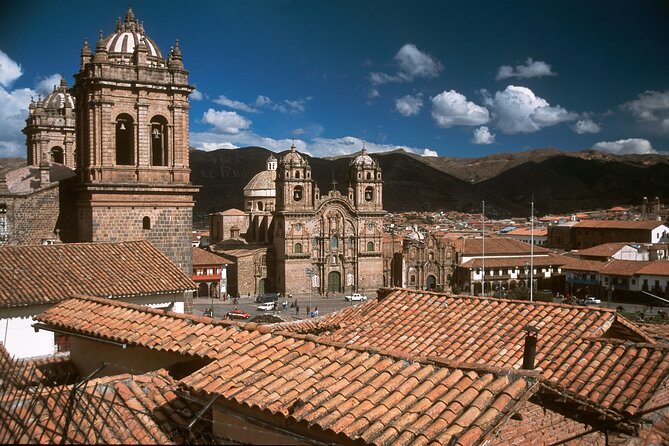
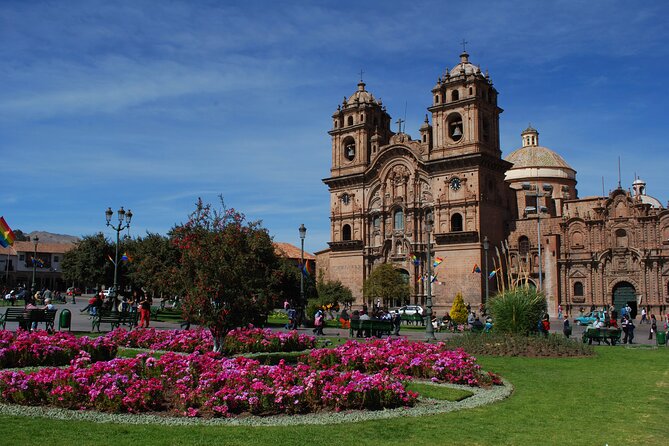
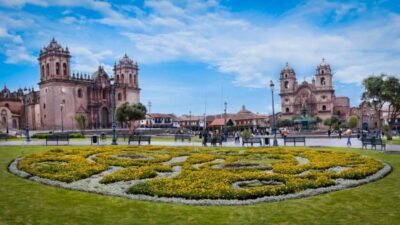
The central Plaza de Armas is the city portion of the outing. You will have a chance to walk through the square and see Cusco Cathedral alongside the Church of the Society of Jesus.
The cathedral combines late-Gothic and Baroque elements and holds a large collection of colonial religious art. Inside, look for colorful stained glass, ornate decoration, and the painting of the Senor de los Temblores, described as the oldest surviving painting in Cusco.
This stop changes the tone of the tour. After open ruins and broad mountain views, you move into a crowded historic center filled with church architecture and devotional art. It also makes the Spanish chapter of Cusco’s story more concrete.
Photography is forbidden inside the cathedral, so put your camera away and give yourself time to look. Shorts are not allowed in religious sites, another reason to dress for the whole route rather than only for the ruins.
The cathedral visit is scheduled for about one hour. If you hoped for a broad walking tour of Cusco’s streets, markets, and neighborhoods, adjust your expectations. This is mainly a Plaza de Armas and cathedral visit, not a long city walk. One account found the city portion narrower than expected because so much of the time focused on religious buildings.
The guide can make or break the afternoon
The strongest part of this experience is often the guide. Names praised in the supplied feedback include Alvaro Jimenez, Abraham, Adrial, Yuber, Aracely, Clara, Julio, Rommel, and Niko. Niko was described as a former history professor, while another guide brought personal family ties to Inca culture into the discussion.
Good guiding matters here because the ruins do not explain themselves. At Sacsayhuaman, you need help connecting stonework, symbols, ritual, and defense. At Qorikancha and the cathedral, you need someone to explain how Inca and Spanish beliefs were placed side by side.
You can also ask your guide to tailor the talk. One guide adjusted the visit to a guest’s particular research interests, and other guides were praised for including children and handling mixed-age groups with patience. The best approach is to tell the guide at the start what interests you most: engineering, religion, conquest, architecture, or daily life.
The language setup needs care. This is a bilingual Spanish and English service, not necessarily a separate English-only group. If most people in the van speak Spanish, the guide may alternate between languages. One English-speaking participant felt that the English explanations were too brief. If precise English commentary is essential to you, confirm the arrangement before booking.
Transport, pickup, and the pace of the route
The air-conditioned vehicle is more useful than it may sound. Cusco’s sites are spread between the city center and the hills above it, and walking the full route would take much longer. The vehicle lets you cover the outer ruins without spending your energy on every uphill transfer.
Hotel pickup and drop-off are included in the stated service, but there are limits. Some hotels sit on streets where vehicles cannot go. You may need to walk to a nearby point, and the return transfer has not always been offered as clearly as expected.
Pickup timing can also shape the day. Individual hotel collections may delay the start, and the return to the center can be affected by traffic and group coordination. A central meeting point in or near Plaza de Armas could be simpler, but that is not guaranteed for every departure.
I would leave extra time after the tour. The official estimate is 3 hours 30 minutes, yet some outings have lasted longer. That extra time may come from thorough explanations or additional sites, both of which can be welcome. It is less welcome if you have a fixed restaurant booking or evening train.
Is $79 a fair price?
The value depends on your ticket choice and priorities. At $79, the tour gives you transport, a guide, and a tightly organized route across several sites. For a first day in Cusco, that can be worthwhile because you get orientation without spending time arranging taxis or sorting out the order of the ruins.
The price is harder to judge if admission fees are separate. Add the required entrance costs and the final bill can rise sharply. A complaint about an additional 290 soles shows why you should not assume that the headline price is the full cost.
The tour also saves you from paying for separate transport to Sacsayhuaman, Qenqo, Puca Pucara, and Tambomachay. If you are traveling alone or as a couple, that shared vehicle may be good value. If you are a larger family or already have a private driver, a private arrangement could give you more control over timing, though that comparison is outside the details provided here.
The average booking lead time is 44 days. That suggests planning ahead can matter, especially if you want a particular departure or guide. Still, one last-minute booking was accommodated, so late availability may sometimes be possible.
Who should book this Cusco tour?
I would choose this experience if you have one acclimatization day in Cusco and want a broad introduction before visiting Machu Picchu or other Inca sites. The route gives you the basic vocabulary: ceremonial spaces, military posts, water worship, imperial masonry, Spanish conquest, and colonial religion.
It also suits you if you prefer a guide to handle transport and explain the sites in real time. Families can benefit from the variety, since the route changes often enough to keep the afternoon moving. People interested in architecture, symbolism, and history will get the most from a strong guide.
I would hesitate if you want a slow archaeological study of each ruin. The itinerary covers a lot, and the smaller sites receive less time than Sacsayhuaman. I would also hesitate if you need guaranteed English-only commentary, exact timing, or completely trouble-free hotel transfers.
The overall rating is 4.3 from 101 reviews, which fits the pattern here: many excellent guide-led experiences, mixed reports on ticket clarity and logistics, and a few serious complaints about missed pickups. The tour’s content is strong. The booking details deserve the most careful checking.
Final verdict: a useful first look at Cusco
Book this tour if you want to see Sacsayhuaman, the three nearby ruins, Qorikancha, and the cathedral in one organized half-day. The views, massive stonework, and guide-led context make it a practical way to get your bearings fast.
Before paying, confirm three things: that your language needs are understood, that hotel pickup and return arrangements are clear, and that your selected price includes every entrance ticket you need. With those points settled, the tour offers a good mix of major sights and efficient transport. Without them, the same outing can feel rushed, confusing, or more expensive than planned.
FAQ
How long does the Cusco City Sightseeing and Sacsayhuaman tour last?
The advertised duration is approximately 3 hours 30 minutes. Some outings have taken four to five hours, so leave extra time after the scheduled finish.
What sites are included in the route?
The route includes Sacsayhuaman, Qenqo, Puca Pucara, Tambomachay, Qorikancha, Plaza de Armas, and Cusco Cathedral.
Are entrance tickets included in the $79 price?
There are booking options with and without tickets. Admission is included only if you choose the ticket-included option. Check your selection carefully before booking.
Is the guide available in English?
The tour provides live bilingual service in Spanish and English. It is not described as an English-only tour, so the amount of English commentary may depend on the group.
Is hotel pickup and drop-off provided?
Hotel pickup and drop-off are included, but some hotels are in areas where vehicles cannot enter. In those cases, you may need to meet the vehicle at another location.
Can I take photographs inside Cusco Cathedral?
No. Photography is forbidden inside the cathedral. Shorts are also not allowed in religious sites, so dress accordingly.
Just added around Cusco
- Waqrapukara 1 day trekking + meals★ 3.9 · 3 reviews
- Zipline over the Sacred Valley Trip★ 5.0 · 11 reviews
- Valle Sur Cusco | half day★ 4.3 · 3 reviews
- Visit to the Cochahuasi Animal Sanctuary with rescued animal★ 4.1 · 4 reviews
- Visit Pisac from Cusco: Private Transport★ 4.6 · 9 reviews
- Maras and Huaypo lagoon by ATV from Cuzco | Local Operator★ 4.7 · 4 reviews
- Trek to Humantay Lake from Cusco★ 4.9 · 8 reviews
- Trek to Choquequirao 4 days★ 3.8 · 4 reviews
Sacsayhuaman Tours, compared.
Half-Day City Tour with Sacsayhuaman and Q’enco
Read our review →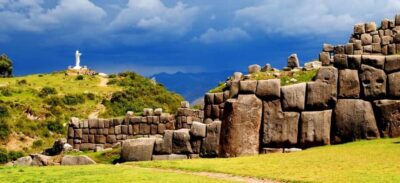
City Tour Cusco Qoricancha Sacsayhuaman y Tambomachay
Read our review →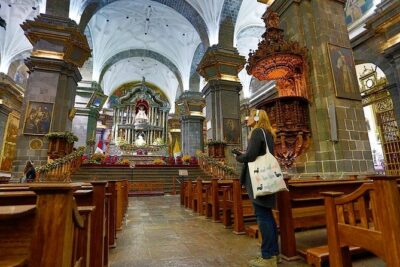
Cusco 4-Hour Private Tour Including Sacsayhuaman and Qenqo
Read our review →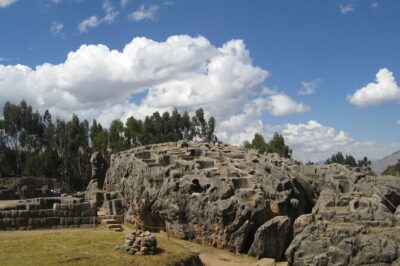
Sacsayhuaman Temple, Tambomachay and Puca Pucara Half-Day Tour
Read our review →
Private Cusco City Tour with Sacsayhuaman & Inca Sites
Read our review →
Cusco City Tour with Sacsayhuaman & Inca Sites – Small Group
Read our review →
Horseback Riding Plus Tour to Sacsayhuaman, Quenqo, Puka Pucara and Tambomachay
Read our review →
Half day Horseback Riding tour around Sacsayhuaman park
Read our review →Browse the lists this tour appears in