
Reviewed · CITY TOURS
Open Bus Cusco City Tour
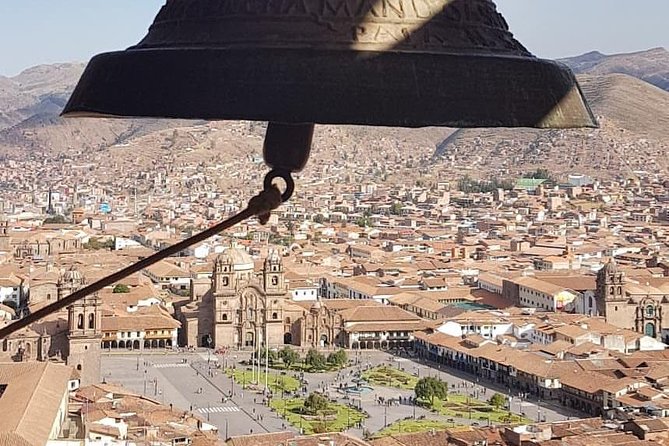
From the top deck, Cusco makes sense in a hurry. You look down on red-tiled roofs, climb toward the white Christ statue, and pass Inca sites that sit beyond the compact center. I especially like the wide city views and the chance to see more of Cusco without spending three hours walking uphill.
I also like the low price of $14.09, and the short format works well on your first day, when altitude may have you moving slowly. The main caution is organization: start times have sometimes slipped by 40 minutes to an hour, and some passengers find the shopping stops and traditional ceremony more commercial or intrusive than expected.
In This Review
- Key points to know before booking
- Starting near Plaza de Armas
- Seeing Cusco from the open top deck
- Cristo Blanco and the high view over Cusco
- Inca sites viewed from the road
- Paccha, the mural, and the city beyond the square
- The traditional ceremony and shopping stops
- Bilingual guiding is the biggest variable
- Timing, delays, and the three-hour promise
- Is $14.09 good value?
- Who should book this Cusco bus tour?
- Should you book the Open Bus Cusco City Tour?
- FAQ
- How much does the Open Bus Cusco City Tour cost?
- How long does the tour last?
- Where does the tour start?
- Where does the tour end?
- Is a guide included?
- Is the tour available in English?
- Does the tour enter the archaeological sites?
- Is Cristo Blanco included?
- Are meals and drinks included?
- What happens if I need to cancel?
Key points to know before booking
- Cristo Blanco gives you the best photo stop: You get about 10 minutes to walk around, take pictures, and look over Cusco.
- Most archaeological sites are viewed from the bus: The route passes important places, but it is not a walking tour of archaeological ruins.
- The traditional ceremony is optional in principle: You may be invited to join a coca-leaf or Pachamama-style ritual, so ask before taking part.
- English service can vary: Guides such as Paulo and Victor have provided English explanations, but some departures have had little or no English.
- The upper deck gets cold fast: Rain gear is available, but bring warm clothing, especially for afternoon departures.
- Allow extra time: Delays have affected several departures, so do not schedule another activity close to the advertised finish.
Starting near Plaza de Armas
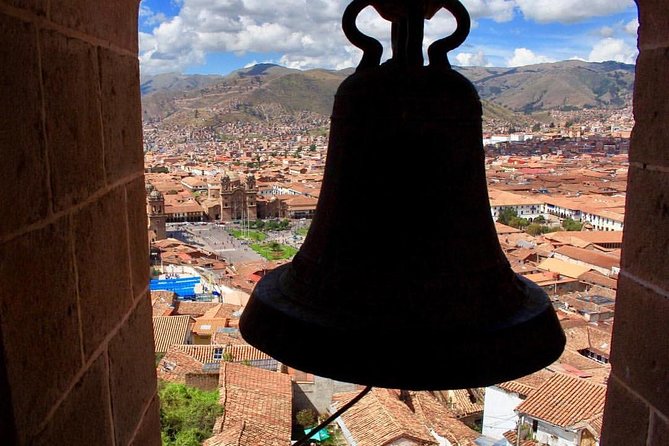
The tour begins at Sta. Catalina Angosta 120, close to Cusco’s main square. Plaza de Armas is a sensible starting point because it gives you an immediate look at the city’s layered past: Spanish colonial buildings surround a square that has long been central to Cusco life.
A guide gives a short introduction here, then you board the open bus. In practice, the bus may not be right at the first meeting point. Some departures have involved a walk through the center before boarding, and the pace has felt quick for people carrying bags or adjusting to the altitude.
I would arrive early and wait at the stated meeting point rather than wander off. Staff are expected to collect the group, but communication has not always been smooth. This is a small practical issue that matters when the departure point is not obvious.
The tour lasts about three hours and holds up to 24 people. That is small enough to avoid a huge coach group, though the upper deck can still feel crowded when everyone wants the same view or rain cover.
A few more Cusco trips to weigh up
- Cusco: Half-Day City Tour with Sacsayhuaman and Q’enco
★ 4.6 · 1,129 reviews - City Tour Cusco Qoricancha Sacsayhuaman y Tambomachay
★ 4.7 · 617 reviews - Cusco: Sightseeing Tour of the City on an Open-Top Bus
★ 4.0 · 481 reviews
Seeing Cusco from the open top deck
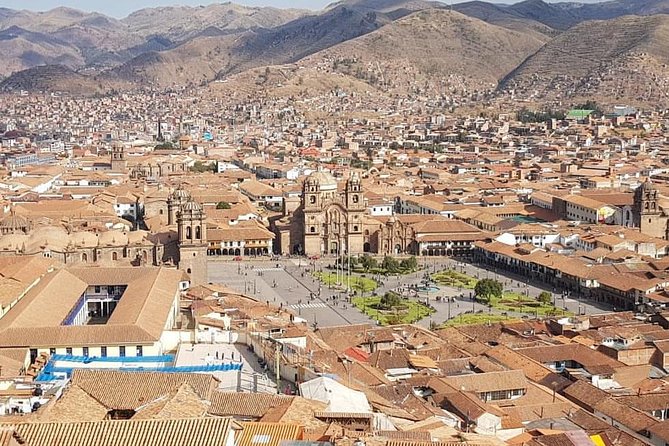
The bus is the star of the experience. Cusco’s streets rise quickly, and from the upper level you can see how the city spreads up the surrounding hills. You also get a close look at daily life as the bus passes homes, streets, and neighborhoods outside the main square.
The open design is fun, but it comes with real conditions. Rain can arrive quickly, and the bus provides rain gear for the top deck. If the weather turns cold, passengers move inside, where the views are less open. At high elevation, even a sunny afternoon can feel sharp once the bus is moving.
Wear a warm layer, especially if you book a later departure. A light jacket may not be enough. One useful suggestion from the experience is to dress for a colder return trip rather than the weather you see when you leave the square.
Music has also been played loudly on the top deck. If you want to hear the guide clearly, sit near the front when possible and be ready for some street noise. The commentary is intended to be bilingual, but traffic, music, and engine noise can make it difficult to catch every word.
Cristo Blanco and the high view over Cusco
The clearest scheduled stop is the Statue of Christ, often called Cristo Blanco. The bus climbs above the center, and you get roughly 10 minutes to step off, take photos, and look across Cusco.
This is the strongest part of the tour for anyone who wants a quick city overview. From here, the grid of streets below is easier to understand, and the tiled roofs give way to the hills around the basin. The stop is short, so you will not have time for a long walk or a careful visit.
The altitude is more noticeable up here. If you have just arrived in Cusco, keep your pace slow and avoid treating the stop like a hike. The tour can be a good low-effort way to see the city, but sitting on a bus does not remove the effects of elevation.
The stop also shows the limits of the format. You get a view, not an extended visit. If Cristo Blanco is important to you, plan a separate visit later so you can spend more time there.
Inca sites viewed from the road
The route passes several important places outside the city center. You may see an Inca fortress from the bus while the guide explains its purpose and historical setting. The itinerary also refers to the most sacred Inca temple, whose foundations were retained when the Spanish built a church above them.
These passages are useful for orientation, particularly if this is your first look at Cusco. You hear how Inca construction, Spanish conquest, and present-day life overlap in the city. The guide can point out details you might miss while walking alone.
Do not book this experience expecting admission to archaeological sites. The bus passes them, and one stop is specifically described as a brief panoramic look while remaining onboard. Some descriptions of the tour use the idea of visiting sites, but the practical experience is mainly an outside view from the road.
That distinction affects the value. At $14.09, the route is a cheap way to see where the sites are and decide which ones deserve a proper visit. It is not a replacement for a dedicated archaeological tour with time to walk among the remains.
Same valley, a completely different kind of day:
- Cusco: Humantay Lake Tour with Breakfast and Buffet Lunch
★ 4.9 · 2,976 reviews - From Cusco: Sacred Valley & Maras Salt Mines Tour with Lunch
★ 4.8 · 2,227 reviews - From Cusco: Moray, Maras Salt Mines & Chinchero Weavers Tour
★ 4.8 · 1,925 reviews - From Cusco: Full-Day Group Tour of Machu Picchu
★ 4.7 · 1,767 reviews
Paccha, the mural, and the city beyond the square
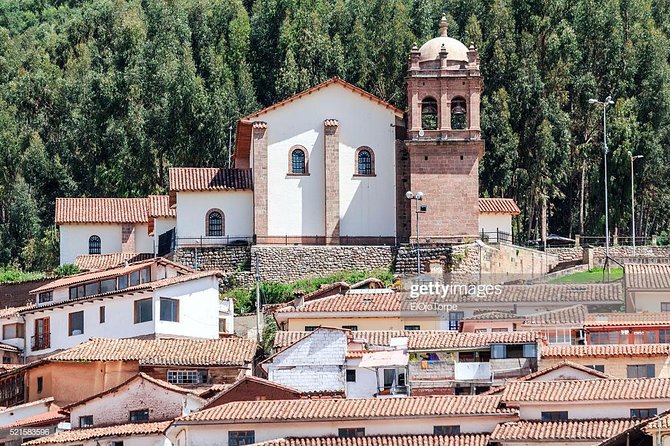
The bus continues through Paccha, described as an important center in Cusco, and along the Great Mural of Cusco. The mural presents scenes tied to the Incas and the Spanish conquest, adding a visual layer to the guide’s explanation.
You will also pass streets where the city’s old customs remain part of ordinary life. This is one reason I prefer the route to a simple square-only tour. Cusco is more than its polished center, and the bus gives you a quick sense of how residential areas and historic sites connect.
The tradeoff is that much of this portion is viewed through the bus window. Traffic can delay the route, and the guide may begin explaining a landmark before the bus reaches it. Keep your attention on both the street and the commentary, but do not worry if you miss a detail. The value here is the broad picture, not a close study of every building.
The traditional ceremony and shopping stops
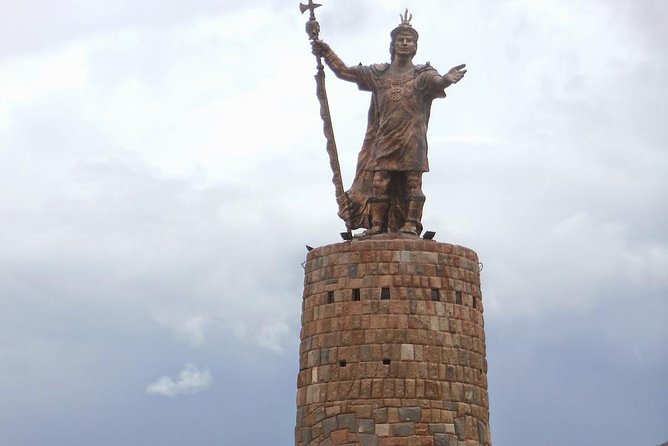
A traditional Andean ceremony is part of some departures. It may involve coca leaves, a blessing, or a ritual giving thanks to the earth. Some people find this moving and memorable, while others feel uncomfortable when the activity is presented without enough explanation or when participation is not clearly optional.
You should ask what will happen before joining in. You are free to observe rather than take part, and you should not feel pressured into a religious or spiritual activity. The experience is presented as living local culture, but the setting can feel staged when it takes place alongside a sales stop.
Several parts of the route may include opportunities to see alpacas or llamas and browse alpaca textiles. You may be encouraged to buy scarves or other goods. Prices can be higher than expected, and the quality is not always consistent.
I would treat these stops as optional extras, not as the reason to book. If you want to support local sellers, inspect the item carefully and buy only what you genuinely want. If shopping makes you uncomfortable, stay polite and keep the focus on the cultural explanation.
This is the most important expectation to set. The tour is not only a moving history lesson. It also includes commercial elements that some people enjoy and others find distracting.
Bilingual guiding is the biggest variable
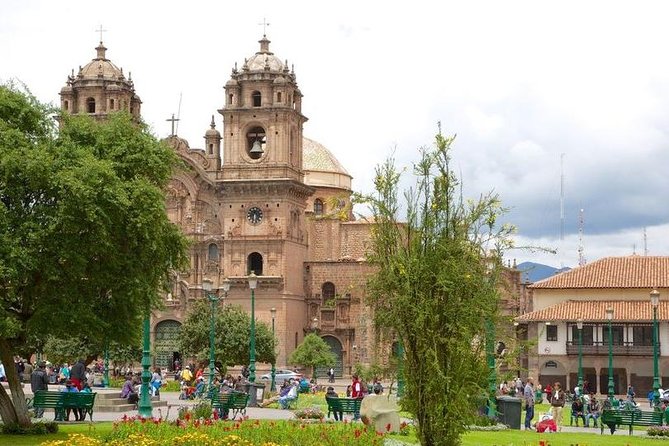
The experience includes a bilingual guide, and good departures can be genuinely informative. Paulo has been praised for speaking three languages quickly, while Victor has helped explain the tour in English even when most conversation was in Spanish.
The quality of the explanation depends heavily on the individual guide and the day’s communication. Some English-speaking passengers have received clear information about Inca history and local customs. Others have found that English was limited, disappeared during part of the ride, or was replaced by Spanish.
That inconsistency is important if you do not understand Spanish. Confirm the language at the start, and if the explanation is not reaching you, tell the guide promptly. The tour’s main benefit is the interpretation between stops, so a language gap changes the experience considerably.
Drivers and guides also need to keep the group together during boarding. Confusing meeting instructions and rushed walks have caused problems on some departures. Stay with the group and check that you know where the bus will be waiting.
Timing, delays, and the three-hour promise
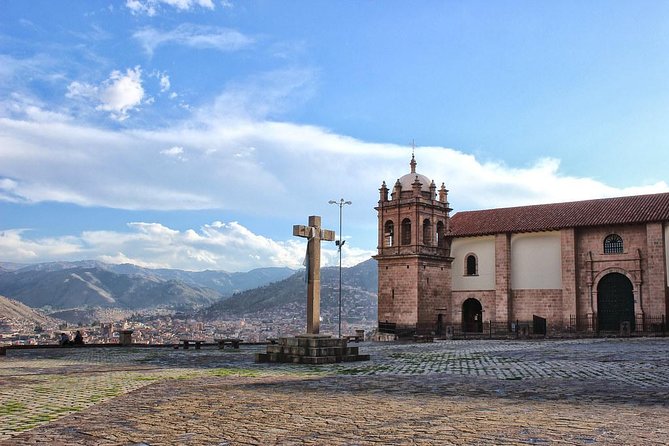
The advertised duration is about three hours, but I would not treat the finish time as fixed. Some departures have begun on schedule, and others have started 40 minutes to more than an hour late. Delays have been linked to waiting for late arrivals or bus maintenance.
That matters because the route reaches colder, higher ground. A late afternoon delay can mean returning after temperatures drop, with less comfortable time on the upper deck. It also matters if you have a museum visit, dinner reservation, airport transfer, or another booked tour afterward.
The safest plan is to leave a wide gap after this experience. I would avoid scheduling anything important for at least a few hours after the stated end time. If the bus leaves on time, you simply finish early and have more freedom.
The short route is still useful when it runs properly. It gives you a city loop, a high viewpoint, several passing landmarks, and one or two stops without demanding a full day of walking.
Is $14.09 good value?
At $14.09 per person, this is one of the less expensive ways to get a broad view of Cusco. Transport and a bilingual guide are included, while food, drinks, personal spending, and optional gratuities are not.
I think the price works best if you see the tour as a moving introduction. You are paying for the bus route, the view from above, the Cristo Blanco stop, and basic historical context. You are not paying for entry to archaeological sites or a detailed guided visit inside them.
The value rises if you have limited time, are tired after Machu Picchu, or want a gentle activity while adjusting to the altitude. It also suits you if you mainly want photos and a quick sense of the city’s layout.
The value drops if you need exact timing, fluent English throughout, or a quiet cultural visit without shopping. In that case, a more structured private or small-group tour may suit you better, though it will cost more.
Who should book this Cusco bus tour?
I would recommend it to you if:
- You want to see Cusco quickly without a long walking route.
- You are adjusting to high altitude and prefer a seated activity.
- You enjoy panoramic views and short photo stops.
- You want basic context before choosing which sites to visit properly.
- You are comfortable with some Spanish, changing weather, and commercial stops.
I would be cautious if you:
- Need a guaranteed English-speaking guide.
- Want to enter and explore archaeological sites.
- Have another booking soon after the tour.
- Dislike sales pitches or unexpected spiritual activities.
- Need a calm, carefully timed itinerary.
The meeting point is at Sta. Catalina Angosta 120, and the tour ends at C. Saphy 661, about two blocks from the main square. Service animals are allowed, the route is near public transportation, and most people can participate. Free cancellation is available when you cancel at least 24 hours before the start time. Later cancellations and changes are not refunded.
Should you book the Open Bus Cusco City Tour?
Book it for the views, orientation, and price, not for a full archaeological visit. The upper deck gives you a lively look at Cusco, Cristo Blanco is worthwhile, and a good guide can add useful details about Inca and Spanish history.
Go in with warm clothes, patience, and an open mind about the ceremony and shopping stops. If your schedule is flexible and you want an easy first look at the city, $14.09 is fair value. If punctuality and consistent English matter most, choose a more tightly managed tour instead.
FAQ
How much does the Open Bus Cusco City Tour cost?
The listed price is $14.09 per person.
How long does the tour last?
The tour lasts approximately three hours.
Where does the tour start?
It starts at Sta. Catalina Angosta 120 in Cusco, Peru.
Where does the tour end?
It ends at C. Saphy 661, about two blocks from Cusco’s main square.
Is a guide included?
Yes. Transport and a bilingual guide are included.
Is the tour available in English?
The tour is described as bilingual, but English service can vary by departure and guide. Guides including Paulo and Victor have provided English explanations, while some departures have had limited English.
Does the tour enter the archaeological sites?
No entry is included for the archaeological sites. The bus passes important places, and some are viewed from the road or while remaining onboard.
Is Cristo Blanco included?
Yes. The Statue of Christ stop includes admission, and you have about 10 minutes to walk around, take photos, and enjoy the city view.
Are meals and drinks included?
No. Meals and beverages are not included.
What happens if I need to cancel?
You can receive a full refund if you cancel at least 24 hours before the experience start time. Cancellations or changes made less than 24 hours before the start time are not accepted for a refund.
Just added around Cusco
- Waqrapukara 1 day trekking + meals★ 3.9 · 3 reviews
- Zipline over the Sacred Valley Trip★ 5.0 · 11 reviews
- Valle Sur Cusco | half day★ 4.3 · 3 reviews
- Visit to the Cochahuasi Animal Sanctuary with rescued animal★ 4.1 · 4 reviews
- Visit Pisac from Cusco: Private Transport★ 4.6 · 9 reviews
- Maras and Huaypo lagoon by ATV from Cuzco | Local Operator★ 4.7 · 4 reviews
- Trek to Humantay Lake from Cusco★ 4.9 · 8 reviews
- Trek to Choquequirao 4 days★ 3.8 · 4 reviews
City Tours, compared.
Half-Day City Tour with Sacsayhuaman and Q’enco
Read our review →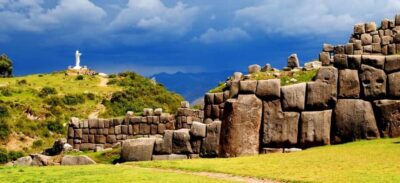
City Tour Cusco Qoricancha Sacsayhuaman y Tambomachay
Read our review →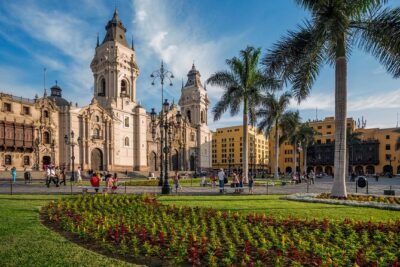
Lima’s Vibrant Heritage: Exploring the City’s Landmarks Half-day
Read our review →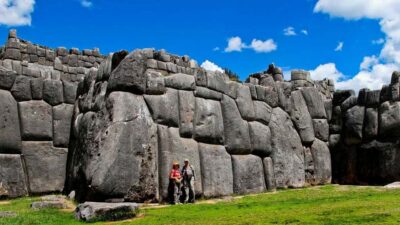
City Tour | Half-Day Tour to 4 Archaeological Sites
Read our review →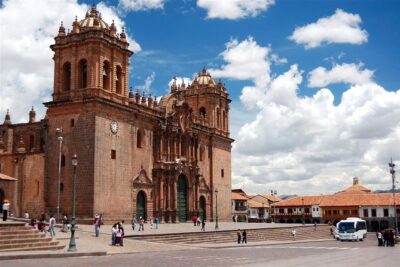
City Tour in Cusco & visit Museum South American Camelid Private.
Read our review →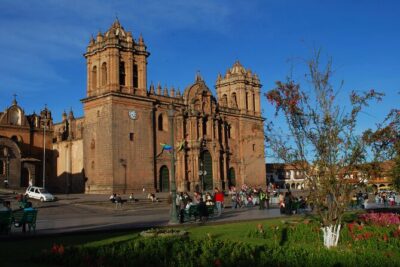
Cusco City Sightseeing, San Pedro Market, Cathedral and Qorikancha Temple
Read our review →
Browse the lists this tour appears in