
Reviewed · WORKSHOPS
Cusco: Bean to bar chocolate workshop
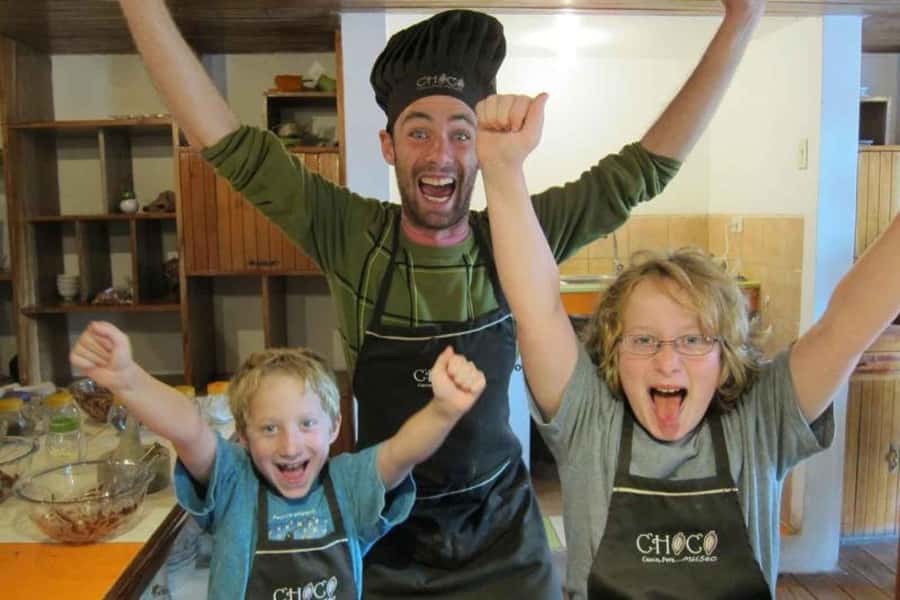
Cusco’s chocolate workshop lets you handle cacao at every stage, from roasted bean to finished bar. You roast, peel, grind, and refine the cacao yourself, then make hot chocolate and a chocolate bar with ingredients chosen to suit your taste.
I like the hands-on work and the fact that you take home your own organic chocolates. I also like the small taste of chocolate history, especially grinding cacao on a metate with a mano in the same traditional way used by the Aztecs. The main consideration is that this is a two-hour workshop, not a full visit to a cacao farm, so the focus is making and tasting rather than seeing cacao grow in the field.
In This Review
- Five things to know before you book
- Starting with cacao instead of a finished candy bar
- Roasting the beans and revealing the cacao
- Grinding cacao on a metate with a mano
- Refining the paste in a melangeur
- Making hot chocolate with Maya and conquistador styles
- Creating a custom organic chocolate bar
- What the two-hour schedule means for your day
- Who will get the most from this chocolate class
- How good is the value?
- Practical booking advice for Cusco
- Should you book the Cusco bean-to-bar workshop?
- FAQ
- How long does the Cusco bean-to-bar chocolate workshop last?
- Where does the chocolate workshop take place?
- What languages are available?
- What chocolate-making steps will I learn?
- Will I make my own chocolate bar?
- Can I take the chocolate home?
- Does the activity include hot chocolate?
- Can I cancel the booking for a refund?
Five things to know before you book
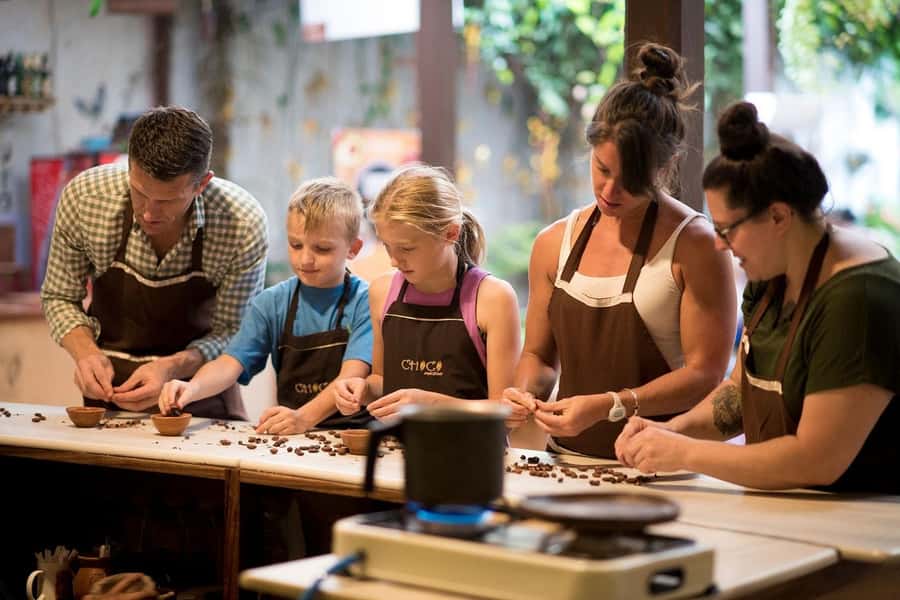
- You process the cacao yourself: Roast the beans, remove the husks, grind the nibs, and refine the paste.
- The metate is part of the lesson: You use a stone metate and mano, giving the class a clear link to older cacao-making methods.
- Your chocolate is yours to customize: Make an organic chocolate bar with your choice of ingredients.
- The drinks are part of the fun: Try hot chocolates connected with Maya and conquistador traditions.
- It fits neatly into a Cusco day: The workshop lasts two hours and is offered in English or Spanish.
Starting with cacao instead of a finished candy bar
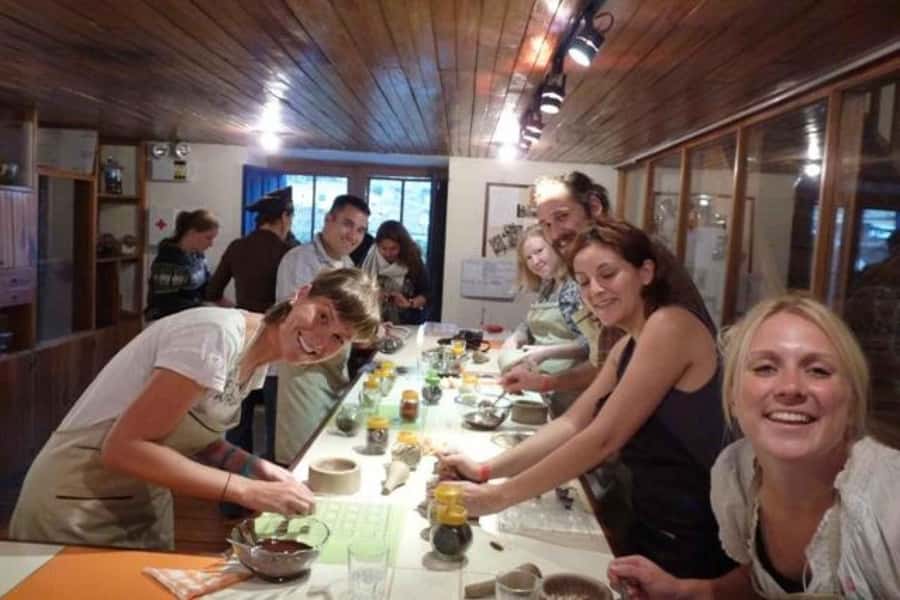
Most chocolate experiences begin with a pretty display of wrapped sweets. This one starts farther back. You learn how cacao changes from bean to paste and then into chocolate, which gives the tasting a practical point of reference.
The workshop takes place in a chocolate museum and working workshop in the Cusco region. I like that combination because you are not only watching a demonstration. You also get a short cultural and historical explanation before working with the ingredients yourself.
The guides explain the basic cacao-making process and why Cusco is associated with fine chocolate. The information is aimed at curious visitors rather than professional confectioners, so you do not need prior cooking experience.
You should expect an interactive class rather than a formal lecture. You will handle the cacao, follow instructions, and make several things during the session. That makes the activity a good break from Cusco’s churches, ruins, and long sightseeing walks.
A few more Cusco trips to weigh up
- Chocolate Workshop in Cusco with Premium Organic Cacao
★ 5.0 · 75 reviews - Cusco: Chocolate Workshop with the Best Local Organic Cacao
★ 4.5 · 23 reviews - 1.5h Cusco Chocolate Workshop – Truffles & Hot Chocolate
★ 4.3 · 8 reviews
Roasting the beans and revealing the cacao
The first practical stage is roasting the cacao beans. Roasting changes the raw beans and prepares them for the next steps, while also helping you understand that chocolate begins with a food product that looks and smells very different from a finished bar.
The class then moves to removing the cacao husk. This is simple work, but it matters. The bean has to be separated from its outer covering before the useful cacao nibs can be ground.
I appreciate this part because it slows the process down. At home, chocolate arrives smooth, sweet, and ready to eat. Here, you see that several small jobs come before the familiar chocolate texture appears.
The supplied details do not specify how many beans each person handles or how much time the class spends on roasting. You can expect the guide to lead the group through the steps, but the exact pace may depend on the group and the day’s schedule.
Grinding cacao on a metate with a mano
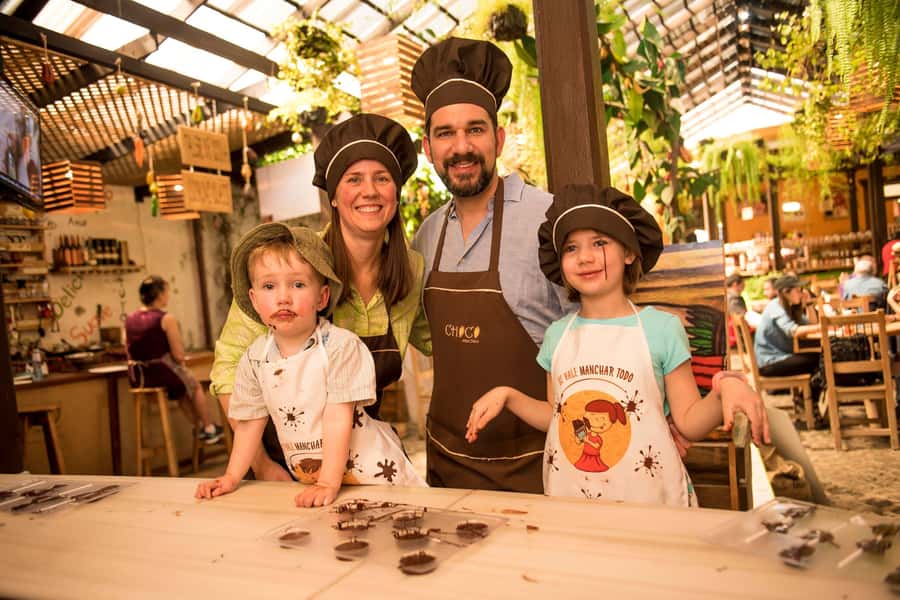
The most distinctive part of the workshop is grinding the cacao nibs on a metate with a mano. This traditional stone-grinding method connects the modern chocolate bar to older food preparation practices associated with the Aztecs.
The metate and mano are not just display pieces. You use them to turn the nibs into a cacao paste. That physical work gives you a better sense of how much effort is hidden inside a smooth bar of chocolate.
Do not expect a quick, effortless step. Grinding by hand is slower than using a modern machine, and that is precisely why it belongs in the workshop. It gives you a direct lesson in texture, pressure, and patience.
I would pay close attention here, even if you are mainly interested in eating chocolate. This is the part that makes the experience feel different from a standard tasting. You are not simply sampling flavors. You are helping create the base ingredient.
Refining the paste in a melangeur
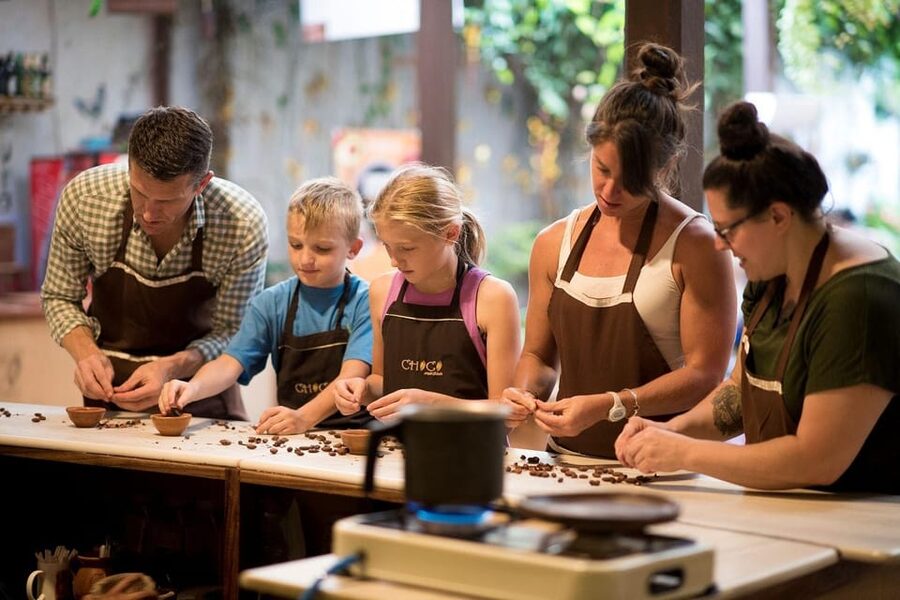
After the cacao is ground, the paste is refined in a melangeur. This machine helps develop a smoother texture, moving the mixture closer to the chocolate you recognize in a bar or hot drink.
The workshop presents four main processes:
- Roasting the cacao beans
- Removing the cacao husk
- Grinding the nibs on a metate with a mano
- Refining the cacao paste in a melangeur
That sequence gives the class a clear structure. You can follow the movement from rough bean to usable chocolate paste without needing a technical background.
The melangeur stage also shows why handmade chocolate is not simply melted candy. Texture matters, and refining helps create a more pleasant final result. The guide explains the process while you watch and participate in the broader preparation.
Because the class lasts two hours, the teaching is necessarily selective. You receive a practical overview of the process, not a detailed course in fermentation, tempering, commercial production, or cacao farming. If you want a professional pastry lesson, this may feel too basic. If you want a clear introduction with plenty of participation, the scope makes sense.
Same valley, a completely different kind of day:
- Cusco: Humantay Lake Tour with Breakfast and Buffet Lunch
★ 4.9 · 2,976 reviews - From Cusco: Sacred Valley & Maras Salt Mines Tour with Lunch
★ 4.8 · 2,227 reviews - From Cusco: Moray, Maras Salt Mines & Chinchero Weavers Tour
★ 4.8 · 1,925 reviews - From Cusco: Full-Day Group Tour of Machu Picchu
★ 4.7 · 1,767 reviews
Making hot chocolate with Maya and conquistador styles
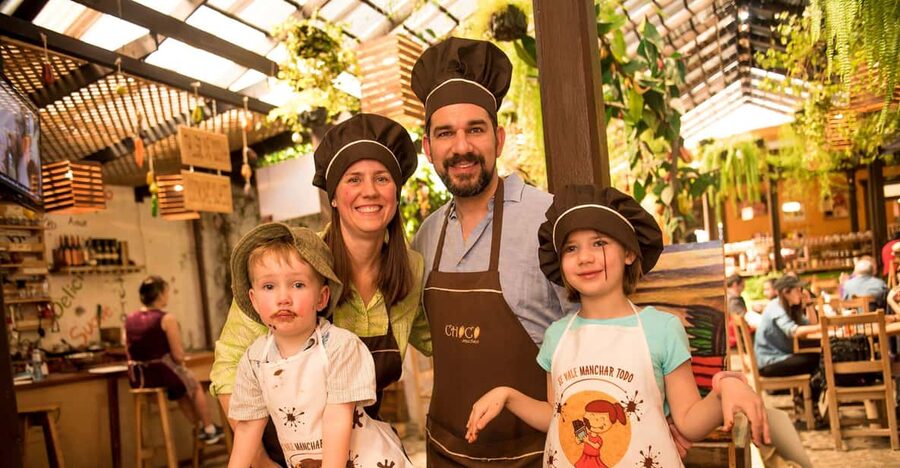
The workshop includes hot chocolate drinks associated with Maya and conquistador traditions. These drinks add a historical angle to the tasting and give you another way to notice how cacao can be prepared.
The names suggest two different cultural approaches to the drink, but the supplied information does not spell out the exact ingredients or flavor profile of each version. I would ask the guide to explain the distinction when you arrive, especially if you want to understand how the drinks relate to cacao’s history.
The hot chocolate is also a useful checkpoint in the process. You have handled the cacao as a bean, nib, and paste, and then you taste it in liquid form. That makes the workshop feel like a complete progression rather than a series of unrelated samples.
One published account of the class specifically noted that participants roasted, peeled, and ground their own cacao paste for hot chocolate. That detail matters. You are not only drinking something prepared in advance. You get to work on the paste that helps make the drink.
Creating a custom organic chocolate bar
The final creative stage is making your own organic chocolates. You choose ingredients for your chocolate bar, so the result can reflect your own taste rather than a fixed recipe.
The activity description does not list the available ingredients. You should therefore think of the customization as a guided choice within the workshop’s supplies, not as a promise that every possible nut, fruit, spice, or topping will be available.
This is a strong feature for families, couples, and friends because everyone can make a slightly different bar. It also gives children a clear task, though the practical suitability for very young children depends on the group setup and the guide’s instructions.
You can take your handmade chocolates home, assuming you have not eaten them during the class. Bring a little room in your day pack, and perhaps a small container if you already carry one, though no special packing requirement is provided.
I like the souvenir value here. A shop-bought chocolate bar is easy to find in Cusco. A bar you helped roast, grind, refine, and mold carries a more personal memory of Peru.
What the two-hour schedule means for your day
Two hours is long enough to cover the main cacao steps without taking over your day. You can place the class between major Cusco sights, use it as a relaxed afternoon activity, or choose it for a day when you want something less physically demanding.
The experience does not include a long transfer, farm visit, meal, or full-day excursion in the information provided. That keeps the commitment modest, but it also means you should book it for the workshop itself rather than expecting a wider cacao tour.
I would not schedule it when you are rushing to an airport, train, or another fixed departure. The class involves several stages and hands-on work, and you will enjoy it more if you have time to listen and make the chocolate without checking the clock.
Starting times are subject to availability. When you book, enter your phone number with the country code and make sure you have WhatsApp. For a last-minute reservation, contact the provider by email first to confirm that a place is available.
The provider is Uyuni Experience EIRL. Guides lead the session in English or Spanish, which makes the class accessible to visitors who do not speak Spanish, while Spanish-speaking visitors can choose the language that feels most comfortable.
Who will get the most from this chocolate class
I would recommend this workshop to anyone who wants a short, local-feeling activity with a clear result. It suits first-time visitors who want more than shopping for Peruvian chocolate, and it gives repeat visitors a different way to spend two hours in Cusco.
It is especially suitable for:
- Couples looking for a shared activity
- Families who enjoy making food
- Chocolate fans curious about cacao production
- Visitors wanting a handmade souvenir
- People needing a slower activity between demanding excursions
- Anyone interested in traditional food preparation
The class may be less suitable if you want a cacao plantation visit or a long technical lesson. Nothing in the supplied details promises transport to a farm, a full explanation of agricultural work, or advanced confectionery skills.
You should also consider your personal taste. The experience focuses on cacao and chocolate, so it is not the right pick if you do not enjoy chocolate or cannot take part in the ingredients used. Specific allergy information and ingredient substitutions are not provided, so ask the provider before booking if that is important for you.
How good is the value?
No price is provided here, so I cannot judge the exact cost against other Cusco activities. I can judge what you receive for your time: a museum and workshop visit, bilingual instruction, a hands-on look at four stages of chocolate production, hot chocolate preparation, and handmade chocolate to take home.
That is better value than a simple tasting if you enjoy participation. You are paying for the instruction and the process, not just for the amount of chocolate you consume.
The value is also tied to your interest. If you would happily spend an hour learning how cacao becomes chocolate, the two-hour format gives you a satisfying amount of activity. If you only want a quick snack, the workshop may feel longer than necessary.
I would compare the final price with other short food classes in Cusco, but I would not compare it directly with a major day trip. This is a small, focused experience. Its strength is the personal making, not the number of attractions covered.
Practical booking advice for Cusco
The activity offers free cancellation up to 24 hours before the start time for a full refund. It also allows you to reserve now and pay later, which helps if your Cusco schedule may change because of weather, altitude adjustment, or changing plans.
Enter your contact number carefully, including your country code, and have WhatsApp available. That is particularly useful for receiving contact information or updates from the provider.
For last-minute bookings, email Uyuni Experience EIRL before you commit. Availability should be checked directly with the provider, since an online booking request may not be enough at short notice.
The class is in the Cusco region, but the supplied details do not give a precise meeting address, transport plan, group size, or accessibility information. Check those points before booking if they affect your plans.
Should you book the Cusco bean-to-bar workshop?
Book it if you want to understand chocolate by making it, not just tasting it. The strongest parts are the four-stage process, the traditional metate grinding, the hot chocolate preparation, and the personal chocolate bar you take home.
I would choose it for a free morning or afternoon in Cusco, especially after several days of ruins and mountain outings. It offers a useful change of pace and leaves you with something more memorable than another packaged souvenir.
Skip it if your priority is a cacao farm, a long food tour, or advanced chocolate technique. But for a focused two-hour workshop with English or Spanish instruction and plenty of hands-on work, this is a sensible, enjoyable addition to a Cusco itinerary.
FAQ
How long does the Cusco bean-to-bar chocolate workshop last?
The workshop lasts two hours.
Where does the chocolate workshop take place?
It takes place in the Cusco region of Peru, at an interactive chocolate workshop and museum.
What languages are available?
The live tour guide service is available in English and Spanish.
What chocolate-making steps will I learn?
You will learn four main steps: roasting the cacao beans, removing the cacao husk, grinding the cacao nibs on a metate with a mano, and refining the cacao paste in a melangeur.
Will I make my own chocolate bar?
Yes. You will make your own organic chocolate bar and choose ingredients for it.
Can I take the chocolate home?
Yes. You can take your handmade chocolates home unless you eat them during the workshop.
Does the activity include hot chocolate?
Yes. You will create hot chocolates and try drinks connected with Maya and conquistador traditions.
Can I cancel the booking for a refund?
You can cancel up to 24 hours in advance for a full refund. The activity also offers a reserve-now, pay-later option.
More Workshops in Cusco
- Cusco: Peruvian Cooking Class, Cocktails & Local Market Tour
★ 4.9 · 512 reviews - Cooking class and market tour with a local chef
★ 5.0 · 186 reviews - The First Class Machu Picchu Train by Inca Rail
★ 4.0 · 182 reviews - The Textile Workshop Experience in Cusco Region
★ 5.0 · 118 reviews
Just added around Cusco
- Waqrapukara 1 day trekking + meals★ 3.9 · 3 reviews
- Zipline over the Sacred Valley Trip★ 5.0 · 11 reviews
- Valle Sur Cusco | half day★ 4.3 · 3 reviews
- Visit to the Cochahuasi Animal Sanctuary with rescued animal★ 4.1 · 4 reviews
- Visit Pisac from Cusco: Private Transport★ 4.6 · 9 reviews
- Maras and Huaypo lagoon by ATV from Cuzco | Local Operator★ 4.7 · 4 reviews
- Trek to Humantay Lake from Cusco★ 4.9 · 8 reviews
- Trek to Choquequirao 4 days★ 3.8 · 4 reviews
Workshops, compared.
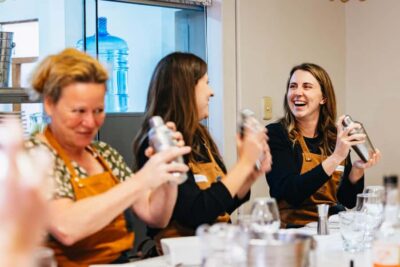
Peruvian Cooking Class, Cocktails & Local Market Tour
Read our review →
Cooking class and market tour with a local chef
Read our review →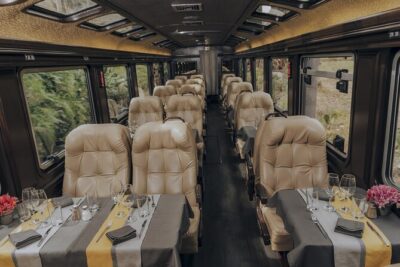
The First Class Machu Picchu Train by Inca Rail
Read our review →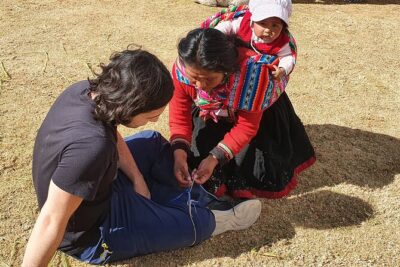
The Textile Workshop Experience in Cusco Region
Read our review →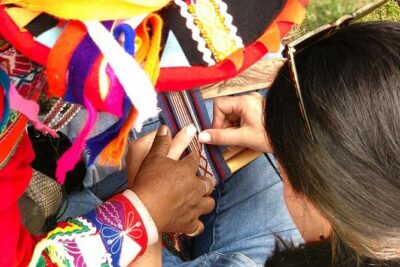
Sacred Valley Textile Workshop – Dyeing & Weaving in Cusco
Read our review →
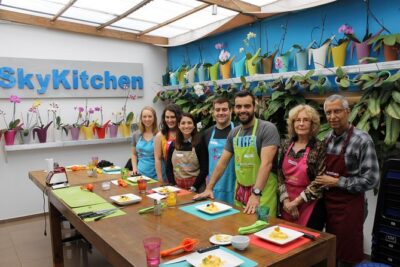
Market Tour, Tasting of 35 Fruits, and 4-Course Peruvian Cooking Class in Lima
Read our review →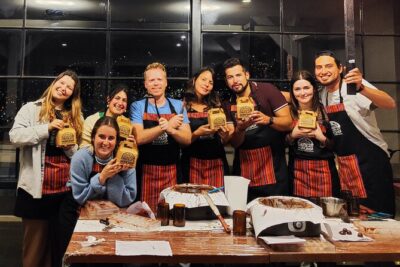
Chocolate Workshop in Cusco with Premium Organic Cacao
Read our review →Browse the lists this tour appears in