
Reviewed · MACHU PICCHU TOURS
Small Group: 4-Day Inca Trail Trek to Machu Picchu
Machu Picchu is the finale, not the whole show. This four-day Inca Trail trek takes you past Patallacta, Runkurakay, Sayacmarca, Wiñayhuayna, and the Sun Gate before you reach the citadel from above. That arrival feels earned in a way a quick train visit cannot match.
I like the small group, capped at 10 people in the tour details, and I like that the price covers the hard-to-arrange pieces: permits, camping equipment, porters, meals, trains, buses, and hotel pickup. Guides such as Freddy, Edwin, Herlin, and Ronald have been assigned to past departures, while chefs including Mario, Sabino, Herminios, and Nazario have earned special praise for making fresh, filling food in camp.
The catch is simple: this is a serious mountain hike. You climb to 4,215 meters at Dead Woman’s Pass, sleep in tents, hike for up to eight hours on the longest day, and face sun, rain, hail, cold, and thin air. Moderate fitness is the minimum sensible standard, and five months’ advance booking is wise because trail permits sell out.
In This Review
- Key points to know before you book
- Why this Inca Trail feels different from a Machu Picchu day trip
- The $850 cost and what it really covers
- Day 1: Km 82, Patallacta, and the first camp
- Day 2: Dead Woman’s Pass is the hard day
- Day 3: Ruins, cloud forest, and Wiñayhuayna
- Day 4: Entering Machu Picchu through the Sun Gate
- Food, tents, porters, and the human side of the trek
- Who should book this trek?
- Booking advice and the final call
- FAQ
- How long is the Inca Trail tour?
- What time does the tour start?
- Where does the hike begin?
- What is the highest point on the trek?
- Are meals included?
- Is a sleeping bag included?
- How much gear can a personal porter carry?
- Are Huayna Picchu and Machu Picchu Mountain included?
- What documents and fitness level do I need?
Key points to know before you book
- Dead Woman’s Pass reaches 4,215 meters: Day 2 is the physical test, with a steep climb followed by a hard descent to Pacaymayo.
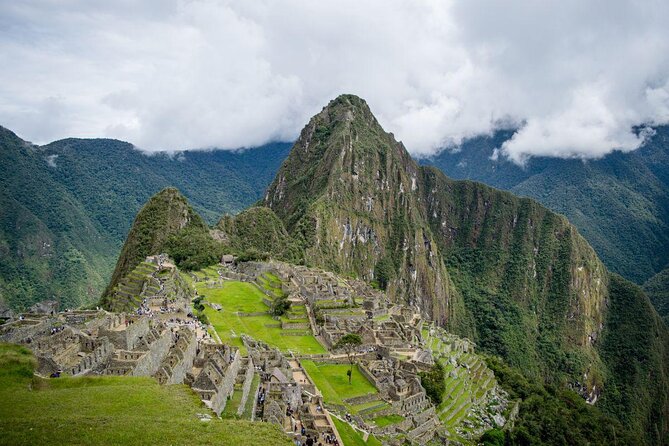
- The Sun Gate arrival is the reward: On Day 4, you enter Machu Picchu by foot and get your first view from Inti Punku.
- A chef and porters make a big difference: Three breakfasts, lunches, and dinners are included, along with a personal porter for 5 kilograms of gear.
- The small group feels personal: The stated maximum is 10 people, though the inclusions also mention 12, so confirm the final group size before paying.
- The $850 price covers a lot: Transport, admission, tents, mattress, guide, cooking crew, meals, and the return train are included.
- Book extra mountain hikes early: Huayna Picchu or Machu Picchu Mountain requires a separate ticket and advance planning.
Why this Inca Trail feels different from a Machu Picchu day trip
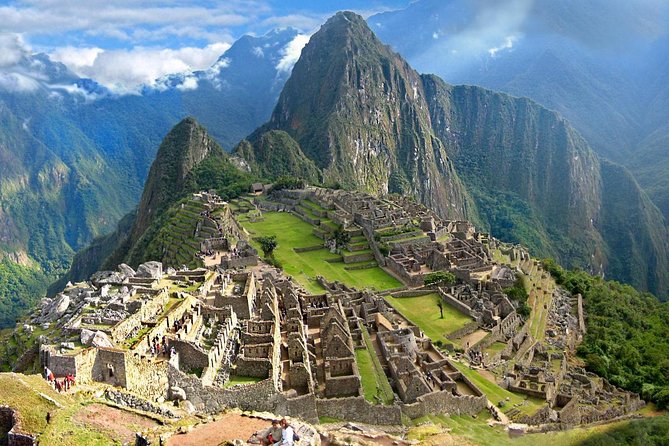
You can reach Machu Picchu by train, see the citadel, and be back in Cusco quickly. This trip asks much more of you, but it also gives you the old approach route, a changing series of mountain zones, and several Inca sites that most day visitors never see.
The trail begins at Km 82 in the Sacred Valley. From there, you walk through valleys, high grassland, cloud forest, stone stairways, terraces, and ceremonial sites. The ruins arrive along the way rather than in one large burst at the end.
That pacing matters. By the time you reach the Sun Gate, you have spent three nights moving toward Machu Picchu under your own power. The citadel becomes the final chapter of a larger journey.
The national trail limit also helps control the experience. Since 2000, Peru has restricted the Inca Trail to 500 people each morning, including hikers, guides, porters, and cooks. That does not make the route empty, but it keeps the path and campsites regulated and cleaner than they might otherwise be.
More machu picchu tours in Cusco:
- From Cusco: Full-Day Group Tour of Machu Picchu
★ 4.7 · 1,767 reviews - Machu Picchu Day Trip from Cusco
★ 4.5 · 1,644 reviews - Machu Picchu: Full-Day Tour from Cusco with Optional Lunch
★ 4.6 · 927 reviews
The $850 cost and what it really covers
At $850 per person, this is not a cheap walk, but the number looks more reasonable once you separate the included services. You receive hotel pickup in central Cusco, a private bus to Km 82, a professional English-speaking guide, a chef, porters for cooking and camping equipment, a personal porter for 5 kilograms of your gear, camping tents, an inflatable mattress, meals, water after the first four hours, and the return train and bus.
You also get a dining tent with tables and chairs, hot water each morning, an inflatable pillow, an oxygen bottle, and a first aid kit. These are useful comforts on a route where your legs and lungs do most of the work.
The personal porter allowance is especially valuable. Five kilograms will not cover everything you own, so pack carefully, but it lets you hike with a daypack instead of carrying your full camping load. You still need to carry the inflatable pillow, and you must bring water for the first four hours on Day 1.
The price does not include a sleeping bag. You can rent one from the local operator. Day 1 breakfast and Day 4 lunch and dinner are also excluded, as is a separate ticket for Huayna Picchu or Machu Picchu Mountain. Travel insurance is strongly recommended and is not included.
One practical detail deserves attention. The material gives both a maximum of 10 people and a small-group limit of 12. The additional tour information states that the activity has a maximum of 10 travelers, but I would ask Inkayni Peru Tours to confirm the actual cap for your departure.
Day 1: Km 82, Patallacta, and the first camp
The day starts at 5:00 a.m. with pickup from your hotel. You ride by private bus through Chinchero, Urubamba, and Ollantaytambo toward Km 82, the official trailhead. The drive takes about two and a half hours and gives you a look at the Sacred Valley before the hiking begins.
The first day covers about five hours. You climb toward Wilka Rakay, where the views open toward Patallacta and the Kusichaca Valley. Patallacta is one of the first major Inca sites along the route, and it gives you an early sense of how the trail linked settlements and farmland.
This is a good opening day because it lets you find your walking rhythm before the highest passes. You see stone ruins and Andean plants while the support crew moves ahead to set up camp.
The night is at Wayllabamba, at about 3,000 meters. A comfortable four-person tent is shared by two people, and the crew prepares dinner in the dining tent. Do not expect a hotel room, but the mattress, tent, hot morning water, and meal service make this far more organized than carrying your own stove and shelter.
Breakfast is not included on Day 1, so plan for that before departure. Since water is excluded for the first four hours of the trek, carry enough for the morning section as well.
Day 2: Dead Woman’s Pass is the hard day
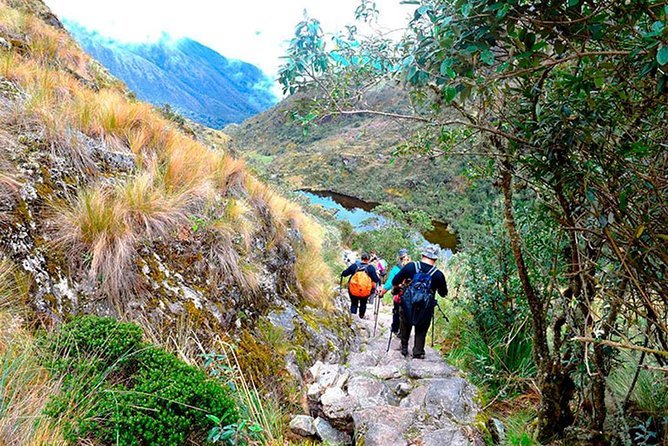
Day 2 is the day to respect. After breakfast, you climb for about an hour to Tres Piedras, then continue into cloud forest before tackling the main ascent to Abra de Warmihuañusca, better known as Dead Woman’s Pass.
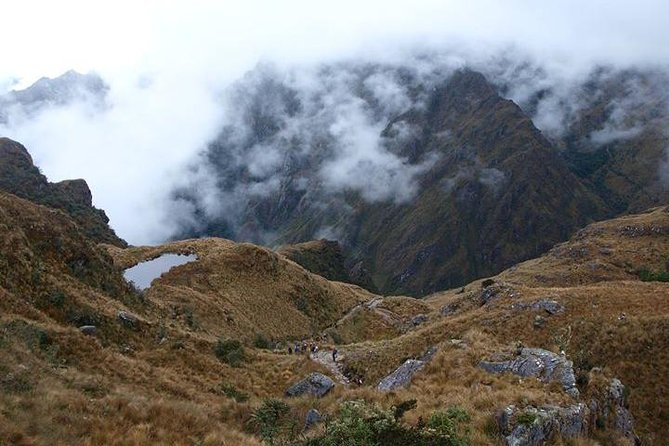
At 4,215 meters, this is the highest point on the route. The challenge is not only the height. The climb is long, and the air can feel thin even if you are fit at home. Move slowly, take the breaks your guide suggests, and keep your warm and waterproof layers accessible.
At the pass, you cross high Andean grassland with wide views of the surrounding peaks. The moment is memorable, but the work is not finished. The trail drops steeply to Pacaymayo, at roughly 3,600 meters, where you camp after about seven hours of hiking.
That descent can be rough on knees and ankles. Trekking poles are not listed among the included items, so bring your own if you use them. A waterproof jacket or rain poncho, warm jacket, hat, and gloves belong in your daypack, not buried in the porter’s bag.
The support team becomes especially important here. The porters carry cooking and camping equipment, while your personal porter handles up to 5 kilograms of your gear. The guides are also there to set the pace and monitor how you are doing. Past guide teams have included Freddy, Edwin, Herlin, Ronald, and Paul, but your assigned guide may be different.
More inca trail treks in Cusco:
- Cusco: 4-Day Inca Trail to Machu Picchu with Accommodation
★ 4.8 · 432 reviews - Cusco: Machu Picchu 2-Day Inca Trail with Panoramic Train
★ 4.9 · 260 reviews - From Cusco: 2-Day Inca Trail to Machu Picchu
★ 4.2 · 244 reviews - Machu Picchu: Inca Trail 2-Day Overnight Guided Tour
★ 4.9 · 203 reviews
Day 3: Ruins, cloud forest, and Wiñayhuayna
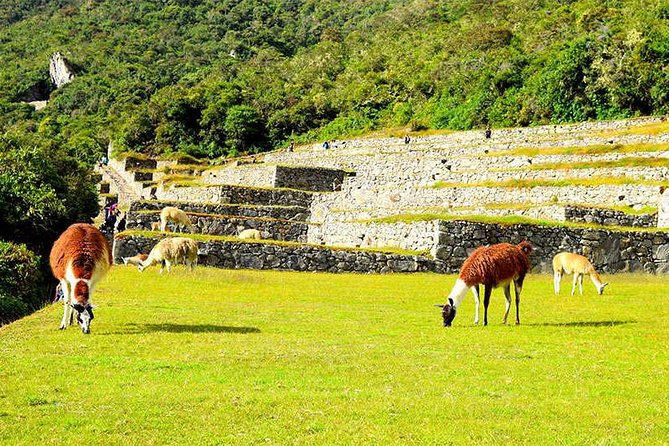
Day 3 is the longest, at about eight hours, but it may be the most varied. You begin with a 45-minute climb to Runkurakay, a rounded Inca resting site. Another 45-minute ascent brings you to Runkurakay Pass, at about 4,000 meters.
From the pass, the route drops toward Sayacmarca. The ruins cling to a steep mountainside, and their position makes the site feel almost defensive. Your guide can help you understand how the stonework, terraces, and paths fit together rather than treating the stop as a quick photo break.
After Sayacmarca, you follow a well-preserved section of Inca road to Chaquicocha for lunch. This is where the included cooking team earns its keep. Fresh, varied meals are one of the strongest parts of the setup, and vegetarian food can be arranged if you request it in advance.
The trail then reaches high Andean cloud forest, with thick plant growth and the chance to see unusual wildlife. From Phuyupatamarca Pass, you get broad views toward the Sacred Valley, nearby peaks, and, in the distance, Machu Picchu.
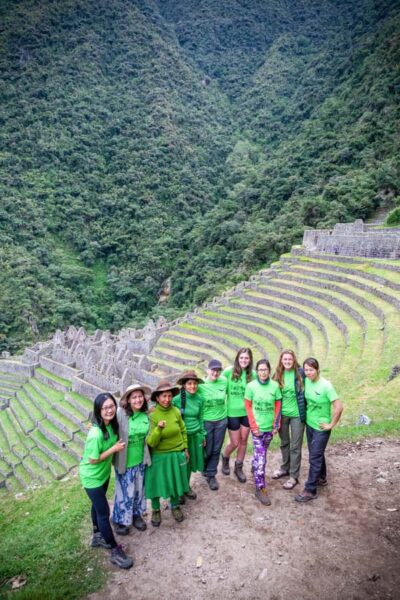
The final descent leads to Wiñayhuayna, the last campsite before the citadel. Along the way, you pass ceremonial places and agricultural terraces. The ruins and setting make this section feel like a gradual approach to a sacred center, not simply a march to the finish.
You should also expect tired legs by the end of this day. The route has already included major climbs and descents, and the next morning starts early. Use the evening to organize your daypack, dry wet clothing as best you can, and ask your guide about the timing for the Sun Gate.
Day 4: Entering Machu Picchu through the Sun Gate
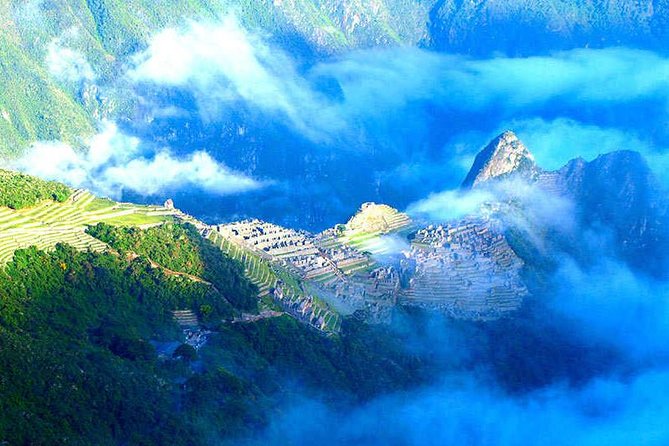
The final hiking section is relatively easy compared with Day 2, but the early start and accumulated fatigue still matter. After about an hour, you reach Inti Punku, the Sun Gate.
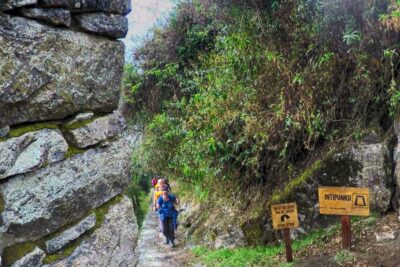
Weather decides how much you see. On a clear morning, Machu Picchu appears below with the Andes behind it. This is your first full view of the citadel, and it arrives from the trail rather than from a bus entrance.
The walk down to the upper terraces takes about 45 minutes. These terraces provide the classic photo spot, so have your camera ready, but do not rush past the view. You have worked for it.
The standard plan includes admission and a guided visit inside the Inca citadel, where your guide leads you through temples, ceremonial spaces, terraces, and storage structures. The details about re-entry need careful attention: an optional new ticket may be required if you want to leave and enter Machu Picchu again. Ask the operator exactly what your included admission permits.
Huayna Picchu and Machu Picchu Mountain are separate add-ons. Huayna Picchu rises to 2,720 meters, while Machu Picchu Mountain reaches 3,082 meters. Both require a pre-booked ticket, and neither should be treated as an automatic part of the $850 package.
After the site visit, you take the bus to Aguas Calientes. Lunch on Day 4 is not included, so budget for it there. You then ride the train to Ollantaytambo, where a private van returns you to Cusco.
The complete day lasts about nine hours. It is a long finish, but the train provides a welcome change from stone steps.
Food, tents, porters, and the human side of the trek
Camping food can make or break a demanding hike. Here, the chef prepares three breakfasts, three lunches, and three dinners, and the cooking team has included people such as Mario, Sabino, Herminios, and Nazario on different departures.
Meals have included several courses, local dishes, strong seasoning, and vegetarian choices. That does not turn a mountain camp into a restaurant, but it does mean you can expect more care than basic trail rations. Tell the operator about dietary needs before the trek.
The tents are spacious four-person models shared by two people. You receive an inflatable sleeping mattress and pillow, but not a sleeping bag. Hot water is available each morning, a small luxury that matters after a cold night.
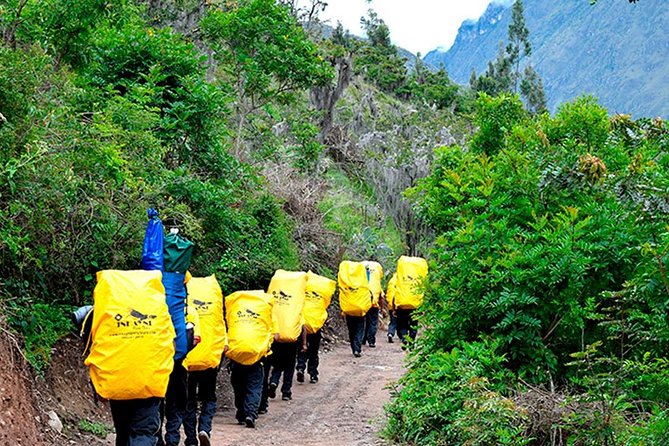
The porters, sometimes called Chasquis in reference to the Inca running messengers, carry the cooking and camping equipment. Their work is a major part of what makes the trip manageable. Pack light, follow the 5-kilogram personal limit, and bring only items you truly need.
The strongest human touch comes from the local guiding and support team. Freddy has led departures with stories about Inca beliefs and Andean life. Other past guides, including Edwin, Herlin, Ronald, and Paul, have been praised for patience, humor, trail explanations, and attention to the group’s pace. The exact team changes, so treat those names as examples rather than a guarantee.
Who should book this trek?
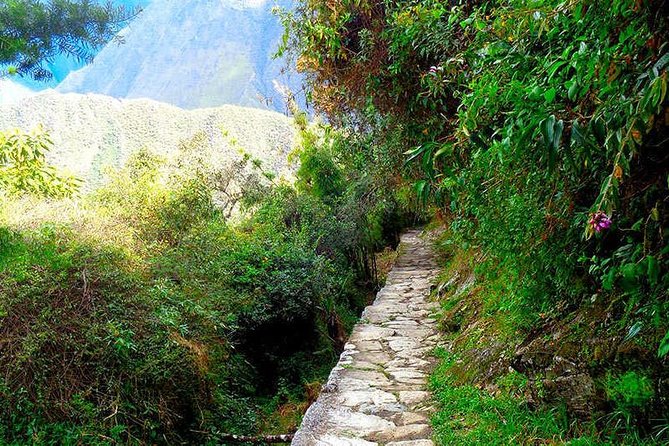
I would choose this trip if you want the approach to Machu Picchu to be part of the destination. It suits hikers with moderate fitness, a taste for early starts, and a willingness to sleep in tents and deal with changing weather.
It can work for families because the minimum age is 6, but the age rule alone does not make it easy for young children. Dead Woman’s Pass, long descents, altitude, and four days of walking demand preparation and honest judgment.
You should not book it casually if you have back problems, heart disease, or another serious medical condition. The operator specifically advises against participation in those cases. If you have concerns about altitude or endurance, speak with a medical professional before booking.
Start training with long walks, stair climbs, and downhill practice. Break in your walking boots before Peru. Carry sunscreen of factor 35 or higher, insect repellent, personal medication, hand sanitizer, toiletries, spare batteries, and a torch.
Your original passport is required on the day of the trek. If you are a student and want the discount, bring your ISIC card. A waterproof layer matters just as much as a warm jacket because conditions can shift from blazing sun to heavy rain or hail.
Booking advice and the final call
Permits can sell out, so booking at least five months ahead is strongly recommended. The experience is non-refundable and cannot be changed after booking, which makes travel insurance and firm flight plans especially important.
I would book this tour if you value a local crew, a small group, strong meal support, and the emotional payoff of reaching Machu Picchu through the Sun Gate. The $850 price is fair for the number of services included, especially the porters, chef, camping equipment, admission, and return transport.
I would choose another Machu Picchu plan if you want a soft bed, a relaxed schedule, or a short walk. The Inca Trail is demanding, and the reward comes from accepting that demand. Before paying, confirm the group-size limit, your exact guide and permit details, what admission covers on Day 4, and the cost of a sleeping bag or optional mountain ticket.
FAQ
How long is the Inca Trail tour?
The tour lasts approximately four days. Hiking times are about five hours on Day 1, seven hours on Day 2, eight hours on Day 3, and nine hours on Day 4 including the Machu Picchu visit and return transport.
What time does the tour start?
Pickup begins at 5:00 a.m. from your hotel in central Cusco.
Where does the hike begin?
The hiking portion begins at Km 82, the official starting point of the Inca Trail. Transportation from Cusco to Km 82 is included.
What is the highest point on the trek?
The highest point is Abra de Warmihuañusca, or Dead Woman’s Pass, at 4,215 meters, or 13,828 feet.
Are meals included?
Three breakfasts, three lunches, and three dinners are included. Breakfast on Day 1 and lunch and dinner on Day 4 are not included.
Is a sleeping bag included?
No. A sleeping bag can be rented from the local tour operator.
How much gear can a personal porter carry?
The included personal porter service covers up to 5 kilograms of your gear. You need to carry your inflatable pillow yourself.
Are Huayna Picchu and Machu Picchu Mountain included?
No. Entrance to Huayna Picchu Mountain is not included. Huayna Picchu and Machu Picchu Mountain require pre-booked tickets and an extra charge.
What documents and fitness level do I need?
You need a current valid passport on the day of the trek. The activity is intended for people with moderate physical fitness and is not recommended for those with back problems, heart disease, or other serious medical conditions.
More 4-Day Experiences in Cusco
- 4 Day Tour to the Manu National Park
★ 5.0 · 81 reviews - Choquequirao Trek 4 days and 3 nights
★ 5.0 · 81 reviews - Cusco Sacred Valley and Machupicchu 4 Days
★ 5.0 · 80 reviews - Ancascocha Trek To Machu Picchu 4 Days And 3 Nights
★ 5.0 · 77 reviews
More Hiking & Trekking in Cusco
- From Cusco: 7 Lakes Ausangate Trek with Breakfast and Lunch
★ 4.8 · 360 reviews - Cusco: Rainbow Mountain Tour and Red Valley Hike (Optional)
★ 4.7 · 149 reviews - Cusco: Full-Day Rainbow Mountain & Red Valley Trekking Tour
★ 4.5 · 121 reviews - Salkantay Trek Challenge – 3 Days / 2 Nights
★ 5.0 · 101 reviews
Just added around Cusco
- Waqrapukara 1 day trekking + meals★ 3.9 · 3 reviews
- Zipline over the Sacred Valley Trip★ 5.0 · 11 reviews
- Visit to the Cochahuasi Animal Sanctuary with rescued animal★ 4.1 · 4 reviews
- Valle Sur Cusco | half day★ 4.3 · 3 reviews
- Visit Pisac from Cusco: Private Transport★ 4.6 · 9 reviews
- Maras and Huaypo lagoon by ATV from Cuzco | Local Operator★ 4.7 · 4 reviews
- Trek to Humantay Lake from Cusco★ 4.9 · 8 reviews
- Trek to Choquequirao 4 days★ 3.8 · 4 reviews
Machu Picchu Tours, compared.



4-Day Inca Trail to Machu Picchu with Accommodation
Read our review →
2-Day Trip to the Sacred Valley and Machu Picchu
Read our review →
Machu Picchu 2-Day Inca Trail with Panoramic Train
Read our review →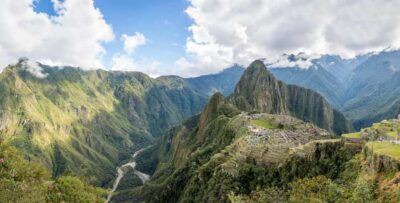
Browse the lists this tour appears in