
Reviewed · CITY TOURS
Half-Day City Tour of Cusco Including Tambomachay
Cusco’s best introduction is not confined to its cobbled center. This half-day outing moves from the Spanish Cathedral and Qorikancha to four Inca sites in the hills above town, ending at Tambomachay, a ceremonial water shrine. You get the big picture quickly, with a guide to explain what stonework, conquest, and living Andean culture mean.
I like the efficient route and the mix of sites. Sacsayhuaman gives you the grand scale, while Q’enqo, Puka Pukara, and Tambomachay add smaller, more focused stops. I also like the chance to ride between the ruins in an air-conditioned vehicle, then finish in central Cusco with dinner choices close by.
The main caution is organization. Pickup and meeting times have gone smoothly for some people and poorly for others, with late departures, unclear instructions, and missed stops reported. Entrance charges are also extra, and the published amounts are not fully consistent, so you should confirm the current fees and carry soles.
In This Review
- Key points to know before booking
- What this Cusco half-day tour actually covers
- Cusco Cathedral and the Plaza de Armas
- Qorikancha and the meeting of two belief systems
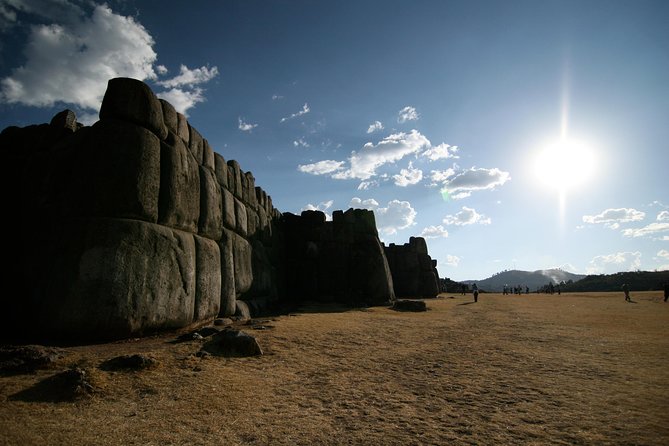
- Sacsayhuaman: the large-scale highlight
- Q’enqo, a smaller site with a darker purpose
- Puka Pukara and the road through the hills
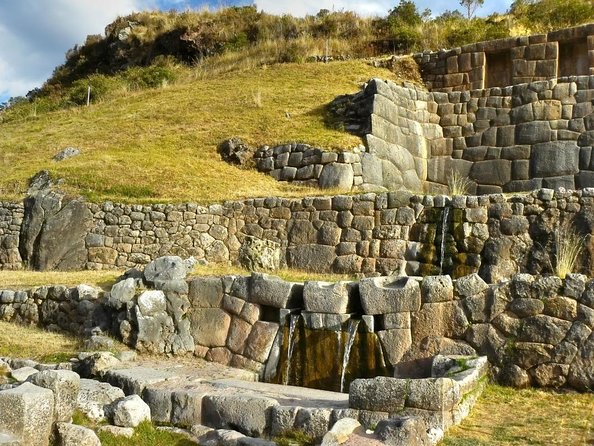
- Tambomachay, the Temple of Water
- Guides, language, and the quality of the commentary
- Price, entrance fees, and real value
- Pickup, timing, and the main risks
- Who should book this half-day route?
- Should you book it?
- FAQ
- How long does the Cusco city tour last?
- Where does the tour start?
- Is hotel pickup included?
- Are entrance fees included?
- How many people can join the tour?
- Is the tour available in English?
- What is the cancellation policy?
Key points to know before booking
- Six major sights in about five hours: You see the Cathedral, Qorikancha, Sacsayhuaman, Q’enqo, Puka Pukara, and Tambomachay in one compact route.
- The Inca sites are the main event: Despite the city-tour name, most of the time is spent at archaeological sites outside the central plaza.
- Small groups are advertised: The stated maximum is 10 people, although group size can vary in practice.
- Several strong English-speaking guides: Victor, Fidel, Marco Antonio, Nildo, Walter, and others have been praised for clear explanations and good time management.
- Bring cash in Peruvian soles: Admission is not included, and some sites require payment in cash.
- Pickup is limited to historic-center hotels: The tour ends in central Cusco, not necessarily at your hotel.
What this Cusco half-day tour actually covers
The route begins around 12:30 p.m. with pickup from your hotel lobby in Cusco’s historic center. If your hotel is outside that zone, you may need to reach the Regional Historical Museum on Calle Garcilaso, the stated meeting point.
From there, the group heads to the Plaza de Armas and then climbs toward the archaeological sites. The itinerary allows roughly 45 minutes at the Cathedral, 15 minutes in the plaza, 45 minutes at Qorikancha, an hour at Sacsayhuaman, and shorter visits at Q’enqo, Puka Pukara, and Tambomachay.
That is a lot for half a day. I see this as a first look, not a leisurely archaeological study. You will get explanations, photographs, and a useful sense of how the sites fit together. If you want long walks, quiet reflection, or detailed museum time, plan separate visits.
The stated vehicle is air-conditioned, which matters after walking on Cusco’s uneven streets and at exposed hilltop ruins. Some groups have been very small, while one account describes a group of about 15. The advertised maximum is 10, but I would not book this expecting a private experience unless you select a private option and confirm it directly.
A few more Cusco trips to weigh up
- Cusco: Half-Day City Tour with Sacsayhuaman and Q’enco
★ 4.6 · 1,129 reviews - Cusco: City Tour | Half-Day Tour to 4 Archaeological Sites
★ 4.6 · 206 reviews - Cusco: Half-Day City Tour
★ 4.2 · 129 reviews
Cusco Cathedral and the Plaza de Armas
The Cathedral is the tour’s first major stop. It occupies one side of Cusco’s central Plaza de Armas, where Inca and Spanish power meet in the most visible way in the city.
Allow about 45 minutes inside. The guide’s role matters here because the building is not simply a church to walk through. The tour is designed to explain the Spanish religious presence and the way Catholic architecture was placed over an older Inca center.
Photography rules can be strict. One person found that pictures were not allowed inside, while other groups appeared to be taking them. Follow the current signs and staff instructions rather than relying on what another group is doing.
The Cathedral is not included in the basic tour price. The supplied information gives two different figures, 25 soles in the stop description and 40 soles in the fee section. That is a clear reason to check the current price before departure.
Afterward, you get around 15 minutes in the Plaza de Armas. This is short, but enough to orient yourself, admire the arcades, and understand Cusco’s central layout. If you have never visited the city, this brief pause helps the later ruins make more sense.
Qorikancha and the meeting of two belief systems
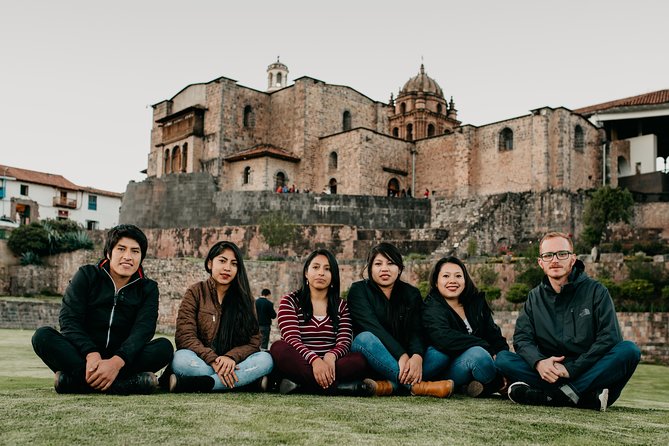
The group walks from the Plaza de Armas to Qorikancha along an old Inca-built street. This is one of the best parts of the route because you are not only transported between attractions. You are shown how Cusco’s older street plan still shapes the modern city.
Qorikancha was the principal Inca Temple of the Sun and the center from which the empire’s roads extended. The surviving stonework is the key attraction. Look for the precise joints and the way Inca masonry differs from later Spanish construction.
The site also shows the collision and overlap of Inca religion and Catholicism. The tour describes this juxtaposition inside what is now a church complex, giving you a direct example of how Spanish rule used existing sacred spaces.
The visit lasts about 45 minutes. Admission is listed as 15 soles and is not included. One practical wrinkle is that Cusco’s different tourist tickets do not always cover every attraction. Some archaeological sites on this route can be covered by the appropriate tourist ticket, but Qorikancha and the Cathedral may require separate payment. Check your ticket rather than assuming one pass covers everything.
Sacsayhuaman: the large-scale highlight
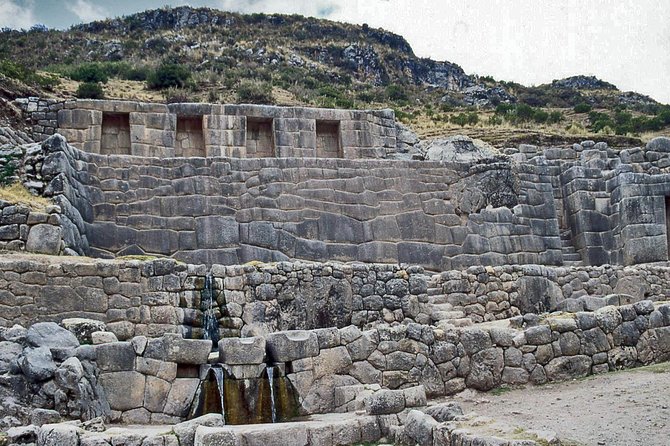
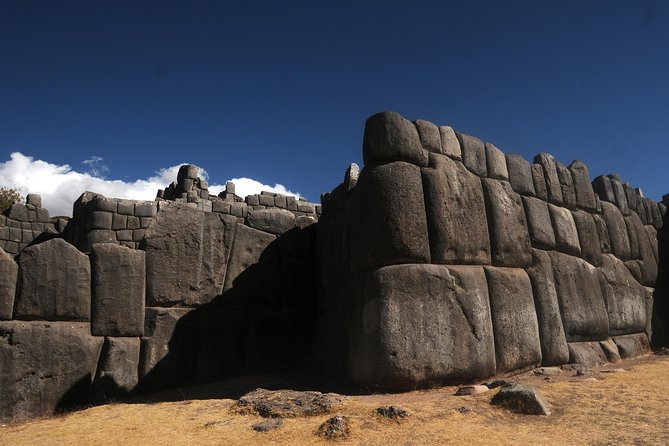
A vehicle ride of about 25 minutes takes you to Sacsayhuaman. This is the stop most likely to make you pause and simply look.
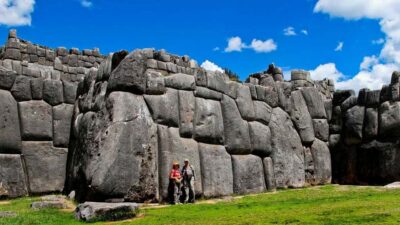
The massive fitted stones show the scale and skill of Inca construction better than the smaller sites do. Your guide will explain the site’s importance and its connection to Cusco. Sacsayhuaman is also associated with the large annual celebration of the sun, Inti Raymi, which gives the ruins continuing cultural importance beyond their stone walls.
The tour allows about an hour here, the longest stop of the day. That is appropriate. You have time to listen, walk around, and take photographs. The open setting also means you should pay attention to the altitude and pace yourself. Cusco is already high, and the ruins require walking over uneven ground.
This is where a good guide can make a major difference. Fidel has been praised for excellent English, strong site knowledge, friendliness, and keeping the group on schedule. Victor has also been singled out for precise explanations of Inca history. Names and assignments can change, but the best version of this tour depends heavily on who leads your group.
Same valley, a completely different kind of day:
- Cusco: Humantay Lake Tour with Breakfast and Buffet Lunch
★ 4.9 · 2,976 reviews - From Cusco: Sacred Valley & Maras Salt Mines Tour with Lunch
★ 4.8 · 2,227 reviews - From Cusco: Moray, Maras Salt Mines & Chinchero Weavers Tour
★ 4.8 · 1,925 reviews - From Cusco: Full-Day Group Tour of Machu Picchu
★ 4.7 · 1,767 reviews
Q’enqo, a smaller site with a darker purpose
From Sacsayhuaman, the vehicle makes a short transfer to Q’enqo. The name comes from Quechua and refers to a labyrinth or zigzag, matching the crooked channel cut into the rock.
Q’enqo is smaller and more intimate than Sacsayhuaman. The carved stone and cave-like spaces invite a closer look, and the guide explains the site’s ceremonial role. One particularly memorable feature is the cave where rituals, including sacrifices, are understood to have taken place.
The visit is scheduled for about 25 minutes. That is enough for an introduction and photographs, though not enough for an unhurried exploration. Stay close to the guide at the start, then use any free time to look at the carved rock and the surrounding site.
Puka Pukara and the road through the hills
Puka Pukara comes next, also with about 25 minutes set aside. Its name is often translated as Red Fortress, and it is described here as a small circular Inca military fortification.
Compared with Sacsayhuaman, Puka Pukara is modest. Its value comes from position and purpose. The site helps you picture the network of roads, watchpoints, and way stations that supported movement through the Inca realm.
Do not expect a long guided visit. This is a quick stop in a packed itinerary. You will hear the main explanation, have time for pictures, and then return to the vehicle. That rhythm is useful if you want to see several sites in one afternoon, but it can feel rushed if you prefer slow travel.
Tambomachay, the Temple of Water
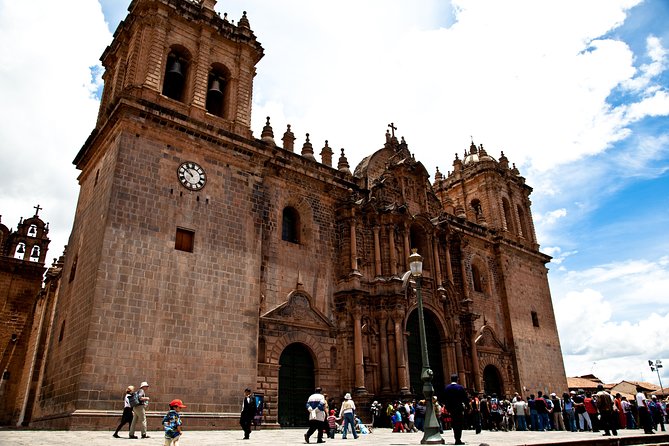
The tour ends at Tambomachay, usually after another short drive. The scheduled visit lasts about 30 minutes.
Tambomachay is associated with water and ceremonial use. Its channels and stone structures make it a fitting final stop, especially after the larger military and administrative sites earlier in the afternoon. The sound and sight of water give the visit a different mood from the broad terraces of Sacsayhuaman.
The timing is important. One group arrived about 15 minutes after the site had closed and was taken instead to an alpaca farm. That may have been a practical recovery, but it is not the same as seeing Tambomachay. The tour covers a lot of ground, and late pickup, extended stops, or shopping visits can put the final ruin at risk.
The official route says you return to Cusco and finish in the main square. That makes this a useful evening plan. You can have dinner near the Plaza de Armas rather than spending more time arranging transport back to your hotel.
Guides, language, and the quality of the commentary
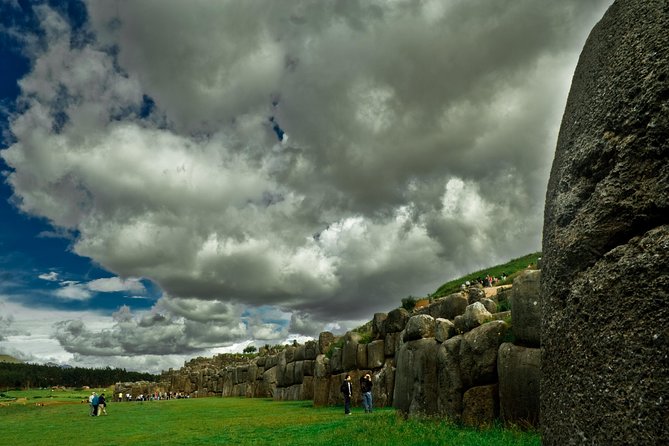
The strongest part of this experience is often the guide. Several guides have earned praise for clear English and strong storytelling. Victor, Fidel, Marco Antonio, Nildo, Walter, Richard, and Jhanett are all names associated with positive experiences in the supplied material.
Fidel is described as keeping the group on time while offering excellent English and detailed explanations. Marco Antonio is praised for making the tour informative and fun. Nildo is noted for handling a small group well, and Walter for giving enough information without dragging out each stop.
Language performance can vary. One person found the tour mainly in Spanish, with English translation that was hard to follow. Since the service can be bilingual, ask at the start how explanations will be handled in your language. If you are an English speaker, do not assume every departure will feel like a fully English-language tour.
Audio equipment has also been used on at least one departure, with a microphone and individual earpieces. It is not guaranteed, but it can help in a noisy group or at a large open site.
Price, entrance fees, and real value
At $18 per person, the tour itself is inexpensive for five hours of transport, a guide, and access to a route that would be awkward to arrange independently. The price is good if you want an efficient overview of Cusco’s main nearby ruins.
The real cost is higher because admission is extra. The supplied fee information lists:
- Plaza de Armas tourist ticket: 70 soles
- Cusco Cathedral: 25 or 40 soles, depending on which published figure is current
- Qorikancha: 15 soles
The fee descriptions are inconsistent, so confirm the current amount before you go. Carry enough Peruvian currency. People have specifically found the ticket system confusing, and some admissions may not accept cards.
The archaeological sites can be included in a suitable Cusco tourist ticket. If you already have one, bring it and check exactly which attractions it covers. Do not assume that a 10-day ticket includes the Cathedral or Qorikancha.
At the right total price, this is a good value for someone who wants transport and context without hiring a private guide. It is less attractive if you have already visited the first three stops, since the operator may not be able to customize the route cleanly for a shared group.
Pickup, timing, and the main risks
Pickup is included only from hotels in the historic center. The stated start is around 12:30 p.m., but exact instructions matter. Some departures have involved waiting, late vehicles, confusion at the meeting point, or difficulty reaching the operator.
I would message the provider before the tour and confirm:
- The exact pickup time
- The exact pickup location
- Whether you should go to the Regional Historical Museum
- The guide’s name and language
- Which entrance fees you must pay
- Whether the group is shared or private
Arrive at least 15 minutes early. Once a vehicle leaves for Sacsayhuaman, it may not be possible to join later. A particularly unhappy experience involved conflicting instructions about meeting at 3:00 or 3:45 p.m., ending with the group departing without the couple.
There have also been reports of souvenir or alpaca stops. These can be pleasant if you want to see llamas, alpacas, or buy an alpaca sweater. They become a problem when shopping takes time away from the ruins. If you are not interested in buying anything, make your preference clear and watch the schedule.
The vehicle is air-conditioned, and one account notes that oxygen tanks were available for an altitude emergency. That is reassuring, but it is not a substitute for taking the altitude seriously. Walk slowly, drink water, and tell the guide if you feel unwell.
Who should book this half-day route?
I would choose this tour if you have limited time in Cusco, want the major nearby ruins explained in one outing, and prefer not to arrange taxis or separate admission visits. It is also a good fit for solo visitors who want a group setting, especially when the group stays near the advertised maximum of 10.
It suits first-time visitors best. The route gives you a useful framework for later independent visits and shows the contrast between the Spanish center and the Inca sites above it.
I would think twice if you need exact punctuality, want a guaranteed fully English tour, dislike shopping detours, or have already seen the Cathedral, Qorikancha, and central Cusco. In those cases, a private or site-specific arrangement may give you better control.
Free cancellation is available up to 24 hours before the start time. Changes or cancellations inside that window are not accepted for a refund.
Should you book it?
Book it for the route and the archaeological coverage, not for a slow city stroll. Sacsayhuaman is the major payoff, while Q’enqo, Puka Pukara, and Tambomachay round out your understanding of the Inca road system, ceremonies, and defenses.
Before paying, confirm the pickup details, language, group type, and current admission costs. If the operator communicates clearly and you arrive early with soles in hand, the $18 base price can buy a very useful first afternoon in Cusco. If those details remain vague, the tour’s known organizational problems make a more controlled private option worth considering.
FAQ
How long does the Cusco city tour last?
The experience lasts approximately five hours, including the visits to the Cathedral, Plaza de Armas, Qorikancha, Sacsayhuaman, Q’enqo, Puka Pukara, and Tambomachay.
Where does the tour start?
The stated meeting point is the Regional Historical Museum of Cusco at C. Garcilaso, Cusco 08002, Peru. Hotel pickup is available only from hotels in Cusco’s historic center.
Is hotel pickup included?
Yes, pickup is included for hotels in the historic center of Cusco. The tour ends in central Cusco, around the main square.
Are entrance fees included?
No. Entrance fees are paid separately. The supplied information lists charges for the tourist ticket, Cusco Cathedral, and Qorikancha, but the Cathedral fee appears as both 25 and 40 soles in different details, so confirm the current price.
How many people can join the tour?
The stated maximum is 10 people. A private service requires at least two people per booking.
Is the tour available in English?
English-speaking guides are available, and several guides named in the service details have been praised for fluent English. However, the tour can be bilingual, so confirm the language arrangement before departure.
What is the cancellation policy?
You receive a full refund if you cancel at least 24 hours before the local start time. Cancellations or changes made less than 24 hours before the tour are not refunded or accepted.
Just added around Cusco
- Waqrapukara 1 day trekking + meals★ 3.9 · 3 reviews
- Zipline over the Sacred Valley Trip★ 5.0 · 11 reviews
- Valle Sur Cusco | half day★ 4.3 · 3 reviews
- Visit to the Cochahuasi Animal Sanctuary with rescued animal★ 4.1 · 4 reviews
- Visit Pisac from Cusco: Private Transport★ 4.6 · 9 reviews
- Maras and Huaypo lagoon by ATV from Cuzco | Local Operator★ 4.7 · 4 reviews
- Trek to Humantay Lake from Cusco★ 4.9 · 8 reviews
- Trek to Choquequirao 4 days★ 3.8 · 4 reviews
City Tours, compared.
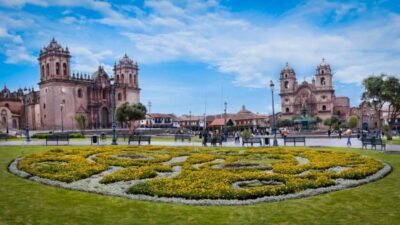
Half-Day City Tour with Sacsayhuaman and Q’enco
Read our review →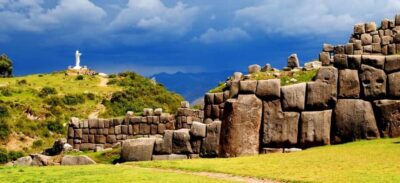
City Tour Cusco Qoricancha Sacsayhuaman y Tambomachay
Read our review →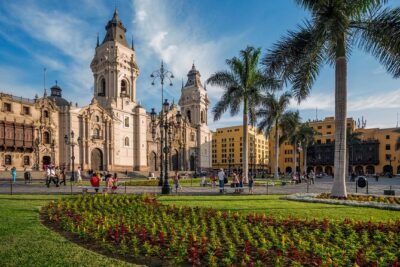
Lima’s Vibrant Heritage: Exploring the City’s Landmarks Half-day
Read our review →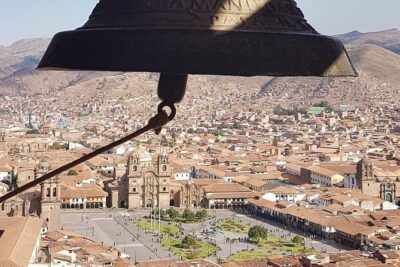
City Tour | Half-Day Tour to 4 Archaeological Sites
Read our review →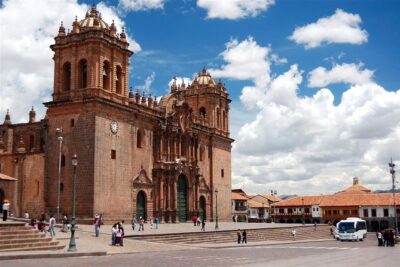
City Tour in Cusco & visit Museum South American Camelid Private.
Read our review →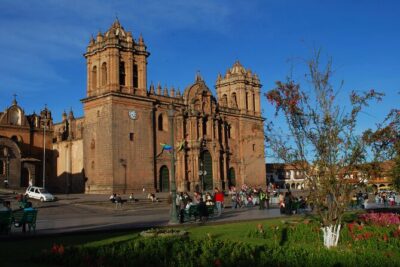
Cusco City Sightseeing, San Pedro Market, Cathedral and Qorikancha Temple
Read our review →
Browse the lists this tour appears in