
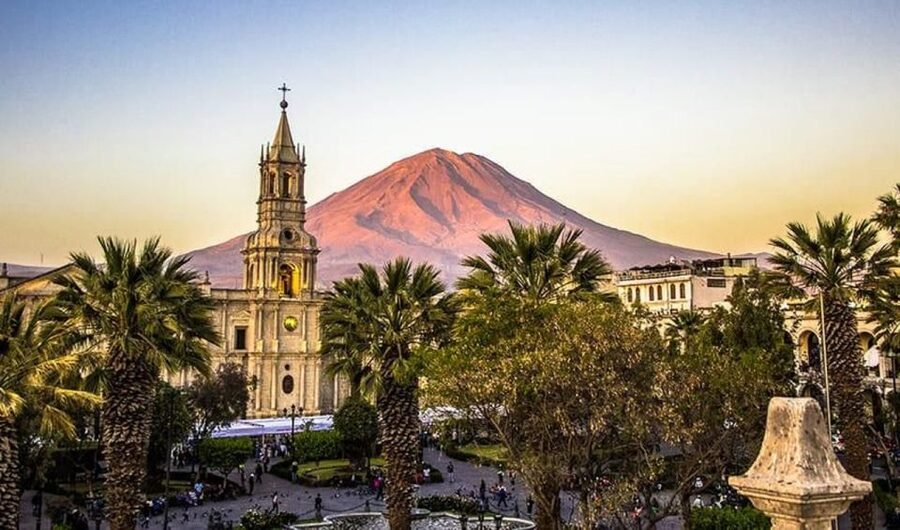
Reviewed · CITY TOURS
Arequipa: City and Country Tour
Arequipa’s best introduction may be a half-day ride that moves from polished colonial streets to working countryside. This $23 city and country tour takes you from the Plaza de Armas to volcano viewpoints, camelid exhibits, old mills, food stops, and farming terraces.
I like the variety, especially the chance to see both the Chili Valley and Misti Volcano in one outing. I also like that the tour explains everyday life, from alpaca fiber to wheat grinding and Quechua farming methods. The main caution is the English guiding: Giuliana received praise for her attentive explanations, but one guest found that a different guide had only minimal English.
In This Review
- Key points
- Why this four-hour route works
- The White City and the Plaza de Armas
- Yanahuara and Carmen Alto viewpoints
- Incalpaca and the four South American camelids
- Sachaca, Tingo, and local food culture
- Via Paisajista and the Mansion del Fundador
- Sabandia Mill and the stone grinding system
- Paucarpata terraces and Quechua farming knowledge
- The guide matters more than the bus
- What $23 really includes
- Who should book this Arequipa outing?
- Practical tips for a smoother half-day
- Should you book the City and Country Tour?
- FAQ
- How long does the Arequipa City and Country Tour last?
- Is hotel pickup included?
- Is the tour offered in English?
- Are entrance fees included in the price?
- Is food included?
- Can I cancel the booking?
Key points
- Yanahuara and Carmen Alto: Two scenic stops give you clear views toward the Chili Valley and the Misti and Chachani Volcanoes.
- Incalpaca’s camelid display: Learn to tell a llama, alpaca, vicuña, and guanaco apart, with a small zoo inside the outlet.
- Colonial and rural Arequipa: The route links the historic center with Sachaca, Tingo, old estates, and countryside roads.
- Sabandia Mill: See how wheat was processed with a stone mill in a building dating to the 16th century.
- Paucarpata terraces: Man-made farming platforms show how local growers created different microclimates for crops.
- Low price, extra entrance fees: The $23 fare includes transport, a bilingual guide, and central hotel pickup, but the two main paid sights cost 22 soles combined.
Why this four-hour route works
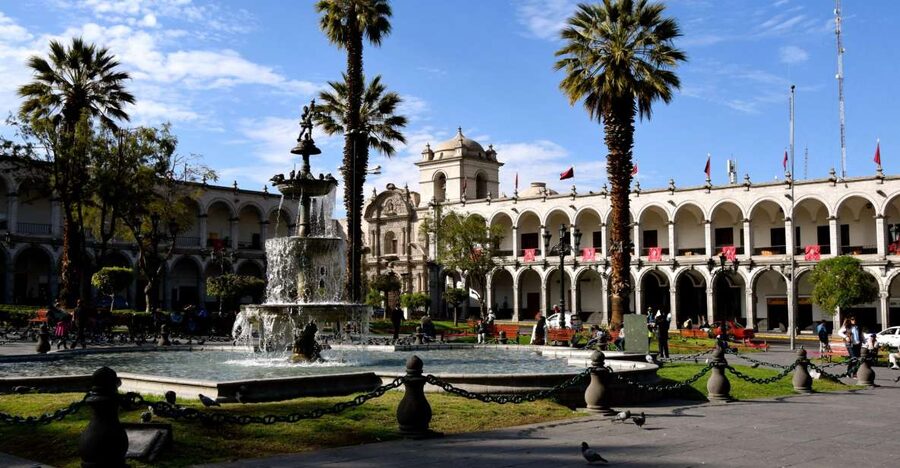
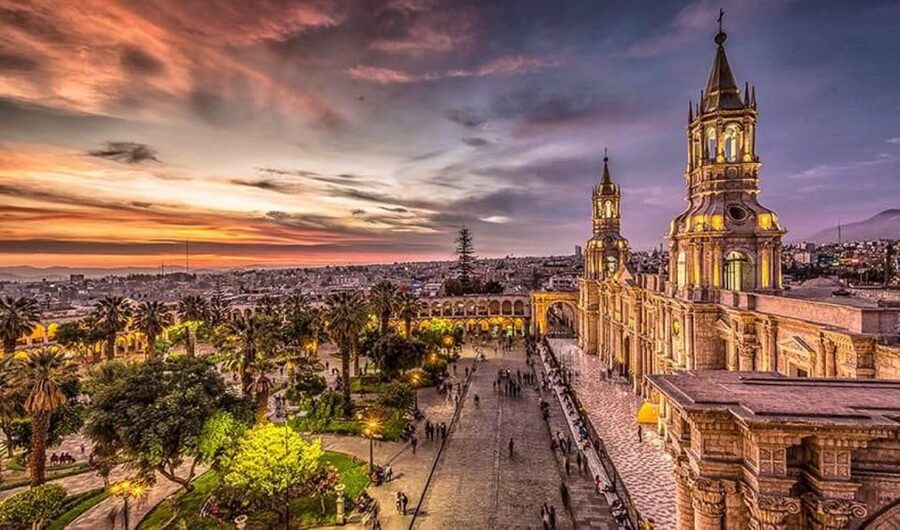
Arequipa is easy to admire from its central streets, but the city makes more sense when you see what surrounds it. The white volcanic-stone buildings, broad valley, snow-dusted peaks, old irrigation systems, and nearby farms all belong to the same story.
This tour is built for orientation. You are not spending a long time at one museum or church. Instead, you move between short stops, step out for photos, hear an explanation, and get back on the bus. That makes it useful early in a stay, when you want to understand the shape of Arequipa before choosing where to return on foot.
The route lasts about four hours. Pickup is included from a hotel in the Arequipa city center, while the tour ends back in the city center. That saves you the trouble of arranging taxis for a morning or afternoon of separate visits.
The format also keeps the price modest. At $23 per person, transportation and guiding cover a wide area outside the center. You will pay extra to enter the Mansion del Fundador and Molino de Sabandia, but even with those fees, the outing remains a reasonable way to reach several scattered sights.
A few more Arequipa trips to weigh up
- Arequipa: Walk through the Historic Center of the City
★ 4.9 · 87 reviews - Arequipa Walking Tour city center and drinks experience
★ 5.0 · 72 reviews - Arequipa, Historic and Colonial City and Santa Catalina Monastery
★ 4.5 · 42 reviews
The White City and the Plaza de Armas
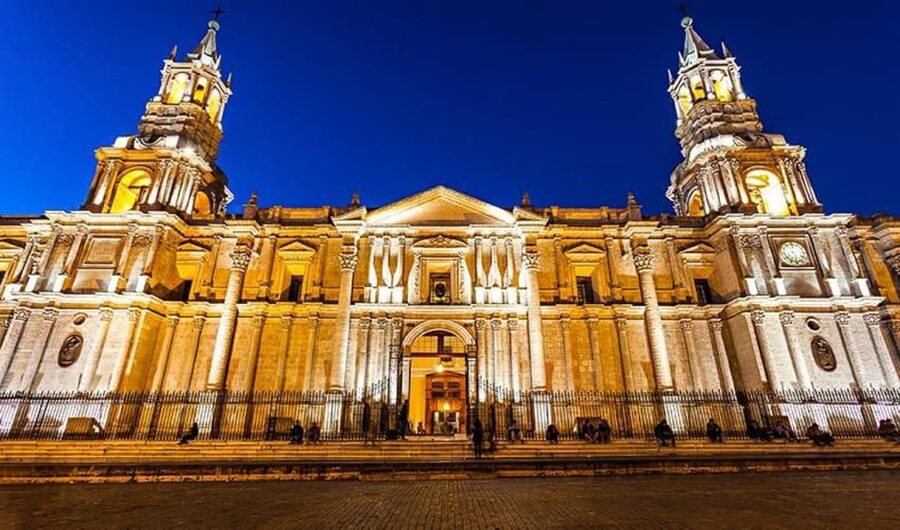
The tour begins with Arequipa’s central landmarks and the streets of the Centro Historico. This is the part of the route that gives you the city’s visual identity: buildings made from pale volcanic sillar, formal streets, and the Plaza de Armas at the center.
The stop is more useful as an introduction than as a full walking tour. You will see the city’s main central areas, but the experience is primarily panoramic and bus-based. If you want detailed time inside individual churches or museums, plan separate visits.
Arequipa’s historic center can feel grand and orderly, while the later stops show a less polished side of daily life. That contrast is one of the strongest features of the morning. You are not being shown only the postcard version of the city.
Yanahuara and Carmen Alto viewpoints
At Yanahuara and Carmen Alto, you get time to leave the vehicle, stretch your legs, and take pictures. These are important pauses because the ride includes several stops, and the views are best enjoyed outside the bus.
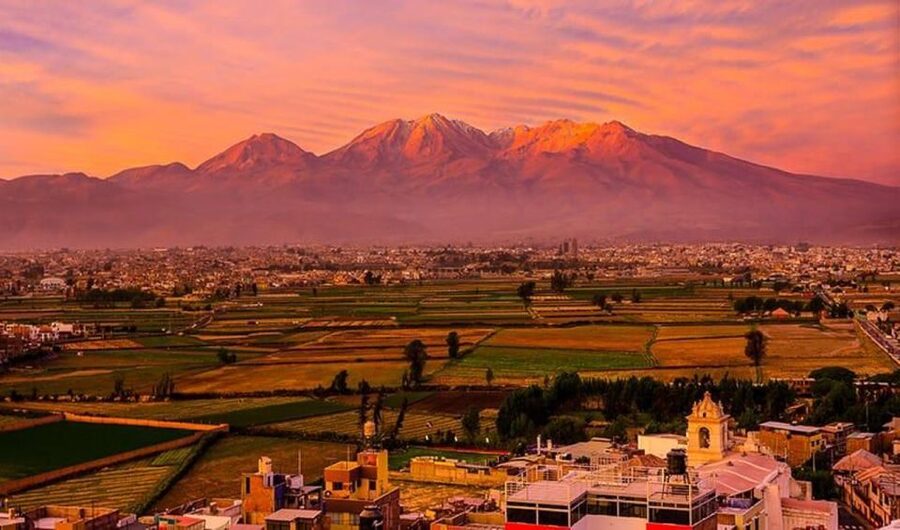
From the overlooks, you can look across the Chili Valley toward Misti and Chachani Volcanoes. Misti is the familiar cone that dominates many views of Arequipa, while Chachani adds a broader mountain backdrop. Weather and cloud cover will affect what you see, so keep expectations flexible.
Yanahuara is also known for its attractive stone arcades and classic views, though the supplied tour details do not promise a long architectural visit there. Think of this portion as a scenic stop with a little breathing room, not a full neighborhood walk.
Carmen Alto adds a different angle over the valley and countryside. Together, the two viewpoints help you understand that Arequipa is not simply a colonial center. It sits beside a fertile valley shaped by water, agriculture, and high volcanic peaks.
Bring a camera, but also listen during the explanation. The value here is not only the photograph. The viewpoints connect the city to its setting, something you miss when you stay entirely around the Plaza de Armas.
Incalpaca and the four South American camelids
The visit to Incalpaca combines shopping, animal viewing, and a lesson about Andean fiber. Inside the outlet is a small zoo where you can learn about four South American camelids: the llama, alpaca, vicuña, and guanaco.
This is a useful stop because the animals are often treated as one big category by first-time visitors. They are not the same, and the guide can help you understand the differences. You also get context for why alpaca and vicuña fiber matter in the region.
The outlet element may appeal to you if you are considering a scarf, sweater, or other alpaca product. If shopping is not your priority, the mini-zoo and explanation still give the stop a clear purpose. You are not simply being taken into a store without a local connection.
Allow for the possibility that shopping stops can feel less compelling than viewpoints or historic buildings. The advantage here is that the animal display keeps the visit tied to local culture and production. It is a short, practical stop rather than the central reason to book the tour.
Same valley, a completely different kind of day:
- From Arequipa: Colca Canyon Full-Day Guided Tour with Meals
★ 4.5 · 982 reviews - Tour to the Salinas Lagoon and National Reserve in Arequipa
★ 4.5 · 548 reviews - From Arequipa: Sillar Route Trek
★ 4.2 · 461 reviews - Arequipa: Chili River White Water Rafting with Hotel Pickup
★ 4.8 · 329 reviews
Sachaca, Tingo, and local food culture
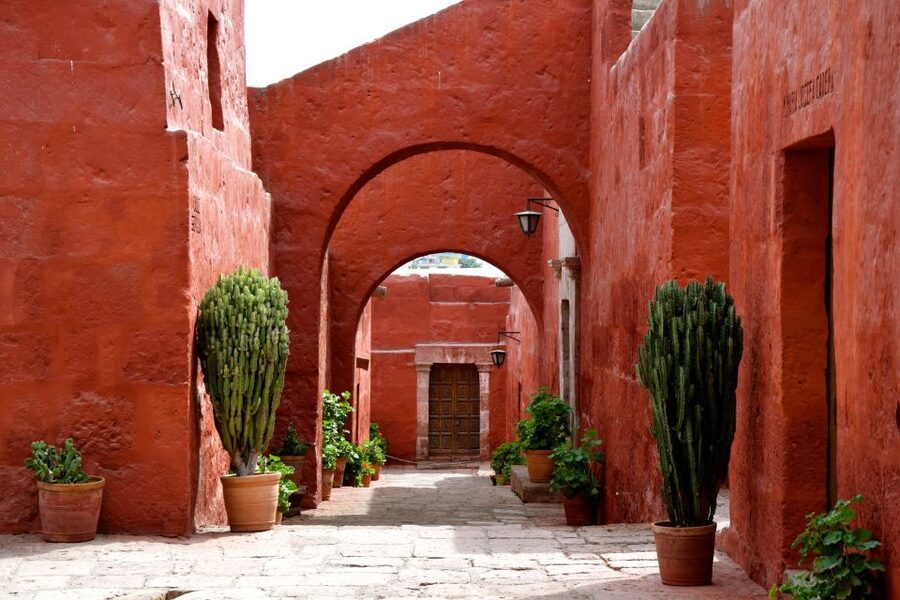
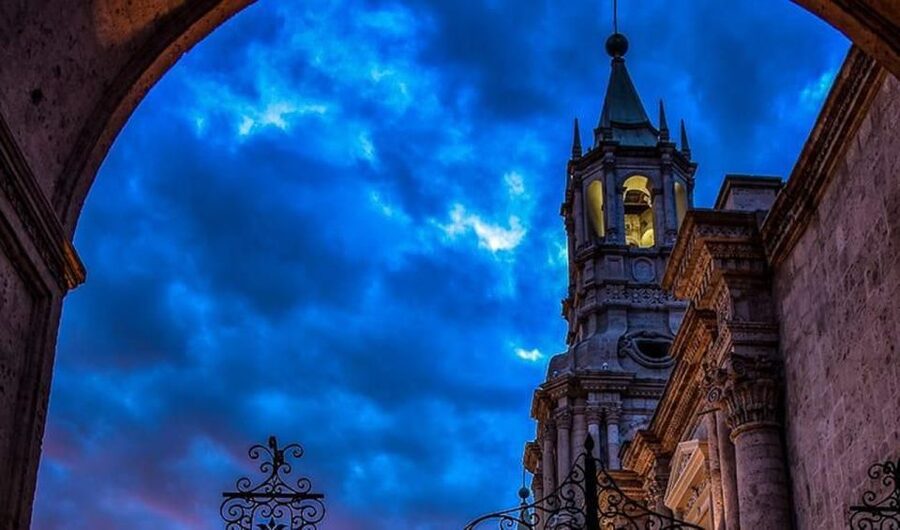
The route continues to Sachaca, a district outside the main historic center. Here you see a beautiful 19th-century church, adding another layer to Arequipa’s religious and architectural story.
The tour then reaches Balneario Tingo, a local recreation area known for food such as anticuchos and buñuelos. Anticuchos are skewered grilled food, while buñuelos are sweet fried treats. Food and drinks are not included, so bring money if you want to sample what is available.
This stop gives the day a more ordinary local feel. The historic center presents Arequipa as a grand city; Tingo shows where food and leisure fit into the life of the wider urban area. The exact food experience may depend on what is open and how much time the group has, so treat it as an opportunity rather than a guaranteed meal.
The 11 a.m. departure includes an extra one-hour stop for optional lunch. Lunch is not included and is not mandatory. This time slot may work well if you prefer to combine sightseeing with a meal, but it also means the day follows a longer schedule than the standard four-hour outing.
Via Paisajista and the Mansion del Fundador
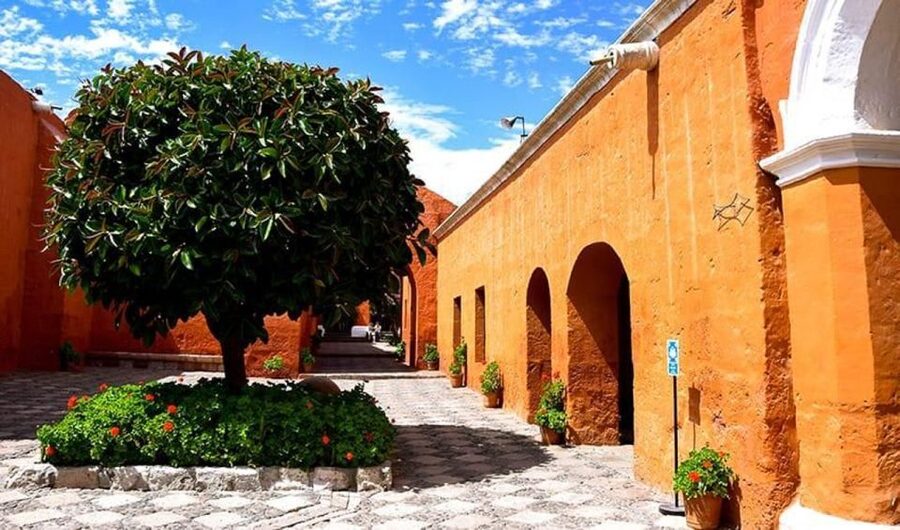
After the urban districts, the bus follows Via Paisajista through the countryside toward the Mansion del Fundador. The change in scenery is part of the point. You move away from the dense center and see open farmland, valley views, and older rural properties.
The Mansion del Fundador dates to the 16th century. Its name points to the colonial era and the powerful landowning families connected with the valley. The tour gives you the chance to enter, but admission is not included and costs 12 soles, subject to change.
That extra fee is modest, though you should factor it into the real cost. If you want to keep spending low, you can ask the guide how the stop works before paying. If you enjoy old houses and colonial-era settings, the admission adds substance to the countryside portion.
Do not expect a long independent exploration. This is a guided stop within a compact route, and the main benefit is seeing how the city’s historic story continues beyond the main square.
Sabandia Mill and the stone grinding system
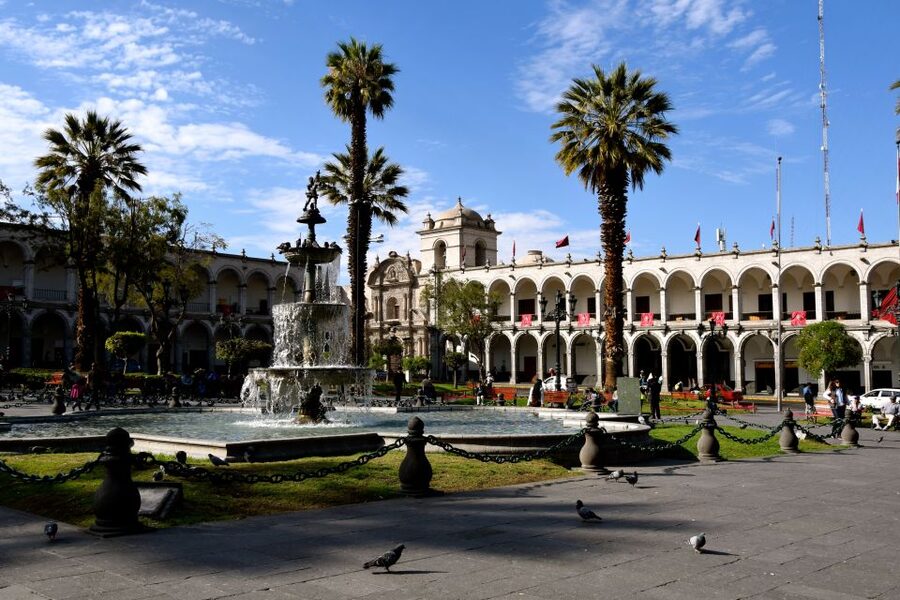
Molino de Sabandia is one of the most distinctive stops. The mill dates to the 16th century and demonstrates how wheat was processed using a stone mill.
The machinery gives you something concrete to picture. Instead of hearing only about colonial agriculture, you can see the basic technique that turned grain into flour. That makes the stop especially worthwhile if you enjoy old technology, rural buildings, or the practical side of history.
Admission costs 10 soles and is not part of the tour price. Along with the Mansion del Fundador, the two entrance fees total 22 soles at the stated rates. Fees can change, so check the current amount when booking or at the entrance.
The mill is not a substitute for a full agricultural museum. Its appeal comes from the setting and the working method. The surrounding countryside and the old stone structure make it a welcome change from the city streets.
Paucarpata terraces and Quechua farming knowledge
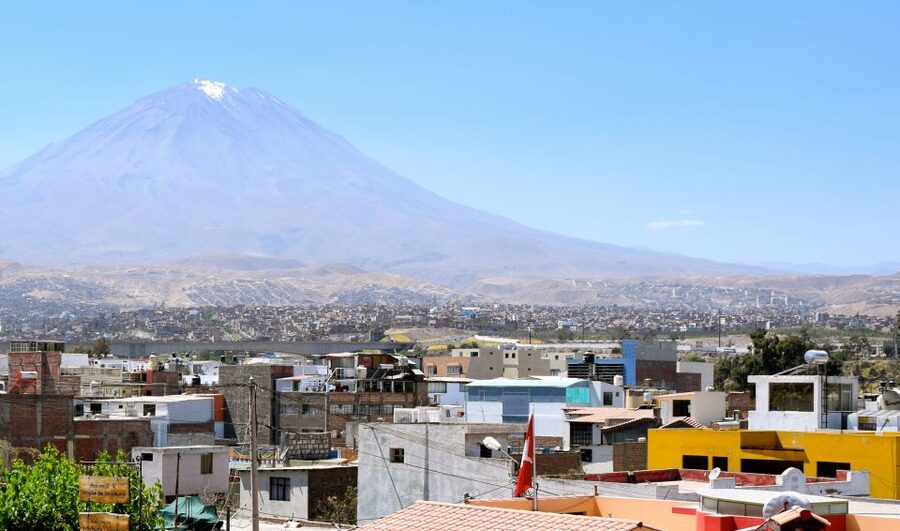
Before returning to central Arequipa, the tour stops to view the Andenes de Paucarpata. These are man-made agricultural platforms built into the slopes.
Their importance is practical. The terraces create a system of microclimates, allowing growers to produce a wide range of crops at different levels. This is a good place to connect engineering with farming. The terraces are not simply scenic steps in the hillside; they show how people adapted agriculture to local conditions.
The stop also helps explain Quechua culture through land use rather than through a staged performance. You see a living farming idea: shaping the ground, managing temperature, and making productive use of difficult terrain.
The supplied details do not promise a long walk among the terraces, so expect an observation stop rather than an extended hike. Still, it rounds out the tour well. You have seen the colonial center, local neighborhoods, valley views, historic buildings, a mill, and the farming systems that supported settlement in the region.
The guide matters more than the bus
This is a panoramic bus tour, so your experience depends heavily on the guide’s explanations and on how well the stops are handled. Giuliana is specifically praised for being attentive, well informed, and careful to make sure everyone received the information they needed.
That is a useful sign for anyone who wants context rather than a simple ride past landmarks. A good guide can connect the Plaza de Armas to the volcanoes, the camelids to local textiles, and the terraces to Quechua agricultural practice.
There is also a practical warning. One English-language booking had a guide who did not initially realize the group required English and had only minimal English ability, although he tried to help. The activity identifies English as an available live guide language, but I would confirm that your reservation is assigned to the English-speaking service before departure.
The guide is listed as bilingual, and pickup is included from central hotels. Still, language arrangements deserve a quick check, especially if detailed historical explanations are important to you.
What $23 really includes
At $23, this tour offers good value if you want to cover sights spread around the city without arranging separate transport. The fare includes:
- Pickup from accommodation within the city center
- Transportation throughout the route
- An English-speaking bilingual guide
- Return to the city center at the end
You will pay separately for food, drinks, personal purchases, and admission to the Mansion del Fundador and Molino de Sabandia. At the listed rates, those admissions add 22 soles, though prices may change.
The price is strongest for people who value coverage. You can see a wide range of Arequipa in one half-day, including places that are not all clustered around the Plaza de Armas. It is less ideal if you prefer slow museum visits, long walks, or complete control over how long you stay at each stop.
The optional lunch hour at the 11 a.m. departure changes the value calculation slightly. You get more time for food, but the outing is no longer as quick. Choose that time only if the added meal break suits your plan.
Who should book this Arequipa outing?
I would recommend it to you if this is your first visit and you want a clear overview of Arequipa and its outskirts. It is also a smart choice if you have limited time, do not want to negotiate local transport, or enjoy seeing how city life connects with farming and nearby districts.
Families and mixed-interest groups may like the range of stops. One person can focus on volcano views, another on colonial buildings, another on camelids, and another on food or rural life. The frequent changes keep the route moving.
You should think twice if you want a deep visit to every attraction. Four hours is enough for orientation, not exhaustive sightseeing. You will also need to budget for the two entrance fees if you want to enter both historic sites.
The tour suits visitors who want explanation and variety more than solitude. It is a group outing, and the bus schedule controls the pace. That tradeoff is reasonable at this price, but it is worth knowing before you book.
Practical tips for a smoother half-day
Wear comfortable shoes because you will get out at several stops, even though this is not presented as a hiking tour. Bring water and some local currency for food, drinks, entrance fees, and purchases at Incalpaca.
Keep your camera ready at Yanahuara and Carmen Alto. The stops include time for photographs, but the tour still has to keep moving to reach the countryside sites.
If you book the 11 a.m. departure, plan for the optional one-hour lunch stop. Since lunch is not included or required, you can decide whether the break fits your budget and schedule.
For the best experience, confirm the English-language guide arrangement before the tour starts. Giuliana’s attentive approach shows how much a strong guide can add, while the reported language mix-up shows why this detail matters.
Free cancellation is available up to 24 hours before departure for a full refund, and you can reserve while paying later. That flexibility helps if your Arequipa schedule depends on weather or connections.
Should you book the City and Country Tour?
Book it if you want an affordable, efficient introduction to Arequipa that reaches beyond the historic center. The combination of volcano viewpoints, the Chili Valley, camelids, Sachaca, Tingo, a colonial mansion, Sabandia Mill, and Paucarpata terraces gives you a useful picture of both the city and its surroundings.
Skip it if you want long, quiet visits at individual sights or if you prefer to arrange a private route at your own pace. Also confirm the English guide before paying, since the quality of the explanations can shape the day.
For most first-time visitors with four hours to spare, the $23 base price is fair. Add the two modest entrance fees, bring money for food, and you get a practical look at the many sides of Arequipa without spending a full day on the road.
FAQ
How long does the Arequipa City and Country Tour last?
The tour lasts four hours. The 11 a.m. departure includes an extra one-hour stop for optional lunch, which is not included and is not mandatory.
Is hotel pickup included?
Yes. Pickup is included from your accommodation if it is located within the Arequipa city center area.
Is the tour offered in English?
Yes. The activity includes a live English-speaking bilingual guide. Confirm the English-language assignment when booking, as one departure had a guide with minimal English.
Are entrance fees included in the price?
No. Entry to the Mansion del Fundador costs 12 soles, and entry to Molino de Sabandia costs 10 soles at the stated rates. These prices may change.
Is food included?
No. Food and drinks are not included. The 11 a.m. departure offers an optional one-hour lunch stop, but lunch is not required.
Can I cancel the booking?
Yes. You can cancel up to 24 hours in advance for a full refund. The tour also allows you to reserve now and pay later.
Just added around Arequipa
- Walking tour through the Historic Center of Arequipa★ 4.0 · 3 reviews
- Trek to the Route of the Sillar and Culebrillas in Arequipa★ 4.0 · 9 reviews
- 3-Day Colca Canyon trek with Professional Guide★ 5.0 · 40 reviews
- Trekking, Waterfalls and Thermal Baths★ 4.5 · 47 reviews
- Colca Full Day★ 5.0 · 57 reviews
- Full Day Tour to Colca Canyon from Arequipa★ 4.0 · 34 reviews
- Private 3 Day Colca Canyon Trekking tour (superior Service)★ 5.0 · 58 reviews
- Arequipa, Historic and Colonial City and Santa Catalina Monastery★ 4.5 · 42 reviews
City Tours, compared.
Half-Day City Tour with Sacsayhuaman and Q’enco
Read our review →
City Tour Cusco Qoricancha Sacsayhuaman y Tambomachay
Read our review →
Lima’s Vibrant Heritage: Exploring the City’s Landmarks Half-day
Read our review →
City Tour | Half-Day Tour to 4 Archaeological Sites
Read our review →
City Tour in Cusco & visit Museum South American Camelid Private.
Read our review →
Cusco City Sightseeing, San Pedro Market, Cathedral and Qorikancha Temple
Read our review →
Browse the lists this tour appears in