
Reviewed · COLCA CANYON TOURS
Turist Bus Colca Canyon (Chivay) To Puno
The best part of this Chivay to Puno bus transfer is that the road trip becomes a sightseeing tour. Instead of spending six hours simply watching the Andes pass by, you stop at high mountain viewpoints, see vicuñas and alpacas, and photograph the mirror-like lakes of Lagunillas.
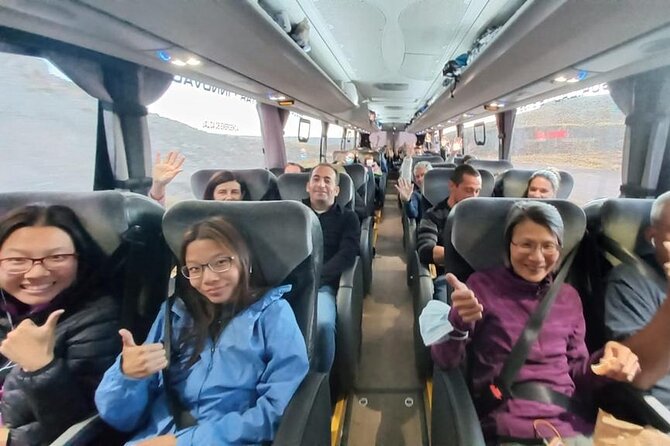
I like the practical comfort here: an air-conditioned bus with charging points, reading lights, and a bilingual guide. I also like the timing, with a 1:15 pm departure that lets you spend the morning in Chivay before crossing the high plateau. The main drawback is that the ride can run longer than the advertised six and a half hours, especially if road construction slows traffic. Also, bring extra water and snacks because the included refreshments may not always be offered.
In This Review
- Key points at a glance
- Why this is more than a bus ride
- Meeting in Chivay after a relaxed morning
- Abra Patapampa and the volcanoes above Chivay
- Tocrapampa and the search for wild camelids
- Patahuasi in Aguada Blanca National Reserve
- Lagunillas and the highland lakes
- What the bus adds to a long mountain crossing
- The guide and the group size
- Is $41.03 a fair price?
- Who should book this Chivay to Puno transfer?
- My practical advice before departure
- Should you book it?
- FAQ
- Where does the Chivay to Puno tour begin?
- How long does the trip from Chivay to Puno take?
- How many sightseeing stops are included?
- What can I see at Abra Patapampa?
- Are food and drinks included?
- Is Wi-Fi available on the bus?
- Can the bus drop me at my hotel in Puno?
Key points at a glance
- Abra Patapampa reaches a high Andean viewpoint: Look across the volcanoes Ampato, Sabancaya, Hualca Hualca, and Mismi, linked to the source of the Amazon River.
- Tocrapampa brings you close to native camelids: Llamas and alpacas graze nearby, while vicuñas may appear if luck is on your side.
- Patahuasi is the useful comfort stop: Buy a hot herbal drink, use the restroom, and browse local crafts in the Aguada Blanca National Reserve.
- Lagunillas is the best photo stop: Small high-altitude lakes reflect the sky, with Andean flamingos and other birds appearing by season.
- The afternoon departure saves your morning: Meet between 12:30 and 1:10 pm beside the church in Chivay’s main square, then leave around 1:15 pm.
- The fare is reasonable for a sightseeing transfer: At $41.03 per person, you get transport, a guide, four stops, and possible hotel delivery in central Puno.
Why this is more than a bus ride
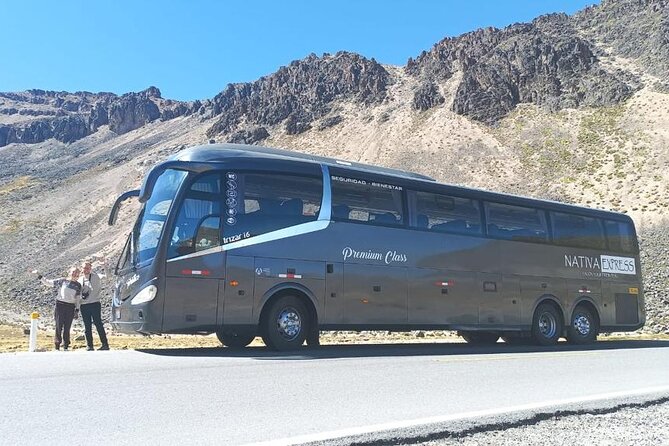
The road from Chivay to Puno crosses some of Peru’s most open and remote highland country. It is a place of volcanoes, pale grasslands, small lakes, wild camelids, and weather that can change quickly.
A regular bus would get you there. This service gives you reasons to get off the bus along the way. The stops are short, but they break up the journey and add real value to a route that you need to take anyway.
The group can reach up to 40 people, so this is not a private outing. Still, a professional Spanish-English guide stays with the group and explains what you are seeing. That guidance matters most at places such as Abra Patapampa, where the names of the volcanoes and the story of the apachetas, small stone towers left as offerings by earlier travelers, add meaning to a quick viewpoint stop.
The trip takes about six hours and 30 minutes in normal conditions. It begins in the early afternoon and reaches Puno around 7:00 to 7:30 pm. A reported delay extended one journey to about seven and a half hours because of construction traffic, so I would avoid scheduling an important evening activity immediately after arrival.
More colca canyon tours in Chivay:
- 2-Day Tour Colca Canyon in Arequipa with end in Puno
★ 4.6 · 248 reviews - From Puno to Arequipa: 2 Days/1 Night Colca Canyon Tour
★ 3.6 · 83 reviews - Tour Fullday Colca Canyon with Breakfast and Typical Lunch
★ 4.3 · 35 reviews
Meeting in Chivay after a relaxed morning
The meeting point is the operator’s office beside the church in Chivay’s main square. The stated gathering window is 12:30 to 1:10 pm, with departure at about 1:15 pm.
This schedule works well if you have spent the morning exploring Chivay or returning from an early Colca Canyon outing. You do not need to rush out at dawn just to catch the bus. At the same time, you should arrive on time because the meeting window is fairly specific.
The transfer ends in Puno, and hotel delivery may be possible if your accommodation is in the historic center. That can be especially useful after a long ride. The information provided does not promise door-to-door delivery for every address, so confirm your hotel location when booking.
Abra Patapampa and the volcanoes above Chivay
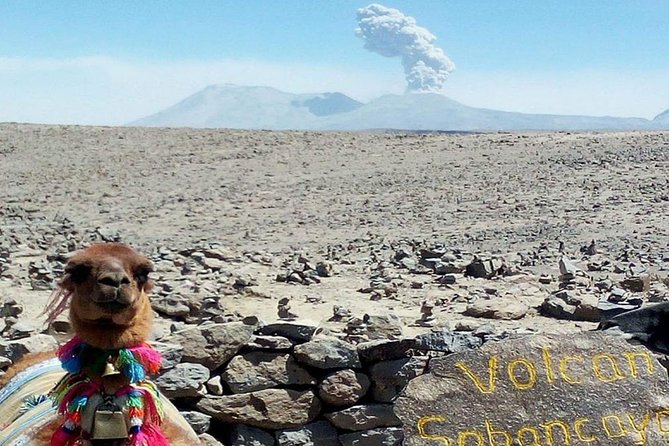
The first major stop is Abra Patapampa, also called the Mirador de los Andes. You have about eight minutes here, which is enough for a quick look and a few photographs, but not enough for a long walk or a slow picnic.
The viewpoint offers a broad view of several volcanoes:
- Ampato
- Sabancaya
- Hualca Hualca
- Mismi
- The Chila mountain range
Mismi is especially interesting because it is identified as the source area of the Amazon River. The stop also introduces you to apachetas, small piles or towers of stones associated with offerings made by people crossing the mountains.
At this altitude, the view can feel stark and enormous. The brief stop is a strength for people who want efficient sightseeing, but it may feel rushed if you need time to adjust to the elevation, take many photos, or study the distant peaks. Keep your jacket handy and move carefully. The stop is free, but the high mountain setting is the main attraction.
Tocrapampa and the search for wild camelids
Tocrapampa is a technical stop with a clear purpose: spotting South American camelids in their natural surroundings.
Llamas and alpacas commonly graze in the area. Vicuñas are less predictable, but the possibility of seeing them adds interest. They are valued for their exceptionally fine and costly fiber, and they look noticeably slimmer and more delicate than domesticated llamas and alpacas.
This stop is less about a formal attraction and more about paying attention to the roadside. You may need to scan the open grassland rather than expect animals to gather in one carefully arranged viewing area. The guide can help explain the difference between the animals, which is useful if you have not spent time in the Andes before.
Because the stop is described as a technical pause rather than a timed sightseeing visit, the exact amount of time here is not specified. Have your camera ready, but keep your expectations sensible. Wildlife sightings are never guaranteed.
Same valley, a completely different kind of day:
- From Arequipa Trek : 2-Days of Hiking in the Colca Canyon
★ 4.5 · 35 reviews - From Arequipa: Fullday Tour Colca Canyon + Transfer To Puno
★ 4.4 · 17 reviews - From Arequipa: One Day Trip to Colca Canyon Ending in Puno
★ 4.0 · 14 reviews - From Arequipa: Tour Colca Canyon 2 Days with End in Puno
★ 4.2 · 12 reviews
Patahuasi in Aguada Blanca National Reserve
Patahuasi, also known as Pampa Cañahuas, is the most practical stop on the route. It lies in the Aguada Blanca National Reserve, behind Chachani Volcano, and gives you about 15 minutes to stretch, use the restroom, buy something, and take in the highland surroundings.
This is where you can look for more llamas, alpacas, and vicuñas. With luck, you might spot foxes or guanacos in the distance. Again, these are possibilities rather than promises.
The stop is also known for hot drinks made with local herbs such as chachacoma and muña. These drinks are not listed as part of the included refreshments, so expect to pay if you choose one. You can also browse crafts and souvenirs.
The restroom is an important detail. Six and a half hours on a mountain road is much easier when a proper break is built into the route. The 15-minute stop is short, so decide quickly if you want a drink, a restroom visit, photos, or shopping. You may not have time for all four.
Lagunillas and the highland lakes
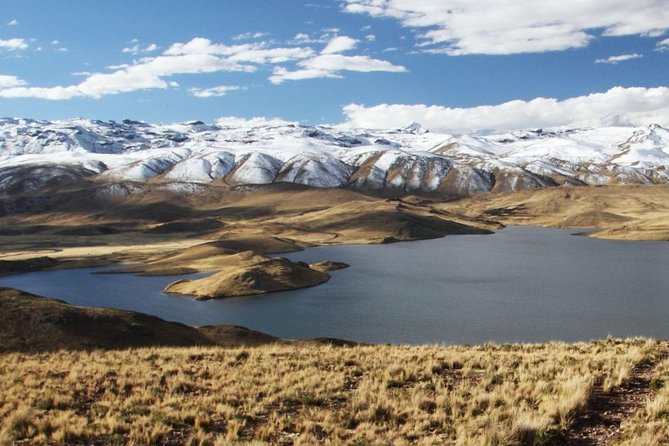
Lagunillas is the final scenic stop and likely the most photogenic. From the viewpoint, you see a group of small lakes that can reflect the sky like mirrors.
The lakes are also habitat for Andean flamingos and other birds, depending on the season. Their presence gives the stop a bit of wildlife interest, but bird sightings are not guaranteed. Bring a phone or camera with enough battery, since the view is designed for quick photographs.
This is a good example of why the transfer earns more than a basic point-to-point bus fare. You are not detouring to a major attraction or spending hours on a trail. Instead, you get a short, well-placed pause at a memorable natural setting.
As with Abra Patapampa, the stop lasts about 15 minutes. That is enough to step out, take photos, and enjoy the air, but not enough for extended birdwatching. If you want a slow nature experience, this is not the right tour. If you want a scenic break during a necessary transfer, it works well.
What the bus adds to a long mountain crossing
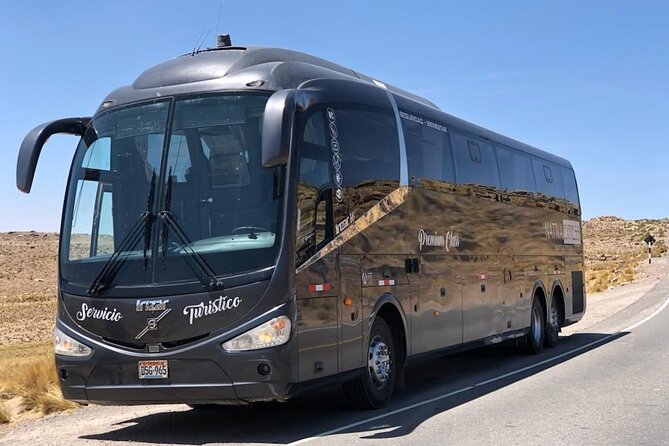
The bus is described as air-conditioned, with heating available, Wi-Fi, an onboard chemical toilet depending on the vehicle, individual reading lights, and charging points for phones, tablets, and laptops.
Those features matter on a route of this length. A reading light lets you rest or read without disturbing the person beside you. Charging points protect you from arriving in Puno with a dead phone. Heating and air-conditioning are useful because high-altitude temperatures can change quickly.
The onboard toilet is listed as dependent on the type of vehicle, so do not treat it as a guaranteed feature without checking the bus assigned to your departure. Patahuasi provides another restroom opportunity.
Wi-Fi is also advertised, but I would not plan a workday around it. One passenger found that Wi-Fi, bottled water, and snacks were not offered during the ride, despite being described as included. Service may vary, but the sensible approach is to download anything you need before departure and carry your own water.
A bottle of water is listed among the inclusions, along with snacks and coffee in the main tour description. Since the actual delivery of those items may be inconsistent, pack a small supply. You can buy drinks at stops, but prices may be higher than in town.
The guide and the group size
A professional bilingual guide in Spanish and English is included. The guide’s role is useful at the viewpoints, where a quick explanation can turn a distant peak or animal into something you remember.
The group may include up to 40 people. That size keeps the price down, but it also affects the rhythm of the stops. Getting everyone off the bus, hearing instructions, and returning on time takes coordination.
The strongest part of the service is the guide’s practical help. The tour includes assistance with onward arrangements and accommodation questions, which can be valuable when you are arriving in Puno after dark. A direct account described the guide as especially helpful in sorting out lodging and onward connections.
Do not expect a private guide who can linger at every stop. This is a shared transfer with commentary and organized pauses. You get structure and support, not a flexible personal schedule.
Is $41.03 a fair price?
At $41.03 per person, the service sits in a useful middle ground. You are paying more than a basic bus ticket, but you are also getting four stops, a bilingual guide, air-conditioning, possible Wi-Fi, charging facilities, and possible delivery to a central Puno hotel.
The value is strongest if you already need to travel from Chivay to Puno. In that case, the sightseeing stops add meaning without requiring another full-day excursion.
The value is weaker if you mainly want the fastest possible arrival. A construction delay can turn the ride into a seven-and-a-half-hour day, and the fixed stops mean you cannot simply skip them to save time.
For most people, the fare is reasonable because transport and sightseeing are combined. Just budget for extra drinks or food in case the included refreshments are not available.
Who should book this Chivay to Puno transfer?
I would choose this for anyone who wants a practical connection between the Colca area and Puno without losing the scenery along the way.
It suits you especially well if you:
- Want to see volcanoes, camelids, and highland lakes in one afternoon
- Prefer a guided transfer to navigating the route alone
- Value charging points, air-conditioning, and a possible onboard toilet
- Are staying in Puno’s historic center
- Have a flexible evening after arrival
- Like short photo stops rather than long hikes
It is less suitable if you need guaranteed Wi-Fi, dependable snacks, or a precise arrival time. It is also not ideal for someone who dislikes high-altitude roadside stops or prefers a private vehicle with complete control over timing.
The cancellation terms are forgiving if your plans change: cancel at least 24 hours before departure for a full refund. Changes made within 24 hours are not accepted, and poor weather can lead to a new date or a full refund.
My practical advice before departure
Bring a warm layer, water, a few snacks, and a fully charged phone. Even with heating and air-conditioning, the mountain stops can feel cold, and the advertised refreshments may not appear.
Download work files, maps, music, or films before leaving Chivay. Wi-Fi is listed, but one passenger could not use it, so treat it as a bonus rather than a service you need.
Keep small purchases in mind at Patahuasi, especially if you want a hot muña or chachacoma drink, crafts, or a souvenir. Use the restroom there even if you do not think you need to. The next stretch of road may be long.
Finally, leave your evening open in Puno. The planned arrival is around 7:00 to 7:30 pm, but road construction or other delays can add an hour.
Should you book it?
Book this transfer if you want your necessary journey from Chivay to Puno to include real sightseeing. The volcano viewpoint, camelid stops, Patahuasi break, and Lagunillas lakes give the route genuine interest, while the bilingual guide and possible central-hotel delivery make arrival easier.
Skip it if your priority is speed, guaranteed onboard refreshments, or dependable Wi-Fi for work. For most people with a flexible evening and modest expectations about the extras, $41.03 is a fair price for a comfortable, guided crossing of the Andes.
FAQ
Where does the Chivay to Puno tour begin?
Meet at the operator’s office beside the church in the main square of Chivay. The meeting window is from 12:30 to 1:10 pm, with departure at about 1:15 pm.
How long does the trip from Chivay to Puno take?
The planned duration is approximately six hours and 30 minutes. Arrival is expected around 7:00 to 7:30 pm, though construction traffic or other delays can make the trip longer.
How many sightseeing stops are included?
The route includes four stops: Abra Patapampa, Tocrapampa, Patahuasi, and Laguna Lagunillas.
What can I see at Abra Patapampa?
You can view the volcanoes Ampato, Sabancaya, Hualca Hualca, and Mismi, along with the Chila mountain range. The stop also includes views of traditional apachetas, small stone towers made as offerings.
Are food and drinks included?
A bottle of water, snacks, coffee, and other complimentary refreshments are listed as included. Since these items may not always be offered, bring extra water and snacks.
Is Wi-Fi available on the bus?
Free Wi-Fi is listed as an inclusion. However, service may not always be available, so download anything important before leaving Chivay.
Can the bus drop me at my hotel in Puno?
Hotel delivery may be possible if your accommodation is in Puno’s historic center. Confirm the exact arrangement for your hotel when booking.
Just added around Chivay
- Tour Fullday Colca Canyon with Breakfast and Typical Lunch★ 4.3 · 35 reviews
- Offer Price: Colca Canyon One Day in Arequipa with Breakfast★ 4.5 · 4 reviews
- Full Day Trip to Colca Canyon from Arequipa ending in Puno★ 4.5 · 4 reviews
- Full day excursion to Colca Canyon★ 4.2 · 6 reviews
- From Puno: 2-Day Tour to Colca Canyon ending in Arequipa★ 4.1 · 4 reviews
- From Arequipa: Tour Colca Canyon 2 Days with End in Puno★ 4.2 · 12 reviews
- From Arequipa Trek : 2-Days of Hiking in the Colca Canyon★ 4.5 · 35 reviews
- From Arequipa: One Day Trip to Colca Canyon Ending in Puno★ 4.0 · 14 reviews
Colca Canyon Tours, compared.
2-Day Tour Colca Canyon in Arequipa with end in Puno
Read our review →
Browse the lists this tour appears in