
Reviewed · COLCA CANYON TOURS
From Puno: 2-Day Tour to Colca Canyon ending in Arequipa
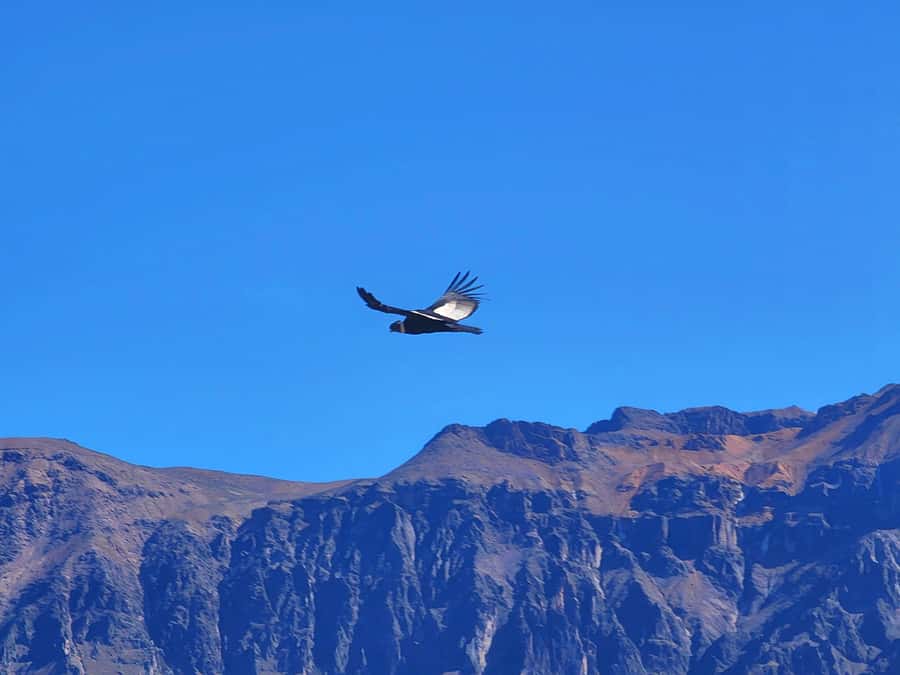
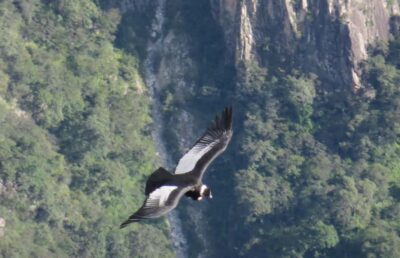
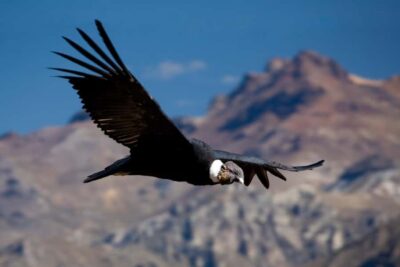
The Andean condor is the star here, but the road to Cruz del Cóndor is nearly as memorable. Starting in Puno, you cross high plains dotted with vicuñas, llamas, and alpacas before reaching Chivay and the great canyon beyond. The condor viewing is the main prize, with the bird often sweeping past the canyon rim on broad wings.
I like two things right away: this tour ends in Arequipa, saving you a return trip to Puno, and it gives you a useful overnight in Chivay instead of forcing Colca Canyon into one exhausting day. The La Calera hot springs are another smart touch after hours on the road.
The tradeoff is the altitude and the early start. You leave Puno at 6:00 a.m., reach Patapampa at 4,900 meters, and spend much of the first day in a vehicle. You must also arrange your own Chivay hotel and pay separately for several meals and entrance fees.
In This Review
- Key points to know before booking
- Why the Puno to Arequipa route works well
- The 6:00 a.m. departure from Puno
- Lagunillas and the high plains
- Salinas and Aguada Blanca National Reserve
- Patapampa at 4,900 meters
- Chivay, your overnight base
- La Calera hot springs after the road trip
- Maca and Antahuilque on the second morning
- Cruz del Cóndor and the great morning sight
- Returning through Chivay to Arequipa
- Comfort, accessibility, and what to pack
- Who will get the most from this tour
- Should you book the Puno to Colca Canyon trip?
- FAQ
- Does the tour start in Puno and finish in Arequipa?
- Is accommodation in Chivay included?
- Are the Colca Canyon and La Calera entrance fees included?
- Are meals included?
- What languages does the guide speak?
- Can I bring a large suitcase?
Key points to know before booking
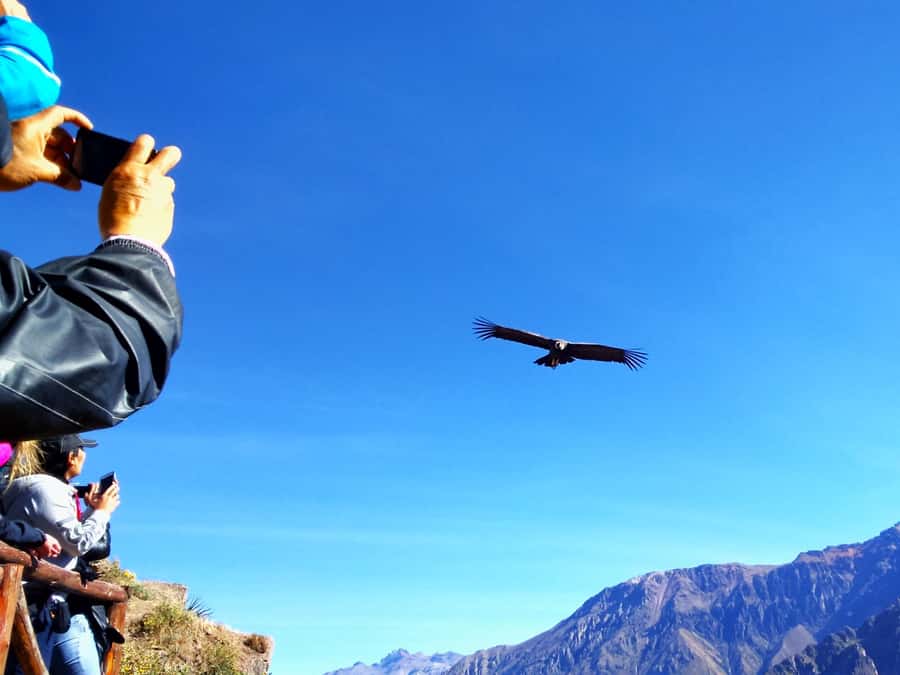
- Cruz del Cóndor is the main event: You visit early on the second day, when the famous Andean condors may rise on the morning air.
- The route reaches 4,900 meters: Patapampa is a spectacular high point, but warm clothes and sensible pacing matter.
- You sleep in Chivay, not Arequipa: Your accommodation is not included, so reserve a Chivay hotel before departure.
- The tour finishes in Arequipa: Arrival is expected around 5:00 p.m. on day two, useful if you are connecting with an Arequipa stay.
- Several extras cost more: Colca Canyon admission, La Calera entry, lunches, and dinner are not included in the base price.
- Wildlife comes before the canyon: The Salinas and Aguada Blanca Reserve offers a good chance to see vicuñas, llamas, and alpacas in open country.
Why the Puno to Arequipa route works well
At $99 per person, this is best understood as a practical transfer with sightseeing, not simply a two-day excursion that returns you to your starting point. You are already moving from Puno toward Arequipa, and the tour turns that necessary journey into a visit to Colca Canyon.
That saves both time and a separate transport fare. It also gives you a night in Chivay, the main town used for access to the canyon. I like this arrangement for a South America trip with a tight schedule, especially if you want to visit Arequipa next and do not want to retrace the road to Puno.
The price is attractive, but it is not an all-inclusive $99. You need to add a Chivay hotel, the Colca Canyon entrance fee, and the entry charge for La Calera if you want to use the hot springs. Lunch on both days and the optional dinner are also extra.
That is not a problem as long as you budget honestly. The core price covers hotel pickup in Puno, transport through the route, a professional bilingual guide, and downtown drop-off in Arequipa. For a two-day journey between two major Peruvian destinations, that is solid value.
More colca canyon tours in Chivay:
- 2-Day Tour Colca Canyon in Arequipa with end in Puno
★ 4.6 · 248 reviews - Turist Bus Colca Canyon (Chivay) To Puno
★ 5.0 · 83 reviews - From Puno to Arequipa: 2 Days/1 Night Colca Canyon Tour
★ 3.6 · 83 reviews
The 6:00 a.m. departure from Puno
The first morning begins early, with pickup at your Puno hotel at 6:00 a.m. You should be ready in the lobby rather than waiting upstairs, and you should expect the day to feel long. If you are staying in an Airbnb, the guide will contact you through WhatsApp when the vehicle is close.
The early departure is not just a scheduling quirk. It allows time for several stops before Chivay and leaves room for the hot springs in the afternoon. It also helps place you near the canyon in time for the second morning’s visit to Cruz del Cóndor.
The transport can carry large suitcases, which makes this route especially useful if you are checking out of Puno and checking into Arequipa. You do not need to travel with only a small daypack, although you will want warm layers and comfortable shoes close at hand.
The guide service is offered in English and Spanish. Communication and punctual operation were especially praised, and guide Rahul was singled out by name for his work. That is useful information if you care about clear instructions during a long route with many stops.
Lagunillas and the high plains
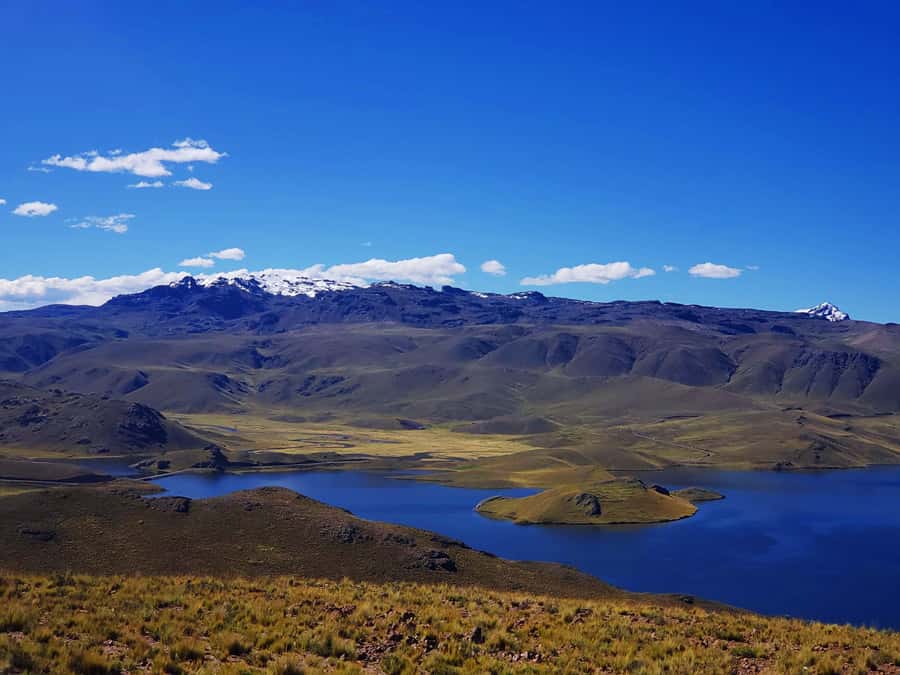
The first scenic pause is at the Lagunillas viewpoint. You get broad views over the South American highlands and a quiet lagoon, a good introduction to the open country between Puno and the Colca area.
This is not a stop built around a long walk or a formal attraction. Its value comes from the change in scale. Near Puno, you may be focused on the city and Lake Titicaca excursions. Here, the road opens into wide, spare scenery, with the lagoon adding a calm patch of color.
Keep your camera ready, but do not expect every stop to last the same amount of time. The supplied schedule does not give exact stop lengths, so the day will have some flexibility depending on road conditions and the group.
The altitude is already part of the experience. Bring warm clothing even if Puno feels mild when you leave. Wind can make viewpoints feel much colder than expected, and you will have fewer distractions than in a city, so the cold gets your attention quickly.
Salinas and Aguada Blanca National Reserve
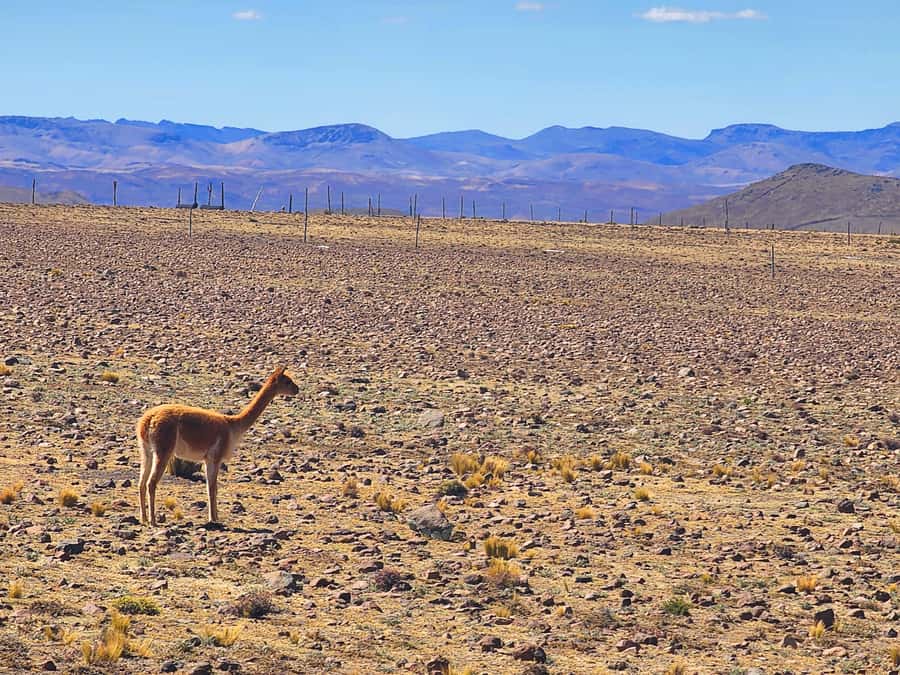
The route continues through the Salinas and Aguada Blanca National Reserve. This is one of the most rewarding sections for animal lovers because you may see vicuñas, llamas, and alpacas moving through their natural habitat.
The distinction matters. You are not visiting a small animal display or a controlled farm stop. The appeal is seeing Andean camelids in open country, where they belong. Vicuñas are especially valuable to spot because they are wild relatives of the llama and alpaca.
Do not treat the reserve as a guaranteed wildlife show. Animals are free-ranging, so sightings depend on the day and the route. Still, the chance to see several species gives this transfer more substance than a direct bus ride.
I would keep your phone or camera accessible, but also take time to look beyond the road. The reserve is part of the journey’s meaning. It shows the high Andes as a working natural region, not just a backdrop for the canyon.
A few more Chivay trips to weigh up
- From Arequipa Trek : 2-Days of Hiking in the Colca Canyon
★ 4.5 · 35 reviews - From Arequipa: Tour Colca Canyon 2 Days with End in Puno
★ 4.2 · 12 reviews - Arequipa: 2-Day Colca Canyon Classic Tour return to Arequipa
★ 4.6 · 10 reviews - Arequipa: 2-day Colca Canyon Trekking, Ending in Puno
★ 4.8 · 8 reviews
Patapampa at 4,900 meters
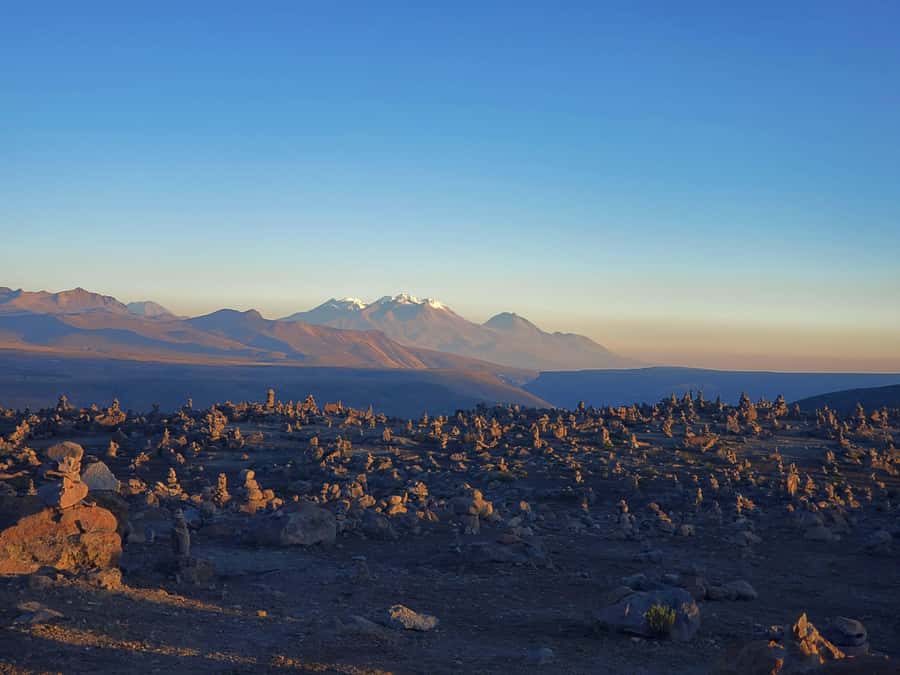
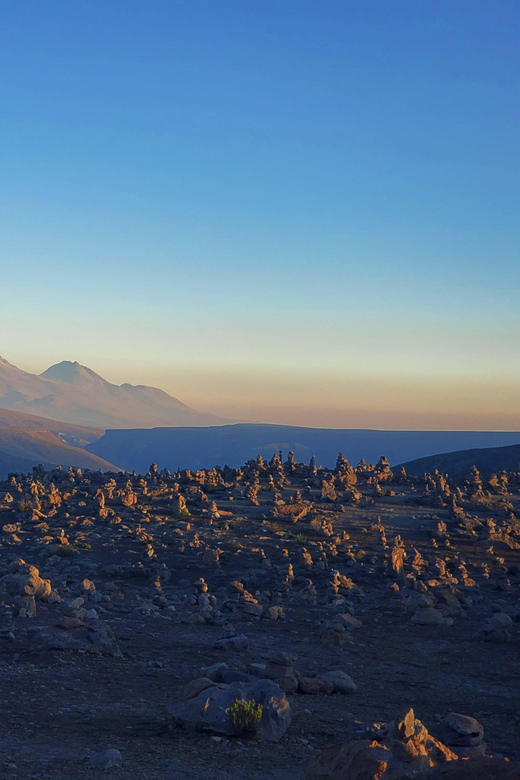
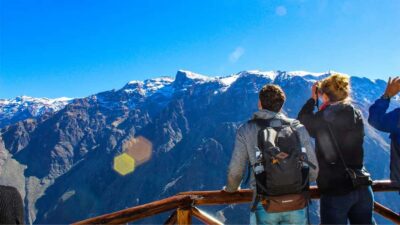
The highest point comes at Patapampa, at 4,900 meters. From here, you get impressive views toward the volcanic mountain range, and the stop offers one of the clearest reminders that this tour is taking you into serious altitude.
The view is memorable, but the physical conditions deserve respect. At this height, a short walk can feel harder than expected. Move slowly, avoid rushing up steps or slopes, and give yourself time to breathe. The provided advice to bring warm clothing is not a formality here.
Patapampa can also be the point where altitude-sensitive visitors realize they need to take the rest of the trip gently. The tour does not describe a strenuous hike, but the road itself reaches a very high pass. Comfortable shoes are enough for the planned stops, yet sturdy footwear will make viewpoint visits easier.
This is one reason the two-day format is better than trying to rush everything into a single outing. You have time to reach Chivay, settle into your hotel, and rest before the canyon morning.
Chivay, your overnight base
After Patapampa, you continue to Chivay. The schedule includes an optional lunch before transfer to your hotel, but you are responsible for booking the accommodation yourself.
This is the most important planning detail in the whole experience. Do not assume a room is included because the activity lasts two days. Reserve a Chivay hotel for the night between the two touring days, and confirm that the property can receive the transfer.
The standard drop-off arrangement does not include several canyon-area properties, including Colca Lodge, Casitas del Colca, El Refugio, and similar establishments. If you choose one of those hotels, the staff can help arrange a taxi, but you should treat that as an extra transport step rather than part of the normal service.
Chivay is a practical overnight point because it puts you closer to Cruz del Cóndor for the early start on day two. Your choice of hotel will affect how convenient the morning feels, so location matters more than fancy facilities for this particular trip.
La Calera hot springs after the road trip
The afternoon visit to La Calera hot springs is designed for recovery. After a morning of high viewpoints and vehicle time, warm water gives your legs and shoulders a chance to relax.
The entrance fee is not included in the base price, but it is available as an add-on during booking. I would consider adding it if you enjoy hot springs and want a gentler end to the first day. If you are watching your budget, you can skip it, but you would lose one of the tour’s most pleasant contrasts: cold, high mountain air followed by hot water.
The schedule does not promise a private or quiet setting, so go for the chance to soak rather than expecting a secluded retreat. Bring what you need for the visit and keep your other belongings secure according to your guide’s instructions.
Dinner is also optional and can include a show of traditional dances. That gives you an easy evening plan in Chivay, though it adds another charge. You can choose it for convenience and entertainment, or make your own dinner plans if you prefer a quieter night.
Maca and Antahuilque on the second morning
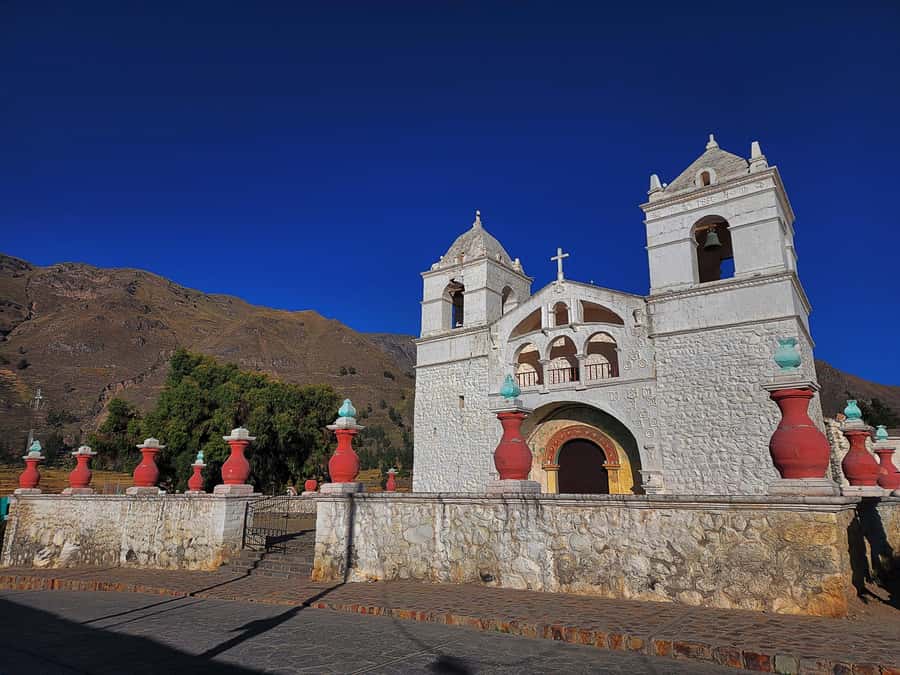
Day two starts early again as you travel toward Colca Canyon. The first stop is the town of Maca, where you visit a colonial church.
Maca offers a small-town pause before the canyon viewpoints. The church gives the morning a cultural element, so the route is not only about scenery and wildlife. Since the stop is part of a guided schedule, follow the meeting instructions closely and do not wander too far from the group.
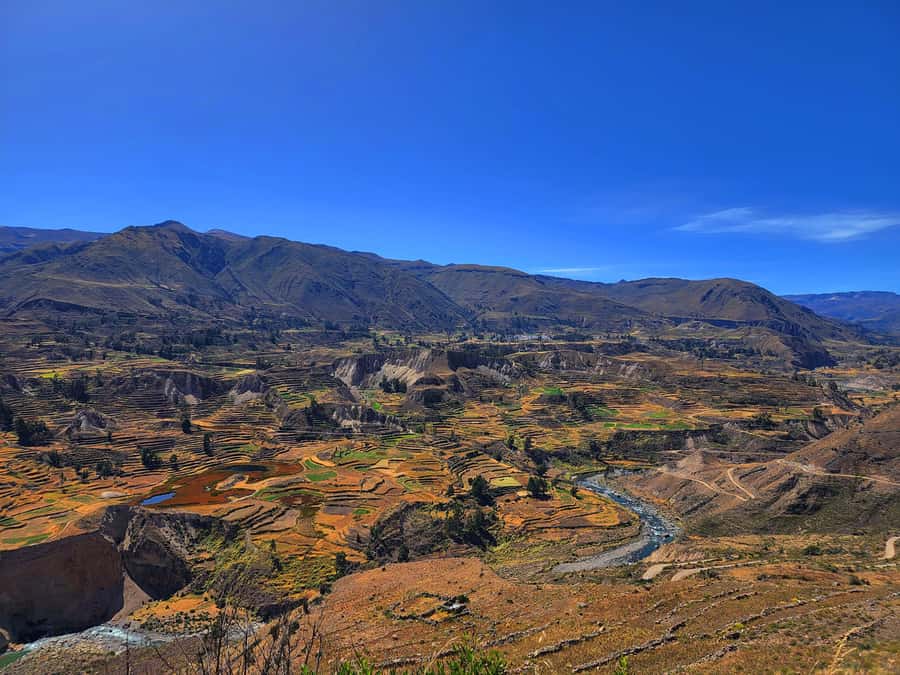
Next comes the Antahuilque viewpoint. Here you can see impressive pre-Inca terraces cut into the surrounding hills. These terraces show how people shaped steep Andean terrain for farming long before the Inca period.
The viewpoint is valuable because it adds context to the canyon. Colca is not an empty natural space. Its slopes and valleys have supported settled communities and agriculture, and the terraces help you read the area as a place where people have worked with difficult ground for centuries.
Cruz del Cóndor and the great morning sight
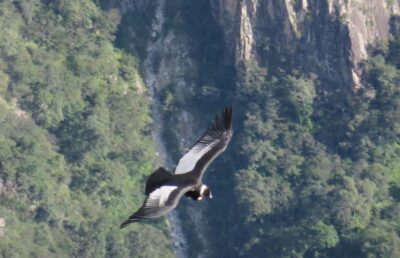
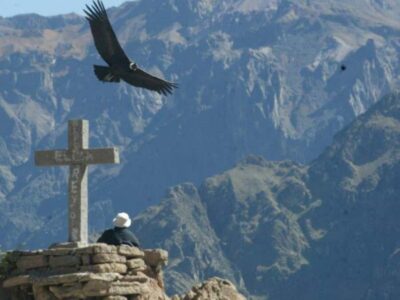
Cruz del Cóndor is the highlight of the second day. At this famous viewpoint, you watch for the Andean condor, described as the largest flying bird in the world, as it rides rising air currents along the canyon.
The sight is powerful because of the bird’s scale and flight style. You may see a condor glide with very little visible effort, passing along the canyon wall or rising from below the rim. The experience depends on natural conditions, so no guide can promise a precise number of birds or a perfect close approach.
That uncertainty is part of the appeal. You are not watching a staged performance. You are waiting at a known viewing place for a wild bird to use the air above the canyon.
Bring warm layers for this morning stop. The canyon rim can feel cold, and you will likely spend time standing still while watching the sky. A camera with a strong zoom may help, but keep your eyes up too. The best moment can pass while you are adjusting a phone.
Cruz del Cóndor also rewards patience. The schedule has to keep the group moving, but the stop is intended for the condor sighting, not just a quick photograph beside a sign. Listen for the guide’s instructions so you know where to gather and when to return to the vehicle.
Returning through Chivay to Arequipa
After Cruz del Cóndor, the route returns to Chivay, where you can buy an optional lunch. Lunch on the second day is not included, so plan for that cost when comparing the base price with other options.
From Chivay, you continue toward Arequipa. The estimated arrival is around 5:00 p.m., with drop-off in downtown Arequipa. That timing is useful, but it is still an estimate, so avoid booking a nonrefundable evening connection that leaves very soon after arrival.
The end point is one of the tour’s strongest practical features. You see Colca Canyon without needing to return to Puno, then arrive in the city that many people use as their next base in southern Peru.
The day is long, and the final vehicle stretch may feel tiring after the early start. Still, the transfer is doing useful work for your wider trip. You are not spending a third day retracing roads simply to collect your luggage.
Comfort, accessibility, and what to pack
The activity is listed as wheelchair accessible, but the route includes viewpoints, a hot springs visit, a colonial church, and a high-altitude stop. If you use a wheelchair, confirm the practical details of each stop with the provider before booking, especially since the supplied information does not specify surface conditions or vehicle boarding arrangements.
For most visitors, packing is simple:
- Comfortable shoes for viewpoints and short walks
- Warm clothing for Lagunillas, Patapampa, and Cruz del Cóndor
- A phone with WhatsApp if you are staying in an Airbnb
- Space for your luggage, since large suitcases can be carried
Children under two travel free when seated on a parent’s lap. That is helpful for families, although the two early starts and long road sections may still make this a demanding choice with very young children.
The flexible booking terms also reduce some risk. You can cancel up to 24 hours before departure for a full refund, and you can reserve now while paying later. Those terms are useful when your wider Peru plans are still moving around.
Who will get the most from this tour
I would choose this tour if you want a direct, organized link from Puno to Arequipa and you want Colca Canyon included along the way. It suits people who value a clear schedule, bilingual guiding, wildlife sightings, and a major natural attraction without arranging every road transfer alone.
It also fits travelers carrying full luggage between cities. The vehicle can handle large suitcases, and the downtown Arequipa drop-off keeps the final transfer simple.
I would think twice if you dislike early starts, long vehicle journeys, or high altitude. The experience is not a relaxed resort break. It asks you to be ready at 6:00 a.m., spend much of the day on the road, and handle a 4,900-meter viewpoint.
You should also compare the true cost before booking. Add your Chivay hotel, canyon admission, hot springs entry, meals, and any taxi required for an excluded canyon hotel. The $99 starting price remains reasonable, but the final amount will be higher.
Should you book the Puno to Colca Canyon trip?
Book it if the one-way route is the main attraction. You get high Andean scenery, free-ranging camelids, Patapampa, a hot springs option, pre-Inca terraces, and the condor viewpoint, then finish in Arequipa rather than returning to Puno.
The strongest reasons to go are the useful routing and the well-regarded organization. Clear communication, punctual operation, and a guide such as Rahul can make a long two-day road trip much easier to manage.
Skip it if you want a slow canyon stay with lots of free time, or if you would rather choose your own transport, meals, and hotel at every stage. For an active transfer with major sights built in, this is a sensible and fairly priced choice. Just reserve your Chivay room first, budget for the extras, and pack for cold air at altitude.
FAQ
Does the tour start in Puno and finish in Arequipa?
Yes. Pickup is provided from hotels in Puno city, and the activity ends with drop-off in downtown Arequipa on the second day. Arrival is estimated at around 5:00 p.m.
Is accommodation in Chivay included?
No. You must book your own accommodation in Chivay for the night between the two touring days.
Are the Colca Canyon and La Calera entrance fees included?
No. The Colca Canyon admission and La Calera hot springs entry are available as add-ons during booking.
Are meals included?
No. Lunch on day one, lunch on day two, and dinner on day one are not included. Each is available as an optional add-on.
What languages does the guide speak?
The live guide service is available in English and Spanish.
Can I bring a large suitcase?
Yes. The transport is equipped to carry large suitcases during the two-day excursion.
Just added around Chivay
- Tour Fullday Colca Canyon with Breakfast and Typical Lunch★ 4.3 · 35 reviews
- Offer Price: Colca Canyon One Day in Arequipa with Breakfast★ 4.5 · 4 reviews
- Full Day Trip to Colca Canyon from Arequipa ending in Puno★ 4.5 · 4 reviews
- Full day excursion to Colca Canyon★ 4.2 · 6 reviews
- From Arequipa: Tour Colca Canyon 2 Days with End in Puno★ 4.2 · 12 reviews
- From Arequipa Trek : 2-Days of Hiking in the Colca Canyon★ 4.5 · 35 reviews
- From Arequipa: One Day Trip to Colca Canyon Ending in Puno★ 4.0 · 14 reviews
- From Arequipa: Fullday Tour Colca Canyon + Transfer To Puno★ 4.4 · 17 reviews
Colca Canyon Tours, compared.
2-Day Tour Colca Canyon in Arequipa with end in Puno
Read our review →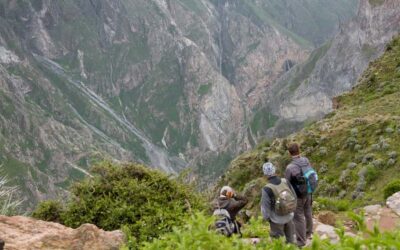
Browse the lists this tour appears in