
Reviewed · COLCA CANYON TOURS
Colca Canyon Plus
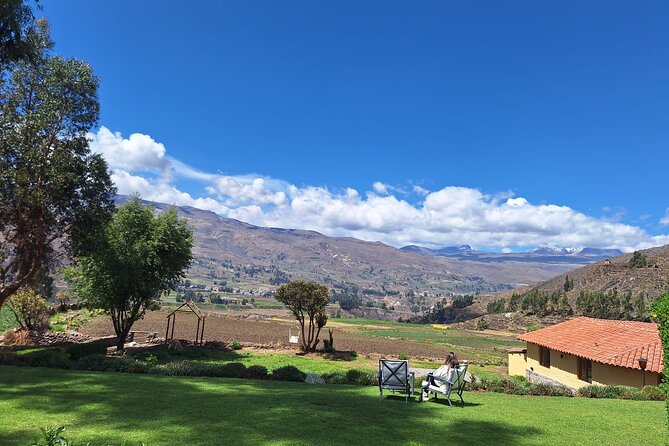
Colca Canyon is the main event here, but the road to it is half the pleasure. You’ll cross the Salinas y Aguada Blanca Reserve, spot wild vicuñas, pass wetlands above 4,400 meters, and reach Abra Patapampa at 4,910 meters. I like that this is not just a quick condor photo stop. You get a night in the Colca Valley and time in Coporaque, where local food, clothing, and village life are part of the experience.
I also like the small group of no more than 14 people and the overnight stop outside the busiest part of Chivay. Guides such as Antonio San Cristobal, Mayan, and others have been praised for clear explanations and a friendly manner. The main drawback is altitude: this is a demanding two days, and lunch, dinner, and the $22 Cruz del Condor entrance fee are extra.
In This Review
- Key Points Before You Book
- Why Two Days Works Better Than a Colca Canyon Dash
- Crossing Salinas y Aguada Blanca to See Wild Vicuñas
- Puruña Stone Forest and a Local Andean Demonstration
- Abra Patapampa at 4,910 Meters
- Coporaque, Local Food, and a Quiet Night in the Valley
- Cruz del Cóndor and the Morning Flight of the Andes
- Pinchollo, Ancient Terraces, and the Return to Chivay
- What the $103.85 Price Really Covers
- Guides, Group Size, and the Human Side of the Trip
- Altitude, Comfort, and Who Should Choose This Tour
- Should You Book Colca Canyon Plus?
- FAQ
- How long is the Colca Canyon Plus tour?
- What is the highest point of the tour?
- Is the Cruz del Condor entrance fee included?
- Are meals included?
- Where do you stay overnight?
- How large is the tour group?
- Can I cancel for a full refund?
Key Points Before You Book
- Vicuñas in their natural habitat: Stop in Pampa Cañahuas, inside Salinas y Aguada Blanca National Reserve, at roughly 4,000 meters.
- High point at 4,910 meters: Abra Patapampa brings enormous Andean views, but altitude can affect even fit people.
- Overnight in Coporaque: Stay in a double or twin room at La Casa de Mamayacchi, with optional village activities and a walk.
- Condors at Cruz del Cóndor: Day two begins early, giving you time at the famous viewpoint and on a nearby canyon walk.
- A full-value package: Transport, professional guide, breakfast, and one hotel night are included for $103.85, while meals and the main viewpoint ticket are not.
- A compact group: The maximum of 14 people keeps the minibus experience more manageable than a large coach tour.
Why Two Days Works Better Than a Colca Canyon Dash
A one-day trip from Arequipa can show you the canyon, but it leaves little room for the villages and high-country stops that give this journey its character. This two-day version breaks up the long route with an overnight stay in Coporaque, allowing you to see the canyon from more than one angle.
The timing is still brisk. Day one includes long stretches on the road and reaches very high elevations. Day two starts early for the condors, then returns to Chivay for lunch before the drive back to Arequipa, arriving around 4 p.m.
I see the format as a good compromise. You do not need to arrange separate hotels, guides, and transport, yet you avoid treating the Colca Valley as a single quick lookout. The experience remains organized, but it gives you a taste of local life rather than only a series of roadside photos.
More colca canyon tours in Arequipa:
- From Arequipa: Colca Canyon Full-Day Guided Tour with Meals
★ 4.5 · 982 reviews - 2-Day Tour Colca Canyon in Arequipa with end in Puno
★ 4.6 · 248 reviews - From Arequipa: 2-Day Colca Canyon Trekking Tour
★ 4.8 · 243 reviews
Crossing Salinas y Aguada Blanca to See Wild Vicuñas
The first part of the journey moves through the Salinas y Aguada Blanca National Reserve. You begin with views of the Misti, Chachani, and Pichu Pichu volcanoes before reaching Pampa Cañahuas.
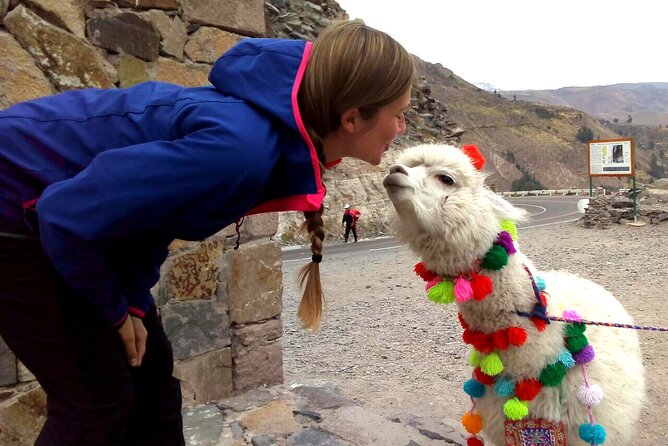
This is a useful first stop because the reserve is not simply a backdrop for the drive. The vehicle makes several stops to look for vicuñas, one of the four types of American camelids. Seeing these animals in their natural setting is more rewarding than meeting them in a staged photo area. Bring patience and keep your camera ready, since wildlife does not follow the guide’s schedule.
At roughly 4,000 meters, the air is already thin. You may feel fine, or you may notice a headache, shortness of breath, or fatigue. The tour requires a moderate fitness level, and that rating matters most here. Walk slowly, drink water, and do not treat the first morning as a race.
The stop lasts about two hours, including time for photos and the next short detour.
Puruña Stone Forest and a Local Andean Demonstration
The route takes a detour to the stone forest of Puruña. Its unusual rock formations give you another reason to leave the vehicle and stretch your legs. You also get wide views across this part of the reserve.
After returning to the main road, the group stops at a local restaurant. You can have mate de coca, use the restrooms, and watch a presentation on alpaca fiber work and Andean plants. This is a modest stop, but it adds useful context to the highland scenery. Alpaca fiber is part of everyday regional craft, and seeing how local women work with it helps connect the products you find in Peruvian markets with the people who make them.
The restaurant is also a practical pause before the highest point of the trip. Do not expect a full included meal here. The package includes breakfast, but lunch and dinner are your responsibility.
Abra Patapampa at 4,910 Meters
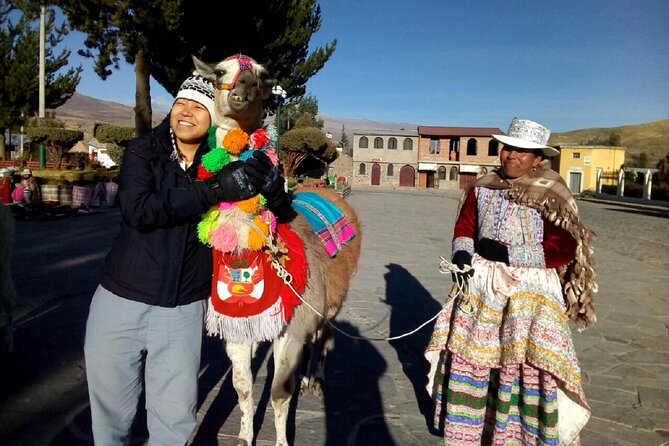
The road continues through Tocra, a high plain more than 4,400 meters above sea level. Look for lakes, wetlands, and wild birds, along with llamas and alpacas spread across the open country.
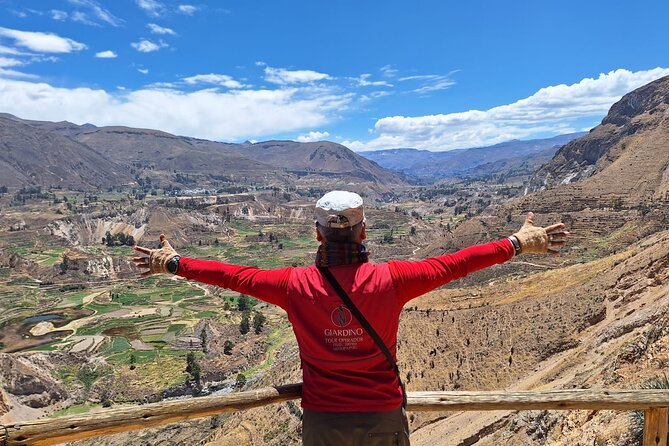
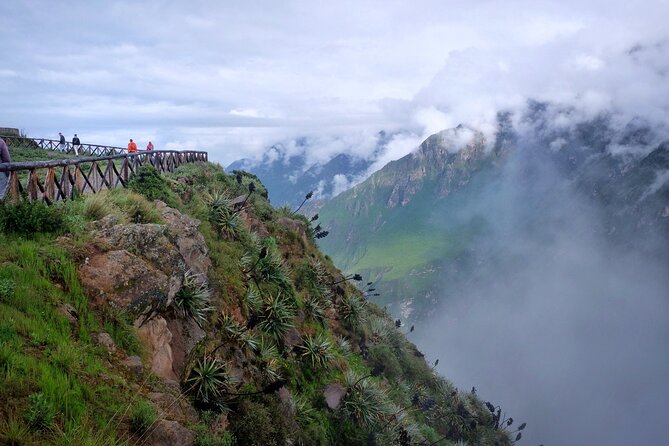
Then comes Abra Patapampa, also called the Viewpoint of the Andes. At 4,910 meters, it is the highest point of the tour. From here, you can look toward Ampato, Sabancaya, Hualca-Hualca, Mismi, and the Cordillera de Chila.
This is the kind of stop that looks easy on paper and feels different in person. You may only walk a short distance from the vehicle, yet the elevation can make small movements tiring. Keep your visit unhurried. The point is the huge view, not a strenuous hike.
The high point also explains why this itinerary suits people who want scenery but not a serious canyon trek. You will walk around Coporaque and near Cruz del Condor, but there is no long descent into the canyon listed here.
Same valley, a completely different kind of day:
- Tour to the Salinas Lagoon and National Reserve in Arequipa
★ 4.5 · 548 reviews - From Arequipa: Sillar Route Trek
★ 4.2 · 461 reviews - Arequipa: Chili River White Water Rafting with Hotel Pickup
★ 4.8 · 329 reviews - Walking tour in the Historic Center of Arequipa
★ 4.4 · 180 reviews
Coporaque, Local Food, and a Quiet Night in the Valley
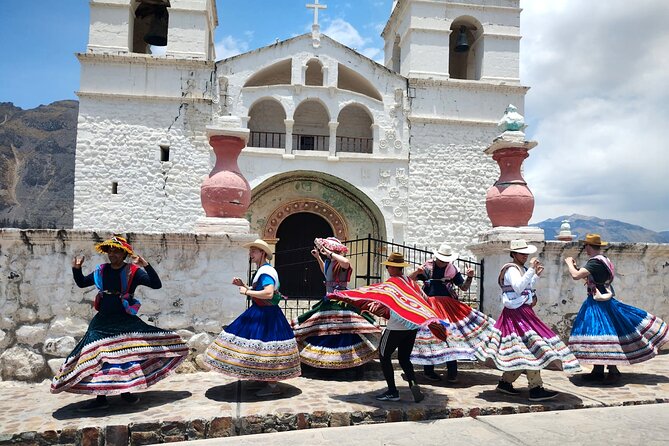
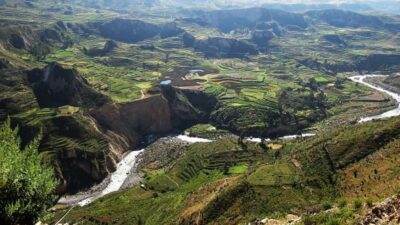
As you approach Chivay, the terraces of the Colca Valley begin to appear in bands of different colors. You make a short visit to Chivay Plaza, then continue along the right side of the canyon to Coporaque.
The overnight stay is at La Casa de Mamayacchi, in a double or twin room. The hotel’s location outside the busiest part of Chivay gives the evening a more rural feel. A well-positioned hotel makes a real difference after a long high-altitude day, especially when you do not have to pack and unpack again.
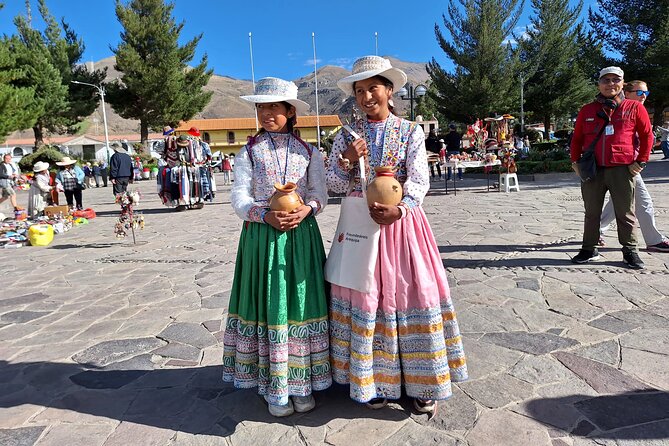
Lunch is free time at the lodge, and the guide can help you take part in activities offered there. These include learning to prepare a typical dish and trying traditional clothing from the Colca Valley. The details may vary with the day’s arrangements, but both activities offer more contact with local culture than another overlook would.
You can also join the guide for an optional walk through Coporaque and the nearby area. It takes about an hour and a half. I would decide only after seeing how your body handles the altitude. The walk is optional, so skipping it is sensible if you have a headache or feel worn out.
Thermal baths in town are available on request, with transport provided if needed. Since this is not automatic for every participant, ask the guide early if you want to use them.
Cruz del Cóndor and the Morning Flight of the Andes
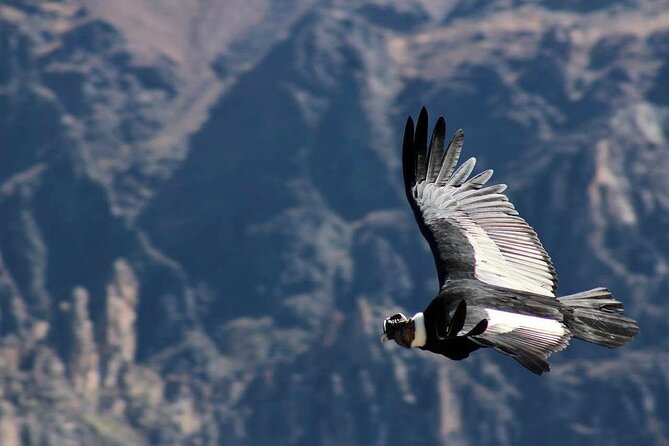
Day two begins with an early breakfast and a drive along the left side of the Colca Canyon to Cruz del Cóndor. The early start is necessary, but it also works in your favor because the morning is the central wildlife moment of the tour.
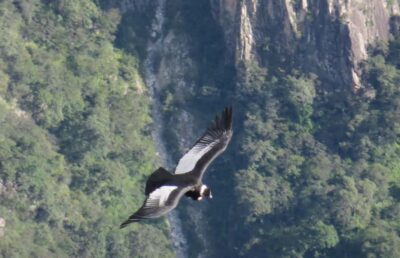
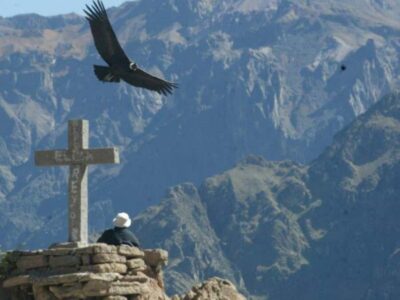
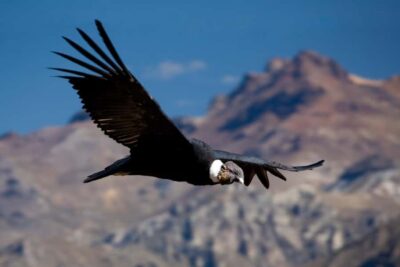
At the viewpoint, you have time to watch Andean condors glide through the canyon and take photographs. Their flight is the reason most people put Colca on their Peru itinerary, and this stop gives you a proper window rather than a rushed five-minute look.
After the main viewpoint, the guide leads a walk near the canyon for about an hour. This adds a better sense of the canyon’s scale. From the railing, you see the condors and the drop. On foot, you can pay more attention to the rock walls, terraces, and changing views around the rim.
The Cruz del Condor entrance fee is not included. Budget $22 per person for it. That is the only specific admission charge listed, but you should still keep some spending money available for meals and optional activities.
Pinchollo, Ancient Terraces, and the Return to Chivay
The return route includes the traditional village of Pinchollo and the Antahuilque viewpoint. Here, you can see terraces said to be about 1,500 years old. These agricultural terraces are one of the most important features of the Colca Valley because they show how people have worked the steep terrain over long periods.
The tour then stops at Choquetico, where you can see a litomaqueta, a model of the canyon terraces carved into rock. It is a small but useful visual aid. The canyon can be hard to understand from one viewpoint, and a carved model helps you read the shape of the valley.
The route continues through the traditional towns of Maca and Yanque before reaching Chivay around midday. You have free time for lunch there. Lunch is not included, so the price of the tour does not cover this meal or dinner the night before.
After lunch, you rejoin the vehicle for the drive back to Arequipa. Arrival is scheduled for about 4 p.m., followed by a transfer to your hotel.
What the $103.85 Price Really Covers
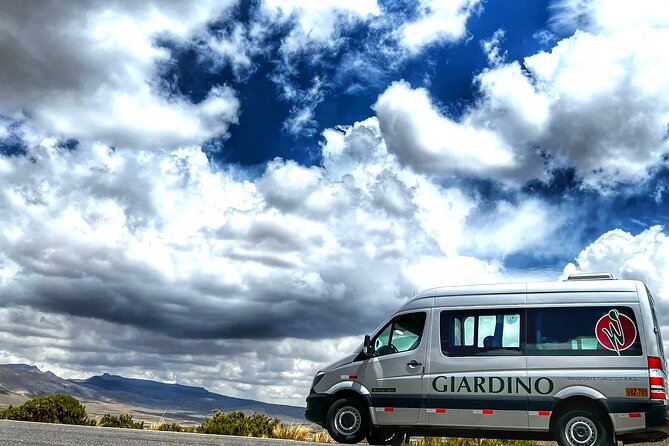
At $103.85 per person, this is a strong package if you value convenience. You receive tourist transportation, a professional guide, breakfast, and one hotel night. Organizing those pieces separately would take time, and the route is long enough that dependable transport matters.
The 14-person limit is another positive. A full-size bus can make highland stops feel slow and impersonal. A group capped at 14 should make it easier to hear the guide and handle short walks, though the exact vehicle comfort is not specified.
The advertised price is not your complete trip budget. Add $22 for the Cruz del Condor entrance, plus lunch on both days and dinner on day one. The optional thermal baths may also cost extra, though no amount is provided.
The tour is also offered with a possible transfer from Chivay to Puno on Lake Titicaca. You must consult the operator about that service. This could be useful if you are traveling onward, but it should not be assumed to be part of the $103.85 package.
Guides, Group Size, and the Human Side of the Trip
A good guide matters on this route. You are not only being moved between viewpoints. You need clear instructions at high altitude, useful explanations about the villages and terraces, and sensible timing at Cruz del Condor.
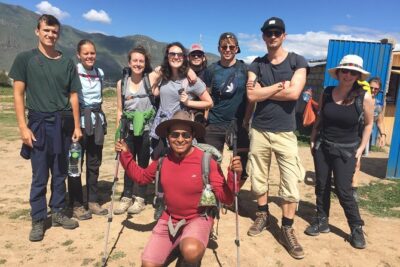
The named guide examples include Antonio San Cristobal and Mayan. Antonio is paired with Derly as driver in one account, with both described as professional, courteous, and friendly. Mayan is noted for keeping a cheerful mood and explaining each stop clearly. Those names give you an idea of the kind of service to expect, but the assigned guide for your date may be different.
I like the balance between organized sightseeing and optional time. You have a planned route, yet you can decide whether to take the Coporaque walk or request transport to the hot springs. That flexibility is helpful when altitude affects your energy.
Altitude, Comfort, and Who Should Choose This Tour
The biggest practical issue is elevation. The tour reaches about 4,000 meters at Pampa Cañahuas, more than 4,400 meters at Tocra, and 4,910 meters at Abra Patapampa. Even if you are accustomed to walking at home, this can feel hard.
The activity calls for moderate physical fitness. You should be comfortable walking for about an hour near Cruz del Condor and possibly an hour and a half around Coporaque. You also need to handle long vehicle journeys and early morning departures.
I would choose this tour if you want:
- A first visit to Colca Canyon without arranging every detail yourself
- Wildlife, volcanoes, wetlands, terraces, and villages in one trip
- A hotel night in the valley instead of returning to Arequipa the same day
- A small group rather than a large coach
- A guided route with optional activities
I would think twice if you want a relaxed holiday with late mornings and little time in a vehicle. The schedule covers a lot of ground, and the elevation is not a minor detail.
The tour requires good weather. If poor weather forces cancellation, you are offered another date or a full refund. For other changes, cancel at least three full days before the start time to receive a full refund. Within that window, the payment is not refunded.
Should You Book Colca Canyon Plus?
Book it if you want the practical version of Colca Canyon with more substance than a single-day lookout run. The strongest features are the overnight stay in Coporaque, the high Andes reserve, the condor viewing, and the chance to meet local traditions through food and clothing activities.
The price is fair once you account for transport, guide service, breakfast, and lodging. Just add the $22 entrance fee and meals before comparing it with other options.
My main advice is to respect the altitude. Keep the Coporaque walk optional, move slowly at Patapampa, and ask about the thermal baths if your legs need an easier activity. If you are ready for an early start, long drives, and spectacular high-country views, this two-day route gives you a well-rounded introduction to the Colca Valley.
FAQ
How long is the Colca Canyon Plus tour?
The tour lasts approximately two days. It returns to Arequipa around 4 p.m. on the second day.
What is the highest point of the tour?
The highest point is Abra Patapampa, also called the Viewpoint of the Andes, at 4,910 meters.
Is the Cruz del Condor entrance fee included?
No. The entrance fee is $22 per person and is paid separately.
Are meals included?
Breakfast is included. Lunch and dinner are not included, so you need to budget for them separately.
Where do you stay overnight?
You stay in a double or twin room at La Casa de Mamayacchi in Coporaque.
How large is the tour group?
The tour has a maximum of 14 participants.
Can I cancel for a full refund?
Yes. You must cancel at least three full days before the experience begins for a full refund. If poor weather causes the operator to cancel, you are offered another date or a full refund.
Just added around Arequipa
- Walking tour through the Historic Center of Arequipa★ 4.0 · 3 reviews
- Trek to the Route of the Sillar and Culebrillas in Arequipa★ 4.0 · 9 reviews
- 3-Day Colca Canyon trek with Professional Guide★ 5.0 · 40 reviews
- Trekking, Waterfalls and Thermal Baths★ 4.5 · 47 reviews
- Colca Full Day★ 5.0 · 57 reviews
- Full Day Tour to Colca Canyon from Arequipa★ 4.0 · 34 reviews
- Private 3 Day Colca Canyon Trekking tour (superior Service)★ 5.0 · 58 reviews
- 8-Hours Tour in Arequipa Laguna de Salinas with Pick-up★ 4.5 · 56 reviews
Colca Canyon Tours, compared.
2-Day Tour Colca Canyon in Arequipa with end in Puno
Read our review →
From Puno to Arequipa: 2 Days/1 Night Colca Canyon Tour
Read our review →Browse the lists this tour appears in