
Reviewed · CITY TOURS
Tour of the most important points in the city of Cusco.
Cusco’s finest first lesson is written in stone. This half-day circuit takes you from the gold-lined Inca temple of Qoricancha to the huge fitted blocks of Sacsayhuaman, then out to four major sites above the city. It gives you history, altitude practice, and a useful overview before you tackle Rainbow Mountain.
I like the small-group format, which should make the guide’s explanations easier to follow, and I like the two start times. The morning pickup is convenient if you want the afternoon free. The main drawback is the extra cost of the Qoricancha entrance and Cusco Tourist Ticket, plus the slightly fuzzy timing: the activity is listed as 270 minutes, while the description says about five hours.
In This Review
- Key points to know before booking
- Why this is a smart first day in Cusco
- Qoricancha, where Inca power met Spanish rule
- Sacsayhuaman and the scale of Inca stonework
- Qenqo, a ritual site cut into limestone
- Puka Pukara, the red fortress on the route
- Tambomachay and the Inca baths
- What the $25 price really covers
- Morning or afternoon: which departure works better?
- Small groups and the pace of the route
- What to pack for Cusco’s changing conditions
- Who should book this Cusco circuit?
- Should you book it?
- FAQ
- How long does the Cusco tour last?
- What sites are included in the route?
- Is hotel pickup included?
- What time does the morning tour start?
- Where does the afternoon tour meet?
- Are entrance fees included in the $25 price?
- Is a guide included?
- Can I cancel the booking?
Key points to know before booking
- Five major sights in one outing: Visit Qoricancha, Sacsayhuaman, Qenqo, Puka Pukara, and Tambomachay.
- Useful acclimatization: The tour gives you a gentler introduction to Cusco’s altitude before more demanding trips such as Rainbow Mountain.
- Two schedule choices: Morning hotel pickup is around 8:30 a.m.; the afternoon tour meets at Qoricancha at 1 p.m.
- Small groups: The operator presents this as a more comfortable way to hear the bilingual guide and move between sites.
- Budget price, extra admissions: The $25 price covers transport and guiding, but not Qoricancha or the Cusco Tourist Ticket.
- Weather-ready packing matters: Bring a passport or ID, camera, hiking shoes, biodegradable sunscreen, rain gear, and cash.
Why this is a smart first day in Cusco
I would use this tour early in a Cusco stay, especially if your plans include Rainbow Mountain or another high-altitude excursion. It is not a strenuous trek, but it gets you outside the central streets and up to several elevated archaeological sites.
That matters because altitude can make even simple sightseeing feel different. You will walk, climb, and spend time outdoors, while the guide explains how Cusco’s Inca and colonial layers fit together. You also get a practical sense of the city’s scale before setting off on longer day trips.
The route is compact but full. The first stop is inside the city, while the later sites are spread across the hills and nearby countryside. Round-trip transport saves you the work of arranging separate taxis, comparing routes, and figuring out which entrance applies at each stop.
The strongest part of the experience is the guiding. The tour is designed around explanation, not just quick photo stops, and the feedback gives particular credit to the guide’s command of local history and the places visited. The guide speaks English or Spanish, depending on your booking.
A few more Cusco trips to weigh up
- Cusco: Half-Day City Tour with Sacsayhuaman and Q’enco
★ 4.6 · 1,129 reviews - City Tour Cusco Qoricancha Sacsayhuaman y Tambomachay
★ 4.7 · 617 reviews - Cusco: Sightseeing Tour of the City on an Open-Top Bus
★ 4.0 · 481 reviews
Qoricancha, where Inca power met Spanish rule
Qoricancha, also written Coricancha, means Temple of the Sun. It was one of the most important religious centers in the Inca world, and its location in modern Cusco makes it an ideal opening stop.
Plan on about an hour here with the guide. You will learn why the temple mattered and how its Inca foundations survived beneath later Spanish construction. The site is valuable because the contrast is visible rather than abstract: carefully fitted Inca stonework sits alongside colonial architecture.
Qoricancha is the one stop where the tour’s included-price wording needs attention. The entrance fee is listed separately at S/ 20.00. Bring cash so this first visit does not create a delay.
The temple is also the afternoon meeting point. If you choose that departure, you meet at Qoricancha at 1 p.m. rather than receiving the morning hotel pickup. This can work well if you prefer a slower start or have morning plans, but confirm the exact arrangement through WhatsApp when the operator contacts you one or two days before the tour.
Sacsayhuaman and the scale of Inca stonework
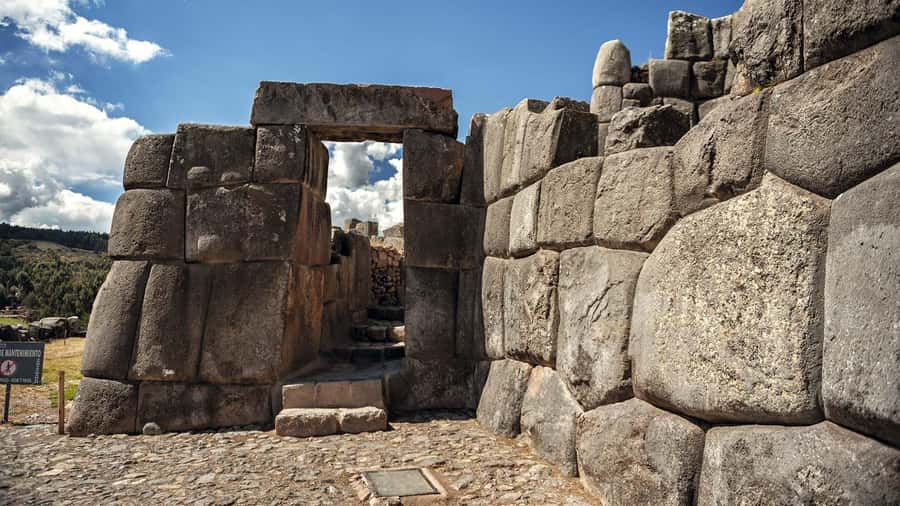
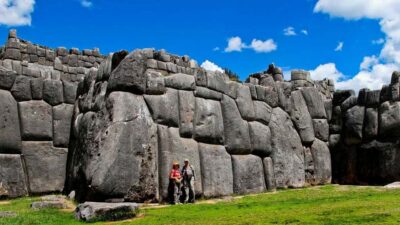
From Qoricancha, the excursion continues to Sacsayhuaman, the best-known large site on the circuit. Its massive stones and defensive design give you a quick lesson in the engineering strength of the Inca state.
The site is described as an imposing example of Inca military architecture. That is a useful way to approach it. Rather than looking only for a single building, pay attention to the size and arrangement of the stone walls, the high position above Cusco, and the way the site controlled access around the former Inca capital.
This is likely to be one of the most memorable stops for first-time visitors. The scale is hard to grasp from photographs, and the guide can help connect the site to the city below.
There is a practical point here: Sacsayhuaman is an archaeological center, and the Cusco Tourist Ticket is not included. Cosituc issues the different tickets used for Cusco attractions and museums. The supplied information does not give the ticket price or specify every attraction covered by the particular ticket, so ask the operator which ticket you need before departure.
Wear shoes with a firm sole. Hiking shoes are specifically recommended, and they make more sense here than smooth-soled city shoes. The tour is not described as a major hike, but these sites involve outdoor walking on uneven ground.
Qenqo, a ritual site cut into limestone
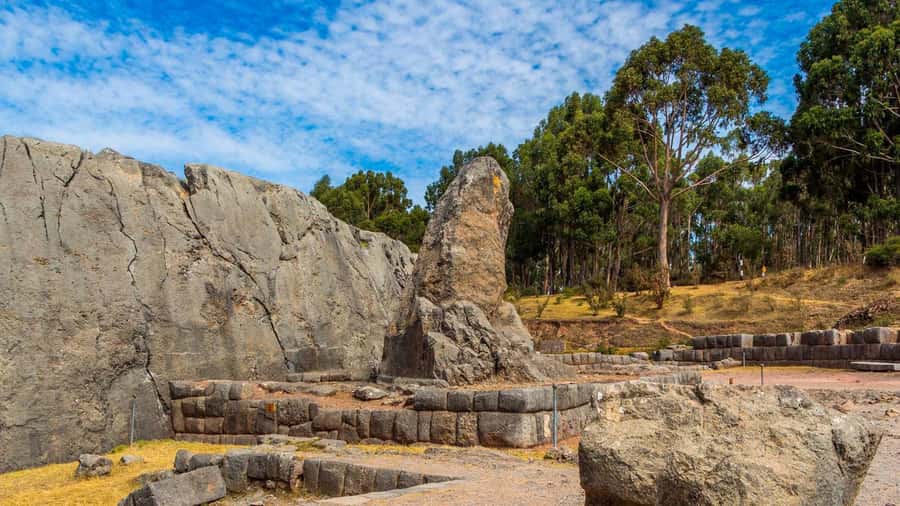
Qenqo changes the mood of the circuit. Instead of the huge walls at Sacsayhuaman, you visit a ritual center built around a distinctive limestone outcrop.
The stone itself is the main clue to the place. Your guide will explain how the natural rock formation was used within the ceremonial site, helping you read the carved and shaped surfaces rather than treating them as random marks.
Qenqo is a good stop for anyone who wants more than military architecture. It adds a religious and ceremonial side to the tour, and it shows how the Incas worked with unusual natural formations.
You may find that this stop feels less immediately obvious than Sacsayhuaman. That is exactly why the guide matters. Without context, a carved rock can be easy to rush past. With a clear explanation, it becomes part of the larger picture of how the Incas organized sacred places around Cusco.
Same valley, a completely different kind of day:
- Cusco: Humantay Lake Tour with Breakfast and Buffet Lunch
★ 4.9 · 2,976 reviews - From Cusco: Sacred Valley & Maras Salt Mines Tour with Lunch
★ 4.8 · 2,227 reviews - From Cusco: Moray, Maras Salt Mines & Chinchero Weavers Tour
★ 4.8 · 1,925 reviews - From Cusco: Full-Day Group Tour of Machu Picchu
★ 4.7 · 1,767 reviews
Puka Pukara, the red fortress on the route
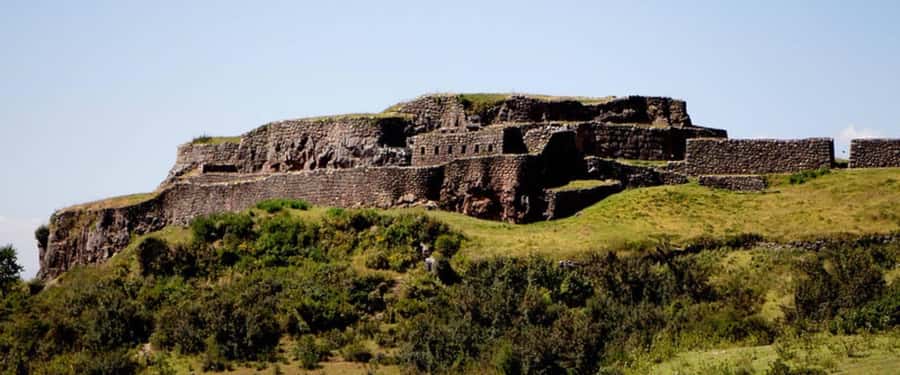
Puka Pukara is known as the red fortress. Its name refers to the reddish color of the stone, while its construction points to a military role.
This stop works nicely in the sequence. Sacsayhuaman gives you monumental defensive walls, Qenqo introduces ritual space, and Puka Pukara returns to the practical side of Inca control and movement. The guide can help you understand the site as part of a network around Cusco rather than an isolated ruin.
The visit is also a reminder to keep your camera ready. The tour specifically recommends bringing one, and Puka Pukara’s color and high setting give you a different visual subject from the gray stonework at the other stops.
Do not expect a long independent exploration at each location. Five major sites plus transport must fit into roughly four and a half to five hours. The benefit is breadth. The tradeoff is that you will not have the slow, unhurried pace of a private full-day archaeological tour.
Tambomachay and the Inca baths
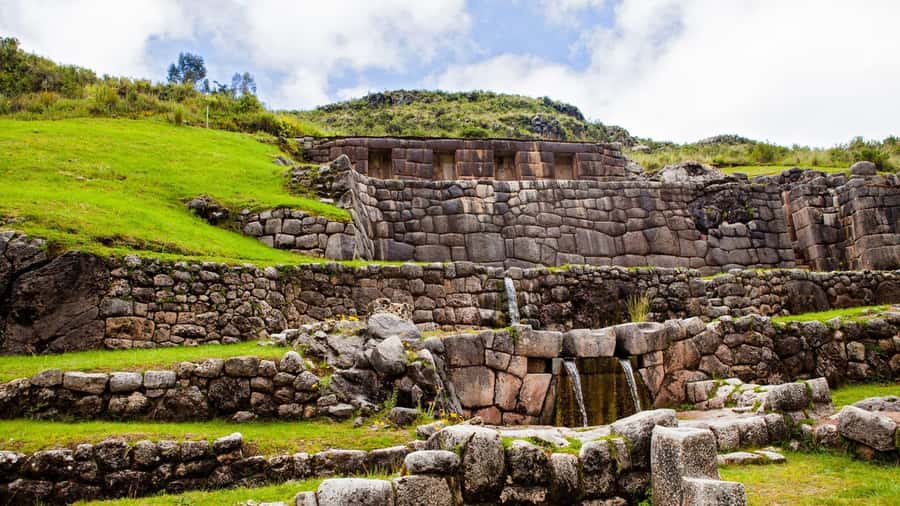
The final archaeological stop is Tambomachay, recognized for its main waterfall and its association with the baths of the Inca.
Water is the focus here. The site offers a useful contrast to the heavy stone defenses at Sacsayhuaman and Puka Pukara. It shows another side of Inca planning, where water, ceremony, and carefully built channels mattered.
I like ending with Tambomachay because it is a quieter type of sight. After several fortifications and stone structures, the flowing water gives the route a more gentle finish. Your guide’s explanation is important here too, since the meaning of the site goes beyond simply seeing a waterfall.
The tour then returns to Cusco by included transport. The description says the vehicle takes you back to the city, but it does not promise hotel drop-off for every participant. Morning pickup is offered for hotels near the historic center, while people outside the operator’s pickup area receive a meeting point. Confirm your return arrangement when the company contacts you.
What the $25 price really covers
At $25 per person, this is a low-cost way to combine transport, guiding, and five major Cusco sights. If you tried to arrange the same circuit on your own, you would still need to organize transportation and decide how to handle the ticket system.
The price includes:
- Pickup at a hotel near Cusco’s historic center, or a designated meeting point
- Round-trip transportation
- A bilingual English or Spanish guide
It does not include water, snacks, breakfast, lunch, or services not listed. Qoricancha costs S/ 20.00 separately, and the Cusco Tourist Ticket is also extra.
That makes the tour good value if you already understand that $25 is the base cost, not the complete day’s expense. The main ticket question should be settled before you book or before departure. Cosituc manages the attraction tickets, but no exact Tourist Ticket price is provided here.
Bring cash, since it is listed among the required items. Carry water and a small snack too, as neither is included. You will be outdoors for several hours, and having your own supplies is simpler than hoping to find them during the route.
Morning or afternoon: which departure works better?
The morning shift includes pickup at your hotel around 8:30 a.m., approximately. This is the better choice if you want to finish the sightseeing early, keep the afternoon open, or avoid rushing to a 1 p.m. meeting point.
The afternoon shift meets at Qoricancha at 1 p.m. It suits you if your hotel is outside the normal pickup area or if you prefer a later start. Since the day’s timing is given as approximately five hours, the afternoon return will be later in the day.
The activity page gives a duration of 270 minutes, or four and a half hours, while the detailed description says the tour lasts approximately five hours. Treat the timing as an estimate rather than a precise schedule. Pickup, traffic, entrance procedures, and group movement can affect the final return time.
The operator plans to contact you on WhatsApp one or two days before the tour with your pickup time. Keep the phone number connected to your booking active. If you make a last-minute reservation, check availability with Journey Peru SAC by email before paying.
Small groups and the pace of the route
Small groups are a meaningful feature here, not just a marketing detail. At archaeological sites, a guide can be hard to hear when a group is large, especially outdoors with several groups nearby. A smaller party should make it easier to stay with the explanation and ask a quick question.
The pace will still be fairly brisk. The route has five stops, and the description gives Qoricancha about an hour, leaving the remaining time for Sacsayhuaman, Qenqo, Puka Pukara, Tambomachay, and transport.
I would choose this format if you want an overview with useful context, not a slow archaeological study. It is particularly suited to first-time visitors, people acclimatizing before higher mountain trips, and anyone who wants transport bundled into a simple half-day plan.
It may not suit you if you want complete control over every stop, long photography sessions, or a private guide focused on one site. The group schedule and shared vehicle are part of the reason the price stays modest.
What to pack for Cusco’s changing conditions
The required packing list is sensible:
- Passport or ID card
- Camera
- Hiking shoes
- Biodegradable sunscreen
- Rain gear
- Cash
The passport or ID card may be needed for ticketing or site access, so keep it secure but available. Bring rain gear even if the morning begins clear, since the tour specifically advises it.
Sunscreen is important for outdoor sightseeing, and biodegradable sunscreen is requested. Water and snacks are not included, so add both to your day bag. Alcohol and drugs are not allowed, and baby carriages are not permitted on the activity.
Dress for walking rather than for a formal city tour. You can still begin in normal Cusco clothing, but comfortable shoes and weather protection will make the hills and archaeological paths easier.
Who should book this Cusco circuit?
I would recommend it most strongly for three groups.
First, it is a good choice for a first day or second day in Cusco. You see the city’s main archaeological setting, learn the basic story of Inca Cusco, and get a practical sense of the altitude before committing to longer trips.
Second, it suits anyone who wants a broad introduction at a modest price. The itinerary does not spend all day at one ruin. Instead, it gives you five distinct stops, each with a different purpose: temple, fortress, ritual center, defensive outpost, and water sanctuary.
Third, it works well for people who prefer a guide to independent sightseeing. The strongest comments about the experience focus on clear information and the guide’s command of the places visited. That is the service you are paying for beyond the vehicle.
I would think twice if you dislike fixed schedules or extra admission costs. The ticket system requires planning, and the exact duration can vary between 270 minutes and about five hours. The tour is also not designed as a relaxed lunch outing, since meals are not included.
Should you book it?
Book this tour if you want an affordable, guided introduction to Cusco before visiting Rainbow Mountain or another demanding destination. The five-stop route is efficient, the bilingual guide adds needed context, and small groups should keep the experience comfortable.
Before booking, budget separately for Qoricancha and the Cusco Tourist Ticket. Choose the morning if you want more of the day free, or the afternoon if a later start is easier. With those details understood, this is a practical first look at Cusco’s most important sights rather than a simple drive-by tour.
FAQ
How long does the Cusco tour last?
The activity is listed as 270 minutes, or four and a half hours. The detailed tour description says to expect approximately five hours, so allow some flexibility.
What sites are included in the route?
The tour visits Qoricancha, Sacsayhuaman, Qenqo, Puka Pukara, and Tambomachay.
Is hotel pickup included?
Pickup is included for hotels near Cusco’s historic center. If your accommodation is outside the pickup area, the operator sets a meeting point.
What time does the morning tour start?
Morning hotel pickup begins at approximately 8:30 a.m.
Where does the afternoon tour meet?
The afternoon tour meets at Qoricancha at 1 p.m.
Are entrance fees included in the $25 price?
No. Qoricancha has a separate entrance fee of S/ 20.00, and the Cusco Tourist Ticket is also not included.
Is a guide included?
Yes. The tour includes a live bilingual guide in English or Spanish.
Can I cancel the booking?
You can cancel up to 24 hours in advance for a full refund. The tour also offers reserve-now, pay-later booking, subject to the booking terms.
Just added around Cusco
- Waqrapukara 1 day trekking + meals★ 3.9 · 3 reviews
- Zipline over the Sacred Valley Trip★ 5.0 · 11 reviews
- Visit to the Cochahuasi Animal Sanctuary with rescued animal★ 4.1 · 4 reviews
- Valle Sur Cusco | half day★ 4.3 · 3 reviews
- Visit Pisac from Cusco: Private Transport★ 4.6 · 9 reviews
- Maras and Huaypo lagoon by ATV from Cuzco | Local Operator★ 4.7 · 4 reviews
- Trek to Humantay Lake from Cusco★ 4.9 · 8 reviews
- Trek to Choquequirao 4 days★ 3.8 · 4 reviews
City Tours, compared.
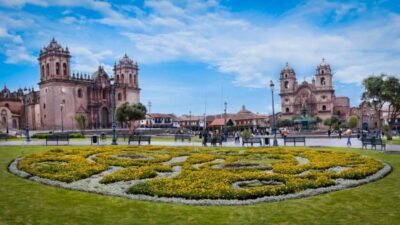
Half-Day City Tour with Sacsayhuaman and Q’enco
Read our review →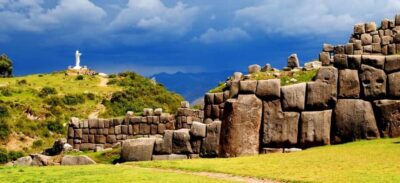
City Tour Cusco Qoricancha Sacsayhuaman y Tambomachay
Read our review →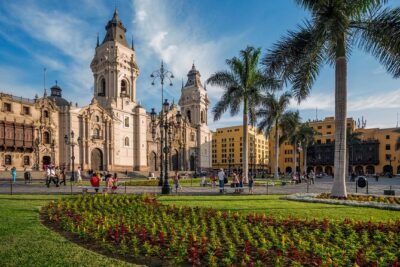
Lima’s Vibrant Heritage: Exploring the City’s Landmarks Half-day
Read our review →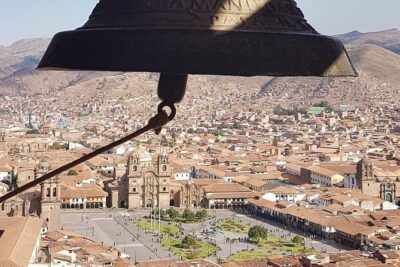
City Tour | Half-Day Tour to 4 Archaeological Sites
Read our review →
City Tour in Cusco & visit Museum South American Camelid Private.
Read our review →
Cusco City Sightseeing, San Pedro Market, Cathedral and Qorikancha Temple
Read our review →
Browse the lists this tour appears in