
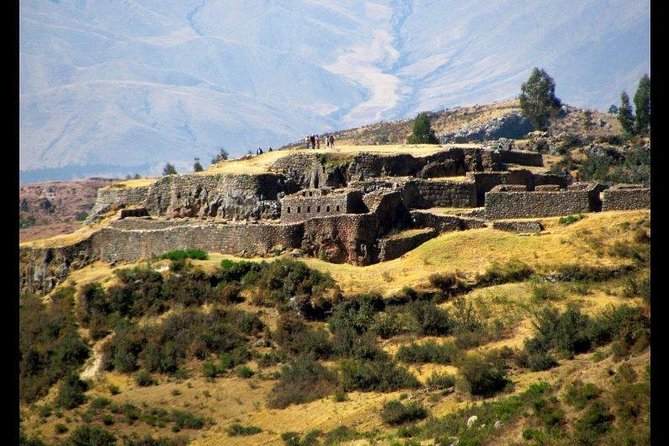
Reviewed · CITY TOURS
Cusco Half Day City Tour: Four Ruins
Cusco’s four main ruins make a fine first lesson in Inca engineering. In a single outing, you move from the giant zigzag walls of Sacsayhuaman to Qenqo’s mysterious carved rock, Puka Pukara’s roadside outpost, and Tambomachay’s flowing springs.
I like the small-group limit of 15, which gives your guide room to explain details without shouting across a crowd. I also like the mix of sites: one dramatic fortress, one ritual center, one probable way station, and one spring-fed ceremonial place. The main drawback is pace. Several people found the stops shorter than expected, and one outing lasted about four hours rather than the advertised six.
In This Review
- Four things to know before you book
- Why this half-day tour works near Cusco
- Sacsayhuaman and the stones that stop conversation
- Qenqo and the puzzle of the carved canal
- Puka Pukara, the practical side of Inca travel
- Tambomachay and the sound of running water
- How the guide and group size affect the day
- What the $45 price really covers
- Altitude, walking, and how to prepare
- Is the four-ruins tour right for you?
- FAQ
- How long does the Cusco Four Ruins City Tour last?
- What time does the tour start?
- Where does the tour begin?
- Where does the tour end?
- Which archaeological sites does the tour visit?
- Is transportation included?
- Is a guide included?
- How large is the group?
- Are entrance fees included?
- Can I cancel the tour for a full refund?
Four things to know before you book
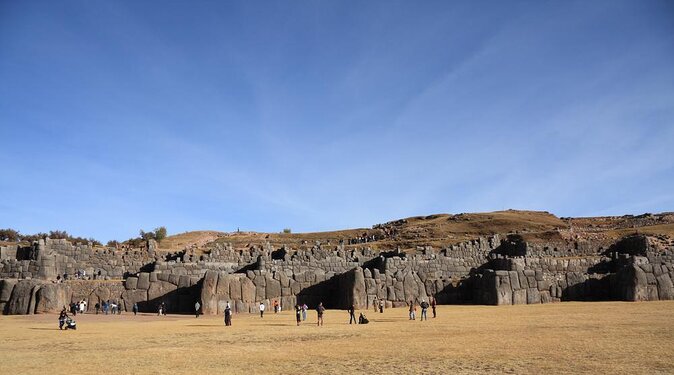
- Sacsayhuaman sets the tone: Giant fitted stones and wide views over Cusco make this the strongest stop for first impressions.
- Qenqo remains partly mysterious: Its carved channels, tunnels, and stone chambers invite questions, but no single purpose is certain.
- Puka Pukara explains Inca movement: The compact site likely served as a barracks and tambo, or roadside lodging, near the road to Tambomachay.
- Tambomachay brings water into focus: Springs run through carefully built channels, terraces, and small waterfalls.
- The group is limited to 15 people: That is a useful size for a bilingual guide, though the vehicle may feel full when every seat is occupied.
- Budget for entrance fees: Transport and the English and Spanish guide are included, but site admission costs PEN70 per person, with PEN20 extra for Qorikancha if it is included in your day’s plan.
Why this half-day tour works near Cusco
This is not a single grand ruin with hours to wander. It is a compact circuit of four places north of Cusco, each showing a different side of Inca life.
You get military architecture at Sacsayhuaman, ceremonial clues at Qenqo, transport and administration at Puka Pukara, and sacred water at Tambomachay. That range matters. If you visited only one ruin, you could easily mistake Inca culture for a story about walls and battles. This route shows how religion, travel, water, defense, and ceremony fit together.
The tour begins at 10:00 a.m. at Heidi Travel EIRL on Plateros 324 in central Cusco and returns to the same meeting point. Transport is included, so you do not need to arrange separate rides between the sites. The drive between the central plaza area and the ruins is short, which helps keep the circuit manageable.
The advertised duration is about six hours. In practice, timing can vary. A late pickup of 35 minutes was reported on one outing, and another group felt the whole experience was closer to four hours. You should allow the full six hours in your schedule, but do not assume every minute will be spent inside an archaeological site.
A few more Cusco trips to weigh up
- Cusco: Half-Day City Tour with Sacsayhuaman and Q’enco
★ 4.6 · 1,129 reviews - City Tour Cusco Qoricancha Sacsayhuaman y Tambomachay
★ 4.7 · 617 reviews - Cusco: Sightseeing Tour of the City on an Open-Top Bus
★ 4.0 · 481 reviews
Sacsayhuaman and the stones that stop conversation
Sacsayhuaman is the grand opening. Its Quechua name is commonly translated as place where the hawk is satiated, likely tied to the birds associated with the area.
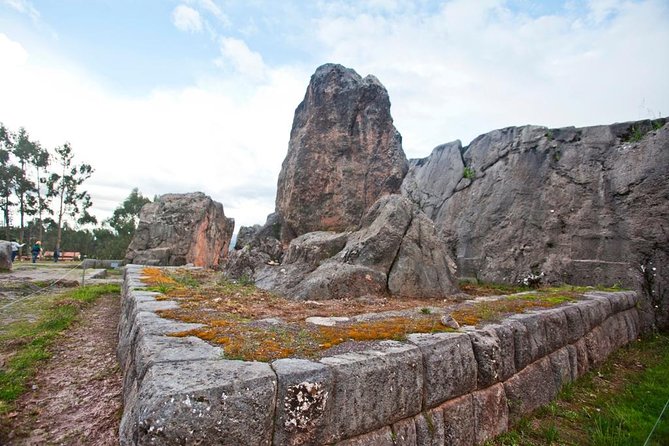
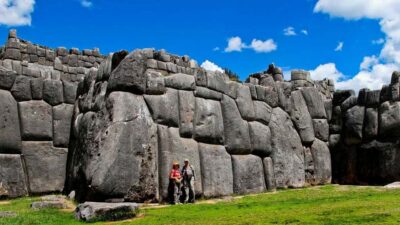
The first thing you notice is the scale of the main zigzag wall. Some stones reach about 5 meters high and 2.5 meters wide, with the largest estimated at between 90 and 125 tons. Their precise joins are the real show. The stones fit together without the broad mortar lines you might expect from such massive construction.
The Spanish called Sacsayhuaman a fortress because of its military-looking walls. That label is useful, but probably incomplete. The site also contained residential buildings, towers, shrines, storage areas, roads, and water channels. It may have served both practical and ceremonial purposes.
Your guide can help you read the site as more than a defensive wall. Look for the three large wall lines, platforms, open spaces, and the way the construction follows the hill. The site’s shape and setting recall other major Inca sacred places, including Machu Picchu, though the experience here is very different.
The views are another reason to pay attention. From Sacsayhuaman, you can look across Cusco and toward the summits of Ausangate, Pachatusan, and Cinca. These peaks held sacred meaning for the Inca, so the view was not merely scenic. It connected the city to the surrounding mountains and the beliefs tied to them.
Plan for walking and steps. The altitude can make even a modest climb feel serious, especially early in your Cusco stay. A considerate guide should let you set your own pace. One guide named Edith was praised for speaking clearly in both English and Spanish and for taking care with different walking abilities.
Qenqo and the puzzle of the carved canal
Qenqo is smaller and stranger than Sacsayhuaman. Its Quechua name refers to a labyrinth or zigzag, a fitting description for the crooked channel cut into the rock.
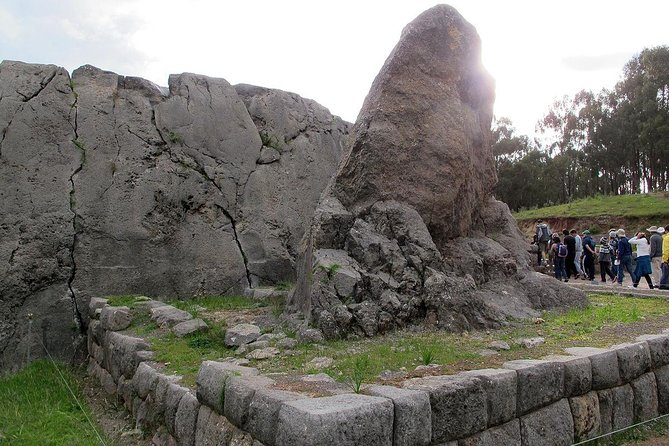
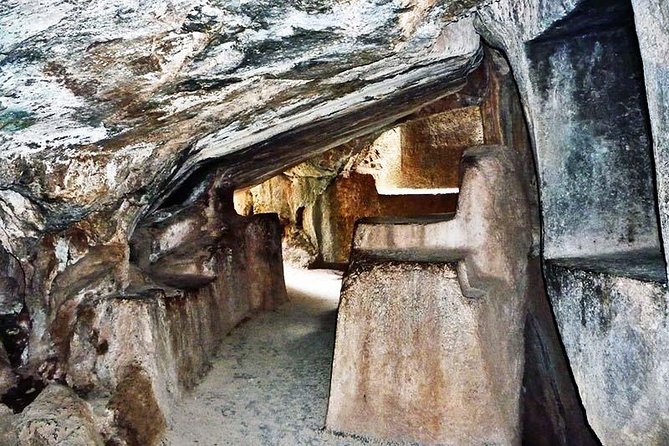
Unlike a freestanding stone complex, much of Qenqo was carved directly from a huge monolith. Natural chambers and man-made passages meet in a site that feels intimate and enclosed. You might find the change in scale refreshing after Sacsayhuaman, though the tight spaces can make a guide’s explanation especially useful.
The main mystery is the channel. Researchers know that some liquid was intended to run through it, but the purpose remains uncertain. Possible interpretations include holy water, chicha made from corn, or blood connected with ritual activity.
That uncertainty is worth preserving. A good explanation here should separate what can be seen from what is only proposed. The channel suggests ceremony, but it does not give us a complete answer about the ceremony itself.
One chamber contains 19 small niches and has the form of an amphitheater. The space may have been used for offerings or sacrifice connected with the sun, moon, and stars. Your guide can explain the leading ideas, but you should expect some open questions rather than a tidy story.
The stop is scheduled for about an hour. That may sound generous, but the circuit moves quickly. If you are the sort of person who likes to study every carved surface, take photographs from several angles, or linger over a question, you may want to ask your guide how much time remains before leaving.
Puka Pukara, the practical side of Inca travel
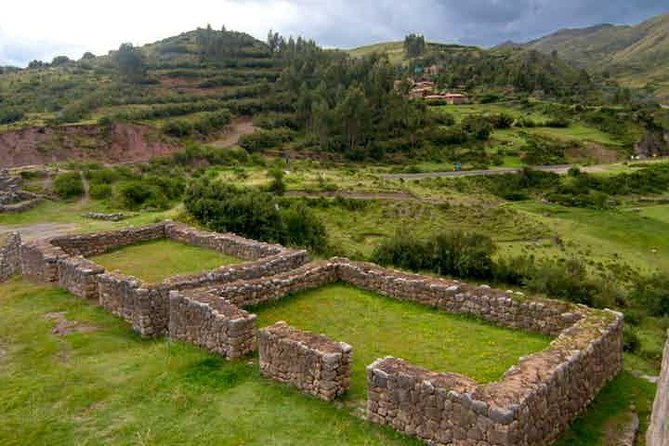
Puka Pukara means red fort, a name tied to the reddish earth and the site’s position. It is less polished than some Inca ruins, with small and medium stones whose surfaces look uneven beside the tightly fitted masonry at Sacsayhuaman.
That difference is part of the lesson. Puka Pukara was built for a practical role, not just visual drama. The complex includes enclosures, inner squares, canals, aqueducts, baths, and a section of the ancient road network known as Qhapaq Ñan.
The site is arranged across three levels. Walls follow irregular lines and avoid protruding rocks rather than cutting through them. Rooms are placed around the stone formations, and some have trapezoidal rather than rectangular floors, a familiar feature of Inca design.
Chroniclers linked Puka Pukara with visits to the baths at Tambomachay. The Inca ruler’s accompanying soldiers and dancers may have waited here, using the site as both a barracks and a tambo, or lodging place. There are also stories of a tunnel connecting Puka Pukara and Tambomachay, though this should be treated as a tradition rather than a confirmed feature you will enter.
This stop is valuable because it shows infrastructure. You see how an empire supported movement along roads, supplied people, and organized space near an important route. It may not have the immediate drama of Sacsayhuaman, but it helps you understand the network behind the famous monuments.
Same valley, a completely different kind of day:
- Cusco: Humantay Lake Tour with Breakfast and Buffet Lunch
★ 4.9 · 2,976 reviews - From Cusco: Sacred Valley & Maras Salt Mines Tour with Lunch
★ 4.8 · 2,227 reviews - From Cusco: Moray, Maras Salt Mines & Chinchero Weavers Tour
★ 4.8 · 1,925 reviews - From Cusco: Full-Day Group Tour of Machu Picchu
★ 4.7 · 1,767 reviews
Tambomachay and the sound of running water
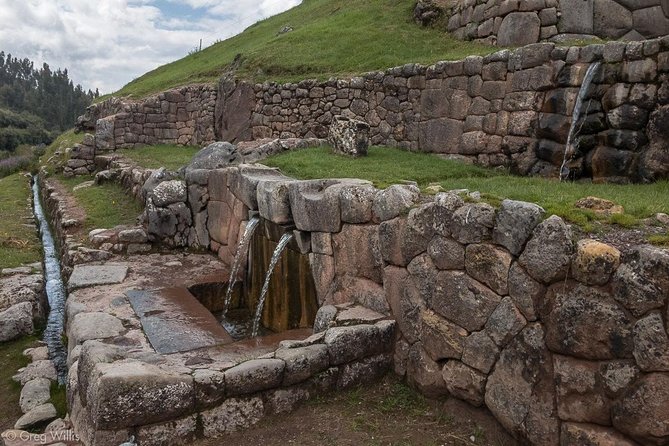
Tambomachay is the quietest stop on the route. Sitting at roughly 3,700 meters, or 12,150 feet, it consists of three stepped terraces built over a natural spring.
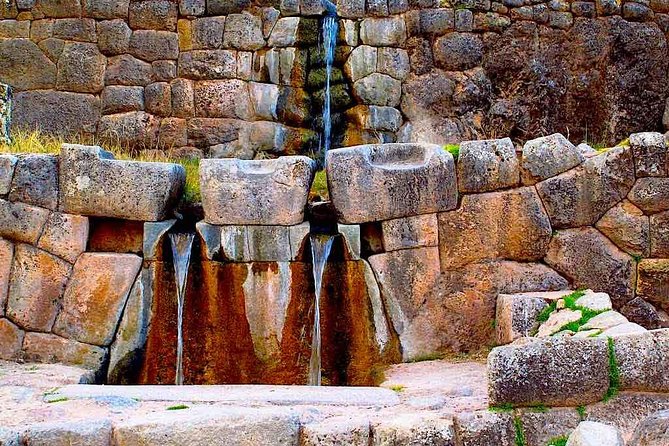
Water feeds a series of small aqueducts, channels, and waterfalls. The stonework is precise, with trapezoidal niches set into some retaining walls. The result is a place where engineering and ceremony are hard to separate.
Tambomachay is also called El Baño del Inca, or the Bath of the Inca. One long-held idea is that it served as a spa for the ruler and members of the Inca nobility. Its secluded setting and constant water supply fit that theory, but the site may also have had ceremonial or military uses.
This is a good place to slow down mentally, even if the schedule keeps you moving. Listen to the water and look at the way it is guided through the terraces. At high altitude, the cool, orderly site can feel like a welcome pause after the larger ruins.
The visit is planned for about 45 minutes. That is enough to understand the layout and take photographs, but not necessarily enough for a long, unhurried exploration. If Tambomachay interests you most, ask at the start whether the guide can preserve the full allotted time there.
How the guide and group size affect the day
The tour uses a bilingual English and Spanish guide, and the maximum group size is 15. That is small enough for questions and usually easier to manage than a large coach group.
The quality of the day depends heavily on communication. Guides named Edith and Freddy received particularly warm praise for clear English, useful historical explanations, and personal attention. Freddy was also noted for offering suggestions about other things to see in Cusco. Your assigned guide may be different, but these examples show what to expect from a strong guide on this route: clear timing, plain explanations, and patience on the uphill sections.
The group limit does not guarantee an empty vehicle. One account described every seat being occupied, though the short transfers helped. If you prefer lots of personal space, a private tour may suit you better. If you want a lower price and the chance to hear other questions, 15 people is a reasonable compromise.
The main organizational risk is a late start or unclear pickup information. A delay of 30 to 40 minutes can make an already tight route feel rushed. Confirm the meeting point at Plateros 324 and arrive ready for the 10:00 a.m. start.
An unlisted stop at an alpaca wool shop has also been part of at least one outing. The visit included an explanation of different materials and was considered pleasant, but it takes time from the ruins. If shopping is not your aim, ask whether such a stop is planned.
What the $45 price really covers
At $45 per person, this is a practical way to see four archaeological sites without paying separately for transport. The price includes the vehicle and bilingual guide, which is the main value of the tour.
The important catch is admission. Site entrance costs PEN70 per person and is not included. Qorikancha admission is listed separately at PEN20 per person. Ask for the complete out-of-pocket total before booking or setting off, since one person specifically wished the entrance cost had been made clear earlier.
The value is strongest if you have only a short stay in Cusco, want an introduction before Machu Picchu, or prefer not to organize taxis and site order yourself. You receive historical context at each stop instead of simply arriving, taking pictures, and leaving.
The value is weaker if you want long periods at each ruin. Four sites in one circuit means transportation and explanations take a meaningful share of the day. A private full-day arrangement could offer more freedom, but this half-day outing keeps the cost lower and the plan simple.
A possible extra stop at the alpaca shop also affects the value. Some people enjoy learning about the materials. Others would rather spend those minutes with the stones and springs.
Altitude, walking, and how to prepare
Most people can take part, but Cusco’s altitude is the practical issue you should not dismiss. The ruins sit above the city, and walking uphill or climbing steps can leave you short of breath if you have not adjusted.
You do not need to race. One of the best details about the guiding style reported on this tour is that the guide did not pressure people to walk faster or climb steps they felt unable to manage. Still, you should wear shoes suited to uneven ground and leave room in your schedule for a slower pace.
Bring water and dress for changing high-altitude conditions. Those basic precautions are especially useful because the route moves between open archaeological spaces and more sheltered carved areas. The provided information does not promise special mobility arrangements, so contact the operator if you have concerns about stairs or uneven surfaces.
The 10:00 a.m. departure may appeal if you want a slower morning than an early sightseeing start. It also gives you time to reach the meeting point in central Cusco. Just remember that a late pickup can compress the visit.
Is the four-ruins tour right for you?
I would choose this tour if you want a clear introduction to the major ruins immediately around Cusco, value included transport, and are happy with a group setting. It suits couples, families, and solo visitors who want a guide to connect the sites rather than work out the history alone.
I would be more cautious if your priority is detailed photography, long independent walks, or a leisurely study of each ruin. The route can feel rushed, and the real duration may fall short of six hours. You also need to add PEN70 for admission, plus PEN20 for Qorikancha if applicable.
The strong 4.8 rating from 30 ratings and the 97 percent recommendation figure point to a consistently positive experience, especially for the guides and the historical explanations. My advice is simple: book it early if the timing fits, confirm the entrance fees, and ask about any extra shopping stop. Free cancellation is available until 24 hours before the start time, which gives you some flexibility.
FAQ
How long does the Cusco Four Ruins City Tour last?
The advertised duration is approximately six hours. The actual timing can vary, and one reported outing lasted about four hours.
What time does the tour start?
The tour starts at 10:00 a.m.
Where does the tour begin?
It begins at Heidi Travel EIRL, located at Plateros 324, Cusco 08000, Peru.
Where does the tour end?
The tour returns to the same meeting point.
Which archaeological sites does the tour visit?
The route includes Sacsayhuaman, Qenqo, Puka Pukara, and Tambomachay.
Is transportation included?
Yes. Transport is included in the tour price.
Is a guide included?
Yes. The tour includes a bilingual English and Spanish guide.
How large is the group?
The maximum group size is 15 people.
Are entrance fees included?
No. Entrance to the main sites costs PEN70 per person. Qorikancha admission is listed separately at PEN20 per person.
Can I cancel the tour for a full refund?
Yes, if you cancel at least 24 hours before the experience start time. Cancellations or changes made less than 24 hours before the start time are not refunded or accepted.
Just added around Cusco
- Waqrapukara 1 day trekking + meals★ 3.9 · 3 reviews
- Zipline over the Sacred Valley Trip★ 5.0 · 11 reviews
- Valle Sur Cusco | half day★ 4.3 · 3 reviews
- Visit to the Cochahuasi Animal Sanctuary with rescued animal★ 4.1 · 4 reviews
- Visit Pisac from Cusco: Private Transport★ 4.6 · 9 reviews
- Maras and Huaypo lagoon by ATV from Cuzco | Local Operator★ 4.7 · 4 reviews
- Trek to Humantay Lake from Cusco★ 4.9 · 8 reviews
- Trek to Choquequirao 4 days★ 3.8 · 4 reviews
City Tours, compared.
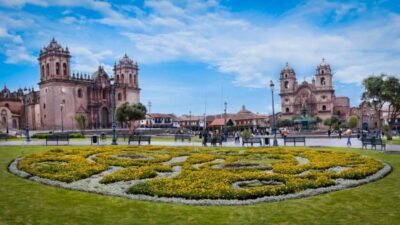
Half-Day City Tour with Sacsayhuaman and Q’enco
Read our review →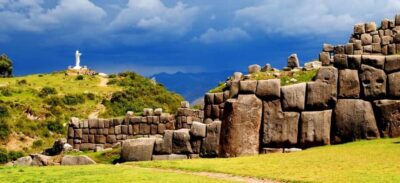
City Tour Cusco Qoricancha Sacsayhuaman y Tambomachay
Read our review →
Lima’s Vibrant Heritage: Exploring the City’s Landmarks Half-day
Read our review →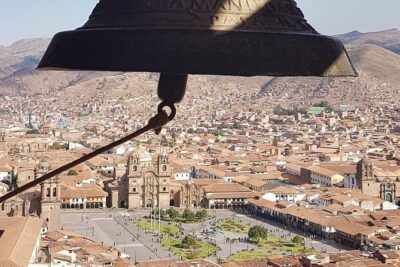
City Tour | Half-Day Tour to 4 Archaeological Sites
Read our review →
City Tour in Cusco & visit Museum South American Camelid Private.
Read our review →
Cusco City Sightseeing, San Pedro Market, Cathedral and Qorikancha Temple
Read our review →
Browse the lists this tour appears in