
Reviewed · CITY TOURS
City Tour Cusco
Cusco’s best-known Inca sites sit outside the historic center, and this five-hour city tour links them in one tidy outing. You begin at Qorikancha, then ride up to Saqsayhuamán, Q’enqo, Puka Pukara, and Tambomachay, with guides such as Jhonny, Victor, Jorge, or Saul explaining what you are seeing.
I like the mix of Inca engineering and Spanish colonial architecture, especially at Qorikancha, and I like having private transport between sites instead of arranging separate taxis. The main drawback is the added cost: the $32 tour price does not include the $25 partial archaeological ticket or the $7 Qorikancha admission.
In This Review
- Key points to know before booking
- Five Inca sites, one practical Cusco outing
- Qorikancha: where Inca gold met Spanish stone
- Saqsayhuamán: huge stones and a ceremonial stronghold
- Q’enqo: rock-cut chambers and ritual meaning
- Puka Pukara: a small military post with a big strategic role
- Tambomachay: fountains, canals, and water worship
- What the guide adds to the experience
- The real price, transport, and group size
- Who will like this tour most
- Practical details worth knowing
- Should you book this Cusco city tour?
- FAQ
- Where does the Cusco city tour start?
- Where does the tour end?
- How long does the tour last?
- Which places are included in the route?
- Are entrance tickets included?
- How many people can join the tour?
- Is transportation included?
Key points to know before booking
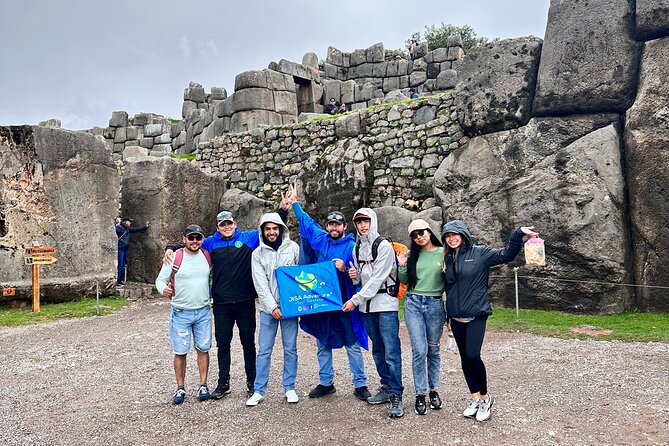
- Five major Cusco sites in one half-day: You visit Qorikancha, Saqsayhuamán, Q’enqo, Puka Pukara, and Tambomachay.
- A small group with private transport: The maximum group size is 12, which makes the rides and guided stops more manageable.
- Strong guide-focused experience: Jhonny, Victor, Jorge, and Saul are specifically praised for clear explanations, energy, kindness, and photo time.
- Tickets cost extra: Budget another $32 if you want both the partial archaeological ticket and Qorikancha admission.
- A useful first look at Cusco: The tour gives you a broad introduction before longer trips to places such as the Sacred Valley or Machu Picchu.
- Return to the Plaza de Armas: Pickup and drop-off are at Cusco’s main square.
Five Inca sites, one practical Cusco outing
I see this tour as a good orientation to Cusco rather than a slow, scholarly study of one monument. In about five hours, you move from an urban temple to high stone fortifications, a ritual site, a military post, and a ceremonial water complex.
That range matters. You are not simply seeing five piles of old stones. Each stop presents a different part of Inca life: religion, construction, defense, ritual, and water worship. A good guide helps connect those pieces, and this is where Jhonny, Victor, Jorge, and Saul appear to add real value through clear explanations and lively delivery.
The tour begins at the Plaza de Armas, making it easy to fit into a first day in Cusco. You will return there at the end, so you do not need to work out a separate ride back from the hills above the city.
The supplied timing calls the activity about five hours, while each of the five visits is described as lasting roughly an hour. The listed stops alone therefore add up to more than five hours, before driving time. I would treat five hours as an approximate target and confirm the day’s exact schedule when booking.
A few more Cusco trips to weigh up
- Cusco: Half-Day City Tour with Sacsayhuaman and Q’enco
★ 4.6 · 1,129 reviews - City Tour Cusco Qoricancha Sacsayhuaman y Tambomachay
★ 4.7 · 617 reviews - Cusco: Sightseeing Tour of the City on an Open-Top Bus
★ 4.0 · 481 reviews
Qorikancha: where Inca gold met Spanish stone
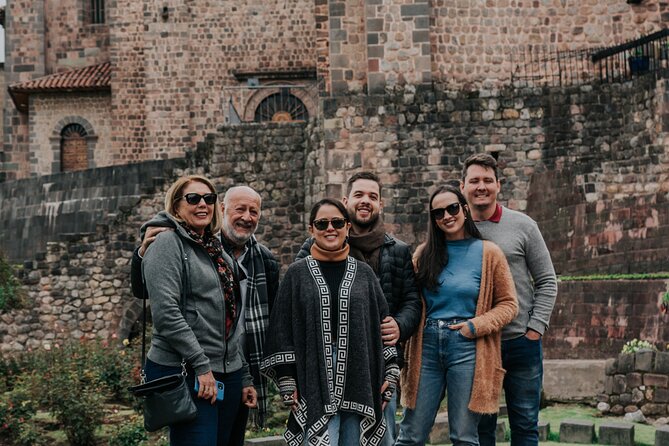
Qorikancha, also called the Temple of the Sun, is the most city-centered stop and a strong opening. Its importance comes from the way Inca religious architecture and Spanish colonial construction occupy the same place.
Your guided visit lasts about 45 minutes according to the description, though the stop is listed as one hour. That gives you enough time for an introduction to the site without using the whole morning on a single building.
Look closely at the masonry and the way the two architectural traditions meet. The point is not only that the Spanish built over an Inca sacred center. It is also that the surviving stonework lets you see the precision of Inca construction while the colonial additions show how Cusco changed after the conquest.
Qorikancha admission is not included. The separate fee is listed as $7. Since this is a guided stop, I would not skip it simply because it costs extra. It provides useful context for the other sites, especially when your guide later explains ceremonial spaces and the Inca worldview.
Saqsayhuamán: huge stones and a ceremonial stronghold
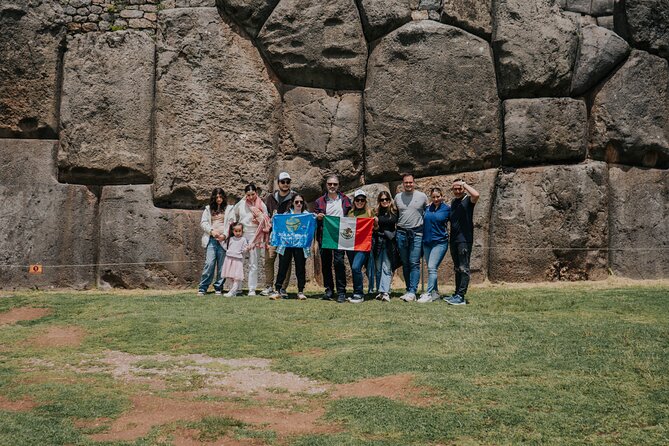
After about 20 minutes by vehicle, you reach Saqsayhuamán. This is likely the visual high point of the outing. The site is known for enormous carved stones and imposing walls, and the tour focuses on how those stones were shaped and fitted together.
I especially like this stop for readers who want to understand Inca building skill in physical terms. Qorikancha shows fine masonry in a city setting. Saqsayhuamán gives you the larger scale: massive blocks, broad walls, and a site with both ceremonial and defensive importance.
Your guide explains construction methods and the role Saqsayhuamán played in Inca society. That explanation matters because the site can be hard to read on your own. Without context, you may notice the size of the stones but miss the reasons the place mattered.
Saqsayhuamán is part of the archaeological ticket, which costs $25 for the partial ticket covering all the archaeological centers on this tour. The ticket is not included in the $32 tour price. I would factor it into the real cost before comparing this outing with other Cusco options.
Q’enqo: rock-cut chambers and ritual meaning
The next stop is Q’enqo, a ritual center set on a rocky outcrop. Here the mood changes. Instead of focusing mainly on immense outer walls, you explore underground chambers and altars cut into the rock.
The guide frames Q’enqo around Inca ceremonies and the way sacred places reflected the Inca view of the world. That makes this a stop where interpretation is especially important. The chambers and carved surfaces do not explain themselves, and a good explanation can turn a brief visit into a more meaningful one.
The site is listed as a one-hour visit. In practice, the exact pace may depend on the group and the guide’s explanations. I would use this stop to listen carefully, then take your photographs once the guide has finished the main story. Victor is specifically praised for making time for photographs while keeping the experience informative.
Q’enqo is also included in the $25 partial archaeological ticket. You should keep that ticket available throughout the archaeological visits, since the tour covers several sites rather than one isolated monument.
Same valley, a completely different kind of day:
- Cusco: Humantay Lake Tour with Breakfast and Buffet Lunch
★ 4.9 · 2,976 reviews - From Cusco: Sacred Valley & Maras Salt Mines Tour with Lunch
★ 4.8 · 2,227 reviews - From Cusco: Moray, Maras Salt Mines & Chinchero Weavers Tour
★ 4.8 · 1,925 reviews - From Cusco: Full-Day Group Tour of Machu Picchu
★ 4.7 · 1,767 reviews
Puka Pukara: a small military post with a big strategic role
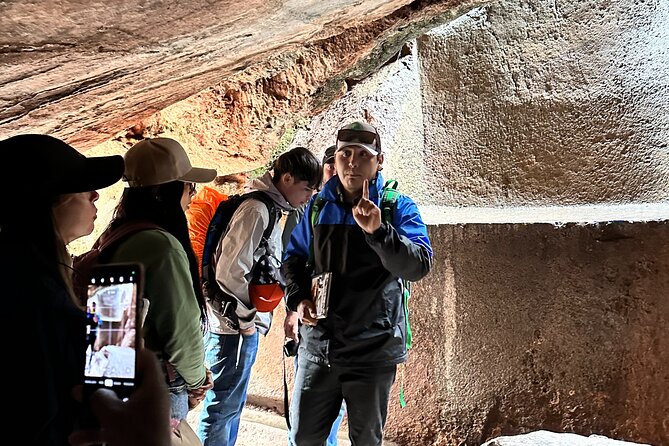
After roughly 15 minutes in the vehicle, you reach Puka Pukara. The name is associated with its reddish construction, and the tour presents it as a military fortress.
Compared with Saqsayhuamán, Puka Pukara is a smaller and more focused stop. Its value comes from understanding the network behind the Inca Empire. The guide explains its defensive and strategic function, helping you see why a site in this position mattered.
This is also a good place to pause for views. The supplied information does not promise a specific viewpoint or photo stop, but it does describe the site as an impressive fortress, and the elevated setting gives the visit a different feel from Qorikancha in central Cusco.
Puka Pukara is part of the archaeological ticket. Since the stop is short in physical scale but important in the wider story, I would pay attention to the explanation rather than judging it only by the size of the ruins.
Tambomachay: fountains, canals, and water worship
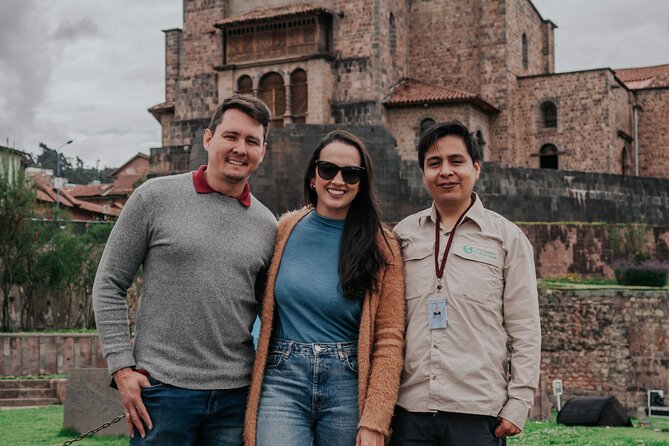
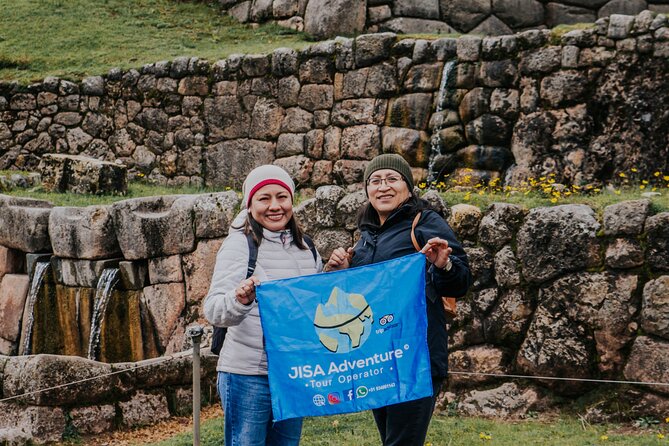
Tambomachay is the final archaeological stop. Known as the Baño del Inca, it is linked with ceremonies and the worship of water.
The most distinctive feature is the stone fountains and canals. They show how carefully the Incas handled water and how engineering could also serve a religious purpose. After the fortifications at Saqsayhuamán and Puka Pukara, Tambomachay gives the route a quieter finish centered on flowing water and ceremonial use.
I like the order of the route because it closes with a clear example of Inca hydraulic work. The guide can help tie this stop back to the religious importance introduced at Qorikancha and the ritual meaning explained at Q’enqo.
Tambomachay is included in the same $25 archaeological ticket. After the visit, private transport takes you back to Cusco and the Plaza de Armas.
What the guide adds to the experience
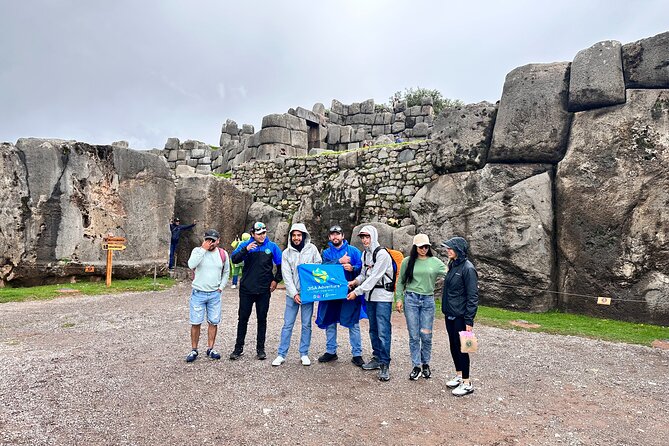
The strongest thread running through the tour is the guide. Jhonny is praised for bringing energy while explaining the sites, and for making the outing fun without losing the historical content. Victor is singled out for his explanations, care with the group, and willingness to allow time for photographs.
Jorge and Saul are also named as guides who provide clear, attentive tours. Saul is associated with a first-day Cusco outing that felt well organized and informative, while Jorge is described as accommodating and easy to recommend.
I would still remember that guides can vary from one departure to another. The experience provider is Jisa Adventure, and the tour includes an official tourism guide, but the exact guide is not guaranteed in the information provided.
A good guide is particularly useful here because the sites are compact and their meaning is not always obvious. You need someone to explain why one wall is defensive, why another space is ritual, and why water channels deserve as much attention as monumental stonework.
The real price, transport, and group size
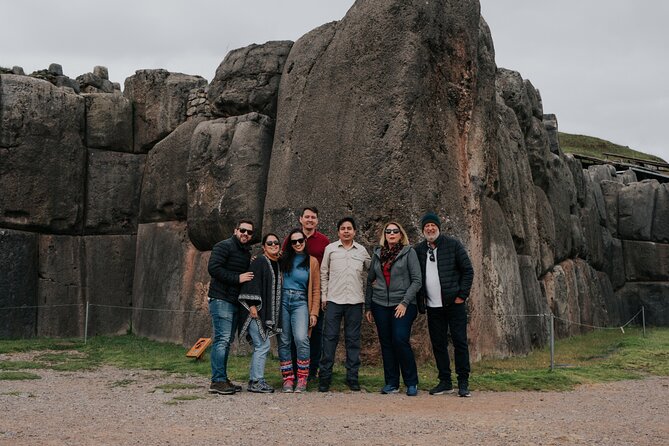
The advertised price is $32 per person. That covers the guided experience and private transportation, but not admission tickets or tips.
The additional entrance costs are:
- $25 for the partial ticket covering the archaeological centers
- $7 for Qorikancha
If you visit every listed site, the total before tips is therefore about $64 per person. That is the figure I would use when comparing this tour with other guided outings.
The value comes from the combination of transport, a guide, and five major sites. Hiring separate taxis to Saqsayhuamán, Q’enqo, Puka Pukara, and Tambomachay could become awkward, especially if you are unfamiliar with Cusco’s layout. Private transport also keeps the group together and removes some negotiating and waiting.
The group is limited to 12 people. That is not a private tour for one family, but it is small enough for questions and a more personal pace than a large coach outing. The included oxygen ball is listed as part of the package, though no further detail is given about how it is used.
Who will like this tour most
I would choose this outing if you are visiting Cusco for the first time and want a clear introduction before setting off for longer trips. It covers the main nearby archaeological sites in one booking and gives you a basic framework for understanding Inca religion, construction, military planning, and water systems.
It also suits you if you prefer guided context over wandering alone. The reviews associated with the guides consistently emphasize explanations, energy, kindness, and attention, which are exactly the traits that matter on a history-heavy route.
Families may appreciate the private transport and limited group size, though the information does not give a specific child age policy. You should also be comfortable with a fairly full half-day that includes several site visits and vehicle transfers.
I would be less inclined to choose it if you want a slow, highly detailed visit to each place. Five sites in one outing means you get breadth rather than long stretches of quiet exploration.
Practical details worth knowing
The meeting point is the Plaza de Armas in Cusco, and the activity ends back there. The listed operating period runs from September 3, 2023, through August 12, 2026, Monday through Sunday, with hours shown as 12:00 AM to 6:00 PM. Since the opening-hours format is unusually broad, confirm the actual departure time before you go.
Confirmation is provided at booking. The meeting point is near public transportation, and the activity is described as suitable for most people. No special accessibility details are supplied, so ask Jisa Adventure directly if you need specific assistance.
Bring money or a payment method for the entrance fees and a little extra for tips if your guide helps make the day especially useful. I would also keep the schedule flexible because the listed stop durations and the approximate five-hour total do not line up perfectly.
The tour is non-refundable and cannot be changed after booking. That makes it important to choose a date you can keep.
Should you book this Cusco city tour?
I would book it if you want an efficient first look at Cusco’s major Inca sites, value having private transport, and like learning through an energetic guide. The mix of Qorikancha, Saqsayhuamán, Q’enqo, Puka Pukara, and Tambomachay gives you a well-rounded introduction in one outing.
I would pause only to calculate the full price and decide if the fast pace suits you. At $32 for the tour plus $32 in listed admissions, it is not a $32 all-in experience. Still, for a small group of up to 12, with transport and an official guide, it can be a sensible way to get your bearings before the Sacred Valley or Machu Picchu.
FAQ
Where does the Cusco city tour start?
The tour starts at the Plaza de Armas in Cusco, Peru.
Where does the tour end?
The activity ends back at the meeting point in the Plaza de Armas.
How long does the tour last?
The tour duration is approximately five hours. The individual visits are listed as about one hour each, with driving time between some sites, so the exact pace may vary.
Which places are included in the route?
The route visits Qorikancha, Saqsayhuamán, Q’enqo, Puka Pukara, and Tambomachay.
Are entrance tickets included?
No. The partial archaeological ticket is listed at $25, and admission to Qorikancha is listed at $7.
How many people can join the tour?
The maximum group size is 12 people.
Is transportation included?
Yes. Private transportation is included, along with an official tourism guide and an oxygen ball.
Just added around Cusco
- Waqrapukara 1 day trekking + meals★ 3.9 · 3 reviews
- Zipline over the Sacred Valley Trip★ 5.0 · 11 reviews
- Valle Sur Cusco | half day★ 4.3 · 3 reviews
- Visit to the Cochahuasi Animal Sanctuary with rescued animal★ 4.1 · 4 reviews
- Visit Pisac from Cusco: Private Transport★ 4.6 · 9 reviews
- Maras and Huaypo lagoon by ATV from Cuzco | Local Operator★ 4.7 · 4 reviews
- Trek to Humantay Lake from Cusco★ 4.9 · 8 reviews
- Trek to Choquequirao 4 days★ 3.8 · 4 reviews
City Tours, compared.
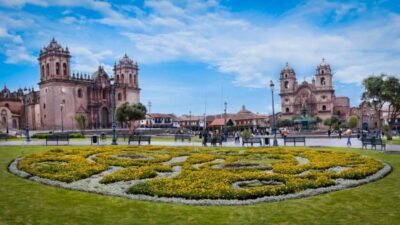
Half-Day City Tour with Sacsayhuaman and Q’enco
Read our review →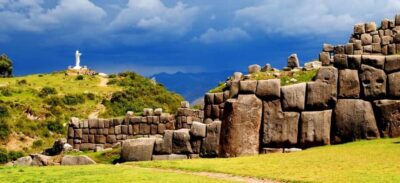
City Tour Cusco Qoricancha Sacsayhuaman y Tambomachay
Read our review →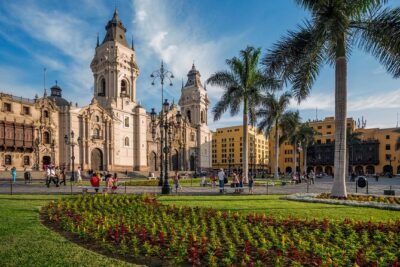
Lima’s Vibrant Heritage: Exploring the City’s Landmarks Half-day
Read our review →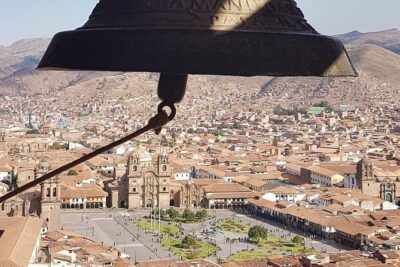
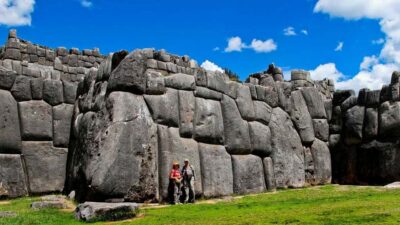
City Tour | Half-Day Tour to 4 Archaeological Sites
Read our review →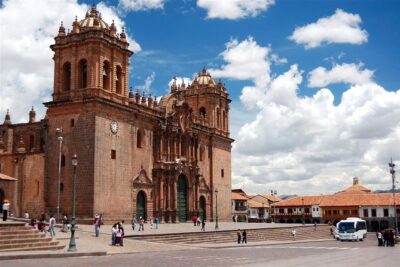
City Tour in Cusco & visit Museum South American Camelid Private.
Read our review →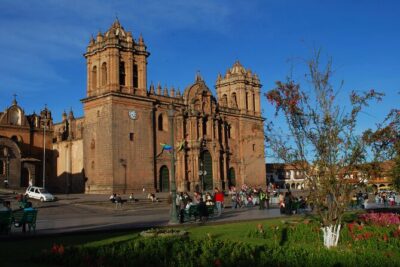
Cusco City Sightseeing, San Pedro Market, Cathedral and Qorikancha Temple
Read our review →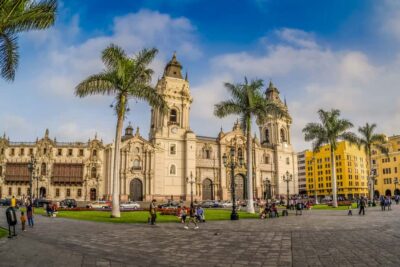
Browse the lists this tour appears in