
Reviewed · SILLAR ROUTE TOURS
Arequipa|| The Sillar Route+Culebrillas Canyon
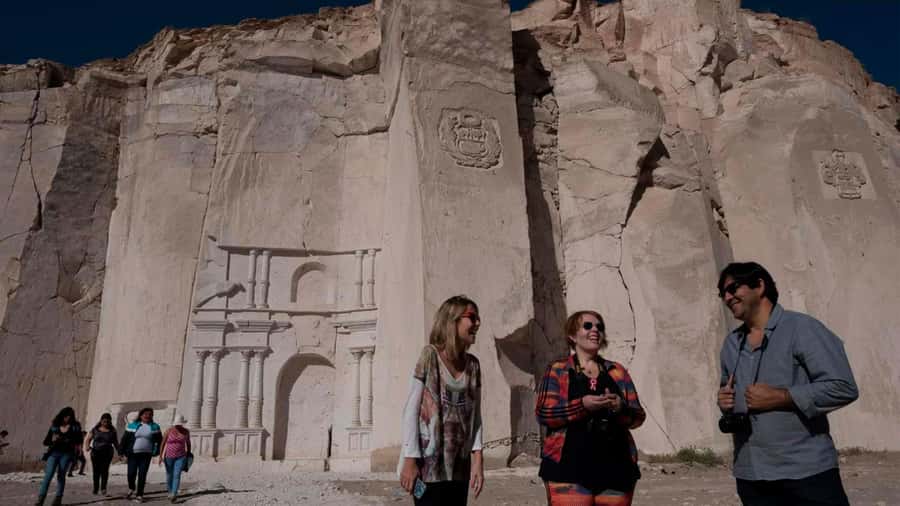
Arequipa’s famous white buildings begin with a very black origin: volcanic lava. On this half-day outing, you visit the quarries where that stone becomes sillar, then walk into Culebrillas Canyon to see petroglyphs linked to the Wari culture. I like the clear connection between Arequipa’s architecture and the raw material outside the city, and I like that the canyon adds a second setting rather than making the trip only about quarry walls. One important caution: the hands-on stonework may be explained more than demonstrated, and an actual stonemason may not be working in view.
I also like the short four-hour schedule, which fits neatly into an Arequipa afternoon, plus the return near the Plaza de Armas. The main cost is $35 per person, but you should add S/. 15 for the two quarry entrances, along with any food and travel insurance. The published rating is 3.7 from four ratings, so I would book this for the geology, archaeology, and scenery, not solely for a live craft demonstration.
In This Review
- Key points to know before you book
- Why Arequipa’s sillar matters
- Reaching the Añashuayco quarries
- Walking into Culebrillas Canyon
- Reading the Wari petroglyphs
- A four-hour afternoon in Arequipa
- What the $35 price really includes
- Who will enjoy this route most
- How to prepare for the quarry and canyon
- Should you book the Sillar Route and Culebrillas Canyon?
- FAQ
- Where does the tour take place?
- How long does the activity last?
- What time do I need to meet the group?
- What languages does the guide speak?
- Are the quarry entrance fees included?
- Is food included?
- Can I cancel for a full refund?
Key points to know before you book
- Volcanic stone behind Arequipa’s white architecture: Visit the Añashuayco quarries and learn how lava becomes hand-cut sillar.
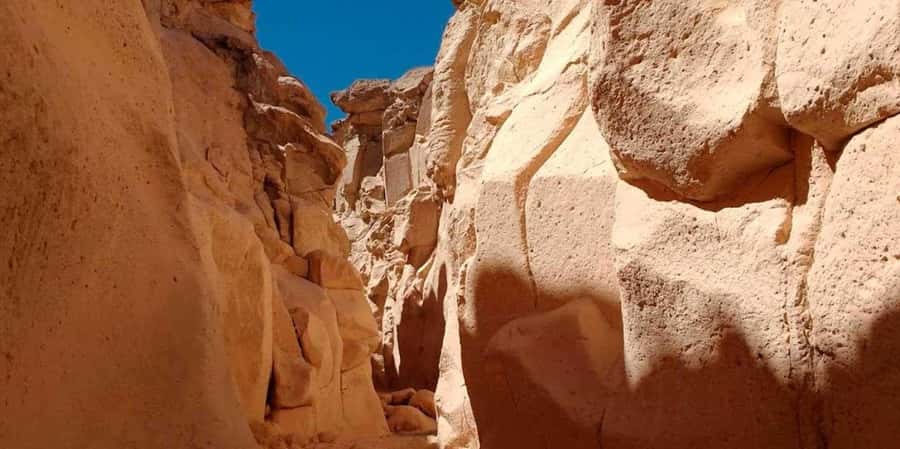
- A 30-minute walk leads to Culebrillas Canyon: The gorge has rock walls about 15 to 20 meters high.
- Wari petroglyphs add an archaeological stop: Symbols carved into the rock are more than a millennium old, though their meaning remains uncertain.
- Four hours is a useful afternoon length: Pickup begins from your Arequipa hotel, with the return near the Plaza de Armas.
- The listed price is not the full cost: Pay S/. 10 for Añashuayco and S/. 5 for Culebrillas, plus food and insurance.
- Expect English or Spanish guiding: No guide’s personal name is provided, so confirm language and pickup details when booking.
Why Arequipa’s sillar matters
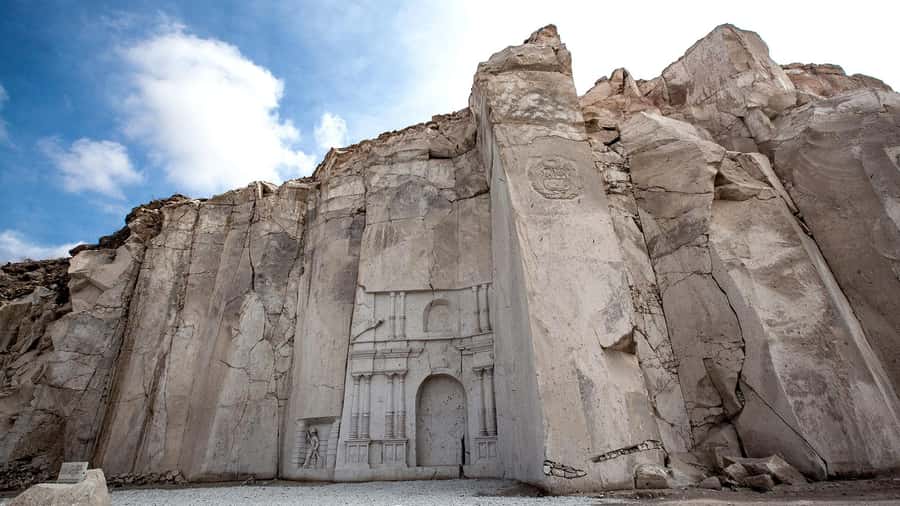
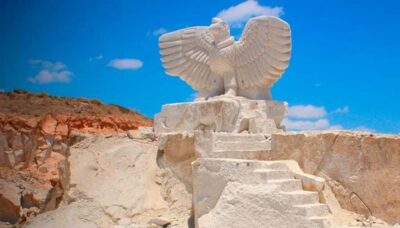
Arequipa is closely tied to its pale volcanic stone. Many of the city’s traditional buildings use sillar, giving the historic center its bright appearance and earning Arequipa a strong visual identity. This tour takes you to the source rather than asking you to admire the finished walls without knowing how they were made.
The stone comes from lava produced by the volcanoes around the region. That fact changes the way you look at the city. A carved doorway or church wall is not simply decorative masonry. It is part of a long chain that begins with volcanic activity, continues through quarrying, and ends with careful handwork.
The stone is also fragile during shaping. The work requires manual carving because the sillar can break if handled too harshly or with the wrong method. That makes the quarry stop more than a quick photo opportunity. At its best, it helps you understand why Arequipa’s buildings have their particular color, texture, and carved detail.
Still, keep your expectations measured. The supplied details promise an explanation of the stonemasons’ trade, but one recorded experience found little visible craft activity and limited information about how the stone is worked. You may see the quarry and learn about the process without watching a full demonstration from start to finish.
More sillar route tours in Arequipa:
- From Arequipa: Sillar Route Trek
★ 4.2 · 461 reviews - Sillar Route and Culebrillas Petroglyphs
★ 4.5 · 89 reviews - Sillar Route in Arequipa and viewpoint of the Volcanoes
★ 4.0 · 71 reviews
Reaching the Añashuayco quarries
The outing starts with pickup from your hotel in Arequipa at your chosen time, then follows the Uchumayo road toward the ashlar quarries. Transport is by bus or minibus, depending on the size of the group. That arrangement keeps the trip simple, especially if you do not want to arrange a taxi to a quarry outside the city.
The first stop is the Añashuayco Quarries. You pay an additional S/. 10 entrance fee here, separate from the $35 tour price. Bring soles for both quarry entrances, since the fees are quoted in local currency.
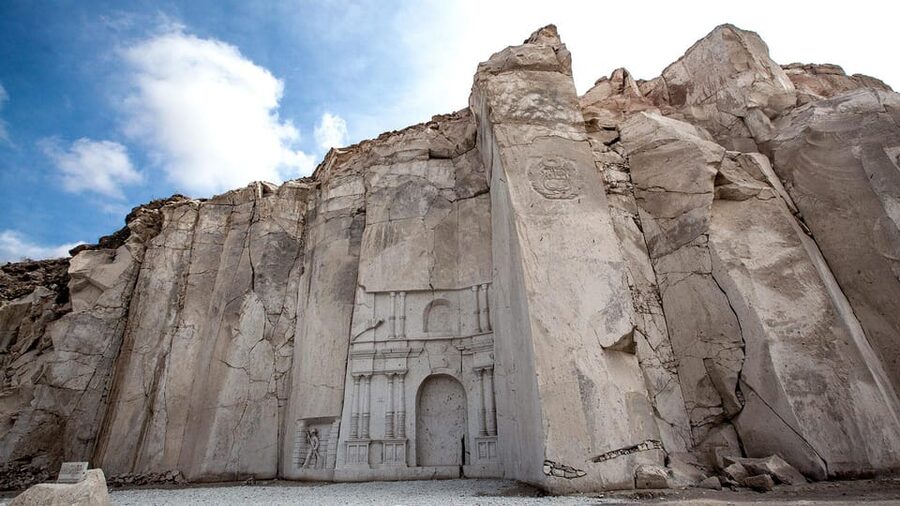
At the quarry, the guide explains how the pale stone is cut and shaped. The focus is the traditional profession of the cantero, or stonemason, and the way manual work protects the material from cracking. You should come ready to look closely at the cut faces of the rock and connect them with the carved stonework you have already seen in central Arequipa.
This is the most important stop for understanding the city’s construction. The value is not only visual. You learn that the stone used in grand buildings begins as rough volcanic material, then depends on human skill before it becomes a block, column, doorway, or wall.
The quality of this section depends heavily on the guide. The tour is offered in English and Spanish, but no individual guide name is supplied. If the stoneworking process is your main reason for booking, confirm that the tour will include a detailed explanation and ask how the guide handles the quarry visit.
Walking into Culebrillas Canyon
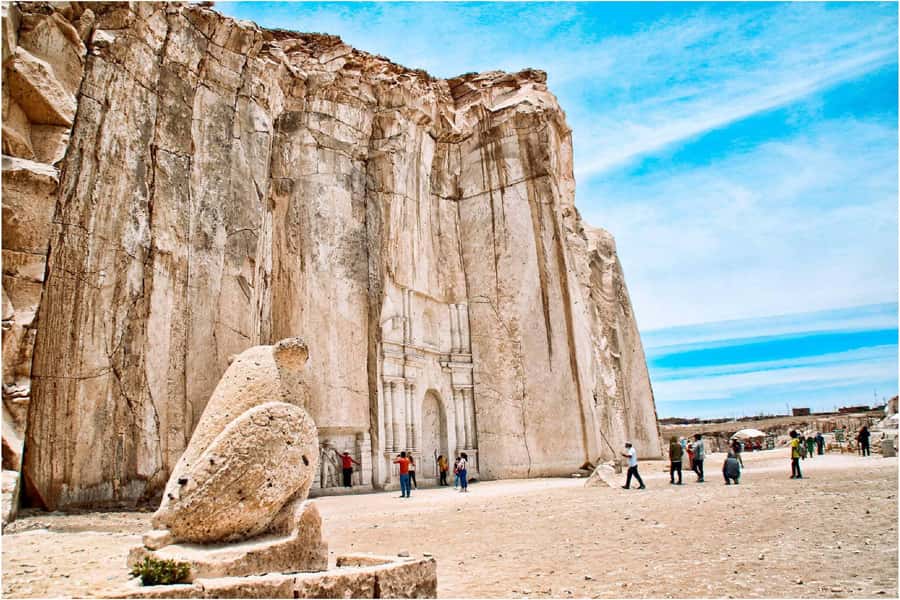
After the quarry visit, you walk for about 30 minutes to Culebrillas Canyon. This is a useful detail to take seriously. The outing is not entirely vehicle-based, and you will spend time walking over the route between the two stops.
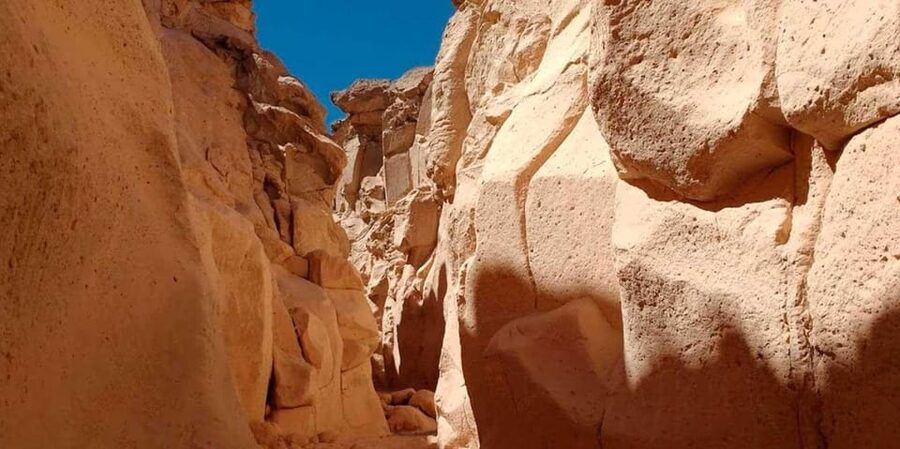
The canyon was shaped by nature and the passage of water. Its walls rise about 15 to 20 meters, creating a narrower, more enclosed setting than the open quarry. The change gives the tour a better rhythm: first you see stone being extracted and shaped, then you enter stone shaped by water.
You have time to photograph the canyon walls and look at the textures in the rock. The setting is especially useful for people who enjoy seeing how geology affects both natural scenery and human construction. The tour does not ask you to choose between culture and scenery. It gives you a short example of each.
The walk also means you should wear practical shoes. The supplied information does not describe the surface, difficulty, or accessibility, so I would not assume a smooth path or step-free route. If a 30-minute walk may be difficult for you, ask the provider for current route details before paying.
Reading the Wari petroglyphs
Culebrillas is not only a gorge. It also contains petroglyphs associated with the Wari culture, created more than a millennium ago. These are symbols engraved into the rock, and their exact meaning remains unknown.
That uncertainty is part of the appeal. You are not being handed a neat answer for every mark. Instead, you see evidence of people who used this place long before modern Arequipa, while accepting that the full message has been lost.
The petroglyphs give the canyon a cultural layer that the quarry alone would not provide. You can look at the rock as geology, as a record of flowing water, and as a surface chosen by earlier people for symbolic marks. Listen closely to the guide here, since the markings may not be obvious at first glance.
The information provided does not specify how many petroglyph panels you will see or how close you can get to them. I would treat this as a focused short stop, not a full archaeological expedition. The attraction is the combination of ancient symbols and canyon scenery within an easy half-day plan.
Same valley, a completely different kind of day:
- From Arequipa: Colca Canyon Full-Day Guided Tour with Meals
★ 4.5 · 982 reviews - Tour to the Salinas Lagoon and National Reserve in Arequipa
★ 4.5 · 548 reviews - Arequipa: Chili River White Water Rafting with Hotel Pickup
★ 4.8 · 329 reviews - 2-Day Tour Colca Canyon in Arequipa with end in Puno
★ 4.6 · 248 reviews
A four-hour afternoon in Arequipa
The scheduled duration is four hours, and the return is near the Plaza de Armas. That makes this outing easy to pair with a morning visit to Arequipa’s historic center, a meal, or an evening plan.
The meeting information needs attention. Hotel pickup is included, yet the stated meeting point is the Cathedral door on the Main Square, with arrival required between 1:45 and 1:55 PM. Those details can sound contradictory. If you are not being collected directly at your hotel, make sure you know to meet at the cathedral during that ten-minute window.
A ten-minute meeting window is narrow, so do not arrive at the last second. The central meeting point is convenient if you are already near the Plaza de Armas, but you should clarify the exact pickup arrangement in advance. This is one of the few practical matters that can affect the whole afternoon.
Transport is shared, with a bus or minibus selected according to group size. The available information does not state the maximum group size, vehicle comfort, or exact driving time to the quarries. If you prefer a private outing or need extra space, ask before booking rather than assuming the vehicle will be small.
What the $35 price really includes
At $35 per person, the tour offers a useful combination of transport, guiding, quarry access arrangements, canyon access arrangements, and a return to central Arequipa. You are paying for a structured half-day rather than arranging two separate visits on your own.
The price does not include the entrance fees. Add S/. 10 for the Añashuayco Quarries and S/. 5 for the Culebrillas Quarries, for a total of S/. 15 per person. Food is also excluded, and there is no travel insurance included.
That extra S/. 15 is not a major addition, but it matters when comparing prices. The real value comes from the route design. You get two related sites in one afternoon, with transport between the city and the quarries and an English or Spanish guide to explain the stops.
The value drops if your priority is a detailed, live stone-carving demonstration. One available account describes the quarry as lacking visible workers and offering only sparse information about the material and carving process. I would therefore choose this tour for access to the sites and the link between geology, architecture, and archaeology, while treating the craft explanation as something that may vary.
Who will enjoy this route most
I would recommend this outing to you if you enjoy short cultural trips with a strong visual element. The quarry gives you a direct connection to Arequipa’s pale stone, while the canyon offers rock walls, a walk, and ancient markings.
It also suits you if you have already seen the main churches and plazas and want a half-day outside the city. The return near the Plaza de Armas means you can continue exploring central Arequipa afterward.
Families and casual sightseers may appreciate the compact schedule, though the 30-minute walk should be considered before booking. The route is not described as accessible, and the information does not give a formal difficulty grade.
I would be more cautious if you are a serious craft enthusiast. The description presents the quarries as a place to learn about stonemasonry, but the actual experience may not include artisans actively carving stone in front of you. In that case, confirm the demonstration content or seek a specialist workshop.
How to prepare for the quarry and canyon
Wear shoes suitable for a 30-minute walk and bring enough water for the four-hour outing. Food is not included, and no meal arrangement is specified, so plan around the afternoon schedule.
Carry soles for the S/. 10 and S/. 5 entrance charges. The tour price is listed in US dollars, while the site fees are quoted in soles, so keeping local currency ready is simpler than trying to change money at the entrances.
Bring a camera, but give yourself time to listen. The quarry’s key lesson is easy to miss if you only photograph white rock. Look for the marks left by extraction and shaping, then compare that raw material with the carved stone in Arequipa’s center.
You should also confirm three details before the day begins: your pickup location, the exact starting time, and whether your guide will speak English or Spanish. The activity offers both languages, but the specific guide is not named.
Should you book the Sillar Route and Culebrillas Canyon?
I would book it if you want a reasonably priced, four-hour outing that explains where Arequipa’s famous sillar comes from and adds a canyon with Wari petroglyphs. The two-site format gives you more variety than a quarry visit alone, and the return near the Plaza de Armas keeps the schedule practical.
I would not book it expecting a guaranteed working demonstration by stonemasons. The strongest reason to go is the setting and the connection between volcanic lava, hand-carved architecture, natural rock, and ancient symbols. If that sounds worthwhile, the $35 price plus S/. 15 in entrance fees is fair. If live artisan work is essential, confirm that point before reserving.
FAQ
Where does the tour take place?
The tour visits the Añashuayco sillar quarries and Culebrillas Canyon in the Arequipa Region of Peru.
How long does the activity last?
The activity lasts four hours.
What time do I need to meet the group?
The stated meeting point is the Cathedral door on Arequipa’s Main Square, and you need to be there between 1:45 and 1:55 PM. Hotel pickup is also described as included, so confirm which arrangement applies to you.
What languages does the guide speak?
The tour is offered with a live guide who speaks English or Spanish.
Are the quarry entrance fees included?
No. The Añashuayco Quarries charge S/. 10 per person, and the Culebrillas Quarries charge S/. 5 per person.
Is food included?
No. Food is not included in the tour price.
Can I cancel for a full refund?
Yes. You can cancel up to 24 hours in advance for a full refund.
Just added around Arequipa
- Walking tour through the Historic Center of Arequipa★ 4.0 · 3 reviews
- Trek to the Route of the Sillar and Culebrillas in Arequipa★ 4.0 · 9 reviews
- 3-Day Colca Canyon trek with Professional Guide★ 5.0 · 40 reviews
- Trekking, Waterfalls and Thermal Baths★ 4.5 · 47 reviews
- Full Day Tour to Colca Canyon from Arequipa★ 4.0 · 34 reviews
- Private 3 Day Colca Canyon Trekking tour (superior Service)★ 5.0 · 58 reviews
- Colca Full Day★ 5.0 · 57 reviews
- Arequipa, Historic and Colonial City and Santa Catalina Monastery★ 4.5 · 42 reviews
Sillar Route Tours, compared.
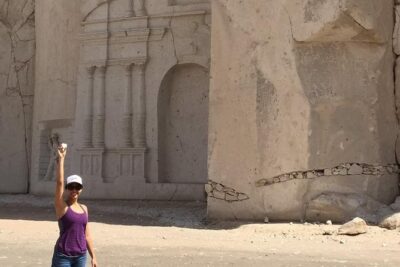
Sillar Route in Arequipa and viewpoint of the Volcanoes
Read our review →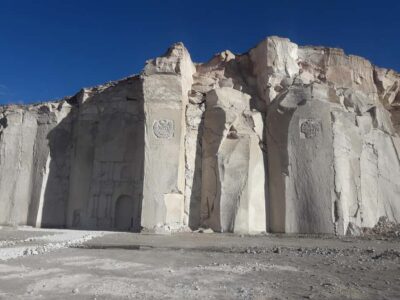
4 hours Tour: Route of Sillar with Trek in Culebrillas
Read our review →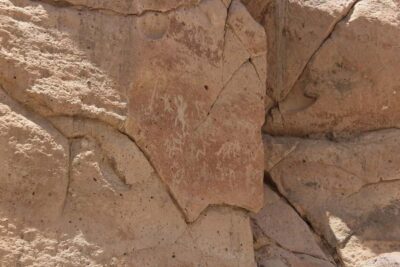
Route of the Sillar | Quarries of Añashuaycos | Half day
Read our review →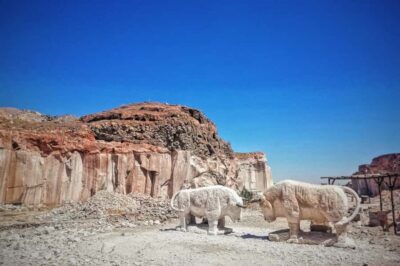
4-hour excursion: Sillar Route with Hiking in Culebrillas
Read our review →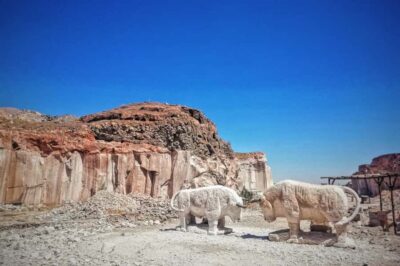
Trek to the Route of the Sillar and Culebrillas in Arequipa
Read our review →Browse the lists this tour appears in