
Reviewed · SILLAR ROUTE TOURS
Sillar Route in Arequipa and viewpoint of the Volcanoes
Arequipa’s white colonial center begins far from the Plaza de Armas, in dusty volcanic quarries where workers cut blocks of sillar by hand. The most memorable part is often Culebrillas Canyon, a narrow, dry passage with petroglyphs and a small pink sillar formation called the Shingle Cannon.
I like the short format and the low price, about $11 per person, especially if you have a spare morning or afternoon in Arequipa. I also like the comfortable round-trip van service and the small maximum group of 15, which can make a big difference on a brief excursion.
The main concern is consistency. Pickup has occasionally been late or unclear, and an English booking may become a multilingual tour with much more Spanish than English. Bring cash for the separate entrance fee, plus sunscreen, insect repellent, and a mask for the dust.
In This Review
- Key points to know before you book
- Why Arequipa’s white stone begins in the quarries
- Añashuayco, where the stone is still worked by hand
- The second quarry shows the rough side of sillar
- Culebrillas Canyon brings the best walk
- The volcano viewpoint adds context, not a separate expedition
- What the $11 price really buys you
- Morning or afternoon timing
- Pickup and guide quality need a little patience
- Who will enjoy this half-day trip
- Practical packing list
- Should you book the Sillar Route?
- FAQ
- How much does the Sillar Route tour cost?
- How long does the tour last?
- Where does the tour start?
- Where does the tour finish?
- Is transportation included?
- Is a guide included?
- How large is the group?
- Can I choose a morning or afternoon departure?
- Is the entrance fee included?
- What happens if bad weather cancels the tour?
Key points to know before you book
- Culebrillas Canyon is the visual highlight: Expect an easy but uneven walk, petroglyphs, carved stone, and strong photo opportunities.
- Sillar is Arequipa’s signature building stone: You see where the pale volcanic blocks used in the historic center are quarried and shaped.
- This is a three-to-four-hour outing: It fits neatly into a free morning or afternoon rather than taking over your day.
- The advertised price is very low: Round-trip tourist transport and a professional guide are included, but the $3 entrance fee is extra.
- Language needs checking: The tour may be conducted in both Spanish and English, and English explanations can be brief if most of the group speaks Spanish.
- Pack for dust, sun, flies, and changing weather: Walking shoes, layers, sunscreen, repellent, and a face mask are sensible additions.
Why Arequipa’s white stone begins in the quarries
The Sillar Route gives you a useful piece of Arequipa’s identity. Much of the city’s historic center is built from sillar, a pale volcanic stone formed from ash and material released by eruptions. Instead of seeing only polished church facades and colonial walls, you get to see the hard, dusty work behind them.
The quarries are not a manicured park. Expect exposed rock, loose dust, rough paths, and active or recently active work areas. That raw setting is part of the point. You can watch or learn about the artisanal way workers cut blocks from the stone, then compare the unfinished material with the carefully fitted buildings back in central Arequipa.
The tour also includes information about the volcanoes around the city and a viewpoint of the volcanic scenery. The exact view depends on weather and the route used that day, so I would treat the volcano stop as a useful bonus rather than the sole reason to book.
More sillar route tours in Arequipa:
- From Arequipa: Sillar Route Trek
★ 4.2 · 461 reviews - Sillar Route and Culebrillas Petroglyphs
★ 4.5 · 89 reviews - 4 hours Tour: Route of Sillar with Trek in Culebrillas
★ 4.2 · 69 reviews
Añashuayco, where the stone is still worked by hand
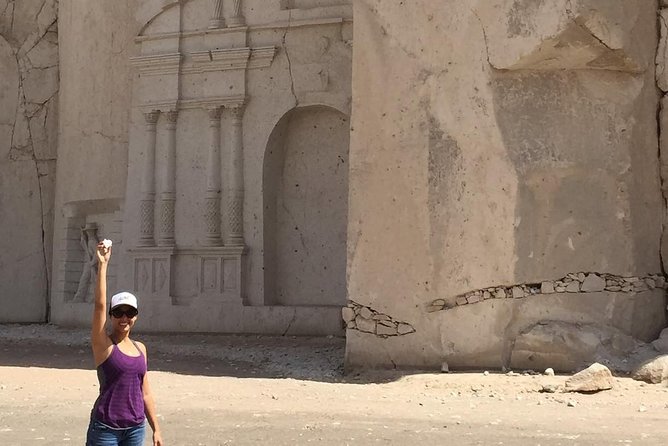
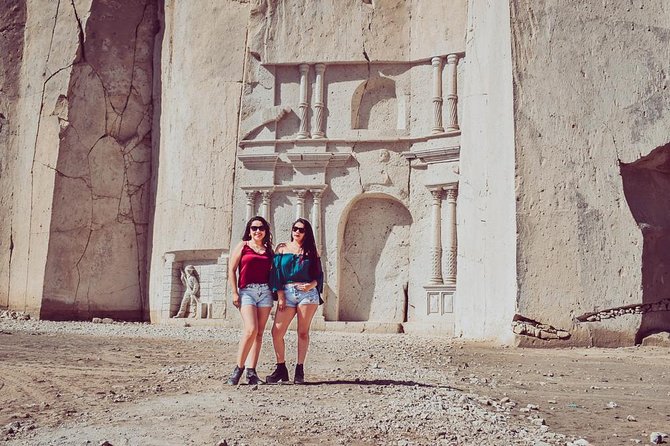
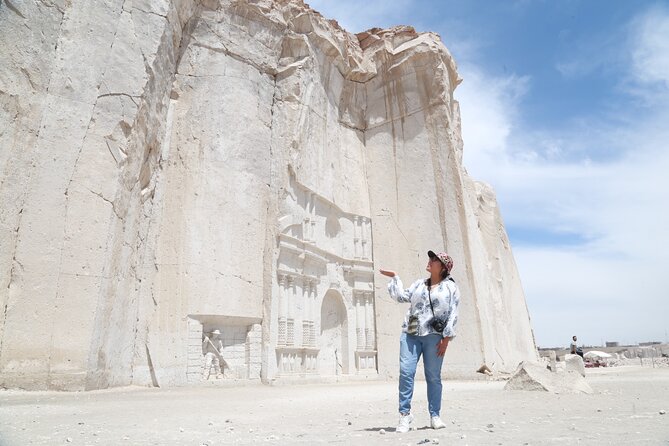
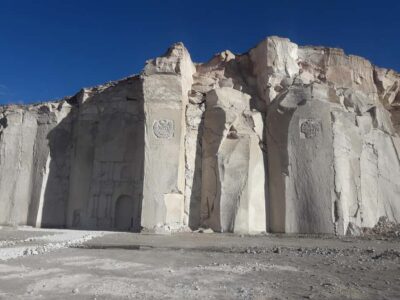
The first main stop is the Añashuayco sillar quarry, with about 50 minutes set aside. This is the place to focus on the craft. You can see murals carved into the ashlar, watch demonstrations of the workers’ routine, and get a clearer sense of how raw volcanic rock becomes a building block.
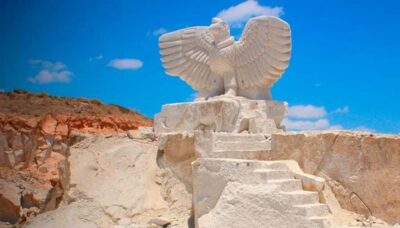
The stone is also shaped into decorative pieces and statues. These carvings give the otherwise dusty quarry a more artistic feel, and they create some of the best photographs on the route. Guides may explain the tools, the labor, and the link between the quarry and Arequipa’s historic architecture.
One unusual feature is the small pink sillar cannon, formed naturally in the rock. It is a curious detail rather than a major monument, but it helps break up the stop and gives you something specific to look for.
The entry charge is not included. The stated cost is $3, though you should confirm the current amount before leaving Arequipa because one booking included an entrance fee that was higher than expected. Carry small cash so a minor price change does not become a problem.
The second quarry shows the rough side of sillar
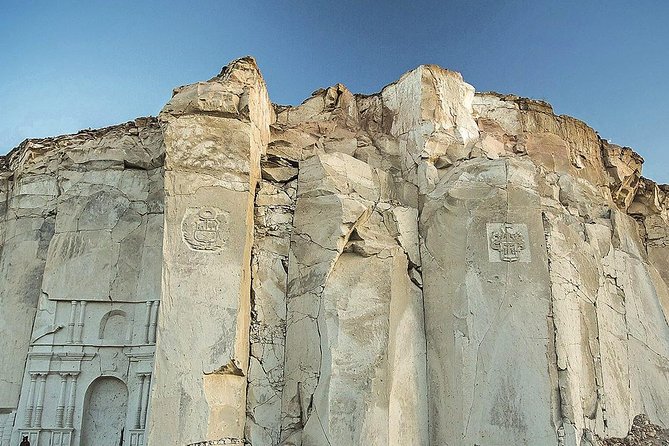
The next quarry stop lasts about 40 minutes. It is described as a protected natural area, and its value is seeing the source of Arequipa’s characteristic stone before it is shaped into walls, arches, and churches.
This part can feel less polished than the first quarry. There are not endless sculptures or a long list of sights. Much of what you see is rock, dust, open ground, and the marks of extraction. If you expect a major archaeological site, you may find it modest.
I think the stop works best when you pay attention to scale and process. The route helps you understand that Arequipa’s famous white architecture did not appear by magic. It came from a demanding industry carried out in a harsh setting, with stone removed and cut by hand.
Dust can be heavy. One useful precaution is to bring a mask, particularly if you are sensitive to airborne dust. Closed walking shoes are a better choice than sandals, and several light layers make sense because the weather can shift from warm sun to wind and cloud.
Culebrillas Canyon brings the best walk
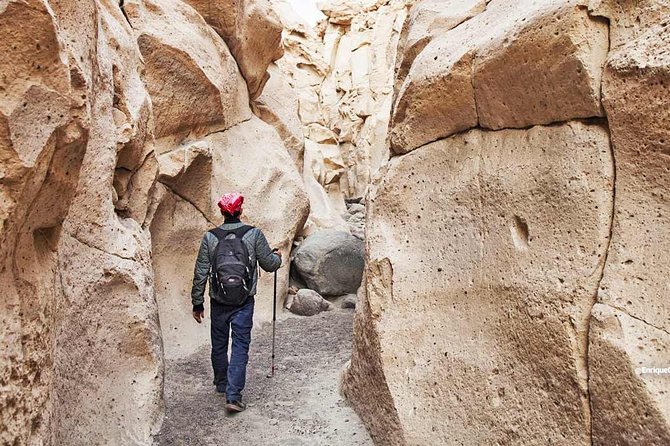
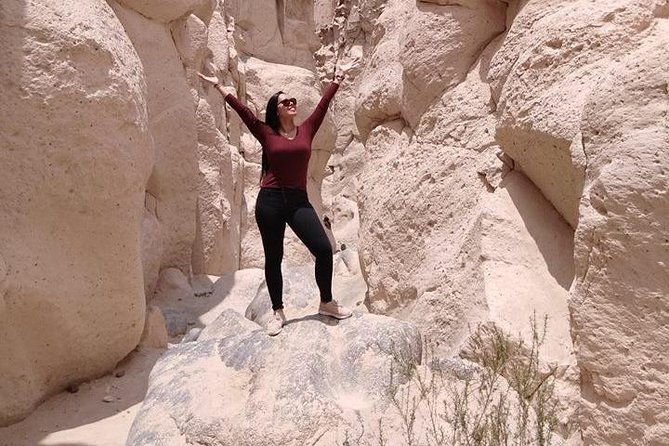
The Culebrillas section is the part I would most want to protect time for. The route includes a walk of roughly 600 meters through a dry canyon, with petroglyphs and stone walls that create a more intimate setting than the open quarry.
The walk is generally described as manageable, but the ground is uneven. Wear sturdy shoes with a good grip. This is not the place for smooth-soled city shoes, even though the outing is short.
The canyon also contains carved figures and unusual rock shapes. Some are natural, while others show human work, and the combination gives the stop more character than a simple quarry visit. It is a good place for photographs, especially when the pale stone catches the changing light.
Bring insect repellent. Flies can be numerous in the canyon, and the open doors and windows of the van may let them in when the group returns from a walk. Sunscreen is just as important. The pale stone reflects sunlight, and shade may be limited.
Same valley, a completely different kind of day:
- From Arequipa: Colca Canyon Full-Day Guided Tour with Meals
★ 4.5 · 982 reviews - Tour to the Salinas Lagoon and National Reserve in Arequipa
★ 4.5 · 548 reviews - Arequipa: Chili River White Water Rafting with Hotel Pickup
★ 4.8 · 329 reviews - 2-Day Tour Colca Canyon in Arequipa with end in Puno
★ 4.6 · 248 reviews
The volcano viewpoint adds context, not a separate expedition
The tour includes views connected with Arequipa’s nearby volcanoes and gives you a chance to contrast the quarry setting with the city’s wider volcanic surroundings. When visibility is good, this helps explain why sillar is such an important part of local building culture.
Do not book this as a dedicated volcano sightseeing trip. The excursion is short, and the supplied route centers on the quarries and canyon. Weather can also affect what you see. On a clear day, the views can add a fine finish. On a cloudy day, the stone-working story remains the main attraction.
The return to central Arequipa completes the connection. After seeing the source of the material, you can look at the city’s great sillar buildings with a sharper eye. The old center is not just whitewashed. Its appearance comes from a particular local stone and generations of skilled labor.
What the $11 price really buys you
At about $11 per person, this is one of the easier Arequipa excursions to justify financially. You get tourist transport, a professional guide, and a three-to-four-hour program. For a short introduction to the city’s building material, the cost is strong.
The value depends on your expectations. If you want a polished museum experience, long expert commentary, or a full-day mountain outing, this will feel basic. If you want an inexpensive way to get beyond central Arequipa and see something distinctive, it does the job.
The separate entrance fee is the only stated extra, but budget a little flexibility in case the amount has changed. Food and optional purchases are not listed as included. One past stop included the chance to buy queso helado, a local frozen dessert, but that was extra and should not be treated as part of the package.
The van is described in positive terms by some bookings, including good condition, space, and air conditioning. Conditions can vary, and one account found the vehicle hot when windows were closed. Still, round-trip transport matters here because the quarries are outside the city and a taxi arrangement would add work and uncertainty.
Morning or afternoon timing
You can choose a morning or afternoon departure. The right choice depends on your wider Arequipa plans, not on a guaranteed difference in quality. A morning tour leaves the rest of the day free. An afternoon tour may suit you if you want a relaxed start or have morning plans in the city.
Allow three to four hours rather than trying to fit a tight appointment immediately afterward. Pickup and traffic can add uncertainty, and the program includes several stops with walking time.
The stated meeting point is C. San Agustín 102. The end point is near the Templo de San Agustín on C. Sucre, two or three blocks from the Plaza de Armas because tour vehicles do not enter the main square. That is convenient for continuing into the historic center, but remember that the tour does not finish directly in the plaza.
Pickup and guide quality need a little patience
The operator confirms the booking at the time of purchase, but pickup communication has not always been smooth. Some people have waited around 30 to 40 minutes, while others found the hotel pickup easy. In a few serious cases, the vehicle did not arrive at all.
That does not mean every departure will be troubled, but I would not stand outside your hotel without a phone and a clear confirmation. If the pickup time is not sent well in advance, contact the operator. Keep the meeting point and booking details available.
Guide quality also varies. Positive experiences have specifically praised Alonso, Betsey, Jose Jose, and Christina for friendly explanations, stories, and good energy. Other bookings found the guide’s English weak or the commentary much shorter in English than in Spanish.
The operator has acknowledged that the service may be multilingual. If you book expecting an English-only experience, ask before departure how the language arrangement will work. This is especially important if you are the only English speaker in the van. The sites are still visible without long explanations, but the cultural value is greater when the guide can explain the stone, the volcanoes, and the city clearly.
Who will enjoy this half-day trip
I would recommend the Sillar Route to you if you have at least a few hours in Arequipa and want an outing that is easy to organize and inexpensive. It suits solo visitors, couples, families, and friends who enjoy unusual photo stops more than strenuous hiking.
It is also a good choice for anyone curious about how historic buildings were made. The route gives you a direct connection between quarry, craftsman, stone carving, and city architecture.
You may want to skip it if your Arequipa schedule is already full of major sights or if you need a tightly timed, English-language program. Some parts are simple, and the second quarry may feel underwhelming if you are not interested in geology, labor, or photography.
Most people can take part, but the route includes uneven ground, dust, sun, and a canyon walk. Anyone with mobility concerns should ask the operator for current details before booking, since the available information only says that most people can participate.
Practical packing list
Keep your bag light, but bring the things that make the rough setting easier:
- Walking shoes with grip
- Sunscreen and a hat
- Insect repellent for Culebrillas
- A face mask or cloth for quarry dust
- Several layers for sun, wind, and cooler periods
- Small cash for the entrance fee
- Water and a phone or camera
The weather requirement matters. If poor weather causes cancellation, you are offered another date or a full refund. For your own plans, avoid placing an important bus, flight, or timed attraction too close to the return.
Should you book the Sillar Route?
Book it if you want a short, low-cost outing with a genuinely local subject. The best moments are the hand-worked stone, the carved canyon, the petroglyphs, and the chance to look back at Arequipa’s white buildings with better understanding.
Go in with realistic expectations. This is not a grand ruin or a full-day volcano adventure. It is a dusty working quarry route with a few strong sights, a useful guide when the language match is good, and excellent value at $11.
I would book it during a flexible day, confirm the pickup and language in advance, and carry more cash than the listed $3 entrance fee. Cancel at least 24 hours before departure for a full refund. Within 24 hours, changes and refunds are not accepted.
FAQ
How much does the Sillar Route tour cost?
The listed price is $11 per person. An entrance fee of $3 is not included, and you should confirm the current amount before departure.
How long does the tour last?
The experience lasts approximately three to four hours.
Where does the tour start?
The stated meeting point is C. San Agustín 102 in Arequipa, Peru.
Where does the tour finish?
The tour ends near the Templo de San Agustín on C. Sucre, two or three blocks from the Plaza de Armas.
Is transportation included?
Yes. Tourist transportation with round-trip service is included.
Is a guide included?
Yes. A professional guide is included.
How large is the group?
The tour has a maximum of 15 participants.
Can I choose a morning or afternoon departure?
Yes. Morning and afternoon start times are available.
Is the entrance fee included?
No. The entrance fee is separate from the tour price.
What happens if bad weather cancels the tour?
You can choose a different date or receive a full refund if the experience is canceled because of poor weather. Free cancellation is available when you cancel at least 24 hours before the start time.
Just added around Arequipa
- Walking tour through the Historic Center of Arequipa★ 4.0 · 3 reviews
- Trek to the Route of the Sillar and Culebrillas in Arequipa★ 4.0 · 9 reviews
- 3-Day Colca Canyon trek with Professional Guide★ 5.0 · 40 reviews
- Trekking, Waterfalls and Thermal Baths★ 4.5 · 47 reviews
- Colca Full Day★ 5.0 · 57 reviews
- Full Day Tour to Colca Canyon from Arequipa★ 4.0 · 34 reviews
- Private 3 Day Colca Canyon Trekking tour (superior Service)★ 5.0 · 58 reviews
- Arequipa, Historic and Colonial City and Santa Catalina Monastery★ 4.5 · 42 reviews
Sillar Route Tours, compared.
4 hours Tour: Route of Sillar with Trek in Culebrillas
Read our review →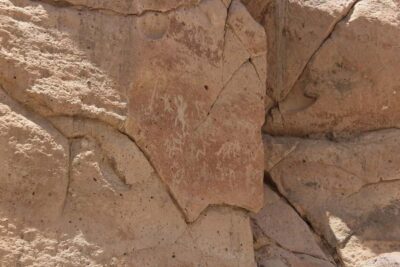
Route of the Sillar | Quarries of Añashuaycos | Half day
Read our review →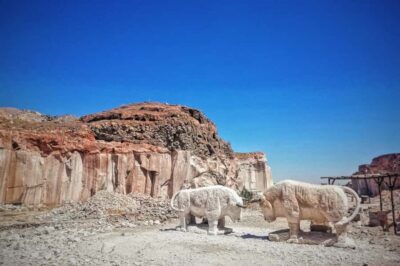
4-hour excursion: Sillar Route with Hiking in Culebrillas
Read our review →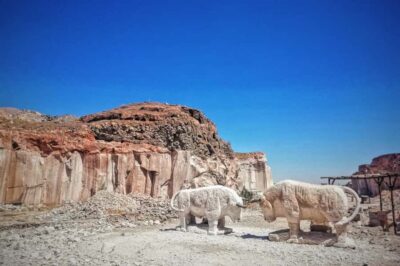
Trek to the Route of the Sillar and Culebrillas in Arequipa
Read our review →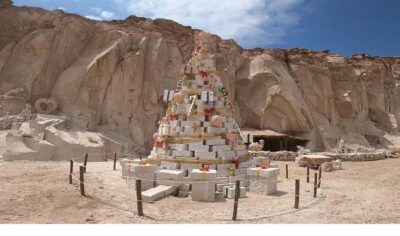
Arequipa | Tour of the Sillar Route + Culebrillas Canyon
Read our review →Browse the lists this tour appears in