
Reviewed · MACHU PICCHU TOURS
4 Day Inca Trail To Machu Picchu – Private Service
The best part of this four-day trek is that Machu Picchu comes at the end of a real journey, not as a quick stop reached by train. You follow old stone paths through cloud forest and high mountain passes, visit Inca sites along the way, and enter through the Sun Gate after four days on foot.
I like the private guide service, especially for a trek where pace and altitude matter. Guides such as Victor, Guido, Guillermo, Hugo, Rene, Felipe, and Aldo have helped past groups with trail timing, history, encouragement, and practical support. I also like that camping gear, cooks, porters, most meals, transport, and a personal porter allowance are bundled into the price.
The main drawback is the physical demand. Dead Woman’s Pass reaches 4,200 meters, and the trail includes long climbs and seemingly endless stone stairs. The non-refundable policy also makes this a booking that deserves careful planning.
In This Review
- Quick points before you book
- What the $1,395 price includes
- Day 1: Kilometer 82 to Wayllabamba
- Day 2: The 4,200-meter climb to Dead Woman’s Pass
- Day 3: Phuyupatamarca, Intipata, and Wiñay Wayna
- Day 4: Sunrise at the Sun Gate and Machu Picchu
- The guide and support team matter
- Food, water, and camp comfort
- Who should choose this private trek
- Is the private service worth $1,395?
- Should you book this Inca Trail trek?
- FAQ
- How long does the Inca Trail tour last?
- Where does the tour begin?
- What documents are needed at the trail checkpoint?
- How high is Dead Woman’s Pass?
- Is this a private tour?
- Are meals included?
- Is camping equipment provided?
- Are porters included?
- Is Huayna Picchu included?
- Is the booking refundable?
Quick points before you book
- Dead Woman’s Pass reaches 4,200 meters, making Day 2 the toughest part of the trek.
- The private format keeps the experience personal, with your group and guide setting the rhythm.
- Wiñay Wayna is a major reward before Machu Picchu, not just another overnight camp.
- A cook prepares three lunches, three dinners, and three breakfasts, with a dining tent, tables, and chairs provided.
- Porters carry camping and cooking equipment, while a personal porter can carry up to 7 kilograms of your belongings, though the listing gives conflicting information about that service.
- The early arrival at the Sun Gate gives you a dramatic first view of Machu Picchu, followed by transport down to Aguas Calientes.
What the $1,395 price includes
At $1,395 per person, this is not a basic walk with a guide and a permit. The package covers a substantial support team and much of the work that makes a four-day camp trek possible.
You get a professional bilingual guide, with an assistant guide for groups of nine or more. Since this is private service, only your own group participates. That matters on a hard trek. Your guide can explain the Inca sites, answer questions, and adjust the walking rhythm to your group rather than keeping you tied to a large party.
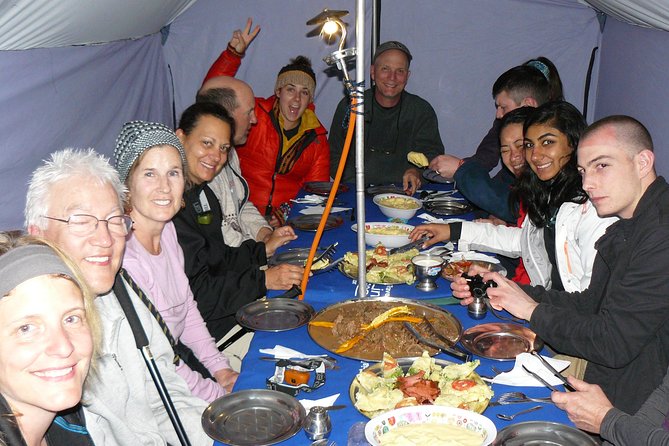
The camping setup includes a four-person tent shared by two people, foam sleeping mattresses, and a dining tent with tables and chairs. Porters carry the cooking and camping gear. A cook prepares the included meals, and the food is one of the package’s strongest practical features. Several named guides and cooks have earned warm praise for turning out filling meals in camp, including a birthday cake on one trip.
Transportation is also covered. You are collected in Cusco, driven to Kilometer 82, and return by train to Ollantaytambo on the final day. From Machu Picchu, a bus takes you down to Aguas Calientes, and the company collects you at Ollantaytambo train station later that day.
The price does not include a single supplement, listed at $60, walking sticks, Huayna Picchu admission, gratuities, travel insurance, or meals not specifically included. The first breakfast, plus lunch and dinner on the last day, are also excluded.
One detail needs confirmation before you pay. The inclusions say a personal porter carries 7 kilograms of belongings, while the exclusions list that same personal porter service as not included. Ask Valencia Travel Agency S.a.c. to clarify the current arrangement and any extra charge.
More machu picchu tours in Cusco:
- From Cusco: Full-Day Group Tour of Machu Picchu
★ 4.7 · 1,767 reviews - Machu Picchu Day Trip from Cusco
★ 4.5 · 1,644 reviews - Machu Picchu: Full-Day Tour from Cusco with Optional Lunch
★ 4.6 · 927 reviews
Day 1: Kilometer 82 to Wayllabamba
The day begins very early, with pickup around 4:00 or 4:30 a.m. The information gives both times, so confirm your exact pickup time before departure. You leave Cusco by vehicle and continue toward Piscacucho, also known as Kilometer 82.
At the trail control point, you show your passport, entrance ticket, and other required documents. Access to the Inca Trail is limited, so this checkpoint is not a formality to ignore. Keep your passport handy, and use the restrooms before setting off. This is also the right time to apply sunscreen and insect repellent.
The trail begins near 2,720 meters beside the Vilcanota River. The first section gives you an immediate sense of the route’s variety. You walk through an Andean valley, then move toward cloud forest and archaeological remains.
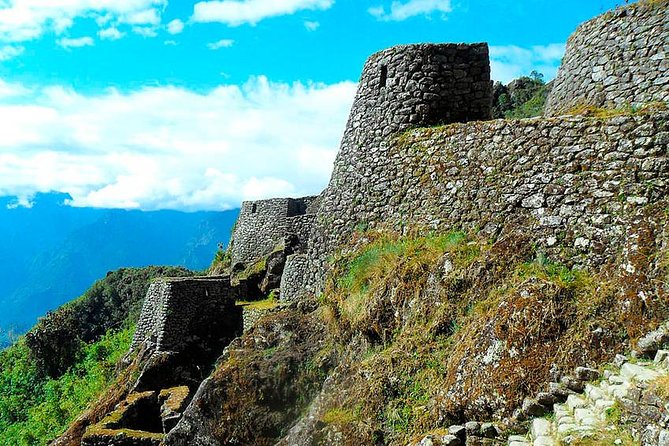
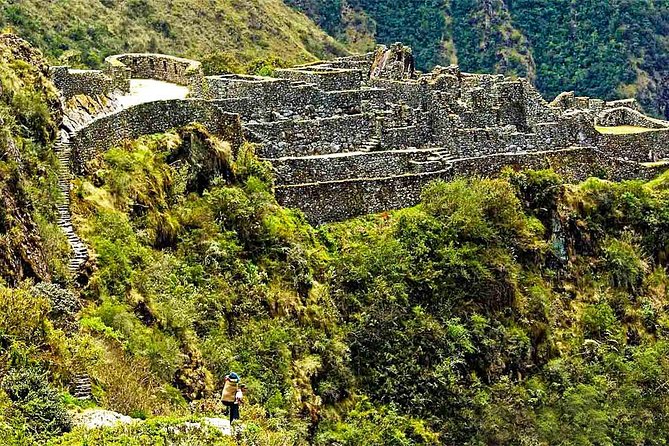
The first major ruin is Huillca Raccay, an Inca fortress set above the trail. From there, you can see Patallacta, a large site spread across the valley. The setting helps explain why this route was more than a practical road. It linked sacred places, settlements, farming areas, and the royal center at Machu Picchu.
You also get views toward the Urubamba range and the snow-covered peak called Veronica, or W’akay Willca, rising to about 5,860 meters. The route does not ease you in for long. The first day lasts about seven hours and ends at Wayllabamba, at roughly 3,000 meters.
Night temperatures at the camp can fall to about 5 degrees Celsius, depending on the month. You should have warm sleepwear and a good insulating layer. The provided foam mattress helps, but it is not the same as sleeping in a hotel bed.
Day 2: The 4,200-meter climb to Dead Woman’s Pass
Day 2 is the test. Breakfast comes early, then you start around 5:30 a.m. to make good use of daylight and your energy.
The climb to Abra de Warrmihuañusca, better known as Dead Woman’s Pass, is steep and takes several hours. At 4,200 meters, the difficulty comes from both the incline and the thin air. A moderate fitness level is required, but fitness alone does not guarantee an easy day. Altitude affects people differently.
This is where private service earns its keep. A good guide can help you settle into a sensible pace, offer encouragement, and watch for signs that you need a break. Guides including Rene and Felipe have been praised for keeping slower groups moving without turning the day into a race. That patience is more useful here than a fast walking time.
After the pass, you descend to Pacaymayu at about 3,550 meters for lunch. Descending does not mean the hard work is finished. Stone steps can be rough on knees, and the downhill sections may bother you more than the uphill climb.
The area also brings close views of high-altitude plant life. You may see hummingbirds and other bird species, along with polylepis trees, which grow in the cloud forest at these elevations.
After lunch comes another steep climb of about two hours toward the Runkurakay pass, near 4,000 meters. Camp is set up around 5:00 p.m., with nighttime temperatures around 4 degrees Celsius. This is the day to keep your water bottle close, protect yourself from sun exposure, and avoid spending all your energy trying to stay ahead of the group.
Day 3: Phuyupatamarca, Intipata, and Wiñay Wayna
Day 3 covers about 10 kilometers in roughly five hours. Compared with Day 2, the walking is shorter, but the trail still includes climbs, descents, and many stone steps.
A gentle ascent leads to Phuyupatamarca, meaning Town in the Clouds. The site sits at about 3,680 meters and provides wide views over mountains and canyons. The name fits the location, with the ruins set high above the surrounding valleys.
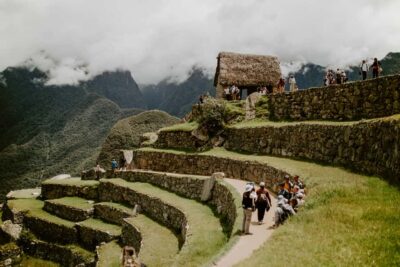
The path then enters more cloud forest and continues toward Intipata, an impressive agricultural site reached by about 3,000 steps. These terraces show how carefully the Incas worked with steep mountain terrain. They are also a reminder that the trail is not simply a scenic footpath. It passes through a network built for farming, movement, ceremony, and control.
You reach the third camp, Wiñay Wayna, around lunchtime. The camp sits at about 2,680 meters, lower than the previous night, and the warmer elevation can feel welcome after the cold high passes.
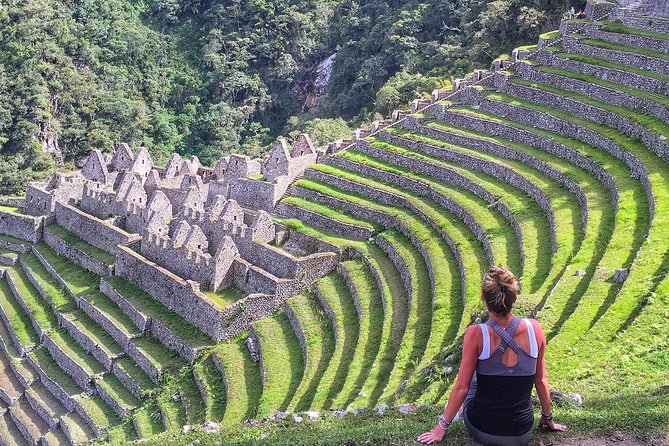
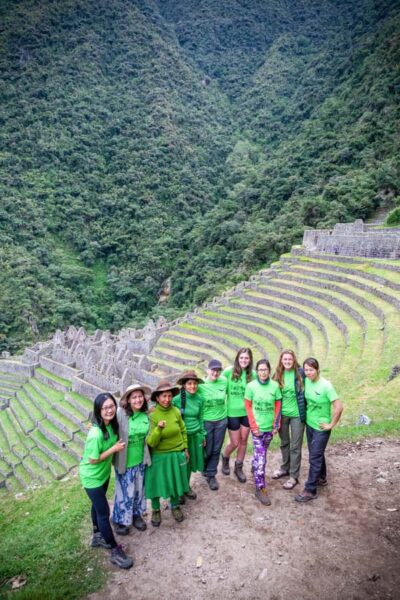
Wiñay Wayna, translated as Forever Young, is one of the most memorable archaeological sites on the route. It lies close to camp, so you can visit without adding a major detour. Terraces, stairways, and stone structures cling to the mountainside, giving you a strong sense that Machu Picchu is near.
The early arrival at camp is a major benefit. You have time to eat, rest, organize your things, and visit the ruins without rushing. After two demanding days, this pause can make the final morning feel manageable.
More inca trail treks in Cusco:
- Cusco: 4-Day Inca Trail to Machu Picchu with Accommodation
★ 4.8 · 432 reviews - Cusco: Machu Picchu 2-Day Inca Trail with Panoramic Train
★ 4.9 · 260 reviews - From Cusco: 2-Day Inca Trail to Machu Picchu
★ 4.2 · 244 reviews - Machu Picchu: Inca Trail 2-Day Overnight Guided Tour
★ 4.9 · 203 reviews
Day 4: Sunrise at the Sun Gate and Machu Picchu
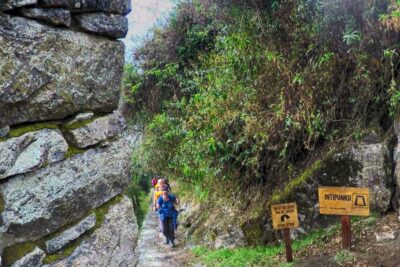
The final day covers about 5 kilometers in around two hours, but the early start makes it feel special. You wake before sunrise, eat breakfast, and walk toward Intipunku, the Sun Gate.
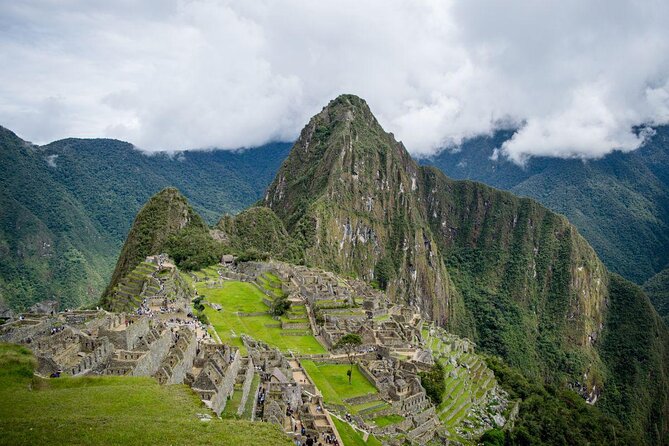
The goal is to arrive before sunrise. At about 2,730 meters, Intipunku gives you the first major view of Machu Picchu, which sits lower at approximately 2,400 meters. The approach matters. You do not first see the citadel from a train platform or bus window. You reach it after crossing the passes, ruins, forests, and stairways of the Inca Trail.
The final arrival is not the end of the day. You continue into Machu Picchu for the main visit, with your guide explaining the site and its place in Inca culture. The supplied schedule lists about three hours at Machu Picchu, though the exact order and timing can depend on entry controls and the permits issued for your group.
Huayna Picchu is not included. If you want to climb it, you need a separate permit booked well ahead of time. The available entry sessions are 7:00 to 8:00 a.m. or 10:00 to 11:00 a.m. A 7:00 a.m. permit may conflict with the guided Machu Picchu visit, so do not add this climb without checking the timing with the operator.
After the site visit, you take the bus down to Aguas Calientes. The package includes the train back to Ollantaytambo and collection from the Ollantaytambo station. Lunch and dinner on this final day are not included, so plan for those costs.
The guide and support team matter
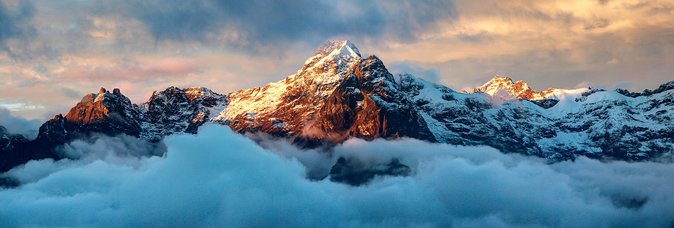
The trail scenery is famous, but the people around you shape the experience. The guide is not just there to point out ruins. On this route, you need someone who can explain Inca beliefs, identify plants and archaeological features, manage timing, and keep the group calm when the altitude bites.
Several guides connected with this service are named in the available material. Victor is described as combining strong trail support with stories about Inca history and Peru. Guido is praised for his passion for Inca culture, while Guillermo, Hugo, Rene, Felipe, Aldo, Nico, and others have led groups along the route.
Do not assume you will receive a particular guide unless the company confirms it in writing. Still, the repeated pattern is useful: the guide team appears to be a central part of the operation, not an afterthought.
Porters carry the cooking and camping equipment, allowing you to walk with a lighter daypack. A personal porter allowance of 7 kilograms is stated, but the contradictory inclusion and exclusion wording means you should clarify it before packing. Gratuities are not included, so bring cash for tips if you choose to thank the team.
Food, water, and camp comfort
Three breakfasts, three lunches, and three dinners are included according to the package details. You also get a cook and a dining tent with tables and chairs. That is a meaningful advantage after long days on the trail.
The menu is not specified, so you should not book this expecting a particular diet unless the company confirms it can accommodate you. The available details do show that meals are prepared in camp, and past groups have singled out the cooking as a highlight. A hot, well-prepared meal can change your mood after a day of climbing.
You must bring water for the first morning. After that, the crew provides drinking water that has been previously boiled. Bring a reusable bottle or hydration system with enough capacity for the initial stretch.
A first-aid kit and oxygen bottle are included. These are sensible safety provisions, but they do not replace travel insurance or medical preparation. Travel insurance is strongly recommended, and you should be honest with yourself about how your body handles altitude.
Who should choose this private trek
This trip suits you if you want the classic Inca Trail but prefer personal attention over a large group. It is also a good fit if your party walks at different speeds, has lots of questions, or wants more time with a guide at the ruins.
The private format can help families and friends set their own rhythm. The minimum age is 10, but every child still needs to handle early mornings, cold camping nights, steep climbs, and high altitude.
You should have moderate physical fitness. That phrase deserves respect. Day 2 is long and steep, and the trail includes many stairs. You do not need to be an elite athlete, but you should prepare for several hours of walking on consecutive days.
This is less suitable if you dislike camping, need flexible cancellation, or want a relaxed route to Machu Picchu. The booking is non-refundable and cannot be changed for any reason. Since Inca Trail access is limited, sort out your dates, passport details, insurance, and fitness plans before paying.
Is the private service worth $1,395?
The value depends on what you want from the trek. If you only want to reach Machu Picchu at the lowest possible price, this is not the simple option. The cost covers permits and transport, but also porters, a cook, camping equipment, meals, a private guide, and support on a demanding route.
I think the private format is most useful for two to eight people who care about flexibility and close guidance. For a couple or small family, the extra cost can buy a calmer pace and more direct help. Group discounts may improve the value for larger parties, though you should ask for the current rate.
The package has a few loose ends. Confirm the exact pickup time, the personal porter charge, meal arrangements, the guide assignment, and the train schedule. Those questions are simple, and getting clear answers will prevent unpleasant surprises.
Should you book this Inca Trail trek?
Book it if you want to earn your arrival at Machu Picchu, enjoy archaeological sites along the route, and value a private guide and full camp support. The strong points are the route itself, the small-group attention, the careful support from porters and cooks, and the powerful final approach through the Sun Gate.
Think twice if four days of steep walking and cold camping sound like punishment. For everyone else, this is a serious trek with a generous support system, not a sightseeing shortcut. Prepare your legs, confirm the unclear inclusions, and protect the dates with travel insurance before committing to the non-refundable booking.
FAQ
How long does the Inca Trail tour last?
The tour lasts approximately four days, with overnight camping on the trail and arrival at Machu Picchu on Day 4.
Where does the tour begin?
Pickup is offered from Cusco, with the meeting time listed as around 4:00 or 4:30 a.m. The group then travels to Piscacucho, also called Kilometer 82.
What documents are needed at the trail checkpoint?
You need to show your passport, Inca Trail ticket, and other required documents at the control point.
How high is Dead Woman’s Pass?
Dead Woman’s Pass reaches about 4,200 meters, or 13,779 feet.
Is this a private tour?
Yes. Only your group participates. An assistant guide is included for groups of nine or more.
Are meals included?
Three breakfasts, three lunches, and three dinners are included. The first breakfast, plus lunch and dinner on the final day, are not included.
Is camping equipment provided?
Yes. The package includes a four-person tent shared by two people, foam sleeping mattresses, and a dining tent with tables and chairs.
Are porters included?
Porters carry cooking and camping equipment. The package also refers to a personal porter carrying up to 7 kilograms of belongings, but the inclusion and exclusion sections conflict, so confirm the current arrangement and fee.
Is Huayna Picchu included?
No. Huayna Picchu requires a separate entrance ticket booked well in advance. The listed entry sessions are 7:00 to 8:00 a.m. and 10:00 to 11:00 a.m.
Is the booking refundable?
No. The experience is non-refundable and cannot be changed for any reason after booking.
More 4-Day Experiences in Cusco
- 4 Day Tour to the Manu National Park
★ 5.0 · 81 reviews - Choquequirao Trek 4 days and 3 nights
★ 5.0 · 81 reviews - Cusco Sacred Valley and Machupicchu 4 Days
★ 5.0 · 80 reviews - Ancascocha Trek To Machu Picchu 4 Days And 3 Nights
★ 5.0 · 77 reviews
Just added around Cusco
- Waqrapukara 1 day trekking + meals★ 3.9 · 3 reviews
- Zipline over the Sacred Valley Trip★ 5.0 · 11 reviews
- Valle Sur Cusco | half day★ 4.3 · 3 reviews
- Visit to the Cochahuasi Animal Sanctuary with rescued animal★ 4.1 · 4 reviews
- Visit Pisac from Cusco: Private Transport★ 4.6 · 9 reviews
- Maras and Huaypo lagoon by ATV from Cuzco | Local Operator★ 4.7 · 4 reviews
- Trek to Humantay Lake from Cusco★ 4.9 · 8 reviews
- Trek to Choquequirao 4 days★ 3.8 · 4 reviews
Machu Picchu Tours, compared.
4-Day Inca Trail to Machu Picchu with Accommodation
Read our review →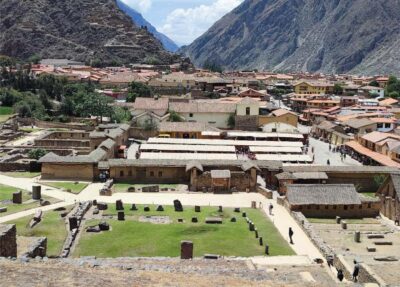
2-Day Trip to the Sacred Valley and Machu Picchu
Read our review →
Machu Picchu 2-Day Inca Trail with Panoramic Train
Read our review →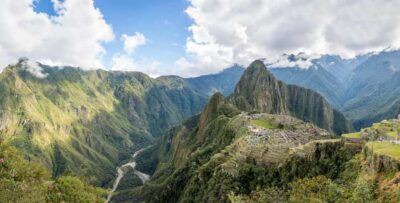
Browse the lists this tour appears in