
Reviewed · HALF-DAY
Sillustani: Chullpas de Sillustani Afternoon Half-Day Tour
Sillustani is one of Peru’s most striking ancient sites, with tall stone burial towers rising above Umayo Lagoon. These chullpas were built for important Collao leaders, and their unusual shape, narrow at the base and wider at the top, makes the site easy to remember.
I like the tour’s short drive from Puno and its calm setting. I also like that your guide explains the links between Kolla, Tiahuanaco, and Inca culture instead of reducing the visit to a few dates and names. The main concern is weather: heavy rain can make the open-air visit uncomfortable, and the advertised six-hour duration does not match the stated afternoon schedule, which runs roughly from 2:00 to 5:00 PM.
In This Review
- Key points to know before booking
- Why Sillustani makes a good afternoon from Puno
- The afternoon pickup from Puno
- Reaching the ceremonial center of Sillustani
- Reading the stonework of the chullpas
- A closer look at Kolla, Tiahuanaco, and Inca culture
- The site museum and what it adds
- Umayo Lagoon and the view from Sillustani
- Timing, photos, and local goods
- Is $45 a fair price for this half-day trip?
- Who should choose this Sillustani tour?
- Should you book the Sillustani afternoon tour?
- FAQ
- Where is Sillustani located?
- How long does the tour last?
- What time does pickup begin?
- What languages are available for the guide?
- What does the $45 price include?
- Are meals included?
- What should I bring, and are there any restrictions?
Key points to know before booking
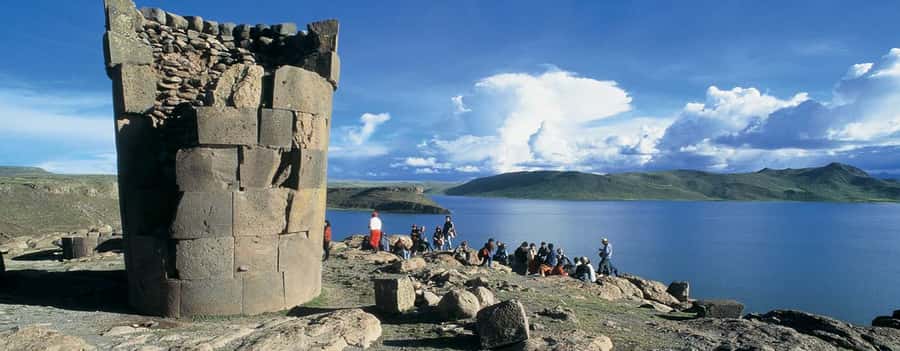
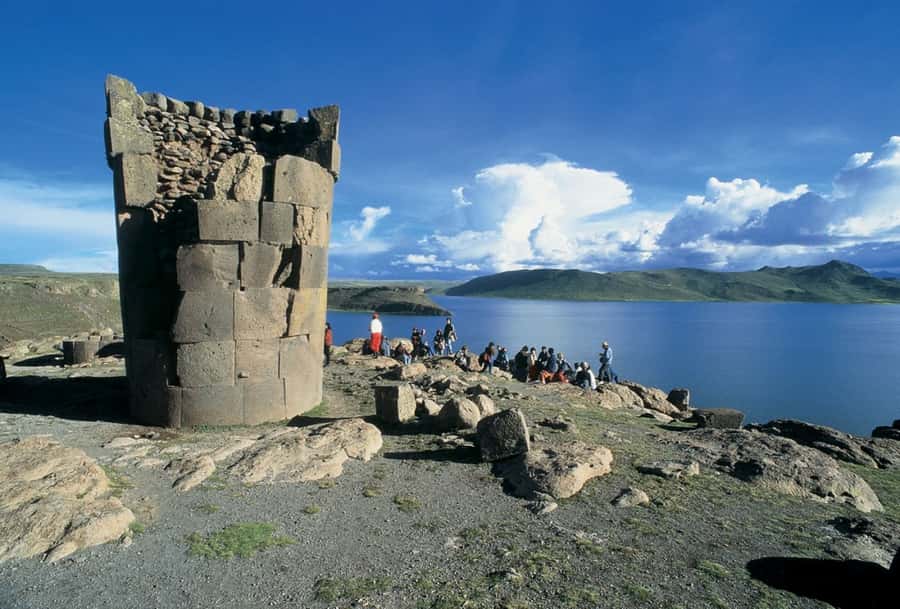
- The Chullpa del Lagarto is Sillustani’s star sight: This tall Inca-era tower was built from tightly fitted square stones and later damaged by treasure hunters.
- Umayo Lagoon gives the visit its setting: Blue water, open Altiplano scenery, and an island reserved for vicuñas frame the archaeological site.
- The guide adds cultural context: Expect explanations of burial customs and the differences and shared features of Quechua and Aymara communities.
- The visit itself takes about one hour: The rest of the outing is transport, hotel pickup, and the return to Puno.
- The $45 price covers the basics: Transport, entry fees, hotel pickup in central Puno, and a professional guide are included.
- Rain matters here: Bring comfortable clothes and shoes, and keep in mind that there is little shelter during the outdoor portion.
Why Sillustani makes a good afternoon from Puno
Sillustani offers a very different experience from the better-known lake excursions. Instead of spending the day on the water, you drive into the Altiplano to visit a ceremonial burial site with a quiet, spacious setting.
The complex sits about 34 kilometers from Puno, so you do not lose an entire day getting there. That makes this tour useful if you have limited time in the region or want an outing that fits around a morning activity.
I especially like the way Sillustani combines architecture and scenery. The towers are the reason you come, but the view across Umayo Lagoon is what gives the place its sense of scale. You can study the stonework, then look beyond it to open sky, water, and the island where local vicuñas are protected.
This is not a loud or crowded attraction by design. The appeal comes from standing among old stone towers and trying to understand how the Collao people honored their dead. The guide helps turn the site from an impressive collection of ruins into a place with a human purpose.
A few more Puno trips to weigh up
- From Puno: Floating Islands of the Uros Half-Day Tour
★ 4.4 · 394 reviews - Cusco: Half-Day City Tour with Sacsayhuaman and Q’enco
★ 4.6 · 1,129 reviews - Lima’s Vibrant Heritage: Exploring the City’s Landmarks Half-day
★ 4.5 · 581 reviews
The afternoon pickup from Puno
The stated pickup time is around 2:00 PM. Hotel pickup is included for accommodations in Puno, but if your hotel lies outside the city center, you will be given a meeting point instead.
That detail matters more than it may seem. Confirm your pickup instructions before the day of the tour, especially if you are staying on the edge of town. You do not want to spend the afternoon waiting at the wrong hotel.
Transport is included, as are entrance fees and a professional guide. Meals are not included, though the afternoon schedule does not suggest that a meal is part of the plan. Bring water and any snack you may need, since the tour is focused on the archaeological visit rather than dining.
The advertised duration is six hours, with starting times subject to availability. Yet the detailed schedule says pickup is around 2:00 PM, arrival back in Puno is around 5:00 PM, and the Sillustani visit takes about one hour. I would confirm the exact departure and return time when booking. The difference may reflect transfer time or a general activity setting, but the published afternoon timetable is much shorter than six hours.
Reaching the ceremonial center of Sillustani
The drive from Puno takes you toward the Sillustani ceremonial center. The scenery is a key part of the outing, not just something to watch through the vehicle window.
You will see the broad Altiplano around Lake Titicaca, with the high, open setting that gives the area its character. The air and weather can change quickly at this elevation, so practical clothing matters more than dressing up for a sightseeing stop.
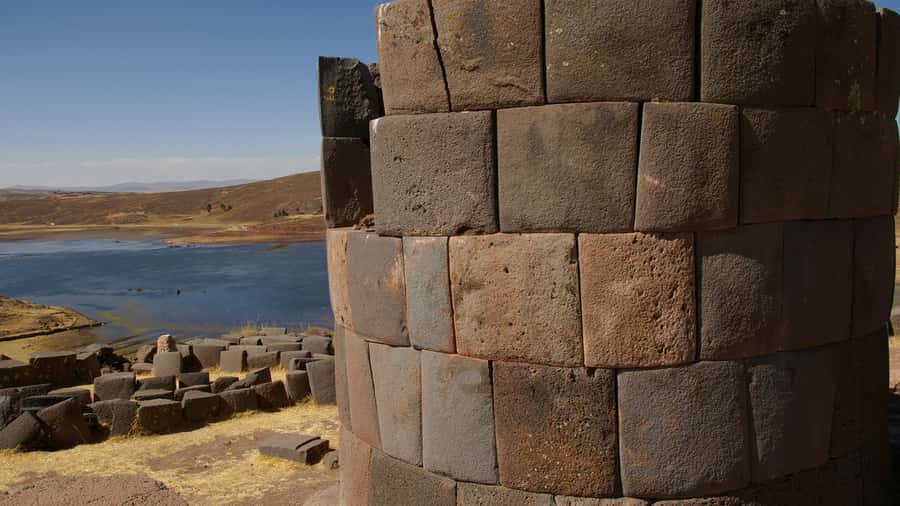
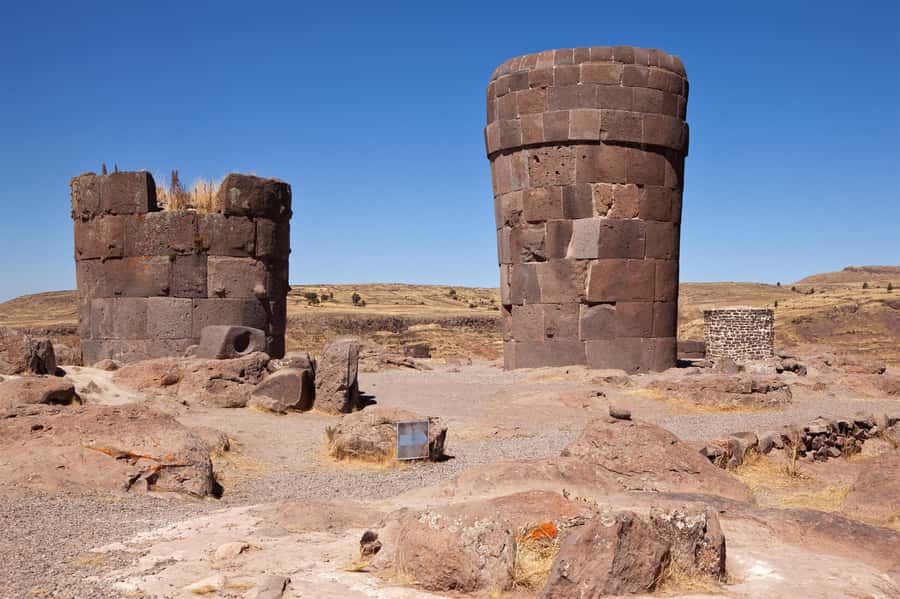
Once at the complex, your guide will introduce the chullpas, circular stone towers used to hold the funerary remains of principal authorities from the ancient Collao region. Some rise as high as 12 meters.
Their shape is especially unusual. The base is narrower than the upper section, giving the towers a slightly top-heavy form. That is not a modern restoration choice or an accidental feature. It is one of the details that makes Sillustani’s funerary architecture different from the simple rectangular ruins you may have seen elsewhere in Peru.
I recommend listening closely during this first explanation. Without context, the towers can look like isolated stone monuments. With context, you begin to see them as carefully made structures connected to authority, burial, and ceremony.
Reading the stonework of the chullpas
The value of Sillustani is not only in the age of the site. It is in the engineering.
The towers were built to house the remains of important people, and the construction required careful planning. Their height, rounded form, and unusual tapering show that the builders were working with a clear architectural design.
The Chullpa del Lagarto is the best-known example. It is considered the highest chullpa in the complex and belongs to the Inca period. It was made with square stones fitted closely together, a detail that gives you a direct way to appreciate the quality of the masonry.
Its name refers to the lizard representation associated with the tower. The structure was damaged in the early 19th century by huaqueros, or grave robbers, who were looking for valuables. That damage is an important part of the site’s story, but it also means you should not expect every tower to survive intact.
The destruction does not erase the skill of the original builders. In fact, seeing the surviving stonework beside the damage can make the site’s past more tangible. You are looking at both an ancient achievement and the effects of later treasure hunting.
Your guide can also help connect Sillustani with the wider cultures of the region. The site includes influences and objects linked with Kolla, Tiahuanaco, and Inca traditions. The visit is a useful way to see that Altiplano history was not limited to one empire or one language group.
Same valley, a completely different kind of day:
- From Cusco: Vinicunca Rainbow Mountain ATV Tour with Meals
★ 4.6 · 1,060 reviews - From Puno: Uros, Amantaní & Taquile Islands 2-Day Tour
★ 4.5 · 452 reviews - Lake Titicaca 2-Day Tour to Uros, Amantani and Taquile
★ 4.4 · 199 reviews - Puno: Full-Day Tour of Lake Titicaca and Uros & Taquile
★ 4.4 · 178 reviews
A closer look at Kolla, Tiahuanaco, and Inca culture
Sillustani is often called an Inca cemetery, but that label needs some care. The complex reflects several cultural periods, including Kolla and Tiahuanaco traditions, as well as later Inca construction.
That layered past is one reason the site is worth a guided visit. You may recognize the Inca name, but the story reaches further back. A good explanation helps you understand how different peoples shaped the region and how cultural practices continued or changed over time.
The guide also discusses differences and common features between Quechua and Aymara languages and ethnic groups that still live in the Puno area. This adds a present-day connection to what could otherwise feel like a visit focused only on distant ruins.
I find that kind of context particularly useful in Puno. The lake and high plains can seem remote when you first arrive, but the cultural details show that this is not an empty setting. It is a lived-in region with old identities that remain important.
The tour is offered with a live guide in English or Spanish. The guide’s style can shape the experience, so use the question time. One guide on this route was described as concise, relaxed, and good at keeping the visit on schedule while still answering questions. That is exactly the balance you want during a one-hour site visit.
The site museum and what it adds
A short distance from the archaeological complex is a site museum. It preserves objects from the Kolla, Tiahuanaco, and Inca cultures.
The museum is a useful companion to the outdoor visit. At the towers, you mainly see stone, open space, and the remains of a funerary complex. The museum gives you a chance to connect those structures with objects and cultural periods.
Do not expect a large museum experience. The information provided describes it as a small site museum, so think of it as a focused stop rather than a full afternoon indoors. Its value lies in helping you sort out the different traditions represented at Sillustani.
If your guide moves through the museum quickly, ask which pieces relate to the towers and which belong to earlier or later cultures. That simple question can make the visit more useful.
Umayo Lagoon and the view from Sillustani
The Umayo Lagoon is the natural setting that makes Sillustani feel special. Its water reflects the sky and clouds, creating a broad, open view around the stone towers.
The lagoon also contains an island reserved for the protection of local vicuñas. You might not see the animals clearly from the complex, but the island is part of the area’s environmental importance.
This is where you should allow time for photographs. The visit includes free time for pictures, and the combination of chullpas, water, and sky gives you more than one strong angle. If the weather is clear, the scenery can be peaceful and striking without needing much explanation.
The open setting has a downside. There is limited protection from rain and changing weather during the outdoor visit. One participant experienced very heavy rain and felt the tour would have been better postponed or brought closer to the site during such conditions. I agree that weather deserves attention here. If rain is severe, the towers and the walk around them will be harder to enjoy.
Timing, photos, and local goods
The Sillustani visit itself takes about one hour. That is enough time for a guided explanation, a look at the main chullpas, museum time, and photographs, but it is not a long, unstructured exploration.
The pace should suit you if you prefer a clear introduction rather than several hours among ruins. If you like to linger over every stone or take many photographs, you may find the schedule a little tight. Ask your guide how much free time is available once the main explanation ends.
There may also be time to look at local goods. That can be a pleasant addition, but it should not be the main reason you choose this tour. The strongest parts are the chullpas, the cultural explanation, and the view over Umayo Lagoon.
The return to Puno is scheduled for around 5:00 PM in the detailed afternoon plan. That leaves the evening open for dinner or another low-key activity. Again, confirm the exact timing, since the general duration is listed as six hours.
Is $45 a fair price for this half-day trip?
At $45 per person, the tour offers reasonable value if you want a simple, organized visit from Puno. The price includes transport, all entrance fees, hotel pickup in central Puno, and a professional English or Spanish-speaking guide.
Those inclusions matter. Arranging separate transport to a site 34 kilometers from Puno can be inconvenient, and entry fees add another step. You are paying for a straightforward package that takes care of the main practical details.
The value is strongest for first-time visitors who want context. Sillustani is more rewarding when someone explains the Collao burial towers, the cultural layers, and the connection between the site and the wider Puno region.
It is less compelling if you only want a long independent visit or if you dislike fixed schedules. The site visit is short, and the total duration needs clarification. You are also paying for a guide-led introduction rather than a full-day archaeological tour.
The booking terms are flexible: you can cancel up to 24 hours before departure for a full refund, and reserve now while paying later. Wheelchair users should note that this tour is not suitable for them. Large bags and luggage are not allowed, so bring only what you need for the afternoon.
Who should choose this Sillustani tour?
I would choose this outing if you are staying in Puno and want a half-day look at an important pre-Inca and Inca site without committing to a full day away from the city.
It suits you especially well if you:
- Want to see ancient funerary architecture with a guide
- Enjoy combining archaeology with open scenery
- Have an interest in Kolla, Tiahuanaco, Inca, Quechua, and Aymara culture
- Prefer included transport and entry fees
- Need an afternoon activity that returns to Puno around early evening
You may want another plan if heavy rain is forecast, if you need wheelchair access, or if you are carrying luggage. The open-air setting and uneven archaeological grounds also make comfortable shoes a sensible choice.
Should you book the Sillustani afternoon tour?
Book it if you want an efficient introduction to one of the Puno region’s most unusual ancient sites. The tall chullpas, the Chullpa del Lagarto, the museum, and Umayo Lagoon give the outing a good mix of stonework, culture, and scenery.
The tour is best when the weather cooperates and the timing is clear. Before booking, confirm the actual pickup and return schedule, especially because the six-hour duration differs from the stated 2:00 to 5:00 PM plan.
For $45, I think it is a sensible choice for visitors who value a guide and easy transport. If you want a slow, private archaeological study, this short group-style format may feel limited. For most people with an afternoon free in Puno, it is a practical way to see Sillustani without turning the visit into a logistical project.
FAQ
Where is Sillustani located?
Sillustani is in Peru’s Puno Region, about 34 kilometers from the city of Puno.
How long does the tour last?
The activity is listed as six hours, but the detailed afternoon schedule describes pickup around 2:00 PM, about one hour at Sillustani, and a return to Puno around 5:00 PM. Confirm the exact timing when you check availability.
What time does pickup begin?
Pickup from hotels in Puno is scheduled for around 2:00 PM. Hotels outside central Puno are given a meeting point instead.
What languages are available for the guide?
The live guide is available in English or Spanish.
What does the $45 price include?
The price includes hotel pickup in Puno, transport, all entrance fees, and a professional guide.
Are meals included?
No. Meals are not included in the tour.
What should I bring, and are there any restrictions?
Bring comfortable shoes and comfortable clothes. Luggage and large bags are not allowed. The tour is not suitable for wheelchair users.
Just added around Puno
- Uros Floating Islands Tour in Puno★ 3.7 · 9 reviews
- Two Day Lake Titicaca Tour With Homestay★ 3.7 · 6 reviews
- TRIP FROM PUNO TO CUSCO WITH THE ROUTE OF THE SUN★ 4.7 · 16 reviews
- Full-Day Tour of Uros, Taquile and Sillustani from Puno★ 5.0 · 41 reviews
- Two-Day Tour to Uros with Amantani and Taquile from Puno★ 5.0 · 44 reviews
- Full Day Lake Titicaca Tour to Uros and Taquile Islands★ 4.5 · 56 reviews
- Full Day Guided Tour of the Aymara Route from Puno★ 5.0 · 55 reviews
- Sun island and Copacabana | From Puno or La Paz / Day Trip★ 4.1 · 5 reviews
Half-Day, compared.

Half-Day City Tour with Sacsayhuaman and Q’enco
Read our review →
Lima’s Vibrant Heritage: Exploring the City’s Landmarks Half-day
Read our review →
Pachacamac Ruins & Barranco Half-Day Guided Tour
Read our review →
Pre Inca Temple of Pachacamac Half-Day Tour from Lima
Read our review →
City Tour | Half-Day Tour to 4 Archaeological Sites
Read our review →
Essential Lima: Half-Day Tour with Catacombs & Pick-Up
Read our review →
Browse the lists this tour appears in