
Reviewed · BUFFET EXPERIENCES
Cusco: Bus Turistico Puno Cusco con Tour y Buffet
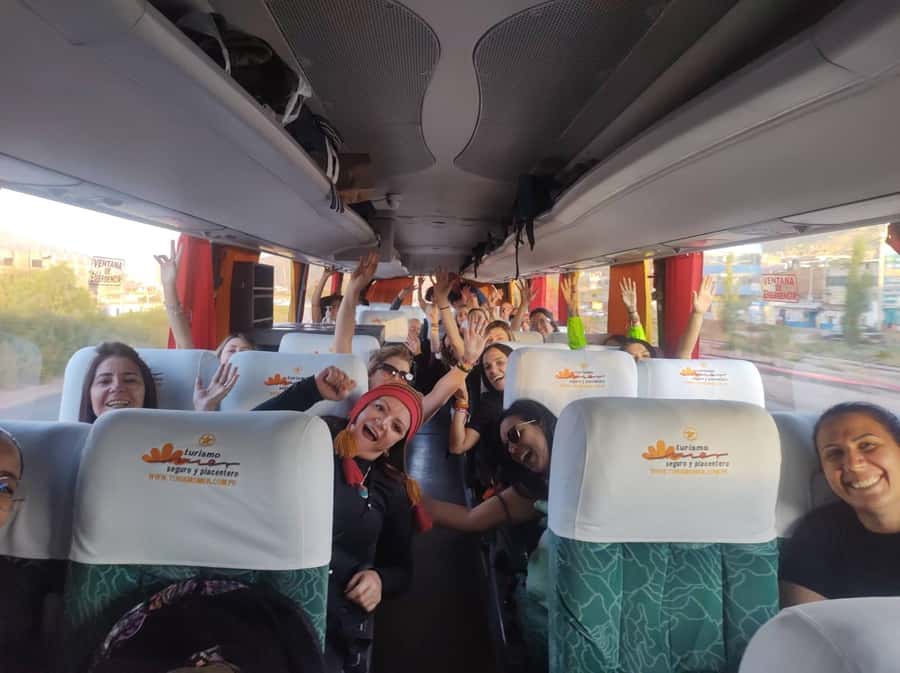
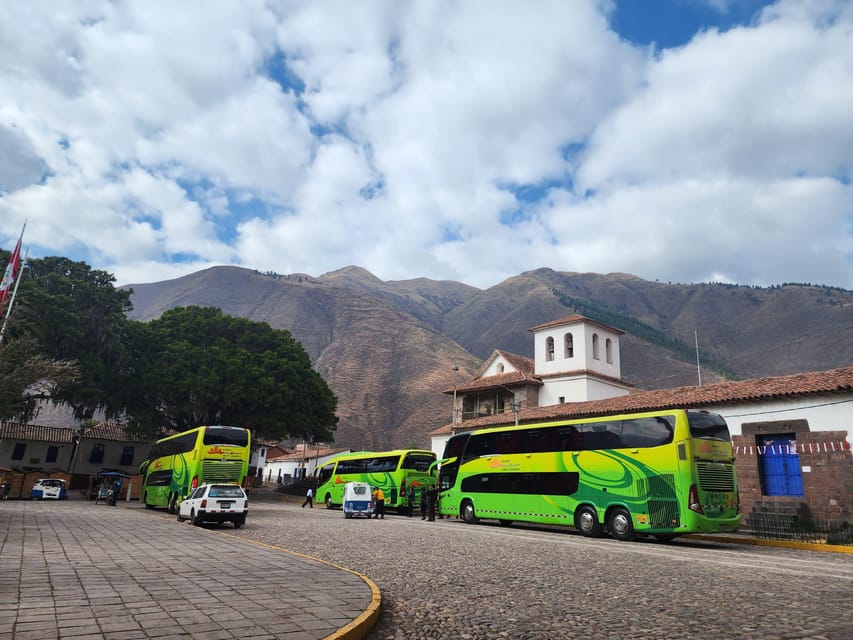
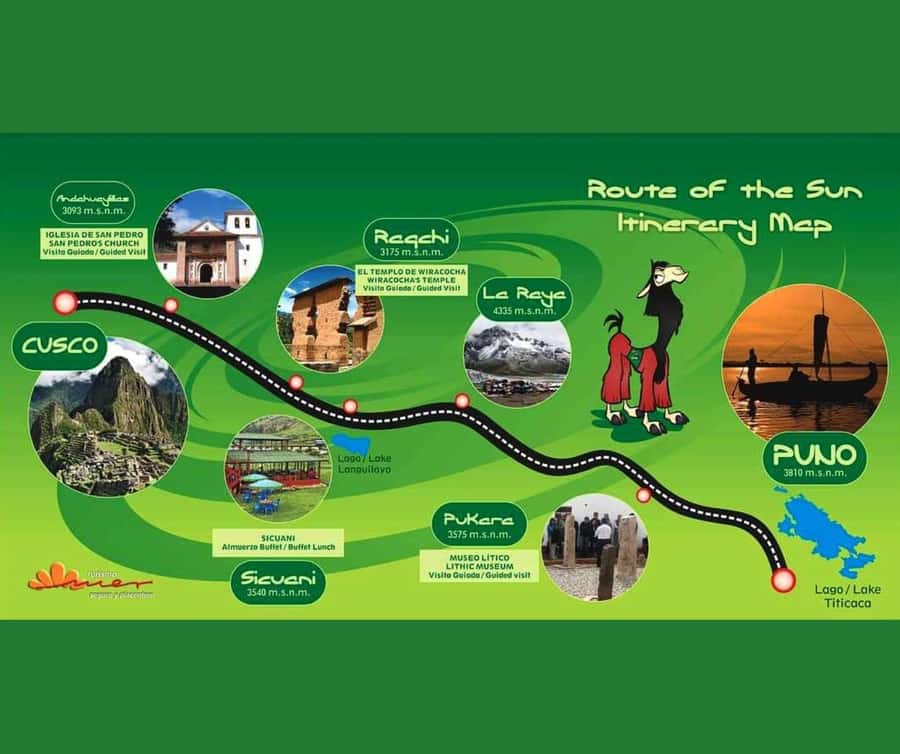
The smart idea here is turning a long Puno to Cusco transfer into a full day of sights. Instead of watching the high plains slide past a bus window, you stop at Andahuaylillas Chapel, Raqchi, La Raya, and Pukara, with lunch in Sicuani along the way. I like the comfortable reclining seats and the fact that the guide explains each place in both English and Spanish.
I also like the buffet lunch, which offers vegetarian and vegan choices, and the onboard snack service. The main concern is reliability: one departure arrived one to two hours late, and one passenger reported poor air-conditioning and a rushed departure while he and his companion were briefly away from the bus. Keep your valuables with you and confirm the bus is waiting before every stop.
In This Review
- Key points to know before booking
- Why this daytime route makes sense
- A bus made for a high-altitude day
- Andahuaylillas Chapel, the first cultural stop
- Raqchi and the temple of Wiracocha
- La Raya and the Chimboya view
- Sicuani lunch at La Pascana
- Pukara and the final museum visit
- The guide makes or breaks the day
- What the $55 price really covers
- Timing, comfort, and the risk of delay
- Who should book this bus
- Should you book the Puno to Cusco tourist bus?
- FAQ
- How long does the Puno to Cusco tourist bus take?
- What attractions are visited?
- Is lunch included?
- Are vegetarian and vegan lunch options available?
- Are entrance tickets included?
- Is hotel pickup included?
- Where is the Puno meeting point?
- Is there Wi-Fi on the bus?
- Is the bus equipped with a restroom?
- What should I bring?
Key points to know before booking
- Four worthwhile stops break up the 10-hour journey: Andahuaylillas, Raqchi, La Raya, and Pukara each offer a different look at southern Peru.
- The $55 price includes more than transport: You get a bilingual guide, snack, buffet lunch, and guided visits, but entrance tickets totaling 53 soles are extra.
- The bus is built for a long daytime ride: Seats recline to 140 degrees, and the vehicle lists heating, ventilation, a chemical toilet, air purification, and charging points.
- La Pascana lunch is a strong part of the day: The buffet includes several choices, including options suitable for vegetarian and vegan diners.
- The schedule can stretch: Plan for possible delays, especially if you have a strict arrival or evening connection in Cusco.
- Hotel transfers are not included: You must reach the private terminal yourself and arrange your own ride onward at the end.
Why this daytime route makes sense
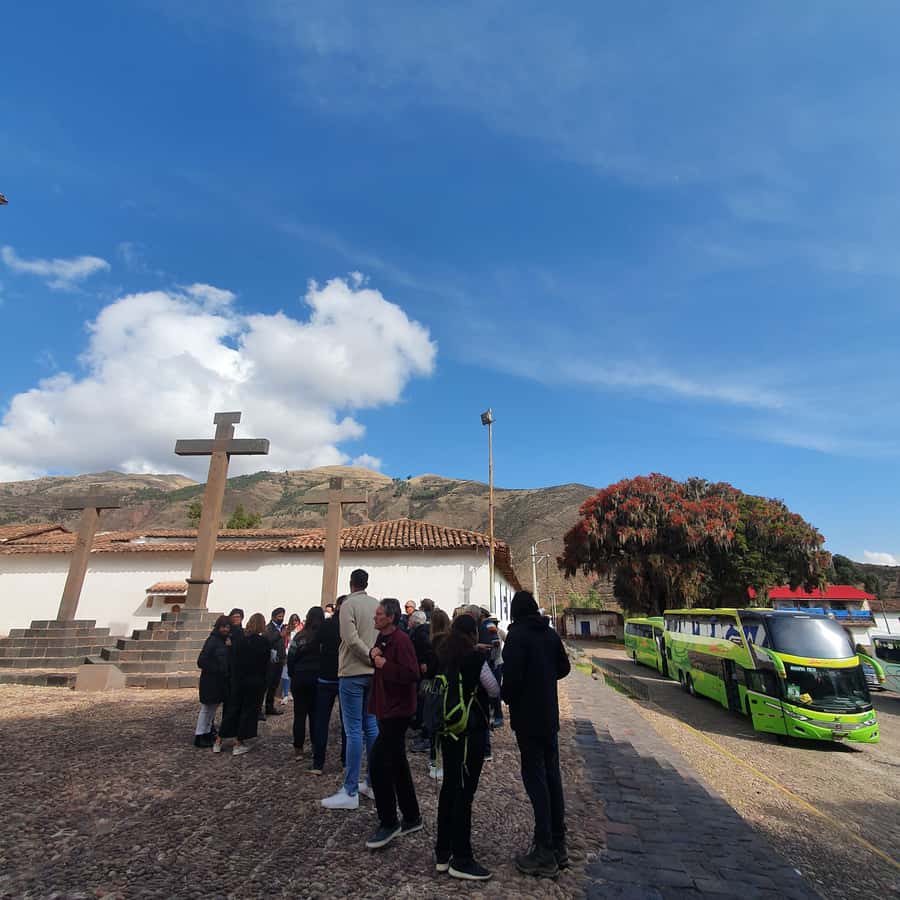
The direct road between Puno and Cusco is useful but not especially memorable if you spend the whole day in a regular coach. This service takes the same basic journey and adds four cultural stops, making the transport itself part of your sightseeing.
You spend roughly 10 hours on the road, though the actual day can run longer. That sounds like a long time, but the breaks help. You get short visits, photo stops, lunch, and guided explanations instead of sitting continuously in your seat.
I would choose this route if you are moving between Puno and Cusco and do not need to arrive at a precise hour. It suits anyone who wants an efficient introduction to the towns and monuments between the two cities. If you have a flight, train, or fixed evening appointment, leave plenty of room after the advertised arrival time.
The service runs in both directions, Puno to Cusco and Cusco to Puno. The meeting point in Puno is one block from the port, between Jirón El Puerto and Los Incas, beside the football field. The private terminal is called Turismo Mer. Hotel pickup is not part of the package.
A few more Puno trips to weigh up
- Cusco: Humantay Lake Tour with Breakfast and Buffet Lunch
★ 4.9 · 2,976 reviews - Cusco: Scenic Route of the Sun to Puno with Buffet Lunch
★ 4.8 · 101 reviews - Excursion to Sacred Valley Full Day & Buffet Lunch |Group Tour|
★ 5.0 · 81 reviews
A bus made for a high-altitude day
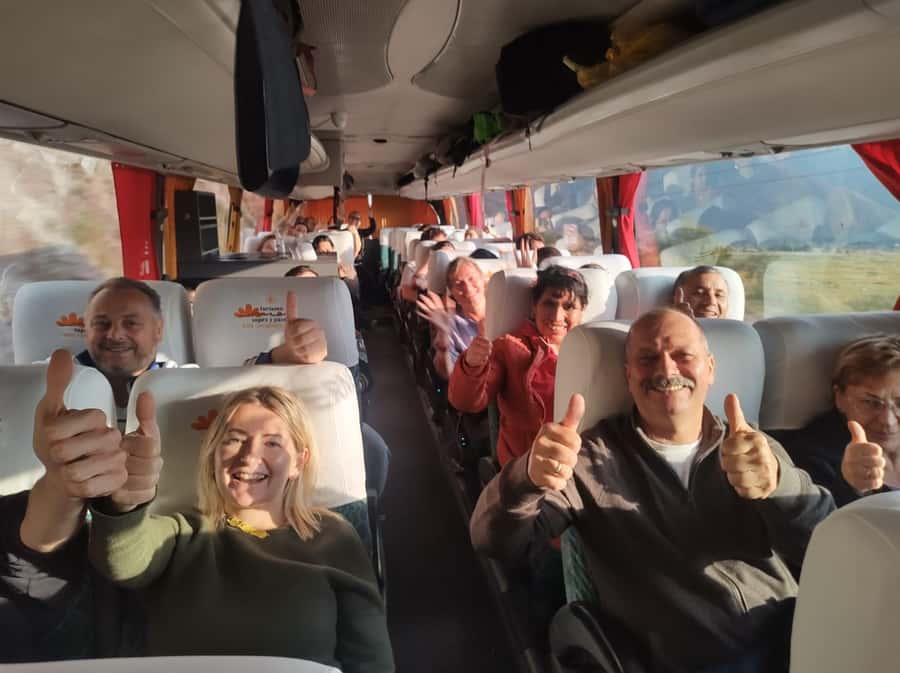
The bus has reclining seats that reach about 140 degrees, which matters on a long ride. You are not getting a sleeper coach, but you do have a better setup than a basic intercity bus. Seat comfort was praised on several departures, though one passenger reported that a seat was not working perfectly.
The equipment list includes heating, air-conditioning, an air purifier, an odor extractor, polarized windows with ultraviolet filters, sun curtains, LED lighting, and a chemical toilet. Oxygen and a first-aid kit are also carried onboard. At high elevations, those practical details are more useful than flashy extras.
Wi-Fi is available only where there is a mobile internet signal, so treat it as an occasional bonus rather than a dependable connection. Cell phone chargers are provided. Bring your own charging cable, sunglasses, a camera, and a jacket.
The air-conditioning deserves a careful note. It is advertised as part of the bus equipment, but one departure had only ventilation running, and the interior became hot in the afternoon sun. You can help yourself by dressing in layers and keeping a jacket within reach for colder sections of the route.
A snack is served onboard. A report from one departure also noted cold drinks and tea on the bus, but the included service specifically promises a snack, not a full drinks package. At lunch, cold drinks are extra.
Andahuaylillas Chapel, the first cultural stop
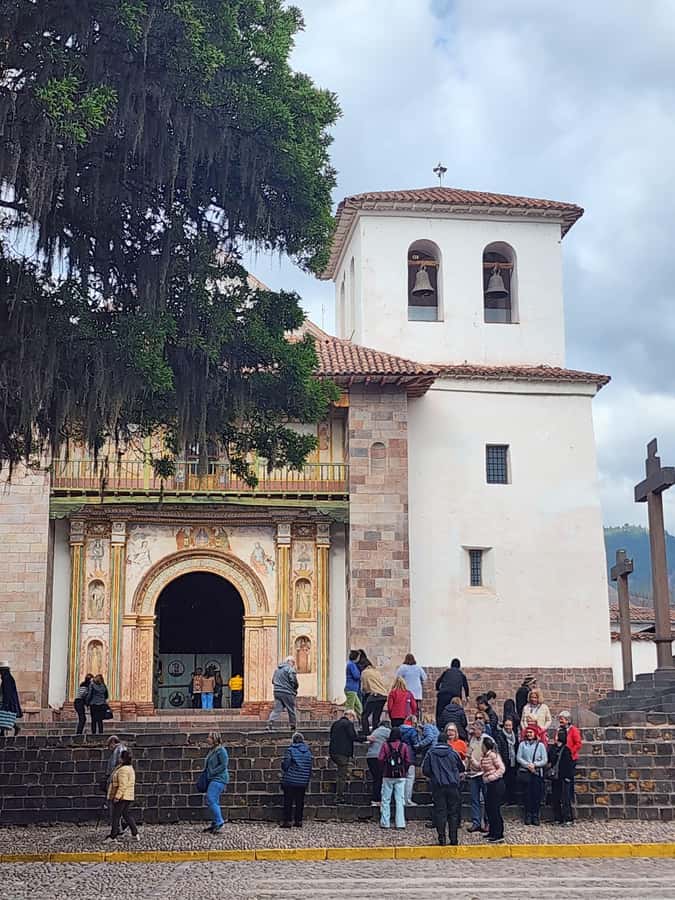
Andahuaylillas is known for its church, often called the Sistine Chapel of America because of its painted interior. The name is not just marketing fluff. The attraction is the contrast between the modest exterior and the heavily decorated inside.
Your guide gives an explanation in English or Spanish, then you have time to look around and take photographs where permitted. The visit is planned as a short stop, so you should pay attention to the meeting time rather than wandering far from the group.
This is a good first introduction to the route because it shows how Catholic worship and Andean traditions were placed side by side during the colonial period. You get a sense of the region’s artistic history without giving up half a day.
Admission is not included. The three paid visiting places together cost 53 soles, according to the activity details. Carry local currency or confirm the accepted payment method before you begin, since the entrance fees are paid directly at the sites.
Raqchi and the temple of Wiracocha
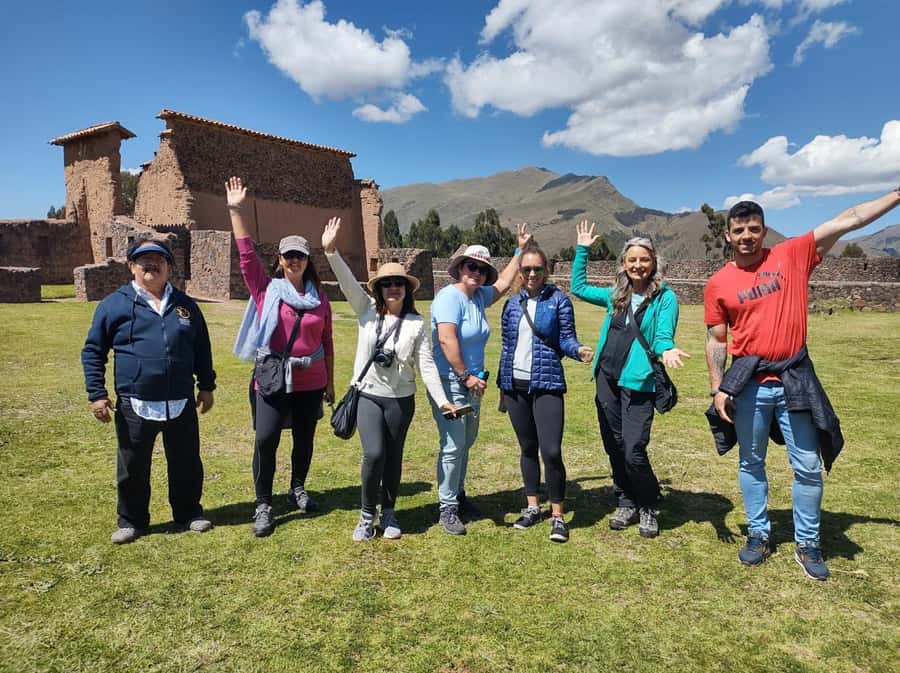
Raqchi is the stop for the imposing Temple of Wiracocha. The site is tied to the Inca world and gives you a chance to see large stone and adobe remains spread across an open area.
The scale is what makes this stop useful. Andahuaylillas focuses on painted religious art, while Raqchi gives you a broader view of Inca planning, construction, and ceremonial space. The guide helps connect the ruins to the wider history of the Cusco and Puno regions.
You have around 40 minutes at this part of the trip. That is enough for a guided visit and photographs, but not enough for a slow archaeological study. I would keep your camera ready, wear shoes you can walk in, and stay aware of the group because the bus will not wait indefinitely for independent exploring.
Raqchi is also one of the places where the high-altitude setting becomes part of the experience. You are not simply entering a museum room. You are looking across an open site with the surrounding countryside visible beyond it.
Same valley, a completely different kind of day:
- From Cusco: Vinicunca Rainbow Mountain ATV Tour with Meals
★ 4.6 · 1,060 reviews - From Puno: Uros, Amantaní & Taquile Islands 2-Day Tour
★ 4.5 · 452 reviews - From Puno: Floating Islands of the Uros Half-Day Tour
★ 4.4 · 394 reviews - Lake Titicaca 2-Day Tour to Uros, Amantani and Taquile
★ 4.4 · 199 reviews
La Raya and the Chimboya view
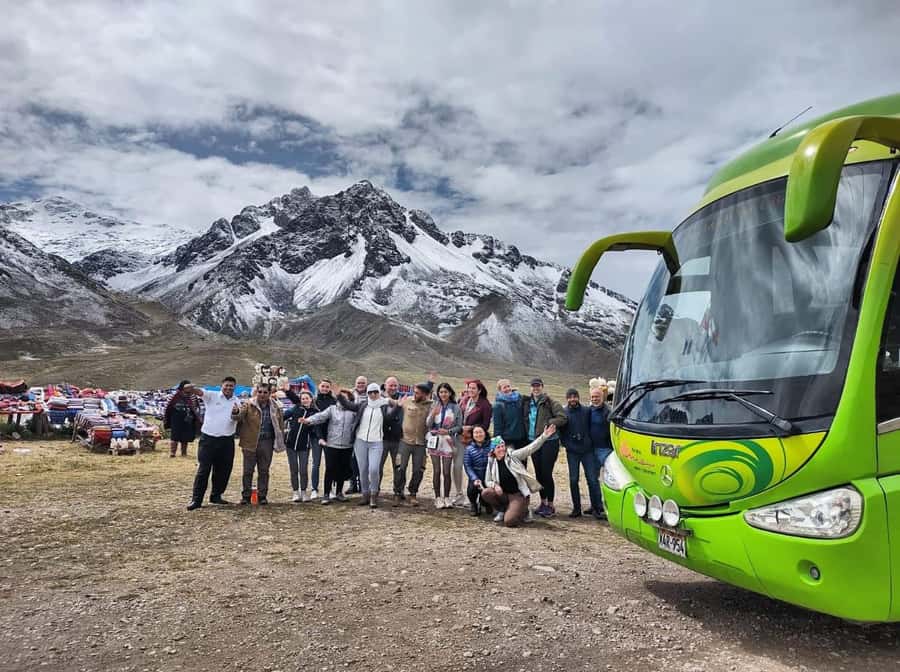
La Raya marks the road limit between the Cusco and Puno regions. It is the highest point on this route, and the stop is mainly about the view, the altitude, and the sense of crossing from one region into another.
The trip includes a view toward Nevado Chimboya. This is a short photo stop, not a long mountain walk. You get time to step off the bus, take pictures, and feel the sharper air before continuing.
Bring your jacket even if Puno or Cusco feels mild when you leave. Temperature can change quickly during the day, and the activity specifically recommends warm clothing. Sunglasses are also useful because the sun can be strong at altitude.
La Raya is a fine example of why daytime travel is worth considering. On a night bus, this crossing disappears in darkness. Here, you get to see the high pass and understand the physical distance between the two cities.
Sicuani lunch at La Pascana
Lunch is served at the La Pascana Tourist Restaurant in the town of Sicuani. The stop lasts about 40 minutes, so this is a planned meal rather than a hurried roadside snack.
The buffet is one of the better value points in the $55 price. A buffet gives you more control over how much you eat during a long day, and available choices include vegetarian and vegan options. One departure had a good meal with several choices and a pleasant view.
Cold drinks at the restaurant cost extra. The package covers the buffet, not every beverage. If you are trying to keep the total price close to $55 plus entrance fees, use the included snack and budget separately for drinks.
Forty minutes is enough to eat, but you should not expect a leisurely restaurant visit. Take only what you need, keep an eye on the departure time, and make sure you know where the bus is parked before you sit down.
Pukara and the final museum visit
Pukara is the final major cultural stop, with a lithic museum connected to the Pukara culture. This gives the day a useful chronological and cultural range. You begin with colonial religious art, see an Inca ceremonial site at Raqchi, cross the high pass, and finish with an earlier Andean culture.
The museum is a good final stop because it brings the road journey back to objects and interpretation. After hours of scenery, you get a more focused look at carved stone and archaeological material.
The planned visit lasts about 30 minutes. That is short, but the guide-led format helps you use the time. Listen for the basic explanation first, then spend the remaining minutes on the pieces that interest you most.
The exact order can vary with direction and road conditions. If you travel from Cusco to Puno, the sequence will be reversed from the Puno to Cusco version. The important point is that the same four principal places are part of the route.
The guide makes or breaks the day
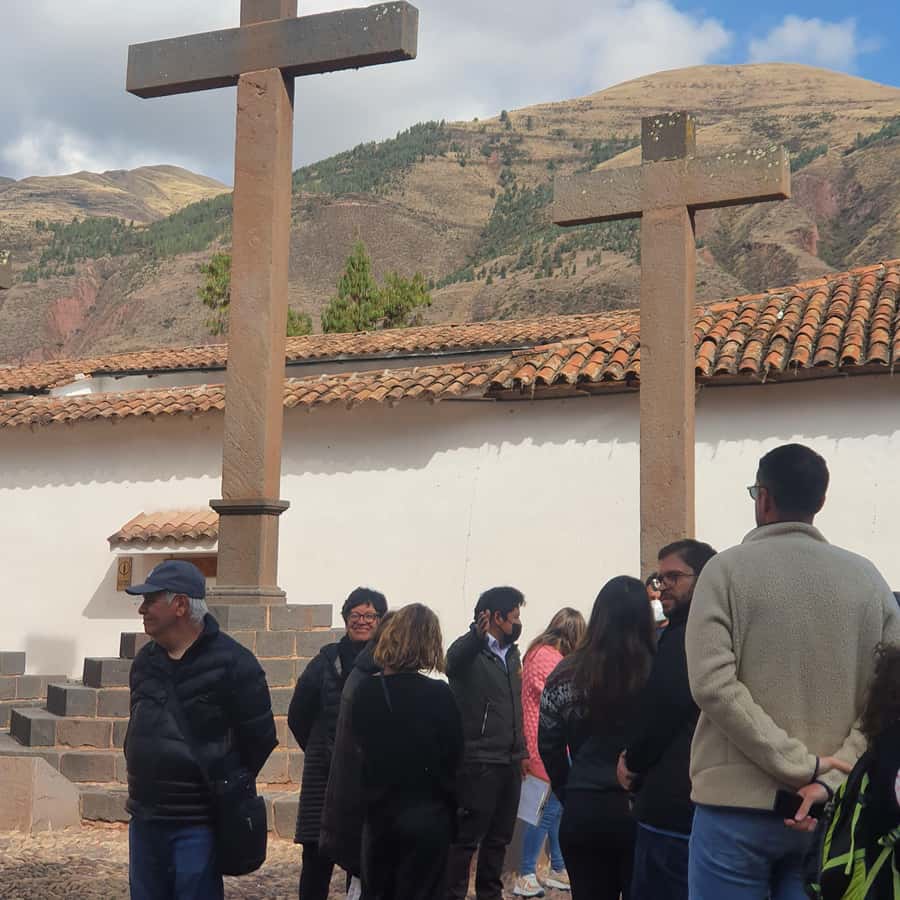
A bilingual English and Spanish guide is included both on the bus and at the sites. Other language availability is listed as French, Portuguese, and Italian, so you should confirm your preferred language when booking.
Guide quality can vary by departure. One guide named Alfredo was described as helpful in English, while another passenger found his English difficult to understand and felt that his Spanish delivery was not clear. That is a fair warning for anyone who depends on detailed English interpretation.
At its best, the guide turns a series of quick stops into a connected story. Juan Carlos Rodriguez, one guide praised during a departure, was described as passionate and generous with information about the cultures and places along the route. That kind of explanation is especially useful at Raqchi and Pukara, where a few minutes of context make the visit far more meaningful.
I would not book this solely for a polished English lecture. I would book it for the combination of transport and access, with the guide as an important bonus. If your main goal is detailed archaeological study, you need a slower private tour.
What the $55 price really covers
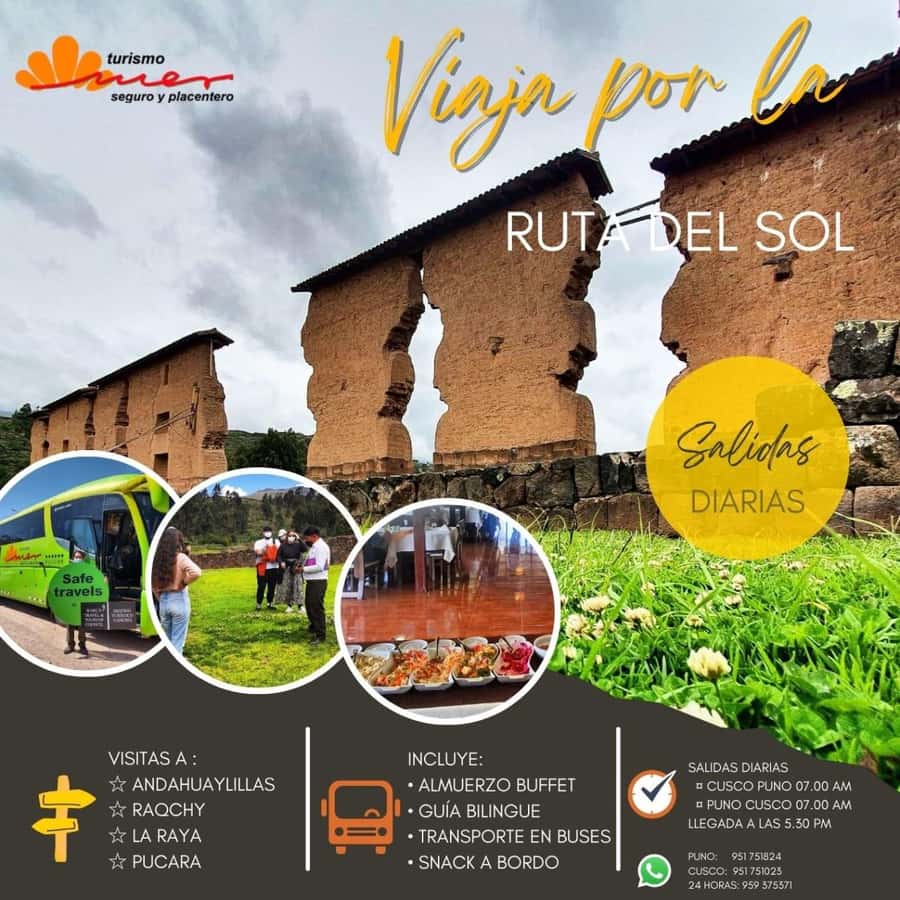
At $55 per person, the service is priced above a basic bus ticket because it combines transportation, guided stops, lunch, and onboard support.
Included are:
- Modern tourist bus transportation
- Reclining seats
- Bilingual guided visits
- Snack service
- Buffet lunch in Sicuani
- Wi-Fi where there is a signal
- Cell phone charging
- Oxygen and first-aid equipment
- Onboard chemical toilet
- Heating and air-conditioning equipment
You must add the entrance fees, which total 53 soles for the three paid sites. Hotel transfers are also extra, and cold drinks at lunch are not included.
I see reasonable value here if you were already planning to visit the four places and would otherwise need to organize separate transport and guides. The buffet and snack help, and the stops prevent the road journey from becoming dead time.
The value is weaker if you only need to get from one city to the other as quickly as possible. You are paying for the sightseeing program, and the day is long. You also need to accept the possibility of a late arrival.
Timing, comfort, and the risk of delay
The advertised duration is 10 hours, with availability shown for different starting times. In practice, one departure arrived one to two hours late, and a final stop was felt to be unnecessary because of the delay.
That matters if you are checking into a hotel, meeting a guide, or catching a flight in Cusco or Puno. I would not schedule an important connection immediately after this bus. Give yourself a buffer and keep your evening plans flexible.
The short stops are both the strength and the limitation of the tour. They let you see more places in one day, but you will not have time for long walks, quiet museum visits, or independent exploration. Think of this as a moving introduction, not a deep visit to each site.
There was also a serious departure-management complaint from one passenger who said the bus began leaving while he and his companion were in the bathroom. I cannot treat that as a normal feature of the service, but it is useful practical advice: tell the guide when you leave the group, use the facilities early, and check that everyone is back before boarding.
Who should book this bus
I would recommend it to you if:
- You need to travel between Puno and Cusco anyway.
- You prefer daytime transport to a night bus.
- You want a guide and organized stops.
- You like seeing several historic places in one day.
- You can handle a long schedule and possible delay.
- You appreciate a buffet with vegetarian and vegan choices.
I would think twice if:
- You need a guaranteed arrival time.
- You want quiet, extended visits at each site.
- You are uncomfortable with a tightly timed group program.
- You expect hotel pickup and drop-off.
- You need consistently strong English interpretation.
- You are sensitive to heat inside a bus.
The activity is wheelchair accessible, and it is not suitable for people over 95 years old according to the supplied conditions. Alcohol and drugs are not allowed.
Should you book the Puno to Cusco tourist bus?
Book it if you want your transfer to do double duty as a sightseeing day. The strongest parts are the well-chosen stops, comfortable seating, included buffet, and the chance to see La Raya in daylight. At $55, the package can make sense once you compare it with paying separately for transport, meals, and guided visits.
Do not book it if punctuality is your top concern. The day can run long, the air-conditioning may not perform perfectly on every departure, and guide quality is not guaranteed to be equally strong in every language.
My practical choice would be to reserve this when you have a free evening after arrival. Bring layers, local currency for the 53 soles in entrance fees, and a charging cable. Treat the journey as a full excursion with transport attached, not as a simple bus ride.
FAQ
How long does the Puno to Cusco tourist bus take?
The advertised duration is 10 hours. The journey can take longer, with one departure arriving one to two hours late.
What attractions are visited?
The route includes guided visits to Andahuaylillas, Raqchi, La Raya, and Pukara. The main sights include Andahuaylillas Chapel, the Temple of Wiracocha, the view toward Nevado Chimboya, and the Pukara lithic museum.
Is lunch included?
Yes. A buffet lunch at the La Pascana Tourist Restaurant in Sicuani is included.
Are vegetarian and vegan lunch options available?
Yes. The buffet includes options for vegetarian and vegan diners.
Are entrance tickets included?
No. Tickets for the three paid attractions are paid directly at the sites and total 53 soles.
Is hotel pickup included?
No. Transfers from your hotel to the bus station and from the terminal to your hotel are not included.
Where is the Puno meeting point?
The meeting point is one block from the port of Puno, between Jirón El Puerto and Los Incas, beside the football field. The private terminal is Turismo Mer.
Is there Wi-Fi on the bus?
Yes, but Wi-Fi works only in areas where there is an internet signal.
Is the bus equipped with a restroom?
Yes. The bus has a chemical toilet onboard.
What should I bring?
Bring sunglasses, a camera, and a jacket. A jacket is useful for the high pass at La Raya and changing temperatures during the day.
Just added around Puno
- Uros Floating Islands Tour in Puno★ 3.7 · 9 reviews
- Two Day Lake Titicaca Tour With Homestay★ 3.7 · 6 reviews
- TRIP FROM PUNO TO CUSCO WITH THE ROUTE OF THE SUN★ 4.7 · 16 reviews
- Full-Day Tour of Uros, Taquile and Sillustani from Puno★ 5.0 · 41 reviews
- Two-Day Tour to Uros with Amantani and Taquile from Puno★ 5.0 · 44 reviews
- Full Day Lake Titicaca Tour to Uros and Taquile Islands★ 4.5 · 56 reviews
- Full Day Guided Tour of the Aymara Route from Puno★ 5.0 · 55 reviews
- Sun island and Copacabana | From Puno or La Paz / Day Trip★ 4.1 · 5 reviews
Buffet Experiences, compared.
Humantay Lake Tour with Breakfast and Buffet Lunch
Read our review →
Scenic Route of the Sun to Puno with Buffet Lunch
Read our review →
Excursion to Sacred Valley Full Day & Buffet Lunch |Group Tour|
Read our review →

Rainbow mountain horseback riding tour + Buffet Lunch
Read our review →
Rainbow mountain horseback riding tour + Buffet Lunch
Read our review →
Ausangate 7 Lagoons Tour 1 day + Buffet Breakfast and Lunch
Read our review →Browse the lists this tour appears in