
Reviewed · SACRED VALLEY TOURS
From Cusco: Sacred Valley Group Tour with Buffet Lunch
The most striking part of this Cusco day trip is its range. In one long sweep, you see Incan farm terraces, unusual circular agricultural platforms, salt ponds still worked in the mountains, a fortress, and several Sacred Valley towns. It is a packed introduction to the region rather than a slow, quiet outing.
I like the wide mix of sights and the fact that an Andean buffet lunch is included, which makes the $69 price easier to justify. The guide-led explanations also add real value, especially at Moray and the Salineras, where a quick photo stop would miss the point.
The tradeoff is the pace. With pickup around 6:30 to 7:00 am and a return near 7:00 pm, you cover a lot of ground, but you will have less time to linger at each stop than you would on a private tour.
In This Review
- Key points to know before booking
- What this Sacred Valley day trip is really like
- An early start from Cusco
- Chinchero, the city of the rainbow
- Moray and the Incas’ agricultural experiments
- Maras and the Salineras salt ponds
- Urubamba and the included Andean buffet
- Ollantaytambo, fortress of the Sacred Valley
- Pisaq before the ride back to Cusco
- What the $69 price includes, and what it does not
- Who should choose this tour?
- Practical verdict: book it for range, not slowness
- FAQ
- How long does the Sacred Valley tour last?
- What time is hotel pickup?
- Which places does the tour visit?
- Is lunch included?
- Are entrance fees included?
- Is hotel pickup included?
- What languages does the guide speak?
Key points to know before booking
- Moray explains Incan farming in a memorable way: The circular agricultural platforms are linked to the Incas’ experiments with growing conditions.
- Maras adds a working tradition to the day: Its salt evaporation ponds have been used since Incan times.
- Chinchero combines church, terraces, and local identity: You visit the Church of Our Lady of Monserrat and the Andenería terraces.
- Ollantaytambo is more than a ruin stop: Its fortress served military, agricultural, and religious purposes.
- The schedule is efficient but full: Expect roughly 12 hours away from Cusco, including several major stops and lunch.
- The listed price is not the final cost: You need 70 soles for Sacred Valley admission and 10 soles for Salineras entry.
What this Sacred Valley day trip is really like
This is a classic full-day circuit from Cusco, designed for you to see many of the valley’s best-known places in one organized outing. The route links Chinchero, Maras, Moray, the Salineras salt mines, Urubamba, Ollantaytambo, and Pisaq before returning to Cusco.
That range is the main reason to choose it. You are not looking at the Sacred Valley from one viewpoint. Instead, you get several ways to understand it: farming, food, religion, engineering, salt production, and military power.
The guide speaks English or Spanish and leads the visits throughout the day. Past feedback gives particular weight to clear explanations, good organization, and the quality of the buffet. That matters here because many of the sites are easier to appreciate when someone explains how they fit into Incan life.
The group format keeps the price at $69 per person, but it also sets the rhythm. You should expect a planned route with several stops, not an open-ended day where you choose how long to stay at every site.
More sacred valley tours in Cusco:
- From Cusco: Sacred Valley & Maras Salt Mines Tour with Lunch
★ 4.8 · 2,227 reviews - From Cusco: Moray, Maras Salt Mines & Chinchero Weavers Tour
★ 4.8 · 1,925 reviews - Cusco: Sacred Valley, Pisac, Ollantaytambo, Salt Mines Moray
★ 4.6 · 1,058 reviews
An early start from Cusco
Hotel pickup is scheduled in the early morning, generally between 6:30 and 7:00 am. The more specific pickup window given for many hotels is about 6:35 to 6:50 am, so keep your morning free and be ready before the stated time.
This is a sensible start for such a long route. The Sacred Valley is outside Cusco, and the day includes many stops before the return around 7:00 pm. A late departure would force the tour to cut sites or shorten the visits.
Pickup is included, along with tourist transport and the guide. If your hotel is far away or difficult for the vehicle to reach, the company says you will receive notice one day before departure. Pay attention to that message, since the meeting point or pickup arrangement may differ from the standard hotel service.
Bring your passport. It is the only item specifically required, but you will also want practical day-trip basics such as water, sun protection, and comfortable shoes. Those suggestions are common sense for a long sightseeing day, not special equipment requirements.
Chinchero, the city of the rainbow
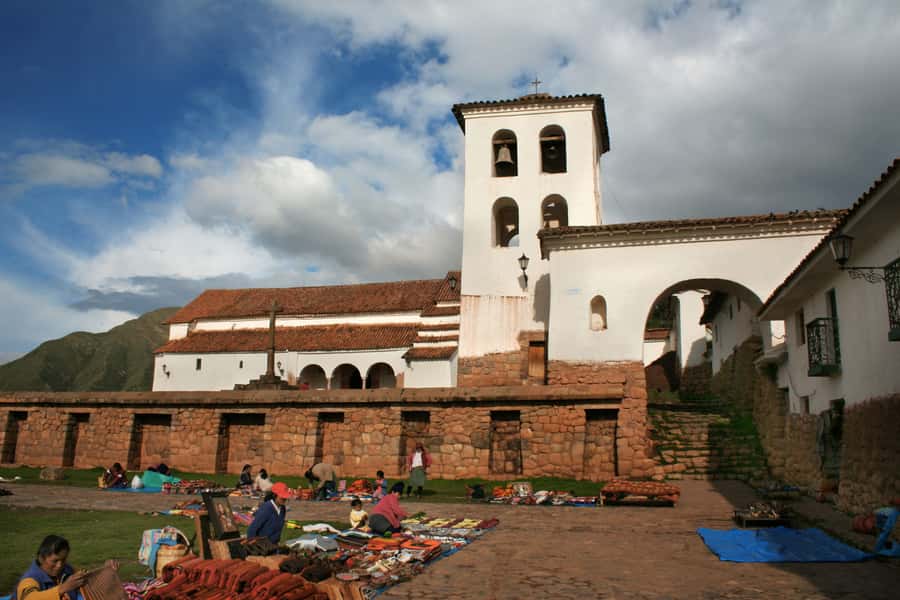
Chinchero is the first major stop and introduces you to the highland side of the Sacred Valley. It is known as the city of the rainbow, and the visit combines colonial religious architecture with the agricultural terraces that shaped life here.
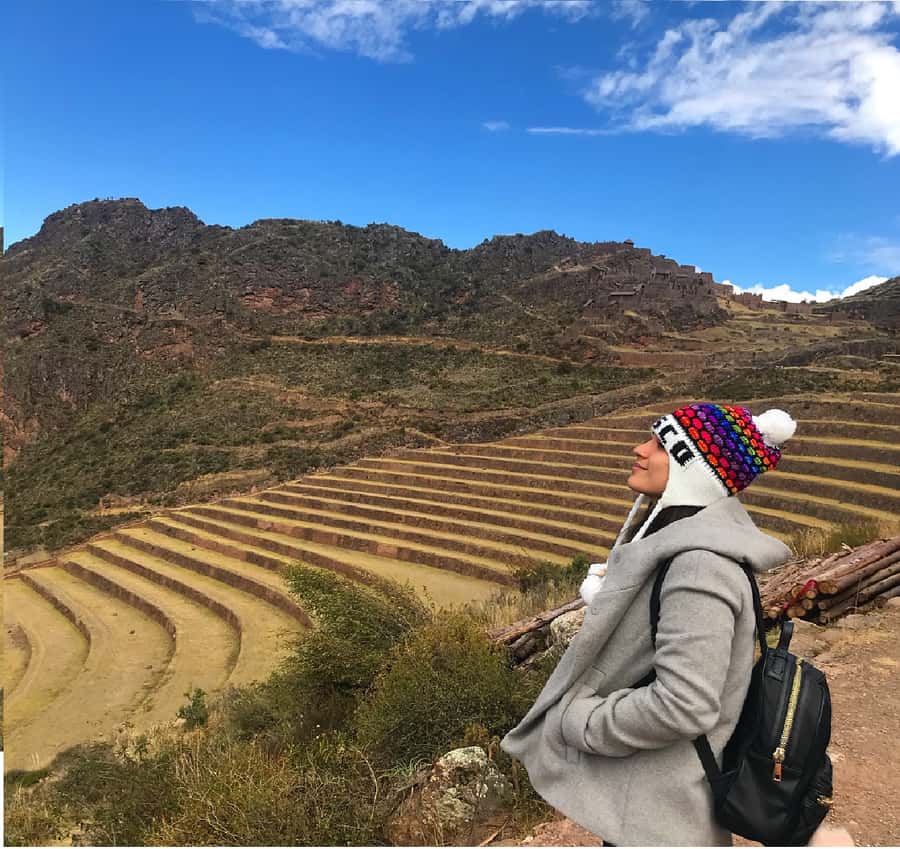
You will see the Church of Our Lady of Monserrat, then the Andenería agricultural terraces. The contrast is useful: the church represents the colonial period, while the terraces show the Andean farming systems that came before it and continued to support communities afterward.
The terraces are not just attractive stone steps. They show how people made use of steep ground for cultivation. Your guide can help connect the construction to the larger Incan approach to farming and water management.
Because Chinchero comes early, you may still be settling into the day. Keep your passport and small essentials easy to reach, and listen closely during the first explanation. It sets up the agricultural themes that return later at Moray and Urubamba.
Moray and the Incas’ agricultural experiments
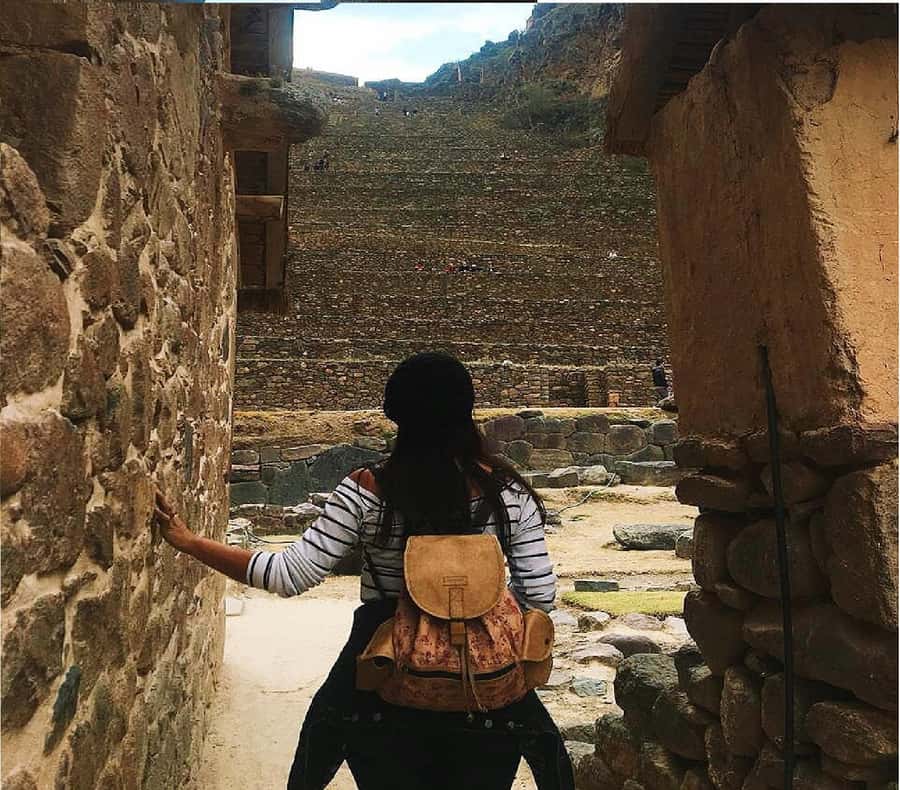
The route continues to Moray, where the main feature is a set of circular agricultural platforms. The site is often linked to Incan experiments with micro-climates, meaning the different levels may have created varied growing conditions.
This is one of the most visually distinctive stops. From above, the terraces form broad circles that descend into the earth. The shape makes it easier to grasp why Moray attracts attention, but the guide’s explanation is what gives the site meaning.
I especially like this stop for people who want more than a sequence of ruins. Moray raises practical questions about how the Incas tested crops, adapted to altitude, and used carefully built terraces to improve agriculture.
Do not expect a long, unhurried study session. The day has several more stops, so the group will move on according to schedule. If you like taking photographs, Moray is a place where you should be ready when you arrive, since the overall shape is best appreciated from a broad viewpoint.
A few more Cusco trips to weigh up
- Cusco: Humantay Lake Tour with Breakfast and Buffet Lunch
★ 4.9 · 2,976 reviews - Cusco: Scenic Route of the Sun to Puno with Buffet Lunch
★ 4.8 · 101 reviews - Excursion to Sacred Valley Full Day & Buffet Lunch |Group Tour|
★ 5.0 · 81 reviews - Rainbow mountain horseback riding tour + Buffet Lunch
★ 3.8 · 9 reviews
Maras and the Salineras salt ponds
The Salineras salt mines provide one of the day’s most unusual scenes. Instead of a single industrial mine, you see many small evaporation ponds arranged across the mountainside. These ponds have been used since Incan times.
The process is straightforward but fascinating. Saltwater reaches the ponds, then sunlight and evaporation leave salt behind. The stepped arrangement makes practical use of the slope and turns production into a striking pattern of pale pools.
This stop gives you a direct connection to a living Andean practice. Moray shows agricultural planning, while Salineras shows how natural resources were collected and organized for use. Together, they make the valley feel like a place of work, not simply an archaeological zone.
You will pay an additional 10 soles for entry to Salineras. That fee is separate from the Sacred Valley admission, so budget for both before you go. The salt ponds are one of the places where the extra charge feels worthwhile if you enjoy seeing traditional production methods rather than only monumental ruins.
Urubamba and the included Andean buffet
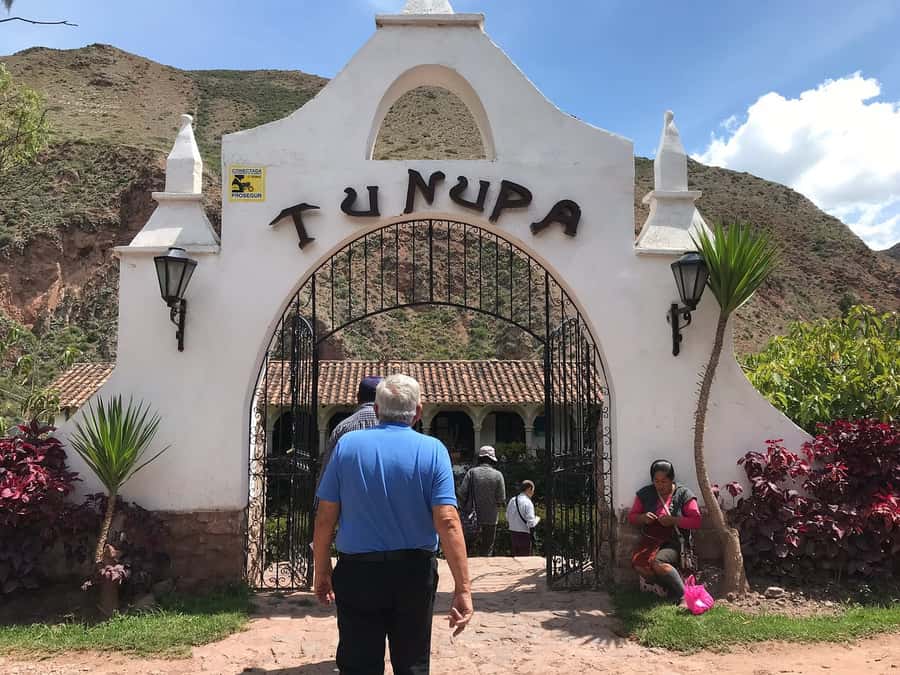
After the morning’s visits, the group heads to Urubamba for lunch. The meal is an Andean buffet featuring Peruvian dishes, and it is included in the tour price.
That inclusion is useful on a 12-hour excursion. You do not need to spend time finding a restaurant or decide where a large group can eat. You can sit down, try several dishes, and get fuel for the afternoon.
The buffet has received especially strong praise, with several comments describing it as excellent or very good. Naturally, a buffet can vary by day, and the exact dishes are not specified. Still, the arrangement gives you a chance to sample authentic Peruvian cuisine in a practical group setting.
Lunch also functions as a needed pause. The schedule begins early and includes several outdoor stops, so use the meal to rest rather than rushing straight back to the vehicle. If you have dietary restrictions, the available information does not specify special menus, so ask the operator before booking.
Ollantaytambo, fortress of the Sacred Valley
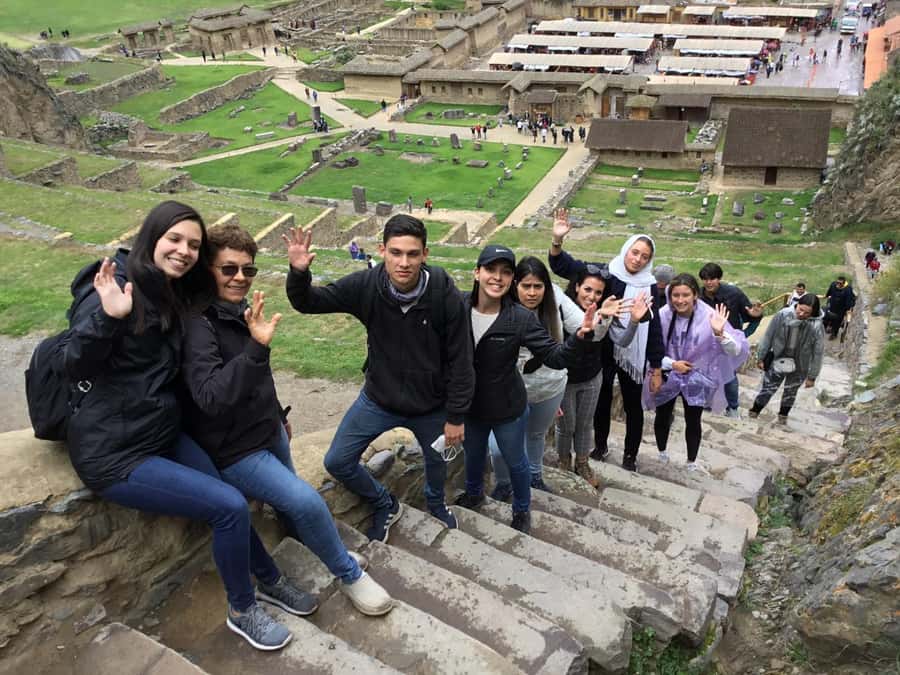
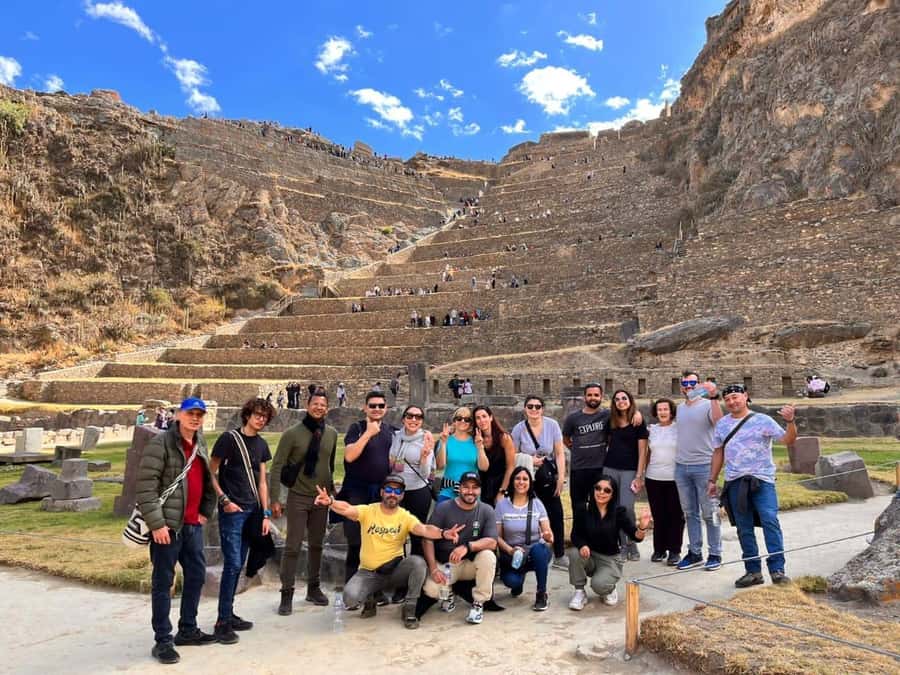
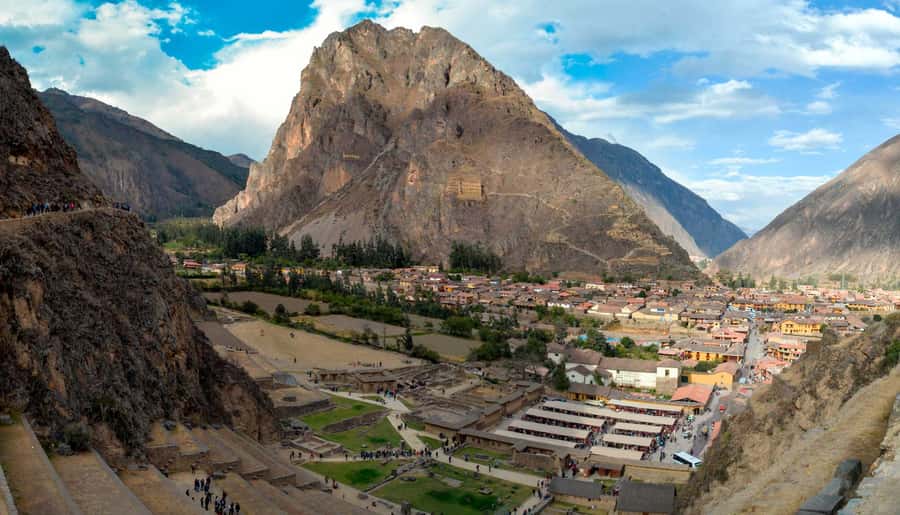
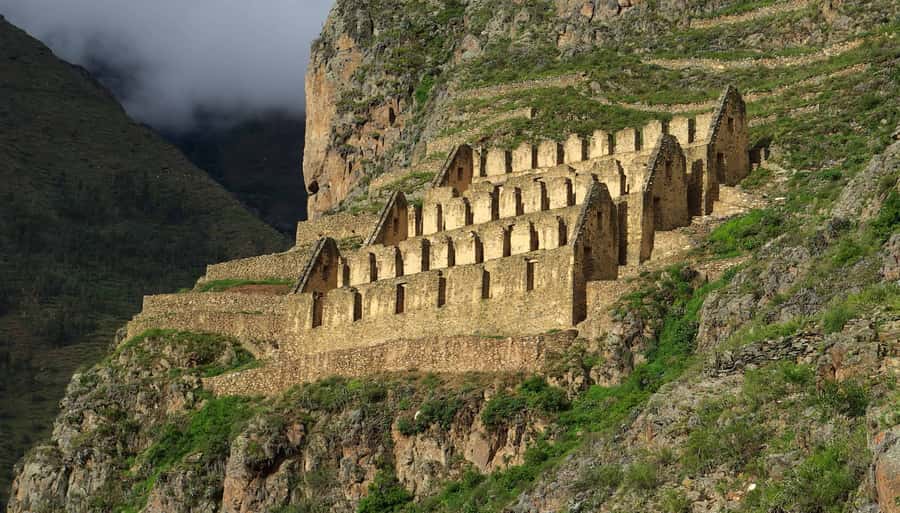
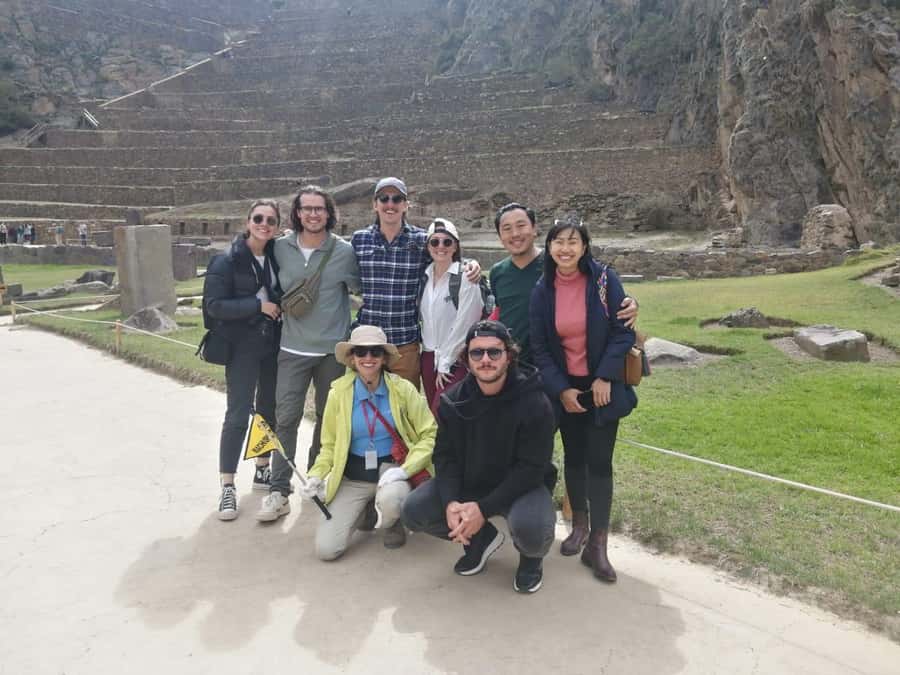
Ollantaytambo is the afternoon’s major archaeological stop. The fortress was a strategic military, agricultural, and religious center, which helps explain why it feels larger in purpose than a simple defensive structure.
The site sits within the wider valley setting and shows how the Incas planned settlements around power, farming, and ceremony. Your guide’s role is important here because the stones alone do not explain all three functions.
I would give Ollantaytambo your full attention. It is one of the stops where the historical explanation can change what you notice. Look beyond the fortress label and consider the site as a working center tied to food production, religious life, and control of the surrounding area.
The limitation is again time. This tour visits several major places in one day, so you should not book it expecting a slow archaeological study. If Ollantaytambo is your main reason for visiting the Sacred Valley, a more focused excursion may suit you better.
Pisaq before the ride back to Cusco
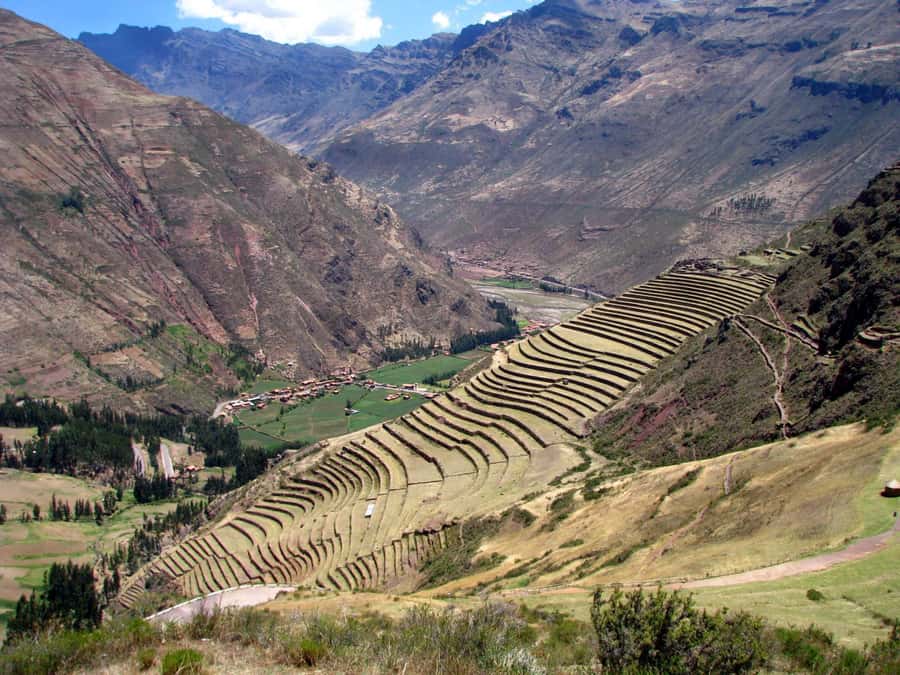
Pisaq is the final named stop before the return to Cusco. Its inclusion rounds out the circuit and lets you see another important Sacred Valley location after Chinchero, Moray, Maras, Urubamba, and Ollantaytambo.
The schedule does not provide a detailed breakdown of the Pisaq visit, so you should think of it as part of the broad overview rather than a guaranteed long stop devoted to one feature. The advantage is efficient coverage. You can include Pisaq without arranging a separate day.
By this point, the early start will be noticeable. The ride back to Cusco is scheduled for around 7:00 pm, making this a full day from hotel pickup to return. That timing works well for someone with limited time in Cusco, but it may feel tiring if you have just arrived or are still adjusting to the altitude.
What the $69 price includes, and what it does not
At $69 per person, the tour offers a useful bundle: hotel pickup, tourist transport, a professional guide, and the Andean buffet lunch. For a full day covering several widely separated places, that can be good value, especially if you are traveling alone or prefer not to arrange transport yourself.
The two required extra admissions are important. Entrance to the Sacred Valley costs 70 soles, while Salineras costs 10 soles. Add those fees to the advertised price when working out your real budget.
The value is strongest if you want breadth and convenience. You get transport between many stops, a guide to explain the agricultural and historical details, and lunch without having to plan each part yourself.
The value is weaker if you mainly want time and flexibility. Group transport means a fixed pace, and the feedback consistently points to many stops being efficient but potentially quick for anyone who prefers to explore slowly.
Free cancellation up to 24 hours before departure and reserve-now, pay-later booking make the reservation less rigid. Those terms are helpful if your Cusco plans may change, but check the exact conditions when booking.
Who should choose this tour?
I would recommend this excursion to you if you have one open day in Cusco and want a broad introduction to the Sacred Valley. It suits first-time visitors, people who value organized transport, and anyone who wants a guide to connect the sites instead of simply arriving at them.
It is also a good match if food is part of your travel experience. The buffet gives you a planned meal and a chance to sample Peruvian dishes without adding a separate restaurant search to an already full day.
You may want another option if you dislike early mornings, long organized excursions, or short visits. The schedule is demanding, and the number of stops means you trade lingering time for variety.
The activity is not considered suitable for pregnant women or people over 95 years of age. The provided details do not give a more general mobility assessment, so anyone with particular physical concerns should ask the operator before reserving.
Practical verdict: book it for range, not slowness
Book this Sacred Valley tour if you want to see Chinchero, Moray, Maras, the Salineras, Urubamba, Ollantaytambo, and Pisaq in one day, with lunch and transport handled for you. The clear guide explanations, strong buffet, and well-organized route are its best features.
Skip it if your ideal day means lingering at one ruin, setting your own departure time, or avoiding a 12-hour schedule. At $69 plus the two entrance fees, it is a sensible overview tour, not a relaxed private exploration.
FAQ
How long does the Sacred Valley tour last?
The tour lasts 12 hours, with hotel pickup in the early morning and a return to Cusco at about 7:00 pm.
What time is hotel pickup?
Pickup is scheduled between 6:30 and 7:00 am. For many hotels, the expected window is approximately 6:35 to 6:50 am.
Which places does the tour visit?
The route includes Chinchero, the Church of Our Lady of Monserrat, the Andenería agricultural terraces, Moray, Maras, the Salineras salt mines, Urubamba, Ollantaytambo fortress, and Pisaq.
Is lunch included?
Yes. An Andean buffet lunch in Urubamba is included in the tour price.
Are entrance fees included?
No. Sacred Valley admission costs 70 soles, and Salineras admission costs 10 soles.
Is hotel pickup included?
Yes. Hotel pickup and tourist transport are included. If your hotel is far away or difficult for the vehicle to reach, you will be informed one day before departure.
What languages does the guide speak?
The live guide service is available in English and Spanish.
More Lunch Experiences in Cusco
- Machu Picchu: Full-Day Tour from Cusco with Optional Lunch
★ 4.6 · 927 reviews - Sacred Valley: Chinchero, Moray, Ollantaytambo & Pisac+Lunch
★ 4.8 · 501 reviews - Pisac Indian Market and Ollantaytambo Fortress with Lunch
★ 4.5 · 395 reviews - From Cusco: 7 Lakes Ausangate Trek with Breakfast and Lunch
★ 4.8 · 360 reviews
Just added around Cusco
- Waqrapukara 1 day trekking + meals★ 3.9 · 3 reviews
- Zipline over the Sacred Valley Trip★ 5.0 · 11 reviews
- Valle Sur Cusco | half day★ 4.3 · 3 reviews
- Visit to the Cochahuasi Animal Sanctuary with rescued animal★ 4.1 · 4 reviews
- Visit Pisac from Cusco: Private Transport★ 4.6 · 9 reviews
- Maras and Huaypo lagoon by ATV from Cuzco | Local Operator★ 4.7 · 4 reviews
- Trek to Humantay Lake from Cusco★ 4.9 · 8 reviews
- Trek to Choquequirao 4 days★ 3.8 · 4 reviews
Sacred Valley Tours, compared.
Sacred Valley & Maras Salt Mines Tour with Lunch
Read our review →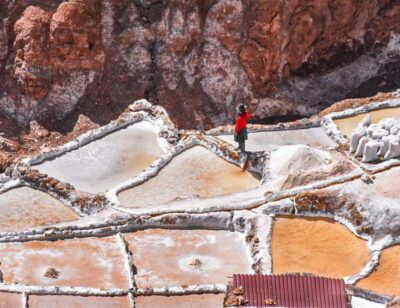
Moray, Maras Salt Mines & Chinchero Weavers Tour
Read our review →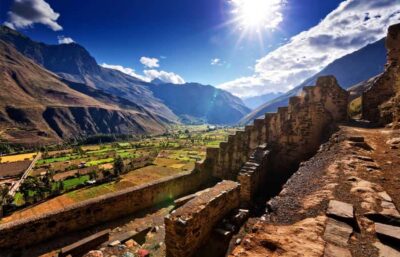
Sacred Valley, Pisac, Ollantaytambo, Salt Mines Moray
Read our review →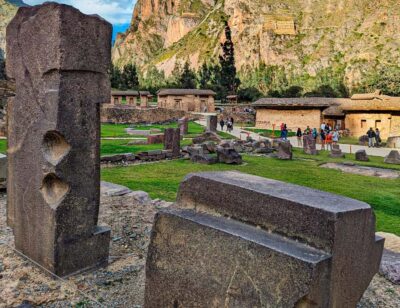
Chinchero,Moray & Salt Mines drop-off in Ollantaytambo
Read our review →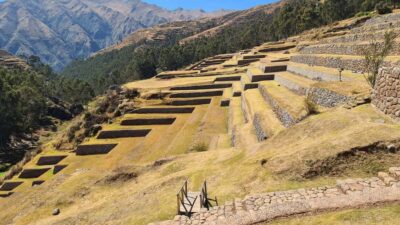

Pisac Indian Market and Ollantaytambo Fortress with Lunch
Read our review →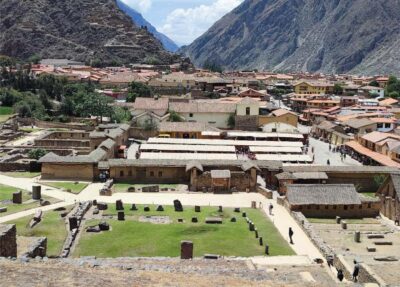
2-Day Trip to the Sacred Valley and Machu Picchu
Read our review →Browse the lists this tour appears in