
Reviewed · INCA JUNGLE TREK
4-Day Inca Jungle Adventure, Mountain Biking, Rafting and Zipline
The Inca Jungle route trades the classic stone-paved Inca Trail for a lively mix of mountain biking, rafting, jungle walking, ziplining, hot springs, and a final visit to Machu Picchu. You move from cold mountain air at Abra Málaga to warm, humid valleys filled with coffee, coca, bananas, and tropical fruit.
I like the variety, especially the long downhill bike ride and the walk from Hidroeléctrica toward Aguas Calientes along the railway. I also like the small maximum group of 15, since that gives the guide a fair chance to keep an eye on the group. The main caution is comfort: the hostels are basic, and the hiking days require solid fitness.
In This Review
- Key points to know before booking
- Why choose the Inca Jungle route from Cusco
- Day 1: Downhill biking from Abra Málaga
- Day 2: Plantation paths, Waka Yupana, and Santa Teresa
- Day 3: Coffee near Lucmabamba and the long walk to Aguas Calientes
- Day 4: Reaching Machu Picchu before the crowds
- What the $378 price really covers
- Lodging, luggage, and what to pack
- Who should book this four-day adventure
- Should you book it?
- FAQ
- How long is the Inca Jungle adventure?
- Is transportation from Cusco included?
- Is Machu Picchu admission included?
- Is the bus from Aguas Calientes to Machu Picchu included?
- Are meals and accommodation included?
- How many people can join the group?
Key points to know before booking
- Abra Málaga to Huamanmarca: The first day begins at 4,316 meters, then drops by bicycle toward warmer jungle country.
- Four kinds of adventure: The package includes biking, river rafting, ziplining, and several long walks.
- Agricultural route: You pass coca, coffee, cassava, annatto, bananas, papaya, citrus, pineapple, mango, and other crops.
- Machu Picchu timing matters: The entrance, circuit, and Huayna Picchu options are not included, so confirm these arrangements before departure.
- Basic lodging: Three hostel nights are included, but standards vary. Santa Teresa offers the best chance to relax at the thermal baths.
- Value at $378: Meals, transport, three nights of lodging, activities, and the return train are included, but key Machu Picchu costs are extra.
Why choose the Inca Jungle route from Cusco
If the thought of four days on one demanding footpath does not appeal to you, this route gives you a more varied way to reach Machu Picchu. You still walk through former Inca territory, but your legs get a change of job every day. One morning you are on a bicycle, another afternoon you are clipped into a zipline, and the final day puts you inside the Inca citadel.
The route also gives you a useful look at how the climate changes around the Andes. Your first departure is from Cusco in the highlands. At Abra Málaga, the air is cold and thin. By Santa María, the road has reached a warmer, greener zone with fruit fields and rivers. That change happens quickly and is one of the trip’s most memorable features.
The trade-off is that this is not a soft adventure. You need a strong level of fitness for the walking, steep stair climb to Machu Picchu, early starts, and repeated days with a small pack. The activity itself is accessible to a fit beginner in places, but the complete four-day schedule is tiring.
More whitewater rafting in Cusco:
- Rafting & Zip line Urubamba River 1 Day
★ 5.0 · 75 reviews - Cusco Rafting and Zipline Adventure
★ 4.5 · 47 reviews - 07 Day: Inca Jungle Adventure with Mountain Bike, Rafting, Zipline & Trek
★ 5.0 · 36 reviews
Day 1: Downhill biking from Abra Málaga
Pickup takes place in Cusco between 6:00 and 7:00 a.m. The drive heads first toward the Sacred Valley, with a stop in Ollantaytambo after about an hour. This is your chance to buy breakfast and make any last purchases before the road climbs higher.
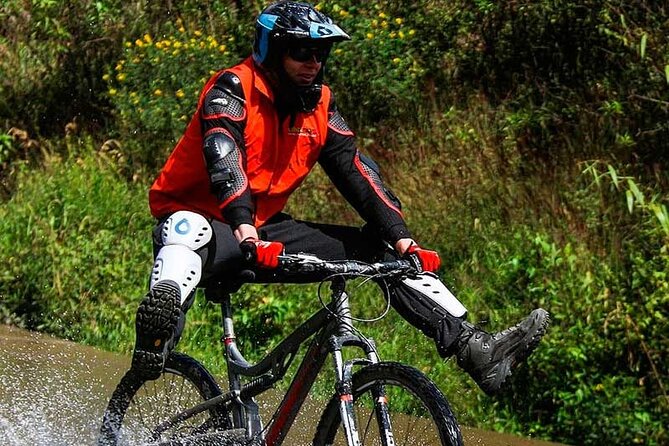
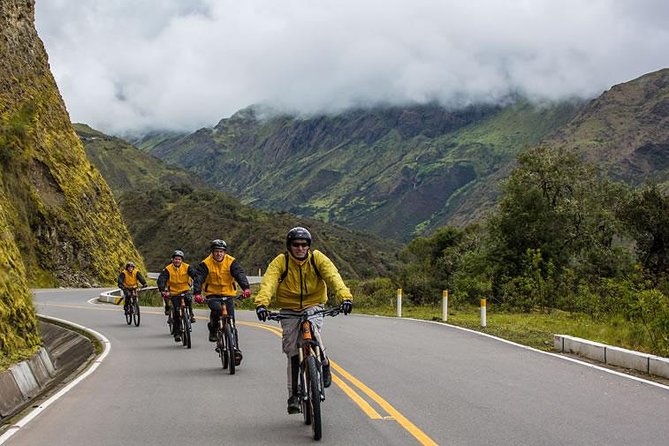
The next drive continues to Abra Málaga, at 4,316 meters above sea level. Here, the guide supplies the bicycle and safety equipment, and the main ride begins. The route descends for about two and a half hours toward Huamanmarca.
This is the sort of cycling that lets you enjoy the views without requiring advanced riding skills. Much of the route is downhill, so the work is less about climbing and more about controlling your speed and staying alert. The road can still feel demanding because of the length, altitude, and changing conditions, so do not treat it as a casual pedal around town.
At Huamanmarca, you leave the bicycles and receive an explanation of the archaeological site. This stop breaks up the ride with a bit of context about the area and gives you a chance to look around before moving into warmer country.
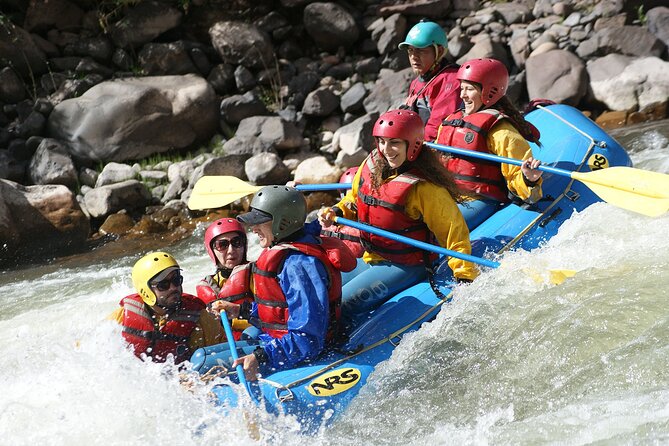
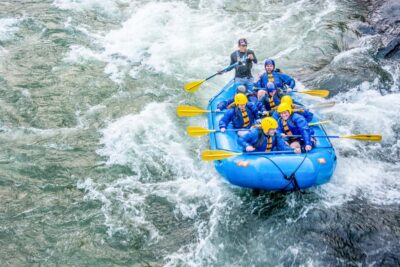
River rafting is included in the overall adventure package. The supplied schedule does not give a separate rafting time or detailed river section, but the experience is described as part of the first day. Plan on a wet, active finish to the day, and keep your dry clothes and valuables protected.
The group then continues to Santa María for lunch and the first overnight stay. The full day lasts about nine hours, so the early start matters. The first hostel is very basic, and cold water may be an issue. After biking and rafting, that lack of a warm shower can feel more than a little inconvenient. Food is provided, though portions and quality may be simple.
Day 2: Plantation paths, Waka Yupana, and Santa Teresa
After breakfast, you begin a roughly five-hour walk toward Waka Yupana. The first two hours are described as fairly easy. The middle section climbs for about two hours, followed by an hour of descent to the point where transport takes you onward to Santa Teresa.
The appeal here is the farming country. The path passes fields of coca, coffee, cassava, annatto, and tropical fruit. You may see banana, papaya, citrus, pineapple, and mango plantations as well. This is more than scenery. Walking through these farms gives you a look at the crops that support daily life in the warmer valleys.
The route also reaches a viewpoint over the Wankar Q’asa canyon. That is one of the better visual pauses of the trip, especially after the uphill section. The guide provides an introduction to the farming, though the level of explanation may depend on the individual guide and the group’s pace.
The walk is not described as extreme, but it is not flat. If you are an intermediate hiker, you may find it manageable, particularly since the guide schedules regular breaks. If you regularly hike steep mountain routes, you might wish this portion were harder. The tour suits people seeking a moderate adventure rather than a technical trek.
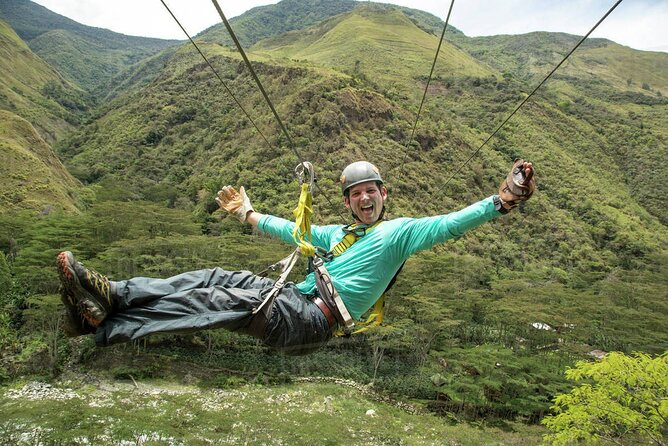
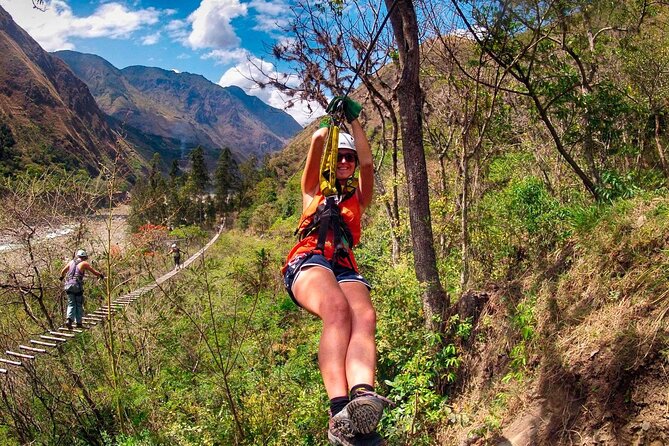
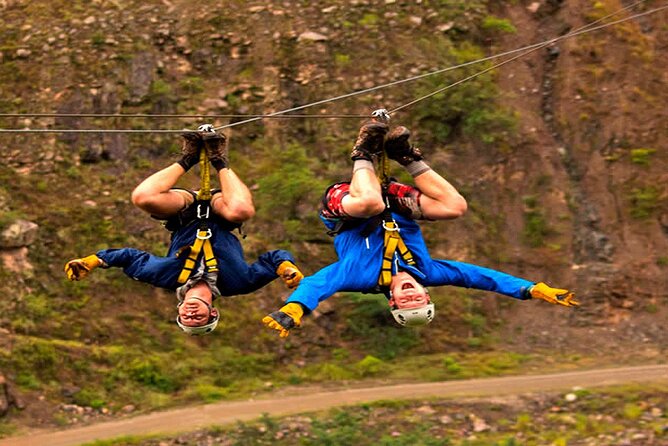
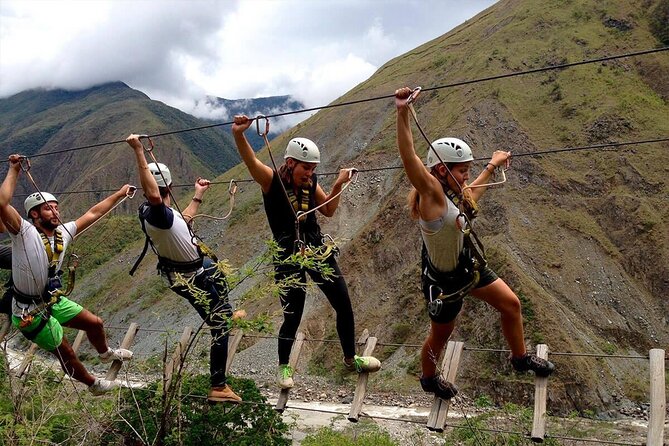
Lunch comes in Santa Teresa, followed by about two hours on the zipline course. You slide on a pulley attached to a waist harness, high above the river. This adds a fast, playful element after a long morning on foot. It is a good fit if you want an adventure activity without having to learn a complicated skill first.
The day finishes at the Cocal Mayo thermal baths, an optional stop costing about 30 Peruvian soles. I would budget for it. Warm, clear pools are exactly what tired legs need after the climb, and this is one of the few chances to slow down during the four-day schedule.
Santa Teresa provides the second overnight. Its hostel is reportedly better than the first and third, and dinner is included. The package covers breakfast, lunch, and dinner on this day.
Day 3: Coffee near Lucmabamba and the long walk to Aguas Calientes
Day three begins early, with breakfast at 5:30 a.m. Local transport takes you about 45 minutes to Lucmabamba. From there, you walk through tropical forest and an organic coffee-growing area.
The coffee stop is a welcome change from simply passing through farmland. You have the chance to try fresh coffee and see the agricultural side of the valley up close. It is a small detail, but it gives the day a stronger sense of place.
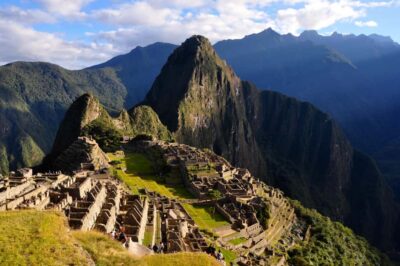
The trail then climbs toward Llactapata, taking about two hours and 50 minutes. After visiting the site, you descend for around two hours. Along this section, you can see Machu Picchu. That first long-distance view of the citadel is a strong reward for the morning’s effort.
Lunch is served at Hidroeléctrica. Afterward, you pass Intiwatana, an ancient carved rock used as a sundial during the Inca period. The route then follows the railway toward Aguas Calientes.
You have two choices for the final section. If you are worn out, you can take the train to Aguas Calientes, but that ticket is not included. If you still have energy, you can walk for about two hours from Hidroeléctrica along the railway tracks.
The walking option saves money, but it adds another long stretch to a day that already includes several hours of hiking. The train option costs extra and makes sense if your feet are tired or if you want to arrive with more energy for Machu Picchu. Either way, Aguas Calientes is your overnight base.
This night is also in basic accommodation. Dinner and breakfast are included, but food portions may feel modest after a full day on the trail. Pack snacks if you prefer to eat more between meals, though the supplied details do not specify what snacks are provided.
More inca jungle trek in Cusco:
- 4 Days Inca Jungle to Machu Picchu Standard
★ 4.5 · 48 reviews - From Cusco: 4-Day Inca Jungle Adventure to Machu Picchu
★ 4.8 · 45 reviews - Inca Jungle Premium to Machu Picchu 4-Day and 3-Nights
★ 5.0 · 40 reviews - Inca Jungle 4-Day Tour: Full Adventure to Machu Picchu Included
★ 5.0 · 38 reviews
Day 4: Reaching Machu Picchu before the crowds
The final day starts around 4:00 a.m. You receive a packed breakfast and walk for about 30 minutes to the Puente Ruinas checkpoint. From there, a steep stair climb of about one hour leads to the main entrance of Machu Picchu.
The stated walking time can stretch to 1.5 or 2 hours depending on your fitness and pace. You can pay for the bus to Machu Picchu, which costs about $24 for a round trip, but the bus is not included in the tour price. I would choose the stairs only if you still feel strong after three active days. The climb is satisfying, but it is not a small warm-up.
Inside the citadel, the cultural guide leads a visit lasting about two and a half hours. The tour covers the main sectors and explains Inca history and culture. A guide named Eber is specifically identified in the supplied material as friendly and effective at Machu Picchu, though the provider disputed whether that particular account belonged to its company. For that reason, treat the guide’s name as something to confirm rather than a guarantee.
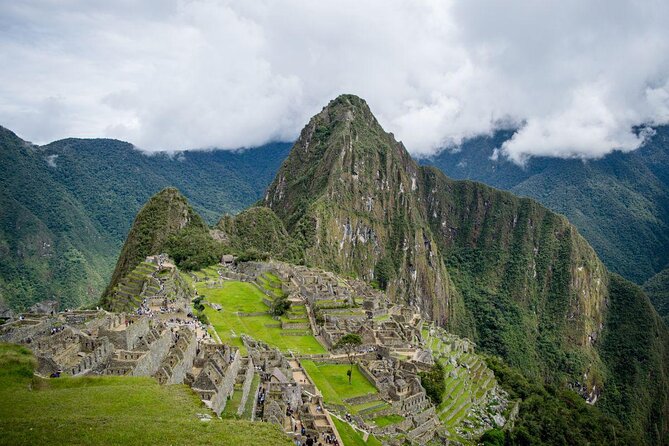
Your entrance to Machu Picchu is not included in the $378 price. The exact circuit, listed as Circuit 1 or Circuit 2 depending on availability, must be arranged with the booking agent. This is a major point, not a footnote. Circuit choices shape what you see, and an early Circuit 2 entry is the preferred arrangement described in the supplied details.
Huayna Picchu is also extra. The listed price is $79 per person when purchased through the company, while the detailed trip account gives a local figure of about 200 soles. Confirm the current cost and availability directly before booking. Huayna Picchu is a steep mountain walk and requires its own entrance arrangement.
After the visit, you return to Aguas Calientes for lunch at your own expense. You then board the train to Ollantaytambo, with the train ride taking about two hours. A bus transfer continues from Ollantaytambo to Cusco.
The return schedule deserves attention. A late train can leave you waiting in Aguas Calientes and arriving in Cusco around 10:00 p.m. Ask about the departure time before you pay, especially if you want time for lunch or a less tiring return.
What the $378 price really covers
At $378 per person, the package offers fair value if you want a guided, active route with most of the moving parts handled for you. Included are the pre-departure briefing, transport from Cusco to Abra Málaga, the biking activity, zipline, river rafting, experienced Inca Jungle guide, three hostel nights, three breakfasts, three lunches, three dinners, the Machu Picchu cultural guide, and the train from Aguas Calientes to Ollantaytambo.
That is a useful bundle. You do not have to arrange separate transport between the highlands, jungle towns, Hidroeléctrica, and Ollantaytambo. The small group, capped at 15, also adds value because a guide can manage the different activities without handling a giant crowd.
Still, the advertised price is not your complete Machu Picchu budget. You must account for the Machu Picchu entrance, the optional bus, and any Huayna Picchu ticket. The Cocal Mayo thermal baths and the train from Hidroeléctrica to Aguas Calientes are also extra.
Meals are included, but keep expectations practical. This is active-tour food, not a culinary holiday. Portions can feel light, especially after the long walking days.
Lodging, luggage, and what to pack
You stay in hostels for three nights. The first and third nights are especially basic, while Santa Teresa offers the better accommodation of the three. Shared rooms and cold water are possible, so pack for simplicity rather than comfort.
You will carry your belongings throughout the route. Bring a modest backpack with a two-liter water bladder, hiking boots, good hiking socks, one pair of long hiking pants, swim shorts, three or four moisture-wicking shirts, a sun hat, sunglasses, soap, toothbrush, sunscreen, mosquito repellent, phone, charger, money, and your passport.
A waterproof jacket and base layer may be useful, but the jungle section is much warmer and more humid than Cusco. The supplied packing advice did not require them during an early June trip, but weather can change. Keep your passport safe, since you need it for Machu Picchu entry.
Who should book this four-day adventure
I would choose this trip if you want several types of activity in one package and do not mind basic lodging. It suits fit hikers who enjoy moderate climbs, long walks, and early mornings, but who also want the fun of biking, rafting, and ziplining.
It is less suitable if you want a polished hotel experience, generous meals, a relaxed schedule, or a single focused trek. The early departures, steep climb to Machu Picchu, and possible walk from Hidroeléctrica demand energy.
The small group is a practical advantage, and the route offers more contact with farms, rivers, and tropical communities than a simple train excursion. But confirm every Machu Picchu detail before departure: entrance circuit, entry time, Huayna Picchu, bus choice, and return train.
Should you book it?
Book this Inca Jungle adventure if variety matters more to you than comfort and you want a strong four-day route to Machu Picchu at a reasonable base price. The downhill cycling, thermal baths, coffee farms, Llactapata views, and railway walk give the journey its character.
Skip it if you want a quiet, high-comfort holiday or if long active days are a concern. Most important, do not assume the $378 covers every Machu Picchu cost. Confirm the entrance arrangements and add the optional fees to your budget first.
FAQ
How long is the Inca Jungle adventure?
The experience lasts approximately four days. The daily activities are listed at about nine hours on day one and about eight hours each on days two, three, and four.
Is transportation from Cusco included?
Yes. Hotel pickup in Cusco is provided, and transport takes you to Abra Málaga. The return train from Aguas Calientes to Ollantaytambo and the bus from Ollantaytambo to Cusco are also included.
Is Machu Picchu admission included?
No. The entrance fee to Machu Picchu is not included and must be arranged with the booking agent. The exact circuit depends on availability.
Is the bus from Aguas Calientes to Machu Picchu included?
No. The round-trip bus costs about $24 per person and is optional. You can instead walk to the entrance, with the climb taking about 1.5 to 2 hours depending on your pace and fitness.
Are meals and accommodation included?
Yes. Three breakfasts, three lunches, three dinners, and three hostel nights are included. The accommodation is basic, and standards vary between the three locations.
How many people can join the group?
The group has a maximum of 15 people. The tour requires a strong physical fitness level because it includes biking, rafting, hiking, ziplining, steep stairs, and early starts.
More Zip Lines in Cusco
- From Cusco: Via Ferrata and Sky Lodge Zipline
★ 5.0 · 16 reviews - Zipline over the Sacred Valley Trip
★ 5.0 · 11 reviews - Cusco: Zipline + ATV’s | Salt Mines of Maras and Moray |
★ 5.0 · 4 reviews - Canopy Tower, Zipline, Kayak, and Monkey Island …
★ 3.6 · 11 reviews
More Cycling Tours in Cusco
- Sacred Valley: Maras & Moray by Quad Bike from Cusco
★ 4.6 · 418 reviews - From Cusco: Quad bike tour Moray and Salt Mines
★ 4.7 · 314 reviews - Sacred Valley: Huaypoo Lagoon and Maras by Quad Bike – ATV
★ 4.6 · 53 reviews - Cusco: Extreme Sky Bike and Rappelling Adventure
★ 4.4 · 10 reviews
Just added around Cusco
- Waqrapukara 1 day trekking + meals★ 3.9 · 3 reviews
- Zipline over the Sacred Valley Trip★ 5.0 · 11 reviews
- Valle Sur Cusco | half day★ 4.3 · 3 reviews
- Visit to the Cochahuasi Animal Sanctuary with rescued animal★ 4.1 · 4 reviews
- Visit Pisac from Cusco: Private Transport★ 4.6 · 9 reviews
- Maras and Huaypo lagoon by ATV from Cuzco | Local Operator★ 4.7 · 4 reviews
- Trek to Humantay Lake from Cusco★ 4.9 · 8 reviews
- Trek to Choquequirao 4 days★ 3.8 · 4 reviews
Inca Jungle Trek, compared.
Inca Jungle Premium to Machu Picchu 4-Day and 3-Nights
Read our review →
Inca Jungle 4-Day Tour: Full Adventure to Machu Picchu Included
Read our review →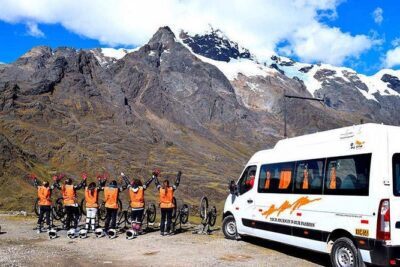
07 Day: Inca Jungle Adventure with Mountain Bike, Rafting, Zipline & Trek
Read our review →
Browse the lists this tour appears in