
Reviewed · SACRED VALLEY TOURS
Super Sacred Valley with Transfer to Ollantaytambo
The most useful feature here is the one-way finish in Ollantaytambo. You see four important Sacred Valley sites in one day, eat lunch in Urubamba, then end near the train station instead of returning to Cusco. I like the mix of Inca ruins, living Andean traditions, and the working salt pools at Maras. I also like that lunch and city-center pickup are included.
The main caution is the pace. You cover a lot of ground at high altitude, entrance fees are extra, and one report describes too much time in souvenir shops and a difficult luggage handoff at Ollantaytambo. Bring a small bag if you can, and confirm how your luggage will be handled before departure.
In This Review
- Key points to know before booking
- Why this Sacred Valley route is useful
- Chinchero at 3,780 meters
- Moray and its round agricultural terraces
- The Maras Salt Mines and 4,000 working pools
- Lunch in Urubamba
- Ollantaytambo, the final Inca city
- Transport, pickup, and the pace of the day
- Is $35 good value?
- Who should book this route?
- Final booking advice
- FAQ
- How long does the Super Sacred Valley tour last?
- Where does the tour start?
- Which places are included in the route?
- Where does the tour finish?
- Is lunch included?
- Are entrance fees included?
- What languages are available for the live guide?
Key points to know before booking
- Four major stops in one day: Chinchero, Moray, the Maras Salt Mines, and Ollantaytambo.
- High-altitude start: Chinchero sits at about 3,780 meters above sea level, higher than Cusco.
- Useful one-way route: Drop-off near the Ollantaytambo train station can fit well with a train onward.
- Lunch is included: You stop in Urubamba for a meal of regional food at a typical local restaurant.
- Budget price, extra costs: The $35 price includes transport and lunch, but not archaeological admission or the Maras entry fee.
- Check the luggage plan: Space in the vehicle may be limited, and carrying a suitcase through Ollantaytambo would be awkward.
Why this Sacred Valley route is useful
This is not just a quick trip to one ruin. It is a full-day sweep through several sides of the Cusco Region: farming, religious art, engineering, salt production, and Inca military planning.
You begin with pickup from a hotel in central Cusco and travel toward the Sacred Valley. Along the way, you see fields and villages set below the snow-capped mountains that held sacred meaning long before the Inca state took shape. The route gives you a sense of how closely daily life, farming, religion, and mountain geography were tied together.
I like the route because each stop has a different purpose. Chinchero gives you Andean textiles and colonial art. Moray shows a clever agricultural site. Maras is still a working place of production. Ollantaytambo then brings the day back to monumental Inca stonework.
The tradeoff is that this variety requires a tight schedule. You will not have unlimited time at any one site, and the route may include stops at craft markets or souvenir shops. If you prefer a slow visit with long stretches at one archaeological site, a smaller private tour may suit you better.
More sacred valley tours in Cusco:
- From Cusco: Sacred Valley & Maras Salt Mines Tour with Lunch
★ 4.8 · 2,227 reviews - From Cusco: Moray, Maras Salt Mines & Chinchero Weavers Tour
★ 4.8 · 1,925 reviews - Cusco: Sacred Valley, Pisac, Ollantaytambo, Salt Mines Moray
★ 4.6 · 1,058 reviews
Chinchero at 3,780 meters
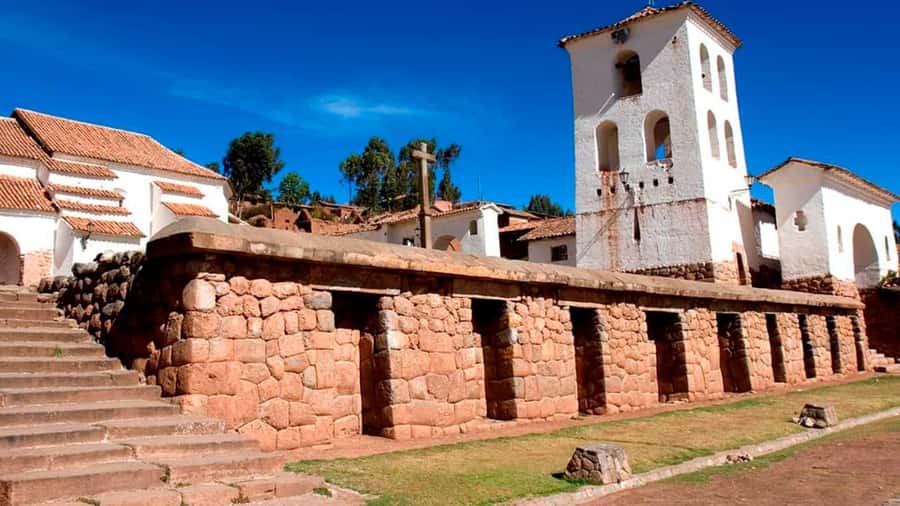
Chinchero is the first major stop and the highest point named in the route. At roughly 3,780 meters above sea level, it deserves respect even if you already spent time in Cusco. Walk slowly, drink water, and avoid treating the first ruins as a race.
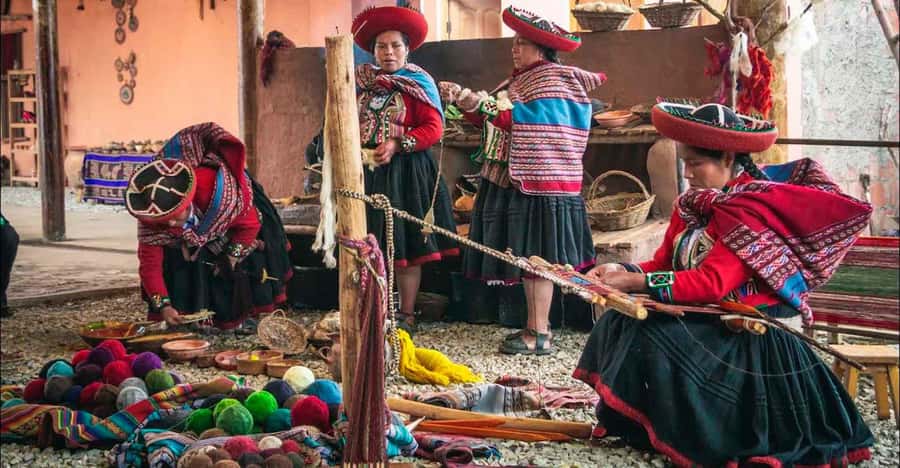
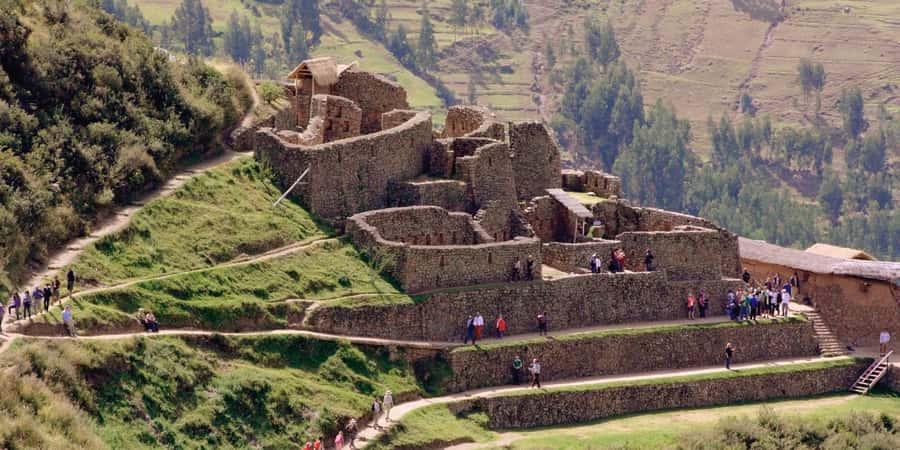
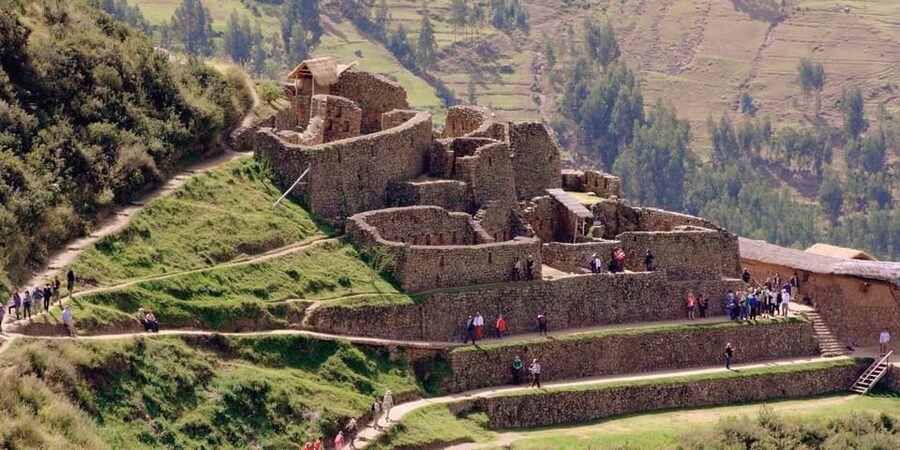
The archaeological area introduces you to Inca construction and the older agricultural world of the Sacred Valley. The town itself adds another layer: a 17th-century colonial church decorated with canvases from the Cusco School. That combination is one of the best reasons to visit Chinchero. You can move from pre-colonial stonework to colonial religious art within the same town.
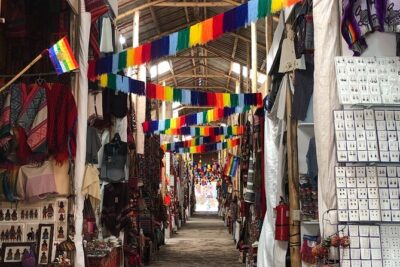
The local market is also part of the appeal. Chinchero is known for Andean fabrics, and the market continues the tradition of exchanging goods and selling woven products. You will see colorful textiles and handmade crafts, though the amount of time given to shopping can affect the rest of the day.
Here is my practical advice: enjoy the market, but keep an eye on the clock. If the guide spends a long stretch at craft stalls, you may feel rushed later at the archaeological sites. This is especially important on a route with four major stops and a final transfer to Ollantaytambo.
Moray and its round agricultural terraces
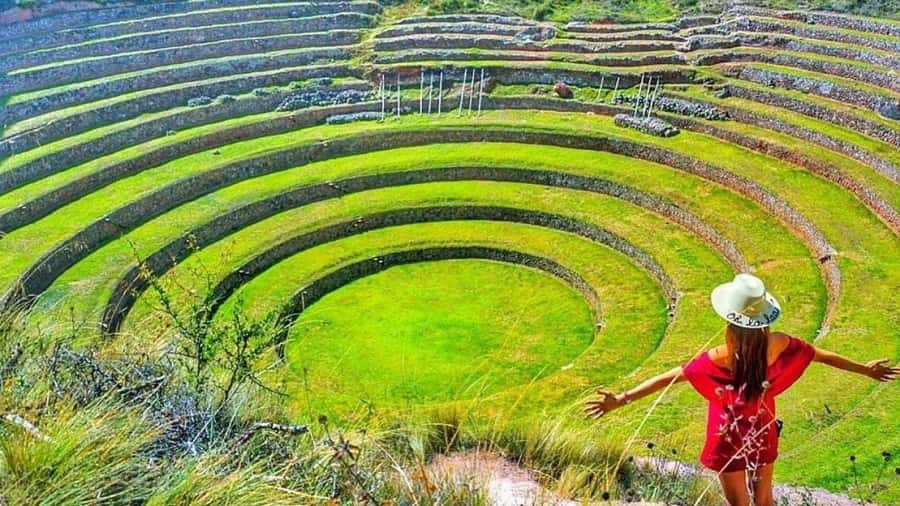
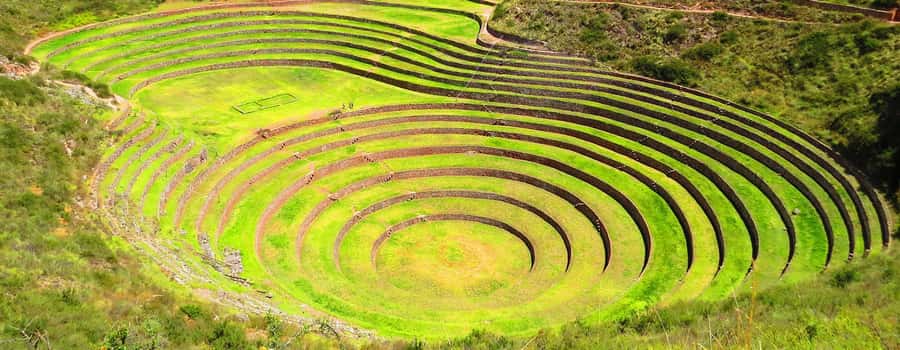
Moray is one of the more unusual Inca sites in the Sacred Valley. Its circular terraces sink into the ground in a series of broad rings, creating a striking pattern that looks unlike the straight agricultural terraces found elsewhere in the region.
The site is linked with ancient agricultural research. The terraces allowed different growing conditions at different levels, making Moray a useful place for understanding how the Inca studied and managed crops. You do not need to be an archaeology specialist to appreciate the basic idea: this was practical engineering shaped by altitude, temperature, and food production.
Moray is also a good stop after Chinchero because it changes the focus from art and market life to science and farming. Your guide should help connect the terraces to the wider Inca system, rather than treating the site as just a photogenic hole in the ground.
The exact amount of time at Moray is not specified, so keep your expectations realistic. This is a group day with several stops, not a private archaeological study. Wear shoes suitable for uneven ground and be ready for more walking at altitude.
The Maras Salt Mines and 4,000 working pools
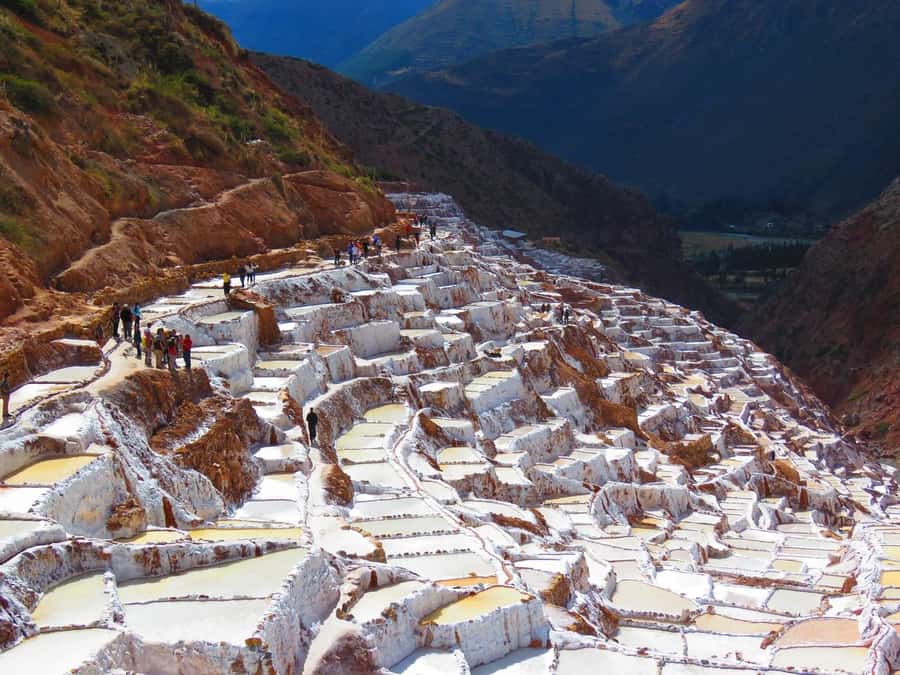
The Maras Salt Mines are among the most memorable parts of the route because they are not simply abandoned ruins. More than 4,000 salt pools spread across the mountainside, producing salt that remains valued in regional cooking.
Each pool is supplied with salty water, and the salt forms as the water evaporates. The result is a patchwork of small white and tan pools that changes with light and weather. The site connects ancient methods with present-day production, which gives the stop a strong sense of place.
You need to budget for a separate entrance fee here. The Maras admission is not part of the $35 tour price, and archaeological entry fees are also excluded. Since the exact amounts can change, check the current costs before you go and carry enough local currency if needed.
Maras is a place where the guide’s explanation matters. Without context, you might see a series of salt pans and move on. With a good explanation, you understand how water, evaporation, labor, and local commerce have shaped the site.
This stop can also be crowded with shopping opportunities. The route description includes local crafts and colorful market displays, and one low-rated account says more time was spent in souvenir shops than at the main sights. I would treat shopping as optional and make sure you know when the group is leaving.
A few more Cusco trips to weigh up
- Cusco: Alpaca and Llama Farm Tour w/ Transfer & Weaving Demo
★ 4.9 · 151 reviews - Cusco: Abode of the Gods ATV Tour with Transfer
★ 4.5 · 118 reviews - Cusco Airport Pickup and Private Transfer
★ 5.0 · 82 reviews - Cusco Private Airport Transfer: Fast, Reliable Hotel Drop-Off
★ 5.0 · 80 reviews
Lunch in Urubamba
After Moray and Maras, the group heads to Urubamba for lunch at a typical restaurant. Lunch is included, which improves the value of the tour, especially on a long day when arranging your own meal would take time away from the route.
The meal is intended to feature regional flavors. The information provided does not specify a menu, restaurant name, or dietary arrangements, so ask the operator in advance if you have food restrictions. Do not assume that special meals are available unless confirmed.
Urubamba works well as a meal stop because it breaks up the sightseeing before the final visit. You can use the pause to rest, eat, and prepare for Ollantaytambo. The day begins at high altitude and includes several sites, so this is not a meal to rush through if the schedule allows.
At the same time, lunch timing may depend on the group’s progress. Delays at the market or earlier sites can shorten the stop. Keep a small snack with you as a backup, especially if you are sensitive to long gaps between meals.
Ollantaytambo, the final Inca city
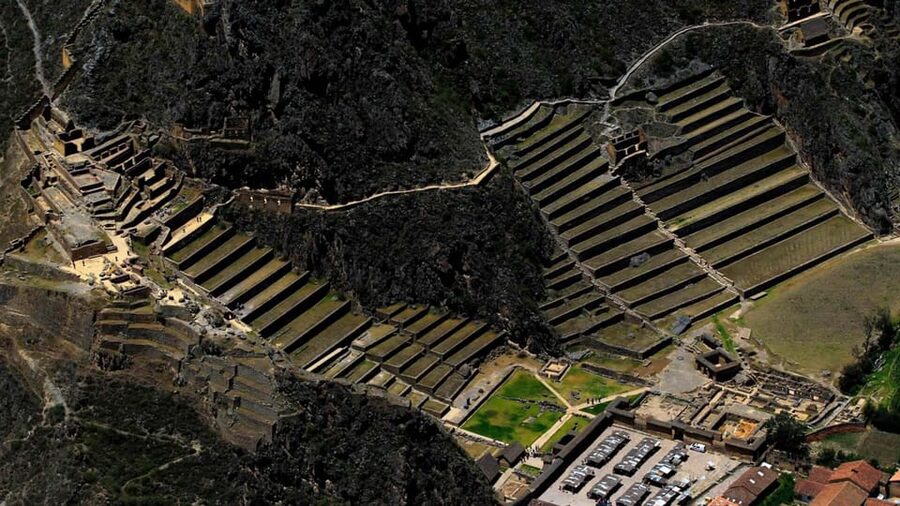
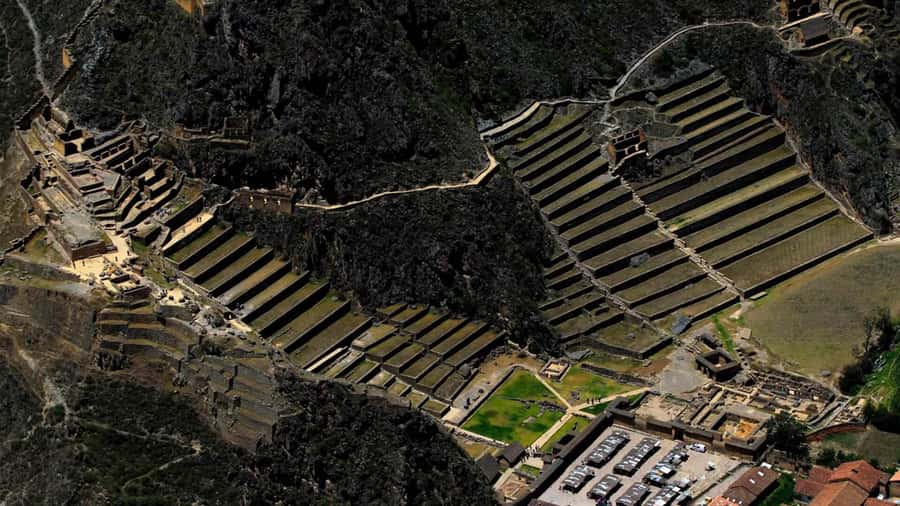
Ollantaytambo is the grand finish. Often described as a living Inca city, it combines present-day town life with a major Inca complex of terraces, stone structures, and defensive planning.
The site served military, religious, and administrative purposes. Its location helped control movement through the Sacred Valley, and its terraces and stonework show how carefully the town was organized. The guide should help you see Ollantaytambo as more than a pile of ruins. It was a functioning center with strategic importance.
The end point near the Ollantaytambo train station is a real advantage. If you have a train connection, this route can save you from returning to Cusco and then retracing the road. It can also work well if you have arranged accommodation in Ollantaytambo.
There is one serious practical issue: luggage. One account describes a vehicle with insufficient space for bags, followed by an instruction to take all luggage out and hurry into the ruins. Carrying a large suitcase through the Ollantaytambo complex would be uncomfortable and could prevent you from completing the visit.
I would contact the operator before booking and ask three direct questions:
- Is my luggage stored in the vehicle during the Ollantaytambo visit?
- Can I bring a full suitcase, or should I carry only a daypack?
- Exactly where will I be dropped off near the train station?
The answers matter more here than on a normal round-trip sightseeing day. A standard daypack should be easier to manage, but do not assume the vehicle has room for larger bags.
Transport, pickup, and the pace of the day
The tour includes pickup from a hotel in central Cusco and transport between the stops. The starting time depends on availability, so check the schedule for your chosen date before paying.
Pickup communication deserves care. One poor experience involved the group leaving without making contact, even though the people concerned had arrived at the meeting point on time. The operator later arranged a taxi to bring them to the bus, but that is not a good way to begin a full-day excursion.
I suggest being ready early and confirming the pickup details the day before. Ask for the exact pickup point, the expected vehicle, and a phone or messaging contact for the day. Keep your phone charged, and do not wander away from the hotel entrance if the pickup procedure is unclear.
The tour offers live guiding in English or Spanish. No guide names are provided, so you cannot select a specific guide in advance. The experience can depend heavily on how well the guide manages time, explains the sites, and keeps the group together.
The route is long and active. You should expect road travel, uneven archaeological ground, market walking, and high-altitude exertion. Comfortable shoes, water, sun protection, and a light layer are sensible choices. These are basic needs for the setting, not extras that make the tour fancy.
Is $35 good value?
At $35 per person, this is an inexpensive way to cover a large section of the Sacred Valley. Transport, hotel pickup in central Cusco, lunch in Urubamba, and visits to four major places are included.
The price looks better if you value the one-way transfer to Ollantaytambo. A separate return to Cusco would take extra time and transport planning, while this route ends near the train station. For someone continuing by rail, that final drop-off may be the most useful part of the package.
The price is less complete than it first appears because archaeological admission and the Maras Salt Mines entry are extra. You need to add those costs to the advertised fare when comparing tours. The exact fees are not supplied here, so check current rates before departure.
A low price also usually means less control over the schedule. You may be traveling with a group, stopping at markets, and following a fixed sequence. If you want more time at Moray, a longer lunch, or a relaxed visit to Ollantaytambo, paying more for a private option may be sensible.
For a budget-minded visitor who wants coverage rather than depth, the value is solid. For someone carrying luggage or wanting a quiet archaeological day, the savings may not outweigh the complications.
Who should book this route?
I would recommend this tour to you if you want a practical overview of the Sacred Valley and need to finish in Ollantaytambo. It suits people who like a full day of varied stops, can handle high altitude, and are comfortable with a structured group schedule.
It is also a useful first introduction to the region. You see ruins, a colonial church, textiles, salt production, farming terraces, and the Inca center at Ollantaytambo without arranging several separate excursions.
I would be more cautious if you have limited mobility, a large suitcase, or a strong dislike of shopping stops. The route includes uneven archaeological areas, and the luggage issue needs a clear answer before you commit.
The overall score is 3.1 out of 5 from four ratings. One short rating specifically praised the guide as excellent, while another described major problems with communication, shopping time, vehicle storage, and the hurried Ollantaytambo visit. That spread tells you to focus less on the headline price and more on confirming the practical details.
Final booking advice
Book this tour if you want four Sacred Valley highlights in one day, lunch included, at a low starting price, and especially if Ollantaytambo is your next base or train departure point. The combination of Chinchero, Moray, Maras, and Ollantaytambo gives you a useful range of Andean history and daily life.
Before booking, confirm the total admission costs, pickup instructions, and luggage space in writing. Pack light, stay alert at market stops, and allow enough time for the final train connection. Free cancellation up to 24 hours ahead and reserve-now, pay-later terms give you some flexibility, but they do not replace careful planning.
FAQ
How long does the Super Sacred Valley tour last?
It is a one-day experience. Starting times vary, so you need to check availability for your chosen date.
Where does the tour start?
Pickup is provided from hotels in the city center of Cusco.
Which places are included in the route?
The tour visits Chinchero, Moray, the Maras Salt Mines, and Ollantaytambo. It also includes lunch in Urubamba.
Where does the tour finish?
Drop-off is provided near the Ollantaytambo train station.
Is lunch included?
Yes. Lunch at a typical restaurant in Urubamba is included in the tour price.
Are entrance fees included?
No. Entrance fees to the archaeological sites and admission to the Maras Salt Mines are not included.
What languages are available for the live guide?
The live guide service is available in English and Spanish.
Just added around Cusco
- Waqrapukara 1 day trekking + meals★ 3.9 · 3 reviews
- Zipline over the Sacred Valley Trip★ 5.0 · 11 reviews
- Valle Sur Cusco | half day★ 4.3 · 3 reviews
- Visit to the Cochahuasi Animal Sanctuary with rescued animal★ 4.1 · 4 reviews
- Visit Pisac from Cusco: Private Transport★ 4.6 · 9 reviews
- Maras and Huaypo lagoon by ATV from Cuzco | Local Operator★ 4.7 · 4 reviews
- Trek to Humantay Lake from Cusco★ 4.9 · 8 reviews
- Trek to Choquequirao 4 days★ 3.8 · 4 reviews
Sacred Valley Tours, compared.

Sacred Valley & Maras Salt Mines Tour with Lunch
Read our review →
Moray, Maras Salt Mines & Chinchero Weavers Tour
Read our review →
Sacred Valley, Pisac, Ollantaytambo, Salt Mines Moray
Read our review →
Chinchero,Moray & Salt Mines drop-off in Ollantaytambo
Read our review →
Pisac Indian Market and Ollantaytambo Fortress with Lunch
Read our review →
2-Day Trip to the Sacred Valley and Machu Picchu
Read our review →Browse the lists this tour appears in