
Reviewed · SACRED VALLEY TOURS
Sacred Valley (VIP) – Full Day Trip
The big appeal here is simple: you cover nearly all of the Sacred Valley’s headline sights in one long day. From Chinchero’s high plain to the salt pools at Maras, then on to Ollantaytambo and Pisac, the route gives you a fast but useful introduction to Inca engineering and Andean life. Ollantaytambo is the day’s star, with huge terraces and an old Inca village still in use.
I like the $55 price, which includes hotel pickup, a bilingual guide, guided visits, and a buffet lunch in Urubamba. I also like the mix of places: you get ruins, living villages, farming terraces, salt production, mountain views, and a proper meal rather than five straight hours of ruins.
The catch is pace. This is a 12-hour road trip with roughly an hour at most major stops, and some portions can feel rushed. You also need to pay extra for the Partial Tourist Ticket and Maras admission, so the advertised price is not the full cost.
In This Review
- Key points to know before booking
- What this $55 Sacred Valley day really delivers
- Chinchero at 3,765 meters
- Moray and the Inca crop laboratory
- The Maras salt pools and the extra 20 soles
- Buffet lunch in Urubamba
- Ollantaytambo, the strongest stop of the day
- Pisac and the Temple of the Sun
- The guide can make or break the day
- Shopping stops and the meaning of VIP
- Transport, pace, and physical effort
- Who should book this Sacred Valley trip
- Should you book it?
- FAQ
- How long does the Sacred Valley VIP tour last?
- What places are included in the route?
- Is hotel pickup included?
- Is lunch included?
- Are the admission fees included in the price?
- Is the tour offered in English?
- How many people can join the tour?
- Can I cancel for a full refund?
Key points to know before booking
- Five major stops in one day: Chinchero, Moray, Maras, Ollantaytambo, and Pisac make this a useful overview tour.
- Ollantaytambo deserves your attention: Its steep terraces, water temple, fortress, and preserved Inca street plan give you the strongest sense of scale.
- The real cost is higher than $55: Add 70 soles for the Partial Tourist Ticket and 20 soles for the Maras salt mines.
- Lunch is included in Urubamba: The buffet also has a vegan option, a welcome break on a full touring day.
- Expect a small group, not a private trip: The stated maximum is 19 people, though group handling has not always been perfect.
- Commercial stops can affect the mood: Some departures have included silver, salt, jewelry, drink, or alpaca-related stops, so ask how much time is reserved for shopping.
What this $55 Sacred Valley day really delivers
At $55 per person, this tour offers good value if your time in Cusco is tight. A private day covering these places would cost far more, while this shared outing lets you see the major sights without arranging transport, tickets, lunch, and a guide on your own.
The tradeoff is that you are buying breadth, not lingering time. You will see a lot, but you will not have the freedom to spend half a morning at Pisac or wander slowly through Ollantaytambo. I would think of it as a first look at the valley, not the final word.
The tour is scheduled for about 12 hours. That matters in practical terms. You should be ready for an early pickup, a full day in a vehicle, quick walks, steps, and repeated stops at high elevations. Chinchero sits at about 3,765 meters, and Ollantaytambo is around 9,160 feet. Even when the walking is not technically difficult, the altitude and pace can make the day tiring.
Pickup is included from Cusco hotels. It is not included from private residences, so you need to arrange a hotel meeting point if that applies to you. Confirmation is provided when you book, and the group size is advertised at no more than 19 people.
One detail deserves attention before you pay: the itinerary descriptions show no admission charge at the stops, but the actual inclusions exclude the Partial Tourist Ticket and Maras salt mines fee. Budget 70 soles per person for the ticket and another 20 soles for Maras. Bring cash in soles. The extra amount is not huge, but it should be clear from the start.
More sacred valley tours in Cusco:
- From Cusco: Sacred Valley & Maras Salt Mines Tour with Lunch
★ 4.8 · 2,227 reviews - From Cusco: Moray, Maras Salt Mines & Chinchero Weavers Tour
★ 4.8 · 1,925 reviews - Cusco: Sacred Valley, Pisac, Ollantaytambo, Salt Mines Moray
★ 4.6 · 1,058 reviews
Chinchero at 3,765 meters
Chinchero is a strong opening stop because it gives you altitude, views, village life, and Inca masonry in one place. This small Andean community sits on the high plains of Anta, about 30 kilometers from Cusco, with the Vilcabamba range and snowy Salkantay visible toward the west when conditions are clear.
The village is linked to the Andean idea that Chinchero was the birthplace of the rainbow. Its adobe homes and traditional clothing help you see that this is not only an archaeological site. People still live and work here, and the Sunday market is known for feeling less arranged for tourists than the market at Pisac.
The Inca remains are concentrated around the main plaza. Look for the massive stone wall with ten trapezoidal niches. Its carefully fitted blocks and the agricultural terraces nearby point to the importance of the settlement under Inca ruler Tupac Yupanqui, who may have used Chinchero as a country retreat.
You get about an hour here. That is enough for an introduction and photographs, but not enough for a slow village walk, especially if the guide gathers the group quickly. The high altitude makes this a place to walk steadily rather than race ahead.
Moray and the Inca crop laboratory
Moray is one of the most unusual stops on the route. Its circular terraces sink into the earth in a series of broad rings, reaching about 330 feet deep. From above, the site looks almost like a giant amphitheater, but its purpose was practical rather than theatrical.
The Inca built retaining walls and irrigation channels into the terraces. The changing height and exposure created different growing conditions, which is why Moray is often described as a crop laboratory. It gives you a clear example of how Inca farming relied on design, water control, and close attention to climate.
The site lies roughly 4.5 miles from Maras and about 39 miles from Cusco. You get around 45 minutes here. That is enough to view the circles and hear the main explanation, though the stop can feel brief if you want to study the stonework or take several viewpoints.
This is one of the places where a good guide changes the experience. Guides such as Irving, Jhonnatan, Richard, and Warner have been singled out for clear explanations, enthusiasm, patience, and help with photographs. The guide’s job at Moray is not just to point at the circles, but to explain why the terraces matter.
The Maras salt pools and the extra 20 soles
The Maras salt mines are a sharp contrast to Moray. Here, salty water flows into hundreds of small pools built into the mountainside. As the water evaporates, salt remains behind, creating a patchwork of white and earthy tones.
The pools are in the rural community of Pichingoto. The setting is especially appealing if you enjoy photography, and the area also connects with walking and mountain-biking routes toward Tarabamba and Pichingoto. You get about 45 minutes, so this is mainly a viewpoint and explanation stop rather than a long hike.
Admission costs 20 soles per person, separate from the tour price. Keep cash ready. The ticket is easy to overlook when comparing tours online, and the lack of clear warning has been a source of frustration for some customers.
The nearby area also includes the Moray archaeological site and the Sanctuary of Tiobamaba, an adobe colonial church with Cusco School paintings, including a Last Supper. The day’s schedule does not promise a full visit to every nearby feature, so treat the salt pools as the main focus.
A practical warning: Maras can be one of the more commercial parts of the day. A salt shop may be included, and some departures have also had other sales-oriented stops. You may find the products interesting, but if you care more about ruins than shopping, ask the guide how much time will be spent there.
A few more Cusco trips to weigh up
- From Cusco: Full-Day Group Tour of Machu Picchu
★ 4.7 · 1,767 reviews - Machu Picchu: Full-Day Tour from Cusco with Optional Lunch
★ 4.6 · 927 reviews - Full-Day Excursion to Sacred Valley, Pisac and Ollantaytambo from Cusco
★ 4.5 · 174 reviews - Food and Culture Full day Tour in the Sacred Valley
★ 5.0 · 144 reviews
Buffet lunch in Urubamba
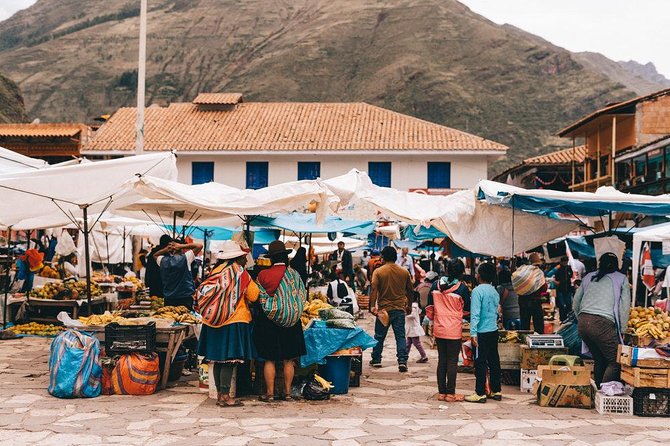
Urubamba provides the day’s main meal break. The buffet lunch is included, and a vegan option is available. That is useful on a long shared tour, since you do not need to search for a restaurant while the clock is running.
Lunch is more than a minor perk here. By this point, you have already visited high-altitude Chinchero, Moray, and Maras, and you still have Ollantaytambo and Pisac ahead. A substantial meal gives you a chance to sit down, refuel, and reset before the afternoon ruins.
The supplied details do not specify the exact buffet menu, restaurant, or length of the lunch stop. If dietary needs matter to you, the vegan option is confirmed, but you may still want to state your requirements when booking.
Ollantaytambo, the strongest stop of the day
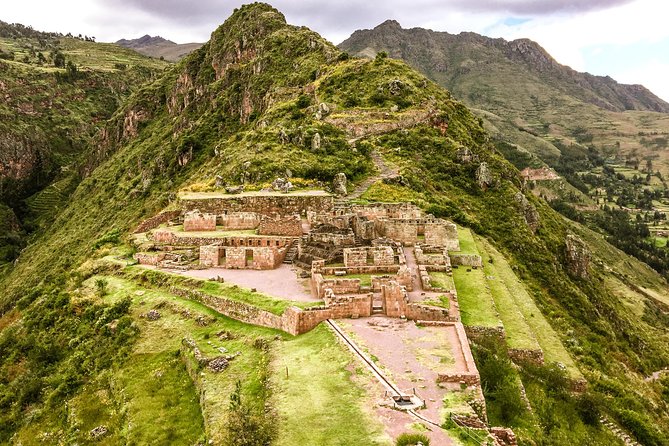
Ollantaytambo is where the tour’s Inca story becomes most powerful. The modern town still follows much of the old Inca plan, with stone buildings and a layout that makes the past feel close at hand. It is not simply a pile of ruins outside town. It is a living settlement built around an Inca foundation.
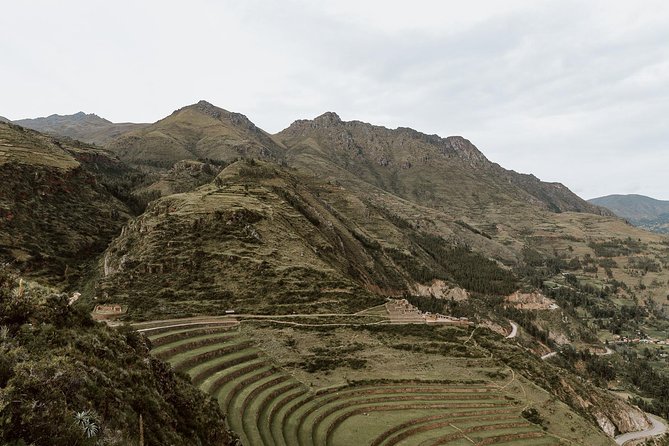
The main complex rises steeply above the valley. You will see broad terraces stacked up the hillside, a ceremonial area connected with water worship, and a fortress built to guard the valley entrance. The scale is impressive, but the climb also makes this one of the most physically demanding stops.
The site includes the Temple of Inti, Incamisana, the baths of the Ñustas, funerary towers at Cachiccata, and steep tiered terraces. Across the way, Pinculluna, also called Tunupa, holds Inca remains thought to have served as food storage buildings.
Give your attention to the stonework and the setting between the mountains. This is the stop where you most clearly see how defense, religion, agriculture, and storage fit into one planned place. The one-hour visit is useful, but many people will wish for more time.
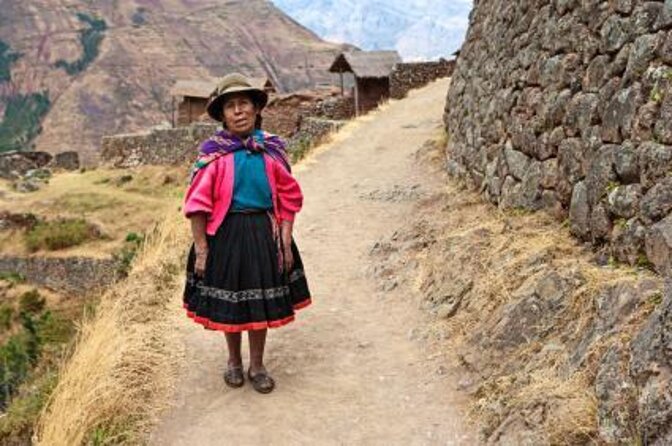
The nearby communities add a living cultural layer. People from places such as Willoc may be recognized by red and black ponchos and hats. The tour can introduce you to the region, but it is still a group schedule, so do not expect a long, unhurried visit through every street.
Pisac and the Temple of the Sun
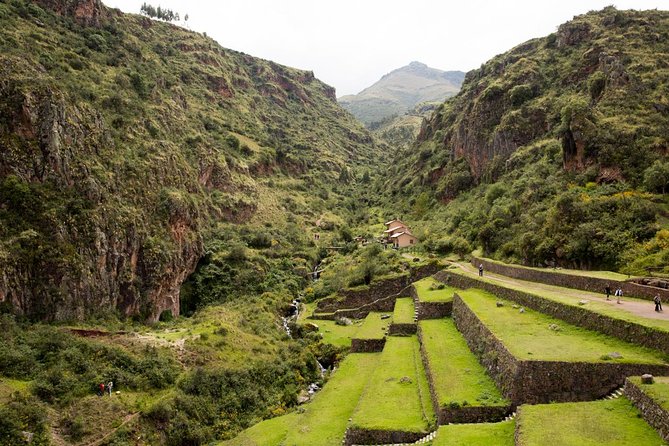
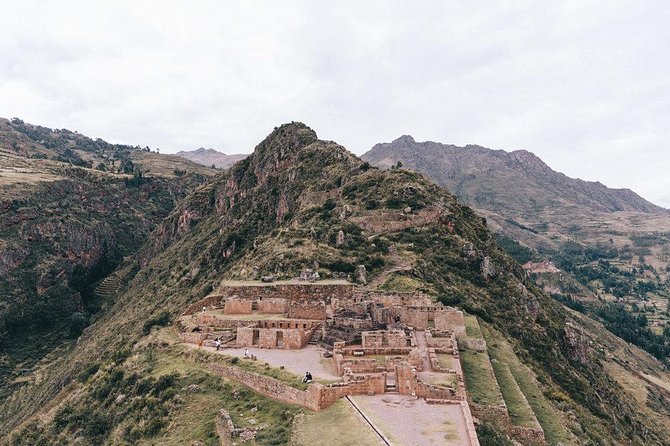
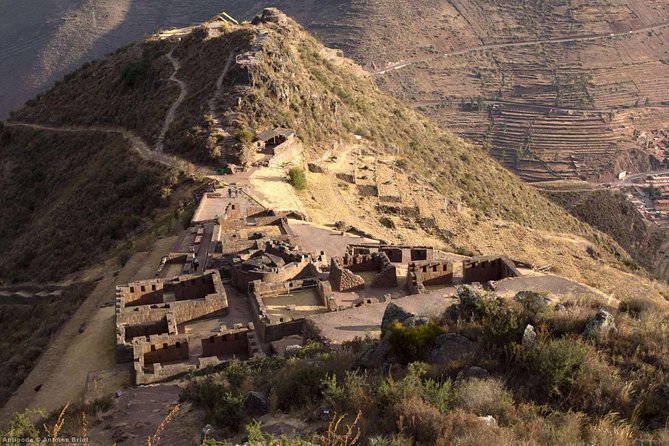
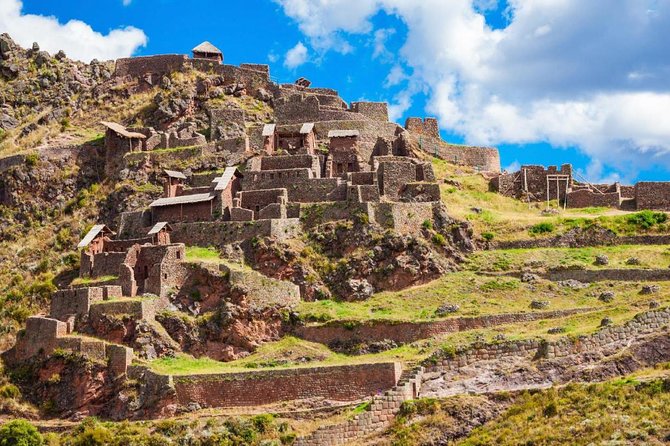
Pisac closes the archaeological portion of the day with a large complex spread across the mountain above the valley. Its name comes from the Quechua word for partridge, a bird found in the area. The site is often connected with the Inca ruler Pachacutec and includes terraces, palaces, towers, walls, and ceremonial buildings.
The Intihuatana is the key feature. Its name is often translated as sundial, and its finely cut stonework is linked to astronomical observation and the June solstice. From the high point, you can look across the Sacred Valley and understand why the Incas chose this position.
Pisac is also called the City of the Towers, with about 20 towers placed along the mountain edges. Water channels remain in the complex, showing again that Inca construction was not only about impressive walls. Farming and water management were built into the settlement.
There is also the rock formation called Ñusta Encantada, or Enchanted Princess. An Andean story tells of a chief’s daughter, Inquill Chumpi, and the prince Asto Rimac, who had to build a bridge in one night to win her hand. When she turned to look at him before the work was finished, both were turned to stone.
You get about an hour at Pisac. That gives you the main explanation and views, but the site can feel compressed at the end of a long day. One especially poor departure lost time through transport problems and reached Pisac late, leaving little time there. That appears to have been an operational failure rather than the intended schedule, but it shows why group organization matters.
The guide can make or break the day
The strongest part of this experience is often the guide. The tour is bilingual in English and Spanish, and several guides have been praised for explaining Inca culture clearly, keeping the day on schedule, taking photographs, and treating people with patience.
Richard has been described as friendly and helpful from hotel pickup onward. Irving received praise for keeping the route moving while explaining the sites. Jhonnatan was singled out for energetic bilingual presentations, and Warner for being attentive and cheerful.
That personal quality matters because the schedule is tight. You need someone who can explain the difference between a ceremonial terrace and a farming terrace without turning every stop into a lecture. You also need clear instructions about meeting times, especially when the group returns to the vehicle.
There have been serious complaints about organization on at least one departure. A group larger than the advertised limit reportedly joined the bus, some passengers were transferred to another guide without a clear explanation, people were left behind at two stops, and a tire problem caused more delay. A full refund was issued in response.
That account should not define every departure, but it is a useful warning. Confirm the group size and meeting procedure at pickup. Keep your phone available, note the guide’s name, and return to the vehicle a few minutes early. On a long route, a small delay can cut into the final archaeological site.
Shopping stops and the meaning of VIP
The word VIP should not lead you to expect a private car or a luxury day. The advertised group limit is 19, and the focus is on seeing many sites efficiently at a modest price.
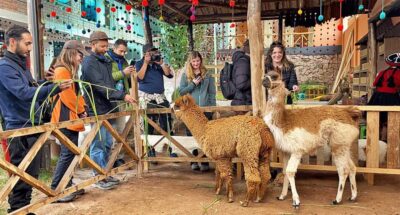
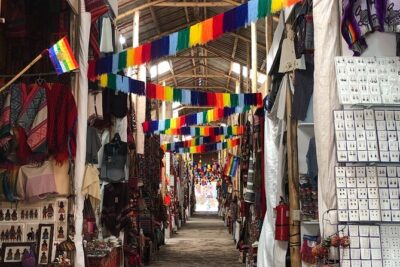
Some departures have included an alpaca processing business, a salt shop, a drink presentation on the bus, and a jewelry or silver shop. The alpaca stop was considered interesting and worthwhile by one customer, while the sales-focused stops were viewed as wasted time, especially the jewelry visit at the end of an exhausting day.
There is nothing wrong with buying local goods if you want to. The problem is lost sightseeing time. When you have only one hour at Ollantaytambo or Pisac, an extra commercial stop can feel like a poor bargain.
Ask before departure if shopping visits are part of the route and if they are optional. If you prefer local markets and independent browsing, you may be disappointed if the schedule gives little time to support vendors at the archaeological sites themselves.
Transport, pace, and physical effort
The tour uses shared transportation, and vehicle quality can affect your impression. One departure had a very noisy bus that made explanations hard to hear. Another had a tire issue that caused delays. These are not details you can solve from the itinerary, but they are worth keeping in mind when choosing a shared day tour.
You should also expect frequent stops, short walking windows, and steps. Ollantaytambo and Pisac both involve steep or uneven sections, while Chinchero is high enough to make a fast pace uncomfortable for some people.
Most people can participate, according to the supplied activity information. Still, I would not call this a relaxed outing. It suits you if you want to see as much as possible in one day and can handle a long schedule. It is less suitable if you want slow photography, quiet village time, or a flexible pace.
The tour is booked, on average, 48 days ahead. That suggests you should reserve early if your Cusco dates are fixed, especially if you want to avoid rearranging a limited itinerary.
Who should book this Sacred Valley trip
I would choose this tour if I had one free day, wanted the major Sacred Valley sights, and valued a guide and lunch more than independence. The $55 base price is fair for transport, interpretation, and the number of places covered.
I would also choose it for a first visit when I wanted help understanding Inca terraces, water systems, religious sites, and village layouts. The bilingual format is useful for mixed-language groups, and the range of guides named above suggests that the experience can be warm and informative.
I would hesitate if I had two days available. Splitting the valley into separate outings would let you spend more time at Ollantaytambo, Pisac, and Chinchero, and would reduce the pressure caused by traffic or a delayed stop.
I would also hesitate if surprise costs or sales stops bother you. Add the 90 soles in stated admission charges to the $55, then ask about commercial visits before booking. Those two checks will give you a more accurate idea of the day.
Free cancellation is available if you cancel at least 24 hours before the start time. Cancellations or changes made within 24 hours are not refunded or accepted, based on local time.
Should you book it?
Book this Sacred Valley day if your priority is maximum coverage in one outing. You will see a remarkable range of sites, enjoy lunch in Urubamba, and get useful context from a bilingual guide. Ollantaytambo, Moray, and Pisac alone make the day worthwhile.
Skip it in favor of a slower or private plan if you dislike fixed schedules, commercial stops, or long hours on the road. Before paying, allow for 70 soles for the Partial Tourist Ticket and 20 soles for Maras, confirm the hotel pickup point, and ask how the operator handles shopping stops and group size.
FAQ
How long does the Sacred Valley VIP tour last?
The tour lasts approximately 12 hours.
What places are included in the route?
The route includes Chinchero, Moray, Maras, Ollantaytambo, and Pisac, with a buffet lunch in Urubamba.
Is hotel pickup included?
Pickup from Cusco hotels is included. Pickup from private residences is not included.
Is lunch included?
Yes. A buffet lunch in Urubamba is included, and a vegan option is available.
Are the admission fees included in the price?
No. The Partial Tourist Ticket costs 70 soles per person, and admission to the Maras salt mines costs 20 soles per person.
Is the tour offered in English?
Yes. A bilingual guide provides the tour in English and Spanish.
How many people can join the tour?
The stated maximum is 19 people.
Can I cancel for a full refund?
Yes, if you cancel at least 24 hours before the experience start time. Cancellations and changes made less than 24 hours before the start time are not accepted, and the amount paid is not refunded.
More 1-Day Tours in Cusco
- Machu Picchu Day Trip from Cusco
★ 4.5 · 1,644 reviews - From Cusco: 2-Day Trip to the Sacred Valley and Machu Picchu
★ 4.6 · 265 reviews - From Cusco: 1-day Machu Picchu Tour by Train
★ 4.6 · 138 reviews - Machupicchu 1 day tour
★ 5.0 · 128 reviews
Just added around Cusco
- Waqrapukara 1 day trekking + meals★ 3.9 · 3 reviews
- Zipline over the Sacred Valley Trip★ 5.0 · 11 reviews
- Valle Sur Cusco | half day★ 4.3 · 3 reviews
- Visit to the Cochahuasi Animal Sanctuary with rescued animal★ 4.1 · 4 reviews
- Visit Pisac from Cusco: Private Transport★ 4.6 · 9 reviews
- Maras and Huaypo lagoon by ATV from Cuzco | Local Operator★ 4.7 · 4 reviews
- Trek to Humantay Lake from Cusco★ 4.9 · 8 reviews
- Trek to Choquequirao 4 days★ 3.8 · 4 reviews
Sacred Valley Tours, compared.
Sacred Valley & Maras Salt Mines Tour with Lunch
Read our review →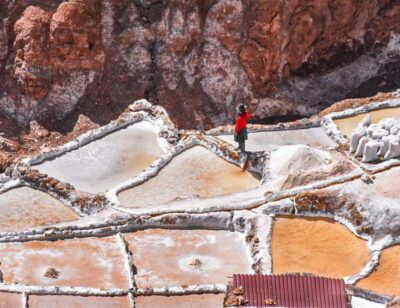
Moray, Maras Salt Mines & Chinchero Weavers Tour
Read our review →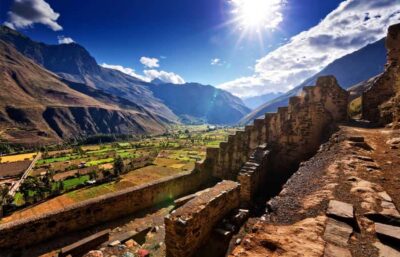
Sacred Valley, Pisac, Ollantaytambo, Salt Mines Moray
Read our review →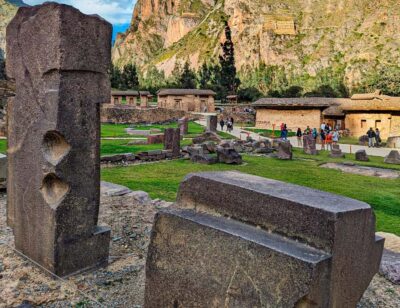
Chinchero,Moray & Salt Mines drop-off in Ollantaytambo
Read our review →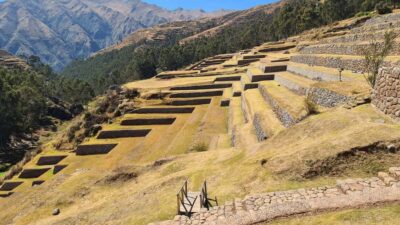

Pisac Indian Market and Ollantaytambo Fortress with Lunch
Read our review →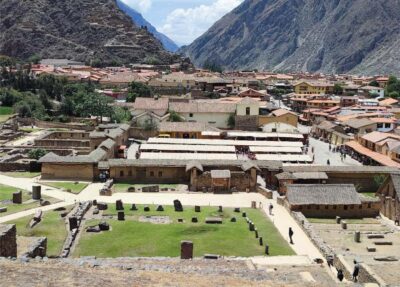
2-Day Trip to the Sacred Valley and Machu Picchu
Read our review →Browse the lists this tour appears in