
Reviewed · MARAS & MORAY TOURS
Maras Moray
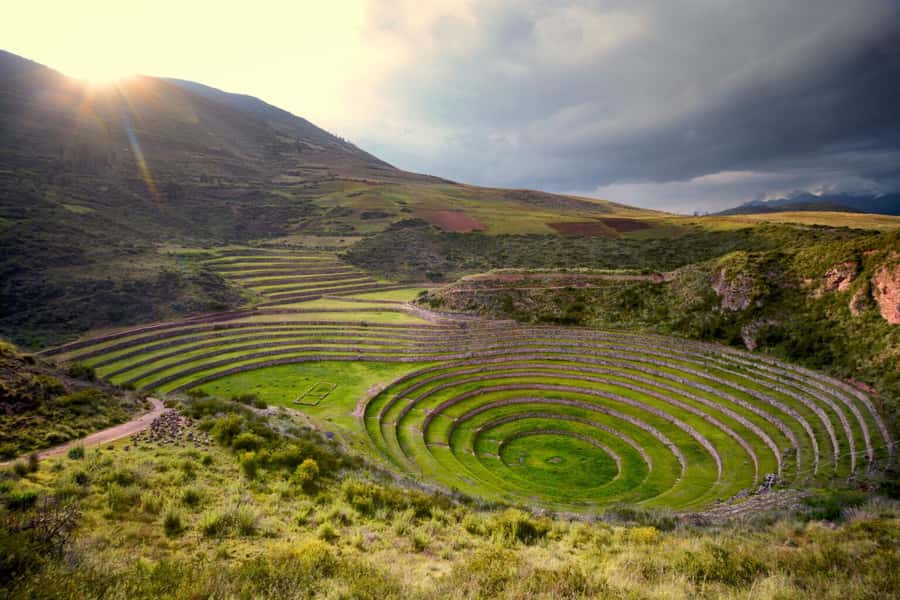
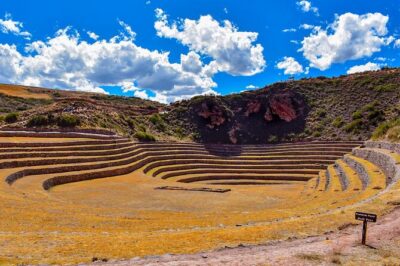
Moray’s great circular terraces look like a giant amphitheater cut into the earth, but they were built for farming experiments, not theater. Pair that with Maras, where thousands of salt ponds climb a mountainside, and you get two of the Cusco region’s most unusual sights in one half-day.
I like the sensible pace and the short duration. You have time for Chinchero, Moray, and Maras without giving up a full day, and guide Raul has shown a thoughtful habit of explaining in English after speaking to the Spanish-speaking group. The main catch is the added entrance cost: the $18 tour price does not include the $20 tourist ticket or $7 Maras admission.
In This Review
- Key points to know before booking
- Why this half-day route works well from Cusco
- Chinchero textiles and the first stop of the morning
- Moray’s circular terraces and Inca farming questions
- Maras salt pools and a working mountain resource
- What the $18 price really covers
- Timing, pace, and photo opportunities
- Who will enjoy this tour most
- What to pack for Moray and Maras
- Should you book the Maras and Moray tour?
- FAQ
- How long does the Maras and Moray tour last?
- What is included in the tour price?
- Are entrance fees included?
- Is the tour available in English?
- Does the tour require difficult walking?
- What should I bring?
Key points to know before booking
- Three distinct stops in six hours: Chinchero textiles, Moray’s agricultural terraces, and Maras’s salt ponds.
- Moray is an Inca farming laboratory: The circular platforms were used to develop and domesticate crops such as corn, potatoes, and olluco.
- Maras still produces salt at high altitude: Mineral-rich water from mountain springs feeds about 3,800 salt-producing plots.
- The pace suits a half-day schedule: You return to Cusco after the salt mines rather than spending the whole day on the road.
- English and Spanish guiding is provided: Raul has been noted for translating carefully and allowing extra time for photography.
- Budget for entrance fees and food: The advertised price covers transport, pickup, and the guide, not admissions or meals.
Why this half-day route works well from Cusco
This outing gives you a useful contrast. At Moray, you look down into a carefully shaped agricultural site. At Maras, you look across a working salt operation that uses water, slopes, and evaporation. The two places are close enough to combine, yet they tell very different stories about how people made practical use of the high Andes.
Pickup is scheduled for about 8:30 a.m. from your hotel or accommodation. You should wait at reception about five minutes early, since the guide will call your name. Tourist transport is included, and the route returns to Cusco after the final stop.
The six-hour schedule is the biggest selling point. If you want to see both sites but are not keen on a full-day excursion, this plan leaves room for other Cusco activities. It also avoids the pressure of cramming several distant attractions into one long day.
There are limits. Exact pickup times can vary, and the supplied details do not give a group size or a precise return time. The road portion also means you will spend part of the morning in the vehicle. Still, for a short regional tour, the route covers a lot without demanding high physical effort.
More maras & moray tours in Cusco:
- From Cusco: Sacred Valley & Maras Salt Mines Tour with Lunch
★ 4.8 · 2,227 reviews - From Cusco: Moray, Maras Salt Mines & Chinchero Weavers Tour
★ 4.8 · 1,925 reviews - Cusco: Sacred Valley, Pisac, Ollantaytambo, Salt Mines Moray
★ 4.6 · 1,058 reviews
Chinchero textiles and the first stop of the morning
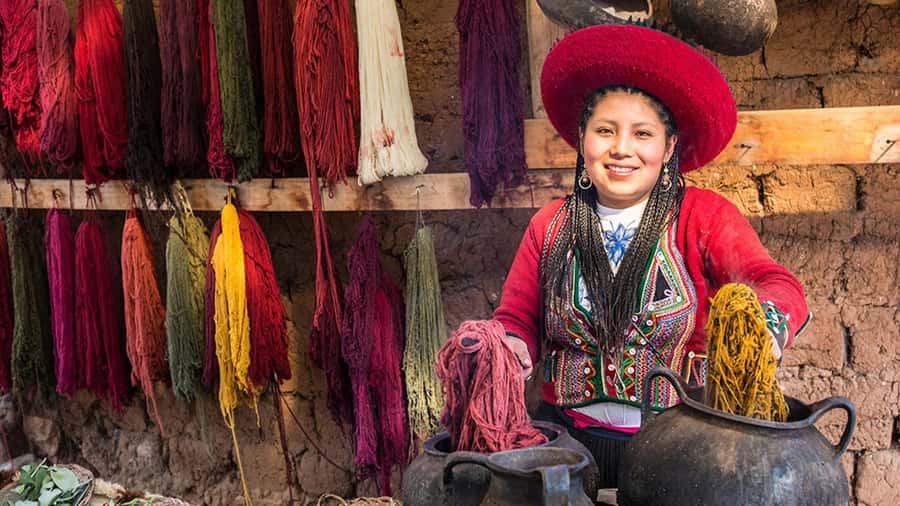
The first stop is Chinchero, a town known for textile production passed down through generations since the Inca era. At a textile center, you can see how natural materials are used to create colors for llama and alpaca wool.
This stop adds cultural context before Moray. Instead of seeing Andean products only in a shop, you get an explanation of how wool is prepared and dyed. The process helps you understand why textiles remain such an important part of regional identity and commerce.
Keep your expectations clear. The planned visit is to a textile center, where you can learn about the process and see products for sale. It is not necessarily a free stroll through the entire town. One account of the outing found that the Chinchero stop focused on the alpaca wool demonstration and sales area rather than independent village exploring.
That distinction matters if you want unstructured time. If you enjoy demonstrations and may wish to buy a scarf or other wool item, the stop can be useful. If you mainly want archaeological sites, it may feel like a commercial pause before Moray.
Your guide’s explanation is important here. Ask about the natural materials used for the colors, and pay attention to the differences between llama and alpaca wool. The supplied information does not specify exactly which dyes are demonstrated on every departure, so the display may vary.
Moray’s circular terraces and Inca farming questions
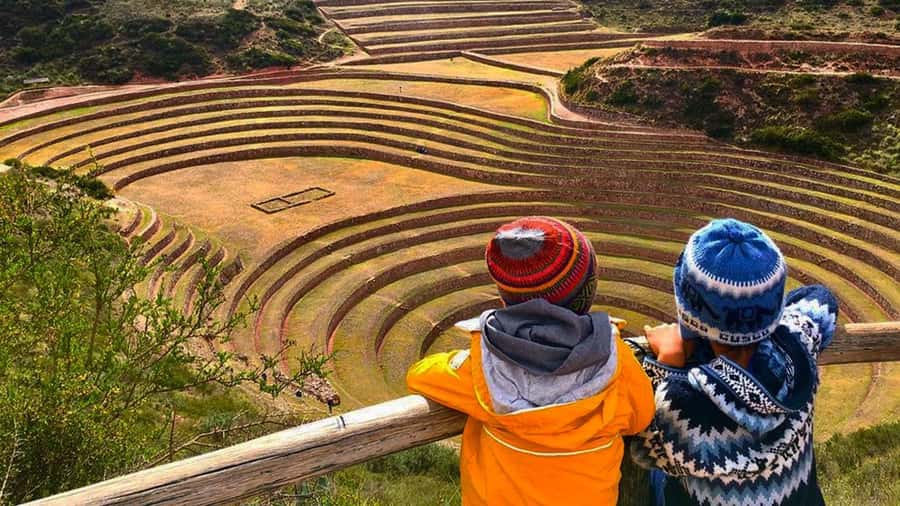
Moray is the visual centerpiece of the route. From above, its terraces form broad circles that descend into a natural hollow. The shape is unlike the rectangular or gently sloping platforms found at many other Inca sites.
The terraces are commonly presented as an experimental agricultural site. The stated purpose was to help obtain and domesticate different crop varieties, including corn, potatoes, and olluco. The design makes you think about temperature, sunlight, drainage, and the way crops respond to different growing conditions.
The attraction is not just the geometry. You also get mountain views, including snow-capped peaks regarded as apus, or sacred mountain beings, in Inca times. Bring your camera, but give yourself time to look beyond the circles. The surrounding highland scenery is part of what makes the site feel so striking.
The tour does not require high physical effort, yet this is still an outdoor archaeological visit at high altitude. Sports shoes are a sensible choice, and sunscreen is worth packing. A first day in Cusco can also be tiring because of the altitude. One recent participant found that the guide sometimes spoke quickly while the group was still adjusting, so do not hesitate to ask for a slower explanation or a repeat in English.
The guide’s handling of two languages can shape the visit. Raul, one guide associated with this outing, has been praised for explaining first in Spanish and then translating into clear English. He also allowed extra time for photographs while completing the Spanish explanation. That is a small but valuable courtesy, especially at a site where you will want to move around and frame several views.
You should also know that the route passes other viewpoints without promising photo stops. If you see a mountain view you want to capture from the road, ask the guide if a brief stop is possible. Do not assume every scenic point is included.
Maras salt pools and a working mountain resource
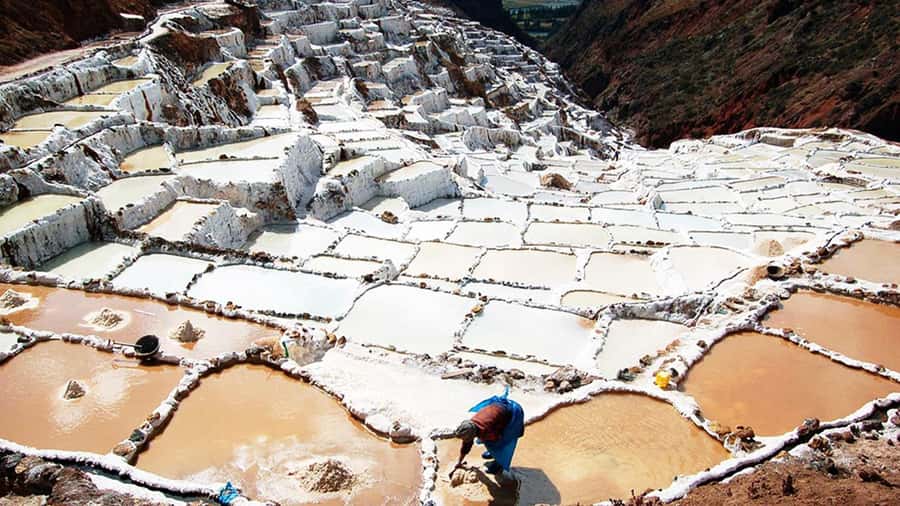
The final major stop is Maras, a salt-producing area more than 3,000 meters above sea level. Mountain springs provide water containing sodium chloride. That water is directed into a large collection of shallow plots, where evaporation leaves salt behind.
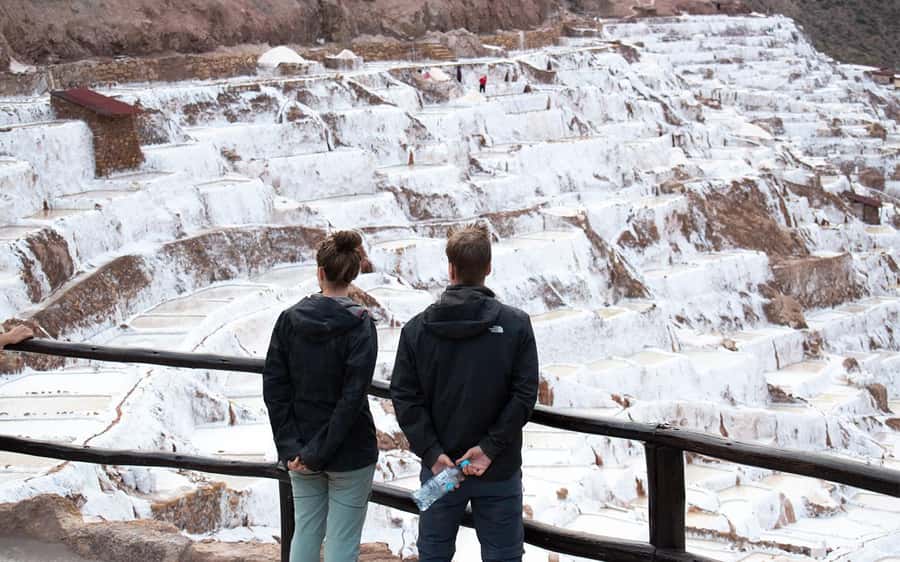
The scale is hard to grasp until you see the many individual pools spread across the slope. The attraction includes about 3,800 salt-producing plots, creating a patterned scene that changes with light, water levels, and salt buildup. It is both scenic and practical, since the area remains tied to salt production rather than being only a historic display.
This is where the tour’s two main subjects connect. Moray shows how the Incas worked with soil and altitude to improve crops. Maras shows how people use naturally occurring minerals, water channels, and the dry mountain climate to produce a valuable resource.
The salt mines can be visually bright, so sunglasses and sunscreen help. You should also carry cash, since entrance fees are separate and personal purchases are not covered. The supplied details do not state whether every part of the salt operation is open for close viewing, so follow the guide’s directions and stay within the permitted areas.
Maras is a good final stop because it gives the day a clear contrast with Moray. At Moray, the eye drops toward the center of a huge engineered form. At Maras, it moves sideways across a slope lined with small plots. Both places reward photographs, but they offer different kinds of detail.
Same valley, a completely different kind of day:
- Cusco: Humantay Lake Tour with Breakfast and Buffet Lunch
★ 4.9 · 2,976 reviews - From Cusco: Full-Day Group Tour of Machu Picchu
★ 4.7 · 1,767 reviews - Machu Picchu Day Trip from Cusco
★ 4.5 · 1,644 reviews - Cusco: Half-Day City Tour with Sacsayhuaman and Q’enco
★ 4.6 · 1,129 reviews
What the $18 price really covers
The advertised price is $18 per person. That is a low starting price for a six-hour outing with hotel pickup, tourist transport, and a professional English and Spanish guide.
You need to add the listed admissions:
- Tour price: $18
- Tourist ticket: $20
- Maras entrance: $7
- Total before food: $45 per person
That changes the value calculation. At $45 before lunch or snacks, this is still a reasonable way to reach two major attractions from Cusco, especially if you are traveling alone or do not want to arrange transport yourself. But the headline price does not represent the full cost.
Food is not included. The tour lasts half a day, so bring a snack and a bottle of water. The details do not promise a meal stop, and you should not count on lunch being part of the schedule.
Transport and a bilingual guide are the practical benefits here. You do not need to organize separate rides to Moray and Maras, and you have someone to explain the sites in English or Spanish. If you already have transport and prefer to explore without a guide, the package may be less attractive. If you want a straightforward route from Cusco, the included services make the price easier to justify.
Timing, pace, and photo opportunities
The morning departure gives the tour a clean structure. You leave around 8:30 a.m., visit Chinchero first, continue to Moray, then finish at Maras before returning to Cusco.
The pace has been described as comfortable, with enough time at each stop. That is important at Moray, where a rushed visit would leave you with a quick photograph but little sense of how the terraces are arranged. At Maras, time matters too, since the salt plots can look very different from one angle to another.
The schedule does not promise dedicated stops at roadside viewpoints. You may pass attractive mountain scenes without pulling over. If photography is central to your plans, tell the guide early. Raul has shown flexibility when people want extra time for pictures, but the group schedule still controls the day.
The bilingual format may also affect the pace. When the guide explains in Spanish and English, you may wait briefly for the second explanation. That is normal and worthwhile, but English speakers should pay attention if the translation is delivered quickly. You can ask for clarification without losing much time.
Who will enjoy this tour most
I would choose this outing if you want a compact introduction to the Cusco region beyond the city and major Inca ruins. It suits you especially well if you want:
- A half-day plan rather than a full-day excursion
- Hotel pickup and shared tourist transport
- Explanations in English or Spanish
- A mix of archaeology, farming, textiles, and local production
- Moderate sightseeing without strenuous activity
- Time for photographs at the main stops
It is less suitable if you need step-free access or have a mobility impairment. The tour is not described as suitable for people with mobility impairments, and both archaeological sites involve outdoor ground and viewing areas.
It may also disappoint you if you expect a long, independent visit in Chinchero. The stop centers on the textile process and products for sale. That does not make it a poor stop, but it is different from wandering freely through the town.
The tour is available every day of the year. You should still check the starting time when booking, since the published pickup is approximate.
What to pack for Moray and Maras
Pack lightly, but cover the practical basics. Your list should include:
- Camera
- Sports shoes
- Sunscreen
- Cash for admissions and personal purchases
- Passport or ID card
- Personal medication
- Water and a snack
A passport or ID card is specifically requested, so do not leave it at your accommodation. Comfortable footwear matters more than fancy hiking equipment. The tour requires no high physical effort, but you will be visiting open-air sites at high altitude.
Altitude is the one issue to take seriously. If this is your first day in Cusco, you may feel heavy-headed or slow, as one participant did. Drink water, take the walking portions at your own pace, and ask the guide to repeat anything you miss.
Should you book the Maras and Moray tour?
Book it if you want the efficient version of these sights: hotel pickup, transport, bilingual explanation, three stops, and a return to Cusco in about six hours. Moray and Maras complement each other well, and Chinchero adds a useful look at Andean textile work.
Before paying, calculate the real cost as about $45 per person before food. Also confirm the entrance arrangements and prepare for a textile-center visit rather than a free town walk. If you value a gentle pace and clear English translation, ask whether Raul is guiding your departure, since his approach has included patient translation and extra photo time.
I would skip it only if you want a private itinerary, long independent visits, or a full day with several extra viewpoints. For a first look at two distinctive sites outside Cusco, this is a practical and well-balanced choice.
FAQ
How long does the Maras and Moray tour last?
The tour lasts about six hours, with pickup in the morning at approximately 8:30 a.m. and return to Cusco after visiting the attractions.
What is included in the tour price?
The $18 price includes hotel pickup, tourist transport, and a professional guide who speaks English and Spanish.
Are entrance fees included?
No. The listed costs are a $20 tourist ticket and a $7 entrance fee for Maras. Food is also not included.
Is the tour available in English?
Yes. Live guiding is available in English and Spanish. Guide Raul has been associated with the tour and has provided English translations after Spanish explanations.
Does the tour require difficult walking?
The tour does not require high physical effort. However, it is not suitable for people with mobility impairments.
What should I bring?
Bring a camera, sports shoes, cash, sunscreen, a passport or ID card, personal medication, a snack, and a bottle of water.
Just added around Cusco
- Waqrapukara 1 day trekking + meals★ 3.9 · 3 reviews
- Zipline over the Sacred Valley Trip★ 5.0 · 11 reviews
- Valle Sur Cusco | half day★ 4.3 · 3 reviews
- Visit to the Cochahuasi Animal Sanctuary with rescued animal★ 4.1 · 4 reviews
- Visit Pisac from Cusco: Private Transport★ 4.6 · 9 reviews
- Maras and Huaypo lagoon by ATV from Cuzco | Local Operator★ 4.7 · 4 reviews
- Trek to Humantay Lake from Cusco★ 4.9 · 8 reviews
- Trek to Choquequirao 4 days★ 3.8 · 4 reviews
Maras & Moray Tours, compared.

Sacred Valley & Maras Salt Mines Tour with Lunch
Read our review →
Moray, Maras Salt Mines & Chinchero Weavers Tour
Read our review →
Sacred Valley, Pisac, Ollantaytambo, Salt Mines Moray
Read our review →
Chinchero,Moray & Salt Mines drop-off in Ollantaytambo
Read our review →
Moray, Maras Salt Mines & Chinchero Weavers Half-Day
Read our review →Browse the lists this tour appears in