
Reviewed · MACHU PICCHU TOURS
Machu Picchu: Chinchero, Maras, Moray & Machu Picchu 2 days
Machu Picchu gets the headline, but the first day gives you a useful sweep of the Sacred Valley. You see Chinchero’s weaving traditions, Moray’s great circular terraces, Maras’s salt pools and Ollantaytambo’s massive stonework before reaching Aguas Calientes. The next morning, you enter Machu Picchu early, when cooler air and smaller crowds can make the citadel feel calmer.
I like the well-packed route and the fact that the $680 price covers transport, entrance tickets, meals listed in the schedule, a 3-star hotel, guides, and the Expedition train. I also like the small group size, capped at 16 people, since that gives your guide room to answer questions. The tradeoff is a long, busy first day, and the return may include a change from train to bus at Ollantaytambo, which can feel tiring after Machu Picchu.
In This Review
- Key points to know before booking
- Why this two-day route works
- Chinchero combines Inca stones and living craft
- Moray’s circular terraces show Inca agricultural planning
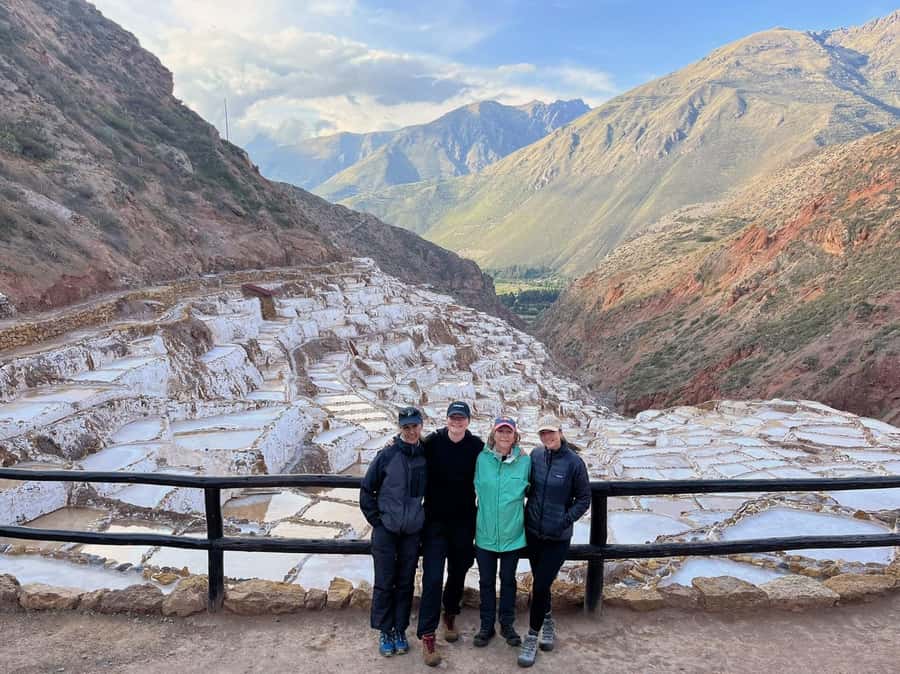
- Maras and Salineras bring the valley down to earth
- Ollantaytambo deserves more than a quick photo
- Aguas Calientes is a practical overnight stop
- Machu Picchu begins with an early bus
- Guides can shape the entire day
- What $680 includes, and where the value sits
- Who should book this experience
- The return journey needs a little patience
- Should you book it?
- FAQ
- How long is the tour?
- Where does pickup take place?
- What languages are available?
- How large is the group?
- What meals are included?
- Is the hotel included?
- Are Huayna Picchu and Machu Picchu Mountain included?
Key points to know before booking
- Moray and Maras add real variety: You move from agricultural terraces to working salt pools, not just one ruin after another.
- Chinchero starts the cultural side of the trip: The archaeological site, colonial church and handicraft market show how older Andean traditions continue today.
- Ollantaytambo is more than a train stop: Its fortress and stone terraces make this one of the strongest archaeological visits on day one.
- Early Machu Picchu entry matters: You take the first buses up after breakfast, then spend about three hours with a guide and have free time inside the citadel.
- Most major costs are bundled: Tickets, hotel, meals listed, buses and Expedition train service are included.
- Expect active travel: This tour is not suitable for people with mobility impairments, and the two-day schedule leaves little spare time.
Why this two-day route works
This tour links several places that are often sold as separate half-day excursions. That is its main strength. You leave Cusco at 8:00 AM, cross the highlands and Sacred Valley, then finish the day on the train to Aguas Calientes. The next morning, Machu Picchu takes center stage.
I find the route especially useful if you have limited time in the Cusco Region. You do not need to arrange separate taxis, tickets, a hotel, train reservations, or the bus to Machu Picchu. Your transport is covered from your Cusco hotel and back again, with door-to-door service included.
The pace is full but not designed as a forced march. One participant described the schedule as comfortable, with enough time at each stop. That will depend on traffic, group movement, and site conditions, but the plan gives you a clear structure without adding a separate return to Cusco after Machu Picchu on the same night.
The biggest concern is energy. Day one includes several visits, road travel, lunch, dinner, and a train ride. Day two starts early. If you want a leisurely Sacred Valley stay or a long afternoon at Machu Picchu, this is not that kind of trip.
More machu picchu tours in Aguas Calientes:
- From Aguas Calientes: Machu Picchu guided tour with tickets
★ 4.9 · 72 reviews - From Cusco: Machu Picchu 2 days
★ 3.6 · 29 reviews - Cusco: Machu Picchu Day Trip with Train + Entrance ticket
★ 4.5 · 17 reviews
Chinchero combines Inca stones and living craft
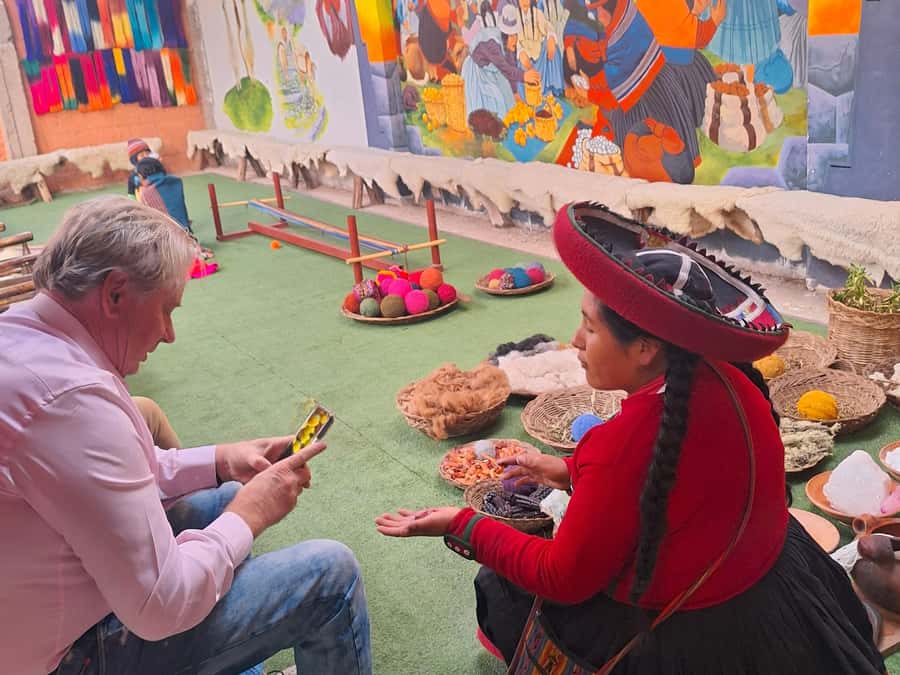
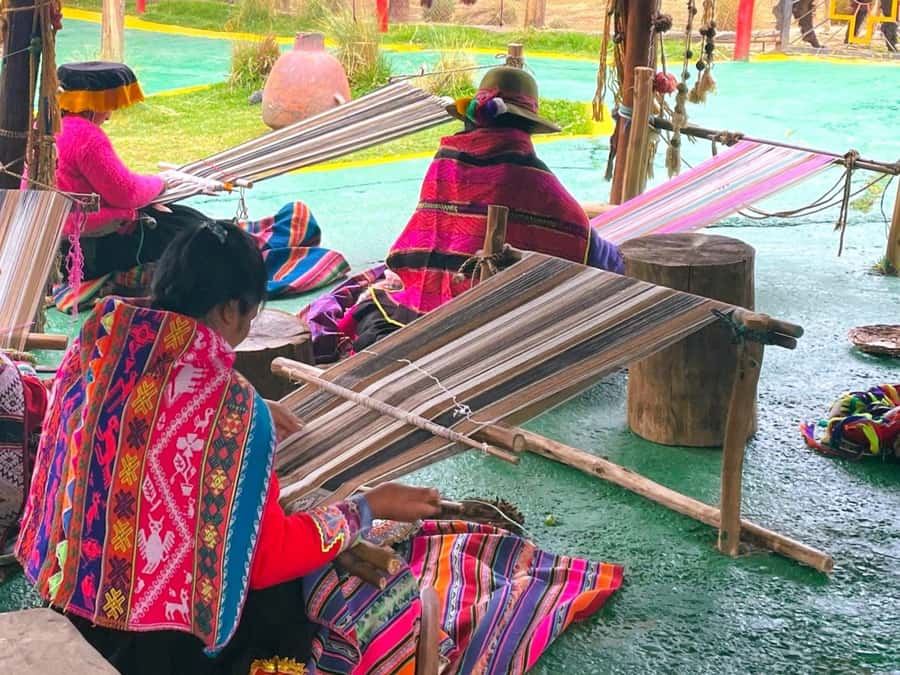
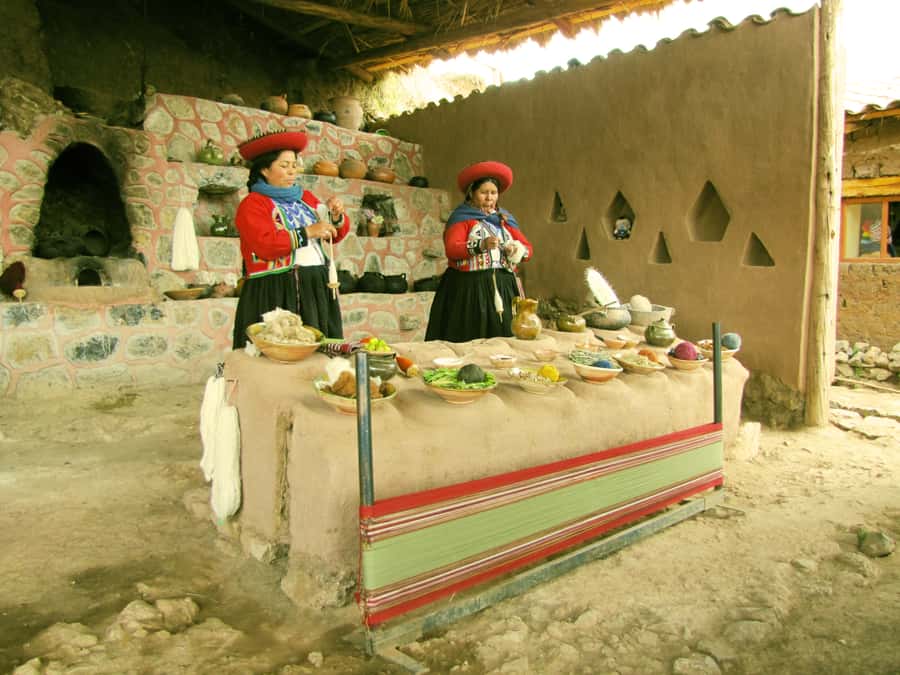
Your first stop is Chinchero, where you visit the archaeological site, a colonial church, and the local handicraft market. This is a good opening because it introduces both the physical remains of the Inca period and the cultural traditions that still shape the area.
The market gives the stop a more human scale than a ruin visit alone. You can browse local crafts and see the commercial side of Andean textile traditions. Since the tour includes a guide, you can ask questions rather than simply walk through the stalls without context.
Chinchero is also a reminder that Spanish colonial buildings were often placed directly over earlier sacred or political spaces. The church and Inca site together make that history visible, even in a short visit.
You should keep your expectations realistic. This is an arranged group stop, not an open-ended market morning. If you enjoy shopping, you may want extra time that the schedule cannot promise. The attraction here is the combination of archaeology, church, and craft culture.
Moray’s circular terraces show Inca agricultural planning
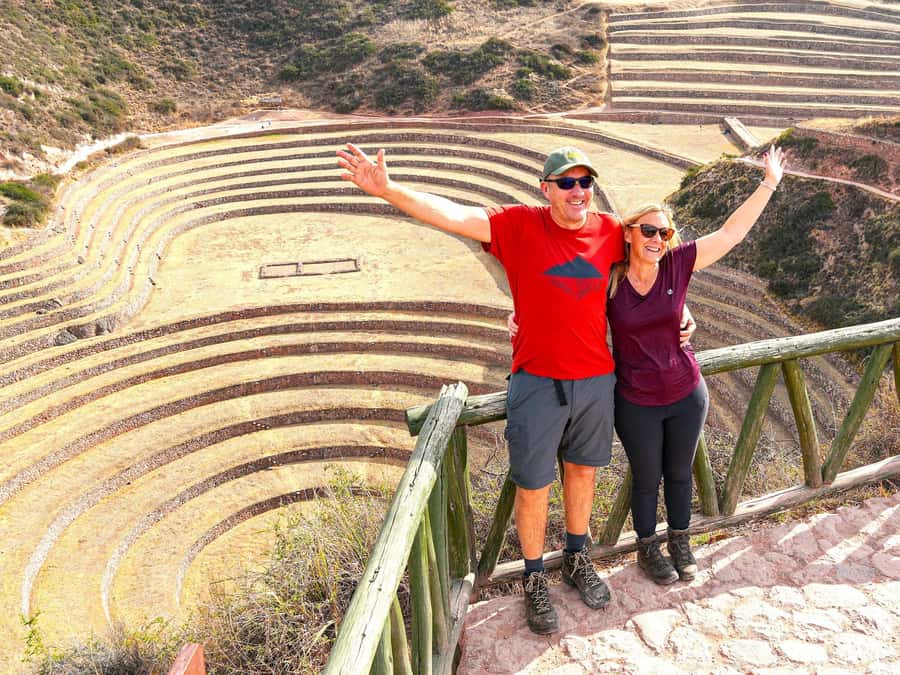
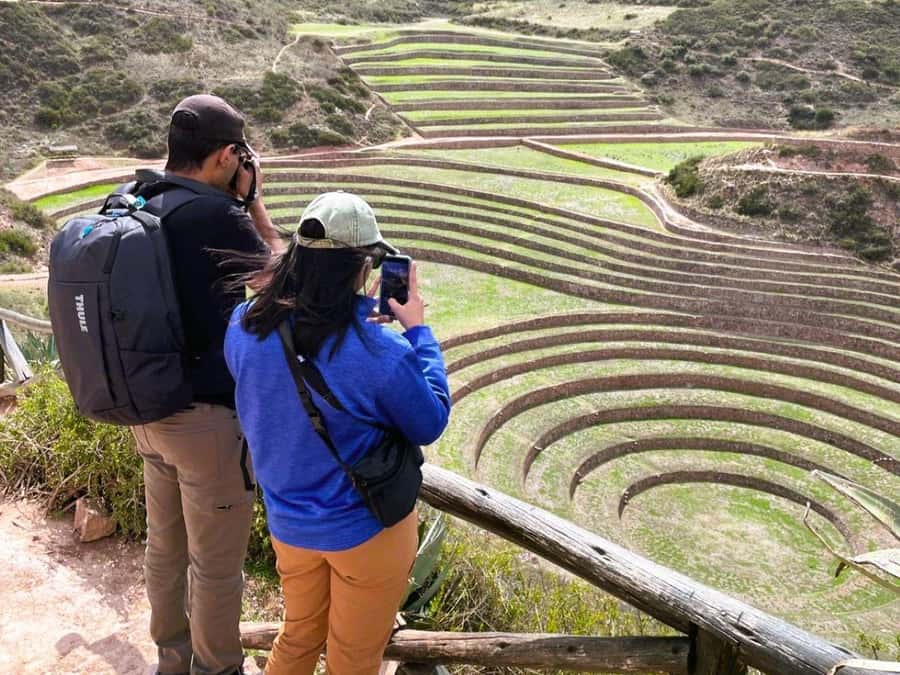
After Chinchero, you settle in for about an hour on the road to Moray. The destination is famous for its enormous circular terraces, which form a series of rings cut into the ground.
From the viewing area, the shape is immediately striking. The terraces are not typical flat fields. Their descending circles create a dramatic bowl, and your guide can explain the site’s agricultural role and the questions surrounding how it was used.
Moray works well in this itinerary because it gives you something visually different from Chinchero and Ollantaytambo. Instead of fortress walls or a city plan, you see careful shaping of the earth for farming. It is a short visit, but one that rewards a guide who can explain why the site was built in such an unusual form.
The practical point is footwear. The tour is not suitable for people with mobility impairments, and the day includes several archaeological sites with uneven ground and walking. Bring shoes that feel secure, since you will be moving between viewpoints and site paths.
Maras and Salineras bring the valley down to earth
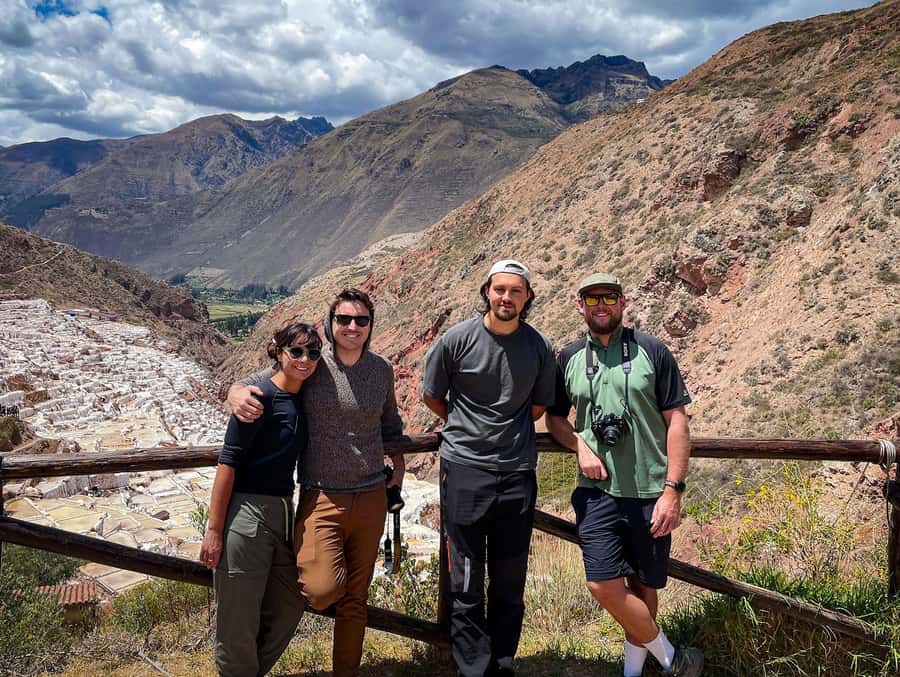
The town of Maras comes next, followed by lunch at a local restaurant with mountain views. The included meal is a buffet lunch in Urubamba, so you do not need to organize food during the middle of a demanding day.
The food stop also gives you a pause between archaeological visits. That matters. Without lunch and a chance to sit down, the first day would feel like one long chain of photo stops.
After lunch, you visit Salineras, the salt mines where local families have extracted salt since Inca times. The site is made up of many small salt pools arranged along the mountainside. Water passes through the pools, and salt is collected as it dries.
Salineras feels more like a working place than a preserved monument. That is what makes it valuable. You see an ongoing local practice rather than only walls that belong to the past. The bright salt pans also provide a sharp contrast with the stone terraces at Moray.
You should check the day’s conditions and follow the guide’s instructions around the pools. The tour description does not promise a private visit or extensive time at Salineras, so treat it as a focused stop within a larger route.
More sacred valley tours in Aguas Calientes:
- From Cusco: Sacred Valley & Maras Salt Mines Tour with Lunch
★ 4.8 · 2,227 reviews - From Cusco: Moray, Maras Salt Mines & Chinchero Weavers Tour
★ 4.8 · 1,925 reviews - Cusco: Sacred Valley, Pisac, Ollantaytambo, Salt Mines Moray
★ 4.6 · 1,058 reviews - Cusco:Chinchero,Moray & Salt Mines drop-off in Ollantaytambo
★ 4.8 · 793 reviews
Ollantaytambo deserves more than a quick photo
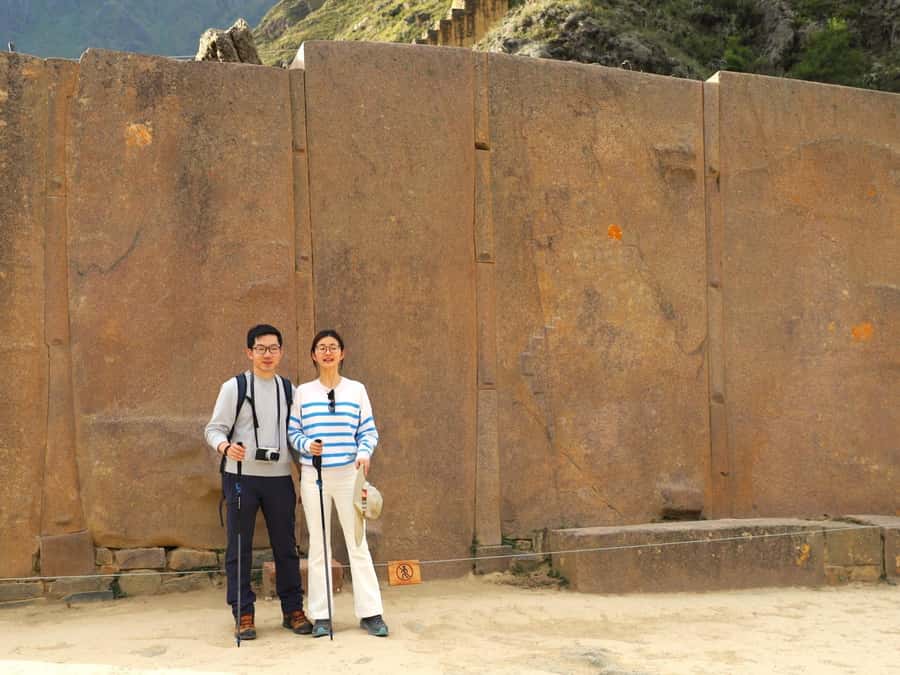
The route continues to Ollantaytambo, where you visit both the town and its archaeological site. The ruins are a large Inca fortress with broad stone terraces rising up the hillside.
This is one of the most substantial stops on the first day. Ollantaytambo shows the Inca talent for fitting monumental construction into steep terrain. Large stones, terraces, and the settlement below help you see how the site functioned as more than a scenic ruin.
The town itself adds to the visit. Its streets and layout preserve a strong connection to the older settlement, giving you a chance to see how daily life and archaeology sit side by side.
Dinner at a local restaurant follows the visit. It is included, as is the night at a 3-star hotel in Aguas Calientes. The schedule then moves you onto the Expedition train for the ride to Machu Picchu’s gateway town.
This evening transfer is efficient, but it is not restful in the same way as an early check-in at a hotel. You have already been on the road all day. I would keep your evening simple and save your energy for the next morning.
Aguas Calientes is a practical overnight stop
Aguas Calientes, also known as Machu Picchu Pueblo, is where you spend the night. The 3-star hotel is included, along with the train from Ollantaytambo.
The value here is convenience. Staying near the entrance route lets you take an early breakfast and catch the first buses up to Machu Picchu. You avoid trying to visit the citadel after a long same-day train journey from Cusco.
The hotel category is clear, but the specific property is not given in the tour details. If room style, hotel facilities, or a particular location matter to you, ask before paying. The tour includes one night, not a flexible hotel choice.
Dinner is included on day one, while other meals not named in the schedule are not. Breakfast at the hotel is part of the morning plan, and lunch in Aguas Calientes follows your Machu Picchu visit. Bring money for any extra drinks, snacks, or meals outside those listed.
Machu Picchu begins with an early bus
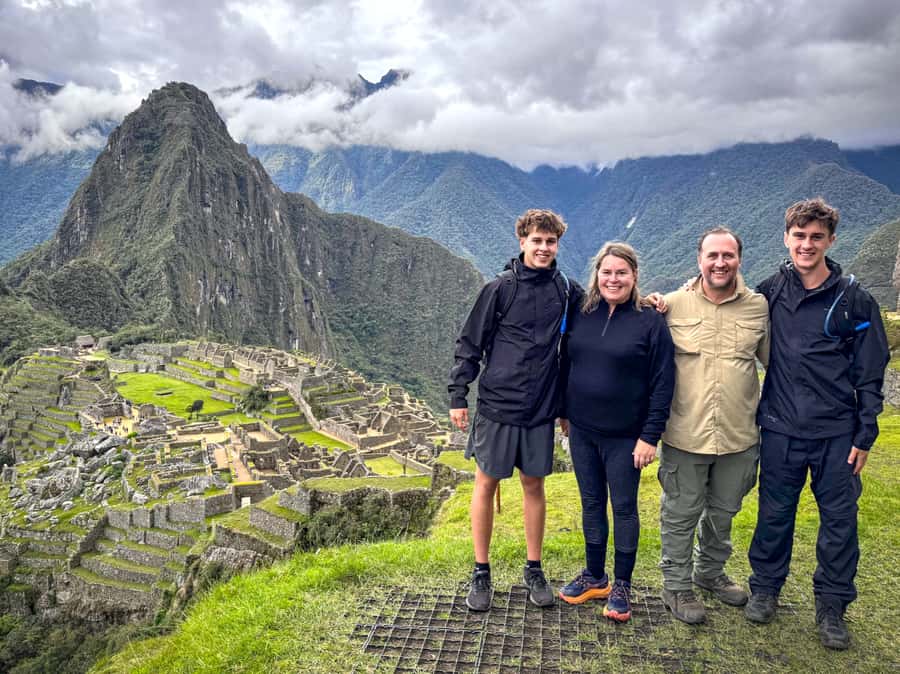
Day two starts with breakfast, followed by the first buses up to Machu Picchu. This early timing is one of the strongest reasons to choose the two-day format.
The bus removes a major logistical headache. You do not need to find your own way from Aguas Calientes to the entrance, and the round-trip bus service is included. Once inside, your guide leads a tour lasting about three hours.
The route covers major parts of the citadel, including temples, palaces, and plazas. That guided time gives you a framework for understanding what you are seeing. Machu Picchu can otherwise become a sequence of impressive walls and viewpoints without a clear sense of how the spaces relate to one another.
After the guided portion, you have free time to explore within the citadel. The exact use of that time depends on current site rules and the route assigned to your entry, so do not assume you can wander everywhere. Still, the combination of guided explanation and independent time is better than either one alone.
The tour does not include Huayna Picchu or Machu Picchu Mountain. Those are separate extra hikes, so book this experience for the main citadel visit rather than for a summit walk.
Guides can shape the entire day
The guide is important on a route with this many stops. Nathalie has led the experience with a calm pace and strong enthusiasm for the subject. Adolfo has been friendly, helpful, and generous with explanations at each stop. Efrain has also handled questions carefully, and on one departure with only two people, the scheduled small group became a private tour.
Those individual guides may not be assigned to every departure, so you should not book on the assumption that one particular person is guaranteed. The stated languages are English and Spanish.
The group limit is 16 participants. That is small enough for a guide to keep the day organized without the feel of a large coach tour. It also helps at ruins, where you may want a quick explanation before moving to the next viewpoint.
A good guide matters most at Moray, Chinchero, and Ollantaytambo, where the stones alone do not explain the site. At Machu Picchu, a guide can also help you use your limited time well.
What $680 includes, and where the value sits
At $680 per person, this is not a budget rail trip. The price makes more sense when you add up what is bundled:
- Hotel pickup and return to your Cusco hotel
- Transport throughout the route
- Chinchero, Moray, Maras salt mines, and Ollantaytambo entrance tickets
- Machu Picchu entrance ticket
- Round-trip Expedition train service
- Round-trip bus service to Machu Picchu
- One night in a 3-star Aguas Calientes hotel
- Buffet lunch in Urubamba and dinner in Ollantaytambo
- Tour guidance
- Taxes and reservation charges
That package saves you from coordinating separate tickets and transfers, which is valuable on a tight schedule. The train and Machu Picchu entry alone require careful planning, and a mistake can disrupt the whole visit.
The price is less attractive if you already have hotel arrangements, prefer to choose your own restaurants, or want a slower two or three-night Sacred Valley stay. You are paying for coordination and a compact route, not maximum flexibility.
A few costs remain outside the package. Huayna Picchu and Machu Picchu Mountain are extra, as are meals not listed and travel insurance. Plan for those separately.
Who should book this experience
I would choose this tour if you have two days, want to see several Sacred Valley highlights, and prefer having one company handle the details. It suits first-time visitors who want a guide at the major sites and a simple hotel-to-hotel arrangement.
It also fits people who value an early Machu Picchu visit. The overnight in Aguas Calientes is more practical than trying to cover Cusco, the Sacred Valley, and Machu Picchu in one punishing day.
You may want another format if you dislike early starts, long road transfers, or fixed meal stops. It is also a poor fit for anyone with mobility limitations, since the trip involves repeated walking at archaeological sites and is specifically not suitable for people with mobility impairments. The stated age restriction also excludes people over 95.
Bring your passport. Drones, alcohol, and drugs are not allowed. The listed health rules require temperature checks when boarding the van and train and when checking into the hotel, along with mask use in public places.
The return journey needs a little patience
After lunch in Aguas Calientes, you take the Expedition train back toward Cusco. The planned arrival at your hotel is around 7:30 PM.
The return is not always a single uninterrupted train ride to Cusco. One route arrangement requires a change to a bus at Ollantaytambo, and that extra transfer can feel tiring after an early start and a full Machu Picchu visit.
This is the main logistical weakness I would keep in mind. It does not cancel out the convenience of the tour, but it does make the final evening longer than the headline two-day format may suggest. Avoid scheduling an important late-night activity after your expected hotel arrival.
Should you book it?
Book this tour if you want the strongest sights of the Cusco Region in a tightly organized two-day plan. The combination of Chinchero, Moray, Salineras, Ollantaytambo, and an early Machu Picchu visit gives you much more than a simple overnight excursion.
I especially like it for someone who values good pacing and expert help but does not want to manage trains, buses, tickets, meals, and a hotel independently. The guides named for this route, including Nathalie, Adolfo, and Efrain, have brought warmth and useful explanations to the experience.
Skip it if you need a leisurely schedule, private transport throughout, extra hiking at Huayna Picchu or Machu Picchu Mountain, or a direct return without a possible bus change. At $680, the value lies in the amount of planning it removes. For a short first visit, that can be money well spent.
FAQ
How long is the tour?
The experience lasts two days and one night. Starting times vary, so you need to check availability when booking.
Where does pickup take place?
Pickup is included from your hotel in Cusco. Wait in the hotel lobby 10 minutes before the scheduled time. The driver will hold a sign with your last name.
What languages are available?
Live guidance is available in English and Spanish.
How large is the group?
The tour is limited to 16 participants. If only a small number of people book a departure, the group may be smaller.
What meals are included?
Day one includes buffet lunch in Urubamba and dinner in Ollantaytambo. Breakfast is provided at the hotel on day two, and lunch in Aguas Calientes follows the Machu Picchu visit. Meals not mentioned in the program are not included.
Is the hotel included?
Yes. One night in a 3-star hotel in Aguas Calientes is included.
Are Huayna Picchu and Machu Picchu Mountain included?
No. Those extra hikes require separate payment and are not part of this tour.
More 2-Day Experiences in Aguas Calientes
- Machupicchu tour by tourist train in 2 days
★ 4.5 · 7 reviews - Inca Trail 2 days to Machu Picchu
★ 5.0 · 5 reviews - Machu Picchu 2 Days / 1 Night (By Bus)
★ 3.7 · 4 reviews - From Cusco: Machu Picchu by Car 2D/1N
★ 3.5 · 3 reviews
More Maras & Moray Tours in Aguas Calientes
- Sacred Valley: Chinchero, Moray, Ollantaytambo & Pisac+Lunch
★ 4.8 · 501 reviews - Sacred Valley: Maras & Moray by Quad Bike from Cusco
★ 4.6 · 418 reviews - From Cusco: Quad bike tour Moray and Salt Mines
★ 4.7 · 314 reviews - From Cusco: Moray, Maras Salt Mines & Chinchero Weavers Half-Day
★ 5.0 · 126 reviews
Just added around Aguas Calientes
- TOUR TO MACHU PICCHU FULL DAY BY TRAIN – The Best Adventure★ 3.2 · 4 reviews
- Salkantay Trek to Machu Picchu 5 Days with Sky Lodge Domes★ 5.0 · 5 reviews
- Rainbow Mountain tour and Machu Picchu tour by train★ 4.8 · 13 reviews
- Machupicchu tour by tourist train in 2 days★ 4.5 · 7 reviews
- Machu Picchu: Private Tour Guide Service for up to 15 people★ 4.5 · 3 reviews
- From Cusco: Train Ride and Guided Tour of Machu Picchu★ 5.0 · 6 reviews
- Machu Picchu Entry Ticket and Bus from Aguas Calientes★ 3.8 · 8 reviews
- Machu Picchu 2 Days / 1 Night (By Bus)★ 3.7 · 4 reviews
Machu Picchu Tours, compared.



4-Day Inca Trail to Machu Picchu with Accommodation
Read our review →
2-Day Trip to the Sacred Valley and Machu Picchu
Read our review →
Machu Picchu 2-Day Inca Trail with Panoramic Train
Read our review →
Browse the lists this tour appears in