
Reviewed · SACRED VALLEY TOURS
From Cuzco: Sacred Valley, Moray Terraces, and Salt Mines
Moray is the star of this trip: a set of huge circular terraces cut into the highlands, where each level created a different growing environment. I like that you can see Inca engineering in a physical, easy-to-read form, not just hear a dry date from a guide. The nearby Maras salt pools add a sharp contrast, with bright mineral ponds spread across a mountainside.
I also like the choice of formats. You can take a shorter Moray and Maras outing, or spend the whole day adding Chinchero, Urubamba, Ollantaytambo, and Pisac. The small-group or private option can make a long day feel more manageable, especially when you want time for photos.
The main caution is the road day itself. Pickup may run late, and one account described very rough driving, so I would confirm the pickup time and expect a tiring ride. On the longer route, the day can stretch from early morning until about 7 p.m., with many stops and extra entrance charges.
In This Review
- Key points before you book
- Moray: Inca farming written in circles
- Maras salt pools: a working mountain site
- The short route from Cusco
- The full-day Sacred Valley circuit
- Chinchero and the royal estate
- Moray and Maras
- Lunch in Urubamba
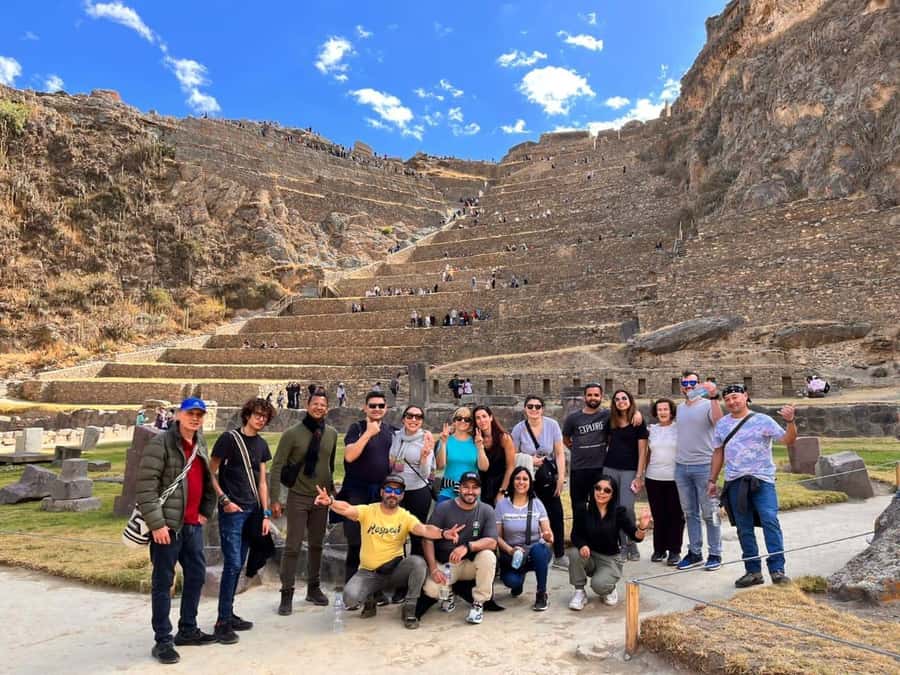
- Ollantaytambo and its stone terraces
- Pisac, platforms above the valley
- What the $25 price really covers
- The ride, guide, and pace
- Who should choose this experience
- Should you book Moray and Maras?
- FAQ
- What sites are included in the shorter tour?
- What sites are included in the full-day option?
- Is hotel pickup included?
- Where does the tour finish?
- Is lunch included?
- How much are the entrance fees?
- What languages does the guide speak?
- How long does the tour last?
- What should I bring?
Key points before you book
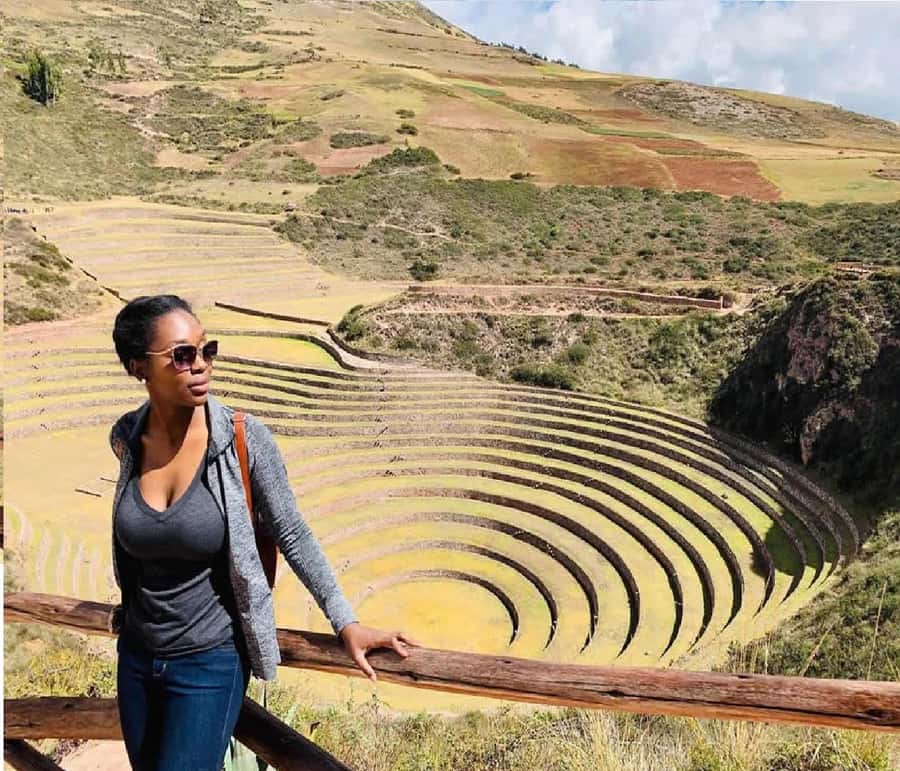
- Moray’s circular terraces offer one of the clearest glimpses of how the Incas adapted farming to difficult mountain conditions.
- Maras salt pools are close to Moray, making the shorter option efficient rather than padded with unrelated stops.
- The full-day route adds Chinchero, Ollantaytambo, Pisac, and an Urubamba lunch with more than 30 typical dishes.
- Spanish may dominate in a mixed group, even when the guide also speaks English.
- The advertised $25 price is only the starting point, since Moray, Maras, and lunch are not included.
- Hotel pickup is included, with central Cusco pickup points and drop-off near the Plaza de Armas.
Moray: Inca farming written in circles
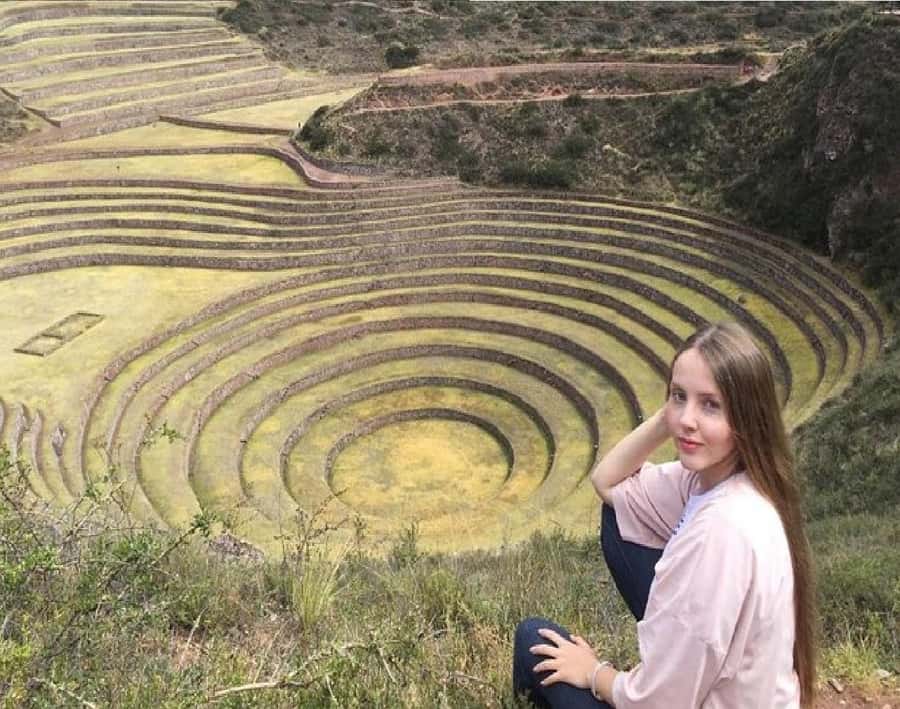
The visit to Moray lasts about 50 minutes. That is enough to walk around the viewpoint area, take photographs, and hear the main explanation, but it is not a long archaeological session.
The terraces form broad circles that descend into the earth. Their exact purpose is still discussed, but the tour presents them as an agricultural construction tied to Inca farming. The practical point is easy to grasp: different heights meant different conditions for crops. The site shows how carefully the Incas worked with altitude, sun, and temperature.
I find Moray valuable because it turns a large historical idea into something you can see at once. Instead of picturing an empire only through walls and temples, you see food production treated as serious state planning. The curved stone terraces also make one of the best photo stops on the route.
You should wear shoes with a decent grip and bring water. The information provided does not specify the walking distance or terrain in detail, but this is an outdoor archaeological site with uneven ground and high-altitude conditions. The trip is not suitable for people with mobility impairments, so be realistic about your comfort on foot.
A bilingual guide leads the visit in English and Spanish. In a shared group, the Spanish explanation may take more time, leaving the English portion shorter than you expect. If the history matters to you, listen closely and ask direct questions during the stop.
Moray requires the Cusco tourist ticket, listed at 70 soles. That fee is separate from the tour price. Check the current amount when booking, since the information provided gives both a stated ticket price and a note about purchasing it locally.
More sacred valley tours in Cusco:
- From Cusco: Sacred Valley & Maras Salt Mines Tour with Lunch
★ 4.8 · 2,227 reviews - From Cusco: Moray, Maras Salt Mines & Chinchero Weavers Tour
★ 4.8 · 1,925 reviews - Cusco: Sacred Valley, Pisac, Ollantaytambo, Salt Mines Moray
★ 4.6 · 1,058 reviews
Maras salt pools: a working mountain site
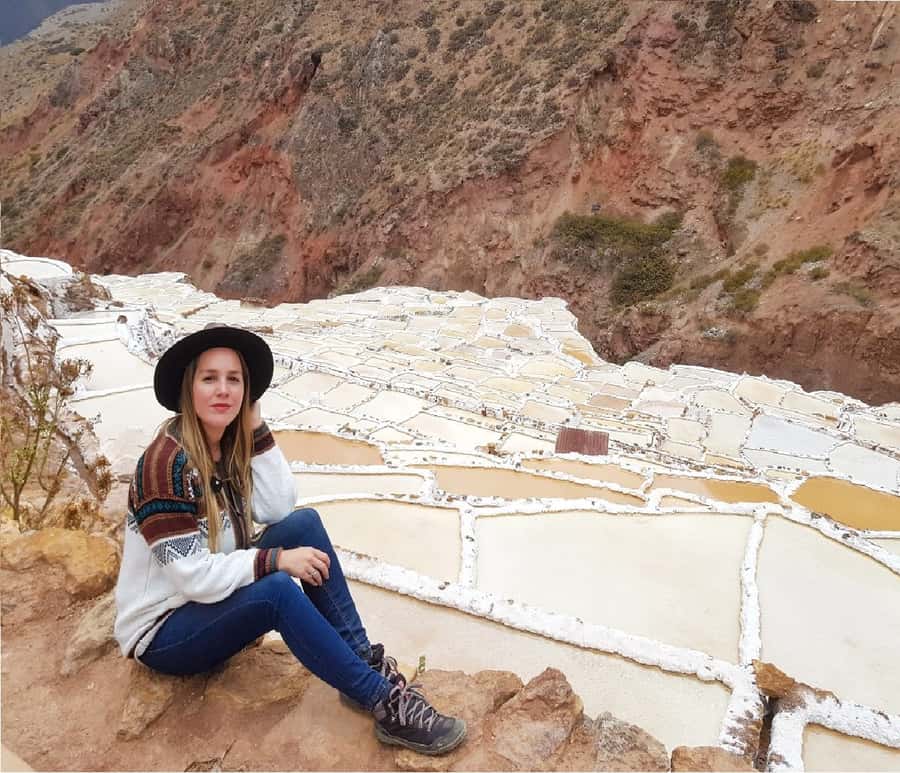
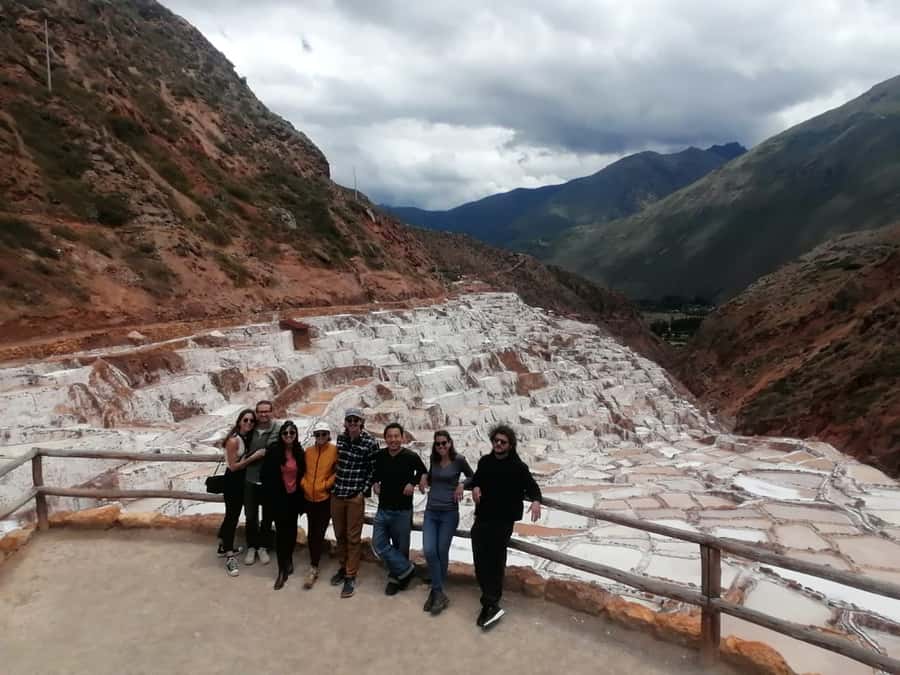
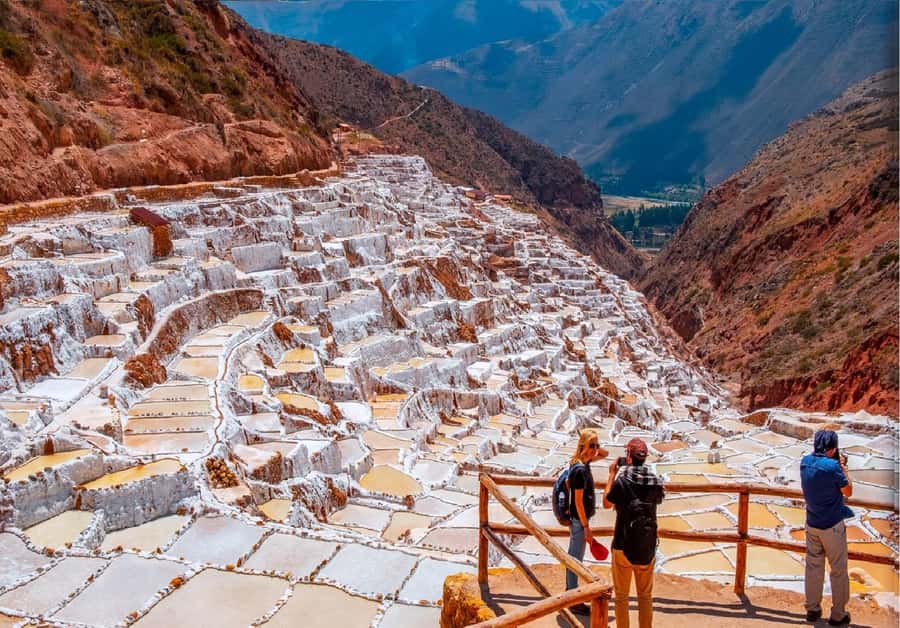
After Moray, the route continues to Maras for another stop of roughly 50 minutes. Here you see hundreds of small salt ponds arranged across the slope. Water carrying salt reaches the pools, and evaporation leaves the mineral behind.
This stop works well beside Moray. Moray shows planned agriculture, while Maras shows a long-running use of natural minerals. You get two very different examples of how people made practical use of the high Andes.
The salt pools are especially attractive for photographs because the ponds break the hillside into small shapes and pale colors. The appearance can vary with light and conditions, so do not expect every pool to look identical. Your guide should explain the history of salt mining and how the site functions, but the visit is also a good chance to step back and simply look.
The entrance fee is not included. The information gives 20 soles in one place and 10 soles in another, so ask the operator or guide for the current fee before you leave Cusco. Bring cash. Card payment should not be assumed.
Maras is an active salt-producing area rather than a polished museum. That is part of its appeal, but it also means you should follow the route and avoid treating the pools as props. You may have time for photos, but the stop remains fairly short.
The short route from Cusco
The shorter choice focuses on Moray and Maras. Pickup is generally around 7:40 a.m., with a stated hotel waiting window of 7:30 to 8:00 a.m. The vehicle travels through the Urubamba Valley, with views toward the snow-capped Andes along the way.
This option is the better fit if your main goals are the terraces and salt pools. It takes less time than the full circuit and avoids packing five major sites into one day. The total activity is described as six to 12 hours, so confirm the exact departure and return time for your date.
Hotel pickup is available from a long list of central Cusco properties and areas, including the Historic Center, San Blas, Wanchaq, and hotels near the Plaza de Armas. The listed drop-off points are Calle Plateros and Calle Saphy. If your hotel is not on the pickup list, confirm the meeting point rather than waiting outside with your bags.
Shared transportation keeps the price low, but it also means you have less control over the pace. Pickup delays are possible, and an early start is normal. I would arrive ready before the stated window, keep your phone available, and avoid scheduling a tight evening connection.
The full-day Sacred Valley circuit
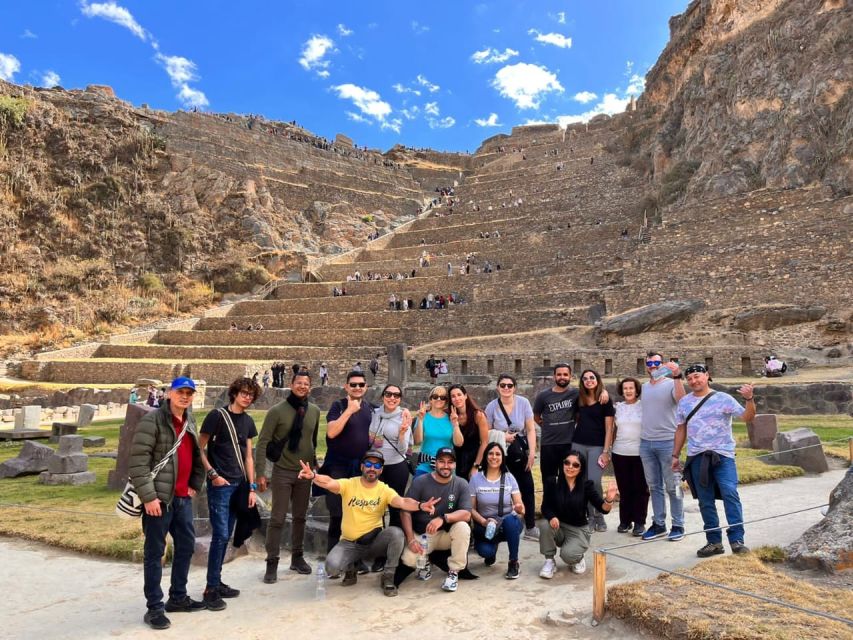
The longer option starts earlier, with pickup between 6:35 and 6:55 a.m. It follows a wide loop through Chinchero, Moray, the Maras salt mines, Urubamba, Ollantaytambo, and Pisac, returning to Cusco around 7 p.m. Drop-off is near the center of town on Plateros Street.
This is a full sightseeing day, not a relaxed half-day outing. You cover a lot, but the reward is a broad look at the Sacred Valley and its Inca sites.
More maras & moray tours in Cusco:
- Cusco:Chinchero,Moray & Salt Mines drop-off in Ollantaytambo
★ 4.8 · 793 reviews - Sacred Valley: Chinchero, Moray, Ollantaytambo & Pisac+Lunch
★ 4.8 · 501 reviews - Sacred Valley: Maras & Moray by Quad Bike from Cusco
★ 4.6 · 418 reviews - From Cusco: Quad bike tour Moray and Salt Mines
★ 4.7 · 314 reviews
Chinchero and the royal estate
Chinchero is the first stop. The town contains remains connected with the royal estate of Túpac Inca Yupanqui, along with a well-preserved Inca wall in the main square.
The stop gives you an early look at the way Inca construction survives inside a living town. It is not simply an isolated ruin. The square, wall, and surrounding highland setting help connect imperial history with present-day Peru.
Because Chinchero comes before the main sites, it sets up the day well. You begin with the idea of royal power and construction, then move to Moray’s agricultural purpose and later to the military and religious role of Ollantaytambo.
Moray and Maras
The full-day option visits Moray and Maras in the same general order as the shorter trip. Plan for about 50 minutes at each site. You receive a guided visit, time for photos, and a quick look at two very different forms of Andean resource management.
The drawback is time. If you want extended walking or careful photography, these stops may feel brief. The full route gives you more places, but it does not give you unlimited time at each one.
Lunch in Urubamba
The group then stops in Urubamba for lunch. The meal is described as a buffet with more than 30 varieties of typical dishes, but food and drink are not included in the base tour price.
This is useful on a long day because you do not need to arrange lunch separately. Still, budget for it and check whether the meal cost is payable at the restaurant. If you have dietary needs, ask before booking, since no specific dietary arrangements are provided.
Urubamba also breaks up the archaeological visits. After an early start and several outdoor stops, a proper midday pause can make the second half of the tour easier.
Ollantaytambo and its stone terraces
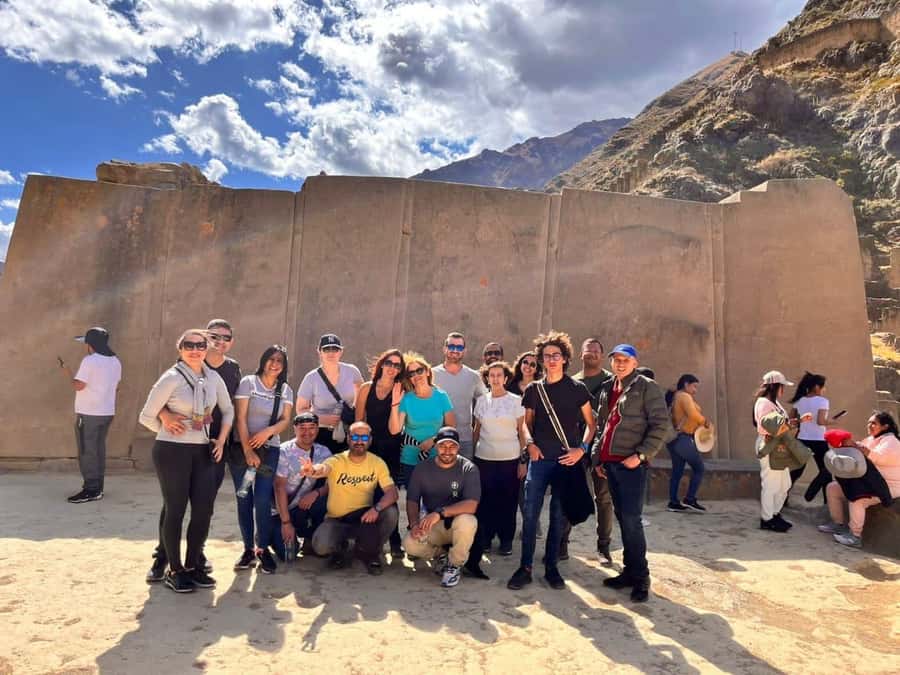
Ollantaytambo was built to guard this part of the valley and protect it from possible attacks from the jungle region. The complex had military, religious, and cultural roles, so it is one of the more varied stops on the full route.
You also get time to walk through the town’s small streets. That detail matters. Ollantaytambo is not only a high stone complex viewed from one platform. The town layout helps you picture how an Inca settlement functioned, with narrow streets and carefully fitted construction.
The stop can be demanding after a full morning. Comfortable shoes are important, and breathable clothing helps when the sun comes out. The exact time at Ollantaytambo is not stated, so ask how long you will have before the group moves on.
Pisac, platforms above the valley
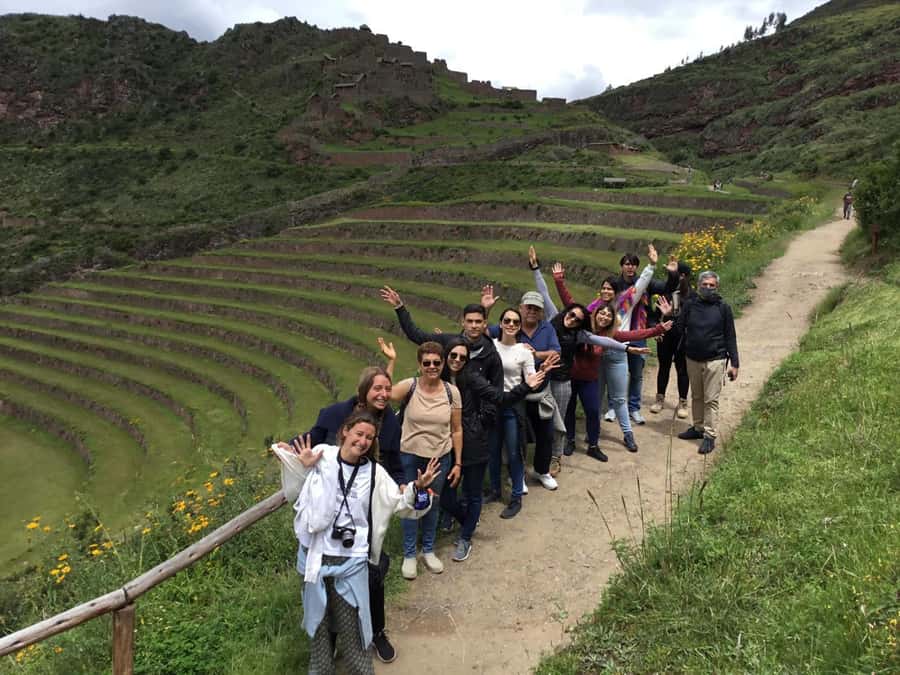
Pisac is the final major stop. Its buildings and terraces spread across the slopes and summit of the mountain. The site combines agricultural platforms with architectural groups, giving you both large views and close-up stonework.
I would save some energy for Pisac. Its position above the valley is a strong finish to the sightseeing portion, but reaching different parts of a hillside site can take effort. Since the tour is already long by this point, you may need to choose between a broad view and a closer look at the ruins.
The full-day route ends back in Cusco at about 7 p.m., with transport leaving you on Plateros Street. That is convenient for the Plaza de Armas area, but it is not a hotel drop-off at the end of the day.
What the $25 price really covers
At $25 per person, the tour is inexpensive for a Cusco day trip that includes hotel pickup, round-trip shared transport, and a professional bilingual guide. The value is strongest if you want transport arranged for you and prefer to see several major sites in one booking.
The headline price does not cover the main site costs. Set aside money for the Moray tourist ticket, the Maras entrance fee, and lunch on the full-day option. The provided information lists Moray at 70 soles and gives conflicting Maras prices of 20 and 10 soles, so confirm the current amount.
Food and drinks are excluded. Bring cash in soles for entrance fees and purchases. The tour also recommends carrying your passport or an identification card. You should bring both your passport and a copy or other accepted ID if that fits your travel plans, but the stated requirement is simply passport or ID card.
The low price comes with shared transport and a busy schedule. A private or small-group version may offer a better balance if you value easier communication, more personal guiding, or a calmer pace. The exact supplement is not provided, so compare the final price before choosing.
The ride, guide, and pace
The guide speaks English and Spanish, and professional guiding is part of the package. In a mixed group, the guide may speak more Spanish than English because of the group makeup. If you want equal time in both languages, confirm that before departure.
The driving deserves attention. One detailed account described a very rough ride and unsafe-feeling speed. I cannot tell you that every departure has the same driver, but I would make safe driving a booking question. If you are prone to motion sickness, sit near the front if possible, carry medication you already use, and bring water.
Pickup can also be imperfect. One account described a delay of about an hour. Wait at the hotel during the stated 7:30 to 8:00 a.m. window for the shorter route, and expect the full-day option to begin around 6:35 to 6:55 a.m. Build flexibility into your morning.
The overall rating is 4.6 from 11 reviews, with strong praise for the sites and guide professionalism, but the lower score tied to driving is important. The archaeology is the reason to go. The vehicle and schedule are the parts to check carefully.
Who should choose this experience
Choose the short route if you want Moray and Maras without committing to a 12-hour day. It suits you if you are staying in Cusco, want organized transport, and care more about these two sites than about covering the entire Sacred Valley.
Choose the full route if this is your only available day for the valley and you want Chinchero, Ollantaytambo, and Pisac included. You will see more, but you must accept early pickup, limited time at each stop, a group lunch, and a late return.
This experience is not suitable for people with mobility impairments, and it is not recommended for people over 95. The trip also demands patience with mountain roads, changing conditions, and a long day outdoors. Comfortable shoes, breathable clothing, cash, and a passport or ID are the basic kit.
Free cancellation up to 24 hours before departure and reserve-now, pay-later terms add useful flexibility. The activity is available as a private or small-group experience, though the price for those formats is not given.
Should you book Moray and Maras?
I would book it if you want a low-cost, organized way to see two memorable sites near Cusco, especially if you choose the shorter route. Moray and Maras complement each other, and the included transport removes the need to arrange a separate day trip.
I would choose the full-day option only if you value coverage over comfort. It gives you Chinchero, Urubamba, Ollantaytambo, and Pisac, but the schedule is demanding and the extra fees push the real cost above $25.
Before paying, confirm three things: the current Maras entrance fee, the exact pickup time, and how the guide will divide English and Spanish. If the company can answer those clearly and confirm a careful driver, this is a solid value for an ambitious day in the Cusco Region.
FAQ
What sites are included in the shorter tour?
The shorter tour visits Moray and the Maras salt mines. It includes guided visits and time for photographs.
What sites are included in the full-day option?
The full-day route includes Chinchero, Moray, the Maras salt mines, Urubamba, Ollantaytambo, and Pisac before returning to Cusco.
Is hotel pickup included?
Yes. Pickup is included from listed Cusco hotels and central areas. The stated waiting window for the shorter option is 7:30 to 8:00 a.m.
Where does the tour finish?
The listed drop-off points are Calle Plateros and Calle Saphy. The full-day route specifically ends on Plateros Street near the Plaza de Armas.
Is lunch included?
Lunch is included only with the full-day Sacred Valley option, according to the provided information. Food and drinks are not included in the shorter option.
How much are the entrance fees?
Moray requires a tourist ticket listed at 70 soles. The Maras fee is listed as either 20 soles or 10 soles in the provided information, so confirm the current price before departure.
What languages does the guide speak?
The tour offers live guiding in English and Spanish. In shared groups, the guide may speak more Spanish depending on the group.
How long does the tour last?
The activity is listed as lasting six to 12 hours. The full-day route begins early and is scheduled to finish around 7 p.m.
What should I bring?
Bring your passport or ID card, comfortable shoes, breathable clothing, and cash. Bikes, alcohol, and drugs are not allowed.
Just added around Cusco
- Waqrapukara 1 day trekking + meals★ 3.9 · 3 reviews
- Zipline over the Sacred Valley Trip★ 5.0 · 11 reviews
- Valle Sur Cusco | half day★ 4.3 · 3 reviews
- Visit to the Cochahuasi Animal Sanctuary with rescued animal★ 4.1 · 4 reviews
- Visit Pisac from Cusco: Private Transport★ 4.6 · 9 reviews
- Maras and Huaypo lagoon by ATV from Cuzco | Local Operator★ 4.7 · 4 reviews
- Trek to Humantay Lake from Cusco★ 4.9 · 8 reviews
- Trek to Choquequirao 4 days★ 3.8 · 4 reviews
Sacred Valley Tours, compared.

Sacred Valley & Maras Salt Mines Tour with Lunch
Read our review →
Moray, Maras Salt Mines & Chinchero Weavers Tour
Read our review →
Sacred Valley, Pisac, Ollantaytambo, Salt Mines Moray
Read our review →
Chinchero,Moray & Salt Mines drop-off in Ollantaytambo
Read our review →

Pisac Indian Market and Ollantaytambo Fortress with Lunch
Read our review →
2-Day Trip to the Sacred Valley and Machu Picchu
Read our review →Browse the lists this tour appears in