
Reviewed · SACRED VALLEY TOURS
Cusco: Moray, Maras Salt Mines, and Chinchero Weavers Tour
Moray’s great circular terraces are the star of this Cusco day trip, but the route gives you three very different views of Andean life: Inca farming at high altitude, salt production in a mountain valley, and Quechua weaving in Chinchero. The scenery between stops is excellent, with farmland and broad mountain views.
I like the small-group format, limited to 12 people, and the low $14 starting price. I also like that the tour includes hotel pickup and combines several sights that are awkward to reach on your own. The main caution is the Chinchero weaving stop: one serious complaint described a sales-focused workshop and synthetic fiber presented as alpaca, so keep your buying hat off until you are sure of the materials.
In This Review
- Key points to know before booking
- Why this half-day route works well from Cusco
- Chinchero begins with weaving and a buying decision
- Moray’s circular terraces show farming at altitude
- Maras adds a colonial village to the route
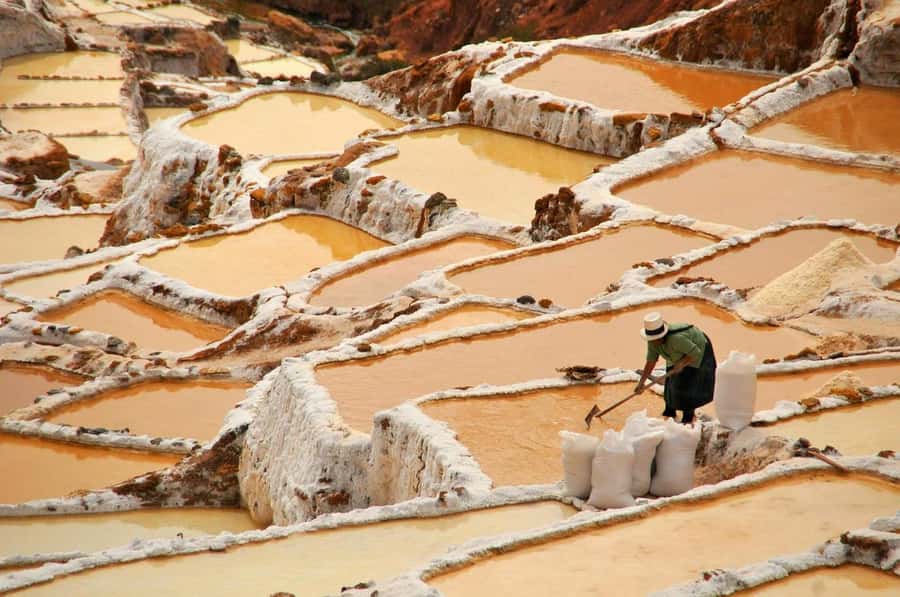
- The Salineras turns a mountain slope into 3,000 salt pools
- The guide can shape the whole morning
- Transport, timing, and the end at Plaza Regocijo
- Who will get the most from this tour
- Should you book the Moray and Maras tour?
- FAQ
- How long does the tour last?
- Where does the tour begin?
- Where does the tour finish?
- What languages are available?
- How large is the group?
- Are entrance fees included?
- What happens at the Chinchero stop?
- How high is Moray?
- What should you bring?
Key points to know before booking
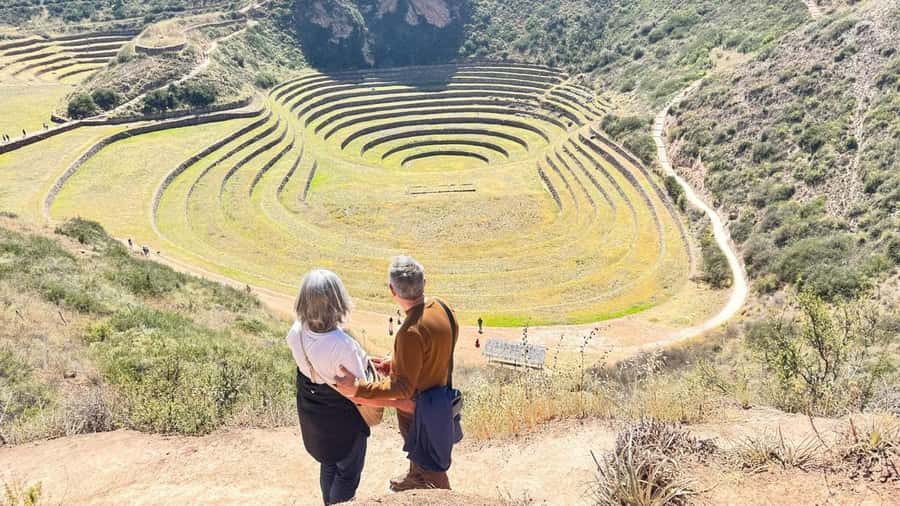
- Moray sits at 11,318 feet: Expect striking circular terraces and thin air, with about 40 minutes at the site.
- The Salineras has about 3,000 pools: Salt still comes from these small evaporation ponds and is processed for regional sale.
- Chinchero includes a weaving demonstration: Artisans show how plants become natural dyes, but the workshop can also be a shopping stop.
- The route takes about six hours: You’ll spend a fair amount of time in the vehicle, including a long final ride to Plaza Regocijo.
- Entrance fees are extra: Budget $19 or 70 soles for the archaeological sites and $6 or 20 soles for the salt mines.
- Pickup is included, but hotel drop-off is not: The tour ends at Plaza Regocijo in Cusco.
Why this half-day route works well from Cusco
Cusco is surrounded by major sights, and the problem is often not finding places to visit. It is fitting them together without wasting half a day on transport. This tour handles that neatly by linking Chinchero, Moray, Maras, and the Salineras in one loop.
The pace is brisk. You get roughly 30 minutes in Chinchero, 40 minutes at Moray, and 40 minutes at the salt mines, with a stop in Maras included along the way. That is enough for a clear first look, photos, and a guide’s explanation, but not enough for a slow, independent exploration.
I would choose this outing if you want a broad taste of the Sacred Valley region and have limited time in Cusco. I would not choose it if you want long walks, quiet contemplation, or detailed archaeology at each site. This is a highlights tour, not a full-day field trip.
The $14 price is unusually low for transportation, hotel pickup, a bilingual guide, and several stops. But you must add the entrance fees, and the final cost will be higher if you choose a private version. Even so, it can be good value because the sites are spread out and public transport would make the day harder to manage.
More sacred valley tours in Cusco:
- From Cusco: Sacred Valley & Maras Salt Mines Tour with Lunch
★ 4.8 · 2,227 reviews - From Cusco: Moray, Maras Salt Mines & Chinchero Weavers Tour
★ 4.8 · 1,925 reviews - Cusco: Sacred Valley, Pisac, Ollantaytambo, Salt Mines Moray
★ 4.6 · 1,058 reviews
Chinchero begins with weaving and a buying decision
The first drive from Cusco to Chinchero takes about 50 minutes. Chinchero sits at 3,762 meters, or roughly 12,342 feet, so you are already high before reaching Moray. The altitude matters here. Walk slowly, drink water, and do not treat the first stop as a race.
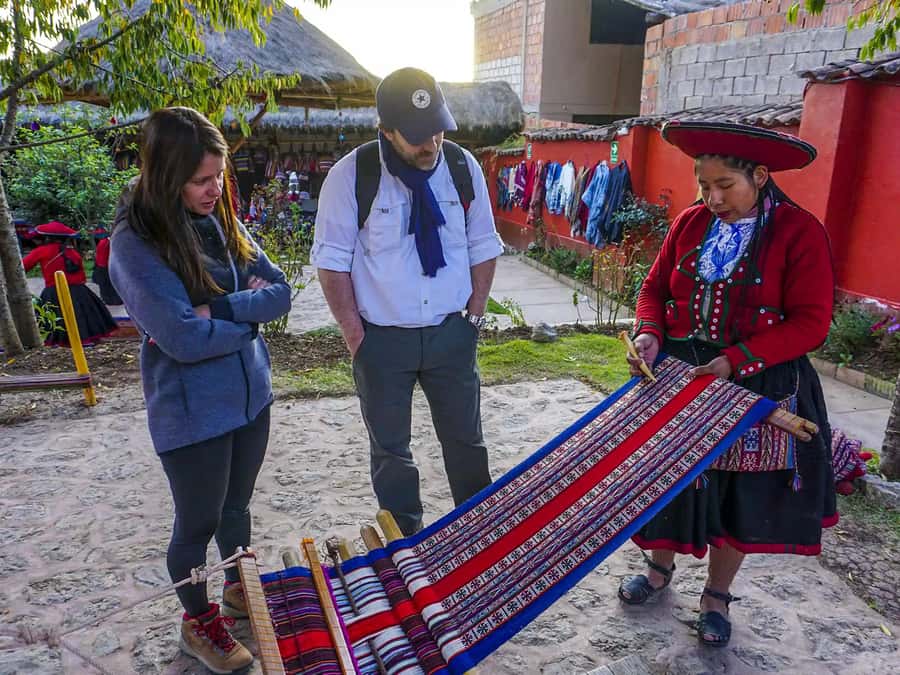
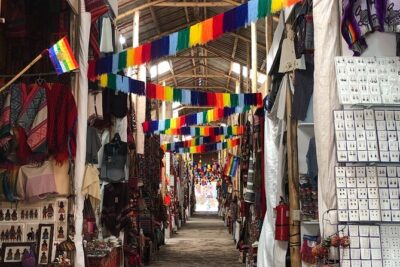
The workshop visit lasts about 30 minutes. You can expect a presentation of Quechua weaving methods, including the use of natural plants to create colors for Andean textiles. This is one of the most useful parts of the morning because it connects a finished textile with the work behind it.
The demonstration can also include shopping. That is not automatically a problem, but it does mean you should look closely before buying. One complaint about this operator described a workshop different from the one shown in promotional photos and alleged that synthetic material was presented as real alpaca. I cannot verify that account, but it is a clear reason to ask what a textile is made from and how the price was set.
If you are shopping, ask direct questions about alpaca, wool, and synthetic fibers. Look at the label if there is one, and do not feel obliged to buy because a demonstration has just ended. You can enjoy the color-making lesson without opening your wallet.
The stop is also useful for photographs and a short walk. Since you have only 30 minutes, stay aware of the meeting point. A late return here could reduce time at Moray, where most people will want a little room for photos.
Moray’s circular terraces show farming at altitude
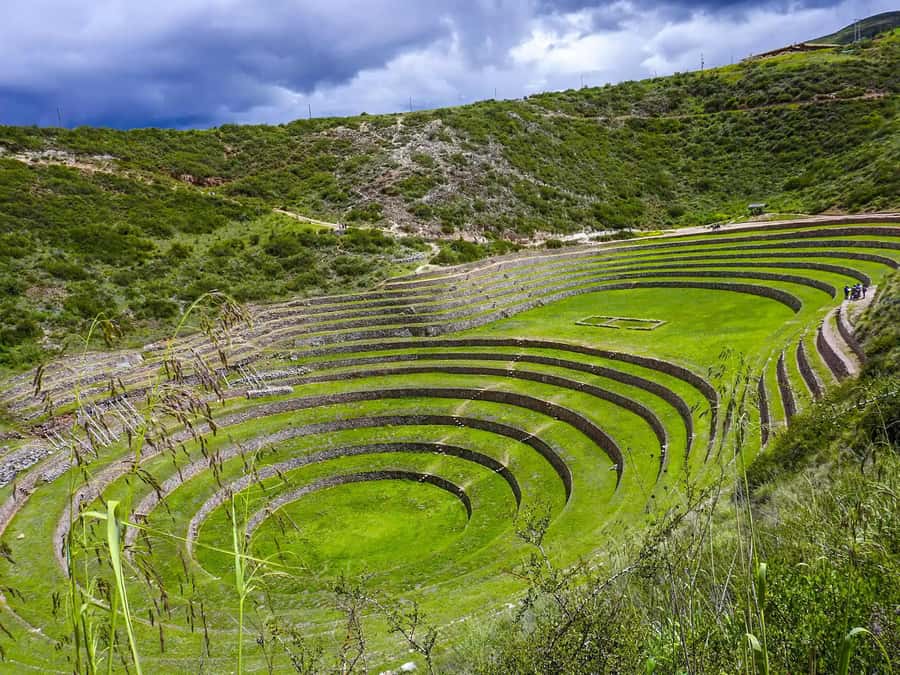
After Chinchero, the vehicle ride to Moray takes about 35 minutes. The archaeological complex sits at 3,450 meters, or 11,318 feet. The high position gives the site a dramatic setting, but the altitude can make even a short walk feel harder than expected.
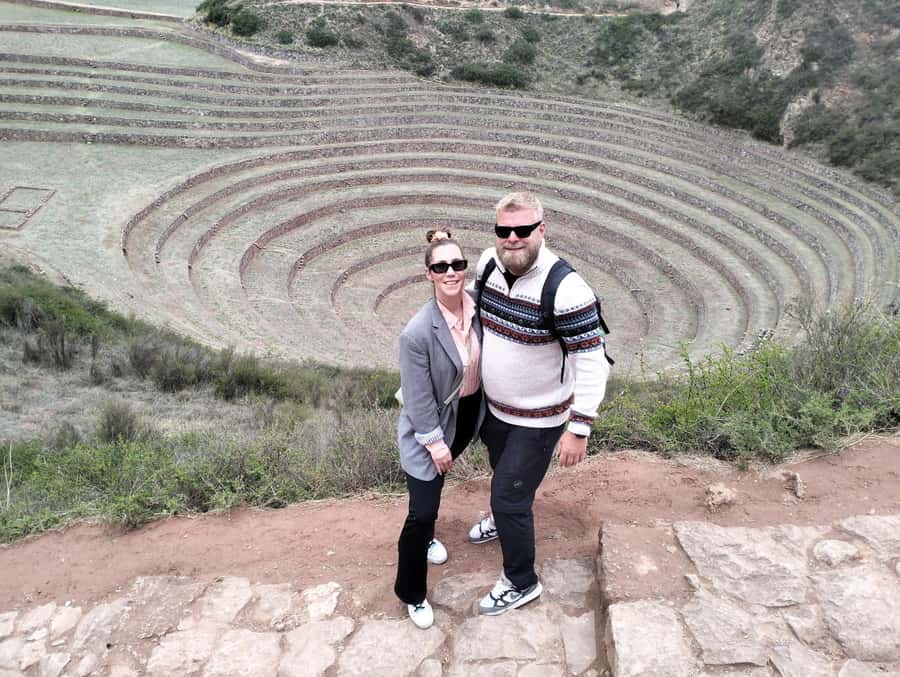
Moray is famous for its great circular terraces cut into the earth. The rings descend toward the center, creating a bowl-like form that looks almost too precise to be natural. The site also includes an irrigation system, and your guide will explain how the terraces relate to Inca agriculture.
I like Moray because it is more than a pretty viewpoint. The shape encourages you to think about how the Inca worked with altitude, water, soil, and changing temperatures. The terraces are not simply steps on a hillside. They show planning on a large scale and give you a direct view of how farming shaped the region.
Your scheduled time here is about 40 minutes, including a guided visit, a photo stop, and some walking. That is enough to understand the basic design and take in the broad mountain scenery. It is not enough to wander every path or linger at every angle, so listen early in the visit while the guide is explaining the site.
Bring sturdy, comfortable shoes. The tour specifically advises them, and they are a better choice than fashion footwear for uneven ground. A hat, sunscreen, and a camera also belong in your day bag. Bright high-altitude sun can be strong even when the air feels cool.
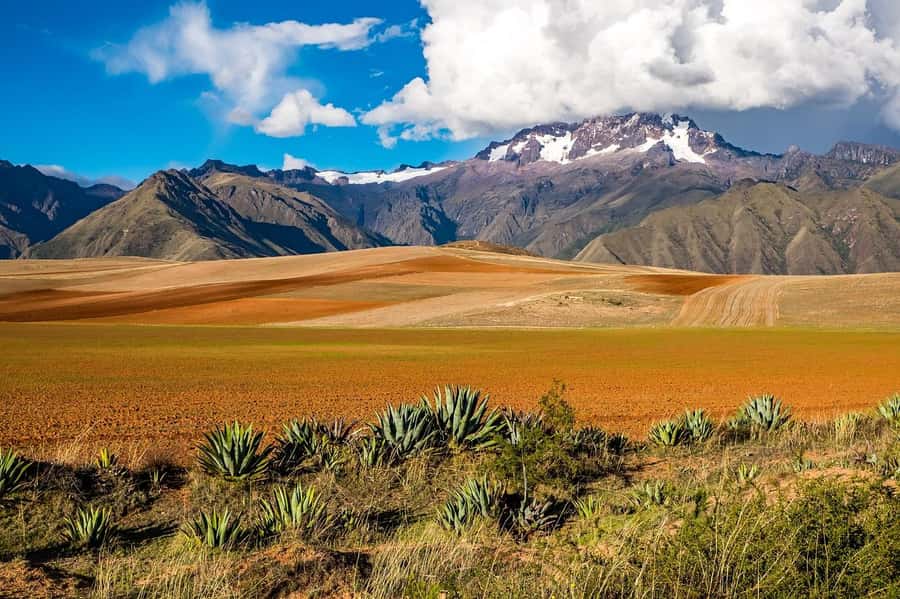
The views are part of the reward. You will see farmland and mountains around the terraces, and the change from Cusco’s urban streets to open Andean country is noticeable. Moray feels spacious, but the short visit keeps the day moving.
Maras adds a colonial village to the route
The itinerary includes a visit through Maras after Moray. This gives you a different kind of historical stop. Instead of the grand scale of the Inca terraces, Maras is associated with preserved colonial architecture and thin-stoned buildings.
The village stop helps show how the region changed after the Inca period. You see a town shaped by later construction, while the surrounding route continues to reveal older agricultural practices. That contrast is useful, especially if you want more than a sequence of scenic viewpoints.
The available schedule does not assign a separate long walking period for Maras. Expect this to be a shorter sightseeing portion connected with the drive toward the salt mines. If colonial buildings are your main interest, keep your expectations in check. Moray and Salineras receive the clearest timed visits.
The route between stops is part of the experience. Farmland and mountain views fill the windows, and the drive gives you a break from walking at altitude. On the other hand, road time adds up. After the Chinchero and Moray rides, you will continue by vehicle before reaching the salt mines, so this is not a tour built around constant activity.
More maras & moray tours in Cusco:
- Cusco:Chinchero,Moray & Salt Mines drop-off in Ollantaytambo
★ 4.8 · 793 reviews - Sacred Valley: Chinchero, Moray, Ollantaytambo & Pisac+Lunch
★ 4.8 · 501 reviews - Sacred Valley: Maras & Moray by Quad Bike from Cusco
★ 4.6 · 418 reviews - From Cusco: Quad bike tour Moray and Salt Mines
★ 4.7 · 314 reviews
The Salineras turns a mountain slope into 3,000 salt pools
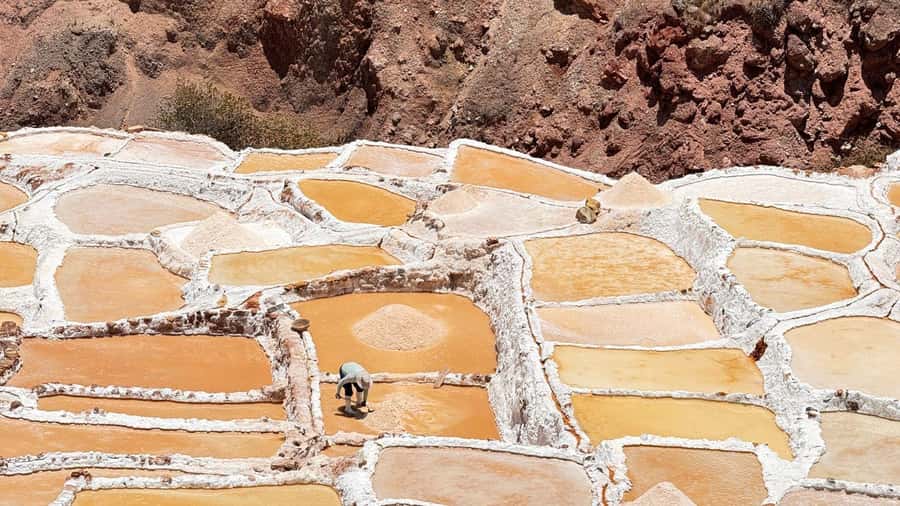
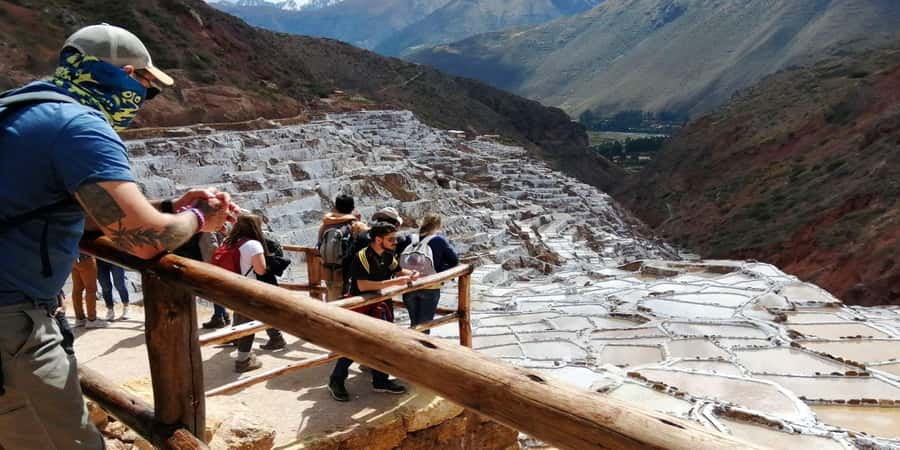
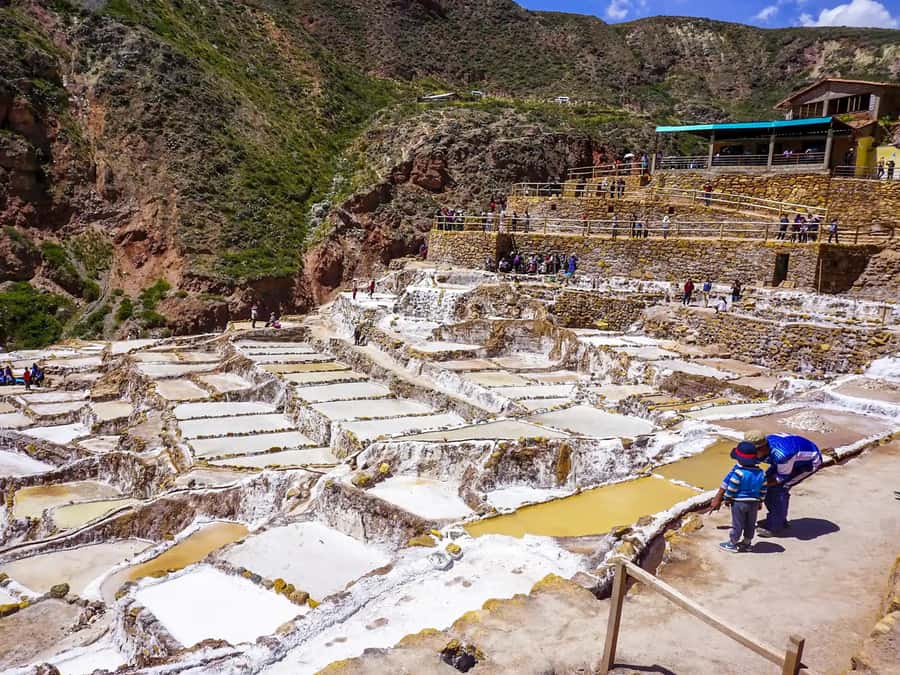
The Maras Salt Mines, also called the Salineras, are the most visually unusual stop. About 3,000 small pools spread across the mountainside, each one collecting salt through evaporation. The result is a patchwork of pale pools and earthen walls that changes in appearance with the light and season.
The site dates back to pre-Inca times and still produces salt today. That continued use gives the visit a practical edge. You are not looking at a dead archaeological display. Salt is processed and distributed in the region, linking an old method with present-day work.
You get about 40 minutes here for a guided visit, sightseeing, walking, and photographs. The guide can help explain how water reaches the pools and how the salt is gathered. Stay attentive around the edges and follow instructions, since the pools and paths are working areas rather than a formal museum.
I like the Salineras because it shows Andean resource use in a simple, visible way. Moray asks you to imagine how farming systems worked. At the salt mines, you can see the production system laid out in front of you.
There is also a practical cost. Entrance to the salt mines is not included and is listed as $6 or 20 soles. Bring cash, as the tour instructions specifically tell you to do so. The archaeological sites are also extra, listed at $19 or 70 soles, so make sure you have enough local currency or dollars before leaving Cusco.
The guide can shape the whole morning
The tour offers English and Spanish, with a bilingual guide leading the group. A small group of up to 12 people should make it easier to hear explanations and stay together than on a large coach tour.
A guide named Víctor received especially strong praise for his explanations, broad command of the subjects, and considerate way of handling the group. Other feedback described the outing as well organized, with pickup on time, a good driver, and a guide who took care of the group.
The main guide-related caution is language pacing. One person found that the guide switched repeatedly between Spanish and English and talked so continuously that it became tiring. That may happen when one guide is serving both language groups. If you need clarification, ask early rather than letting several stops pass in confusion.
There was also a complaint about inaccurate facts and repeated explanations in difficult-to-follow English. That is one reason I would treat the guide’s talk as a useful introduction, not the final word on every detail. The strongest feedback points to good organization and solid explanations, but the experience may vary with the assigned guide.
Transport, timing, and the end at Plaza Regocijo
Hotel pickup in Cusco is included, which is a major convenience for an early or tightly scheduled day. The vehicle rides are not short: about 50 minutes to Chinchero, 35 minutes to Moray, 40 minutes onward, and about 80 minutes for the final return to Plaza Regocijo.
That long final ride is worth noting. You do not get hotel drop-off, so plan to collect your belongings and finish your Cusco day from Plaza Regocijo. If you have a restaurant booking, train connection, or another tour immediately afterward, allow extra time.
The six-hour duration is an estimate for the full outing. Pickup timing can affect the exact finish, and stops may run longer if the group is slow to return. The small-group limit helps, but it does not remove the need to watch the clock.
You will want comfortable shoes, a sun hat, sunscreen, a camera, your passport, and cash. The passport requirement should not be overlooked. Keep it secure and accessible for entry arrangements.
The tour allows free cancellation up to 24 hours before departure for a full refund, and you can reserve now and pay later. Those policies make it easier to fit the trip into a changing Cusco schedule, especially if altitude or weather affects your plans.
Who will get the most from this tour
I would recommend this trip to first-time visitors who want to see several important places without arranging separate taxis, drivers, or day tours. It suits people who like a guide’s context and prefer a planned route over negotiating transport in the Sacred Valley.
It is also a good match for photographers. Moray’s circular terraces, the salt pools, Chinchero’s textiles, and the mountain scenery offer very different subjects in one morning.
You should be comfortable with high altitude and short walks. The tour does not describe a long hike, but both Chinchero and Moray are high, and the salt mines involve walking around a working site. If you have just arrived in Cusco, consider how your body is handling the altitude before committing.
I would be more cautious about booking if the weaving workshop is your main reason for going. The plant-dye demonstration is worthwhile, but the stop also has a sales element, and the conflicting experience described above means you should not assume the workshop will match promotional images.
Should you book the Moray and Maras tour?
Book it if you want an affordable, efficient introduction to four contrasting places near Cusco. Moray and the Salineras are the strongest reasons to go, while Chinchero adds a look at living Quechua craft and Maras supplies a short colonial-era contrast.
Before booking, add the entrance fees to the advertised $14 and confirm whether you are choosing a shared small group or private option. Also plan for the Plaza Regocijo finish, the long return drive, and a workshop visit where you may need to decline a purchase.
The high rating of 4.4 from 15 recorded ratings reflects a generally positive outing, with especially strong praise for organization, punctual pickup, the driver, and guides such as Víctor. The complaints are specific enough to take seriously, but they do not erase the appeal of the route itself. For a low-cost Sacred Valley sampler, this is a sensible choice if you keep your expectations realistic.
FAQ
How long does the tour last?
The tour lasts about six hours, with starting times available when you check the schedule.
Where does the tour begin?
Pickup is provided from your hotel in Cusco.
Where does the tour finish?
The tour finishes at Plaza Regocijo in Cusco. Hotel drop-off is not included.
What languages are available?
The tour offers a live guide in English or Spanish.
How large is the group?
The shared tour is limited to 12 participants. A private option is also available if selected.
Are entrance fees included?
No. Entrance to the archaeological sites is listed as $19 or 70 soles, and entry to the salt mines is $6 or 20 soles.
What happens at the Chinchero stop?
You visit a weaving workshop, see Quechua textile traditions, and learn how local artisans use natural plants to create colors. There is also time for shopping.
How high is Moray?
Moray is at 3,450 meters, or 11,318 feet above sea level.
What should you bring?
Bring your passport, comfortable shoes, a sun hat, a camera, sunscreen, and cash.
Just added around Cusco
- Waqrapukara 1 day trekking + meals★ 3.9 · 3 reviews
- Zipline over the Sacred Valley Trip★ 5.0 · 11 reviews
- Valle Sur Cusco | half day★ 4.3 · 3 reviews
- Visit to the Cochahuasi Animal Sanctuary with rescued animal★ 4.1 · 4 reviews
- Visit Pisac from Cusco: Private Transport★ 4.6 · 9 reviews
- Maras and Huaypo lagoon by ATV from Cuzco | Local Operator★ 4.7 · 4 reviews
- Trek to Humantay Lake from Cusco★ 4.9 · 8 reviews
- Trek to Choquequirao 4 days★ 3.8 · 4 reviews
Sacred Valley Tours, compared.

Sacred Valley & Maras Salt Mines Tour with Lunch
Read our review →
Moray, Maras Salt Mines & Chinchero Weavers Tour
Read our review →
Sacred Valley, Pisac, Ollantaytambo, Salt Mines Moray
Read our review →
Chinchero,Moray & Salt Mines drop-off in Ollantaytambo
Read our review →
Pisac Indian Market and Ollantaytambo Fortress with Lunch
Read our review →
2-Day Trip to the Sacred Valley and Machu Picchu
Read our review →Browse the lists this tour appears in