
Reviewed · FOOD & DRINK
Arequipa Tasting Tour
Arequipa’s best introduction may be found between its grand white-stone churches and its food stalls. This small-group walking tour links the city’s main colonial sights with San Camilo Market, local fruit, queso helado, and a pisco tasting at the end.
I like the personal scale, with no more than eight people, and I like the way the route connects architecture to daily life. Guides including José, Daniel, and Jorge have been praised for answering questions and adjusting their explanations to the group. The main drawback is simple: despite its name, this is mostly a history and walking tour, with the tasting saved for the final part.
In This Review
- Key points to know before booking
- Why this Arequipa walk works so well
- Plaza Campo Redondo and the city’s first chapter
- San Francisco Plaza, Santa Catalina, and Fundo el Fierro
- Plaza de Armas and the earthquake-shaped city
- La Compañía’s baroque facade and gold-covered altars
- San Camilo Market is the tour’s strongest food stop
- Queso helado and the final pisco lesson
- How long the tour feels in practice
- What the $13 price really buys you
- Who will get the most from this experience
- My verdict on the Arequipa Tasting Tour
- FAQ
- Where does the Arequipa Tasting Tour start?
- Where does the tour finish?
- How long does the experience last?
- What food and drinks are included?
- Is lunch included?
- How large is the group?
Key points to know before booking
- The tasting comes at the end: You sample local fruit and food along the way, but the main queso helado and pisco experience takes place after the walking portion.
- San Camilo Market is the food highlight: Expect a close look at Arequipa’s produce, tubers, meats, fruits, and everyday market life.
- The route covers major central sights: You visit Plaza Campo Redondo, San Francisco Plaza, Plaza de Armas, the Church of La Compañía, and the Jesuit cloisters.
- The group is capped at eight people: That makes it easier to ask questions and stay close to the guide on busy streets.
- Plan for a real walk: A moderate level of physical fitness is recommended, and the tour lasts about three and a half hours.
- The $13 price is strong value: You get a guided city walk plus pisco, a traditional dessert, and local fruit, though entry fees, drinks, and lunch are extra.
Why this Arequipa walk works so well
I would use this tour early in an Arequipa stay, ideally on your first full day in the city. The route gives you a useful map of the center, points out buildings you might otherwise pass without noticing, and introduces food that you can seek out later on your own.
The tour also gives you two different views of Arequipa. The first is the polished colonial center, with carved facades, church interiors, and earthquake stories. The second is the working city, seen through San Camilo Market and the food sold there.
That contrast matters. Arequipa is not just a collection of attractive plazas. It is a place where religious buildings, local commerce, regional agriculture, and food traditions sit close together. A good guide can connect those pieces, and the strongest feedback about this experience centers on that personal explanation.
José has been especially well regarded for his patient answers and broad knowledge of the city. Daniel has also led a route that covered architecture, religion, local industries, alpaca wool, vicuña, and food. Jorge has been described as friendly and approachable. The exact guide may vary, but you should expect a conversational walking tour rather than a scripted lecture.
A few more Arequipa trips to weigh up
- Arequipa Food Tour: Ancestral Cuisine & City Tour
★ 5.0 · 11 reviews - Cooking Class Typical Food in Arequipa
★ 3.9 · 3 reviews - Arequipa: Colca Canyon Trekking 2 days and 1 night + food
★ 4.8 · 3 reviews
Plaza Campo Redondo and the city’s first chapter
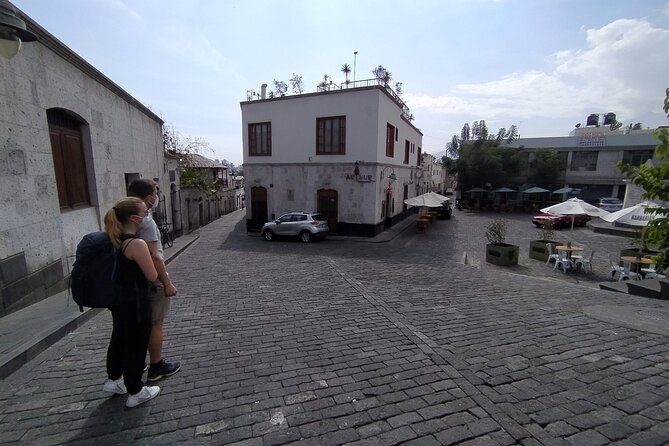
The walk begins at Plaza de Armas, but the first listed stop is Plaza Campo Redondo, in a traditional part of Arequipa. This area is linked with the first settlement of the Spanish conquerors when they arrived in the region.
You spend only about 10 minutes here, so think of it as a quick orientation rather than a long visit. The value is in the setting and the opening explanation. It gives the rest of the route a starting point, placing the later churches and plazas within the story of how Arequipa developed.
This is also one reason comfortable shoes matter. The tour moves through several central areas, and the streets can be more interesting than a direct route between sights. You are walking to understand how the city fits together, not simply checking off isolated monuments.
San Francisco Plaza, Santa Catalina, and Fundo el Fierro
From Campo Redondo, the route passes by the Santa Catalina Convent and the street that shares its name before reaching San Francisco Plaza. The stop takes about 20 minutes and includes views of the Church and Monastery of San Francisco, along with Fundo el Fierro, an artisan center.
The church gives you another look at Arequipa’s colonial religious architecture. Fundo el Fierro adds a more practical, contemporary layer, with local crafts and a place where the city’s artistic traditions are visible in a less formal setting.
The route ends at Fundo el Fierro for the pisco tasting, so you will return to this area later. That makes the opening pass useful. You get a first look at the final location, then finish there after the main walk.
The Santa Catalina portion is a pass-by, not a full convent visit. If you want a detailed tour of Santa Catalina, you should allow separate time and pay attention to the fact that entrance tickets are not included in this experience.
Plaza de Armas and the earthquake-shaped city
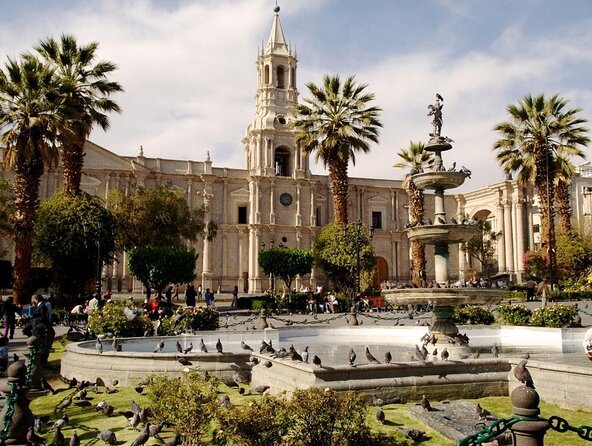
The Plaza de Armas receives about 25 minutes, making it one of the longer stops on the route. Here the guide discusses the founding of Arequipa, changes caused by earthquakes, the Cathedral, and other details tied to the square.
This is where a good guide adds real value. At first glance, a central plaza can look like a familiar travel scene: cathedral, arcades, carved stone, and a steady flow of people. The explanation helps you notice how repeated earthquakes affected the city, its buildings, and the way Arequipa rebuilt itself.
The stop also gives you a chance to ask questions. José has been praised for explaining buildings that people had walked past without understanding, and that is exactly the kind of benefit you should expect here. You are not only looking at the Cathedral. You are learning why the center looks as it does.
The meeting point is Plaza de Armas, Arequipa 04001. Confirm the exact meeting instructions when you book, since the supplied details describe the meeting location as the square itself rather than a particular corner or landmark.
Same valley, a completely different kind of day:
- From Arequipa: Colca Canyon Full-Day Guided Tour with Meals
★ 4.5 · 982 reviews - Tour to the Salinas Lagoon and National Reserve in Arequipa
★ 4.5 · 548 reviews - From Arequipa: Sillar Route Trek
★ 4.2 · 461 reviews - Arequipa: Chili River White Water Rafting with Hotel Pickup
★ 4.8 · 329 reviews
La Compañía’s baroque facade and gold-covered altars
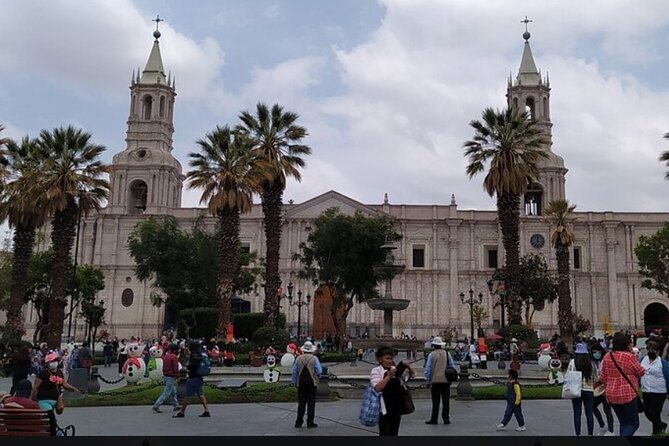
The Church of La Compañía de Jesús sits beside Plaza de Armas. The visit lasts about 10 minutes and focuses on the old Jesuit complex, including the church and cloisters.
The church is known for its baroque facade, more restrained interior, and altars covered in gold leaf. That change from ornate exterior to sober interior gives the guide something useful to explain. You can look closely at how decoration was used differently on the outside and inside of the building.
The visit is brief, so it is best treated as an introduction. You may want to return later for a slower look, especially if you care about colonial art or religious architecture. Any entrance fees are not included, and the tour information does not promise a full paid visit inside every building.
San Camilo Market is the tour’s strongest food stop
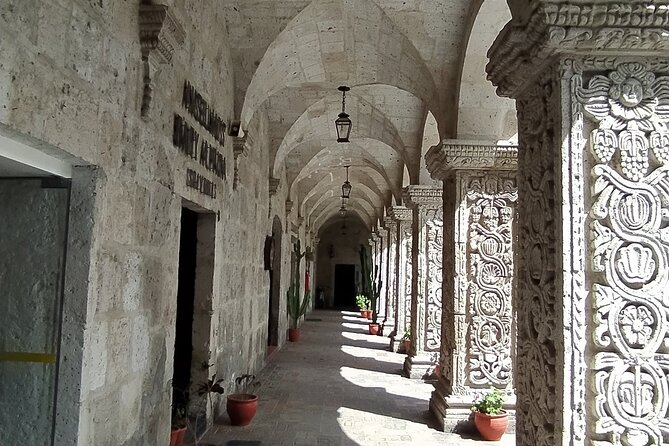
The 30-minute visit to San Camilo Market is likely the most memorable part for anyone interested in local food. It is described as one of Peru’s most varied markets, with regional tubers, meats, fruits, and other products.
This is not a polished food hall. It is a working market, and that is the point. You get a look at what is sold for daily cooking and how local produce appears before it reaches a restaurant plate. The guide can help you understand unfamiliar ingredients and direct you toward small samples.
Fruit tasting is part of the experience, and the food focus is broader than the official pisco portion. Previous routes have included samples from different stalls, which makes the market feel active rather than decorative. Since the exact samples can depend on what is available, you should view this as a guided introduction to regional products, not a fixed tasting menu.
The market also changes the pace of the tour. After churches and plazas, you are surrounded by ingredients, vendors, colors, smells, and ordinary shopping. I like that shift because it prevents the tour from becoming a long architecture lecture.
Still, 30 minutes is not enough for a full market exploration. If you enjoy San Camilo, return later with time to browse on your own. The guide’s route gives you a useful first look, but it cannot cover every aisle or food counter.
Queso helado and the final pisco lesson
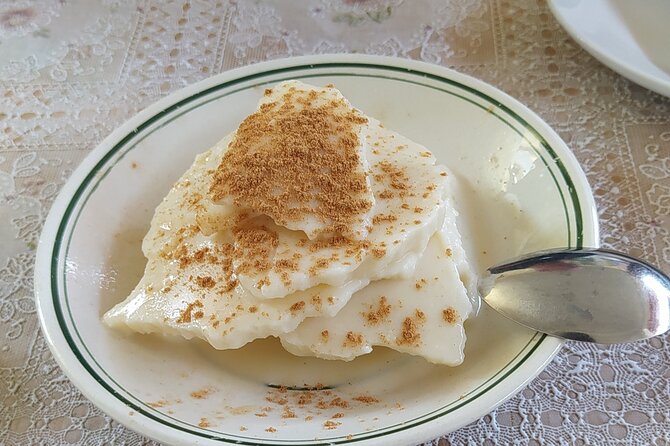
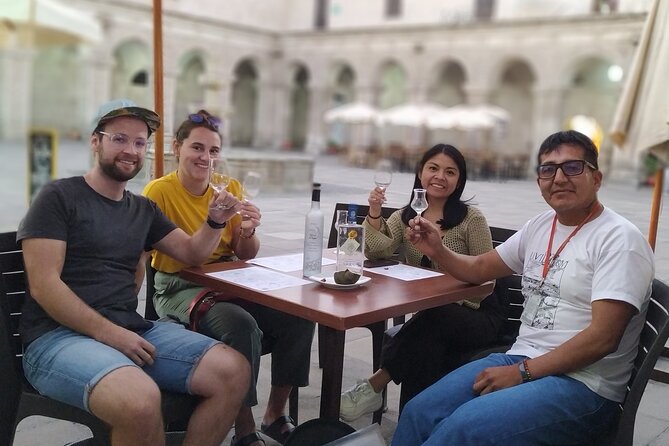
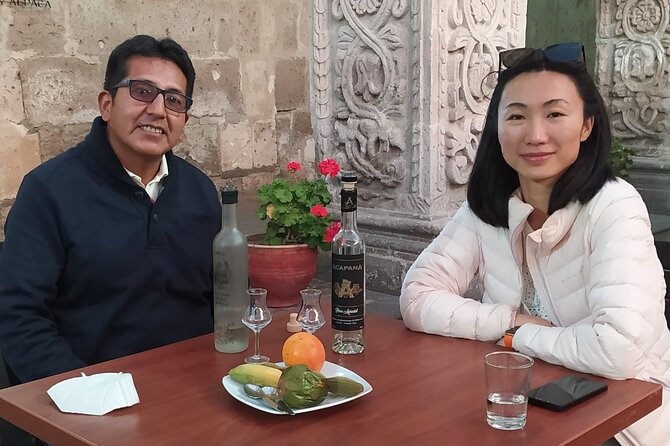
The tour finishes at Centro Artesanal Fundo el Fierro, where the pisco tasting takes place. Included refreshments are pisco, a traditional dessert, and local fruit. The dessert is queso helado, Arequipa’s well-known frozen milk dessert, according to the tasting accounts connected with this experience.
Queso helado is a useful part of the tour because it is not simply generic ice cream. Its name can surprise you, and trying it in Arequipa gives the dessert a clear local setting. The tasting accounts describe it as one of the best parts of the experience.
The pisco section is also more than a quick drink. The guide explains pisco, how it is made, and the drink’s place in Peruvian food culture. At the end of the walk, this slower tasting gives you time to sit, ask questions, and compare what you have just seen in the market with what is being served.
One important point: the tasting is at the end, not spread evenly through the whole three-and-a-half-hour route. One person specifically found the title misleading because the experience felt mainly like a long city walk, with queso helado and pisco appearing late. If you are booking for a dedicated food crawl, keep that distinction in mind.
The tasting location has occasionally required a change of plan. In one case, the planned restaurant was closed, and the pisco lesson was arranged for the following day with another guide. That suggests the provider can respond to outside problems, but it also means you should keep some flexibility if the tasting venue changes.
How long the tour feels in practice
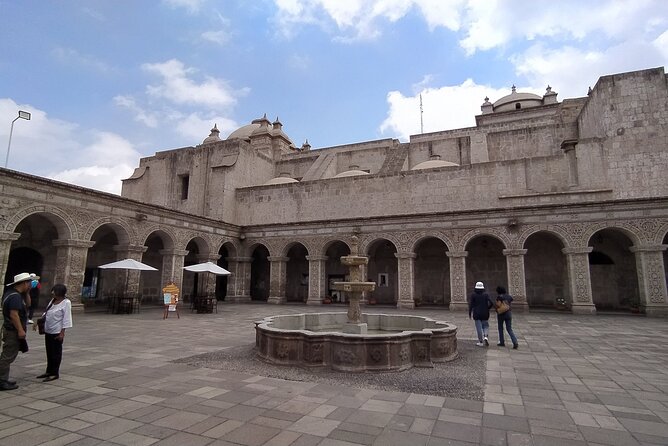
The listed duration is about three hours and 30 minutes. The timed stops add up to roughly two hours and 15 minutes, leaving the remaining time for walking between locations, explanations along the route, market sampling, and the final tasting.
That makes the duration believable, but it also explains why the tour can feel long to some people. You are covering several central sites on foot, and many stops include historical background. If you prefer fast sightseeing, this may feel slow. If you want context and questions answered, the pace is a benefit.
A moderate fitness level is recommended. No special high-altitude activity is described, but you will be on your feet for much of the afternoon or morning. Wear comfortable shoes, carry what you need, and do not assume the tour includes a bottle of water. Bottled water and soda are not included.
The tour does not include lunch. If you choose an afternoon departure, eat beforehand. The tasting is not a replacement for a meal, and arriving hungry could make a long walk less comfortable.
What the $13 price really buys you
At $13 per person, this is inexpensive for a three-and-a-half-hour guided city walk with a market visit and a pisco tasting. You also receive local fruit and queso helado, which adds food value without turning the tour into a full meal.
The price is strongest if you want orientation. A private guide or a longer formal food tour would cost more, while this option gives you a small group and several central sights in one outing. A group limit of eight is especially useful at this price. You are less likely to lose the guide in a crowd, and you have a better chance to ask about buildings, ingredients, or local customs.
There are extra costs to remember. Entrance tickets are not included, and neither are bottled water, soda, or lunch. The tour is therefore a guided tasting walk, not an all-inclusive day out.
The provider is Evaristravel Agencia de turismo. Confirmation is provided when you book, and the experience is often reserved about 13 days ahead, so I would not leave it until the last minute if your schedule is tight. Free cancellation is available up to 24 hours before the start time. Poor weather can lead to a new date or a full refund, since the activity depends on good conditions.
Who will get the most from this experience
I would recommend it to you if you are visiting Arequipa for the first time and want the city explained in one compact outing. It suits solo visitors particularly well because the small group and guide-led format make it easy to ask questions without organizing a private tour.
It also works for couples and families who want a mix of landmarks and food. The market gives children or less architecture-focused companions a change of pace, while the churches and plaza provide substance for anyone interested in the city’s past.
Food-focused visitors should book it with the right expectations. You will get fruit, queso helado, and pisco, but the bulk of the experience is walking, history, churches, and architecture. For a full meal or many restaurant tastings, you will need another activity.
The route can also be useful if you have already walked around central Arequipa on your own. A guide may point out the meaning of buildings you previously ignored, and the market visit adds a practical side to the city center.
Service animals are allowed, and the tour is near public transportation. The information does not give a detailed accessibility assessment, so anyone with mobility concerns should ask the provider about the exact route, walking surface, and time spent standing before booking.
My verdict on the Arequipa Tasting Tour
Book this tour if you want a strong first look at central Arequipa for a modest price, especially if you enjoy local markets and prefer a guide who welcomes questions. The combination of Plaza de Armas, La Compañía, San Francisco, San Camilo Market, queso helado, and pisco gives you a broad introduction in one morning or afternoon.
Skip it if your main goal is a food crawl or if you dislike long walking tours with extended historical explanations. The pisco and dessert arrive near the finish, and the walking portion carries most of the schedule.
For the best experience, eat before an afternoon departure, bring water money or a bottle, wear good shoes, and keep another hour available if you want to revisit San Camilo Market or one of the churches. At $13, the tour offers unusually good value, provided you see the tasting as a rewarding finale to a city walk rather than the entire point of the outing.
FAQ
Where does the Arequipa Tasting Tour start?
The tour starts at Plaza de Armas in Arequipa, Peru. The listed address is Arequipa 04001, Peru.
Where does the tour finish?
The tour ends at Centro Artesanal Fundo el Fierro, located at Plaza San Francisco, C. Zela 202, Arequipa 04001. The pisco tasting takes place there.
How long does the experience last?
The tour lasts approximately three hours and 30 minutes.
What food and drinks are included?
The experience includes a pisco tasting, a traditional dessert, and local fruits. The dessert is identified in the tour details and tasting information as queso helado.
Is lunch included?
No. Lunch is not included, and you are advised to eat beforehand if you take the tour in the afternoon. Bottled water and soda are also not included.
How large is the group?
The tour has a maximum of eight people. Service animals are allowed, and a moderate level of physical fitness is recommended.
Just added around Arequipa
- Walking tour through the Historic Center of Arequipa★ 4.0 · 3 reviews
- Trek to the Route of the Sillar and Culebrillas in Arequipa★ 4.0 · 9 reviews
- 3-Day Colca Canyon trek with Professional Guide★ 5.0 · 40 reviews
- Trekking, Waterfalls and Thermal Baths★ 4.5 · 47 reviews
- Private 3 Day Colca Canyon Trekking tour (superior Service)★ 5.0 · 58 reviews
- Colca Full Day★ 5.0 · 57 reviews
- Full Day Tour to Colca Canyon from Arequipa★ 4.0 · 34 reviews
- Arequipa, Historic and Colonial City and Santa Catalina Monastery★ 4.5 · 42 reviews
Food & Drink, compared.
Historic Center Street Food, Market, and Eateries Tour
Read our review →
Food and Culture Full day Tour in the Sacred Valley
Read our review →
The 10 Tastings of Lima With Locals: Private Street Food Tour
Read our review →
Market Tour, Tasting of 35 Fruits, and 4-Course Peruvian Cooking Class in Lima
Read our review →
Pisco and Wine Route with tasting in 03 Wineries
Read our review →
The 10 Tastings of Cusco With Locals: Private Food Tour
Read our review →Browse the lists this tour appears in