
Reviewed · CHAN CHAN & MOCHE PYRAMIDS
Lima: Tour to Huaca Pucllana and Huaca Mateo Salado
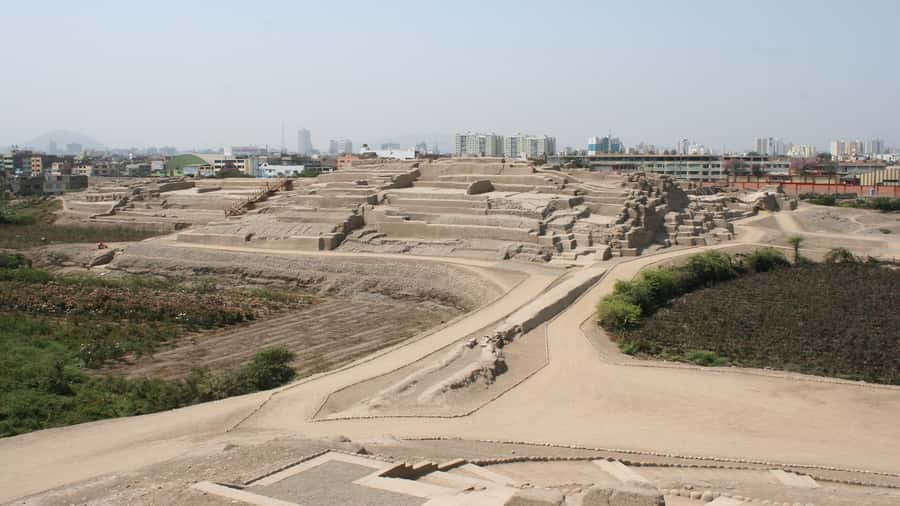
Lima’s best archaeological surprises are not far outside the city. They are tucked into working neighborhoods, where apartment blocks, traffic, and old adobe walls share the same view. This four-hour tour links Huaca Pucllana in Miraflores with Huaca Mateo Salado in Pueblo Libre, giving you two very different windows onto Peru’s pre-Columbian past.
I like the efficient pairing of the sites, and I like that the price includes private transportation, entrance tickets, and a live guide in English, Spanish, or Portuguese. You also get a useful city pickup and return, rather than spending time sorting out taxis between the two sites.
The main consideration is the price: $217 per person is a serious outlay for four hours, especially if you are traveling alone. The value makes more sense if you want a private group, hotel transport, and clear historical context without arranging each visit yourself.
In This Review
- Key points at a glance
- Why these two huacas make a smart Lima pairing
- Starting from Miraflores, San Isidro, or Barranco
- Huaca Pucllana’s 25-meter adobe pyramid
- Crossing Lima to Huaca Mateo Salado
- Mateo Salado and the Qhapaq Ñan connection
- What the four-hour schedule feels like
- Guide language, tickets, and private transport
- Is $217 per person a fair value?
- Who should book this Lima archaeology tour?
- Booking details worth knowing
- Should you book it?
- FAQ
- How long does the tour last?
- Where can hotel pickup and drop-off take place?
- Which archaeological sites are included?
- What languages are available for the guide?
- Are entrance tickets included?
- Is food or drink included?
- Can I cancel the tour for a refund?
Key points at a glance
- Two major huacas in one morning or afternoon: Visit Huaca Pucllana in Miraflores and Mateo Salado in Pueblo Libre.
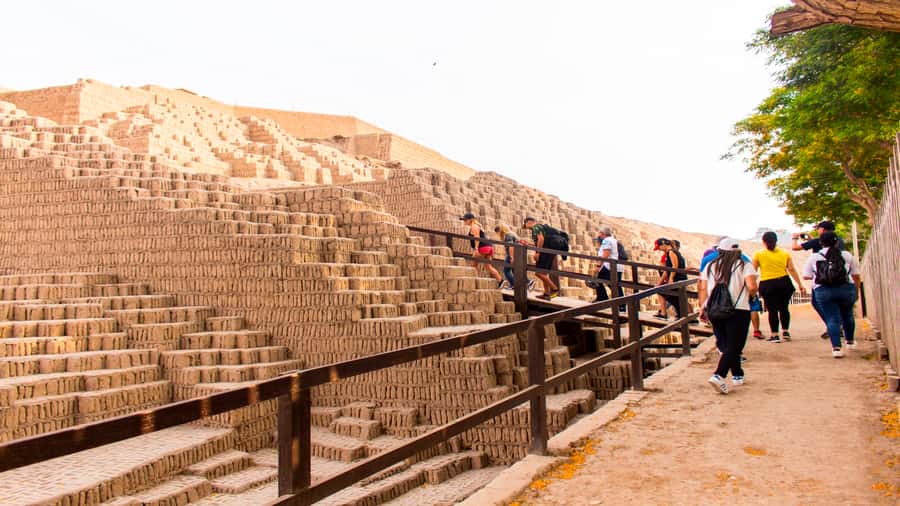
- A 25-meter adobe pyramid: Huaca Pucllana gives you one of Lima’s most striking archaeological views from inside the city.
- A site linked to the Inca road system: Mateo Salado connects local Lima and Ychsma history with the Qhapaq Ñan.
- A private four-hour outing: Your group travels by van with a guide, rather than joining a large shared party.
- Hotel pickup in three districts: Pickup and return are available in Miraflores, San Isidro, and Barranco.
- A strong choice for first-time Lima visitors: The tour brings ancient sites into a clear half-day plan without requiring a separate excursion.
Why these two huacas make a smart Lima pairing
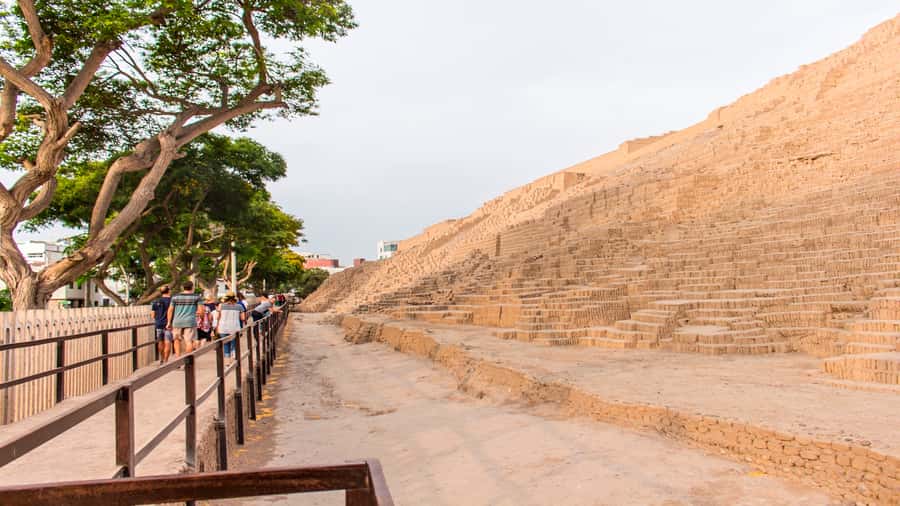
A huaca is an ancient ceremonial or administrative site, often built from adobe. Lima has several of them, but they do not all tell the same story. Huaca Pucllana developed in the Lima culture, while Mateo Salado reflects several layers of use, including later Inca connections.
That contrast is the real strength of the outing. At Pucllana, you focus on a large urban ceremonial center with courtyards, squares, and a tall truncated pyramid. At Mateo Salado, you see a complex tied to regional administration, religious activity, and the road network that helped connect the Inca Empire.
I like tours that help you understand why an archaeological site matters, not just point at old walls. A professional guide can explain how these structures fit into Lima’s past, which is especially helpful when adobe remains are less immediately readable than a stone temple or colonial church.
The sites are also close enough to visit in one half-day, but far enough apart to show how archaeology is woven through different parts of modern Lima. You are not leaving the city for an all-day ruin trip. You are seeing ancient Peru in the middle of present-day neighborhoods.
More chan chan & moche pyramids in Lima:
- Lima Bike Tour Miraflores – Barranco + Huaca Pucllana!
★ 4.5 · 137 reviews - Lima: Huaca Ruins and Larco Museum at Night with Dinner
★ 4.9 · 35 reviews - Lima city tour: Larco Museum and Huaca Pucllana
★ 4.8 · 33 reviews
Starting from Miraflores, San Isidro, or Barranco
The tour begins with pickup at your hotel in Miraflores, San Isidro, or Barranco. These three districts are practical bases for a Lima visit, and the pickup arrangement removes one of the most annoying parts of a short city tour: finding the right meeting point.
The first drive to Huaca Pucllana takes about 15 minutes by van. That short transfer matters because it gets you to the first site quickly, leaving most of the four-hour schedule for actual visits rather than transport.
The experience is listed as a private group tour. That gives you a more personal setting than a large coach trip, and it should make it easier to ask questions or request clarification from the guide. Still, the supplied information does not give a maximum group size, so you should not assume the vehicle is limited to just one or two people.
You should plan for city traffic, even though the stated drive times are short. Lima’s roads can affect timing, so keep your schedule after the tour reasonably flexible if you have a reservation or long-distance transfer later in the day.
Huaca Pucllana’s 25-meter adobe pyramid
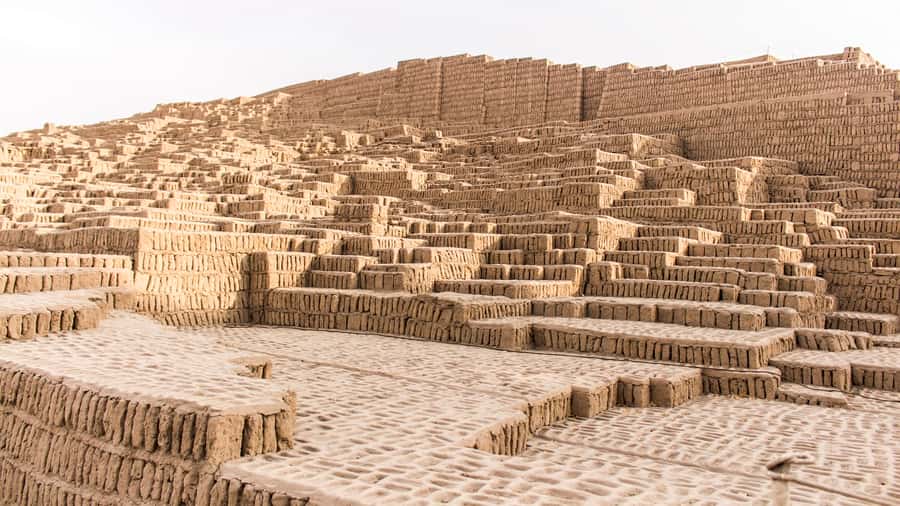
Huaca Pucllana is the visual showstopper. Located in Miraflores, it rises to about 25 meters and takes the form of a truncated adobe pyramid. It is an unusual sight: ancient earth-colored construction surrounded by one of Lima’s most built-up districts.
Your guided visit lasts about 80 minutes. You can expect to walk through courtyards and plazas while the guide explains how the site functioned. Huaca Pucllana was built by the Lima culture, which flourished on Peru’s central coast from about 200 to 700 A.D.
The site served as a ceremonial and administrative center. That description helps you read the complex as more than a pile of old adobe. The pyramid, open spaces, and supporting areas were part of an organized place used for public and religious purposes.
The pyramid was made with adobe bricks, a sensible building material in Lima’s dry coastal climate. The scale is what makes the visit memorable. You are looking at a substantial structure built long before the Spanish conquest, yet it now sits in the middle of a modern city.
The site was discovered during urbanization work in the 1980s. Excavation and restoration have continued since then, allowing you to see a place that might otherwise have been covered or damaged by city growth. That modern story is important. Pucllana is not only an ancient site. It also shows the work required to protect archaeological remains in a growing capital.
Allow yourself to look beyond the tallest section. The courtyards and squares help explain how the complex was organized, while the exhibition hall adds objects and information that can make the architecture easier to understand. The exact contents of the display are not specified, so think of it as a useful interpretive stop rather than expecting a particular collection.
The drawback is that an archaeological site in a city does not offer the remote feeling of a mountain ruin. Buildings and streets remain part of the setting. I see that as a tradeoff rather than a flaw: you lose isolation, but you gain easy access and a striking reminder that Lima’s oldest layers remain under pressure from modern development.
Crossing Lima to Huaca Mateo Salado
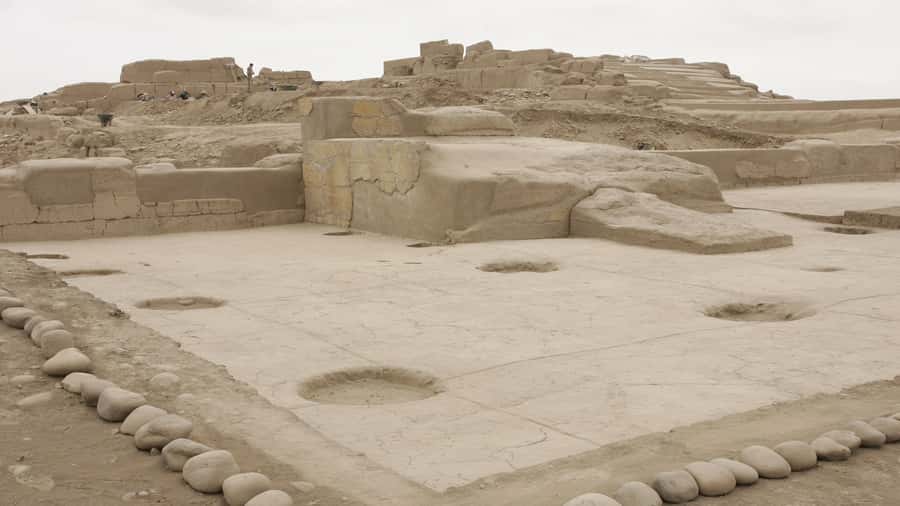
After Pucllana, the van ride to Huaca Mateo Salado takes about 30 minutes. This is the longest transfer of the tour, and it moves you from Miraflores to Pueblo Libre.
The drive gives the outing a different rhythm. You are not simply walking from one monument to the next. You are crossing the city and seeing how widely Lima’s archaeological sites are spread. Since the tour includes private transportation, you do not need to arrange this cross-city journey yourself.
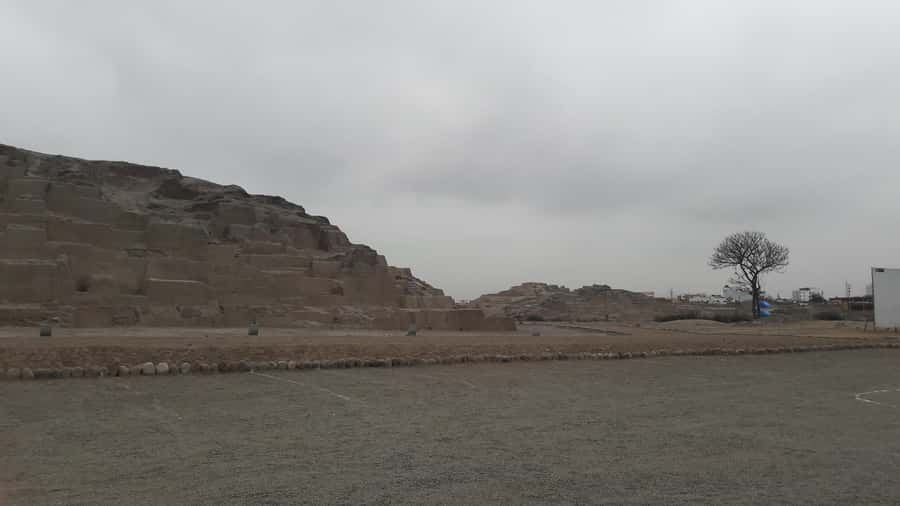
Mateo Salado is not described as one single pyramid. The complex includes a truncated pyramid, a ceremonial plaza, and auxiliary structures. This broader arrangement gives you another way to think about ancient urban centers and how they handled religious, administrative, and practical needs.
The site is about 1,400 years old. It was built by the ancient Lima people during the Middle Horizon, generally dated here to 600 to 900 A.D. The complex later became associated with the Ychsma culture and was reused by the Incas.
That sequence is one of the most interesting parts of the tour. Archaeological sites are often treated as belonging to one culture and one period, but Mateo Salado shows how later societies adapted existing places for new purposes.
Same valley, a completely different kind of day:
- Lima: Ultimate Peruvian Food Tour
★ 4.9 · 700 reviews - Full Day Paracas Ica and Huacachina from Lima All Included
★ 4.5 · 623 reviews - Lima’s Vibrant Heritage: Exploring the City’s Landmarks Half-day
★ 4.5 · 581 reviews - From Lima: Day trip to Paracas, Ica and Oasis Huacachina
★ 4.6 · 409 reviews
Mateo Salado and the Qhapaq Ñan connection
Your guided visit at Mateo Salado lasts about 90 minutes, making it the longer of the two site visits. The extra time is useful because the complex has several components and a more layered story.
Mateo Salado had a ceremonial and administrative role connected with the Ychsma culture. Later, the Incas reused the site as part of a route linking it with Pachacamac, the major religious center south of Lima. This connection gives Mateo Salado a place in the Qhapaq Ñan, the Inca road system that tied together large parts of the empire.
You are not simply visiting an isolated neighborhood ruin. You are seeing part of a network. The Inca road system carried people, messages, goods, and authority across difficult terrain, and this site’s connection to Pachacamac helps explain how local centers could be brought into a wider imperial system.
The main pyramid was covered in adobe and decorated with reliefs and mural paintings. The surviving imagery included human figures, animals, and deities linked with Lima mythology. Some of these details may be easier to appreciate with a guide beside you, since worn surfaces and partial walls rarely explain themselves.
The supplied description does not promise that every original mural or relief remains intact, so you should arrive expecting an archaeological complex with preserved and restored elements, not a perfectly complete ancient building. That is normal for sites of this age, and it makes the guide’s explanation especially valuable.
I like Mateo Salado because it adds depth after Pucllana. Pucllana gives you a dramatic pyramid and a strong sense of urban scale. Mateo Salado gives you a longer chain of cultural change, from the Lima people to the Ychsma and then the Incas.
What the four-hour schedule feels like
The planned timing is straightforward:
- About 15 minutes by van to Huaca Pucllana
- About 80 minutes at Huaca Pucllana
- About 30 minutes by van to Mateo Salado
- About 90 minutes at Mateo Salado
- About 25 minutes by van back to your hotel area
That adds up to roughly four hours. The schedule gives you enough time at both sites to take a guided walk without turning the outing into a rushed photo stop.
The balance favors archaeology rather than free time. You will not have a long café break, shopping stop, or separate neighborhood walk built into the plan. Food and drinks are not included, so eat beforehand or plan to handle refreshments after the tour.
You should also wear comfortable clothes and bring sunglasses and sunscreen. Lima can be bright even when the sky looks gray, and archaeological visits involve time outdoors. A passport is also listed among the items to bring, so keep it with you.
The tour is described as suitable for all ages. That tells you the activity is intended as a general cultural visit, not a strenuous hike. Even so, the site visits involve walking around archaeological grounds, so comfortable footwear remains a sensible choice.
Guide language, tickets, and private transport
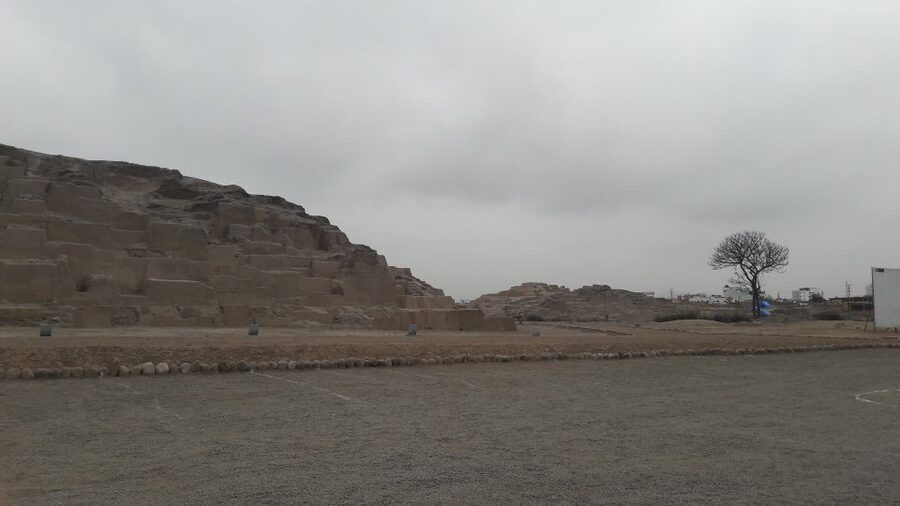
The tour includes an official guide in English, Spanish, or Portuguese. That choice is important at an archaeological site, where a good explanation can turn a wall, plaza, or pyramid into part of a larger story.
No guide’s personal name is provided, so you should not book expecting a particular individual. The important practical point is that the tour is live and guided rather than an audio-only visit.
Entrance tickets to both Huaca Pucllana and Mateo Salado are included. That keeps the $217 price easier to assess because you are not adding two site admissions later.
Transportation is also included from hotels in the three named districts, with return to Barranco, San Isidro, or Miraflores. If you are staying outside those areas, confirm the pickup arrangement before booking, since the included service is specifically limited to those districts.
Is $217 per person a fair value?
At $217 per person, this is not a budget sightseeing option. The price is easiest to justify when you place a high value on a private group, hotel pickup and return, a multilingual guide, two admission tickets, and a tightly arranged four-hour visit.
For a solo visitor, the cost may feel steep. For a couple or small private group, the convenience becomes more appealing, especially if you want direct transportation and do not want to piece together two site visits across Lima.
You are also paying for structure. The tour places two important archaeological sites into a single half-day and provides a guide to connect their dates, cultures, and uses. If you were mainly looking for inexpensive entrance tickets, you could find this too costly. If you want a simple, guided cultural outing from your hotel, the package has a clearer case.
The strongest praise available for this experience is very direct: one verified booking rated it five out of five and described it as excellent in every respect. That is a positive sign, but it comes from only three ratings overall, so I would treat it as encouraging rather than proof of a flawless experience.
Who should book this Lima archaeology tour?
I would recommend it most strongly to first-time visitors who want historical context without spending a full day outside Lima. It also suits you if you are staying in Miraflores, San Isidro, or Barranco and want the ease of door-to-door transport.
Families can consider it because the activity is listed as suitable for all ages. The private format may also work well if different people in your group have different levels of interest. You can ask the guide questions and move at a more personal pace than you might in a large group.
This tour is less suited to you if your main goal is independent exploration, low-cost sightseeing, or a long relaxed stop at one site. The schedule is fixed around two guided visits, and the price reflects convenience rather than shoestring travel.
It is also not the right choice if you expect a remote ruin surrounded by countryside. Both sites are within Lima, and the city remains part of the experience. For me, that urban setting is one of the tour’s best lessons: ancient Peru is not confined to distant mountain valleys.
Booking details worth knowing
You can reserve now and pay later, which helps if you are still arranging your Lima schedule. Cancellation is free up to 24 hours in advance for a full refund, according to the stated terms.
Check availability for the starting time that fits your plans. Since the tour lasts four hours and includes return transport, avoid placing an important fixed appointment immediately afterward.
Bring your passport, sunglasses, sunscreen, and comfortable clothing. Food and drinks are not included, and the tour does not list a meal stop.
Should you book it?
Book this tour if you want two meaningful archaeological sites, a private group setting, hotel transport, and a guide who can explain the passage from the Lima culture through Ychsma use and Inca reuse. Huaca Pucllana supplies the dramatic pyramid. Mateo Salado adds the wider story of roads, administration, religion, and cultural change.
Skip it if $217 per person stretches your budget or if you prefer to explore at your own speed. For everyone else, the combination is well planned, easy to fit into a Lima stay, and unusually good at showing how ancient history remains part of the modern city.
FAQ
How long does the tour last?
The tour lasts four hours, including transportation between your hotel and the two archaeological sites.
Where can hotel pickup and drop-off take place?
Pickup and return are available at hotels in Miraflores, San Isidro, and Barranco.
Which archaeological sites are included?
The tour visits Huaca Pucllana in Miraflores and Huaca Mateo Salado in Pueblo Libre.
What languages are available for the guide?
The live guide is available in English, Spanish, or Portuguese.
Are entrance tickets included?
Yes. Admission tickets to Huaca Pucllana and Mateo Salado are included.
Is food or drink included?
No. Food and drinks are not included in the tour.
Can I cancel the tour for a refund?
Yes. You can cancel up to 24 hours in advance for a full refund.
Just added around Lima
- Lima Airport Transfers by SUV/Van★ 5.0 · 34 reviews
- Guided Tours in Colonial and Modern Lima★ 5.0 · 54 reviews
- Full Day Pilgrims★ 5.0 · 28 reviews
- Sandboarding and Off Road in Lima (National Park Lomas de Ancón)★ 5.0 · 54 reviews
- Tour Miraflores + Fotografía Profesional★ 5.0 · 47 reviews
- In Lima: Sandboarding Off Road Half Day!!★ 5.0 · 36 reviews
- Lima City tour and Catacombs Museum (04 hours) Private Tour with guide in Lima★ 5.0 · 32 reviews
- Full day PRIVATE to Paracas, Ica and Huacachina from Lima All Inclusive and Lunch★ 5.0 · 55 reviews
Chan Chan & Moche Pyramids, compared.
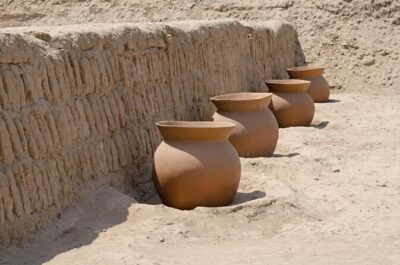
Lima Bike Tour Miraflores – Barranco + Huaca Pucllana!
Read our review →
Full Day Tour Huacas, Chan Chan & Huanchaco – Trujillo
Read our review →
Huaca Ruins and Larco Museum at Night with Dinner
Read our review →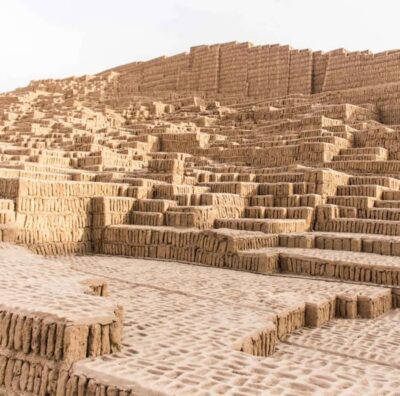
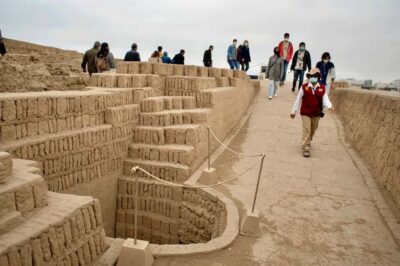
Tour Huaca Pucllana: Pyramids and Pre-Columbian Antiquity
Read our review →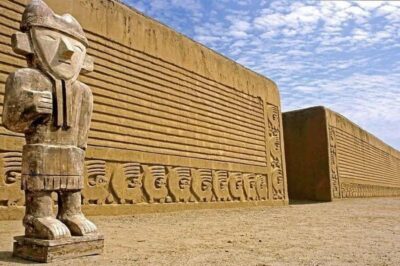
Pyramids of the Sun and the Moon, Huanchaco and Chan Chan
Read our review →Pyramids of the Sun and the Moon, Huanchaco and Chan Chan
Read our review →
Browse the lists this tour appears in