
Reviewed · PERU
From Cusco: Inka Suspension Bridge Qeswachaca – Qeswachaka
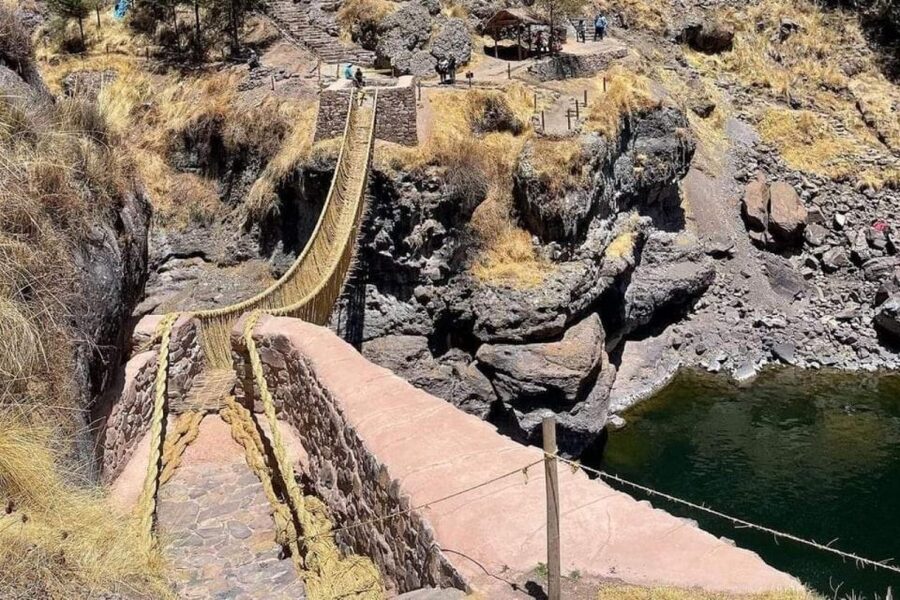
The great reason to take this long day from Cusco is the Qeswachaka Bridge, a swaying grass crossing rebuilt each year by four local communities. You walk over the Apurimac River on a structure made from ichu plant fiber, then look down at the gorge and the people who still care for this living piece of Inca engineering.
I like the quiet chain of lakes, especially Pomacanchi, and I like the final comparison with Checacupe’s older stone bridge. The main drawback is the amount of time in the bus. Breakfast and lunch can be widely separated, and the extra stops feel like filler if your only goal is the bridge.
In This Review
- Key points at a glance
- Why Qeswachaka is worth the long ride
- Leaving Cusco before sunrise
- The lakes around Pomacanchi
- The Pabellones mini-volcano stop
- Walking onto the handwoven Qeswachaka Bridge
- An optional boat ride and extra spending
- Comparing Qeswachaka with Checacupe
- What the $47 price really covers
- Food, guiding, and the practical rhythm of the day
- Who should book this day from Cusco
- Booking tips for a smoother day
- Should you book the Qeswachaka Bridge tour?
- FAQ
- How long does the Qeswachaka Bridge tour take?
- Where does pickup take place?
- What languages are available?
- Is the Qeswachaka Bridge entrance fee included?
- Is the Pabellones mini-volcano entrance fee included?
- Are meals included?
- Is the activity suitable for wheelchair users?
- Can I cancel the booking?
Key points at a glance
- The bridge is rebuilt every year: Four surrounding communities maintain the Qeswachaka crossing with handwoven ichu grass.
- The day begins very early: Hotel pickup is scheduled between 4:30 AM and 5:10 AM, with a return near Plaza Kusipata around 5:00 PM.
- Four lakes add calm scenery: Pomacanchi, Acopia, Asnaqocha, and Pampamarca or Tungasuca are part of the route.
- The crossing is high and wobbly: It is a real walking experience, not simply a viewpoint beside the road.
- Checacupe gives useful context: The colonial Inca Bridge lets you compare a rigid bridge with the flexible grass crossing.
- Budget for small entrance fees: The Qeswachaka ticket costs S/20, and the mini-volcano ticket costs S/2.
Why Qeswachaka is worth the long ride
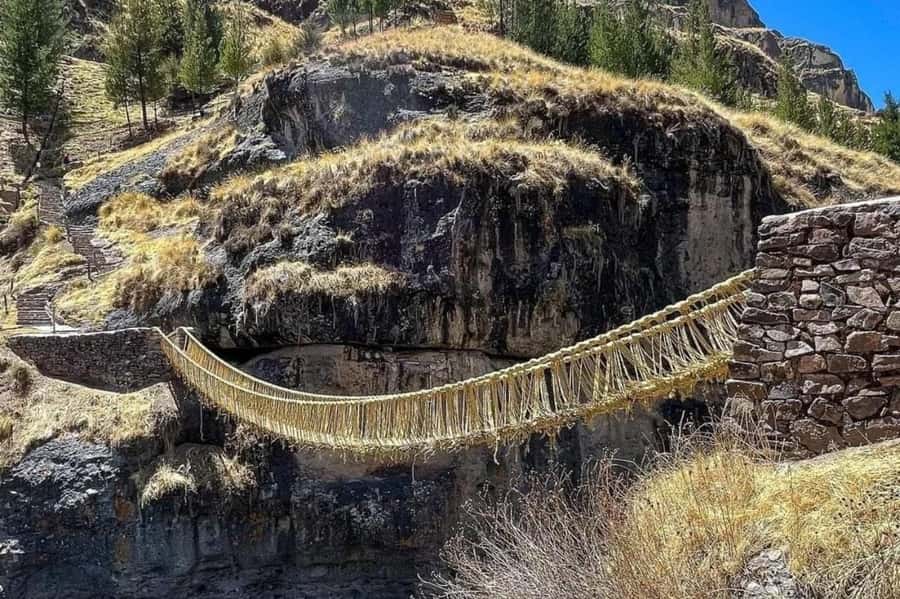
Qeswachaka is not a modern replica built for tourists. It is a working bridge tradition, renewed each year by residents of four nearby communities. The material is ichu, a tough highland grass that is twisted and woven by hand.
That detail changes how you see the crossing. You are not just looking at an old structure. You are seeing a practice that links local people, work, memory, and the Apurimac River. The bridge dates to the Inca period, but its survival depends on present-day hands.
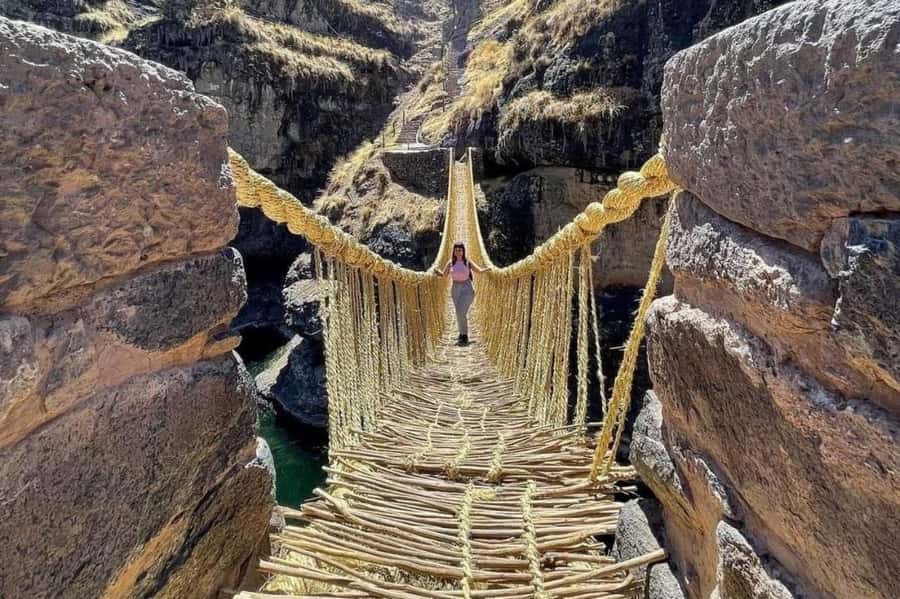
The crossing itself is short, yet it can feel dramatic. The bridge moves as you walk, and the height gives you a wide view of the river and the surrounding country. You should be comfortable on your feet and ready for a little nervous laughter. The motion is part of the experience.
The tour receives a mixed overall score of 3.9 from seven ratings, which fits the nature of the day. People who want the bridge and enjoy a full Andean outing can find it memorable. People who expect many substantial sights and little road time may find the day expensive for what it delivers.
Other Peru days worth putting on the list:
- Cusco: Humantay Lake Tour with Breakfast and Buffet Lunch
★ 4.9 · 2,976 reviews - From Cusco: Sacred Valley & Maras Salt Mines Tour with Lunch
★ 4.8 · 2,227 reviews - From Cusco: Moray, Maras Salt Mines & Chinchero Weavers Tour
★ 4.8 · 1,925 reviews
Leaving Cusco before sunrise
Pickup takes place from your hotel between 4:30 AM and 5:10 AM. You need to wait in the lobby 10 minutes before your scheduled time, but be ready for the possibility of an early arrival. One pickup arrived about an hour ahead of the quoted time, then returned at the agreed hour when the passenger was not ready.
The drive southwest begins in darkness and continues for much of the morning. The total outing lasts about 12 hours, with a return around 5:00 PM near Plaza Kusipata, just a block from the Plaza de Armas.
This timing matters. You get a full day beyond Cusco, but you also spend many hours seated in transport. One account described roughly two hours from pickup to breakfast, another 90 minutes to the mini-volcano, about two hours to the bridge, and another two hours back toward Cusco. Exact timing can shift, but you should plan for a road-heavy day.
The tour includes transportation, hotel pickup, a bilingual guide, breakfast, lunch, a first aid kit, and oxygen. The last two items are sensible for a remote highland outing, though the presence of oxygen does not remove the need to take altitude and fatigue seriously.
The lakes around Pomacanchi
The first scenic part of the day centers on the lakes of Pomacanchi, Acopia, Asnaqocha, and Pampamarca or Tungasuca. The listed stop at Lake Pomacanchi lasts about 25 minutes, so think of this as a photo and fresh-air break rather than a long lakeside walk.
These lakes give the morning a quieter rhythm. Their value is not a long list of activities. You pause beside open water, look across the highland setting, and hear explanations about local climate, plants, animals, and the surrounding Andes.
Pomacanchi is the clearest named stop, while the exact fourth lake can be Pampamarca or Tungasuca. That variation is worth noting if you want a tightly fixed schedule. The lakes are attractive additions, but they do not replace the bridge as the main reason to book.
Breakfast is included, and the food received strong praise for variety and quantity. Still, the spacing of meals deserves attention. Breakfast and lunch may be separated by many hours, so carry a small personal snack if you need regular food. The provided information does not specify the breakfast or lunch menus, but both are described as buffet-style meals with good variety.
The Pabellones mini-volcano stop
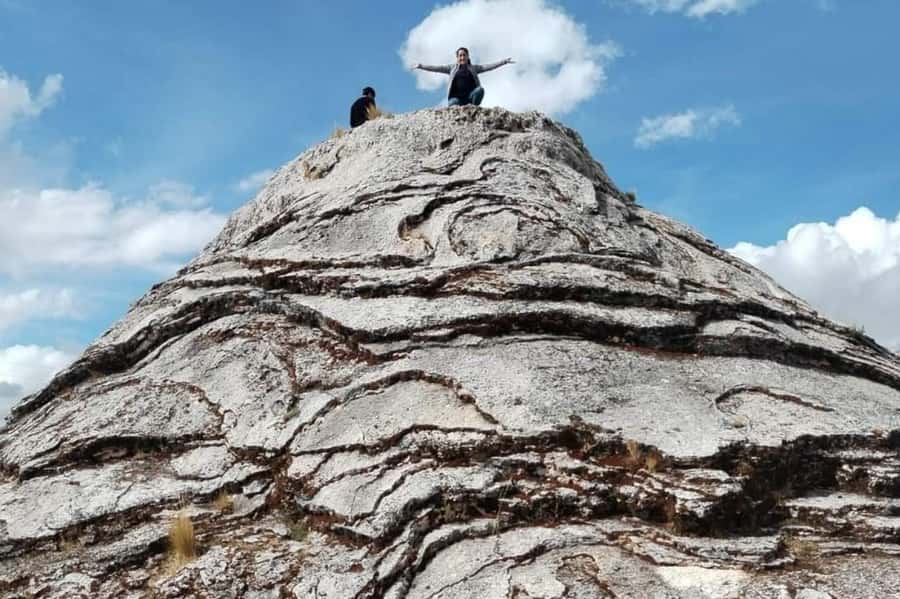
Near Yanaoca, the group stops at the small Pabellones Volcano. The entrance fee is S/2, paid separately from the tour price.
This is a modest sight, not a major volcanic excursion. One of the clearest practical points is that the mini-volcano may feel like a minor stop after a long ride. If you enjoy unusual geological features and short roadside visits, you may be glad to see it. If you are counting every minute before the bridge, you may consider it a low-priority addition.
The stop also breaks up the road journey. That has real value on a 12-hour day, even when the attraction itself is small. Just keep your expectations in proportion. This is not the centerpiece.
Same valley, a completely different kind of day:
- From Lima: Paracas and Huacachina Oasis Full Day Guided Tour
★ 4.7 · 1,780 reviews - From Cusco: Full-Day Group Tour of Machu Picchu
★ 4.7 · 1,767 reviews - Machu Picchu Day Trip from Cusco
★ 4.5 · 1,644 reviews - Cusco: Half-Day City Tour with Sacsayhuaman and Q’enco
★ 4.6 · 1,129 reviews
Walking onto the handwoven Qeswachaka Bridge
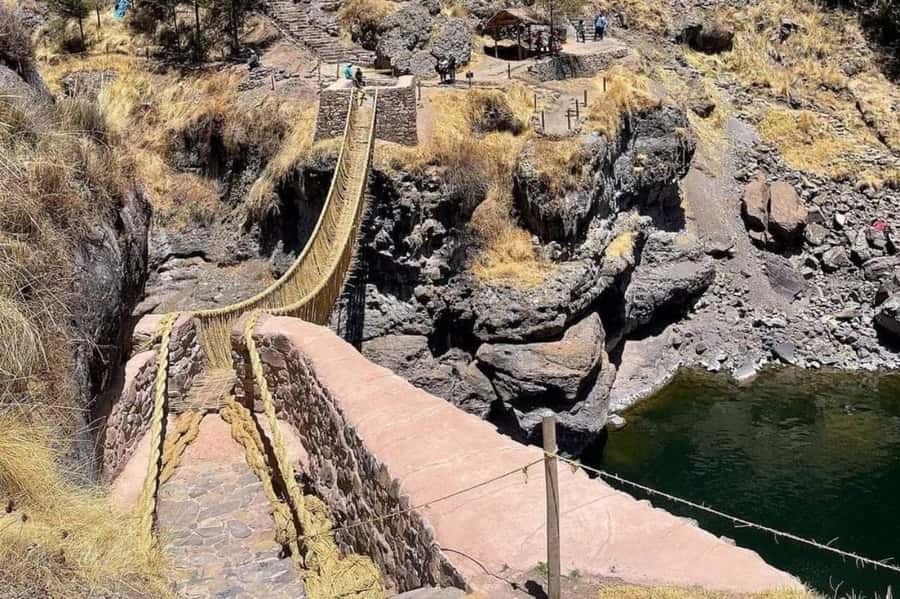
The approach to the bridge includes a short walk. Once you reach the Apurimac River, the guide explains how the crossing is made and maintained, then you have the chance to walk across it.
The Qeswachaka Bridge is woven from ichu plant fibers. Its yearly renewal is carried out by people from four surrounding communities. The bridge’s importance comes from that continuing work, not only from its Inca connection.
You may find the bridge high and distinctly wobbly. That is useful to know before you book. This is not ideal for anyone who needs a fully stable surface, and the experience is not suitable for wheelchair users. The provided information does not give a minimum age, weight limit, or detailed safety rule, so ask the operator directly if any of those points matter to you.
A guide can add a lot here. Roland, one named guide, was praised for explaining the bridge’s construction, its maintenance, and the ideas behind Inca engineering. He also covered Peru, the Andes, climate, lakes, plants, and animals, and answered questions carefully. That is exactly the kind of explanation that makes a short crossing meaningful instead of merely photogenic.
The English service deserves a cautious note. The activity is offered in English and Spanish, but English delivery can vary. One guide was friendly and helpful but spoke English somewhat imperfectly, while another booking received Spanish only despite requesting English. If detailed English interpretation is essential, confirm the guide language before departure.
An optional boat ride and extra spending
A small boat ride may be offered near the bridge area. It is not included in the stated price, and an additional fee may be requested.
You may enjoy it because it gives you a different angle on the bridge and the river. It can also break up the walking and viewing. But do not treat it as an essential part of the experience. The information provided does not confirm the cost, duration, or exact wildlife sightings, so ask for the price and what is included before agreeing.
This is one place where a little firmness helps. The bridge visit is the core activity. You do not need to add every optional extra to have a worthwhile day.
Comparing Qeswachaka with Checacupe
On the return to Cusco, the tour stops at the Colonial Inca Bridge of Checacupe. This is a smart pairing because it lets you compare two very different solutions for crossing water.
Qeswachaka bends and moves because it is made from plant fiber. Checacupe gives you a more solid architectural counterpart. Seeing them on the same day helps you notice how materials shape a bridge’s look, feel, and use.
The Checacupe stop also adds historical perspective without requiring another full excursion. It may not have the emotional force of walking over Qeswachaka, but it gives the day a stronger sense of place. You are not seeing an isolated attraction. You are comparing two forms of Andean bridge building.
What the $47 price really covers
At $47 per person, the tour is reasonably priced if you value included transport, food, guiding, and a full-day route into the Cusco Region. A private taxi or self-organized journey to such a remote bridge could be less convenient, even if you found a lower transport price.
The entrance fees are not included. Add S/20 for the suspension bridge and S/2 for the mini-volcano. Personal spending is also separate, including any optional boat ride.
The value depends on your tolerance for road time. You are paying for access to a remote cultural site, not a packed sequence of major attractions. Much of the day is travel, and the lakes and mini-volcano are supporting stops rather than headline sights.
I would call the price fair for someone who specifically wants to cross Qeswachaka and prefers an organized day from Cusco. I would be less enthusiastic for someone seeking constant activity, extensive walking, or several major ruins.
Food, guiding, and the practical rhythm of the day
Breakfast and lunch are included, and the food is described as plentiful and varied. That is a welcome feature when you leave Cusco before dawn and spend the day far from the city.
The long gaps between meals can still be uncomfortable. Carry water and a small snack, even though the tour provides food. There were also concerns about limited bathroom breaks and a lack of warning about when stops would occur. Since the drive is long, ask your guide about the next planned stop whenever you get the chance.
Guiding quality may be the biggest variable. Roland provided detailed explanations and a warm, family-style service. Another guide was pleasant and useful but not fully comfortable in English. The tour lists English and Spanish, so you should receive one of those languages, but the depth of English commentary may not be consistent.
The transport itself is practical rather than luxurious in the supplied information. No vehicle type or group size is specified, so do not assume a small group or extra legroom. Expect a standard organized excursion with a long ride.
Who should book this day from Cusco
You should consider it if you want:
- A rare chance to walk across an active Inca-era bridge tradition
- A cultural sight that still depends on local community work
- Quiet lake scenery away from Cusco
- A full-day outing with breakfast, lunch, transport, and a guide included
- A comparison between a grass bridge and a colonial stone bridge
You may want a different plan if you need:
- Frequent bathroom breaks and tightly controlled timing
- A wheelchair-accessible activity
- A short excursion with little time in a vehicle
- Guaranteed strong English interpretation
- A schedule filled with major archaeological sites
The tour suits active visitors who can handle an early start, a short walk, and a moving bridge. It also suits anyone who values a living tradition over another standard ruin visit.
Booking tips for a smoother day
Confirm your pickup time the evening before, and be ready in the lobby early. The stated window is 4:30 AM to 5:10 AM, but an earlier arrival is possible.
Wear shoes suitable for a short walk and a bridge surface that moves. The supplied information does not specify trail conditions, so practical footwear is the safest choice.
Bring water, a snack, and money in Peruvian soles for the S/20 bridge ticket, S/2 mini-volcano ticket, and any personal purchases. Ask before joining the boat ride so you know the added cost.
If you are booking the English option, confirm that the guide will provide English commentary. The language issue does not ruin the day for everyone, but it can matter greatly when the bridge’s construction and community role are the main reasons for going.
You can cancel up to 24 hours before the activity for a full refund, and the reserve-now, pay-later option keeps your plans flexible. Those policies are useful because mountain weather, altitude, and a very early start can affect your decision.
Should you book the Qeswachaka Bridge tour?
Book it if the bridge itself catches your attention. The handwoven structure, its yearly renewal by four communities, and the chance to walk above the Apurimac River make this unlike a standard sightseeing stop from Cusco.
Go with realistic expectations. You will spend a great deal of the day on the road, the mini-volcano is small, and the lake stops are brief. The English guiding may also be uneven, and optional activities can add cost.
For me, the best version of this tour is simple: enjoy the lakes, treat the mini-volcano as a bonus, focus on the bridge, listen closely to the explanation, and use Checacupe as a useful comparison. At $47 plus the modest entry fees, that is a good deal for a curious, reasonably fit visitor who wants a memorable cultural outing beyond Cusco.
FAQ
How long does the Qeswachaka Bridge tour take?
The activity lasts about 12 hours. Pickup is scheduled between 4:30 AM and 5:10 AM, and the return is planned for around 5:00 PM near Plaza Kusipata.
Where does pickup take place?
Pickup is included from your hotel in Cusco. You should wait in the hotel lobby 10 minutes before the scheduled pickup time.
What languages are available?
The tour provides live guiding in English and Spanish. English delivery can vary, so confirm the language arrangement if detailed English commentary is important to you.
Is the Qeswachaka Bridge entrance fee included?
No. The suspension bridge entrance ticket costs S/20 and is paid separately.
Is the Pabellones mini-volcano entrance fee included?
No. The mini-volcano ticket costs S/2 and is not included in the tour price.
Are meals included?
Yes. Breakfast and lunch are included. The food is described as varied and plentiful, though the meals may be several hours apart.
Is the activity suitable for wheelchair users?
No. The activity is not suitable for wheelchair users.
Can I cancel the booking?
Yes. You can cancel up to 24 hours in advance for a full refund. You can also reserve now and pay later.
Just added around Peru
- Walking tour through the Historic Center of Arequipa★ 4.0 · 3 reviews
- Waqrapukara 1 day trekking + meals★ 3.9 · 3 reviews
- Zipline over the Sacred Valley Trip★ 5.0 · 11 reviews
- Valle Sur Cusco | half day★ 4.3 · 3 reviews
- Visit to the Cochahuasi Animal Sanctuary with rescued animal★ 4.1 · 4 reviews
- VISIT THE NATIONAL RESERVE OF PARACAS BY ATV★ 4.8 · 23 reviews
- Uros Floating Islands Tour in Puno★ 3.7 · 9 reviews
- Vinicunca Mountain Tour – Full Day Tour to Rainbow Mountain★ 3.4 · 4 reviews