
Reviewed · PERU
Chachapoyas: Karajía Sarcophagi & Quiocta Caves
The most striking part of this day is the contrast: ancient burial towers perched high above the valley, followed by a walk into Quiocta Cave, where stalactites, stalagmites, and old ritual remains fill the darkness. I like that the tour links two sites that tell different parts of the Chachapoyas story, and that entrance fees, transport, boots, and flashlights are included.
I also like the steady pace of the route, with time for lunch in Lamud before the afternoon visit to Karajía. The main drawback is the long day in a tour vehicle, with limited legroom possible if you board after other pickups. One Australian guest specifically found the bus comfortable but tight for a tall person.
In This Review
- Key points to know before booking
- Why Karajía and Quiocta make a good pair
- Leaving Chachapoyas at 8:00 AM
- Lamud: lunch arrangements before the cave
- Inside Quiocta Cave at 2,700 meters
- Lunch in Lamud before the afternoon visit
- The walk from Cruzpata to Karajía
- Meeting the sarcophagi of Karajía
- What the $59 price includes
- Who will get the most from this day
- My call on Karajía and Quiocta
- FAQ
- Where does the tour begin and end?
- What language is the tour conducted in?
- Is lunch included?
- How long is the walk to the Karajía sarcophagi?
- What equipment is supplied for Quiocta Cave?
- Can I cancel the booking?
Key points to know before booking
- Two very different Chachapoyas sites: Quiocta brings you underground, while Karajía places ancient sarcophagi high on a mountain slope.
- A full day from 8:00 AM to about 6:00 or 6:30 PM: Plan on a long outing with several hours of driving and walking.
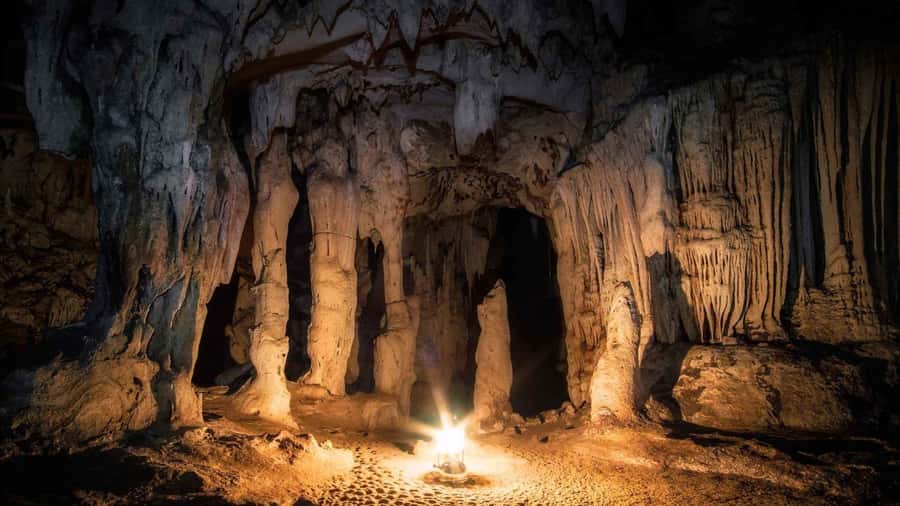
- Quiocta sits at 2,700 meters: The cave extends horizontally for about 550 meters and requires uneven walking in the dark.
- Cave equipment is included: Rubber boots and flashlights are supplied, a useful touch for wet and muddy conditions.
- The Karajía walk is 2 kilometers: Horses and mules are available if you prefer not to walk the full route.
- Spanish is the listed tour language: A recent German booking note says the guide explained everything in two languages.
Why Karajía and Quiocta make a good pair
Chachapoyas is best understood through its unusual funerary sites. The people who lived in this highland region built burial structures that reflect careful ritual practice and a strong connection with cliffs, caves, and mountain places.
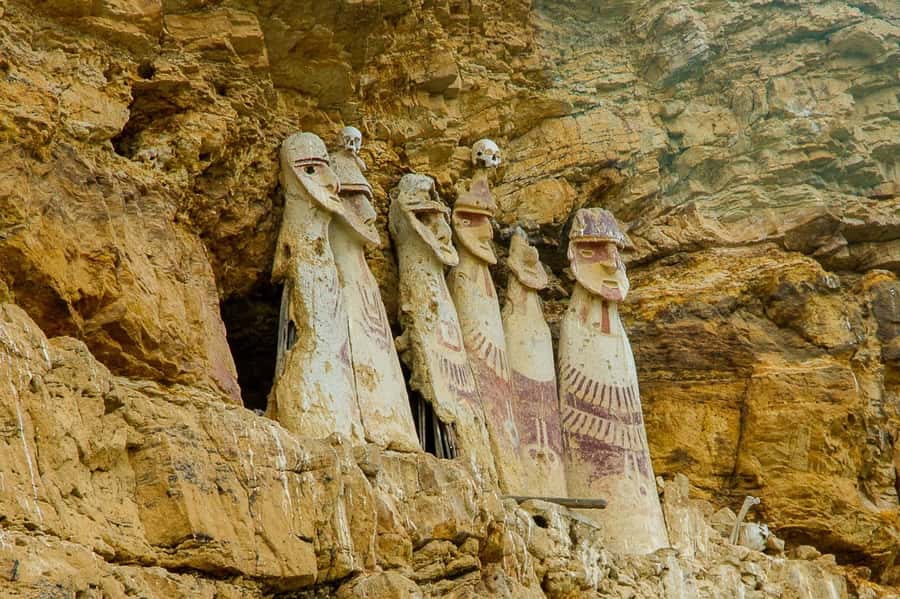
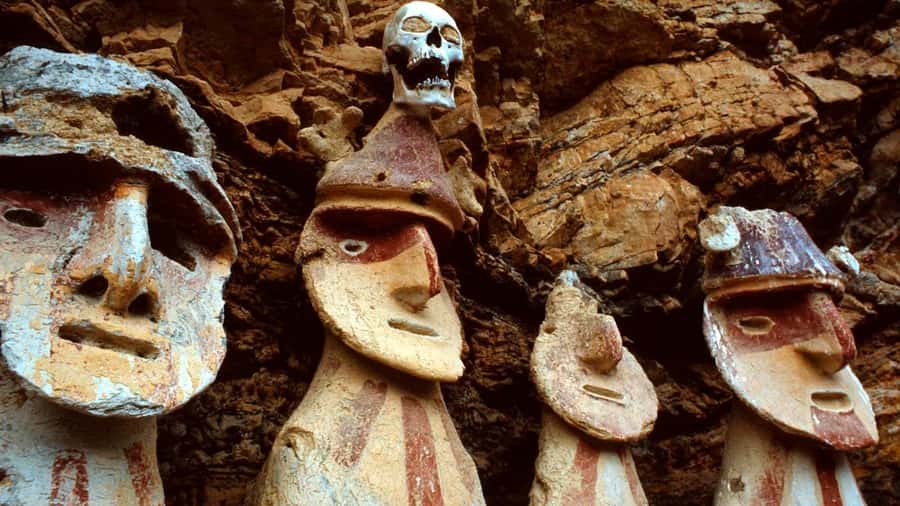
Karajía gives you the clearest visual encounter. Its sarcophagi are tall burial figures placed high on the mountainside, where they appear to watch over the Utcubamba region. Their location is part of the story. These were not ordinary graves set along a town street. They were constructed in a difficult, elevated place and shaped to resemble human figures.
Quiocta offers a different kind of setting. Inside the cave, you see formations created over millions of years through the slow action of water and mineral deposits. You also have the chance to see archaeological remains connected with Chachapoyas funerary and sacred practices.
I like this pairing because you do not spend the entire day looking at similar ruins. At the cave, the focus is geology and ritual use. At Karajía, the focus is architecture, burial customs, and the setting above the valley.
Other Peru days worth putting on the list:
- Cusco: Humantay Lake Tour with Breakfast and Buffet Lunch
★ 4.9 · 2,976 reviews - From Cusco: Sacred Valley & Maras Salt Mines Tour with Lunch
★ 4.8 · 2,227 reviews - From Cusco: Moray, Maras Salt Mines & Chinchero Weavers Tour
★ 4.8 · 1,925 reviews
Leaving Chachapoyas at 8:00 AM
Hotel pickup in Chachapoyas begins the day at about 8:00 AM. The first road leads down into the Utcubamba Valley, described as one of the key areas connected with the pre-Columbian Chachapoyas civilization.
This first stretch is not just wasted transport. The road gives you changing views of the valley and the mountains beside it. You then climb toward Lamud, a village located high above the left side of the Utcubamba.
The journey takes time, so carry water, sunscreen, and a snack. The supplied advice also includes sunglasses, a sun hat, comfortable shoes, and insect repellent. That list makes sense for a day that moves between open mountain roads, a village stop, a cave, and an exposed archaeological site.
The vehicle ride lasts about an hour at one point in the stated route, though the full day includes several separate drives. A practical concern is seating. The vehicle was described as comfortable by one tall passenger, but with limited legroom by the time he boarded. If you are tall, ask about seating at pickup rather than waiting until the vehicle is full.
Lamud: lunch arrangements before the cave
Lamud is the first useful pause. Here, the group reserves lunch before continuing to Quiocta Cave. You do not eat immediately. Lunch is planned in Lamud and served on the return from the cave.
This small detail matters because it keeps the morning moving. You are not spending valuable cave time choosing a meal after the visit. It also means you should bring a snack, especially if you are used to an early lunch.
From Lamud, the drive to the cave takes about 30 minutes. The route shifts from the open valley into a more enclosed mountain setting. At this point, your guide can begin setting the scene for the cave and explain how it fits into local Chachapoyas ritual practices.
Inside Quiocta Cave at 2,700 meters
Quiocta Cave is the first major stop. It lies at about 2,700 meters above sea level and extends horizontally for roughly 550 meters. You walk into a dark underground space where the main sights are stalactites and stalagmites shaped over millions of years.
The difference between the two is simple and useful: stalactites hang from the ceiling, while stalagmites rise from the floor. Inside Quiocta, you get time to examine both kinds of formation rather than making a quick entrance and exit.
The supplied rubber boots are important. Cave floors can be wet, slippery, or muddy, and ordinary walking shoes may not be the best choice. Bring comfortable shoes for the rest of the day, but expect to use the provided boots inside.
You also receive a flashlight. That makes the visit possible, but it does not turn the cave into a brightly lit attraction. The darker conditions are part of the experience. Watch your footing, keep your hands free where possible, and follow your guide’s instructions as the group moves through the cave.
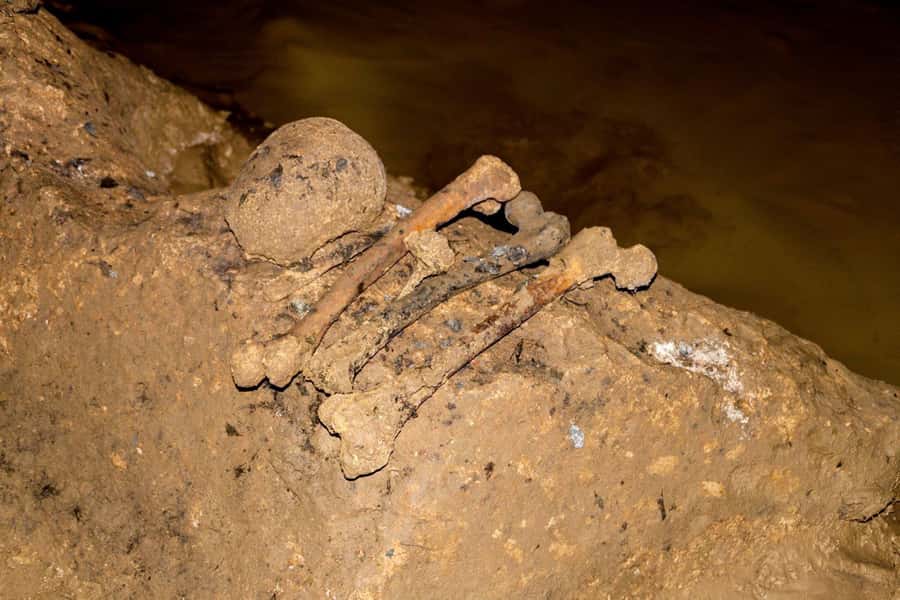
Quiocta is not only a geology stop. Archaeological remains connected with Chachapoyas funerary and sacred rituals can be found inside. Your guide explains the religious use of the space and the clues archaeologists have found. This is where the tour gains much of its meaning: the cave is not simply a natural formation, but also a place tied to old human practices.
The cave visit may suit you well if you like active sightseeing and atmospheric places. It may be less comfortable if you dislike darkness, uneven ground, or damp conditions. The tour data does not give a precise time spent underground, so you should expect a guided visit rather than a timed, self-directed walk.
Same valley, a completely different kind of day:
- From Lima: Paracas and Huacachina Oasis Full Day Guided Tour
★ 4.7 · 1,780 reviews - From Cusco: Full-Day Group Tour of Machu Picchu
★ 4.7 · 1,767 reviews - Machu Picchu Day Trip from Cusco
★ 4.5 · 1,644 reviews - Cusco: Half-Day City Tour with Sacsayhuaman and Q’enco
★ 4.6 · 1,129 reviews
Lunch in Lamud before the afternoon visit
After the cave, the group returns to Lamud for lunch. The meal is not included in the stated price, so budget for it separately. The tour includes transport and the arrangements for stopping at a local restaurant, but food and other services not specified are outside the package.
This is a sensible point in the day for a meal. You have finished the cave before eating, and the lunch stop breaks up the road journey to Cruzpata. Keep the schedule in mind, though. This is a touring day, not a slow village lunch with hours to spare.
Lamud also gives you a useful pause before the 2-kilometer walk to Karajía. Refill your water bottle and make sure your footwear is ready. The second half of the day combines a drive with a walk, so you will want to start the afternoon prepared.
The walk from Cruzpata to Karajía
From Lamud, the vehicle continues for about an hour to the village of Cruzpata. From there, you walk approximately 2 kilometers to the Karajía sarcophagi.
The distance is manageable for many people, but the tour lasts all day and includes cave walking, roads, and mountain terrain. Take the distance seriously if you have knee problems or prefer minimal walking. Horses and mules are available if you would rather not walk the full route, though the provided information does not specify the additional cost or reservation process.
The walk is part of the appeal. Karajía is not presented as a roadside monument where you step out, take one picture, and leave. You approach the site through the mountain setting, then see the sarcophagi from different angles.
Wear comfortable shoes and bring sun protection. The cave boots are included for the underground portion, but they may not be the best choice for the walk to Karajía. Ask the guide which footwear is most suitable when you leave the vehicle.
Meeting the sarcophagi of Karajía
At Karajía, the guide explains Chachapoyas religious beliefs and the cultural details archaeologists have learned about the site. The main focus is the group of tall sarcophagi, burial structures shaped with human features and placed high on the mountainside.
The setting changes how you see them. From a distance, the figures can look almost watchful. Up close, you can study their shapes and construction. The guide points out the different sarcophagi in the area and gives you time to examine them from several angles.
I would listen closely here rather than treating the visit as a photo stop. The visual details are memorable, but the explanations about funerary beliefs help you understand why the structures were made in this form and position.
The tour description refers to recent archaeological discoveries, but it does not name a particular guide or provide a detailed lecture outline. The service is listed in Spanish. One recent German booking noted that the guide explained everything in two languages, so bilingual support may occur, but you should confirm language needs before booking if Spanish is not comfortable for you.
What the $59 price includes
At $59 per person, the value depends on how you would otherwise arrange the day. This is not a short visit to one nearby sight. It covers a full day from Chachapoyas, road transport to two separate sites, entrance fees, hotel pickup and drop-off, ongoing assistance, a guide, and the basic equipment needed for the cave.
The included rubber boots and flashlights are especially helpful. Renting or finding suitable cave gear on your own could be awkward, and the equipment removes one practical problem from the morning.
Lunch is the main extra cost stated. You should also bring drinks and snacks, since they are not included. The phrase other services not specified means you should not assume that personal purchases, meals, or optional animal transport are covered.
For a visitor who wants to see both Karajía and Quiocta in one day, the price is reasonable because transport is the difficult part to organize independently. The value is less clear if you want a slow schedule, private flexibility, or a detailed tour in a language other than Spanish.
Who will get the most from this day
I would choose this tour if you want a strong introduction to Chachapoyas archaeology without arranging several separate rides. It suits you best if you enjoy unusual burial sites, natural formations, and a day that mixes walking with sightseeing.
It is also a good choice for visitors with only a short stay in Chachapoyas. The route brings together two important experiences in one outing and returns to the city around 6:00 to 6:30 PM.
You should think twice if you dislike long vehicle rides or need generous legroom. The tall passenger’s note about the bus is practical information, not a minor footnote. Seating can affect your comfort on a day with several drives.
The cave also calls for sensible preparation. Use the supplied boots, carry water, and expect wet or uneven ground. At Karajía, the 2-kilometer walk adds a physical element, although horses and mules are available.
Free cancellation up to 24 hours before departure and reserve-now, pay-later terms make planning easier. The provider sends organization details by WhatsApp and email the day before, so check those messages carefully for pickup instructions.
My call on Karajía and Quiocta
I would book this day if your priorities are rare archaeological sights and practical transport. Karajía is the visual centerpiece, while Quiocta adds a natural and ritual setting that makes the day feel varied rather than repetitive.
The tradeoff is time. You will leave early, ride several hours in total, walk about 2 kilometers to Karajía, and return in the evening. Tall passengers should ask about legroom, and anyone who needs a non-Spanish guide should confirm arrangements before paying.
For most visitors based in Chachapoyas, the combination of included entrance fees, cave equipment, guide service, and transport makes $59 a fair price. Bring water, a snack, sun protection, and shoes suited to walking. If you can handle a full day and want more than the usual postcard view, this is a useful way to see the region’s ancient burial customs from both above ground and below it.
FAQ
Where does the tour begin and end?
Pickup and drop-off are provided at your hotel in Chachapoyas. The group leaves at about 8:00 AM and returns to Chachapoyas around 6:00 to 6:30 PM.
What language is the tour conducted in?
The tour is listed with a Spanish-speaking live guide. A recent booking note says the guide explained the information in two languages, but you should confirm language availability before booking if you need a specific language.
Is lunch included?
No. The group reserves lunch in Lamud before visiting Quiocta Cave, then eats at a local restaurant on the return from the cave. The meal is not included in the stated price.
How long is the walk to the Karajía sarcophagi?
The walk from Cruzpata to the Karajía sarcophagi is about 2 kilometers. Horses and mules are available if you prefer not to walk the full route.
What equipment is supplied for Quiocta Cave?
Rubber boots and flashlights are included for the cave visit. You should still bring comfortable shoes for the rest of the day.
Can I cancel the booking?
You can cancel up to 24 hours before departure for a full refund. Reserve-now, pay-later booking is also available.
Just added around Peru
- Waqrapukara 1 day trekking + meals★ 3.9 · 3 reviews
- Zipline over the Sacred Valley Trip★ 5.0 · 11 reviews
- Walking tour through the Historic Center of Arequipa★ 4.0 · 3 reviews
- Valle Sur Cusco | half day★ 4.3 · 3 reviews
- Visit to the Cochahuasi Animal Sanctuary with rescued animal★ 4.1 · 4 reviews
- VISIT THE NATIONAL RESERVE OF PARACAS BY ATV★ 4.8 · 23 reviews
- Uros Floating Islands Tour in Puno★ 3.7 · 9 reviews
- Vinicunca Mountain Tour – Full Day Tour to Rainbow Mountain★ 3.4 · 4 reviews