
Reviewed · LIMA TOURS
8-Days Peru, The Rise of the Inca Empire
Machu Picchu may be the headline, but this eight-day route from Lima to Puno gives you a fuller picture of Peru. You move from colonial Lima and ancient coastal cultures to Cusco, Inca engineering, the Sacred Valley, Machu Picchu, and the high waters of Lake Titicaca. I like the built-in transport and the clear north-to-south route, which removes much of the usual planning work.
Two things work especially well here: airport transfers and seven hotel nights are included, and the journey from Cusco to Puno comes with stops at Andahuaylillas, Raqchi, La Raya, and Pucara. The main caution is timing. This is a packed trip, and one reported arrangement left two people waiting about 26 hours near Machu Picchu before their return train. Get the exact schedule in writing before you go.
In This Review
- Key points to know before booking
- What this Peru route does well
- Day 1: Colonial Lima and the Museo Larco
- Day 2: From Lima to Cusco, then straight into Inca history
- Day 3: Pisac, artisan work, and Andean traditions
- Day 4: Moray’s terraces and the salt pans of Maras
- Day 5: Machu Picchu, trains, and a crucial schedule check
- Day 6: The scenic road from Cusco to Puno
- Day 7: Uros and Taquile on Lake Titicaca
- Hotels, meals, and daily communication
- Who should book this trip?
- Should you book the 8-day Peru route?
- FAQ
- Where does the tour begin?
- Where does the tour end?
- How long does the tour last?
- Are flights included?
- What happens on the first day?
- What is included at Machu Picchu?
- Which Machu Picchu circuit is used?
- Can the Machu Picchu ticket be refunded or changed?
- Is Lake Titicaca included?
- How large is the group?
Key points to know before booking
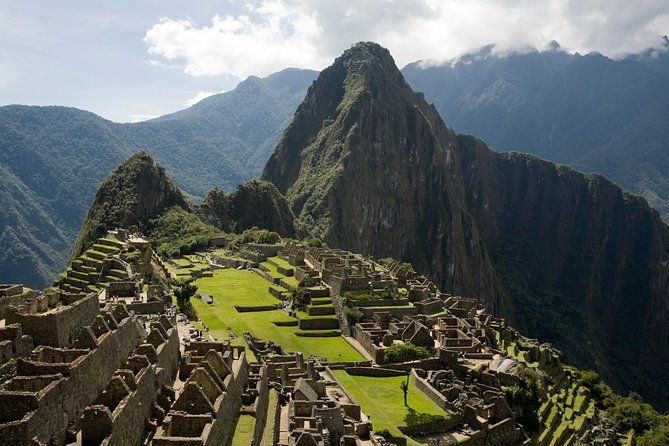
- Machu Picchu is the centerpiece: Your visit includes the train from Ollantaytambo, the uphill bus, a guided visit, and a buffet lunch at Sanctuary’s Lodge restaurant.
- The route ends in Puno: That makes this useful if you plan to continue toward Bolivia or return to Lima from the region.
- Lima gets proper attention: You visit the Historic Center and Museo Larco rather than treating the capital as a simple overnight stop.
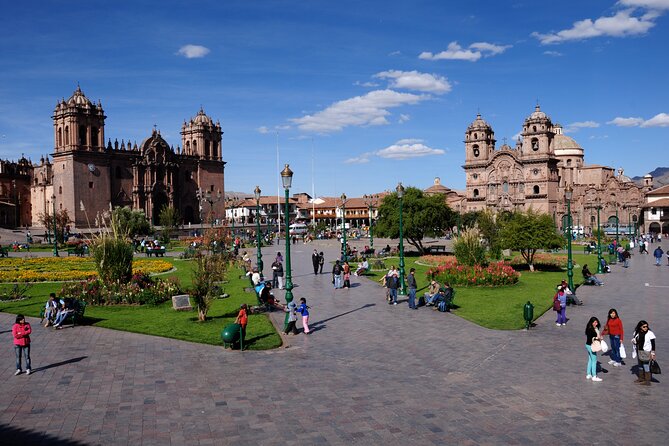
- Cusco’s major sights arrive quickly: Qorikancha, the cathedral, Sacsayhuaman, Q’enqo, Tambomachay, and Puca Pucara are covered soon after arrival.
- Lake Titicaca includes two islands: Uros and Taquile are both included, along with a typical island lunch.
- The group is capped at 15 people: That is small enough for a more manageable guided outing, though hotel and daily arrangements still need checking.
What this Peru route does well
At $1,280 per person, this tour is best viewed as a transport-and-sightseeing package rather than a simple guided holiday. The price covers seven nights, arrival and departure transfers, the Lima and Cusco sightseeing, the Machu Picchu train and admission, the Cusco to Puno bus route, Lake Titicaca excursions, three lunches, and seven breakfasts.
Flights are not included. You must arrange the international flight into Lima and the morning flight from Lima to Cusco. Once you land in Peru, the package takes care of many of the awkward links: airports, hotels, train connections, buses, and transfers between stations and lodging.
I like this setup for a first visit because Peru’s major sights are spread across large distances. A missed connection or poorly timed taxi can cost a full day. Here, the broad route is already in place. The tradeoff is less independence. You do not have much room to linger in Cusco, add a hike, or change the order of the sights.
A 4.8 rating from 49 bookings and a recommendation rate of 94 percent point to generally strong satisfaction, but the lower-rated experience reveals the issue to watch closely: communication. The evening-before schedule may be sent to your hotel front desk, and one person had trouble getting hotel names and dates in advance despite emails and phone calls. I would not leave those details to chance.
Other Lima days worth putting on the list:
- Lima: Ultimate Peruvian Food Tour
★ 4.9 · 700 reviews - Full Day Paracas Ica and Huacachina from Lima All Included
★ 4.5 · 623 reviews - Lima’s Vibrant Heritage: Exploring the City’s Landmarks Half-day
★ 4.5 · 581 reviews
Day 1: Colonial Lima and the Museo Larco
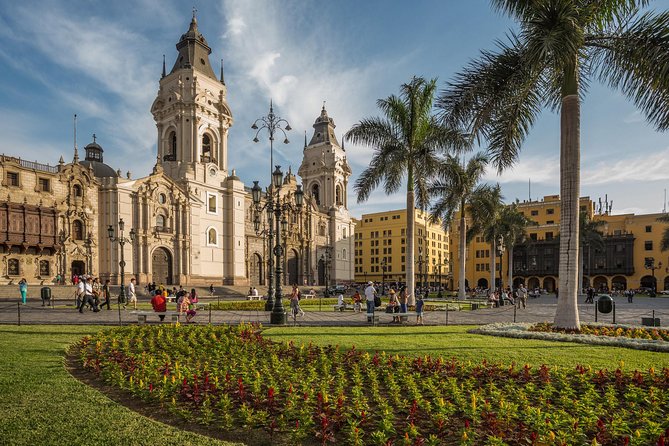
Your first day begins with assistance at Jorge Chávez International Airport and a transfer to your hotel. The city tour then focuses on Lima’s Historic Center, a UNESCO World Heritage Site packed with colonial churches, civic buildings, and layers of earlier history.
The Convent of Santo Domingo is a strong opening stop. It was built during the founding of Lima, and the site later became home to the Universidad Mayor de San Marcos, founded in 1551 and regarded as the oldest university in the Americas. Inside, you see an old choir, a library holding about 25,000 books, and the tombs of San Martín de Porres, San Juan Masías, and Santa Rosa of Lima.
Crossing the Plaza Mayor brings you past the Government Palace and Municipality toward Lima Cathedral. The four-hour visit should give you a useful foundation for understanding Spanish colonial power and Catholic life in Peru. It is also a sensible way to spend arrival day, since the pace is cultural rather than physically demanding.
The two-hour visit to Museo Larco adds something Lima’s old center cannot. Its collection presents the earlier cultures of Peru through gold, textiles, ceramics, and objects tied to ancient beliefs. The museum’s open storage area is especially useful because you see a large number of pieces rather than only a small selection in glass cases.
The erotic ceramics are part of the museum’s collection, so this stop is not aimed only at visitors seeking formal art. It offers a direct look at how ancient Peruvians represented daily life, ritual, power, and the body. I would give the museum your full attention, since it provides context for the Inca sites that come later.
Day 2: From Lima to Cusco, then straight into Inca history
You fly from Lima to Cusco in the morning. The booking instructions specifically require a morning flight, and arrival by noon is considered too late for the planned program. That matters because your Cusco sightseeing starts soon after hotel transfer.
Begin with Qorikancha, the Inca Temple of the Sun. The Spanish built the Convent of Santo Domingo on its foundations, creating one of Cusco’s clearest examples of Inca and colonial construction sharing the same site. The temple was dedicated to Inti, the sun god, and its walls were once covered with gold sheets according to the account of the conquest.
Much of the precious metal disappeared, but the stonework remains. Look closely at the tight joins between blocks. Qorikancha is not a huge stop, at about an hour, but it gives you an immediate sense of how the Spanish city was placed over the Inca capital.
The Cusco Cathedral follows. Built on the foundations of an Inca palace, it contains colonial paintings from the Cusco School, carved choir stalls, ornate altars, and an original cross brought by the first Spanish conquistadors. The art is especially interesting because European methods were combined with local symbols and ideas.
The afternoon heads uphill to Sacsayhuaman Archaeological Park. The massive stones here are the main attraction, with some blocks standing over four meters high. The visit also includes Q’enqo, a rock-cut ceremonial site, Tambomachay, where water runs through carefully built channels, and a panoramic view of Puca Pucara, an old military outpost.
The stated visit lasts about two hours, so expect an efficient circuit rather than a leisurely archaeological study. Cusco sits at high altitude, and this is also your first serious test of how your body reacts. If you have suffered altitude sickness before, ask your doctor about medicine before departure.
Day 3: Pisac, artisan work, and Andean traditions
The Sacred Valley is greener and more agricultural than the high plains around Cusco. The Urubamba River runs through it, and the Incas valued the valley for its climate, crops, and position between mountain ranges.
At Pisac, the ruins sit above the modern town. You see terraces, religious structures, and stonework arranged along a steep mountainside. The high position gives you wide views down toward the colonial village and the valley floor.
After the ruins, the tour descends to Pisac’s artisan market. Textiles, ceramics, silver jewelry, and other crafts are available, and the market is a practical place to compare handmade goods. If you shop, take a moment to inspect the weave and ask about the materials and technique. The experience is better when you buy one useful piece rather than rush through a long list of souvenirs.
The Inkariy Museum presents modeled scenes from the pre-Hispanic cultures of Peru. It is a different kind of stop from a traditional archaeological site. Instead of standing among original walls, you get visual representations that help connect the many cultures that came before and around the Inca Empire.
Lunch is included, followed by the Yucay Live Culture Center. Here, local residents demonstrate weaving and dyeing, adobe making, and the preparation of chicha, a corn-based drink. You also have a close encounter with llamas and alpacas.
This day combines ruins, shopping, museum displays, food, and living craft traditions. It is one of the most varied days of the route, although the schedule gives only about an hour at the broad Sacred Valley area and two hours for Pisac and the museum activities together. Expect movement, not a slow village stay.
Same valley, a completely different kind of day:
- From Lima: Day trip to Paracas, Ica and Oasis Huacachina
★ 4.6 · 409 reviews - Private transfers from Lima Airport or to Lima Airport
★ 4.0 · 359 reviews - Lima: Paracas and the Huacachina Oasis Guided Day Tour
★ 4.5 · 354 reviews - Lima: The Charm of Barranco & Pre Inca Pyramid in Miraflores
★ 4.9 · 322 reviews
Day 4: Moray’s terraces and the salt pans of Maras
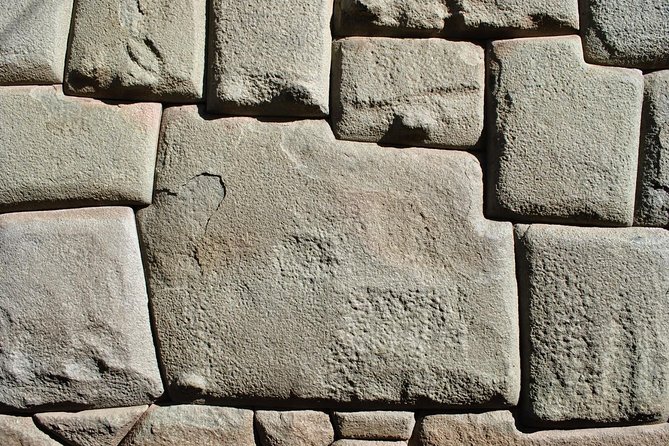
Moray is one of the most unusual Inca sites in the region. Its circular terraces descend into the ground, creating different temperatures and growing conditions at various levels. The tour explains the site as an agricultural laboratory with as many as 20 microclimates.
You do not need to accept every theory about Moray to appreciate the design. The circles show how carefully the Incas worked with altitude, water, sun, and soil. The visit lasts about an hour, so the guide’s explanation will be important.
The route continues to Salinas de Maras. Thousands of shallow salt pools spread across the mountainside, fed by salty spring water. As the water evaporates, salt remains, and local families still work the pans.
The white pools against the red clay hills make this one of the most memorable photo stops in the Sacred Valley. It is also a useful reminder that these are not simply abandoned ruins. The salt works remain tied to local households and ongoing labor.
The excursion lasts about two hours at Maras, with admission included. Wear shoes suited to uneven ground and be prepared for bright sun. The information provided does not specify meal arrangements for this day, so check what is covered before setting out.
Day 5: Machu Picchu, trains, and a crucial schedule check
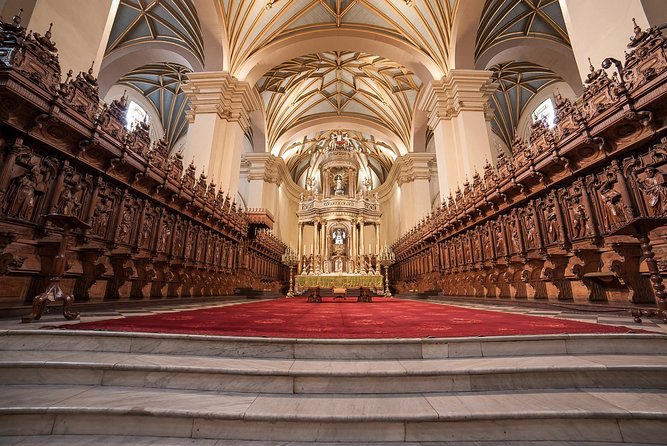
Machu Picchu is the longest and most logistically demanding day, listed at about 10 hours. You board the selected Voyager train at Ollantaytambo, arrive at the Machu Picchu station, and then take the bus up the winding road beside the Urubamba River canyon.
Inside the site, the route includes terraces, stairways, ceremonial areas, and urban sections. The admission ticket is included, as is a buffet lunch at the Sanctuary’s Lodge restaurant. The exact Machu Picchu circuit matters. Route 2 is given priority when available; if it is unavailable, the alternatives listed are Circuit 3B or Circuit 1B.
This is not a small administrative point. The circuits cover different parts of the site, and the ticket cannot be refunded or changed after it is issued. Confirm which route you are accepting before the ticket is purchased.
The return arrangements deserve equal attention. The stated plan says you return by train and transfer to Cusco, but one reported booking left two people at Hotel Ferre Machu Picchu for roughly 26 hours, from around 12:30 a.m. until the next day’s 3:20 p.m. train. They felt that this time could have been used in Ollantaytambo or Cusco.
That may not be every passenger’s schedule, but it is a serious warning. Ask for the exact departure and return times, your hotel name, and the number of nights at Machu Picchu Pueblo before you leave home. If the plan includes a long wait, decide if you can accept it. A cheap overnight near the station may be convenient, but a poorly timed one can consume a large share of an eight-day trip.
Day 6: The scenic road from Cusco to Puno
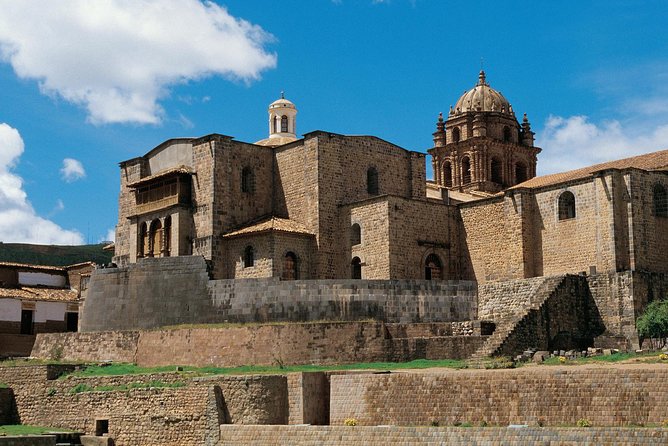
Instead of flying or taking a direct bus, you travel from Cusco to Puno by road with several cultural stops. The route visits Andahuaylillas and its chapel, then Raqchi, home to the Temple of Wiracocha.
These stops make the long transfer more useful. Andahuaylillas brings colonial religious art into the day, while Raqchi returns you to large-scale Inca construction. Lunch is included, and La Raya provides a high point and a natural boundary between the Cusco and Puno regions.
Before arriving in Puno, you visit the Pucara Museum. There is also an opportunity to buy one of the area’s classic bull-shaped ceramics. You arrive in Puno late in the afternoon, making this a full seven-hour travel day rather than a relaxed sightseeing outing.
Day 7: Uros and Taquile on Lake Titicaca
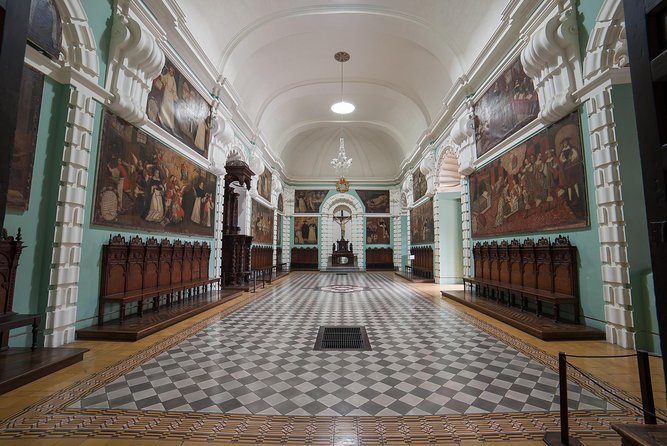
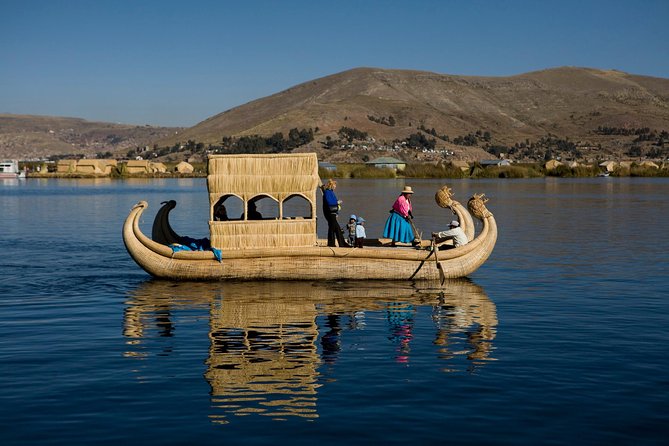
The final full day heads onto Lake Titicaca, with a six-hour excursion to the Uros floating islands and Taquile Island. The Uros islands are made from totora reeds, and the visit introduces you to the people who maintain this unusual form of settlement.
Taquile offers a different experience. Residents continue ancestral traditions and wear colorful clothing tied to local identity. The island also provides high views over the lake and a typical lunch.
This is a good closing day because it shifts the focus from imperial stonework to present-day Andean communities. Still, keep your expectations measured. The schedule includes both islands in one day, so it is a structured outing rather than several quiet days on the lake.
Hotels, meals, and daily communication
Seven nights of accommodation at selected hotels are included, but the hotel names are not provided in the information available here. Breakfast is included on all seven mornings, and three lunches are listed, including the Machu Picchu meal, the Cusco to Puno route, and the Taquile excursion.
Food and drinks outside the specified meals cost extra. Since daily plans may be sent to your hotel front desk only the evening before, ask for a written schedule early. You should have the hotel names, check-in dates, train times, flight details, and transfer instructions saved on your phone or printed.
The maximum group size is 15. That is a useful limit for city visits and archaeological sites, but the service can still involve different guides, buses, hotels, and local operators. Keep your documents handy. Your passport name, number, expiration date, and country are required for every participant at booking.
Who should book this trip?
I would recommend this route to a first-time Peru visitor who wants the major sights arranged in one continuous trip. It suits you if you value pre-arranged transport, do not want to organize trains and station transfers yourself, and like moving through several regions rather than staying in one town.
It is also a sensible choice if you want to finish in Puno and continue toward Bolivia. The endpoint is less useful if you need to fly home from Lima immediately after the tour, since you will need to arrange the onward connection yourself.
I would hesitate if you need flexible pacing, detailed schedules well in advance, or a long, unhurried stay in Cusco. The route is busy, and the Machu Picchu overnight arrangement must be checked carefully. At $1,280, the value is good when the transport and hotel plan works cleanly. It is less attractive if unclear communication creates long idle periods or forces you to miss time in Cusco.
Should you book the 8-day Peru route?
Book it if you want a broad first look at Peru with the difficult connections handled for you. Lima, Cusco, the Sacred Valley, Machu Picchu, Puno, and Lake Titicaca are a lot to cover in eight days, but the route gives you a clear sense of the country’s ancient and colonial past.
Before paying, request the full day-by-day schedule and every hotel name. Confirm your morning Lima to Cusco flight, the Machu Picchu circuit, the train times, and any overnight near the ruins. If those details suit you, this is a practical way to see Peru’s essential sights. If they do not, build the same journey independently and give yourself more time around Cusco and Machu Picchu.
FAQ
Where does the tour begin?
The tour begins at Jorge Chávez International Airport in Lima, Peru.
Where does the tour end?
The tour ends in Puno, Peru.
How long does the tour last?
The tour lasts approximately eight days and includes seven nights of accommodation.
Are flights included?
No. International and domestic flights are not included. You must arrange your flight from Lima to Cusco, and it must be scheduled in the morning.
What happens on the first day?
You receive airport assistance and a hotel transfer, then visit Lima’s Historic Center and Museo Larco.
What is included at Machu Picchu?
The package includes the Voyager service train, Machu Picchu admission, the bus up to the site, assistance at the station, and a buffet lunch at Sanctuary’s Lodge restaurant.
Which Machu Picchu circuit is used?
Route 2 is given priority when available. If it is unavailable, Circuit 3B or Circuit 1B may be offered for your confirmation before the ticket is issued.
Can the Machu Picchu ticket be refunded or changed?
No. The admission ticket is nonrefundable, and date changes or amendments are not accepted after issue.
Is Lake Titicaca included?
Yes. The tour includes visits to the Uros floating islands and Taquile Island, with a typical lunch on Taquile.
How large is the group?
The activity has a maximum of 15 participants.
Just added around Lima
- Lima Airport Transfers by SUV/Van★ 5.0 · 34 reviews
- Guided Tours in Colonial and Modern Lima★ 5.0 · 54 reviews
- Full Day Pilgrims★ 5.0 · 28 reviews
- Sandboarding and Off Road in Lima (National Park Lomas de Ancón)★ 5.0 · 54 reviews
- Tour Miraflores + Fotografía Profesional★ 5.0 · 47 reviews
- In Lima: Sandboarding Off Road Half Day!!★ 5.0 · 36 reviews
- Full day PRIVATE to Paracas, Ica and Huacachina from Lima All Inclusive and Lunch★ 5.0 · 55 reviews
- Lima City tour and Catacombs Museum (04 hours) Private Tour with guide in Lima★ 5.0 · 32 reviews
Lima Tours, compared.


Full Day Paracas Ica and Huacachina from Lima All Included
Read our review →
Lima’s Vibrant Heritage: Exploring the City’s Landmarks Half-day
Read our review →

Paracas and the Huacachina Oasis Guided Day Tour
Read our review →
The Charm of Barranco & Pre Inca Pyramid in Miraflores
Read our review →
Full Day to Paracas and Huacachina Desert Oasis
Read our review →
Pachacamac Ruins & Barranco Half-Day Guided Tour
Read our review →Browse the lists this tour appears in